
Asia Pacific Positive Displacement Pumps Market Size & Forecast:
- Asia Pacific Positive Displacement Pumps Market Size 2025: USD 11.46 Billion
- Asia Pacific Positive Displacement Pumps Market Size 2033: USD 16.11 Billion
- Asia Pacific Positive Displacement Pumps Market CAGR:4.36%
- Asia Pacific Positive Displacement Pumps Market Segments: By Type (Reciprocating Pumps, Rotary Pumps, Peristaltic Pumps, Diaphragm Pumps, Gear Pumps, Screw Pumps, Others); By Application (Oil & Gas, Water Treatment, Chemicals, Food & Beverage, Pharmaceuticals, Others); By Capacity (Low, Medium, High, Others); By End User (Industrial, Municipal, Commercial, Others)
Asia Pacific Positive Displacement Pumps Market Summary
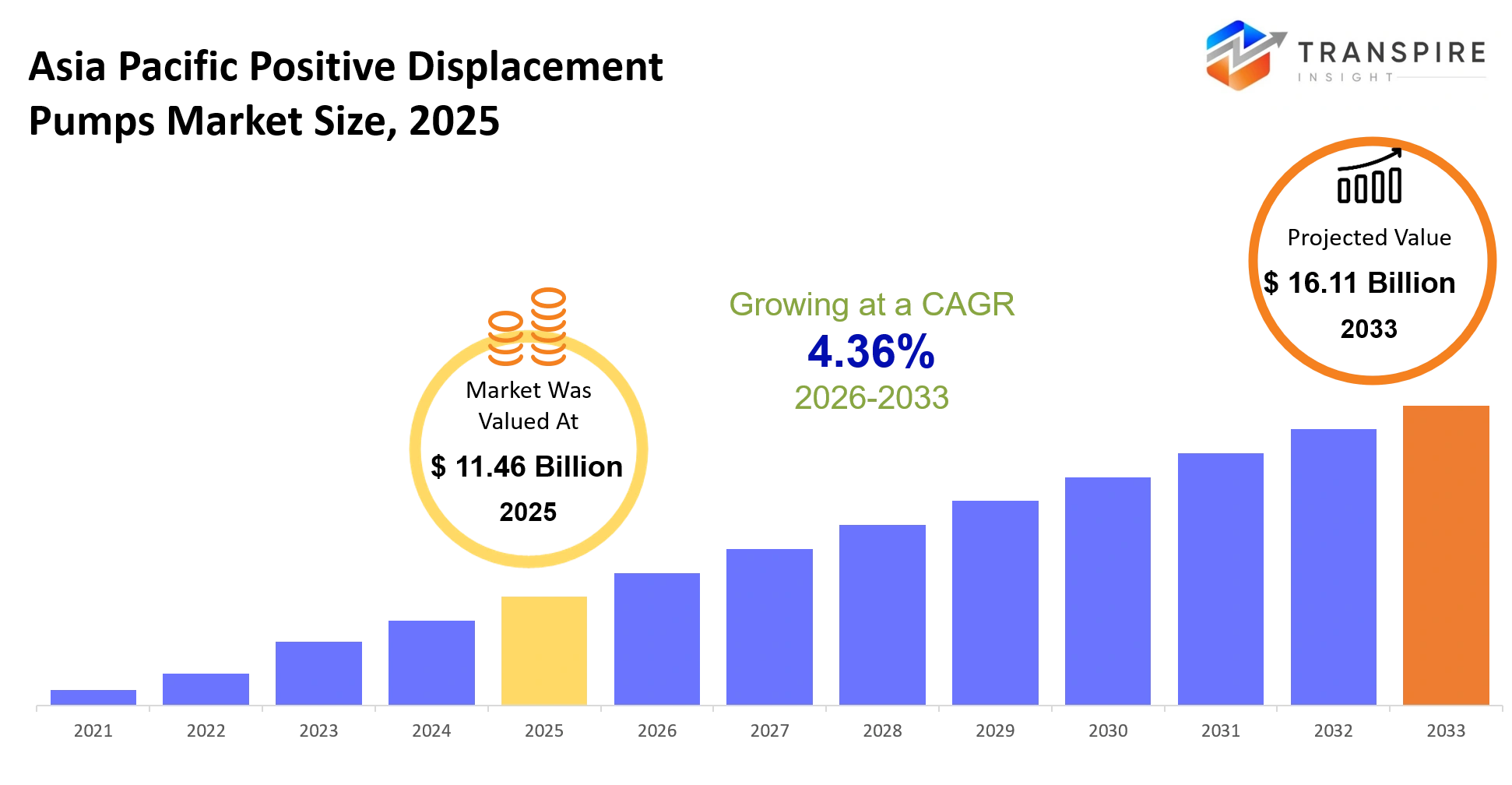
The Asia Pacific Positive Displacement Pumps Market was valued at USD 11.46 billion in 2025. It is forecast to reach USD 16.11 billion by 2033. That is a CAGR of 4.36% over the period.
Positive displacement pumps play a critical role across Asia Pacific industries by moving precise volumes of liquids, slurries, chemicals, oils, and viscous materials where flow accuracy, pressure stability, and process reliability are essential. They are widely used in oil and gas operations, water treatment facilities, chemical processing plants, food production lines, and pharmaceutical manufacturing, helping operators maintain product quality, reduce waste, and ensure continuous operations under demanding conditions.
Over the past three to five years, the market has undergone a structural shift toward energy-efficient and digitally monitored pumping systems. Industrial operators are increasingly integrating sensors and predictive maintenance capabilities to reduce downtime and optimize asset performance. A major trigger for this transition was the supply chain disruption experienced during and after the COVID-19 period, which exposed the operational risks associated with unexpected equipment failures and delayed spare-part availability. As industries prioritize resilience, automation, and process efficiency, investments in advanced positive displacement pumps are accelerating. This shift is expanding replacement demand, supporting premium product adoption, and creating new revenue opportunities through aftermarket services and lifecycle management solutions.
Key Market Insights
- The Asia Pacific Positive Displacement Pumps Market is expanding steadily, supported by industrial automation, water infrastructure investments, and process efficiency requirements across manufacturing sectors.
- The market outlook remains positive through the forecast period, with digital monitoring, energy-efficient designs, and replacement demand shaping future revenue growth.
- China dominates the Asia Pacific Positive Displacement Pumps Market, accounting for approximately 35–40% market share in 2025, driven by large-scale industrial production.
- India is the fastest-growing regional market during 2025–2032, supported by investments in water treatment, pharmaceuticals, and industrial infrastructure.
- Southeast Asian economies are witnessing significant growth due to expanding food processing, chemicals, and wastewater management projects.
- Rotary pumps lead the market with nearly 30% share in 2025, benefiting from broad industrial applicability and operational efficiency.
- Gear pumps represent the second-largest segment, supported by strong utilization in oil, chemical, and lubricant handling applications.
- Peristaltic pumps are the fastest-growing segment through 2032 due to increasing adoption in pharmaceutical and hygienic processing environments.
- Smart pump integration and predictive maintenance capabilities are becoming major product differentiation trends across the regional market.
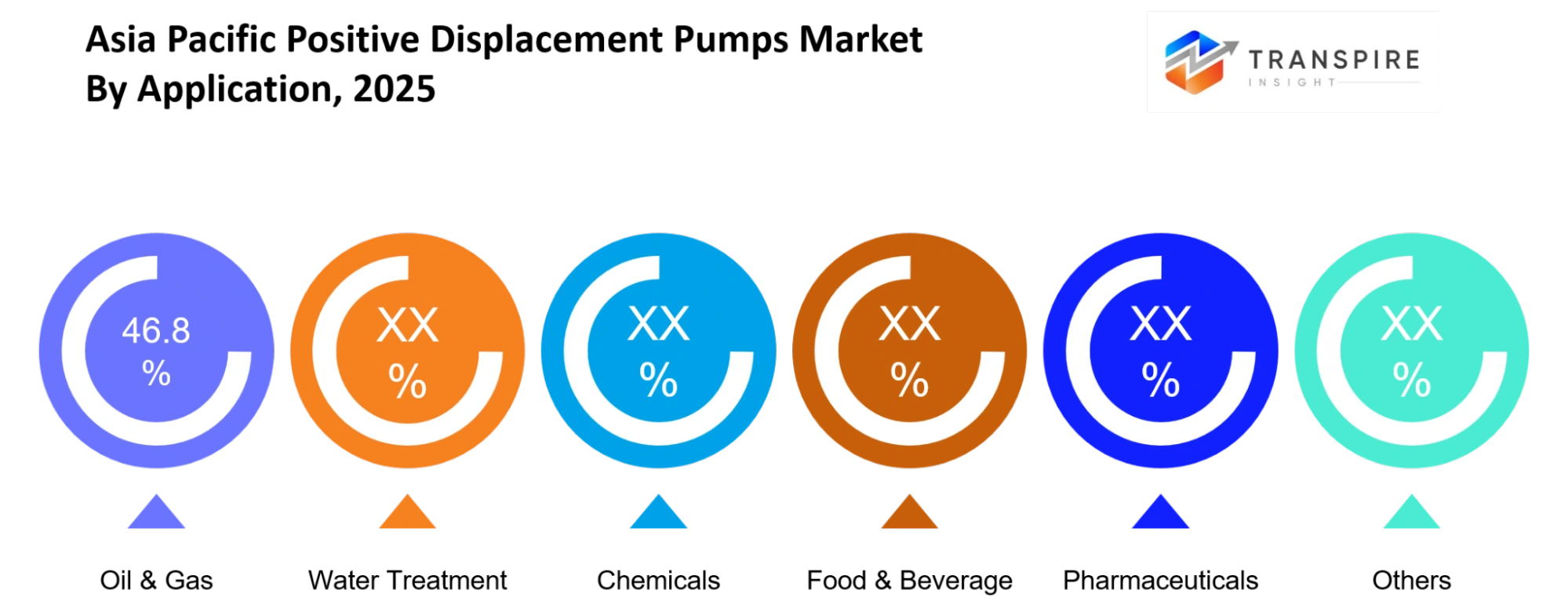
- Water treatment dominates applications, contributing approximately 25–30% of total market revenue in 2025 as governments expand treatment infrastructure.
What are the Key Drivers, Restraints, and Opportunities in the Asia Pacific Positive Displacement Pumps Market?
The strongest force accelerating the Asia Pacific Positive Displacement Pumps Market is the modernization of industrial and municipal fluid-handling infrastructure. Governments across China, India, and Southeast Asia have expanded investments in water treatment, wastewater management, and process industries to support urbanization and industrial output. At the same time, manufacturers are under pressure to improve operational efficiency and reduce unplanned downtime. This shift has encouraged the replacement of aging pumping systems with high-performance positive displacement pumps equipped with monitoring and control capabilities. As operators prioritize reliability and precise flow control, spending is moving toward premium pump solutions, creating higher equipment revenues and expanding aftermarket service opportunities.
The most significant barrier remains the high lifecycle cost associated with advanced pumping systems and maintenance-intensive applications. This challenge is structural because many end users, particularly small and medium-sized industrial facilities, operate under strict capital expenditure constraints. In addition, specialized installation requirements, skilled maintenance personnel, and periodic component replacement add to ownership costs. These factors slow replacement cycles and encourage some operators to extend the life of older equipment rather than invest in new systems. The result is delayed adoption of advanced technologies and slower revenue realization for suppliers.
A major growth opportunity lies in the integration of digital monitoring, predictive maintenance, and Industrial Internet of Things technologies into pumping operations. Large industrial facilities in China, South Korea, and Singapore are increasingly adopting connected equipment to reduce downtime and optimize asset utilization. As industrial digitalization matures across the region, smart positive displacement pumps capable of real-time performance tracking could unlock a new wave of investment and long-term service revenue.
What Has the Impact of Artificial Intelligence Been on the Asia Pacific Positive Displacement Pumps Market?
Artificial intelligence and advanced digital technologies are increasingly transforming fluid-handling operations across the Asia Pacific positive displacement pumps industry. Industrial operators are deploying AI-enabled monitoring platforms that continuously track pump pressure, flow rates, vibration levels, temperature, and energy consumption. These systems automatically adjust operating parameters to maintain process stability, reduce energy losses, and improve equipment utilization. In water treatment, chemical processing, and oil and gas facilities, automated control systems can identify performance deviations in real time and initiate corrective actions without manual intervention.
Machine learning models are also strengthening predictive maintenance capabilities. By analyzing historical operating data alongside real-time sensor inputs, these systems can detect early signs of seal wear, bearing degradation, or flow irregularities before failures occur. This predictive approach helps facilities reduce unplanned downtime, extend equipment life, and lower maintenance expenditures. Many industrial operators report measurable improvements in asset availability and maintenance planning, while energy optimization algorithms contribute to lower operating costs and improved process efficiency.
Digital twins are emerging as another valuable tool, allowing operators to simulate pump performance under different operating conditions and optimize system configurations before implementation. However, AI adoption still faces challenges. High integration costs, fragmented legacy infrastructure, and limited high-quality operational datasets can reduce model accuracy and slow deployment, particularly among small and medium-sized industrial facilities across developing Asia Pacific markets.
Key Market Trends
- Since 2020, manufacturers have accelerated integration of IoT sensors and remote diagnostics, shifting customer preference toward digitally connected pumping systems.
- Water utilities across China and India increased pump modernization spending after 2021, prioritizing energy efficiency and infrastructure reliability over upfront cost savings.
- Chemical and pharmaceutical producers have increasingly adopted hygienic and precision-flow pumping technologies to meet stricter production and quality standards.
- Supply chain disruptions between 2020 and 2022 encouraged buyers to diversify suppliers and maintain larger inventories of critical pump components.
- Companies such as Flowserve, Grundfos, and Xylem expanded regional manufacturing and service networks to shorten delivery times and strengthen customer support.
- Predictive maintenance platforms have moved from pilot projects to operational deployment, helping industrial facilities reduce unexpected equipment failures and maintenance costs.
- Since 2023, procurement teams have increasingly evaluated pumps based on total lifecycle cost rather than initial equipment pricing alone.
- Regulatory pressure on industrial wastewater management has accelerated investment in high-precision pumping systems for treatment and process optimization applications.
- Energy consumption has become a key purchasing criterion, prompting manufacturers to introduce more efficient pump designs and intelligent control technologies.
- Strategic partnerships between pump suppliers and industrial automation providers have increased, enabling integrated monitoring, analytics, and performance optimization solutions.
Asia Pacific Positive Displacement Pumps Market Segmentation
By Type:
Rotary pumps hold a strong position across industrial operations because of consistent flow delivery, compact design, and suitability for handling viscous fluids. Demand has strengthened in chemical processing, oil handling, and food manufacturing facilities where accuracy and reliability remain important. Gear pumps continue to attract adoption for lubrication systems and fluid transfer processes that require stable pressure levels. Screw pumps support applications involving high-viscosity materials and continuous-duty operations, making installation common in industrial production environments.
Peristaltic pumps have gained attention in pharmaceutical and water treatment facilities because fluid contamination risks remain low during operation. Diaphragm pumps maintain relevance in corrosive and abrasive fluid applications due to durable construction and chemical compatibility. Reciprocating pumps continue to serve high-pressure requirements in industrial and energy-related operations. Product development efforts increasingly focus on efficiency improvements, lower maintenance requirements, and integration with digital monitoring technologies.
By Application:
Water treatment represents a major application area as infrastructure upgrades continue across urban and industrial facilities. Positive displacement pumping systems support chemical dosing, sludge handling, and wastewater processing functions that require controlled fluid movement. Expansion of municipal treatment projects has created opportunities for advanced pumping solutions with improved efficiency and operational reliability. Regulatory focus on water quality standards has also encouraged investment in modern equipment.
Chemical processing remains another important application due to requirements for precise flow control and safe handling of aggressive fluids. Food and beverage manufacturers rely on these pumps for hygienic processing and product consistency throughout production cycles. Pharmaceutical production facilities utilize specialized pumping systems to maintain quality standards and support sensitive manufacturing processes. Oil and gas operations continue to require dependable fluid transfer equipment for upstream, midstream, and downstream activities.
By Capacity:
Low-capacity pumps maintain widespread use in laboratories, pharmaceutical production units, and specialized processing environments where accurate fluid handling remains essential. Compact systems offer advantages in applications involving controlled dosing and smaller production volumes. Demand continues to grow in sectors that prioritize precision, cleanliness, and operational flexibility. Equipment manufacturers increasingly develop compact models with enhanced monitoring capabilities and energy-efficient performance.
Medium-capacity pumps serve a broad range of industrial facilities because operational requirements often fall within this performance range. High-capacity systems support large-scale water treatment plants, chemical complexes, and energy-sector operations that require substantial fluid movement. Infrastructure expansion projects across developing economies continue to support investment in higher-capacity installations. Industrial operators increasingly evaluate capacity requirements alongside energy consumption, maintenance costs, and long-term reliability before procurement decisions.
By End User:
Oil and gas companies remain major end users due to extensive fluid handling requirements across exploration, production, transportation, and refining activities. Reliable pumping systems help maintain operational continuity while supporting demanding pressure and flow conditions. Continued investment in energy infrastructure has sustained equipment demand across several regional markets. Maintenance efficiency and system durability remain important purchasing considerations within this segment.
Water utilities represent another significant end-user group because treatment and distribution networks depend on dependable fluid transfer systems. Chemical manufacturers utilize these pumps to manage challenging materials while maintaining process stability and product quality. Food, beverage, and pharmaceutical producers increasingly invest in advanced solutions that support hygiene standards and production efficiency. Industrial automation trends continue to influence purchasing decisions as end users seek better monitoring, predictive maintenance, and lower operating costs.
What are the Key Use Cases Driving the Asia Pacific Positive Displacement Pumps Market?
Water treatment remains the primary use case supporting market adoption across Asia Pacific. Positive displacement pumps are widely used for chemical dosing, sludge transfer, and wastewater processing because these applications require precise flow control and reliable operation. Large municipal infrastructure projects and industrial treatment facilities generate consistent equipment demand due to strict water quality and discharge requirements.
Chemical processing and pharmaceutical manufacturing represent important secondary applications. Chemical plants depend on these pumps for handling corrosive and high-viscosity fluids, while pharmaceutical facilities use them to maintain accurate dosing and contamination control. Food and beverage manufacturers are also increasing deployment to support hygienic production processes and product consistency.
Emerging opportunities are developing in advanced industrial automation and smart manufacturing environments. Connected pumping systems equipped with sensors and predictive maintenance capabilities are gaining attention in high-value production facilities. Hydrogen processing projects and specialized biotechnology operations also present long-term potential as industries seek precise fluid-handling solutions for complex and highly regulated processes.
|
Report Metrics |
Details |
|
Market size value in 2025 |
USD 11.46 Billion |
|
Market size value in 2026 |
USD 11.95 Billion |
|
Revenue forecast in 2033 |
USD 16.11 Billion |
|
Growth rate |
CAGR of 4.36% from 2026 to 2033 |
|
Base year |
2025 |
|
Historical data |
2021 - 2024 |
|
Forecast period |
2026 - 2033 |
|
Report coverage |
Revenue forecast, competitive landscape, growth factors, and trends |
|
Regional scope |
Asia Pacific (India, China, Japan, Australia, South Korea, Rest of Asia Pacific) |
|
Key company profiled |
Flowserve, Grundfos, Xylem, Sulzer, KSB, SPX Flow, Ingersoll Rand, Atlas Copco, Weir Group, Ebara, ITT, Verder, Wilo, Pentair, Kirloskar |
|
Customization scope |
Free report customization (country, regional & segment scope). Avail customized purchase options to meet your exact research needs. |
|
Report Segmentation |
By Type (Reciprocating Pumps, Rotary Pumps, Peristaltic Pumps, Diaphragm Pumps, Gear Pumps, Screw Pumps, Others); By Application (Oil & Gas, Water Treatment, Chemicals, Food & Beverage, Pharmaceuticals, Others); By Capacity (Low, Medium, High, Others); By End User (Industrial, Municipal, Commercial, Others) |
Which Regions are Driving the Asia Pacific Positive Displacement Pumps Market Growth?
East Asia leads the market, with China, Japan, and South Korea forming the region’s strongest industrial base for positive displacement pump adoption. Large-scale investments in water treatment, chemical manufacturing, energy production, and industrial automation continue to support equipment demand across multiple sectors. Strong manufacturing capabilities allow regional suppliers to maintain extensive production networks and efficient supply chains. Government-backed infrastructure programs and ongoing industrial modernization create a stable environment for both equipment sales and aftermarket services.
Southeast Asia serves as the second-largest regional contributor, but growth dynamics differ from those in East Asia. Rather than relying on mature industrial ecosystems, demand comes from expanding manufacturing activity, foreign direct investment, and steady development of processing industries. Countries such as Thailand, Indonesia, Malaysia, and Vietnam continue to invest in water infrastructure, food processing, and chemical production capacity. Economic diversification and gradual regulatory improvements provide a dependable foundation for long-term market expansion and consistent equipment replacement cycles.
South Asia is emerging as the fastest-growing region, led primarily by India’s infrastructure development and industrial expansion initiatives. Recent investments in wastewater treatment, pharmaceutical manufacturing, and industrial corridor projects have accelerated deployment of advanced pumping systems. National programs focused on improving water management and manufacturing competitiveness have created new opportunities for technology suppliers and equipment manufacturers. Growth across South Asia will create attractive prospects for market entrants and investors between 2026 and 2033, particularly in digitalized pumping solutions and high-efficiency industrial equipment.
Who are the Key Players in the Asia Pacific Positive Displacement Pumps Market and How Do They Compete?
Competition in the Asia Pacific positive displacement pumps market remains moderately fragmented, with global manufacturers competing alongside regional suppliers that maintain strong local customer relationships. Market share is influenced less by product pricing alone and more by reliability, energy efficiency, aftermarket support, and application-specific engineering expertise. Large industrial buyers increasingly evaluate suppliers based on lifecycle performance, digital monitoring capabilities, and service responsiveness rather than initial procurement cost. As a result, established companies continue to defend market positions through technology investments and expanded service networks rather than competing solely on price.
Flowserve differentiates itself through engineered pumping solutions designed for demanding oil and gas, chemical, and water infrastructure applications. The company emphasizes digital asset management tools and predictive maintenance capabilities that help customers reduce downtime and improve operational efficiency. Sulzer focuses on high-performance industrial pumping systems and strengthens customer retention through extensive maintenance, repair, and retrofit services across the region. Continued investment in localized service centers allows faster technical support and shorter maintenance cycles.
Grundfos pursues growth through energy-efficient technologies and intelligent control systems that help industrial users reduce operating costs. Strong expertise in water management applications provides an advantage in municipal and industrial treatment projects. Xylem expands its presence through smart water technologies that combine pumping equipment with advanced monitoring and analytics platforms. KSB differentiates itself through broad regional manufacturing capabilities and application-specific engineering support, enabling faster delivery times and customized solutions for industrial customers across Asia Pacific markets.
Company List
- Flowserve
- Grundfos
- Xylem
- Sulzer
- KSB
- SPX Flow
- Ingersoll Rand
- Atlas Copco
- Weir Group
- Ebara
- ITT
- Verder
- Wilo
- Pentair
- Kirloskar
Recent Development News
"In March 2025, Grundfos launched the DDA SMART Digital dosing pump. The new dosing solution introduced enhanced connectivity, remote monitoring capabilities, and improved dosing accuracy, supporting more efficient chemical treatment operations across water and industrial applications. [https://www.grundfos.com
"In July 2025, Flowserve announced the termination of its previously proposed merger agreement with Chart Industries. The decision allowed Flowserve to focus on independent execution of its growth strategy and capital allocation priorities within flow control and pumping markets. [https://ir.flowserve.com)
"In February 2026, Flowserve announced the acquisition of Trillium Flow Technologies’ Valves Division. The transaction expanded Flowserve’s flow control portfolio and strengthened opportunities for integrated pumping and valve solutions across industrial infrastructure projects worldwide. [https://www.nasdaq.com
"In March 2025, Sulzer launched its Energy Optimization Service for industrial pumping operations. The new technology-focused service helps operators improve pump efficiency, lower energy consumption, and reduce operating costs, reinforcing the industry's shift toward performance-based asset management. [https://www.sulzer.com
What Strategic Insights Define the Future of the Asia Pacific Positive Displacement Pumps Market?
Over the next five to seven years, the Asia Pacific positive displacement pumps market is expected to move toward intelligent, performance-driven fluid management systems rather than standalone equipment sales. The underlying force behind this shift is the growing emphasis on operational efficiency, asset reliability, and industrial digitalization across water treatment, pharmaceuticals, chemicals, and energy sectors. Competitive advantage will increasingly depend on the ability to deliver integrated solutions that combine pumping equipment, analytics, monitoring, and lifecycle services.
A less visible risk lies in the growing dependence on specialized materials and critical components used in high-performance pumping systems. Supply disruptions affecting precision castings, electronic controls, or advanced sealing technologies could create cost volatility and extend delivery timelines, even in a favorable demand environment.
An emerging opportunity is developing around smart industrial infrastructure projects in India and Southeast Asia, where digital asset management requirements are being incorporated into new facility designs. Market participants should prioritize investments in predictive maintenance platforms, localized service capabilities, and strategic partnerships with automation providers. Companies that establish digital service ecosystems alongside equipment offerings will be better positioned to capture long-term recurring revenue and strengthen customer retention.
Asia Pacific Positive Displacement Pumps Market Report Segmentation
By Type
- Reciprocating Pumps
- Rotary Pumps
- Peristaltic Pumps
- Diaphragm Pumps
- Gear Pumps
- Screw Pumps
- Others
By Application
- Oil & Gas
- Water Treatment
- Chemicals
- Food & Beverage
- Pharmaceuticals
- Others
By Capacity
- Low
- Medium
- High
- Others
By End User
- Industrial
- Municipal
- Commercial
- Others
Frequently Asked Questions
Find quick answers to common questions.
The expected Asia Pacific Positive Displacement Pumps Market size for the market will be USD 16.11 Billion in 2033.
Key segments for the Asia Pacific Positive Displacement Pumps Market are By Type (Reciprocating Pumps, Rotary Pumps, Peristaltic Pumps, Diaphragm Pumps, Gear Pumps, Screw Pumps, Others); By Application (Oil & Gas, Water Treatment, Chemicals, Food & Beverage, Pharmaceuticals, Others); By Capacity (Low, Medium, High, Others); By End User (Industrial, Municipal, Commercial, Others).
Major Asia Pacific Positive Displacement Pumps Market players are Flowserve, Grundfos, Xylem, Sulzer, KSB, SPX Flow, Ingersoll Rand, Atlas Copco, Weir Group, Ebara, ITT, Verder, Wilo, Pentair, Kirloskar.
The Asia Pacific Positive Displacement Pumps Market size is USD 11.46 Billion in 2025.
The Asia Pacific Positive Displacement Pumps Market CAGR is 4.36% from 2026 to 2033.
- Flowserve
- Grundfos
- Xylem
- Sulzer
- KSB
- SPX Flow
- Ingersoll Rand
- Atlas Copco
- Weir Group
- Ebara
- ITT
- Verder
- Wilo
- Pentair
- Kirloskar
About the Authors

Kartik bhong
I am Kartik Bhong, a Senior Research Analyst at Transpire Insight, specializing in the Packaging, Manufacturing, and Construction industry. My work focuses on analyzing market trends, emerging technologies, industry regulations, and competitive landscapes to deliver accurate, data-driven insights. I am passionate about transforming complex industry information into clear, practical content that helps businesses, professionals, and decision-makers stay informed and make confident strategic decisions. Through continuous research and a strong commitment to accuracy, I strive to create reliable, well-researched content that reflects the latest developments across these dynamic industries and supports the vision of Transpire Insight in delivering valuable market intelligence.

Chakradhar Khansole
Chakradhar serves as the Research Director at Transpire Insight, bringing over 8 years of experience in technology, innovation, and strategic market intelligence. He specializes in transforming complex market data into actionable business insights that enable organizations to make informed, growth-oriented decisions. Recognized for his strategic vision and analytical expertise, Chakradhar leads high-impact research initiatives, delivering comprehensive market assessments, competitive intelligence, and forward-looking industry analysis.
Recently Published Reports
-
Apr 2026
Handling and Lifting Equipment Market
Handling and Lifting Equipment Market Size, Share & Analysis Report By Product (Cranes and Hoists, Forklifts, Conveyor Systems, Aerial Work Platforms, Others), By Application (E-Commerce, Automotive and Railway, Food and Beverages, Aviation, Others), and Geography (North America, Europe, Asia-Pacific, Middle East and Africa, South and Central America), 2021 - 2031
-
Apr 2026
HVAC Equipment Market
HVAC Equipment Market Size, Share & Analysis Report By Heating Equipment Type (Boilers and Furnaces, Heat Pumps, and Unitary Heaters), By Ventilation Equipment (Air Handling Units, Humidifiers and Dehumidifiers, Air Filters, and Fan Coiling Units), By Air Conditioning Equipment (Unitary Air Conditioners, Room Air Conditioners, Packaged Terminal Air Conditioners, and Chillers), By End User (Commercial, Residential, Industrial, and others), and Geography (North America, Europe, Asia-Pacific, Middle East and Africa, South and Central America), 2021 – 2031
-
Apr 2026
Refrigeration Valves Market
Refrigeration Valves Market Size, Share & Analysis Report By Type (Solenoid Valves, Expansion Valves, Check Valves, Service Valves, Others), By Application (Commercial Refrigeration, Industrial Refrigeration, Transport Refrigeration, Residential Refrigeration, Air Conditioning Systems), By End User (Food and Beverage Industry, Pharmaceutical Industry, HVAC Industry, Chemical Industry, Others), and Geography (North America, Europe, Asia-Pacific, Middle East and Africa, South and Central America), 2021 – 2031
-
Apr 2026
E-Commerce Packaging Materials Market
E-Commerce Packaging Materials Market By Material Type (Corrugated Boxes, Paper & Paperboard, Foam & Cushioning Materials, Plastic Packaging, Flexible Packaging, Protective Packaging, Others), By Product(Primary Packaging, Secondary Packaging, Tertiary Packaging), By Packaging Function (Protective Packaging, Branding & Presentation Packaging, Transit & Logistic Packaging, Sustainable Packaging, Tamper Evidence Packaging), By End-User (Retail & Consumer Goods, Electronic Appliances, Food & Beverages, Healthcare & Pharmaceutical, Fashion & Apparel, Home & Furnishing, Others); By Industry Analysis, Size, Share, Growth, Trends, and Forecasts 2021-2033