
Asia Pacific Polytetramethylene Ether Glycol (PTMEG) Market Size & Forecast:
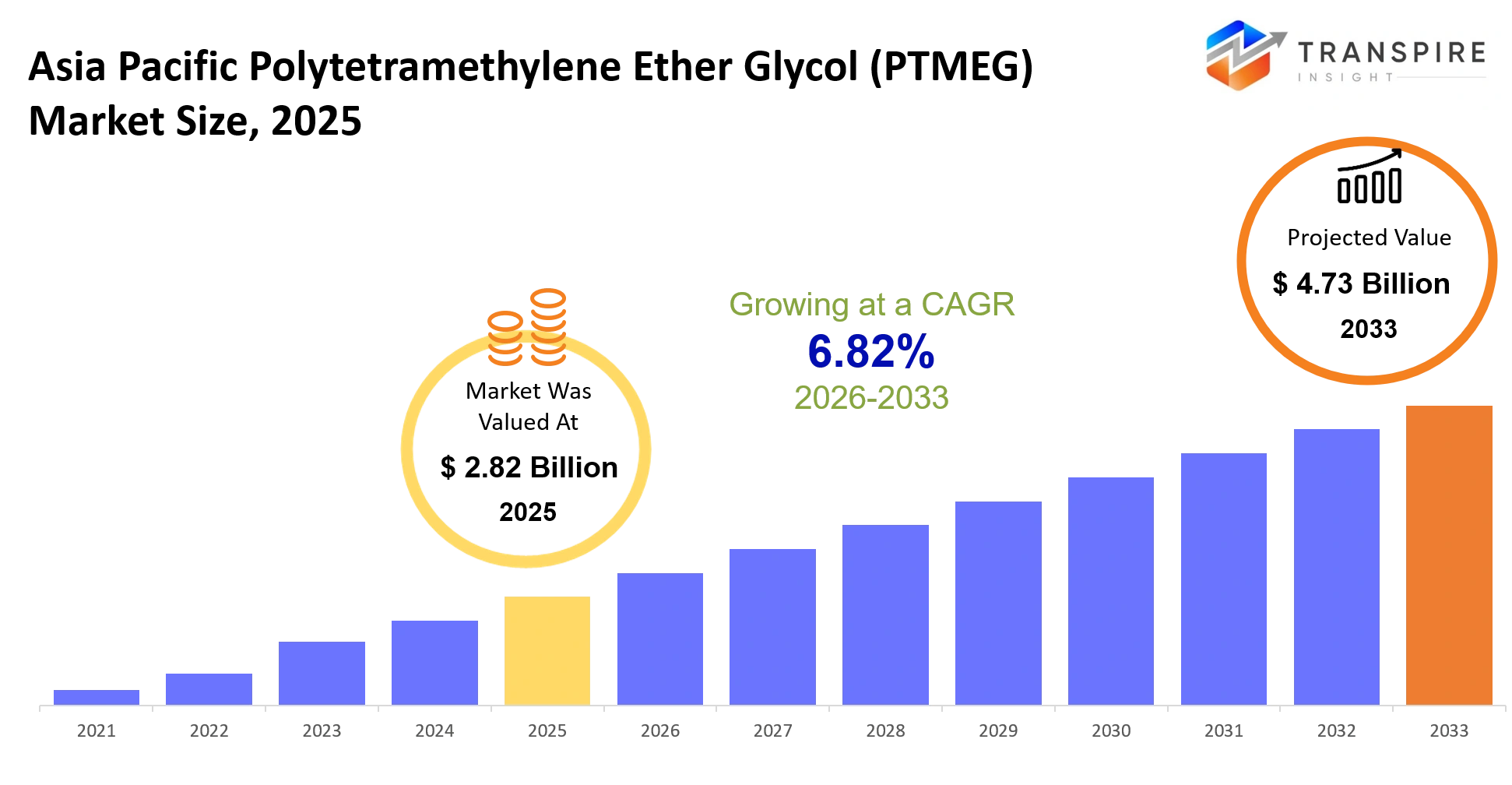
- Asia Pacific Polytetramethylene Ether Glycol (PTMEG) Market Size 2025: USD 2.82 Billion
- Asia Pacific Polytetramethylene Ether Glycol (PTMEG) Market Size 2033: USD 4.73 Billion
- Asia Pacific Polytetramethylene Ether Glycol (PTMEG) Market CAGR: 6.82%
- Asia Pacific Polytetramethylene Ether Glycol (PTMEG) Market Segments: By Grade (Industrial Grade, Fiber Grade, Elastomer Grade, Specialty Grade, Others); By Application (Spandex Fibers, Polyurethanes, Copolyester Ethers, Thermoplastic Elastomers, Others); By End User (Textile Industry, Automotive, Construction, Footwear, Others); By Distribution Channel (Direct Sales, Distributors, Others).
Asia Pacific Polytetramethylene Ether Glycol (PTMEG) Market Summary
The Asia Pacific Polytetramethylene Ether Glycol (PTMEG) Market was valued at USD 2.82 Billion in 2025. It is forecast to reach USD 4.73 Billion by 2033. That is a CAGR of 6.82% over the period.
The Asia Pacific Polytetramethylene Ether Glycol or PTMEG market is really important for making high-performance elastomers. The Asia Pacific Polytetramethylene Ether Glycol or PTMEG market helps make these elastomers which are used in making spandex fibers and thermoplastic polyurethanes and coatings and adhesives and engineering plastics.In real-life use the Asia Pacific Polytetramethylene Ether Glycol or PTMEG makes things stretchy and resilient and durable. You can see this in textiles and car interiors and industrial parts that need to bend and straighten times without breaking.
The Asia Pacific Polytetramethylene Ether Glycol or PTMEG is a material for making high-performance products. The Asia Pacific Polytetramethylene Ether Glycol or PTMEG is used in making clothes and industrial supplies.Over the years the Asia Pacific Polytetramethylene Ether Glycol or PTMEG market has changed a lot. Companies are now making the Asia Pacific Polytetramethylene Ether Glycol or PTMEG in-house.This change happened because the demand for spandex and polyurethane products increased sharply. The fast fashion and sports clothing industries need a lot of elastomers.When there were problems with getting petrochemical feedstocks during logistics issues the Asia Pacific Polytetramethylene Ether Glycol or PTMEG producers decided to make their Asia Pacific Polytetramethylene Ether Glycol or PTMEG.
Key Market Insights
- The Asia Pacific Polytetramethylene Ether Glycol market is changing in a way. Companies that make Asia Pacific Polytetramethylene Ether Glycol are now working together with companies that make spandex and TPU. This is helping them to make these products from start to finish.
- China and the countries around it are making a lot of Asia Pacific Polytetramethylene Ether Glycol. In 2025 they will make 55 to 60 percent of it. This is because they have factories that can make a lot of fiber and polyurethane.
- Southeast Asia is where the Asia Pacific Polytetramethylene Ether Glycol market is growing quickly. This growth is happening from 2025 to 2032. The reason it's growing fast is that textile companies are moving there and it's cheaper to produce chemicals.
- People prefer to use Asia Pacific Polytetramethylene Ether Glycol that has a molecular weight. They want to make strong fibers. The Asia Pacific Polytetramethylene Ether Glycol 1800 is a type.
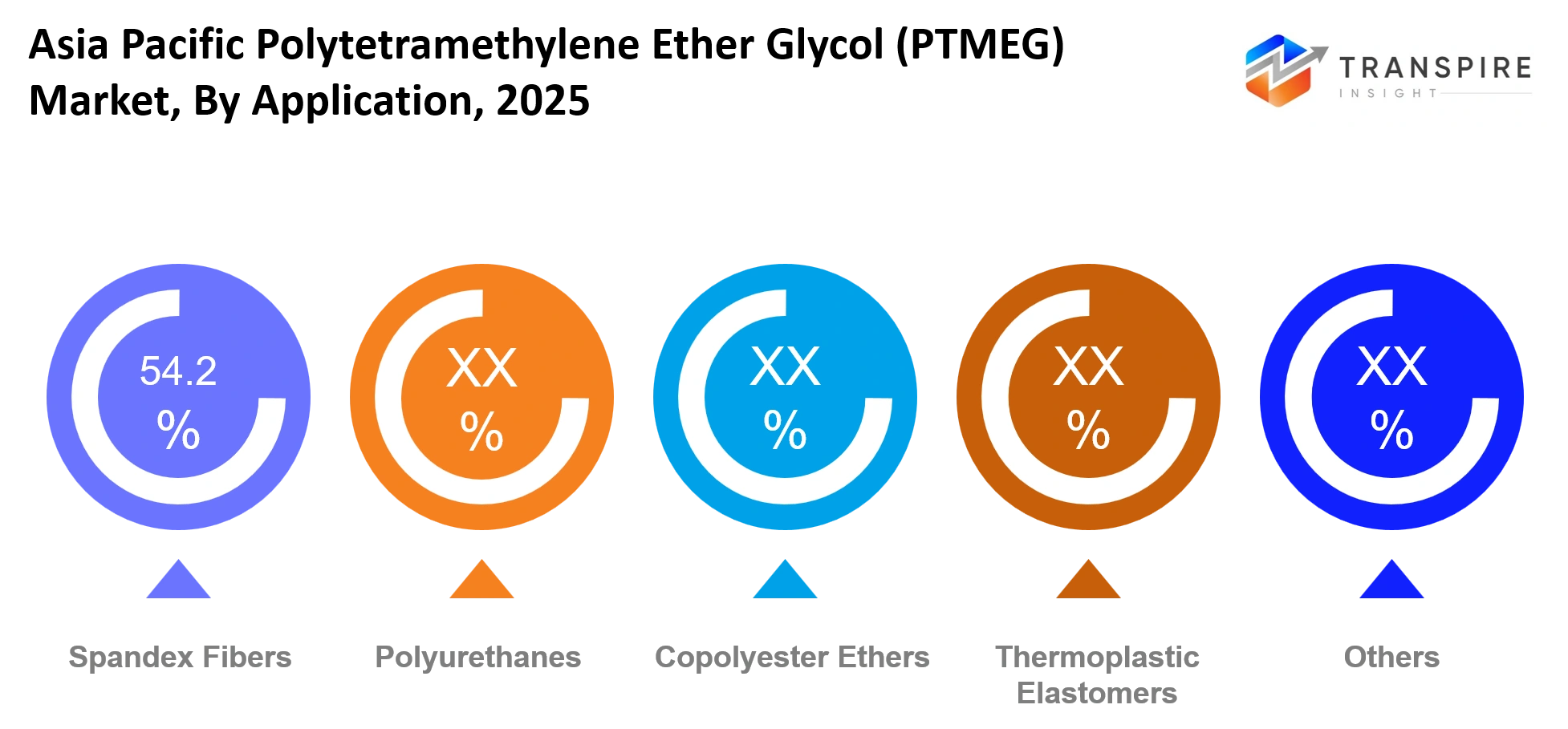
- The main use of Asia Pacific Polytetramethylene Ether Glycol is to make spandex fibers. In 2025 more than 50 percent of Asia Pacific Polytetramethylene Ether Glycol was used to make spandex fibers. Asia Pacific Polytetramethylene Ether Glycol is really important for making these fibers.
- Some companies are starting to use Asia Pacific Polytetramethylene Ether Glycol to make polyurethane. This is happening fast. It is because cars need to be lighter and industries need to be more flexible.
- The companies that make textiles are the users of Asia Pacific Polytetramethylene Ether Glycol. Then there are companies that make shoes and car parts. They also use a lot of Asia Pacific Polytetramethylene Ether Glycol.
- Some big companies, like BASF, Hyosung, Sinopec, LG Chem, Mitsubishi Chemical and Asahi Kasei are making Asia Pacific Polytetramethylene Ether Glycol. They are working with the companies that supply them with the things they need to make Asia Pacific Polytetramethylene Ether Glycol.
- These companies are trying to make the process of making Asia Pacific Polytetramethylene Ether Glycol. They want to use energy and make it cheaper.
- The companies that make Asia Pacific Polytetramethylene Ether Glycol are working with the companies that make fibers. They are doing this so that they can be sure they will have the Asia Pacific Polytetramethylene Ether Glycol they need in the term.
What are the Key Drivers, Restraints, and Opportunities in the Asia Pacific Polytetramethylene Ether Glycol (PTMEG) Market?
Driver
The Asia Pacific Polytetramethylene Ether Glycol market is growing fast. This is because the spandex and polyurethane-based manufacturing industries are getting bigger. People want textiles that can stretch clothes that perform well and last a long time and strong materials for things like the inside of cars and coatings.
When companies like fashion and sportswear brands make clothes that stretch they need Polytetramethylene Ether Glycol. Polytetramethylene Ether Glycol is an important material for them.So the companies that make Polytetramethylene Ether Glycol and other chemicals and fibers are using their factories often. This makes their businesses more stable and secure which is good for the Asia Pacific Polytetramethylene Ether Glycol market.
Restraint
One big problem is that these industries rely much on petrochemicals, especially butadiene, which is affected by changes in crude oil prices. This is an issue that cannot be fixed quickly because making PTMEG requires a lot of big machinery and investment. When oil prices change it affects how much it costs to make PTMEG, which puts pressure on the companies that make it and makes it hard for them to plan for the future. This means that the growth of the industry is not always steady.
Opportunity
There is a chance for growth in the use of special elastomers in electric vehicles and other advanced transportation systems. These vehicles use polyurethane parts and flexible materials inside, which helps with things like seating, insulation and reducing vibration. Southeast Asia is becoming a place for making these vehicles and new factories are being built to make the materials needed for them. As more of these factories are built it will mean demand for PTMEG especially as the industry in the region keeps growing.
What Has the Impact of Artificial Intelligence Been on the Asia Pacific Polytetramethylene Ether Glycol (PTMEG) Market?
Artificial intelligence and digital technologies are making PTMEG production and the supply chains that come after it more efficient. They do this by making the chemical process better and by making it easier to see what is going on. In plants that make polymers, computers that use artificial intelligence watch the temperature and pressure of the reactors and how well the catalysts are working. This helps keep the quality of the PTMEG the same all the time. These computer systems also reduce the need for people to get involved and help keep the weight of the PTMEG consistent which is very important for things like spandex and polyurethane.
Computers are getting better at predicting when equipment might break down like compressors and heat exchangers. They look at how the equipment's vibrating and how the process is going and use that information to predict when something might go wrong. This helps reduce the amount of time the plant is not working and keeps production going all the time. People are also making virtual copies of production lines to see how they can make them work better and use energy. This helps costs and make the plant work more efficiently.
There is still a big problem. It is very expensive to connect intelligence systems to old chemical equipment. A lot of PTMEG production facilities do not have the right digital systems in place which makes it hard to make good decisions in real time. Also it is hard to get data, from complex chemical reactions, which limits how well computers can predict what will happen and make the production process better. This means that artificial intelligence is not being used much as it could be to make large-scale polymer production systems work better. PTMEG production is a part of this process and artificial intelligence can help make it more efficient.
Key Market Trends
- PTMEG producers changed from working to being part of the spandex supply chain after 2023 to ensure stable demand for a long time.
- The demand for high-quality PTMEG grades increased sharply in 2024 as manufacturers focused on making fibers more efficiently.
- Spandex use grew in textile hubs across Asia Pacific increasing PTMEG use by than 8 percent every year since 2022.
- Sinopec and LG Chem decided to produce their raw materials in 2025 to avoid problems with butadiene price changes.
- Car polyurethane applications grew steadily after 2023 changing how PTMEG is used beyond textile uses.
- Southeast Asia attracted PTMEG investments in 2024 as production moved to places with lower chemical production costs.
- BASF and Hyosung made long-term agreements with fiber manufacturers to reduce uncertainty and stabilize prices.
- More companies started using digital process optimization after 2024 improving reactor efficiency and reducing energy use in PTMEG plants.
- China started new projects after 2023 to solve supply problems in elastomer markets.
- Companies upgraded emission control systems due to regulations increasing costs but improving production efficiency in the long run.
Asia Pacific Polytetramethylene Ether Glycol (PTMEG) Market Segmentation
By Grade
The Asia Pacific Polytetramethylene Ether Glycol market is dominated by Fiber Grade PTMEG. This is because Fiber Grade PTMEG is really important for making spandex fibers. Textile producers need this grade of PTMEG to make clothing that's elastic and lasts a long time. Industrial Grade PTMEG is also used to make coatings and adhesives. This is because Industrial Grade PTMEG is very stable and this is important for manufacturing processes.
The Elastomer Grade PTMEG is being used more and more in the industrial sectors. This is because it is used in polyurethane systems. Specialty Grade PTMEG is used for applications that need very specific performance. This is important for production environments where the materials need to be very precise.
By Application
The main use of Asia Pacific Polytetramethylene Ether Glycol is for making Spandex Fibers. This is because textile manufacturers are making more stretchable fabrics. Apparel brands are making elastic clothing and this is driving up the demand for PTMEG.Polyurethane applications are also increasing. This is because there is a demand for automotive interiors and flexible industrial materials. Thermoplastic Elastomers are being used more and more in manufacturing systems that need to be lightweight. They are also being used in performance-driven engineering components.
By End User
The Textile Industry is the user of PTMEG. This is because the textile industry needs PTMEG to make textiles. Manufacturers are making more elastic textiles to meet the demand for fashion and sportswear.The Automotive sector is also using PTMEG. This is because they need flexible interior components. The Construction and Footwear industries are also starting to use PTMEG. This is because they need materials that're very advanced and specialized.
By Distribution Channel
The main way that PTMEG is sold is through Direct Sales. This is because chemical producers and large manufacturers have long-term contracts. This means that the prices are stable and the raw materials are always available.Distributors help manufacturers who need to be able to buy PTMEG in a more flexible way. They also help manufacturers who need to buy PTMEG from a supplier. There are channels that are used but they are not as big.
What are the Key Use Cases Driving the Asia Pacific Polytetramethylene Ether Glycol (PTMEG) Market?
The Asia Pacific PTMEG Market is mainly used to make spandex fiber. This is because spandex fiber gives clothes the ability to stretch and be strong. People who make clothes need spandex fiber to make clothes that people can wear when they play sports or go to parties. Just hang out. They need a lot of spandex fiber to make these clothes.Another important use of the Asia Pacific PTMEG Market is to make polyurethane. This is used in car seats and other things people use every day. People who make shoes also use the Asia Pacific PTMEG Market to make shoes that're comfortable and can bend. More and more people are using the Asia Pacific PTMEG Market to make things that're light and can do lots of things.
The Asia Pacific PTMEG Market is also used to make kinds of plastic that can be used to make important parts for machines. People who build houses and make medical tools are starting to use the Asia Pacific PTMEG Market to make things that're strong and can be used for a long time. The Asia Pacific PTMEG Market is going to be used more because people want things that can last a long time and are easy to use.
|
Report Metrics |
Details |
|
Market size value in 2025 |
USD 2.82 Billion |
|
Market size value in 2026 |
USD 2.98 Billion |
|
Revenue forecast in 2033 |
USD 4.73 Billion |
|
Growth rate |
CAGR of 6.82% from 2026 to 2033 |
|
Base year |
2025 |
|
Historical data |
2021 - 2024 |
|
Forecast period |
2026 - 2033 |
|
Report coverage |
Revenue forecast, competitive landscape, growth factors, and trends |
|
Regional scope |
Asia Pacific |
|
Key company profiled |
BASF, Invista, Hyosung, DCC, Formosa Chemicals, Mitsubishi Chemical, Korea PTG, Shanxi Sanwei, Sinopec, China Petroleum, Sanlong New Materials, Xinxiang Bailu, LG Chem, Toray, Asahi Kasei. |
|
Customization scope |
Free report customization (country, regional & segment scope). Avail customized purchase options to meet your exact research needs. |
|
Report Segmentation |
By Grade (Industrial Grade, Fiber Grade, Elastomer Grade, Specialty Grade, Others); By Application (Spandex Fibers, Polyurethanes, Copolyester Ethers, Thermoplastic Elastomers, Others); By End User (Textile Industry, Automotive, Construction, Footwear, Others); By Distribution Channel (Direct Sales, Distributors, Others). |
Which Regions are Driving the Asia Pacific Polytetramethylene Ether Glycol (PTMEG) Market Growth?
East Asia leads the Asia Pacific PTMEG Market due to its strong integration of chemical manufacturing and large-scale textile production. The region benefits from advanced industrial infrastructure, high spandex fiber output, and strong downstream demand from apparel and sportswear industries. Government support for petrochemical capacity expansion and established supply chains further strengthen production efficiency. This ecosystem enables continuous PTMEG consumption at scale, making East Asia the dominant contributor to regional output.
Southeast Asia represents the second major region, supported by steady growth in textile and footwear manufacturing. Unlike East Asia, which relies on high-capacity integrated production, this region benefits from cost-competitive labor and increasing foreign direct investment. Stable export demand from global fashion brands ensures consistent utilization of textile facilities. Gradual industrial upgrades and improving chemical processing capabilities continue to support reliable PTMEG consumption growth across manufacturing clusters.
South Asia is the fastest-growing region due to rapid expansion in textile exports and increasing modernization of manufacturing units. Recent investments in synthetic fiber production and industrial infrastructure have improved production capacity across key hubs. Growing demand for affordable apparel and elastic textiles has accelerated adoption of PTMEG-based materials. This momentum will create strong opportunities for producers and investors as supply chains expand and regional manufacturing integration strengthens between 2026 and 2033.
Who are the Key Players in the Asia Pacific Polytetramethylene Ether Glycol (PTMEG) Market and How Do They Compete?
The Asia Pacific PTMEG Market shows a moderately consolidated structure, with a small group of large petrochemical producers controlling a significant share of production capacity. Competition is shaped mainly by cost efficiency, feedstock integration, and long-term supply contracts with spandex and polyurethane manufacturers. Incumbents focus on securing backward integration into butadiene and related feedstocks, while smaller entrants face barriers due to high capital requirements and complex production processes. Technology upgrades in polymerization efficiency and energy optimization also influence competitive positioning across the region.
BASF focuses on integrated value chain control, linking PTMEG production with downstream polyurethane applications to stabilize demand and improve pricing consistency. Hyosung strengthens its position through deep specialization in spandex fiber supply, ensuring strong demand visibility and long-term contracts with textile manufacturers. Sinopec leverages large-scale petrochemical infrastructure and feedstock access to maintain cost leadership, giving it an advantage in high-volume production markets. These companies continue expanding capacity through plant upgrades and regional supply chain integration.
LG Chem and Mitsubishi Chemical emphasize technology-driven production efficiency, investing in advanced polymerization systems that improve yield and reduce energy consumption. Asahi Kasei focuses on high-purity PTMEG grades for premium elastomer applications, strengthening its niche positioning in high-performance materials. Expansion strategies across these companies include joint ventures with fiber producers, capacity additions in Asia, and increased localization of supply chains to secure long-term demand stability.
Company List
- BASF
- Invista
- Hyosung
- DCC
- Formosa Chemicals
- Mitsubishi Chemical
- Korea PTG
- Shanxi Sanwei
- Sinopec
- China Petroleum
- Sanlong New Materials
- Xinxiang Bailu
- LG Chem
- Toray
- Asahi Kasei
Recent Development News
“In May 2025, BASF expanded its production footprint for polyurethanes and specialty chemicals in Asia to strengthen downstream supply integration linked to PTMEG-based elastomers. The expansion supports improved feedstock security and enhances supply stability for textile and automotive applications.”
Source: https://www.mordorintelligence.com
“In 2024, Hyosung Chemical increased its integrated spandex–PTMEG production capacity through facility upgrades in Asia, aiming to strengthen backward integration and reduce dependency on external intermediates. This improves cost efficiency and stabilizes long-term supply contracts with fiber manufacturers.”
Source: https://www.koreaittimes.com
“In 2024, Mitsubishi Chemical advanced its high-performance PTMEG product line development for thermoplastic polyurethane applications, focusing on improved molecular weight control and energy-efficient production systems. The initiative supports higher-margin specialty material demand across industrial applications.”
Source: https://www.mordorintelligence.com
What Strategic Insights Define the Future of the Asia Pacific Polytetramethylene Ether Glycol (PTMEG) Market?
The Asia Pacific Polytetramethylene Ether Glycol (PTMEG) Market is structurally moving toward deeper integration with downstream spandex, polyurethane, and elastomer value chains, driven by sustained demand for stretchable textiles and lightweight industrial materials. Production networks will increasingly concentrate around large-scale petrochemical hubs that can secure feedstock efficiency and reduce cost volatility. This shift will strengthen vertically integrated manufacturers while increasing dependency between fiber producers and PTMEG suppliers across the region.A key hidden risk lies in feedstock concentration and exposure to butadiene-linked supply disruptions. Any prolonged volatility in upstream petrochemical pricing will directly compress margins and delay expansion decisions, even when downstream demand remains strong. This creates a structural imbalance that is not fully visible in short-term demand growth indicators.
A major emerging opportunity is the expansion of PTMEG use in electric vehicle interiors and high-durability polyurethane components, particularly as automotive lightweighting accelerates. Southeast Asia is also positioned as a secondary production base for elastomer materials due to cost advantages and industrial relocation trends.
Market participants should prioritize backward integration into feedstock supply and expand long-term contracts with spandex and polyurethane manufacturers to secure stable demand visibility and protect against cyclical pricing shocks over the next decade.
Asia Pacific Polytetramethylene Ether Glycol (PTMEG) Market Report Segmentation
By Grade
- Industrial Grade
- Fiber Grade
- Elastomer Grade
- Specialty Grade
- Others
By Application
- Spandex Fibers
- Polyurethanes
- Copolyester Ethers
- Thermoplastic Elastomers
- Others
By End User
- Textile Industry
- Automotive
- Construction
- Footwear
- Others
By Distribution Channel
- Direct Sales
- Distributors
- Others
Frequently Asked Questions
Find quick answers to common questions.
The expected Asia Pacific Polytetramethylene Ether Glycol (PTMEG) Market size for the market will be USD 4.73 Billion in 2033.
Key segments for the Asia Pacific Polytetramethylene Ether Glycol (PTMEG) Market are By Grade (Industrial Grade, Fiber Grade, Elastomer Grade, Specialty Grade, Others); By Application (Spandex Fibers, Polyurethanes, Copolyester Ethers, Thermoplastic Elastomers, Others); By End User (Textile Industry, Automotive, Construction, Footwear, Others); By Distribution Channel (Direct Sales, Distributors, Others).
Major Asia Pacific Polytetramethylene Ether Glycol (PTMEG) Market players are BASF, Invista, Hyosung, DCC, Formosa Chemicals, Mitsubishi Chemical, Korea PTG, Shanxi Sanwei, Sinopec, China Petroleum, Sanlong New Materials, Xinxiang Bailu, LG Chem, Toray, Asahi Kasei.
The Asia Pacific Polytetramethylene Ether Glycol (PTMEG) Market size is USD 2.82 Billion in 2025.
The Asia Pacific Polytetramethylene Ether Glycol (PTMEG) Market CAGR is 6.82% from 2026 to 2033.
- BASF
- Invista
- Hyosung
- DCC
- Formosa Chemicals
- Mitsubishi Chemical
- Korea PTG
- Shanxi Sanwei
- Sinopec
- China Petroleum
- Sanlong New Materials
- Xinxiang Bailu
- LG Chem
- Toray
- Asahi Kasei
About the Authors

Pankaj Ghogare Patil
I am Pankaj Ghogare Patil, a Senior Research Analyst at Transpire Insight, specializing in the Pharmaceutical, Chemicals & Materials, Healthcare IT, and Biotechnology industry. My expertise lies in conducting comprehensive market research, analyzing industry trends, evaluating competitive landscapes, and translating complex data into actionable insights. At Transpire Insight, I closely follow emerging technologies, regulatory developments, and market innovations to create accurate, well-researched, and informative content that helps businesses and professionals make informed decisions. I am committed to producing credible, evidence-based articles that reflect industry best practices while making technical topics accessible and valuable for a broad audience.

Chakradhar Khansole
Chakradhar serves as the Research Director at Transpire Insight, bringing over 8 years of experience in technology, innovation, and strategic market intelligence. He specializes in transforming complex market data into actionable business insights that enable organizations to make informed, growth-oriented decisions. Recognized for his strategic vision and analytical expertise, Chakradhar leads high-impact research initiatives, delivering comprehensive market assessments, competitive intelligence, and forward-looking industry analysis.
Recently Published Reports
-
May 2026
Healthcare Polymer Packaging Market
Healthcare Polymer Packaging Market Size, Share & Analysis Report By Packaging Type (Syringes, IV Bottles and Pouches, Clamshells, Blisters, Bottles & Jars, Containers, Tubes, IV Parental Packaging, Others), By Type (Regulated, Non-regulated), By Polymer Type (LDPE (Low-Density Polyethylene), HDPE (High-Density Polyethylene), Homo-polymer (Homo), Random Copolymer (Random), Block Copolymer (Block), PET, Polystyrene, Polyvinyl Chloride, Polyamide/EVOH, Others), and Geography (North America, Europe, Asia-Pacific, Middle East and Africa, South and Central America), 2021 - 2031
-
Apr 2026
Hydrophilic Tape (Waterstop) Market
Hydrophilic Tape (Waterstop) Market Size, Share & Analysis Report By Type (Bentonite-Based Hydrophilic Tape, Rubber-Based Hydrophilic Tape), By Application (Residential Buildings, Commercial Buildings, Infrastructure Projects), and Geography (North America, Europe, Asia-Pacific, Middle East and Africa, South and Central America), 2021 - 2031
-
Apr 2026
Metalens Market
Metalens Market Size, Share & Analysis Report By Type (Visible Light Metalens, and Infrared Metalens), By Application (Consumer Electronics, Automotive Electronics, Industrial, Medical, and Others), and Geography (North America, Europe, Asia-Pacific, Middle East and Africa, South and Central America), 2021 - 2031
-
Apr 2026
PBT Resin Market
PBT Resin Market Size, Share & Analysis Report By Type (Reinforced PBT Resin, Unreinforced PBT Resin), By Processing Method (Injection Molding, Extrusion, Blow Molding, Others), By End-User (Automotive, Electrical & Electronics, Consumer Appliances, Industrial Machinery, Medical Devices, Packaging, Others), and Geography (North America, Europe, Asia-Pacific, Middle East and Africa, South and Central America), 2021 - 2031