
Asia Pacific Plant-based Meat Market Size & Forecast:
- Asia Pacific Plant-based Meat Market Size 2025: USD 2.32 Billion
- Asia Pacific Plant-based Meat Market Size 2033: USD 3.26 Billion
- Asia Pacific Plant-based Meat Market CAGR: 18.55%
- Asia Pacific Plant-based Meat Market Segments: By Product Type (Burgers, Sausages, Nuggets, Mince, Meatballs, Seafood Alternatives, Others); By Source (Soy Protein, Pea Protein, Wheat Protein, Mycoprotein, Rice Protein, Others); By Distribution Channel (Retail Stores, Online Retail, Foodservice, Quick Service Restaurants, Others); By End User (Vegans, Vegetarians, Flexitarians, Others)
Asia Pacific Plant-based Meat Market Summary
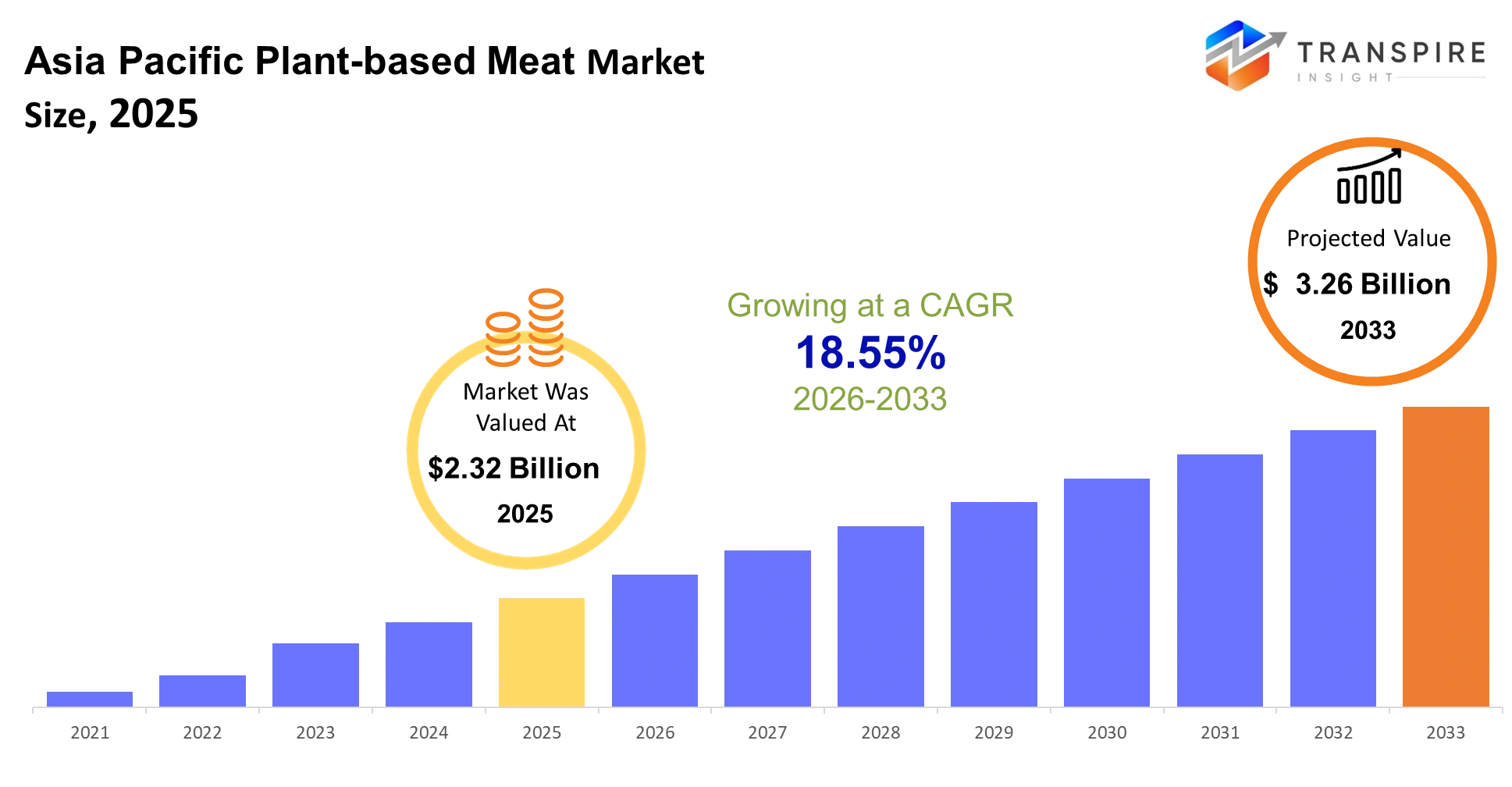
The Asia Pacific Plant-based Meat Market was valued at USD 2.32 billion in 2025. It is forecast to reach USD 3.26 billion by 2033. That is a CAGR of 18.55% over the period.
The Asia Pacific Plant-based Meat Market is a place where food manufacturers, restaurants and retailers can find alternatives to animal meat. This market helps with things like getting food from places using resources wisely and keeping up with what people want to eat. Plant-based meat products are really helpful for foodservice operators and consumer brands because they can offer food that tastes and feels like meat. Does not need as much livestock.
Over the few years the Asia Pacific Plant-based Meat Market has changed a lot. It used to be about simple soy-based products but now it is about advanced protein engineering, fermentation technologies and extrusion processes. These new ways of making plant-based meat products have improved the texture, flavor and nutritional profiles.
Something big happened when the global meat supply chains and commodity markets were disrupted during and after the pandemic. This showed that the traditional way of getting protein was not very strong. So food companies started looking for ways to get protein that were more reliable. This led to investment in making alternative protein products. Now there are plant-based products available in stores and restaurants which means companies can make more money. The Asia Pacific Plant-based Meat Market is growing because the products are getting better. They are available in places and more people are putting plant-based options on their menus. This allows companies to sell to people who're not just vegetarians but to anyone who wants to try plant-based meat products.
Key Market Insights
- The Asia Pacific Plant-based Meat Market is becoming really popular. It is not just a small part of the food industry anymore. It is becoming a part of the protein food segment. This is happening because companies are coming up with products and these products are available in more stores.
- The Asia Pacific Plant-based Meat Market will keep growing until 2033. This is because technology is getting better and people are using these products in restaurants and at home.
- China is the market for the Asia Pacific Plant-based Meat Market. In 2025 China had 38% of the market. This is because China has factories and it is investing in alternative protein sources.
- India will be the growing market for the Asia Pacific Plant-based Meat Market until 2033. This is because more restaurants are using these products and India's making more of these products at home.
- Burger patties are really popular. They made up about 30% of the money the industry made in 2025. This is because many restaurants and fast food places are using them.
- Sausages are the most popular product. They are becoming more popular because they are available in supermarkets and convenience stores.
- Chicken-style plant-based products will grow fast until 2033. This is because companies are making these products taste and feel like real chicken.
- Many restaurants are using the Asia Pacific Plant-based Meat Market products. In 2025 40% of the products were used in restaurants. This is because restaurants are adding alternative protein options to their menus.
- People are also buying these products to eat at home. Since 2022 this has been the growing part of the industry. This is because people can buy these products online.
- Companies like Beyond Meat, Impossible Foods, Nestlé, Unilever and V2Food are coming up with products really fast. They are working with partners and making products that people in different regions like.
- New technology is helping to make these products taste better. This technology started to become popular after 2023. It is making the products taste more like meat.
- Companies are selling their products in stores, restaurants. They are making new products that are a mix of plant-based and real meat. This is helping them to compete with companies and it is creating new demand for the Asia Pacific Plant-based Meat Market products.
What are the Key Drivers, Restraints, and Opportunities in the Asia Pacific Plant-based Meat Market?
Driver
The main thing that is helping the Asia Pacific Plant-based Meat Market grow is that food processing technologies are getting better and better. This is especially true for things like high-moisture extrusion and precision fermentation. These new ways of doing things have made plant-based products taste better, feel better in your mouth and have protein. This means they are not so different from meat anymore. Because of this big restaurants and stores are starting to sell plant-based products, which is good for the companies that make them.
Another big help is that big food companies are investing in plant-based products. They want to have kinds of protein in their products and not have to worry so much about the problems that can happen with livestock. More and more restaurants think that plant-based products can be a money maker, not just a small part of their menu. This has led to space on store shelves for these products, more deals to get them into stores and more new products at different prices. All of this is helping more people try plant-based products.
Restraint
The biggest problem is still that it costs a lot to make plant-based products. This is because it costs a lot to get the ingredients to make the products and to formulate them. You need equipment and technology to make these products taste good and that costs a lot of money. This means that plant-based products are often more expensive than meat, which is a problem for people who are careful with their money.
This is a problem because the companies that make plant-based products are not as big as the companies that make regular meat. This means they cannot make many products at a lower cost. The companies that make ingredients like pea protein and soy isolates are also not very many which can cause problems with getting these ingredients and can make their prices go up and down. All of this means that it is harder for plant-based products to become popular with people and that slows down how fast the market can grow.
Opportunity
There is a chance for growth in making new kinds of plant-based products that combine plant proteins with ingredients made through fermentation. These products can taste better, feel better in your mouth and be better for you all while costing less to make. Some companies are investing in fermentation technologies that can make proteins that're similar to the ones found in animals.
South and Southeast Asia are good places for growth because they are making more food and investing more in plant-based products. If companies make products that are tailored to the cuisine more people will want to buy them. Companies that can get ingredients from suppliers and invest in technologies that can make a lot of products will be in a good position to grow in the market over the next few years.
What Has the Impact of Artificial Intelligence Been on the Asia Pacific Plant-based Meat Market?
Artificial intelligence and advanced digital technologies are changing the Asia Pacific Plant-based Meat Market. They are making product development, manufacturing and supply chain management better.Food manufacturers use AI to find the ingredients for their products. They analyze ingredient combinations to improve texture, flavor and nutrition. AI also helps with quality control. It checks moisture levels, protein consistency, color and product structure in time. This reduces waste, improves consistency and lowers costs.
Predictive analytics helps with production planning and equipment management. Manufacturers use machine learning to forecast demand, optimize inventory and predict maintenance needs. This approach reduces downtime, improves production and enhances resource use. Digital twin technologies simulate processing conditions before large-scale production. This shortens product development cycles. Reduces trial costs.
The benefits of AI in plant-based meat production include:Faster product innovationReduced ingredient lossesBetter supply chain visibility
Some manufacturers see improvements in formulation development time and production efficiency. However, integrating AI systems with existing infrastructure is expensive. High-quality data for plant proteins is also limited. This can make AI models less accurate for new formulations or product categories.The Asia Pacific Plant-based Meat Market continues to leverage AI and digital technologies.Artificial intelligence improves product development in the Asia Pacific Plant-based Meat Market.The Asia Pacific Plant-based Meat Market benefits from digital technologies.
Key Market Trends
- Since 2022 companies that make food have been using a way to make things called high-moisture extrusion technology. This helps them make food that feels like meat when you eat it so people buy it again and again.
- Beyond Meat and Impossible Foods started to make food that people like in Asia between 2023 and 2025. They did this by making recipes that're popular in different Asian countries.
- After 2024 people started to use things made from fermentation to make their food taste better. This also helped them use additives, which are like extra ingredients that some people do not like.
- Restaurants and other places that serve food started to offer plant-based food options, which is food that does not come from animals. They have done this by more than 30% since 2021 so now you can find plant-based food on menus all the time, not just sometimes.
- Some companies had problems with getting the things they needed to make food because of trouble with their supply chains. So they started to get things from closer to home which is called sourcing.
- From 2022 people started to use pea protein more and more. This is because companies were looking for something other than soy to use in their food.
- In 2025 people started to invest money in things called protein products. These are products that combine plant ingredients with things made from fermentation. This helps make the food taste and feel better.
- Now people can buy food online, which is called e-commerce. This helps companies try out products and hear what people think of them.
- Companies, like Nestlé, Unilever, V2Food, OmniFoods and Next Gen Foods are working more. They do this to get their products to people and to sell them in more places.
- Now companies can make products faster because they use computers to help them. This is called AI-assisted formulation platforms. It helps them make things and get them to people faster.
Asia Pacific Plant-based Meat Market Segmentation
By Product Type
Burgers are really popular because they are easy to make and people like them. They are also easy to find in restaurants and stores. This makes it easy for people to try different kinds of burgers. People who make burgers are always trying to make them taste better and feel better in your mouth. You can find burgers in a lot of restaurants and stores which helps them sell well.
Sausages and Nuggets are also popular because they are easy to make and people like to eat them when they're busy. Mince and Meatballs are good for cooking at home and for meals. Seafood alternatives are getting more popular because they are getting better and there are many kinds of them. Then there are Others, which're special kinds of food that some people like.
By Source
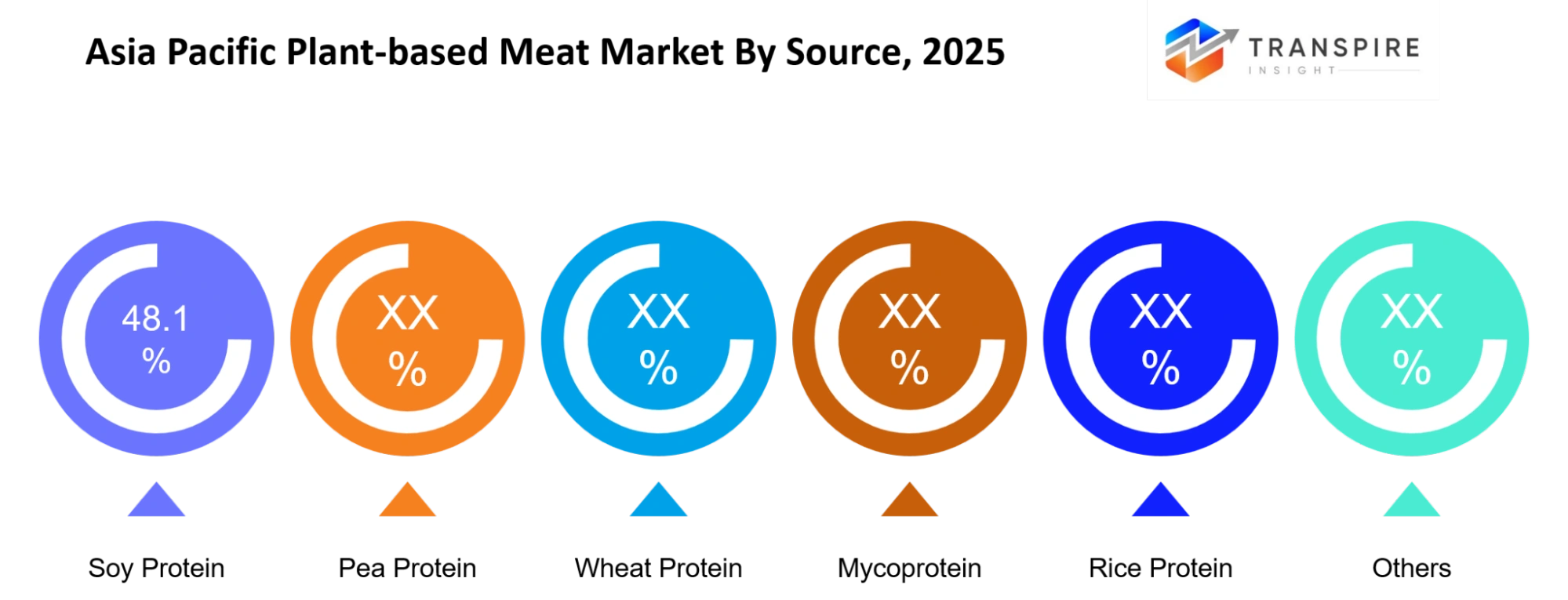
Soy Protein is used a lot because it is easy to get. It works well in a lot of foods. It is good for making things that're like meat. People who make food are always trying to make Soy Protein taste better and be better for you. It is also not too expensive, which helps.Pea Protein is getting more popular because some people are allergic to different kinds of protein and companies want to try new things. Wheat Protein helps make food feel better in your mouth. Mycoprotein is interesting because it has qualities that make it different. Rice Protein and other kinds of protein help companies make interesting foods.
By Distribution Channel
Retail Stores are important because people like to go to stores and buy things away. Stores are getting better at selling protein products and they have them at different prices. This helps people find what they want and buy it. When you can always find something in a store you are more likely to buy itOnline retail is getting bigger because it is easy to shop and find what you want. Foodservice establishments help by putting protein products on their menus and letting people try them. Quick Service Restaurants help by making protein products that people like to eat. Then there are Others, which're special ways of selling food to certain kinds of people.
By End User
Vegans are important because they like to eat plant-based foods. Companies make kinds of food and flavors for Vegans. When you can always find what you want you are more likely to buy it. Some companies even make products just for Vegans.Vegetarians like to eat protein products regularly. Flexitarians are a growing group because they like to eat a bit of everything. They help make alternative protein products popular by buying them. Then there are Others, which're people who like to try new things or eat special kinds of food.
What are the Key Use Cases Driving the Asia Pacific Plant-based Meat Market?
The main reason people are using plant-based food is because it can be easily added to menus at food places and stores that sell ready to eat meals. Plant-based burgers are really popular because restaurants do not have to make changes to how they cook food. This makes it easy for restaurants to offer options to people who want to eat alternative protein.
Other ways people are using plant-based food are in meals, frozen snacks and easy meals. More and more people are using plant-based nuggets and sausages because they want to offer food with different ingredients. Now that people can buy these products online they are available in places other than just cities.
Some new ideas for plant-based food are alternatives to seafood and hybrid products made with fermentation. These are not very big yet. They could be really popular if the products get better. Some companies that make food for schools and offices are also thinking about using these products as a way to offer protein options. Plant-based food is becoming more popular. Companies are starting to think about using plant-based food as part of their long-term plans, for offering different types of protein.
|
Report Metrics |
Details |
|
Market size value in 2025 |
USD 2.32 Billion |
|
Market size value in 2026 |
USD 2.75 Billion |
|
Revenue forecast in 2033 |
USD 3.26 Billion |
|
Growth rate |
CAGR of 18.5% from 2026 to 2033 |
|
Base year |
2025 |
|
Historical data |
2021 - 2024 |
|
Forecast period |
2026 - 2033 |
|
Report coverage |
Revenue forecast, competitive landscape, growth factors, and trends |
|
Regional scope |
Asia Pacific (India, China, Japan, Australia, South Korea, Rest of Asia Pacific) |
|
Key company profiled |
Beyond Meat, Impossible Foods, Nestle, Unilever, Tyson Foods, Maple Leaf Foods, V2Food, Starfield, OmniFoods, Green Rebel, Shandi Global, Karana, Next Gen Foods, Zhenmeat, Eat Just |
|
Customization scope |
Free report customization (country, regional & segment scope). Avail customized purchase options to meet your exact research needs. |
|
Report Segmentation |
By Product Type (Burgers, Sausages, Nuggets, Mince, Meatballs, Seafood Alternatives, Others); By Source (Soy Protein, Pea Protein, Wheat Protein, Mycoprotein, Rice Protein, Others); By Distribution Channel (Retail Stores, Online Retail, Foodservice, Quick Service Restaurants, Others); By End User (Vegans, Vegetarians, Flexitarians, Others) |
Which Regions are Driving the Asia Pacific Plant-based Meat Market Growth?
East Asia holds the dominant position in the regional market. Strong food manufacturing capabilities, advanced research infrastructure, and substantial investment in alternative protein innovation support market leadership. Major retailers and restaurant chains actively collaborate with food technology companies to commercialize new products. A mature ecosystem of ingredient suppliers, processors, distributors, and retail networks sustains continued expansion and product availability.
Oceania represents the second-largest contributor and differs from East Asia through its emphasis on agricultural innovation and export-oriented production. Stable economic conditions and consistent investment in food technology create a reliable environment for long-term growth. Alternative protein companies benefit from established agricultural supply chains and supportive commercialization programs. This combination supports steady revenue generation and strengthens the region’s role in international alternative protein trade.
South Asia is emerging as the fastest-growing region due to changing consumer purchasing patterns and expanding domestic manufacturing capacity. Recent investments in food processing facilities and alternative protein startups have improved product availability and affordability. Growing participation from quick service restaurants and digital retail platforms has accelerated market penetration. This momentum creates attractive opportunities for investors and new entrants seeking scalable growth between 2026 and 2033.
Who are the Key Players in the Asia Pacific Plant-based Meat Market and How Do They Compete?
Competition remains moderately fragmented, with global food companies, regional specialists, and emerging startups competing for shelf space and foodservice contracts. Technology, product quality, ingredient sourcing, and localization strategies form the primary basis of competition. Established brands continue to defend market share through research investment and distribution strength, while newer entrants challenge traditional players with products tailored to local cuisines and consumer preferences. The competitive environment increasingly rewards companies that can balance taste, affordability, and scalable production.
Beyond Meat focuses on technology-driven product development and invests heavily in improving texture and flavor performance. Product formulations are designed to closely replicate conventional meat characteristics, helping secure partnerships with restaurant chains and retailers. Impossible Foods differentiates through proprietary ingredient technology that enhances sensory experience and supports broader consumer acceptance. Both companies continue expanding through foodservice collaborations and regional distribution agreements that increase market reach.
Nestlé leverages extensive retail networks and manufacturing capabilities to scale alternative protein products efficiently across multiple markets. V2Food emphasizes localized product development and works closely with foodservice operators to create products suited to regional tastes. OmniFoods specializes in Asian-style applications, including dumplings and prepared meals, creating differentiation through cultural relevance and menu adaptability. These strategies strengthen competitive positioning by aligning product offerings with local consumption patterns while expanding commercial opportunities across retail and foodservice channels.
- Beyond Meat
- Impossible Foods
- Nestle
- Unilever
- Tyson Foods
- Maple Leaf Foods
- V2Food
- Starfield
- OmniFoods
- Green Rebel
- Shandi Global
- Karana
- Next Gen Foods
- Zhenmeat
- Eat Just
Recent Development News
- In February 2026, Eat Just secured additional growth financing from existing and mission-aligned investors. The investment supports expansion of alternative protein production capacity and commercialization activities across international markets.https://ipos.fyi.
- In December 2025, Nestlé increased its ownership stake in Orgain as a follow-on investment from an earlier acquisition. The move strengthened Nestlé’s position in plant-based nutrition and expanded its portfolio of alternative protein offerings.https://www.nestle-mena.com
- In November 2025, Pluri expanded global partnerships through its cultivated meat subsidiary Ever After Foods. The collaboration advanced scale-up and pre-commercial production programs with food companies in Asia, supporting future alternative protein commercialization.https://www.newtechfoods.com
What Strategic Insights Define the Future of the Asia Pacific Plant-based Meat Market?
The Asia Pacific plant-based meat market is going to start growing in a careful way focusing on quality instead of just trying to sell a lot. Over the five to seven years the market will probably change because of new ingredients, better products and more plant-based foods being sold in restaurants and stores. As people become more picky they will want products that're good for them that have simple ingredients and taste like regular meat. This means companies will have to make products that're really good rather than just making a lot of new products.
There is a problem that's not very obvious which is that the market relies on just a few types of protein like soy and pea protein. If there are problems with getting these ingredients or if they become too expensive or if people start to worry about how sustainable they're it could hurt the companies that make plant-based meat. At the time there was a new opportunity to make and sell new types of protein like special fermented proteins and proteins that come from plants that are grown in the same region. Companies should try to get their ingredients from places and work together with other companies to make new products that are unique and high-quality so they can stay competitive in the long term. The Asia Pacific plant-based meat market will be shaped by these changes and the plant-based meat market will have to adapt to what people want which's good quality plant-based meat products.
Asia Pacific Plant-based Meat Market Report Segmentation
-
By Product Type
- Burgers
- Sausages
- Nuggets
- Mince
- Meatballs
- Seafood Alternatives
- Others
-
By Source
- Soy Protein
- Pea Protein
- Wheat Protein
- Mycoprotein
- Rice Protein
- Others
-
By Distribution Channel
- Retail Stores
- Online Retail
- Foodservice
- Quick Service Restaurants
- Others
-
By End User
- Vegans
- Vegetarians
- Flexitarians
- Others
Frequently Asked Questions
Find quick answers to common questions.
The expected Asia Pacific Plant-based Meat Market size for the market will be USD 3.26 Billion in 2033.
Key segments for the Asia Pacific Plant-based Meat Market are By Product Type (Burgers, Sausages, Nuggets, Mince, Meatballs, Seafood Alternatives, Others); By Source (Soy Protein, Pea Protein, Wheat Protein, Mycoprotein, Rice Protein, Others); By Distribution Channel (Retail Stores, Online Retail, Foodservice, Quick Service Restaurants, Others); By End User (Vegans, Vegetarians, Flexitarians, Others).
Major Asia Pacific Plant-based Meat Market players are Beyond Meat, Impossible Foods, Nestle, Unilever, Tyson Foods, Maple Leaf Foods, V2Food, Starfield, OmniFoods, Green Rebel, Shandi Global, Karana, Next Gen Foods, Zhenmeat, Eat Just.
The Asia Pacific Plant-based Meat Market size is USD 2.32 Billion in 2025.
The Asia Pacific Plant-based Meat Market CAGR is 18.55% from 2026 to 2033.
- Beyond Meat
- Impossible Foods
- Nestle
- Unilever
- Tyson Foods
- Maple Leaf Foods
- V2Food
- Starfield
- OmniFoods
- Green Rebel
- Shandi Global
- Karana
- Next Gen Foods
- Zhenmeat
- Eat Just
About the Authors

Chetan Dhatrak
I’m Chetan Dhatrak, a Senior Research Analyst at Transpire Insight, specializing in the Consumer Goods, Foods and Beverages industry. I focus on analyzing market trends, consumer behavior, competitive landscapes, and industry developments to deliver accurate, data-driven insights. My research at Transpire Insight is built on credible sources and in-depth analysis, helping businesses and readers better understand market dynamics, emerging opportunities, and evolving consumer preferences. I’m committed to creating reliable, well-researched content that supports informed decision-making and reflects the latest developments in the consumer goods and food & beverage sectors.

Chakradhar Khansole
Chakradhar serves as the Research Director at Transpire Insight, bringing over 8 years of experience in technology, innovation, and strategic market intelligence. He specializes in transforming complex market data into actionable business insights that enable organizations to make informed, growth-oriented decisions. Recognized for his strategic vision and analytical expertise, Chakradhar leads high-impact research initiatives, delivering comprehensive market assessments, competitive intelligence, and forward-looking industry analysis.
Recently Published Reports
-
Apr 2026
Baby Infant Formula Market
Baby Infant Formula Market Size, Share & Analysis Report By ype (Infant Milk, Follow On Milk, Specialty Baby Milk, Growing-Up Milk), By Ingredient (Carbohydrate, Fat, Protein, Minerals, Vitamins, and Others), By Product Form (Powder, Liquid, and Ready-to-feed), By Distribution Channels (Supermarket/Hypermarket, Specialty Store, Pharmacies, Online Retail, and Others), and Geography (North America, Europe, Asia-Pacific, Middle East and Africa, South and Central America), 2021 - 2031
-
Apr 2026
Edible Insects for Animal Feed Market
Edible Insects for Animal Feed Market Size, Share & Analysis Report By Type (Insect Powder, Insect Meal, Insect Bar, Insect Paste, Insect Oil, and Others), By Insect Type (Beetles, Cricket, Caterpillar, Hymenoptera, Orthoptera, Tree Bugs, and Others), By Application (Livestock, Pet Food, and Aquaculture), By Livestock Type (Poultry, Swine, and Others), and Geography (North America, Europe, Asia-Pacific, Middle East and Africa, South and Central America), 2021 - 2031
-
Apr 2026
Food Industry Disinfection and Bacterial Control Market
Food Industry Disinfection and Bacterial Control Market Size, Share & Analysis Report By Type (Chemical Disinfectants, Physical Disinfectants, and Biocides and Antimicrobials), By Application (Food Processing Equipment Surface Disinfection, Food Preparation Areas Surface Disinfection, Storage Areas Surface Disinfection, Anti-microbial Coatings Food Preservation, and Preservative Solutions Food Preservation), By End User (Meat and Poultry Processing, Dairy Processing, Seafood Processing, Bakery and Confectionery, Restaurants and Commercial Kitchens, and Food Service Providers), By Sales Channel (Online, Offline), and Geography (North America, Europe, Asia-Pacific, Middle East and Africa, South and Central America), 2021 - 2031
-
May 2026
Freeze Dried Food Market
Freeze Dried Food Market Size, Share & Analysis Report By Product Type (Fruits, Vegetables, Freeze-Dried Dairy Products, Freeze-Dried Meat and Seafood, Freeze-Dried Pet Food, and Prepared Meal), By Nature (Organic, and Conventional), By Form (Powdered, Granules, and Diced), By End Use (Breakfast Cereals, Dairy Products, Bakery & Confectionery, Nutritional Bars & Supplements, Powdered Beverages, Snacks, and Retail (Household)), and Geography (North America, Europe, Asia-Pacific, Middle East and Africa, South and Central America), 2021 - 2031