

Asia Pacific Luxury Hotel Market Size & Forecast:
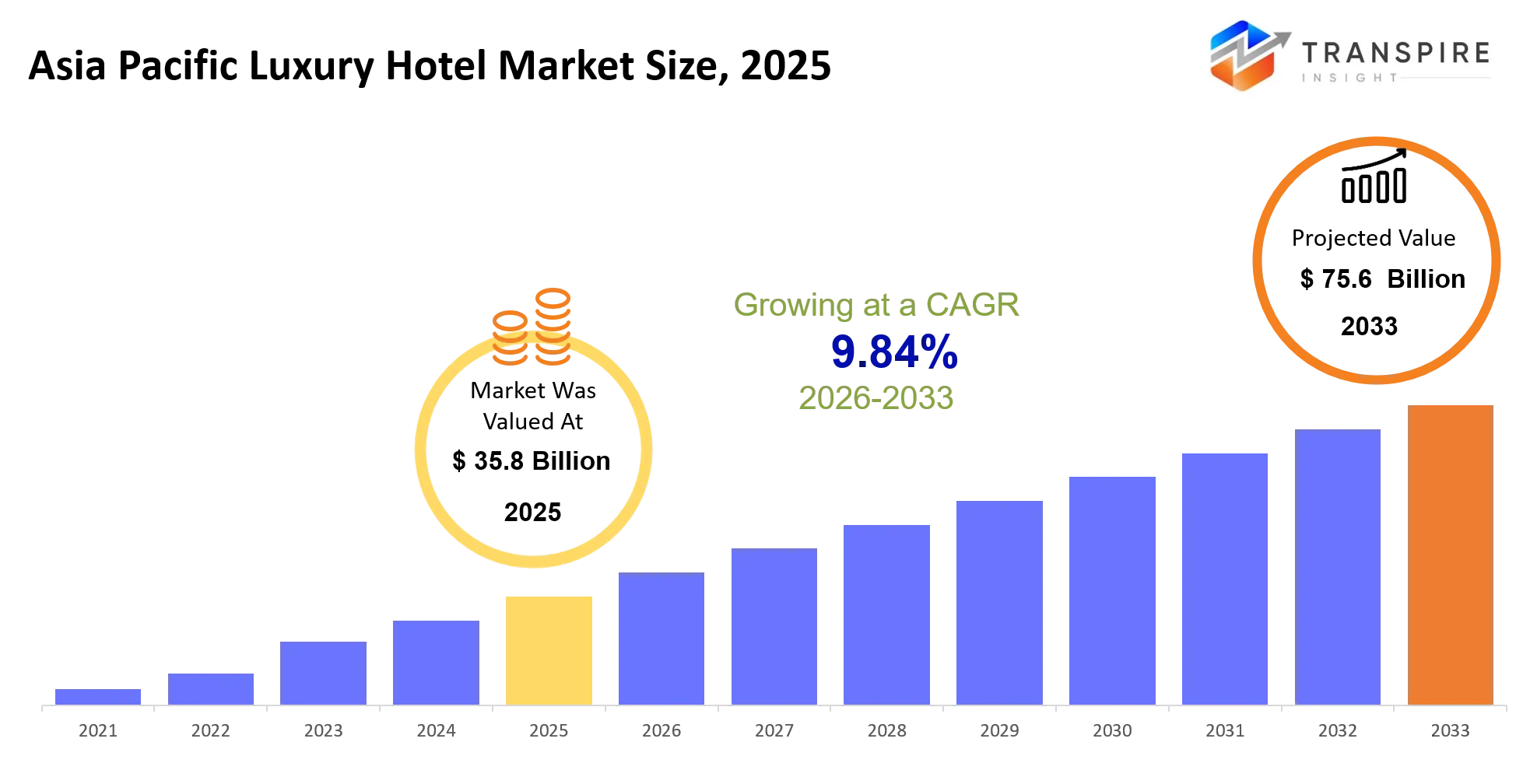
- Asia Pacific Luxury Hotel Market Size 2025: USD 35.8 Billion
- Asia Pacific Luxury Hotel Market Size 2033: USD 75.6 Billion
- Asia Pacific Luxury Hotel Market CAGR: 9.84%
- Asia Pacific Luxury Hotel Market Segments: By Hotel Type (Business Hotels, Resort Hotels, Boutique Hotels, Heritage Hotels, Airport Hotels, Wellness Hotels, Others); By Booking Channel (Direct, OTA, Travel Agents, Corporate Booking, Others); By Guest Type (Business, Leisure, Families, VIP, Others); By Service Type (Accommodation, Dining, Spa, Events, Others)
To learn more about this report,  Download Free Sample Report
Asia Pacific Luxury Hotel Market Summary
The Asia Pacific Luxury Hotel Market was valued at USD 35.8 Billion in 2025. It is forecast to reach USD 75.6 Billion by 2033. That is a CAGR of 9.84% over the period.
In the Asia Pacific, the luxury hotel market really acts like a key piece of the whole premium travel and hospitality puzzle, it gives high-end sleeping places, personal attention, special kinds of experiences, plus business spaces for wealthy vacationers , senior corporate leaders, and visitors coming from abroad. But it’s not only about rooms. In practice, these luxury hotels behave like little destinations inside the destination, they help tourism spending move around, they support business mixing, and they host big events, which in turn feeds local economies in a meaningful way.
Over the last five years, the market has been changing in a more structural way toward experience-led hospitality. Basically, wellness routines, carefully picked cultural moments, and digital concierge services have turned into the stand out factors, not just the room quality. One big reason for this was the COVID-19 pandemic , it sort of redrew what travelers think they require, especially around privacy, health standards, and services that feel sort of tailored to them. When international travel corridors reopened, luxury travelers began to lean more toward premium properties, ones that include exclusive options and flexible routines. That shift has let operators push for higher room pricing, grow extra income from side services, and speed up investments in branded residences, wellness programs, and tech driven ways to keep guests engagedSo, long term revenue growth across the region gets stronger.
Key Market Insights
- China is basically running the Asia Pacific Luxury Hotel Market, taking up around 35% of the regional luxury hotel revenue in 2025, or so the numbers suggest.
- It keeps that market hold by leaning on domestic luxury travel spend, premium city hotel projects, and that ongoing solid bounce back in international tourism.
- India feels like the quicker mover over the forecast years, since affluent households keep growing and there are big scale hospitality investments showing up.
- When it comes to type, luxury city hotels are leading the game with close to 40% of the Asia Pacific Luxury Hotel Market in 2025, largely because of business trips and urban sightseeing.
- And overall, leisure travel pretty much dominates too, with roughly 65% market share. That part is backed by higher end holiday spending and the continued recovery of international tourism.
- Bleisure travel basically fuses business and leisure tasks, and for sure it stays the fastest-growing application category when you look at the whole forecast period.
- Also, luxury event hosting plus destination weddings keep bringing in real substantial ancillary income, especially across resort-centered markets, in general.
- High-net-worth individuals are still the dominant end-user group, they account for over 50% of luxury accommodation spending during 2025, it seems.
- Meanwhile affluent millennials and Gen Z travelers are the quickest growing customer tier, they tend to favor personalized stays and more experience-led moments.
- Corporate executives as well as premium business travelers keep backing occupancy levels across the major financial and commercial hubs, consistently.
What are the Key Drivers, Restraints, and Opportunities in the Asia Pacific Luxury Hotel Market?
The main growth driver in the Asia Pacific Luxury Hotel Market is basically the rapid expansion of affluent consumer populations across China, India, Southeast Asia and some important developed economies. As private wealth keeps rising, plus stronger international air connectivity, and a lot of premium tourism investment, luxury travel is moving from that “once in a while” purchase to something more like a repeatable lifestyle expense. Luxury hotel operators have been reacting, more or less, by adding immersive guest experiences, wellness programs, private concierge support and even branded residences. This shift tends to raise average daily rates , and also pushes guest spending beyond just accommodation, so revenue becomes higher value across the whole hospitality chain.
The biggest thing holding things back is the heavy capital intensity around luxury hotel development and day to day operations. Prime city center or resort sites need major land acquisition costs, premium construction benchmarks , specialized staffing and constant property refurbishments. Those structural needs make it harder to enter the market and slow down capacity buildout. On top of that, labor shortages in luxury hospitality add to operating costs and can impact service consistency. Because of this, in some markets you see delayed project timing and limited room supply, which ends up dampening possible revenue growth even when traveler spending looks promising.
Big chances sit in widening integrated luxury hospitality ecosystems, where accommodation kind of blends with wellness, branded residences, and these very exclusive lifestyle moments. Like, places such as Vietnam, Indonesia, and India are seeing more and more capital being put into premium mixed use projects aimed at wealthy local guests as well as international travelers. What’s changing too is that guest personalization is getting more sophisticated, through artificial intelligence, predictive analytics and a digital concierge platform . So operators can craft tailored moments, while also pushing profitability upward. In other words, these movements are setting up the Asia Pacific Luxury Hotel Market for what comes next, that value driven growth, plus better premium customer acquisition.
What Has the Impact of Artificial Intelligence Been on the Asia Pacific Luxury Hotel Market?
Artificial intelligence and cutting edge digital technologies are changing the Asia Pacific luxury hotel market, by boosting operational efficiency, guest tailoring, and the overall performance of their assets. More and more luxury operators are rolling out AI driven property management systems, these tend to cover room assignment, shifting room rates based on demand, housekeeping timetables, plus energy management. The systems read occupancy behavior, guest preferences, and booking movement in real time, so hotels can sort of tune staffing capacity and nudge revenue per available room a bit higher.
Meanwhile machine learning is showing up in predictive maintenance for key infrastructure like HVAC units, elevators, lighting arrangements, and water management equipment. The point is to catch strange or off performance signals before something actually breaks. That way, unplanned downtime goes down, asset lifespan often gets better, and the whole maintenance spend stays more controlled, not so chaotic.On top of that, advanced analytics tools are also used for demand forecasting. They examine travel patterns, airline seat availability, local happenings, and earlier reservation history, which helps produce more reliable occupancy estimates and sharper pricing results.
Digital concierge services, AI chatbots, and recommendation engines tuned to particular guests are improving the experience too, but they do it while easing pressure on the front desk. They typically make replies faster, help the service flow smoother, and can lift guest satisfaction scores. In higher end places, smart room features can additionally cut energy use through automated climate adjustments and lighting control systems, and it all feels more seamless for the guest.
Key Market Trends
- Since 2021, luxury hotel groups have expanded wellness centered offerings a bit, with spa, longevity , and preventive health programs becoming core revenue drivers, like its not just an add on anymore.
- Between 2022 and 2025, AI powered pricing and revenue management platforms largely displaced manual forecasting across many premium hospitality portfolios, somehow faster and “cleaner” than before.
- Affluent travelers are leaning more and more toward tailored itineraries and kind of intimate local encounters instead of the usual standardized luxury services, and it’s sort of reshaping what hotel investors think matters most in a noticeable way.
- Bigger groups, for example Marriott International and Hilton Worldwide, have been pushing branded residence developments quite hard, mainly to diversify income past room revenue only.
- Once international travel restrictions eased, luxury resorts in Thailand, Indonesia, and Vietnam started to catch a larger share of regional tourism spend, which felt pretty clear in the numbers.
- Sustainability reporting moved from a marketing style feature into an investment kind of requirement, so it now affects asset valuation and even the development financing choices made by stakeholders.
- Digital concierge platforms and mobile first guest services have cut down the routine face to face service interactions, while also increasing personalization, and improving operational efficiency, more or less.
- Luxury hotel growth seems to be moving toward secondary cities in India and Southeast Asia as well, mostly because the gateway markets are getting a bit saturated now, you know.
- Starting from 2023, ultra luxury travelers show an even more pronounced preference for privacy centered villas, suites, and setups with exclusive-use, instead of the older style room inventories.
- Also, strategic partnerships between hospitality brands, luxury retailers, and wellness providers are turning up more often, so in practice they build these integrated lifestyle ecosystems that go beyond just staying somewhere.
Asia Pacific Luxury Hotel Market Segmentation
By Hotel Type :
Business hotels are aimed at corporate travelers who kind of need a convenient location, meeting rooms, fast internet, and quick services that just work. Resort hotels usually aim at vacation people who want to decompress a bit, slip into recreation, and catch those premium moments. Boutique hotels put the spotlight on special design, more tailored service, and guest experiences that feel a little less like the standard, you know, cookie-cutter hotel option.
Heritage hotels, on the other hand, operate in places with historical weight and they offer stays that reflect the local culture and architecture. Airport hotels are for travelers who want near instant access to the airport, while wellness hotels tilt toward health oriented care, like fitness programs, spa sessions, and wellness retreats.The remaining category is more niche It covers specialty luxury properties made for particular traveler tastes and unusual hospitality concepts, basically unique by design and intention.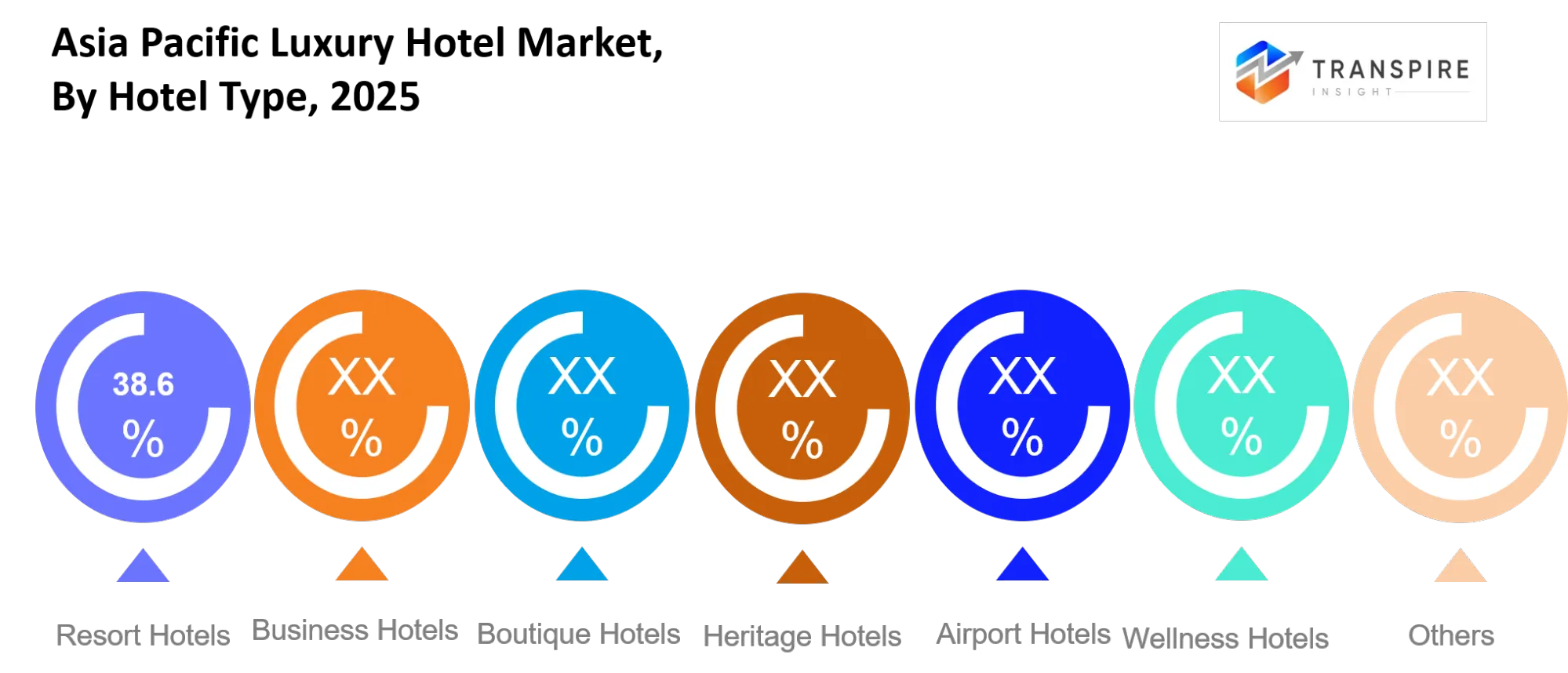
To learn more about this report, Download Free Sample Report
By Booking Channel :
Direct booking channels let guests reserve through the hotel's own sites , mobile apps , or reservation desks. In this way hotels keep a more solid customer tie and they have more say in pricing strategies. Online Travel Agencies, often called OTAs, run digital marketplaces that show and compare stay options, so travelers can decide faster based on their preferences and what services are actually included.
Meanwhile travel agents still help with personalized trip design, plus package arrangements , especially for luxury travelers who want a tailored, more refined experience. Corporate booking channels cover reservations made by organizations for business trips , meetings and other events. The “other” bucket includes partnerships, loyalty programs, and alternative reservation platforms, all aiming at bringing in guests from different customer groups.
By Guest Type :
Business guests mainly show up for meetings , conferences, corporate projects, and professional engagements. In general this segment cares about speed, strong connectivity, meeting spaces that work well, and a very practical way to reach shopping and commercial areas. Leisure guests on the other hand lean toward recreation, tourism, unwinding, and destination led experiences, those tend to lift travel satisfaction and make the whole stay feel more comfortable.
Families usually look for roomier accommodations, services that are kid friendly, and activities that cover several age groups at once. VIP guests are after something more tailor made, with privacy , a sense of exclusivity, and premium comfort in almost every moment during the visit. The other category covers specialized traveler groups, where lodging preferences shift based on their own travel motives, and requirements too.
By Service Type :
Accommodation services are basically the base of how luxury hotels work, and they include guestrooms, suites , villas, and that personalized hospitality style. Dining services run through restaurants, fine dining venues, bars, private dining moments, and curated culinary programs meant to increase guest satisfaction and also encourage higher spending during the stay. Spa services lean into rest, wellness treatments, beauty therapies, and health oriented experiences that keep guest well being in mind.
Event services back up conferences, weddings, corporate gatherings, exhibitions, and social occasions, using dedicated facilities plus planning help. The other category can include concierge services, transport arrangements, recreational activities, and extra support options that add value to the entire luxury hospitality experience, kind of like a whole background service layer.
What are the Key Use Cases Driving the Asia Pacific Luxury Hotel Market?
Luxury accommodation for high spending leisure travelers is still kinda the main thing pushing the Asia Pacific Luxury Hotel Market forward. Premium resorts along with upscale city properties pull in guests who want personalized services, exclusive moments, and generally high end facilities. This particular use case takes the biggest chunk of demand, since wealthy travelers usually spend more on where they stay, dining, wellness services, and carefully curated activities compared with other groups of guests, honestly.
Corporate hospitality is showing up as a stronger secondary use case too. Multinational firms more and more rely on luxury hotels for executive trips, leadership gatherings, conferences and even client engagement events. Meanwhile destination weddings, plus bigger social celebrations are picking up steam in resort driven regions, which basically opens new revenue paths for hotel operators.
Then there are newer, emerging use cases such as wellness centered luxury retreats and branded residential hospitality projects. Hotels are also moving toward long-stay luxury living concepts for affluent professionals and international travelers. These are still kinda niche today but they’re expected to gather momentum, as people look for lifestyle oriented experiences that feel personal, beyond the usual accommodation deal.
|
Report Metrics |
Details |
|
Market size value in 2025 |
USD 35.8 Billion |
|
Market size value in 2026 |
USD 39.2 Billion |
|
Revenue forecast in 2033 |
USD 75.6 Billion |
|
Growth rate |
CAGR of 9.84% from 2026 to 2033 |
|
Base year |
2025 |
|
Historical data |
2021 - 2024 |
|
Forecast period |
2026 - 2033 |
|
Report coverage |
Revenue forecast, competitive landscape, growth factors, and trends |
|
Regional scope |
Asia Pacific (India, China, Japan, Australia, South Korea, Rest of Asia Pacific) |
|
Key company profiled |
Marriott, Hilton, Hyatt, Accor, IHG, Shangri-La, Mandarin Oriental, Four Seasons, Rosewood, Aman, Taj Hotels, Oberoi, Banyan Tree, Peninsula Hotels, Minor Hotels |
|
Customization scope |
Free report customization (country, regional & segment scope). Avail customized purchase options to meet your exact research needs. |
|
Report Segmentation |
By Hotel Type (Business Hotels, Resort Hotels, Boutique Hotels, Heritage Hotels, Airport Hotels, Wellness Hotels, Others); By Booking Channel (Direct, OTA, Travel Agents, Corporate Booking, Others); By Guest Type (Business, Leisure, Families, VIP, Others); By Service Type (Accommodation, Dining, Spa, Events, Others) |
Which Regions are Driving the Asia Pacific Luxury Hotel Market Growth?
China is pretty much the big name in the Asia Pacific Luxury Hotel Market, mainly because there are so many affluent people there, plus domestic travel spending stays high, and companies keep pouring money into premium hotel infrastructure. You can see it in major cities like Beijing, Shanghai, Shenzhen, and Guangzhou, where there’s a wide web of luxury places that welcome both business travelers and vacationers, more or less. On top of that, government programs that push tourism growth and urban modernization have made the whole hospitality scene stronger over time. There’s also this already-formed luxury ecosystem , think upscale boutiques, international air connections, premium restaurants, and entertainment spaces, all of which quietly keeps the region in front.
Japan comes in next as the second-largest contributor, but the “why” isn’t exactly the same as in China. Instead of leaning mostly on new domestic prosperity, Japan has a steadier tourism environment, consistent international visitor movement, and a well-known reputation for dependable high-end hospitality. Luxury hotel brands are still putting effort into renovations and service improvements, so they can stay competitive. With solid transport links, well-known visitor destinations, and occupancy that holds up reliably, Japan feels like a dependable revenue source for the market, overall.
India is emerging as the most rapidly-growing region in the market, sort of. With rising disposable incomes, wider aviation connectivity and meaningful investments in luxury hospitality projects, the pace of development is accelerating across metro areas and also leisure spots. In other words, new luxury resorts, wellness-centered properties, and mixed-use hospitality developments have really broadened the market appeal, for both domestic and international travelers. This ongoing momentum is now creating interesting openings for investors and hotel operators who want to expand between 2026 and 2033, especially in premium travel destinations that are still underserved.
Who are the Key Players in the Asia Pacific Luxury Hotel Market and How Do They Compete?
The competitive landscape of the Asia Pacific Luxury Hotel Market is kind of a mix where global hospitality brands walk side by side with regional luxury operators. They end up competing on service quality , brand positioning, guest experience, plus that really specific thing about strategic location selection. Overall it feels moderately concentrated in big urban centers and the well-known tourism hubs, but then emerging markets keep pulling in new investments anyway. Also, hotels are not really fighting only on accommodation standards anymore. It’s more about personalized experiences , wellness offerings, digital engagement platforms, and loyalty ecosystems which, honestly, have turned into key differentiators.
Marriott International leans into portfolio diversity by using brands that fit different luxury traveler inclinations. So, from a more traditional luxury stay to lifestyle-oriented experiences. Marriott expands via new property developments, branded residences, and partnerships with local developers across high-growth locations. Hilton Worldwide, on the other hand, differentiates itself through digital guest services, connected room technologies, and a loyalty platform meant to drive repeat bookings across multiple markets. Its continued expansion into secondary cities, plus resort destinations, helps widen market reach.
Accor is all about a kind of luxury lifestyle hospitality thing, with premium brands that kind of blend accommodation and dining along with wellness plus cultural moments, so it feels seamless, not just a “room”. Hyatt Hotels Corporation, meanwhile, leans more into wellness as the main luxury angle, offering curated guest experiences that are made for high-spending travelers who usually want something personalized, and not cookie cutter. Shangri-La Hotels and Resorts uses its deep regional know-how, plus solid brand awareness all over Asia and then service as the main differentiator.
For expansion, the playbook is shifting too—more luxury mixed use developments, branded residences, and partnerships that can build long term revenue streams, beyond the usual hotel operations.
Company List
- Marriott
- Hilton
- Hyatt
- Accor
- IHG
- Shangri-La
- Mandarin Oriental
- Four Seasons
- Rosewood
- Aman
- Taj Hotels
- Oberoi
- Banyan Tree
- Peninsula Hotels
- Minor Hotels
Recent Development News
In May 2026, JLL reported a significant surge in luxury hotel investment activity across Asia Pacific. The advisory highlighted that luxury hotel transaction volumes rose sharply, reaching approximately USD 2.1 billion in 2025, reflecting renewed institutional investor confidence in high-end hospitality assets and strengthening capital inflows into premium hotel acquisitions across the region.Source https://www.ttrweekly.com
In February 2026, Marriott International reported record development momentum in its Asia Pacific excluding China region, signing nearly 200 hotel deals in 2025 representing over 28,000 rooms in its pipeline. The expansion includes significant luxury segment growth under brands such as JW Marriott and The Ritz-Carlton, reinforcing strong investor and developer confidence in luxury hospitality demand across emerging Asia Pacific markets.
Source https://travel.economictimes.indiatimes.com/
What Strategic Insights Define the Future of the Asia Pacific Luxury Hotel Market?
The Asia Pacific luxury hotel market seems to be moving toward this thing where hospitality operators get their returns from connected lifestyle ecosystems, not just beds or accommodation alone. Over the next five to seven years, growth will come more and more from wellness services, branded residences, long-stay luxury living and then very personalized experiences, which are all helped along by digital technologies. The main driver behind this shift is basically the way affluent travelers spend now, where exclusivity, ease of access, and experience led consumption are getting more weight than classic luxury perks.
But there is also a less obvious risk, and it is kind of hiding in plain sight. Market concentration is happening in a relatively small set of gateway cities and already established resort destinations. So as more operators push into the same high-value places, they are competing for the same premium guests, the same skilled staff and even the same development sites, and that could squeeze margins even if total revenue keeps going up.
Still, there is an opportunity that is starting to show up more clearly. Developers can look at luxury hospitality assets in secondary cities across India, Vietnam, and Indonesia, because infrastructure spending and rising household prosperity are building new premium travel corridors. Players in the market should focus on flexible mixed use projects, that blend hospitality with wellness, residential options and experiential offers. That way revenue doesn’t rely on room occupancy alone. Also it gives a bit more optionality for the future, kind of like a steadier income base even when demand moves around.
Asia Pacific Luxury Hotel Market Report Segmentation
By Hotel Type
- Business Hotels
- Resort Hotels
- Boutique Hotels
- Heritage Hotels
- Airport Hotels
- Wellness Hotels
By Booking Channel
- Direct
- OTA
- Travel Agents
- Corporate Booking
By Guest Type
- Business
- Leisure
- Families
- VIP
By Service Type
- Accommodation
- Dining
- Spa
- Events
Frequently Asked Questions
Find quick answers to common questions.
The Expected Asia Pacific Luxury Hotel Market size is USD 75.6 Billion in 2033.
Key Segments for the Asia Pacific Luxury Hotel Market are By Hotel Type (Business Hotels, Resort Hotels, Boutique Hotels, Heritage Hotels, Airport Hotels, Wellness Hotels, Others); By Booking Channel (Direct, OTA, Travel Agents, Corporate Booking, Others); By Guest Type (Business, Leisure, Families, VIP, Others); By Service Type (Accommodation, Dining, Spa, Events, Others).
Major Asia Pacific Luxury Hotel Market Players are Marriott, Hilton, Hyatt, Accor, IHG, Shangri-La, Mandarin Oriental, Four Seasons, Rosewood, Aman, Taj Hotels, Oberoi, Banyan Tree, Peninsula Hotels, Minor Hotels.
The Current Asia Pacific Luxury Hotel Market size is USD 35.8 Billion in 2025.
The Asia Pacific Luxury Hotel Market CAGR is 9.84% from 2026 to 2033.
- Marriott
- Hilton
- Hyatt
- Accor
- IHG
- Shangri-La
- Mandarin Oriental
- Four Seasons
- Rosewood
- Aman
- Taj Hotels
- Oberoi
- Banyan Tree
- Peninsula Hotels
- Minor Hotels
About the Authors

Chetan Dhatrak
I’m Chetan Dhatrak, a Senior Research Analyst at Transpire Insight, specializing in the Consumer Goods, Foods and Beverages industry. I focus on analyzing market trends, consumer behavior, competitive landscapes, and industry developments to deliver accurate, data-driven insights. My research at Transpire Insight is built on credible sources and in-depth analysis, helping businesses and readers better understand market dynamics, emerging opportunities, and evolving consumer preferences. I’m committed to creating reliable, well-researched content that supports informed decision-making and reflects the latest developments in the consumer goods and food & beverage sectors.

Chakradhar Khansole
Chakradhar serves as the Research Director at Transpire Insight, bringing over 8 years of experience in technology, innovation, and strategic market intelligence. He specializes in transforming complex market data into actionable business insights that enable organizations to make informed, growth-oriented decisions. Recognized for his strategic vision and analytical expertise, Chakradhar leads high-impact research initiatives, delivering comprehensive market assessments, competitive intelligence, and forward-looking industry analysis.
Recently Published Reports
-
Apr 2026
Bottled Water Market
Bottled Water Market Size, Share & Analysis Report By Product Type (Still Bottled Water, Carbonated Bottled Water, Functional Bottled Water, and Others), By Packaging (PET, Cans, and Others), By Sales Channel (Supermarkets/Hypermarkets, Convenience Stores/Drug Stores, Grocery Stores/Club Stores, Foodservice, and Others) and Geography (North America, Europe, Asia-Pacific, Middle East and Africa, South and Central America), 2021 - 2032
-
Apr 2026
Color Cosmetic Packaging Market
Color Cosmetic Packaging Market Size, Share & Analysis Report By Application (Mascara Packaging, Liquid Packaging, and Liquid Face), By Type (Tubes & Bottles, Pens & Markers, Compacts & Containers, and Droppers & Pumps), and Geography (North America, Europe, Asia-Pacific, Middle East and Africa, South and Central America), 2021 - 2031
-
Apr 2026
External Microphone For Camera Market
External Microphone For Camera Market Size, Share & Analysis Report By Type (Shotgun Microphone, Lavalier Microphone, and Others), By Application (Digital Camera, Professional Video Camera, and Others), and Geography (North America, Europe, Asia-Pacific, Middle East and Africa, South and Central America), 2021 - 2031
-
Apr 2026
Foot Orthotic Insoles Market
Foot Orthotic Insoles Market Size, Share & Analysis Report By Type (Pre-fabricated, and Custom-made), By Material (Thermoplastic, Composite Carbon Fiber, and Others), By Distribution Channel (Drug Stores, Hospitals & Clinics, and Others), and Geography (North America, Europe, Asia-Pacific, Middle East and Africa, South and Central America), 2021 - 2031