

Japan Luxury Hotel Market Size & Forecast:
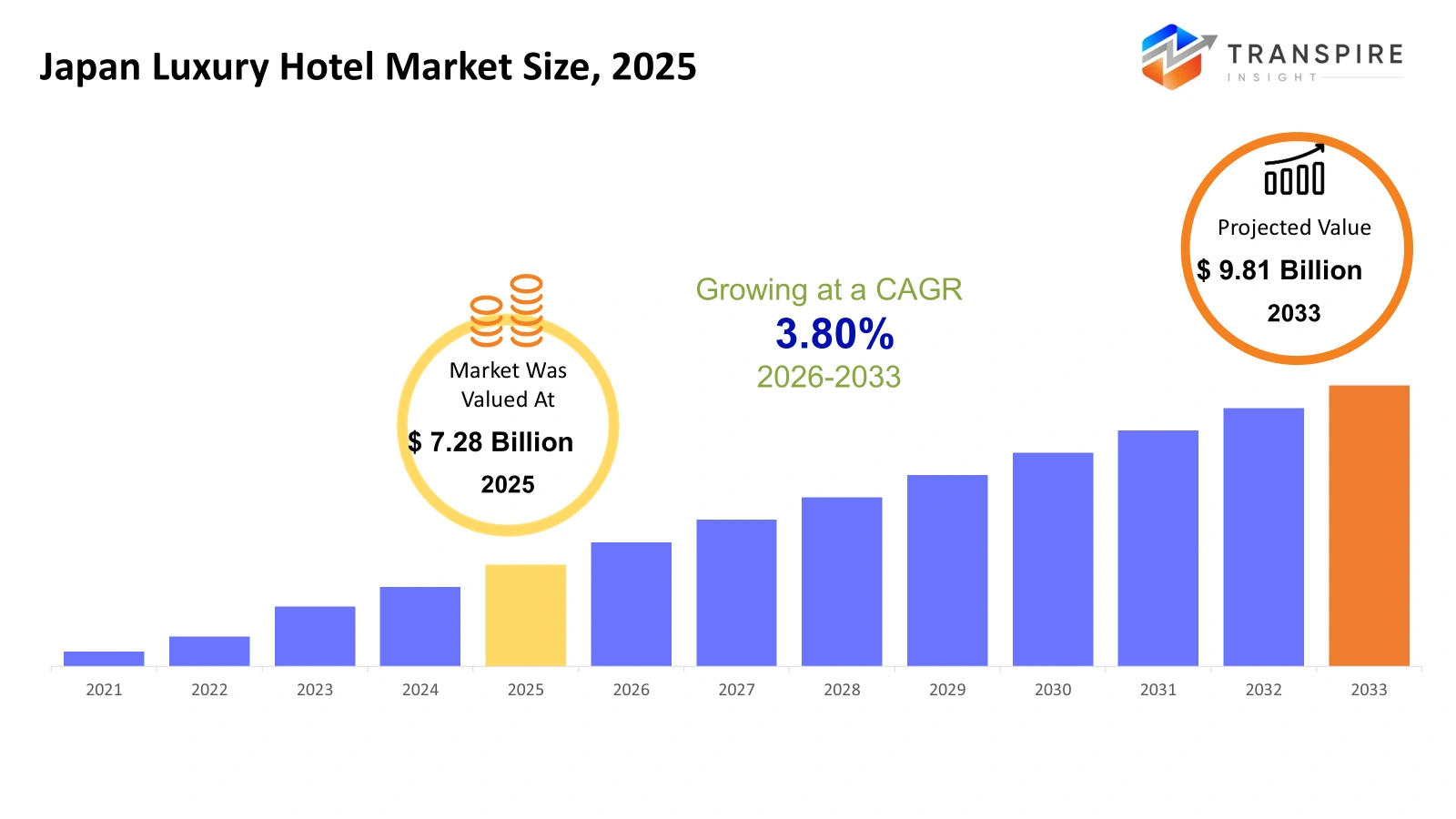
- Japan Luxury Hotel Market Size 2025: USD 7.28 Billion
- Japan Luxury Hotel Market Size 2033: USD 9.81 Billion
- Japan Luxury Hotel Market CAGR: 3.80%
- Japan Luxury Hotel Market Segments:By Room Type (Luxury Rooms, Suites, Villas), By Booking Channel (Online Travel Agencies, Direct Booking), By Guest Type (Business Travelers, Leisure Travelers).
]
To learn more about this report,  Download Free Sample Report
Japan Luxury Hotel Market Summary:
The Japan Luxury Hotel Market size is estimated at USD 7.28 Billion in 2025 and is anticipated to reach USD 9.81 Billion by 2033, growing at a CAGR of 3.80% from 2026 to 2033. Japan's luxury hotel market displays an elegant combination of historical customs and contemporary advanced design which attracts affluent travelers who want to experience authentic Japanese culture. The sector progresses through its traditional ryokan accommodations and international five-star hotels because they provide customised services and health treatments and modern architectural elements. The sector experiences growth because of strong tourism recovery and increasing demand for experiential stays. The hospitality industry develops future plans through two main trends which involve sustainability practices and technological system implementation to provide guests with comfortable, authentic experiences in one of the world's most exceptional hospitality environments.
Key Market Trends & Insights:
- Travelers now prefer to explore cultural activities beyond their need for luxury accommodations. Luxury hotels provide their guests with authentic experiences through tea ceremonies and local cuisine workshops and guided heritage tours.
- Various properties combine traditional Japanese design elements such as tatami flooring and onsen baths with modern architectural styles. The combination attracts international visitors who want traditional Japanese experiences and domestic tourists who prefer comfortable travel options.
- Wellness tourism is expanding as luxury hotels introduce spa treatments and hot spring facilities and mindfulness training programmes. Guests at hotels have started to give more importance to their mental health and physical fitness during their time at the hotel.
- Environmental awareness drives hotel operations through the use of energy-efficient building designs and the implementation of local material sourcing systems. Guests prefer to stay at hotels that demonstrate sustainable and responsible tourism practices.
- Hotels implement modern technology solutions through contactless check-in systems and artificial intelligence-based concierge systems and intelligent room management systems. The new technologies give users easier access but still deliver them a unique experience.
- International hotel companies are increasing their operations in Japan with a focus on expanding their hotels in Tokyo, Kyoto and Osaka. The new arrivals create more market competition, which results in better service delivery throughout the entire industry.
- The rising number of wealthy travellers, particularly from Asia-Pacific, drives up the need for ultra-luxury hotel options. Hotels provide dedicated high-end services which target their exclusive client base.
Japan Luxury Hotel Market Segmentation
By Room Type
- Luxury Rooms: The most popular room choice in hotels remains luxury rooms because they provide guests with comfortable yet stylish and reasonably priced accommodation options in high-end hospitality spaces. The rooms showcase sophisticated interior designs together with contemporary facilities and picturesque views, which attract both business travellers and vacationing guests who want top-quality services without paying for the most expensive rooms.
- Suites: The needs of travellers who want large spaces and private areas and premium travel experiences are met through suites. The suite provides high-net-worth individuals and executives and families with their perfect accommodation through its dedicated living space and tailored guest services and high-quality facilities. Japanese design principles serve as the foundation for suites which provide guests with a luxurious experience that includes exclusive amenities and sophisticated furnishings.
- Villas: The most luxurious option available to customers provides them with total control over their experience through customised service. The properties need to be situated in peaceful areas that include outdoor pools and private gardens and have staff members dedicated to serving guests. The facilities attract high-status travellers who seek a peaceful and deeply personalised Japanese cultural experience in the Far East.
By Booking Channel
- Online Travel Agencies (OTAs): serve as essential platforms through which international travelers who use modern technology can find travel information. OTAs provide travelers three main benefits through their service, which combines affordable prices with simple price comparison features. OTAs enable luxury hotels to expand their global presence because first-time guests use the platform to discover Japan's high-end hotel services.
- Direct Booking: Direct bookings are becoming more popular because hotels provide special benefits, which include room upgrades and flexible rules and personalised services to their customers. Through this channel hotels establish closer relations with their guests while maintaining brand loyalty to their hotel chain, which guests who visit again prefer to book through customised experiences.
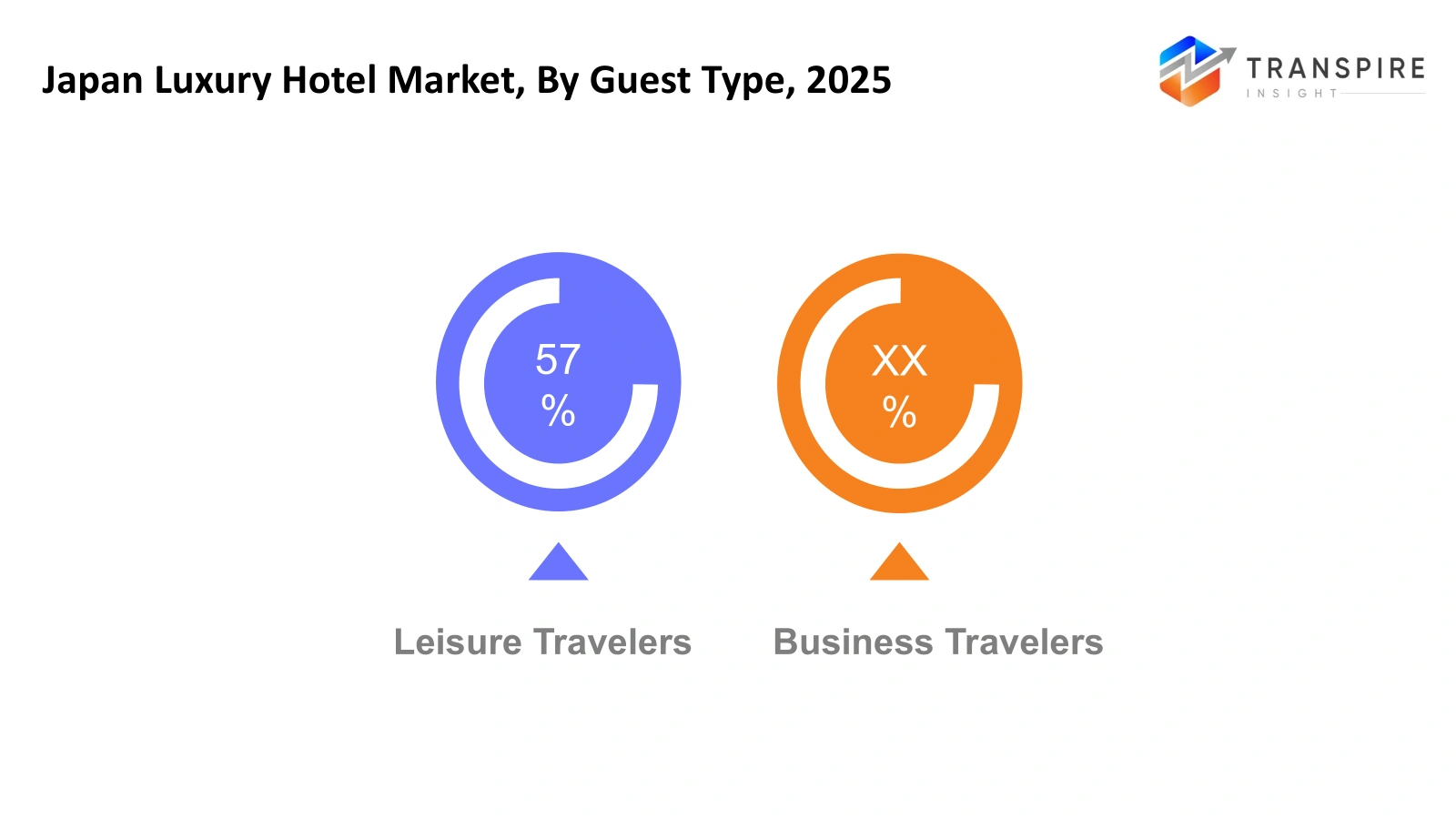
By Guest Type
- Business Travelers: The luxury hotel market in major cities receives substantial support from business travelers who comprise a vital segment of its customer base. Their primary focus lies on three essential elements, which include convenient access and available services. Hotels provide executive lounges and meeting spaces together with efficient check-in procedures to create a comfortable work environment which maintains operational efficiency for their business guests.
- Leisure Travelers: Leisure travelers drive demand for unique and memorable experiences. The travelers search for cultural experiences together with peaceful environments and luxurious accommodations. The hotels provide Japanese visitors with dedicated experiences and wellness services and beautiful resort locations to make their Japanese stay both educational and luxurious.
To learn more about this report, Download Free Sample Report
Country Insights
Japan's luxury hotel sector develops through the combination of its deep cultural heritage, its strong tourist attractions and its dedication to providing outstanding customer service. International tourists visit Tokyo, Kyoto and Osaka because these cities offer them a combination of contemporary luxury and traditional Japanese cultural experiences. Japan uses the concept of omotenashi, which means to provide customers with services that require complete understanding of their needs at all times, to establish its unique position in worldwide hospitality standards.
The market has experienced positive growth in recent years because tourism has steadily returned while travel restrictions have eased and high-value tourists from Asia, Europe and North America have shown increased interest in visiting. The development of high-end boutique hotels and upscale ryokans has been driven by the growing popularity of regional tourist destinations.
The market now recognises sustainability and innovation as the primary drivers of its development. Hotels create better guest experiences by combining environmentally sustainable methods with modern technological solutions. Japan's luxury hotel industry presents a complete combination of traditional elements with modern elements and high-class style.
Recent Development News
Imperial Hotel Kyoto Opens in Gion District, Boosting Hospitality Sector: The iconic Imperial Hotel launches a new luxury property in Kyoto’s historic Gion, blending tradition with modern comfort as tourism demand rises.
Business travelers boost luxury hotel demand in Japan: High‑end hotels across major cities are benefitting from increased business travel, with executives opting for premium stays and fine dining.
|
Report Metrics |
Details |
|
Market size value in 2025 |
USD 7.28 Billion |
|
Market size value in 2026 |
USD 7.557 Billion |
|
Revenue forecast in 2033 |
USD 9.81 Billion |
|
Growth rate |
CAGR of 3.80% from 2026 to 2033 |
|
Base year |
2025 |
|
Historical data |
2021 – 2024 |
|
Forecast period |
2026 – 2033 |
|
Report coverage |
Revenue forecast, competitive landscape, growth factors, and trends |
|
Country scope |
Japan |
|
Key company profiled |
Marriott International Inc., Hilton Worldwide Holdings Inc., Hyatt Hotels Corporation, InterContinental Hotels Group PLC, Four Seasons Hotels & Resorts, Accor SA, Mandarin Oriental Hotel Group, Shangri-La Hotels & Resorts, Ritz-Carlton Hotel Company, Aman Resorts, Rosewood Hotel Group, Oberoi Hotels & Resorts, Taj Hotels, Banyan Tree Holdings Ltd., Minor Hotels Group. |
|
Customization scope |
Free report customization (country, regional & segment scope). Avail customized purchase options to meet your exact research needs. |
|
Report Segmentation |
By Room Type (Luxury Rooms, Suites, Villas), By Booking Channel (Online Travel Agencies, Direct Booking), By Guest Type (Business Travelers, Leisure Travelers). |
Key Japan Luxury Hotel Company Insights
The Japanese luxury hotel market displays two prominent groups, which include well-known global hotel brands and highly esteemed Japanese hotel companies, who both provide distinct guest experiences. The companies create elegant and memorable accommodations by combining traditional Japanese design elements with contemporary hotel amenities. Their main services include personalized care and wellness services and cultural experiences that allow guests to experience local traditions. The industry competition drives companies to develop new products, which range from technology-based customer relief solutions to environmentally friendly business methods. The companies that operate in this sector are expanding their operations to enhance tourist experiences while establishing Japan as a leading destination for exceptional hospitality.
Company List
- Marriott International Inc.
- Hilton Worldwide Holdings Inc.
- Hyatt Hotels Corporation
- InterContinental Hotels Group PLC
- Four Seasons Hotels & Resorts
- Accor SA
- Mandarin Oriental Hotel Group
- Shangri-La Hotels & Resorts
- Ritz-Carlton Hotel Company
- Aman Resorts
- Rosewood Hotel Group
- Oberoi Hotels & Resorts
- Taj Hotels
- Banyan Tree Holdings Ltd.
- Minor Hotels Group
Japan Luxury Hotel Market Report Segmentation
By Room Type
- Luxury Rooms
- Suites
- Villas
By Booking Channel
- Online Travel Agencies
- Direct Booking
By Guest Type
- Business Travelers
- Leisure Travelers
Frequently Asked Questions
Find quick answers to common questions.
The Approximate Japan Luxury Hotel Market size for the Market will be USD 9.81 Billion in 2033.
The key Segments of the Japan Luxury Hotel Market are By Room Type (Luxury Rooms, Suites, Villas), By Booking Channel (Online Travel Agencies, Direct Booking), By Guest Type (Business Travelers, Leisure Travelers).
Major Players in the Japan Luxury Hotel Market are Marriott International Inc., Hilton Worldwide Holdings Inc., Hyatt Hotels Corporation, InterContinental Hotels Group PLC, Four Seasons Hotels & Resorts, Accor SA, Mandarin Oriental Hotel Group, Shangri-La Hotels & Resorts, Ritz-Carlton Hotel Company, Aman Resorts, Rosewood Hotel Group, Oberoi Hotels & Resorts, Taj Hotels, Banyan Tree Holdings Ltd., Minor Hotels Group.
The Current Market size of the Japan Luxury Hotel Market is USD 7.28 Billion in 2025.
The Japan Luxury Hotel Market CAGR is 3.80%.
- Marriott International Inc.
- Hilton Worldwide Holdings Inc.
- Hyatt Hotels Corporation
- InterContinental Hotels Group PLC
- Four Seasons Hotels & Resorts
- Accor SA
- Mandarin Oriental Hotel Group
- Shangri-La Hotels & Resorts
- Ritz-Carlton Hotel Company
- Aman Resorts
- Rosewood Hotel Group
- Oberoi Hotels & Resorts
- Taj Hotels
- Banyan Tree Holdings Ltd.
- Minor Hotels Group
Recently Published Reports
-
Apr 2026
Bottled Water Market
Bottled Water Market Size, Share & Analysis Report By Product Type (Still Bottled Water, Carbonated Bottled Water, Functional Bottled Water, and Others), By Packaging (PET, Cans, and Others), By Sales Channel (Supermarkets/Hypermarkets, Convenience Stores/Drug Stores, Grocery Stores/Club Stores, Foodservice, and Others) and Geography (North America, Europe, Asia-Pacific, Middle East and Africa, South and Central America), 2021 - 2032
-
Apr 2026
Color Cosmetic Packaging Market
Color Cosmetic Packaging Market Size, Share & Analysis Report By Application (Mascara Packaging, Liquid Packaging, and Liquid Face), By Type (Tubes & Bottles, Pens & Markers, Compacts & Containers, and Droppers & Pumps), and Geography (North America, Europe, Asia-Pacific, Middle East and Africa, South and Central America), 2021 - 2031
-
Apr 2026
External Microphone For Camera Market
External Microphone For Camera Market Size, Share & Analysis Report By Type (Shotgun Microphone, Lavalier Microphone, and Others), By Application (Digital Camera, Professional Video Camera, and Others), and Geography (North America, Europe, Asia-Pacific, Middle East and Africa, South and Central America), 2021 - 2031
-
Apr 2026
Foot Orthotic Insoles Market
Foot Orthotic Insoles Market Size, Share & Analysis Report By Type (Pre-fabricated, and Custom-made), By Material (Thermoplastic, Composite Carbon Fiber, and Others), By Distribution Channel (Drug Stores, Hospitals & Clinics, and Others), and Geography (North America, Europe, Asia-Pacific, Middle East and Africa, South and Central America), 2021 - 2031