
Asia Pacific High Protein RTD Shakes Market Summary
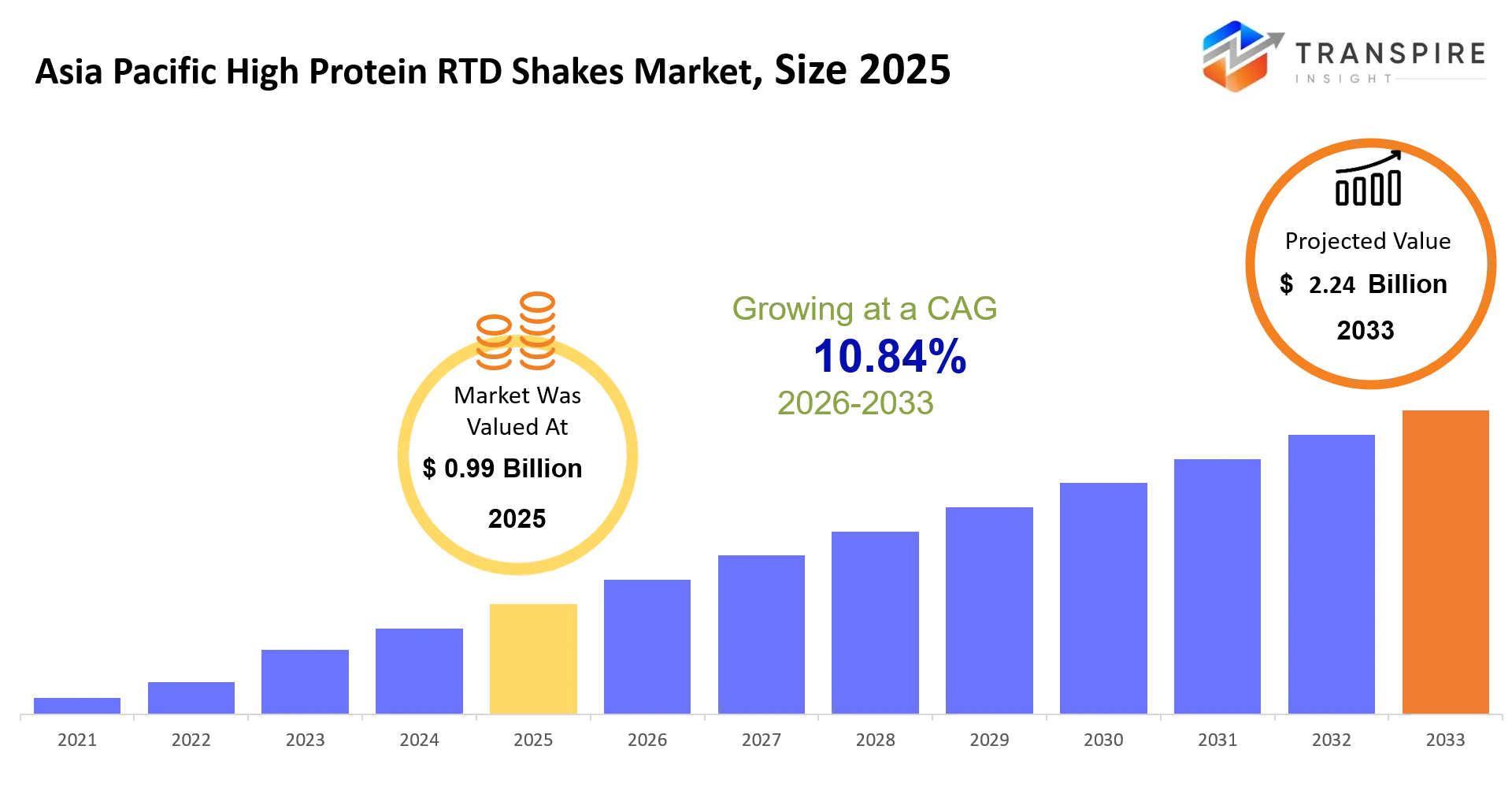
As per Transpire Insight Analysis the Asia Pacific High Protein RTD Shakes Market size is estimated at USD 0.99 Billion in 2025 and is anticipated to reach USD 2.24 Billion by 2033, growing at a CAGR of 10.84% from 2026 to 2033.
The Asia Pacific High Protein RTD Shakes market sorta supports everyday nutrition needs by giving ready-to-drink protein beverages that sync with busy lifestyles, clinical nutrition plans, sports recovery, and yeah even meal replacements where you don’t really need to do anything but pour. They help people hit their daily protein target without any prep time, so these shakes end up feeling helpful for working professionals, older adults, athletes, and healthcare environments where convenience plus steady nutrition, just really matters. Over the last three to five years the market kinda drifted away from “only fitness” type sipping, and it moved toward more mainstream preventive health routines and healthier aging habits. The COVID-19 period also sped that change along, since people started focusing more on immune wellness, personal nutrition, and the simple comfort of packaged options, while e-commerce and direct-to-consumer channels grew stronger.Then manufacturers started pushing cleaner labels, more plant based protein options, and mixes designed for different age brackets. Because of that, adoption broadened beyond the old “gym only” audience, and product presence increased across both retail and healthcare channels. That means better revenue chances and it also encourages ongoing formulation innovation throughout the region.
Asia Pacific High Protein RTD Shakes Market Size & Forecast:
- Asia Pacific High Protein RTD Shakes Market Size 2025: USD 0.99 Billion
- Expected Market Value 2033: USD 2.24 Billion
- Forecast CAGR: 10.84%
- Leading region in 2025: East Asia
- Fastest Growing region: Southeast Asia
- Key Profile: Abbott Laboratories, Nestlé Health Science, PepsiCo, Glanbia Nutritionals, MusclePharm, Premier Nutrition, Amway, Herbalife, Danone, Optimum Nutrition, Myprotein, GNC, Orgain, Fairlife, Yakult Honsha
Key Market Insights
- In 2025, East Asia kind of dominated the Asia Pacific High Protein RTD Shakes market, taking around 41% market share , and that was helped a lot by mature retail networks plus the fact that people are spending more on premium nutrition.
- For Southeast Asia, things should stay move-quick: the regional market is expected to be the fastest-growing during 2025–2033, largely because modern retail is spreading, digital commerce is growing, and more middle-income consumers are adopting these products more often.
- If we look at product type, whey protein RTD shakes were on top in 2025 with almost 58% share. This came about from well established sports nutrition habits and a sense of trusted nutritional performance.
- Plant-based protein RTD shakes sat in second place, with manufacturers pushing new pea, soy and oat protein options across regional supermarket chains , so shelf presence keeps expanding.
- Looking ahead, plant based protein formulations are likely to climb the fastest through 2033, more and more supported by product innovation and a lactose free angle, plus ingredients sourced from more than one place. It’s almost like the pace sticks there longer than expected.
- On the application side, sports nutrition was roughly 46% of the market in 2025, at least thats what the numbers are showing.
- Professional athletes and fitness enthusiasts kept buying premium products , which kept momentum steady.
- Meanwhile meal replacement applications should grow the quickest across the forecast , since busy urban consumers are increasingly choosing convenient but still balanced nutrition formats.
- Finally, by end user, adult consumers held the leading position in 2025 with nearly 61% share, supported by preventive nutrition priorities and healthy aging themes.
- Older consumer people really should be the quickest-growing end user group by 2033, though , mostly due to protein intake guidelines getting more attention, and specialized nutrition products becoming more accessible in stores.
What are the Key Drivers, Restraints, and Opportunities in the Asia Pacific High Protein RTD Shakes Market?
The most powerful driver behind market expansion is really the shift toward handy, protein-forward nutrition, with product innovation and broader retail access holding it up. After the COVID-19 period , demand for shelf-stable nutritional beverages and tailored wellness items showed up in a sharper way, so manufacturers pushed investments sooner than before. With better cold-chain logistics, digital retail channels, and more reliable access to premium ingredients, product launch cycles became shorter , almost like they got streamlined. As a result, consumer reach grew beyond the sports nutrition lane, into healthy aging , clinical nutrition, and those everyday busy professional routines. And when families spent more on functional beverages, that pretty much mapped into deeper product penetration plus wider revenue chances.
The main structural drag though stays the same: the production expense around premium protein raw materials and the specialized formulations. Whey protein isolates, plant proteins, flavor systems, and aseptic packaging still see periodic cost swings. On top of that , nutritional labeling rules aren’t identical across Asia Pacific , so approval timelines can stretch, and cross-border standardization gets limited. This combo tends to slow down new product rollouts and squeeze margins, especially for smaller players. Based on a Transpire Insight review of regional procurement notices plus launch schedules, supply chain concentration stays the key execution concern, even with all the improvements.
There is a big opportunity hiding in personalized nutrition, sort of backed by digital health platforms and those advanced protein formulation things. The idea of AI assisted nutrition guidance, plus microbiome driven meal planning, and even age tailored formulations is basically opening up new premium product categories, and they tend to sell for better average prices. In Southeast Asia, it looks especially promising, since organized retail keeps pushing forward , along with online grocery platforms and more money flowing into healthcare initiatives. If a company can mix local tastes with nutrition claims that are scientifically validated, it should stand out more clearly, and that will help unlock the next phase of how the market develops .
What Has the Impact of Artificial Intelligence Been on the Asia Pacific High Protein RTD Shakes Market?
Artificial intelligence is currently reshaping that regional high-protein ready-to-drink beverage space, kind of by nudging manufacturing efficiency along, improving quality assurance, and also making commercial planning more “on purpose” than before. Food manufacturers more and more use AI-vision systems, not just for one thing but for the whole pipeline, like checking packaging integrity monitor filling accuracy, and spot production defects, before items even hit distribution. Alongside that, automated compliance platforms make nutritional label checks easier and help production paperwork stay consistent across different regulatory zones, which sounds simple but usually saves a ton of headaches.
Then there’s machine learning, which has turned into a real go-to tool for demand forecasting. These systems blend retail sales patterns, seasonal buying habits, promotional campaigns, and the e-commerce stream to tune production timing and manage inventory placement. Predictive analytics also supports ingredient requirement estimates, so waste drops while products stay available even when demand starts wobbling. And with digital twins plus connected production systems, equipment utilization gets better too, because potential maintenance needs are flagged ahead of time, instead of after a failure interrupts everything.
These technologies have, sort of, lowered the costs for keeping inventory on hand, boosted production efficiency and even shortened the replenishment cycles across multiple manufacturing facilities. And yeah AI also helps with new product development by looking into things like flavor preferences, plus consumer buying patterns across different countries. Still , the wide rollout kind of stays constrained because implementation costs are pretty high, and the day-to-day operational data is also rather fragmented. Smaller manufacturers often don’t have that integrated digital infrastructure in place, so the model accuracy gets reduced , and the payback on technology investments can take longer than expected even if the longer term operational benefits are pretty clear.
Key Market Trends
- Since 2022, plant based protein beverages have expanded real fast, like manufacturers kinda diversified their formulations using pea, soy and oat proteins alongside traditional dairy ingredients.
- After 2020, e-commerce sales gained a big share, which sort of encouraged brands to roll out subscription models and direct to consumer nutrition platforms across most Asian markets, not all of course.
- Between 2021 and 2025, manufacturers also started pushing low sugar, and in some cases zero added sugar formulations, just to match the changing nutrition tastes that consumers are voicing lately.
- Nestlé Health Science and Abbott Laboratories then broadened their science backed nutrition portfolios with focused product launches, aimed at healthy aging and medical nutrition use cases, because you know that these are the categories growing.
- Local manufacturers, meanwhile strengthened regional sourcing plans after the global ingredient disruptions that hit during 2021–2023, so they could shrink their reliance on single country supply chains.
- Premium aseptic packaging investments rose across 2023–2025, which helps extend shelf life and also makes wider distribution easier into secondary cities, and even rural retail channels too.
- Since 2022, functional ingredients like probiotics collagen, vitamins and fiber have sort of become “normal” add-ins and this is what ends up creating more differentiated premium beverage portfolios or so it goes.
- At the same time, brands are tuning flavors for local preferences, rolling out drinks inspired by matcha, black sesame , tropical fruits and milk tea, basically to improve market penetration without over thinking it too much.
- Then after 2023, strategic partnerships between dairy ingredient suppliers and beverage manufacturers picked up steam too, which shortened innovation cycles and bumped commercialization speed across Asia Pacific in a steady, kind of quiet way.
Asia Pacific High Protein RTD Shakes Market Segmentation
By Protein Source :
Whey protein held the largest share, mainly because it had a full set of amino acids , it soaks in fast and it is pretty well liked across a lot of sports nutrition use cases, which sort of steadied sales over time. Product makers kept rolling out more whey ready to drink options, with better taste, less sugar, and even some added vitamins—so the whole thing can pull in a wider crowd. Also the premium style formulas started showing up in hospitals, wellness programs, and in healthy aging nutrition spaces, so that opened extra commercial avenues. With retail shelves staying dependable and the nutritional results staying reliable, strong demand should keep landing across regional markets.
Plant protein got real momentum too, since dairy free nutrition is now more approachable , especially via pea, oat, and mixed plant protein formulations. Casein protein still had that pull for long lasting release, notably in recovery products and in meal replacement categories. Soy protein remained a key player because pricing was competitive and the supply chain is already well set, which helps value minded offerings stick around in several countries. Meanwhile mixed protein blends and other specialty sources will probably carve out room for differentiation, by pairing nutritional upsides with improved flavor and texture, rather than relying on one single format.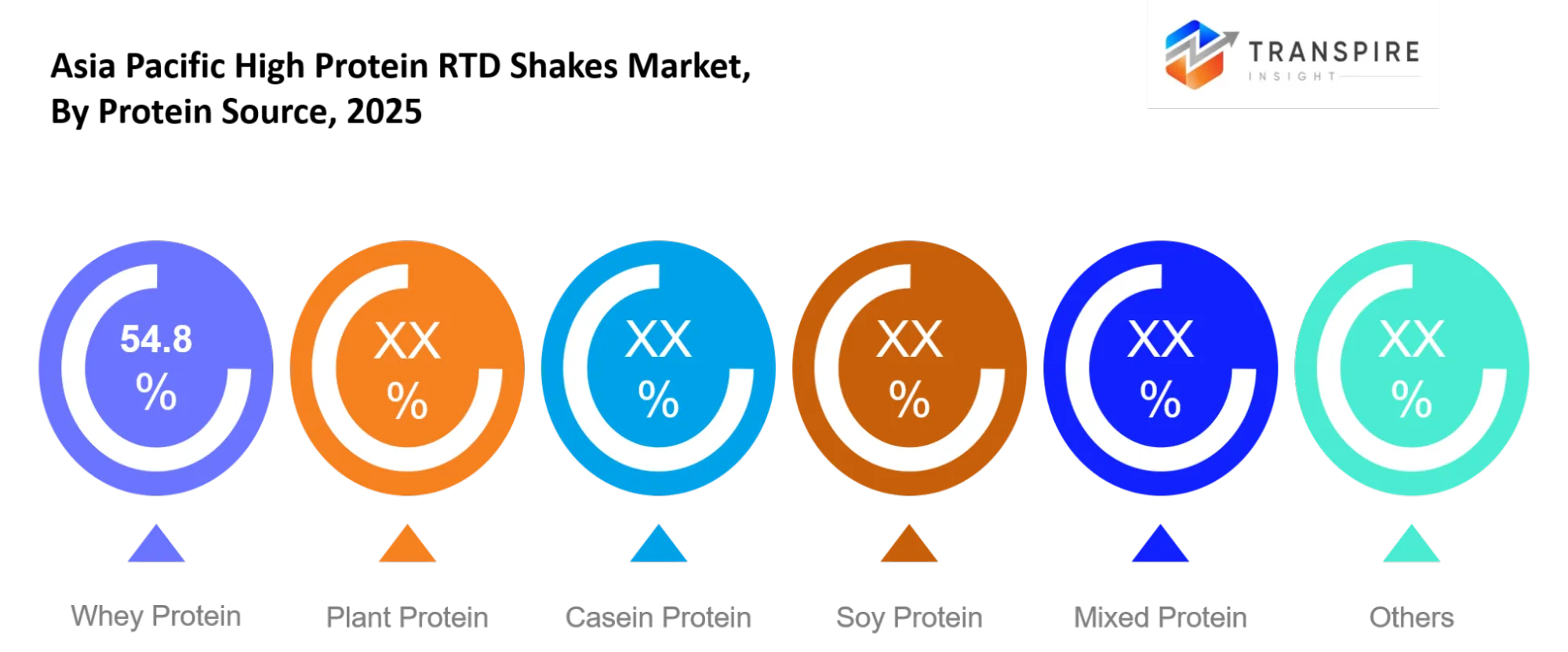
By Flavor :
Chocolate stayed ahead, mostly due to broad consumer acceptance, plus the fact people kept buying it again and again, which really backed up strong category results over time. Manufacturers, you know, rolled out premium cocoa types, tightened up their reduced-sugar recipes, and also used fortified formulations to make the shelf appeal a bit stronger both in supermarkets and on online platforms. Flavor innovation was a big part of that too , letting brands aim at fitness users and mainstream nutrition customers at the same time, all without touching the core nutritional profile. If they keep putting money into taste upgrades, it should help future product expansion.
Vanilla was in second place as the largest flavor because it’s so flexible—sort of easy to match with different protein sources and functional ingredients. Strawberry kept moving with steady sales, helped by balanced sweetness and generally wide acceptance among younger shoppers. Coffee-flavored items grew as busy professionals looked for drink-like options that mixed protein with something familiar, like their everyday refresh habits. Going forward, fruit flavors and other regional varieties should keep pulling in buyers who want more localized tastes, and also more variety overall.
By Distribution Channel :
Supermarkets, and hypermarkets made up the biggest chunk of sales, mainly because the products are easy to spot, there are persistent promotion efforts and the brand selection is wide enough to make people pick up items more or less regularly. Big retail chains also pushed for better shelf placement for functional beverages, and they rolled out premium nutrition sections to keep shoppers more engaged. At the same time, organized retail makes it simpler to compare what’s on the label, so consumers can judge the nutritional merit before they buy. If retail keeps spreading across developing economies, it will keep reinforcing this distribution route.
Convenience stores kept growing at a steady pace too, because they serve folks who want quick nutrition during commuting and day to day work routines. Online retail seems to be the quickest mover, with digital channels improving access to products, adding subscription models, and offering home delivery, which sounds small but it matters a lot. Health stores, along with pharmacies, stayed central for clinical nutrition and specialized dietary items, especially when those choices are guided by professional advice. Beyond that, other retail styles will keep helping with area based distribution, especially in smaller towns and other emerging markets.
By End User :
Athletes showed up as the leading end-user group, mostly because more organized training routines and performance minded nutrition actually help them keep buying products on a steady basis. At the same time, fitness enthusiasts also pushed solid sales, thanks to gym memberships, recreational movement, and a wellness centered lifestyle kind of thing. Product developers went further and rolled out specialized formulations, add-on amino acids vitamins, and mineral blends to raise nutritional value across different kinds of activity levels. If sports involvement keeps staying strong, it will keep feeding market expansion too, not just for a short while.
Meanwhile, people focused on weight management started using these products more, since meal replacement options got easier to handle and they stayed nutritionally balanced. The elderly population also came through as one of the fastest-growing customer categories , because higher protein intake backs healthy aging and helps with muscle upkeep. Broader consumers expanded their buying habits through preventive nutrition approaches and convenient breakfast alternatives that fit into real life schedules. Beyond that, other niche consumer segments should generate more chances via targeted nutritional products and carefully matched formulas.
By Packaging :
Bottles pretty much took over the packaging segment, since portability, product protection ,and this simple “grab and drink” kind of consumption fit daily routines ,and most people expect that kind of convenience. Companies put money into lighter packaging materials and recyclable design ideas, plus better sealing tech, so the product stays solid during moving, transit, and storage. Even the nicer looking bottle forms helped the product stand out on shelf, and at the same time they basically supported brand recognition in retail aisles. Going forward, more packaging innovation should boost consumer ease while also making operations run smoother, you know, day to day.
Cans held onto the second biggest share thanks to durability, and also because they store efficiently for certain beverage types. Tetra packs got more traction as well, mostly because the extended shelf life lets distribution spread farther across regions without hurting product quality. Pouches showed up in more budget minded categories, leaning on lower material usage and improved transport efficiency too. Other packaging formats will still matter for smaller niche uses where portability, sustainability, or a more specialized product positioning actually adds extra value.
What are the Key Use Cases Driving the Asia Pacific High Protein RTD Shakes Market?
The biggest, use case really shows up in sports nutrition, where whey protein ready-to-drink shakes help muscle recovery and they also make it easier to hit your daily protein goal right after workouts. Gyms, sports clubs, and even organized retail channels keep buying on a regular basis because athletes and fitness people tend to prefer convenient nutrition with, no fuss preparation. When products stay consistently on the shelves and the formulation feels the same, people tend to repurchase more often across city markets.
Healthcare nutrition and weight control apps keep getting more traction across the region too. Hospitals and outpatient nutrition initiatives are adding high-protein drinks more often for recovery support, and at the same time, people doing weight management tend to pick ready-to-drink options as a practical meal alternative during structured dieting. Online retail also makes it easier for these specialized beverages to find a wider audience.
New chances are starting to appear in healthy aging and workplace nutrition, like, senior care providers are testing protein beverages to support muscle well-being in older adults, while employers and corporate wellness teams are rolling out functional drinks as part of employee health programs. Formulas built around personalized nutrition and specific dietary requirements should also open up extra commercial possibilities through the forecast period, overall.
|
Report Metrics |
Details |
|
Market size value in 2025 |
USD 0.99 Billion |
|
Market size value in 2026 |
USD 1.09 Billion |
|
Revenue forecast in 2033 |
USD 2.24 Billion |
|
Growth rate |
CAGR of 10.84% from 2026 to 2033 |
|
Base year |
2025 |
|
Historical data |
2021 - 2024 |
|
Forecast period |
2026 - 2033 |
|
Report coverage |
Revenue forecast, competitive landscape, growth factors, and trends |
|
Regional scope |
Asia Pacific (India, China, Japan, Australia, South Korea, Rest of Asia Pacific) |
|
Key company profiled |
Abbott Laboratories, Nestlé Health Science, PepsiCo, Glanbia Nutritionals, MusclePharm, Premier Nutrition, Amway, Herbalife, Danone, Optimum Nutrition, Myprotein, GNC, Orgain, Fairlife, Yakult Honsha . |
|
Customization scope |
Free report customization (country, regional & segment scope). Avail customized purchase options to meet your exact research needs. |
|
Report Segmentation |
By Protein Source (Whey Protein, Plant Protein, Casein Protein, Soy Protein, Mixed Protein, Others); By Flavor (Chocolate, Vanilla, Strawberry, Coffee, Fruit Flavors, Others); By Distribution Channel (Supermarkets & Hypermarkets, Convenience Stores, Online Retail, Health Stores, Pharmacies, Others); By End User (Athletes, Fitness Enthusiasts, Weight Management Consumers, Elderly Population, General Consumers, Others); By Packaging (Bottles, Cans, Tetra Packs, Pouches, Others) |
Which Regions are Driving the Asia Pacific High Protein RTD Shakes Market Growth?
East Asia brought in around 41% of regional revenue , so yeah it became the main place for high-protein RTD shakes in 2025. The thing is , strong food safety rules, better cold chain logistics, and already mature retail networks help products show up pretty much everywhere you look in major cities. At the same time global nutrition brands , plus local beverage makers and even specialized ingredient suppliers keep their production and distribution systems running smoothly across the region. And since companies are still putting money into new formulas, premium nutrition, and digital retail channels, this regional momentum should stay in place during the forecast window.
South Asia looks different in a more structural way, because affordability plus sheer population size tends to steer buying habits more than the whole premium product image. Organized retail keeps expanding, food processing capacity keeps getting better , and steady investment in consumer goods manufacturing gives more stable day-to-day business conditions. Domestic players also keep rolling out competitively priced options that align with local flavor expectations and real income levels. Plus, ongoing urbanization and rising household purchasing power should keep revenue coming in steadily across the forecast period.
Southeast Asia is, like, the fastest-growing regional market because modern retail expansion, more solid e-commerce infrastructure ,and food manufacturing investments have sped up product accessibility in recent years. A number of governments have also pushed food processing investments, which kinda sets up good conditions for nutrition, beverage production and distribution. At the same time, regional manufacturers are rolling out localized product portfolios to better fit shifting dietary preferences and those convenience-focused consumption habits. Overall, growth through 2026–2033 will open up pretty attractive chances for new brands, contract manufacturers, and ingredient suppliers who want to broaden their reach past the more mature markets.
Who are the Key Players in the Asia Pacific High Protein RTD Shakes Market and How Do They Compete?
Competition stays somewhat fragmented, because you can see multinational nutrition firms competing right next to regional beverage makers and also a few specialized functional food developers. Instead of price being the main driver, it’s usually the overall product quality, nutritional formulation, flavor creativity, and how far the distribution actually goes that end up shaping where each player sits in the market. The long running brands keep trying to lock in their retail footprint, plus they push scientific backing, including validation that looks more healthcare like. Meanwhile, newer entrants often go for localized tastes , and they push plant based alternatives, trying to snag fresh customer groups. In the background, continuous product evolution and the shift toward digital retail channels still look like the top competitive goals.
Nestlé Health Science differentiates itself with nutritional formats that are science backed, backed by clinical evidence and healthcare collaborations. Their move into healthy aging and medical nutrition also opens up wider commercial paths that go beyond the classic sports nutrition lane. Abbott Laboratories, on the other hand, centers on specialized nutritional beverages, relying on healthcare trust and a very broad regional distribution network. Ongoing spending on more advanced formulations and specific targeted nutrition solutions helps keep them competitive, across hospitals, pharmacies, and even more standard retail locations.
Danone is expanding its premium protein drinks, sort of by mixing dairy know-how with functional nutrition ideas, tuned to what people in each region actually prefer. Meanwhile FrieslandCampina is boosting its market position using strong dairy protein ingredients and also by collaborating with beverage manufacturers who are crafting new ready to drink options. Fonterra on the other hand, leans into a more connected dairy supply setup along with ingredient innovation, so it can keep a clear competitive edge. And Arla Foods Ingredients keeps putting money into more advanced protein solutions that let beverage makers push better nutritional results, improve taste, and even support product stability across Asia Pacific, kind of overall.
Company List
- Abbott Laboratories
- Nestlé Health Science
- PepsiCo
- Glanbia Nutritionals
- MusclePharm
- Premier Nutrition
- Amway
- Herbalife
- Danone
- Optimum Nutrition
- Myprotein
- GNC
- Orgain
- Fairlife
- Yakult Honsha
Recent Development News
In May 2026, Abbott Laboratories launched Ensure® Strength Pro in India. The new nutrition product delivers 30 grams of high-quality protein to support healthy ageing, strengthening Abbott's presence in the premium protein nutrition segment across Asia Pacific.
Source https://www.abbott.in/
In June 2026, Danone announced the acquisition of Australia's MADE Group. The acquisition expands Danone's functional nutrition portfolio with brands offering high-protein ready-to-drink products and strengthens regional manufacturing and distribution capabilities across Asia Pacific. Source https://www.danone.com/
What Strategic Insights Define the Future of the Asia Pacific High Protein RTD Shakes Market?
Over the next five to seven years the Asia Pacific High Protein RTD Shakes Market is going to lean more and more toward personalized nutrition, kind of enabled by digital health platforms, premium formulations, and a wider tie-in with clinical nutrition. Market growth won’t just be about adding more SKUs or expanding the line-up in a straightforward way. Instead it will lean on product differences , like manufacturers going for more focused blends aimed at healthy aging , weight management, and active lifestyles.
There is also a quieter risk that doesn’t always show up in the headlines. It has to do with the concentration of supplies for premium protein ingredients, so if prices bounce around, and sourcing options stay narrow then margins can get squeezed and product launches may end up delayed, even if retail sales look strong.
At the same time, a real chance is starting to form, driven by AI-supported nutrition personalization and by product development that uses microbiome insights. This is especially notable in Southeast Asia, where digital healthcare adoption keeps speeding up. Firms that diversify ingredient sourcing, build stronger regional manufacturing relationships, and put money into science-backed formulations with more localized flavor profiles are the ones likely to stay ahead. They’ll also reduce operational risk across future market cycles, which is sort of the point right.
Asia Pacific High Protein RTD Shakes Market Report Segmentation
By Protein Source
- Whey Protein
- Plant Protein
- Casein Protein
- Soy Protein
- Mixed Protein
By Flavor
- Chocolate
- Vanilla
- Strawberry
- Coffee
- Fruit Flavors
By Distribution Channel
- Supermarkets & Hypermarkets
- Convenience Stores
- Online Retail
- Health Stores
- Pharmacies
By End User
- Athletes
- Fitness Enthusiasts
- Weight Management Consumers
- Elderly Population
- General Consumers
By Packaging
- Bottles
- Cans
- Tetra Packs
- Pouches
Frequently Asked Questions
Find quick answers to common questions.
The Expected Asia Pacific High Protein RTD Shakes Market size for the Market will be USD 2.24 Billion in 2033.
Key segments for the Asia Pacific High Protein RTD Shakes Market are By Protein Source (Whey Protein, Plant Protein, Casein Protein, Soy Protein, Mixed Protein, Others); By Flavor (Chocolate, Vanilla, Strawberry, Coffee, Fruit Flavors, Others); By Distribution Channel (Supermarkets & Hypermarkets, Convenience Stores, Online Retail, Health Stores, Pharmacies, Others); By End User (Athletes, Fitness Enthusiasts, Weight Management Consumers, Elderly Population, General Consumers, Others); By Packaging (Bottles, Cans, Tetra Packs, Pouches, Others) .
Major Asia Pacific High Protein RTD Shakes Market players are Abbott Laboratories, Nestlé Health Science, PepsiCo, Glanbia Nutritionals, MusclePharm, Premier Nutrition, Amway, Herbalife, Danone, Optimum Nutrition, Myprotein, GNC, Orgain, Fairlife, Yakult Honsha.
The Current Asia Pacific High Protein RTD Shakes Market size is USD 0.99 Billion in 2025.
The Asia Pacific High Protein RTD Shakes Market CAGR is 10.84% from 2026 to 2033.
- Abbott Laboratories
- Nestlé Health Science
- PepsiCo
- Glanbia Nutritionals
- MusclePharm
- Premier Nutrition
- Amway
- Herbalife
- Danone
- Optimum Nutrition
- Myprotein
- GNC
- Orgain
- Fairlife
- Yakult Honsha
About the Authors

Chetan Dhatrak
I’m Chetan Dhatrak, a Senior Research Analyst at Transpire Insight, specializing in the Consumer Goods, Foods and Beverages industry. I focus on analyzing market trends, consumer behavior, competitive landscapes, and industry developments to deliver accurate, data-driven insights. My research at Transpire Insight is built on credible sources and in-depth analysis, helping businesses and readers better understand market dynamics, emerging opportunities, and evolving consumer preferences. I’m committed to creating reliable, well-researched content that supports informed decision-making and reflects the latest developments in the consumer goods and food & beverage sectors.

Chakradhar Khansole
Chakradhar serves as the Research Director at Transpire Insight, bringing over 8 years of experience in technology, innovation, and strategic market intelligence. He specializes in transforming complex market data into actionable business insights that enable organizations to make informed, growth-oriented decisions. Recognized for his strategic vision and analytical expertise, Chakradhar leads high-impact research initiatives, delivering comprehensive market assessments, competitive intelligence, and forward-looking industry analysis.
Recently Published Reports
-
Apr 2026
Bottled Water Market
Bottled Water Market Size, Share & Analysis Report By Product Type (Still Bottled Water, Carbonated Bottled Water, Functional Bottled Water, and Others), By Packaging (PET, Cans, and Others), By Sales Channel (Supermarkets/Hypermarkets, Convenience Stores/Drug Stores, Grocery Stores/Club Stores, Foodservice, and Others) and Geography (North America, Europe, Asia-Pacific, Middle East and Africa, South and Central America), 2021 - 2032
-
Apr 2026
Color Cosmetic Packaging Market
Color Cosmetic Packaging Market Size, Share & Analysis Report By Application (Mascara Packaging, Liquid Packaging, and Liquid Face), By Type (Tubes & Bottles, Pens & Markers, Compacts & Containers, and Droppers & Pumps), and Geography (North America, Europe, Asia-Pacific, Middle East and Africa, South and Central America), 2021 - 2031
-
Apr 2026
External Microphone For Camera Market
External Microphone For Camera Market Size, Share & Analysis Report By Type (Shotgun Microphone, Lavalier Microphone, and Others), By Application (Digital Camera, Professional Video Camera, and Others), and Geography (North America, Europe, Asia-Pacific, Middle East and Africa, South and Central America), 2021 - 2031
-
Apr 2026
Foot Orthotic Insoles Market
Foot Orthotic Insoles Market Size, Share & Analysis Report By Type (Pre-fabricated, and Custom-made), By Material (Thermoplastic, Composite Carbon Fiber, and Others), By Distribution Channel (Drug Stores, Hospitals & Clinics, and Others), and Geography (North America, Europe, Asia-Pacific, Middle East and Africa, South and Central America), 2021 - 2031