Artificial Intelligence (AI) In Pharmaceutical Market Summary:
According to Transpire Insights, a detailed research report on the market reflects that the drug discovery and developmentapplication segment dominates the Artificial Intelligence (AI)in Pharmaceutical Market, accounting for approximately 69% of the total market share worldwide. NVIDIA Corporationleads the market with approximately around USD 130 billion in annual revenue and an estimated 18-22% market sharein AI infrastructure and pharmaceutical AI enablement, making it the leading contributor to market development, innovation, advanced AI-powered pharmaceutical research, expanding computational capabilities, and the overall growth dynamics of the Artificial Intelligence (AI) in Pharmaceutical Market.
Market Snapshot
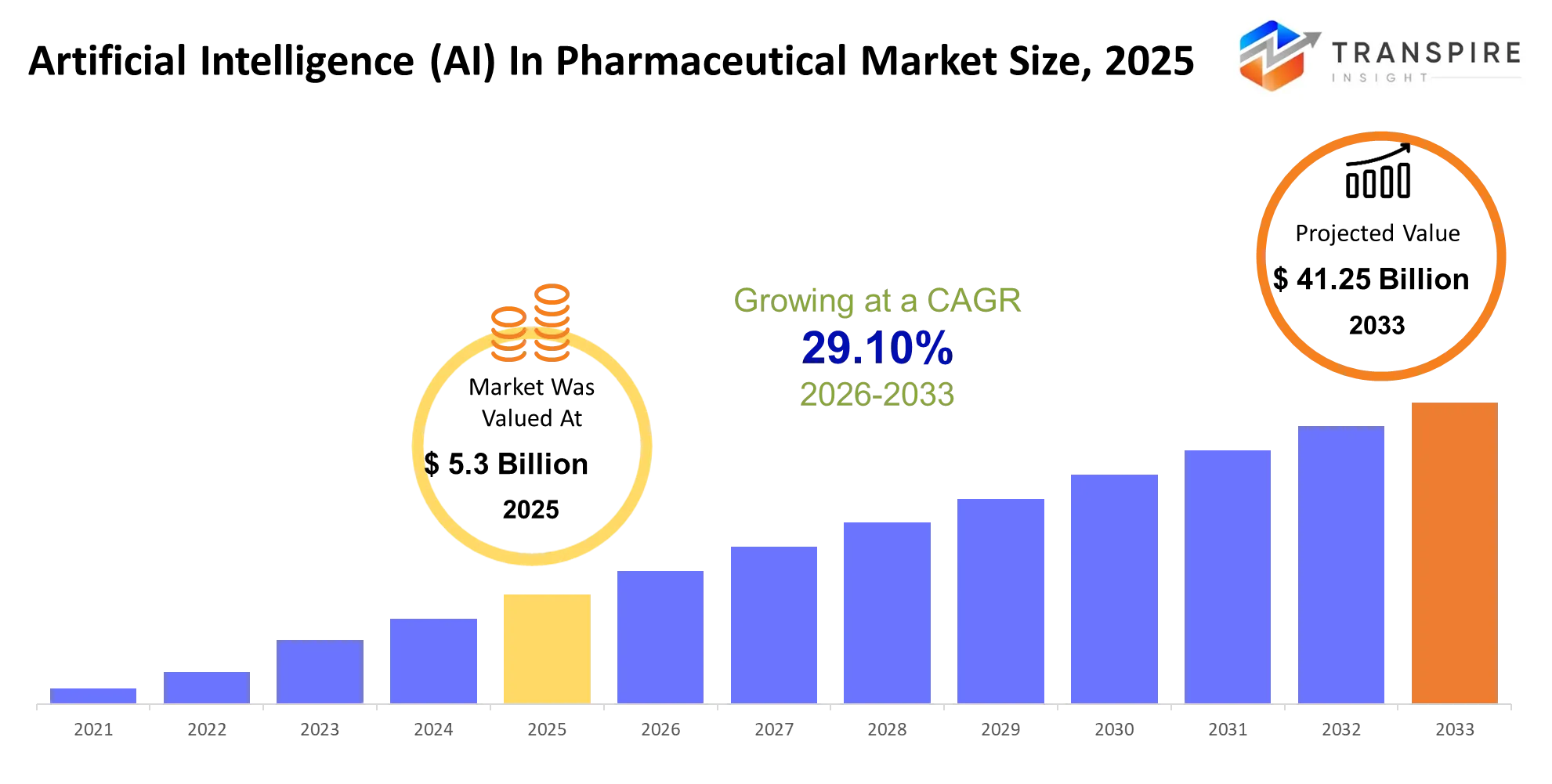
- Market Value (2025): USD 5.3 Billion.
- Expected Market Value (2026): USD 6.9 Billion.
- Estimated Market Value (2033): USD 41.25 Billion.
- Forecast CAGR (2026-2033): 29.10%.
- Leading Region in 2025: Asia-Pacific.
- Second-largest Region: Europe.
- Fastest Growing Region: North America.
Introduction
Artificial Intelligence (AI) in Pharmaceutical refers to the application of advanced machine learning (ML), deep learning, natural language processing (NLP), computer vision, and predictive analytics across the pharmaceutical value chain. AI enables pharmaceutical companies to accelerate drug discovery, optimize clinical trials, improve precision medicine, enhance manufacturing efficiency, streamline regulatory compliance, and strengthen pharmacovigilance. The technology significantly reduces research timelines, lowers drug development costs, improves decision-making accuracy, and increases the probability of clinical success. The Artificial Intelligence (AI) in Pharmaceutical Market is driven by the growing demand for AI-powered drug discovery platforms, increasing investments in digital healthcare, rising adoption of precision medicine, expanding pharmaceutical R&D activities, and continuous advancements in cloud computing, big data analytics, and generative AI technologies.
For Instance:-
- North America, Market Outlook: North America is expected to remain one of the most dominant regions in the Artificial Intelligence (AI) in Pharmaceutical Market and is projected to exceed USD 18 billion over the coming years, supported by strong pharmaceutical R&D investments, AI startups, and advanced healthcare infrastructure.
- Europe, AI Innovation & Regulatory Development: Pharmaceutical companies across Europe are increasingly investing in explainable AI (XAI), federated learning, digital twins, and AI-enabled clinical research platforms while regulatory agencies continue developing AI governance frameworks to improve transparency, regulatory compliance, and patient safety.
Market Highlights:-
- North America is expected to dominate the Artificial Intelligence (AI) in Pharmaceutical Market by holding approximately 41% of the market share during the forecast period.
- Asia Pacific is anticipated to be the fastest-growing region, accounting for approximately 30% of the market share due to expanding pharmaceutical manufacturing, government AI initiatives, and increasing healthcare digitization.
- Europe is projected to hold approximately 24% of the Artificial Intelligence (AI) in Pharmaceutical Market throughout the forecast period.
- By Technology, the Machine Learning (ML) segment dominated the market and held approximately 44% share in 2025, and is projected to grow at a substantial CAGR during the forecast period.
- By Application, the Drug Discovery & Development segment dominated the market and held approximately 39% share in 2025, and is projected to grow at a substantial CAGR during the forecast period.
- By End User, the Pharmaceutical & Biotechnology Companies segment dominated the market and accounted for approximately 48% share in 2025, and is projected to grow at a substantial CAGR during the forecast period.
- Government AI & Healthcare Initiatives: Governments across the U.S., Europe, China, Japan, India, and South Korea continue investing in AI research, digital health infrastructure, precision medicine programs, and pharmaceutical innovation to accelerate AI adoption across healthcare and drug development ecosystems.
How is Technology Driving Growth in the Artificial Intelligence (AI) in Pharmaceutical Market?
The Artificial Intelligence (AI) in Pharmaceutical Market is witnessing rapid expansion owing to continuous technological advancements in artificial intelligence, cloud computing, high-performance computing (HPC), genomic sequencing, and big data analytics. AI-powered algorithms significantly accelerate target identification, biomarker discovery, molecular modeling, compound screening, and clinical trial optimization, enabling pharmaceutical companies to reduce drug development timelines and research costs. Furthermore, advanced predictive analytics improve patient recruitment, optimize trial design, and increase the probability of regulatory approval. The integration of generative AI, digital twins, robotic process automation, and real-world evidence (RWE) analytics further enhances pharmaceutical research, manufacturing optimization, quality assurance, and post-market surveillance, thereby driving substantial market growth worldwide
Market Drivers
Rising Pharmaceutical R&D Investments & AI-Powered Drug Discovery.Increasing investments in pharmaceutical research and development, combined with growing demand for precision medicine and personalized therapies, are significantly driving the Artificial Intelligence (AI) in Pharmaceutical Market. Pharmaceutical companies are increasingly leveraging AI to identify novel drug targets, predict molecular interactions, optimize drug candidates, and accelerate clinical development. Additionally, collaborations between AI technology providers, biotechnology firms, contract research organizations (CROs), and pharmaceutical manufacturers continue expanding AI implementation across the drug development lifecycle. The increasing prevalence of chronic diseases, oncology research, rare disease therapeutics, and biologics development further supports market growth.
For Instance:- The U.S. government, the European Union, and several Asian countries continue supporting AI-enabled healthcare innovation through funding programs, public-private partnerships, national AI strategies, and digital health initiatives aimed at accelerating pharmaceutical research and improving patient outcomes.
Restrain
The primary challenge limiting the Artificial Intelligence (AI) in Pharmaceutical Market is the high implementation cost associated with AI infrastructure, cloud computing platforms, high-quality clinical datasets, and specialized AI talent. Moreover, concerns regarding data privacy, cybersecurity risks, regulatory uncertainty, algorithm transparency.
Analysis of Prices and Consumer Behaviour
Drug discovery and development applications dominate the Artificial Intelligence (AI) in Pharmaceutical Market, contributing approximately 69% of total market revenue due to increasing investments in AI-assisted molecular discovery, clinical trial optimization, and precision medicine research. Enterprise-grade AI pharmaceutical platforms are typically priced approximately 25-35% higher than conventional drug development software because of their advanced predictive analytics, machine learning capabilities, automation features, and cloud-based infrastructure. Drug discovery applications account for nearly 41% of total AI implementation across pharmaceutical organizations, driven by the need to reduce development timelines and improve research productivity. Approximately 74% of overall market demand originates from pharmaceutical and biotechnology companies investing in AI-enabled R&D, while healthcare organizations and research institutes continue expanding adoption. Customer preferences indicate that nearly 71% of pharmaceutical decision-makers prioritize AI platforms offering high predictive accuracy, regulatory compliance, explainable AI, seamless integration, and scalable cloud deployment, supporting sustained growth of the Artificial Intelligence (AI) in Pharmaceutical Market.
Top Companies in the Artificial Intelligence (AI) In Pharmaceutical Market
- NVIDIA
- Microsoft
- IBM
- Oracle
- IQVIA
- Insilico Medicine
- BenevolentAI
- Exscientia
- Recursion Pharmaceuticals
- Schrödinger
- Tempus AI
- Pfizer
- Roche
- AstraZeneca
Market Segmentation
The Artificial Intelligence (AI) In Pharmaceutical Market share is divided into five categories: Product Type, Application, End User, Packaging Type, and Distribution Channel.
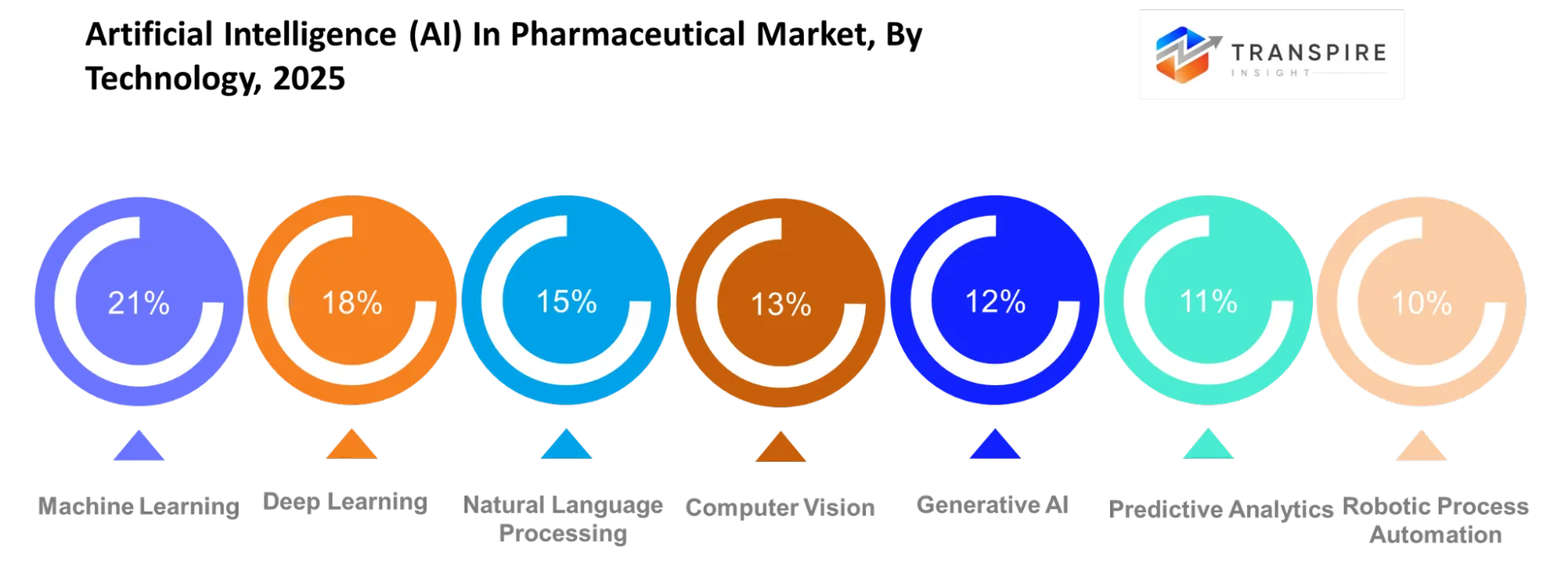
The Machine Learning (ML) segment dominated the market, accounting for approximately 44% in 2025, and is expected to rise at a significant CAGR during the forecast period.
The Artificial Intelligence (AI) in Pharmaceutical Market is segmented by technology into Machine Learning (ML), Deep Learning, Natural Language Processing (NLP), Computer Vision, Context-Aware Computing, Predictive Analytics, Generative AI, and Others. Among these, the Machine Learning (ML) segment dominated the market, accounting for approximately 44% in 2025, and is expected to increase at a significant CAGR during the forecast period. Machine learning algorithms enable pharmaceutical companies to identify potential drug candidates, optimize clinical trial outcomes, predict molecular interactions, and improve decision-making across drug development. Increasing investments in AI-enabled research platforms, predictive analytics, and precision medicine continue to accelerate the adoption of machine learning solutions throughout the pharmaceutical industry.
The Drug Discovery & Development segment held the greatest share of approximately 39% in 2025 and is expected to increase at a substantial CAGR over the forecast period.
The Artificial Intelligence (AI) in Pharmaceutical Market is segmented by application into Drug Discovery & Development, Clinical Trials, Medical Imaging, Precision Medicine, Drug Repurposing, Pharmacovigilance, Manufacturing Optimization, Regulatory Compliance, and Others. Among these, the Drug Discovery & Development segment held the largest market share of approximately 39% in 2025 and is expected to grow at a substantial CAGR throughout the forecast period. AI significantly accelerates target identification, compound screening, biomarker discovery, molecular modeling, and lead optimization while reducing research costs and development timelines. Increasing pharmaceutical R&D investments and the growing need to develop innovative therapies continue to strengthen this segment's market leadership.
The Pharmaceutical & Biotechnology Companies segment held the greatest share of approximately 48% in 2025 and is expected to increase at a high CAGR over the forecast period.
The Artificial Intelligence (AI) in Pharmaceutical Market is segmented by end user into Pharmaceutical & Biotechnology Companies, Contract Research Organizations (CROs), Academic & Research Institutes, Hospitals & Healthcare Providers, Contract Development & Manufacturing Organizations (CDMOs), Regulatory Organizations, and Others. Among these, the Pharmaceutical & Biotechnology Companies segment accounted for approximately 48% of the market in 2025 and is projected to grow at a considerable CAGR during the forecast period. Growing investments in AI-driven drug discovery, personalized medicine, clinical trial optimization, and manufacturing automation are driving widespread AI adoption across pharmaceutical enterprises. Strategic collaborations with AI technology providers and increasing digital transformation initiatives further support segment growth.
Regional Segment Analysis of the Artificial Intelligence (AI) in Pharmaceutical Market
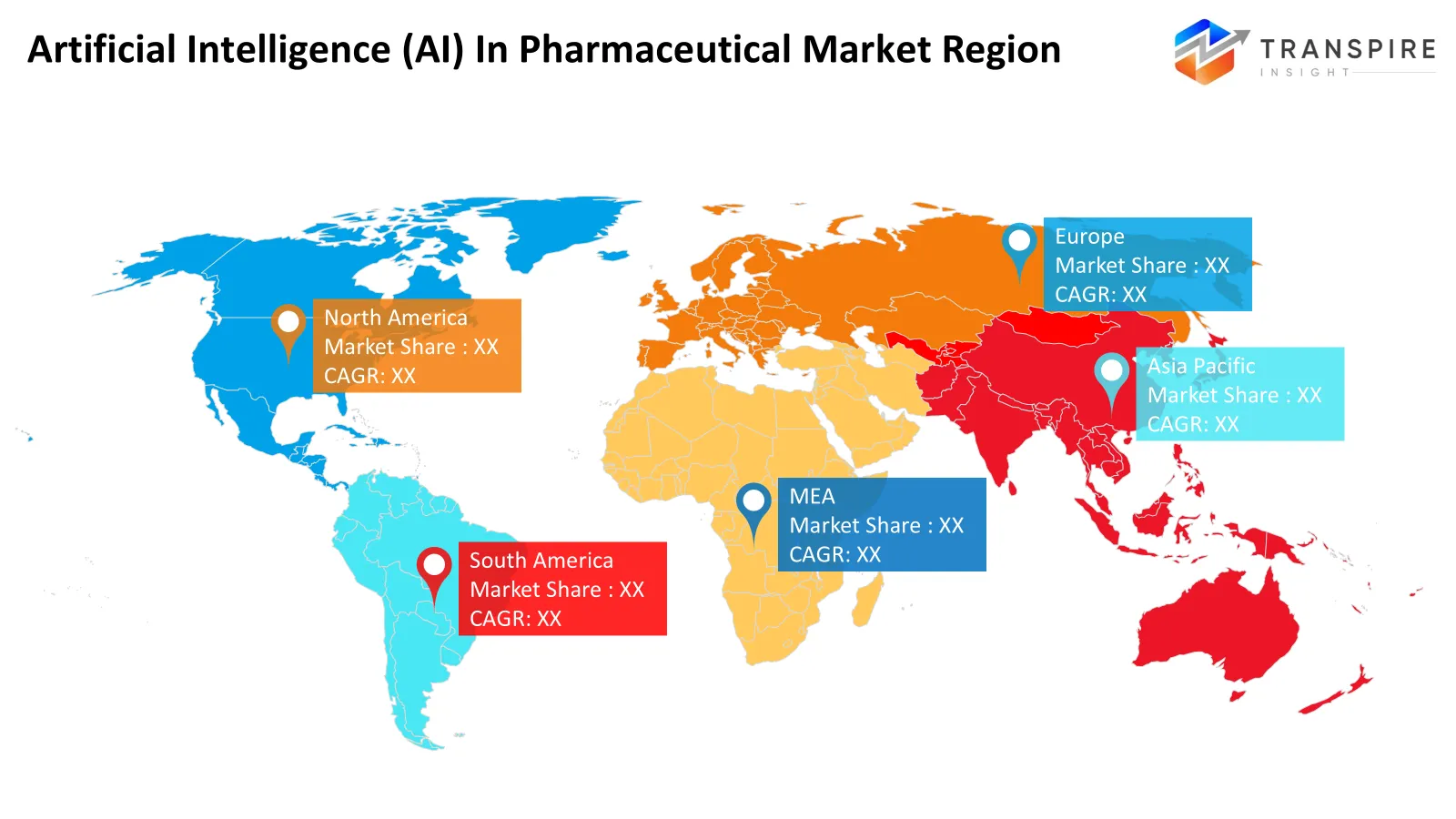
- North America (U.S., Canada, Mexico)
- Europe (Germany, France, U.K., Italy, Spain, Rest of Europe)
- Asia-Pacific (China, Japan, India, Rest of APAC)
- South America (Brazil, Argentina, Rest of South America)
- Middle East & Africa (UAE, Saudi Arabia, South Africa, Rest of MEA)
North America is expected to dominate the Artificial Intelligence (AI) in Pharmaceutical Market by holding approximately 41% of the market share during the forecast period.
North America maintains its leadership position due to the presence of leading pharmaceutical manufacturers, AI technology companies, world-class research institutions, and substantial investments in healthcare innovation. The United States continues to lead AI-driven drug discovery, clinical research, precision medicine, and digital therapeutics. Favorable regulatory initiatives, increasing venture capital investments, and strong collaborations between pharmaceutical companies and AI solution providers continue to strengthen regional market growth.
Asia Pacific is the fastest-growing region in the Artificial Intelligence (AI) in Pharmaceutical Market during the forecast period, accounting for approximately 30% market share.
Asia Pacific is witnessing rapid market expansion due to increasing pharmaceutical manufacturing, government investments in artificial intelligence, expanding biotechnology sectors, and rising healthcare digitalization. Countries including China, India, Japan, and South Korea are investing heavily in AI-enabled drug development, genomic research, cloud computing infrastructure, and precision medicine initiatives. The region's growing patient population and increasing demand for innovative healthcare technologies continue to create significant market opportunities.
Europe is anticipated to hold approximately 24% share of the Artificial Intelligence (AI) in Pharmaceutical Market over the forecast timeframe.
Europe remains a major contributor to the market due to its advanced pharmaceutical ecosystem, strong biotechnology research capabilities, and supportive AI regulatory initiatives. The region continues to invest in explainable AI, digital health infrastructure, precision medicine, and AI-assisted clinical research. Collaborative research projects between pharmaceutical companies, academic institutions, and technology providers further enhance innovation and strengthen Europe's competitive position within the AI pharmaceutical industry.
Strategies for Market Growth in Non-Leading Regions
Emerging economies can accelerate Artificial Intelligence (AI) in Pharmaceutical Market growth by investing in AI research infrastructure, high-performance computing facilities, cloud-based healthcare platforms, and skilled AI talent development. Governments should encourage public-private partnerships, pharmaceutical innovation hubs, AI startup ecosystems, and digital healthcare initiatives to improve market competitiveness. Expanding regulatory frameworks for AI-enabled healthcare solutions, strengthening cybersecurity measures, promoting clinical data standardization, and increasing investments in precision medicine programs will further support sustainable market expansion. Additionally, collaborations between pharmaceutical companies, research institutes, and AI technology providers can significantly improve innovation, technology transfer, and commercialization across developing markets.
Future Market Trends for the Artificial Intelligence (AI) in Pharmaceutical Market
- Generative AI Transforming Drug Discovery: Generative AI models are increasingly being utilized to design novel drug molecules, predict protein structures, optimize molecular properties, and accelerate candidate selection. Leading pharmaceutical companies continue investing in generative AI platforms to significantly reduce research timelines and improve drug development success rates.
- Expansion of Precision Medicine & Personalized Therapeutics: The growing integration of AI with genomics, biomarker analysis, and patient health records is enabling personalized treatment strategies. Pharmaceutical companies are increasingly developing AI-powered precision medicine platforms that improve therapeutic outcomes while minimizing adverse drug reactions.
- AI-Enabled Clinical Trial Optimization: Artificial intelligence is revolutionizing clinical trial management through intelligent patient recruitment, predictive enrollment modeling, protocol optimization, remote patient monitoring, and real-time data analytics. These technologies improve operational efficiency, reduce trial costs, and accelerate regulatory approval processes.
Recent Developments
- In May 2026 - NVIDIA Corporation: NVIDIA expanded collaborations with pharmaceutical companies and biotechnology organizations to enhance accelerated computing infrastructure and AI platforms supporting large-scale drug discovery, molecular simulation, and pharmaceutical research.
- In January 2025 - Insilico Medicine: Insilico Medicine advanced multiple AI-designed drug candidates into clinical development, demonstrating the increasing commercialization of generative AI and machine learning technologies for accelerating pharmaceutical innovation and improving drug discovery efficiency.
Market Segment
This study forecasts revenue at global, regional, and country levels from 2020 to 2033. Transpire Insights has segmented the Artificial Intelligence (AI) In Pharmaceutical Market based on the below-mentioned segments:
Artificial Intelligence (AI) In Pharmaceutical Market, By By Technology
- Machine Learning
- Deep Learning
- Natural Language Processing
- Computer Vision
- Generative AI
- Predictive Analytics
- Robotic Process Automation
- Others
Artificial Intelligence (AI) In Pharmaceutical Market, By Application
- Drug Discovery
- Clinical Trials
- Medical Imaging
- Precision Medicine
- Pharmacovigilance
- Manufacturing Optimization
- Sales & Marketing
- Others
Artificial Intelligence (AI) In Pharmaceutical Market, By Deployment
- Cloud-based
- On-premise
- Hybrid
- Private Cloud
- Public Cloud
- Edge AI
- Multi-cloud
- Others
Artificial Intelligence (AI) In Pharmaceutical Market, By End User
- Pharmaceutical Companies
- Biotechnology Companies
- CROs
- Research Institutes
- Hospitals
- Regulatory Agencies
- Academic Institutions
- Others
Artificial Intelligence (AI) In Pharmaceutical Market, By Drug Type
- Cell Small Molecules
- Biologics
- Biosimilars
- & Gene Therapies
- Vaccines
- Orphan Drugs
- Specialty Drugs
- Others
Artificial Intelligence (AI) In Pharmaceutical Market, By Regional Analysis
North America
- US
- Canada
- Mexico
Europe
- Germany
- UK
- France
- Italy
- Spain
- Russia
- Rest of Europe
Asia Pacific
- China
- Japan
- India
- South Korea
- Australia
- Rest of Asia Pacific
South America
- Brazil
- Argentina
- Rest of South America
Middle East & Africa
- UAE
- Saudi Arabia
- Qatar
- South Africa
- Rest of the Middle East & Africa
Frequently Asked Questions
Find quick answers to common questions.
Rising investments in AI-powered drug discovery, increasing pharmaceutical R&D spending, growing adoption of precision medicine, expanding clinical trial optimization, and continuous advancements in machine learning, generative AI, and cloud computing are driving the growth of the Artificial Intelligence (AI) in Pharmaceutical Market.
North America dominates the market due to its strong pharmaceutical industry, advanced AI ecosystem, significant healthcare investments, leading biotechnology companies, and increasing adoption of AI-driven drug discovery and precision medicine technologies.
Artificial Intelligence enhances drug discovery, accelerates clinical trials, improves predictive analytics, enables personalized medicine, optimizes pharmaceutical manufacturing, strengthens pharmacovigilance, and reduces drug development costs while improving operational efficiency.
The Drug Discovery & Development segment leads the market, driven by increasing adoption of AI for target identification, molecular modeling, compound screening, biomarker discovery, and accelerating new drug development.
Major companies include NVIDIA Corporation, Microsoft Corporation, Alphabet Inc. (Google DeepMind), IBM Corporation, Oracle Corporation, Insilico Medicine, Exscientia plc, BenevolentAI, Schrödinger Inc., and Recursion Pharmaceuticals.
- NVIDIA
- Microsoft
- IBM
- Oracle
- IQVIA
- Insilico Medicine
- BenevolentAI
- Exscientia
- Recursion Pharmaceuticals
- Schrödinger
- Tempus AI
- Pfizer
- Roche
- AstraZeneca
About the Authors

Pankaj Ghogare Patil
I am Pankaj Ghogare Patil, a Senior Research Analyst at Transpire Insight, specializing in the Pharmaceutical, Chemicals & Materials, Healthcare IT, and Biotechnology industry. My expertise lies in conducting comprehensive market research, analyzing industry trends, evaluating competitive landscapes, and translating complex data into actionable insights. At Transpire Insight, I closely follow emerging technologies, regulatory developments, and market innovations to create accurate, well-researched, and informative content that helps businesses and professionals make informed decisions. I am committed to producing credible, evidence-based articles that reflect industry best practices while making technical topics accessible and valuable for a broad audience.

Chakradhar Khansole
Chakradhar serves as the Research Director at Transpire Insight, bringing over 8 years of experience in technology, innovation, and strategic market intelligence. He specializes in transforming complex market data into actionable business insights that enable organizations to make informed, growth-oriented decisions. Recognized for his strategic vision and analytical expertise, Chakradhar leads high-impact research initiatives, delivering comprehensive market assessments, competitive intelligence, and forward-looking industry analysis.
Recently Published Reports
-
Apr 2026
AI in Diabetic Retinopathy Market
AI in Diabetic Retinopathy Market Size, Share & Analysis Report By Type (Screening AI Systems, Diagnostic AI Systems, and Predictive AI Models), By Application Segment (Hospitals, Ophthalmology Clinics, Diagnostic Centers, and Research and Development), and Geography (North America, Europe, Asia-Pacific, Middle East and Africa, South and Central America), 2021 - 2031
-
Apr 2026
Psychometric Tests Market
Psychometric Tests Market Size, Share & Analysis Report By Type (Personality Tests, Ability/Aptitude Tests, Skill/Knowledge Tests, and Others), By Application (Talent Acquisition and Talent Management), and Geography (North America, Europe, Asia-Pacific, Middle East and Africa, South and Central America), 2021 – 2031
-
Apr 2026
Rare Biological Sample Collection Market
Rare Biological Sample Collection Market Size, Share & Analysis Report By Type (Isolation Kits & Reagent, Blood Collection Tubes, and Others), By Application (Oncology, Transcriptomics, Pharmacogenomics, and Others), and Geography (North America, Europe, Asia-Pacific, Middle East and Africa, South and Central America), 2021 – 2031
-
Jul 2026
Diabetic Retinopathy Market
Diabetic Retinopathy Market Size, Share & Analysis Report By Type (Proliferative Diabetic Retinopathy, and Diabetic Macular Edema (DME)), By Treatment Type (Anti VEGF Drug, Steroid Implants, Laser Surgeries, and Vitrectomy), and Geography (North America, Europe, Asia-Pacific, Middle East and Africa, South and Central America), 2021 – 2031
Our Clients