
Alcoholic Drinks Packaging Market Summary:
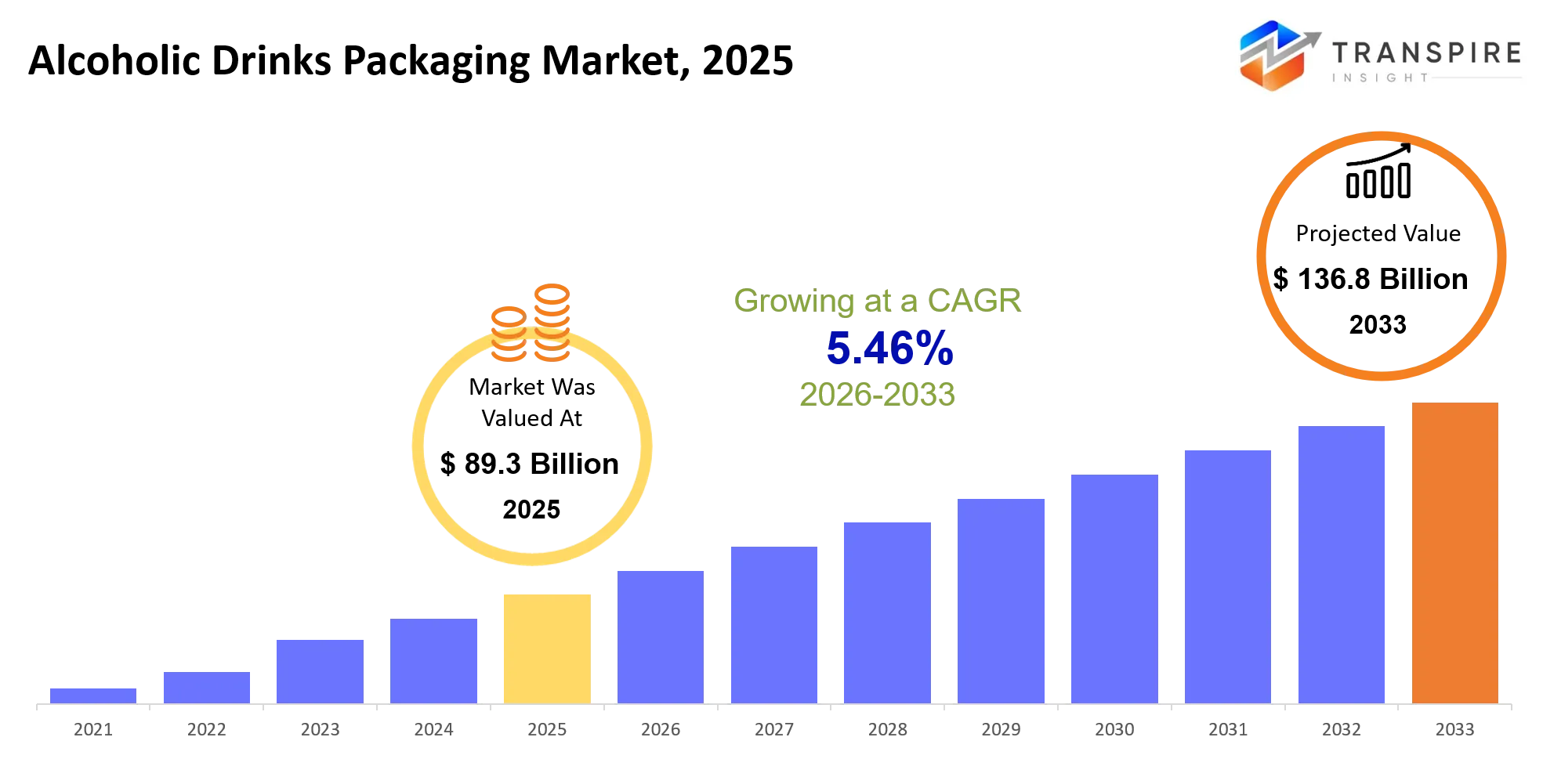
As per the Transpire Insight Analysis, The Alcoholic Drinks Packaging Market size is estimated at USD 89.3 billion in 2025 and is anticipated to reach USD 136.8 billion by 2033, growing at a CAGR of 5.46% from 2026 to 2033.
The alcoholic drinks packaging market helps beverage makers protect product quality, facilitate transportation, promote branding, and ensure compliance with retail and regulatory demands. Over the last three to five years, designers' focus on packaging has shifted from low-cost, high-visual-impact options toward a compromise of recyclability, product differentiation, and supply-chain management. Glass is important for wine and premium spirits brands that need to secure product integrity and meet established expectations, but metal cans are suitable for beer and hard seltzers, along with RTD cocktails, due to their portability. A structural change is underway in the market, as beverage makers are now designing the packaging to feature recycled content, lightweight materials, and circular recovery systems. This trend is being supported by extended producer responsibility regulations and tighter packaging-waste policies in large markets, while the proliferation of canned cocktails and smaller serving sizes is driving further capital investment into flexible filling lines to enable market growth by helping drink makers control logistics costs, meet regulations, and reach new consumption occasions.
Alcoholic Drinks Packaging Market Size & Forecast:
- Market Size 2025: USD 89.3 Billion
- Expected Market Value (2033): USD 136.8 Billion
- Forecast CAGR (2026–2033): 5.46%
- Leading Region in 2025: North America
- Fastest Growing Region: Asia-Pacific
- Key Company Profiles: Amcor, Ball Corporation, Crown Holdings, Ardagh Group, O-I Glass, Verallia, Berry Global, Mondi, DS Smith, WestRock, Tetra Pak, SIG, Smurfit Kappa, TricorBraun, Saxco International.
Key Alcoholic Drinks Packaging Market Insights:
The market is moving away from material substitution to system redesign, and competitiveness is being determined by lightweighting, recycled content, and reusability. Low-carbon packaging suppliers who are investing in high-quality design are getting an edge in the beer, wine, spirits, and RTD categories.
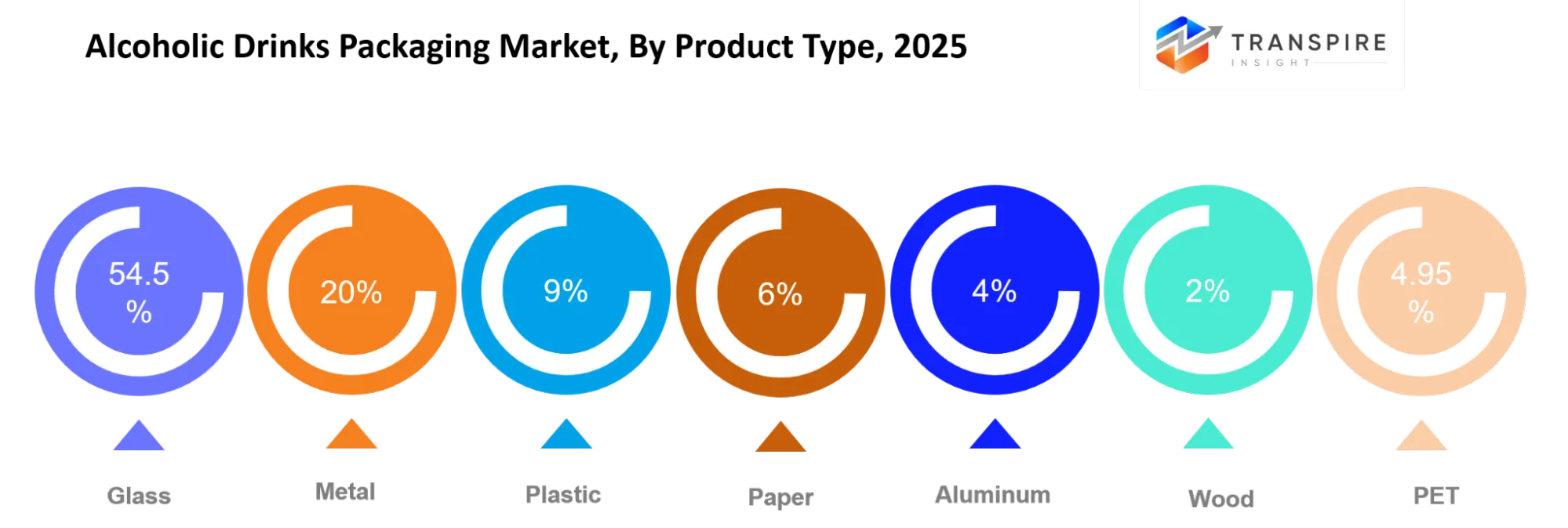
- Glass accounts for 54.05% of the market, and in July 2025, Ardagh introduced a 300 g wine bottle, which reduced glass consumption by 22% without compromising strength.
- Metal packaging accounted for 20.00%, and Crown launched an initiative to replace all of Moment's beverages with 12 oz CrownSleek infinitely recyclable cans in March 2025.
- Plastic is 9.00%, and in April 2025, Amcor joined Berry in a combination that was all-stock, adding rigid and flexible packaging capabilities.
- Paper's 6.00% increase was driven by partnerships with machinery suppliers and large-scale retail contracts to advance recyclable fibre-based packaging.
- Aluminium accounts for 4.00 %; Ball launched lightweight cans in April 2025 with advanced barrier technology to be used for craft beer and RTD products.
- PET accounts for 2.00%, and Amcor introduced 100% recycled PET beverage bottles in June 2025.
- The percentage of wood is 2.00%, and barrel and keg suppliers are promoting refillable, long-life formats for craft beer and spirits maturation.
- O-I Glass aims for 60% cullet use and 80% renewable electricity by 2030, further strengthening its low-carbon premium glass supply.
- Verallia manufactured over 16 billion bottles and jars, which enabled scale-based glass decarbonisation.
What are the Key Drivers, Restraints, and Opportunities in the Alcoholic Drinks Packaging Market?
Driver:
Sustainability regulation and retailer decarbonisation targets are forcing packaging redesign. The EU Packaging and Packaging Waste Regulation, effective from 2025, introduces binding reuse and recyclability requirements, including a 10% reusable-packaging obligation for beverage sales packaging from 2030. This is accelerating investment in refillable glass, recycled aluminium, mono-material labels, and lightweight bottles. The revenue effect is twofold: packaging suppliers gain higher-value conversion projects, while beverage brands can protect retail listings, reduce freight emissions, and strengthen ESG credibility with investors and trade customers.
Restraint:
High conversion costs and fragmented reuse infrastructure limit rapid change. Glass remains dominant because it protects flavour, signals premium quality, and supports established bottling lines; replacing it requires new filling assets, washing systems, reverse-logistics networks, and retailer cooperation. These constraints persist because packaging decisions are capital-intensive, product-specific, and dependent on regional recycling and deposit-return systems that remain uneven across markets.
Opportunity:
Circular packaging systems, lightweight glass, recycled aluminium, and digitally printed short-run cans offer practical avenues for expansion. The EU's Packaging and Packaging Waste Regulation began applying in August 2026, strengthening the case for recyclable designs and improved material recovery. Investments in refillable bottles, deposit-return infrastructure, and recycled-content processing could help suppliers secure long-term contracts, reduce virgin-material exposure, and serve beverage brands seeking measurable environmental improvements.
What Has the Impact of Artificial Intelligence Been on the Alcoholic Drinks Packaging Market?
AI is improving how packagers of alcoholic beverages detect defects, schedule production runs, and reduce downtime of production lines. Machine-vision systems can inspect bottles, cans, closures, labels, and fill levels at-line at production speed. Bottles with scratches, broken labels, and bad seals are flagged before reaching distribution, helping premium spirit makers avoid brand-damaging packaging problems and reducing rejection and rework costs.
Predictive analytics combines sensor signals from the filling, capping, labelling, and conveyor systems to spot unusual production behaviours before machinery breaks down. This information enables maintenance teams to schedule repairs around production, improve equipment usage, and reduce the waste of packaging. Demand forecasting AI helps beverage producers plan for material purchases and change running configurations when seasonal promotions or limited-edition product launches shift the order volume. The challenge is that the use of AI is not the same everywhere; smaller packaging operations may not be able to afford the software integration, lack historical data to create models, bear the cost of installing sensors, or have skilled professionals available to create models. Models can also trigger false alarms in changing production conditions or packaging designs. In the near term, the industry is likely to focus on targeted applications with a rapid return on investment, before expanding AI further.
In October 2026, Carlsberg agreed to acquire PepsiCo's bottling operations in Georgia and Armenia to expand its regional footprint and beverage distribution network. This acquisition deepens Carlsberg's multi-market manufacturing alliance and scales up its integrated supply chain and production capacity.
Key Alcoholic Drinks Packaging Market Trends:
Packaging innovation is moving away from differentiation based on appearance, and towards measurable environmental performance and production flexibility. Brands are juggling high-end presentation, recyclability, convenience, and the ability to withstand supply chain disruptions.
- The larger bottles are being phased out of the market in favour of lighter bottles to reduce freight emissions and breakage in long-distance distribution.
- Brands are leveraging aluminium cans to make premium spirits, wine, cocktails and hard seltzers more portable than beer.
- Convenience and impulse sales are fueling ready-to-drink growth with single-serve, resealable, and multipack formats.
- As EU reuse targets drive a change in beverage distribution and retailer shelf strategies, refillable bottles are making a comeback.
- Recycled aluminium and glass are now requirements for procurement and viable brand communication priorities.
- Digital can printing allows for short-run seasonality, personalisation and quicker limited runs.
- Smart labels, QR codes, and Digital Product Passports enhance traceability, authentication, and consumer interaction.
- The use of mono-material closures, labels and sleeves is becoming more popular to ease recycling and comply with eco-design regulations.
- The growth of e-commerce is driving a demand for secondary and transport packaging that is shock-resistant.
- Premiumisation is driving embossed glass, speciality closures and premium gift packaging for wine and spirits.
- Pack redesigns are being made by beverage companies in anticipation of recyclability, labelling and reuse regulations.
Alcoholic Drinks Packaging Market Segmentation
Material:
Glass makes up a 54.05% share as it preserves taste, remains integral to wine, spirits and craft beer and supports premium positioning. Metal accounts for a 20.00% share – this is the most dynamic segment with a CAGR of 6.35% thanks to canned beer, RTD cocktails, hard seltzers and lightweight recyclable formats. Plastic accounts for 9.00% and is prevalent in closures, crates and some lightweight formats. Paper accounts for 6.00%, primarily in cartons, labels, sleeves and secondary packaging. Aluminium is at 4.00%, PET 2.00% and wood at 2.00%, as well as miscellaneous materials at 2.95%, accounting for kegs, barrels, closures and more niche gift packaging.
Package Type:
Bottles remain the core packaging format for wine, spirits, and premium beer because they protect product quality and support brand differentiation. Metal cans benefit from portability, rapid chilling, and convenient single-serve consumption, particularly for beer and ready-to-drink cocktails. Pouches and cartons serve selected retail applications, while growlers support craft beverage sales. Kegs and barrels remain important for breweries, bars, restaurants, and bulk distribution, with reusable formats helping businesses manage packaging waste and recurring supply costs.
Alcohol Type:
Beer represents a major volume base for alcoholic drinks packaging, supported by established bottling, canning, and multipack distribution systems. Wine and spirits sustain demand for premium glass bottles, specialized closures, and decorative finishes that reinforce product positioning. Ready-to-drink cocktails, cider, and hard seltzers encourage convenient cans and smaller serving formats. Liqueurs also rely on distinctive bottles for shelf differentiation. These changing product preferences encourage packaging suppliers to develop flexible filling capabilities and format-specific solutions for different beverage categories.
Product Format:
Standard packaging maintains scale through established production lines, predictable material requirements, and efficient distribution. However, premium formats support higher-value branding, while lightweight designs reduce shipping weight and material consumption. Refillable packaging offers opportunities to strengthen circular distribution models, particularly where collection systems are established. Single-serve and multipack formats address convenience and retail merchandising needs. Sustainable packaging increasingly influences purchasing decisions and regulatory compliance, encouraging manufacturers to balance production efficiency, consumer appeal, and environmental performance across developed and emerging markets.
Packaging Function:
Primary packaging protects beverage quality and provides the main brand presentation, while secondary packaging supports retail displays, product grouping, and promotional campaigns. Transport packaging reduces damage during warehousing and distribution, particularly across export supply chains. Closures provide sealing and tamper evidence, while labels and sleeves communicate product information, support traceability, and distinguish brands. Cartons improve handling and multipack efficiency. As recycling requirements tighten and online beverage sales evolve, suppliers must coordinate these functions to improve material compatibility, reduce waste, and maintain reliable packaging performance throughout distribution.
What are the Key Use Cases Driving the Alcoholic Drinks Packaging Market?
Glass bottles are the core use case, particularly for wine, premium spirits, and established beer brands. Their barrier performance, established recycling streams, and premium shelf presentation support the leading material segment's 54.05% share. Bottle shapes, closures, and labels also help distinguish brands in crowded retail channels.
Expanding applications include aluminum cans for beer, hard seltzers, and ready-to-drink cocktails, alongside kegs and growlers for craft breweries and hospitality venues. Multipacks and transport cartons help retailers and distributors handle larger volumes efficiently while protecting products during transit.
Emerging use cases include refillable bottles, digitally identifiable packaging, and lightweight formats for e-commerce and export distribution. These solutions can improve traceability, reduce shipping burdens, and support circularity as packaging rules tighten.
|
Report Metrics |
Details |
|
Market size value in 2025 |
USD 89.3 Billion |
|
Market size value in 2026 |
USD 94.3 Billion |
|
Revenue forecast in 2033 |
USD 136.8 Billion |
|
Growth rate |
CAGR of 5.46% from 2026 to 2033 |
|
Base year |
2025 |
|
Historical data |
2021 - 2024 |
|
Forecast period |
2026 - 2033 |
|
Report coverage |
Revenue forecast, competitive landscape, growth factors, and trends |
|
Regional scope |
United States; Canada; Mexico; United Kingdom; Germany; France; Italy; Spain; Denmark; Sweden; Norway; China; Japan; India; Australia; South Korea; Thailand; Brazil; Argentina; South Africa; Saudi Arabia; United Arab Emirates |
|
Key companies profiled |
Amcor, Ball Corporation, Crown Holdings, Ardagh Group, O-I Glass, Verallia, Berry Global, Mondi, DS Smith, WestRock, Tetra Pak, SIG, Smurfit Kappa, TricorBraun, Saxco International. |
|
Customization scope |
Free report customization (country, regional & segment scope). Available customized purchase options to meet your exact research needs. |
|
Report Segmentation |
Material (Glass, Metal, Plastic, Paper, Wood, Aluminum, PET, Others); Package Type (Bottles, Metal Cans, Pouches, Barrels, Cartons, Growlers, Kegs, Others); Alcohol Type (Beer, Wine, Spirits, Ready-to-Drink, Cider, Seltzer, Liqueurs, Others); Product Format (Standard, Premium, Lightweight, Refillable, Single-Serve, Multipack, Sustainable, Others); Packaging Function (Primary Packaging, Secondary Packaging, Transport Packaging, Closures, Labels, Sleeves, Cartons, Others). |
Which Regions are Driving the Alcoholic Drinks Packaging Market Growth?
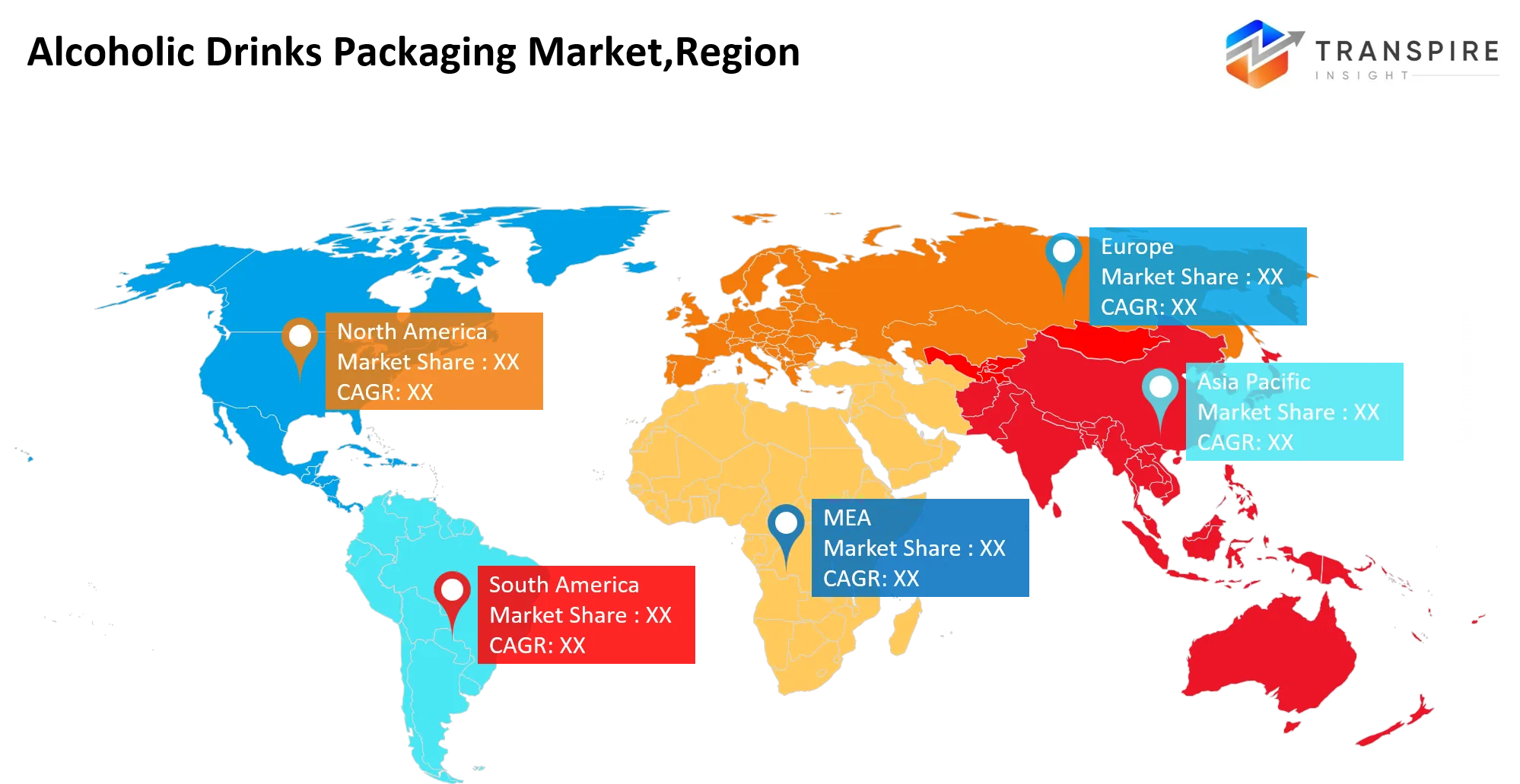
North America has a leading 39.10% market share and is characterised by a large consumption of beer, spirits and RTDs, resulting in considerable demand for cans, bottles and secondary packaging. Its strong network of craft brewing, high-end spirits brands and mature retail market sustains the consistent demand for different packaging formats. The country also benefits from sophisticated recycling infrastructure, an advanced supply chain for aluminium and first-mover deployment of lightweight cans and e-commerce packaging.
In October 2026, Constellation Brands completed the acquisition of spirit-based ready-to-drink brand SpikedAde. This tactical expansion strengthens the beverage giant's presence in the fast-growing premium canned RTD category.
Europe accounts for 32.40% market share and is a volume leader by virtue of regulatory strength. The EU Packaging and Packaging Waste Regulation is promoting reuse – mono-materials and digital traceability are gaining traction with beverage brands. Europe's resilient wine and spirits segment sustains premium glass demand, while deposit-return schemes, glass furnace capacity, and retailer sustainability standards provide stability for a mature market while consumption growth stabilises.
In August 2026, Coca-Cola Europacific Partners Deutschland (CCEP DE), Vetropack, and Myneral Labs expanded their digital packaging partnership to implement unit-level serialisation across multiple bottling plants in Germany.
Asia-Pacific is the fastest-growing region with a compound annual growth rate of 7.95% and market share of 21.00%. Growing urban incomes, the expanding consumption of beer and spirits, and the unprecedented penetration of modern retail have caused demand for cans, bottles, and transport packaging to surge. New local can production, glass capacity, and recycling investments will offer suppliers opportunities to build regionalized, affordable supply chains and to find solutions to temper high temperatures, meet the needs of convenience retail, and tap into digital commerce.
In August 2026, Indorama Ventures partnered with Suntory Holdings, Suntory PepsiCo Beverage (Thailand), and Iwatani Corporation to bring commercial-scale circular PET packaging to Thailand using advanced Flake-to-Preform (FtoP) direct recycling technology.
Who are the Key Players in the Alcoholic Drinks Packaging Market, and how do they compete?
Market dynamics include a shift from capacity leadership to carbon efficiency, innovation in formats, and closed-loop service capability. Supply chains get a deal through providing simplicity to beverage brands to meet recyclability standards, carbon-efficient freight, and new premium or convenience products.
Innovation strategies include: Amcor's focus on scale and innovation by expanding through the merger with Berry for flexible, rigid, and recycled-content packaging through material science and conversion capacity; Ball Corporation's focus on aluminum, can lightweighting, and building its recycling capabilities focused on craft beer and ready-to-drink; Crown Holdings' focus on can formats and partnering with brands on beauty, fashion, and innovation that include the launch of Moment 12 oz Crown Sleek; and low-carbon glass innovation strategies from Ardagh, O-I Glass, and Verallia that deliver lightweight bottles, cullet usage, and furnace decarbonization with Ardagh's 300 g wine bottle serving as a cost and sustainability differentiator. Additional strategies include secondary, transport, and fibre-based packaging competition, including recyclable product design and bringing supply chains together from Berry Global, Mondi, DS Smith, Smurfit WestRock, and WestRock; portion-controlled, alternative beverage formats from Tetra Pak and SIG; and distribution, design services, and craft producer focus from Tricor Braun and Saxco.
Key Players are:
- Amcor
- Ball Corporation
- Crown Holdings
- Ardagh Group
- O-I Glass
- Verallia
- Berry Global
- Mondi
- DS Smith
- WestRock
- Tetra Pak
- SIG
- Smurfit Kappa
- TricorBraun
- Saxco International
Recent Development News
- In June 2026, CANPACK formalised a collaboration with Canovation to advance CanReseal®, a resealable aluminium can-end technology, toward commercial readiness and pilot-scale deployment. The partnership combines resealable closure innovation with beverage-can manufacturing expertise, potentially improving convenience and expanding packaging options for alcoholic and other beverages.
- In May 2026, Guala Closures launched MAGNEX, a next-generation aluminium closure designed for premium spirits using electromagnetic forming technology. The closure integrates complex geometries, micro-engravings, and three-dimensional textures to strengthen product differentiation and make counterfeit packaging more difficult to reproduce, supporting security and premiumization in spirits packaging.In July 2026 launched a newly lightweighted wine bottle design that reduced individual structural bottle weight from 580g down to 440g. This technical modification is projected to cut annual glass utilisation by approximately 350 tonnes across the label's 2.5 million bottle output while reducing manufacturing greenhouse gas emissions, according to Drinks Intel.
What Strategic Insights Define the Future of the Alcoholic Drinks Packaging Market?
The market will move away from the substitution of materials to reusable, lightweight, digitally traceable systems. Glass, while still holding onto its luxury stature, will need to be supported by suppliers who can show lower-emission production alternatives. Cans will continue to enable brands to meet the demand for RTDs and convenience products with innovative barrier and design solutions.
A risk is an existing infrastructure mismatch - targets for reusable bottle and deposit return schemes may outpace collection, washing and reverse logistics capacity, adding cost to brands and retailers. An emerging opportunity is artificial intelligence-enabled circular packaging that tracks returnable bottles, authenticates recycled content, and optimises both glass and cans production. Optimisation of regional reuse networks, mono-material design and data-backed carbon claims will be keys to success for packaging suppliers. Early engagement is crucial for brands to partner with solutions providers who can combine premium face and regulatory compliance with evidence of life cycle carbon emissions.
Key Segmentations are:
Material
- Glass
- Metal
- Plastic
- Paper
- Wood
- Aluminum
- PET
- Others
Package Type
- Bottles
- Metal Cans
- Pouches
- Barrels
- Cartons
- Growlers
- Kegs
- Others
Alcohol Type
- Beer
- Wine
- Spirits
- Ready-to-Drink
- Cider
- Seltzer
- Liqueurs
- Others
Product Format
- Standard
- Premium
- Lightweight
- Refillable
- Single-Serve
- Multipack
- Sustainable
- Others
Packaging Function
- Primary Packaging
- Secondary Packaging
- Transport Packaging
- Closures
- Labels
- Sleeves
- Cartons
- Others
Frequently Asked Questions
Find quick answers to common questions.
The alcoholic drinks packaging market size was valued at USD 89.3 billion in 2025 and is poised to reach USD 136.8 billion by 2033, expanding at a 5.46% CAGR.
Key segments for the alcoholic drinks packaging market are Material (Glass, Metal, Plastic, Paper, Wood, Aluminum, PET, Others); Package Type (Bottles, Metal Cans, Pouches, Barrels, Cartons, Growlers, Kegs, Others); Alcohol Type (Beer, Wine, Spirits, Ready-to-Drink, Cider, Seltzer, Liqueurs, Others); Product Format (Standard, Premium, Lightweight, Refillable, Single-Serve, Multipack, Sustainable, Others); Packaging Function (Primary Packaging, Secondary Packaging, Transport Packaging, Closures, Labels, Sleeves, Cartons, Others).
Growth is primarily driven by premiumization of alcoholic beverages, expanding ready-to-drink cocktail and canned beer sales, demand for lightweight and recyclable packaging, product differentiation, and stricter sustainability regulations.
The alcoholic drinks packaging market is led by major manufacturers, including Amcor, Ball Corporation, Crown Holdings, Ardagh Group, O-I Glass, Verallia, Berry Global, Mondi, DS Smith, WestRock, Tetra Pak, SIG, Smurfit Kappa, TricorBraun, and Saxco International.
North America holds a 39.10% share, supported by established beverage manufacturers, premium spirits consumption, advanced packaging infrastructure, strong retail distribution, and investments in recycling and production automation.
Key opportunities include lightweight glass bottles, recycled aluminium cans, refillable packaging systems, smart packaging technologies, and sustainable materials that improve recyclability and reduce transportation costs.
- Amcor
- Ball Corporation
- Crown Holdings
- Ardagh Group
- O-I Glass
- Verallia
- Berry Global
- Mondi
- DS Smith
- WestRock
- Tetra Pak
- SIG
- Smurfit Kappa
- TricorBraun
- Saxco International
About the Authors

Kartik bhong
I am Kartik Bhong, a Senior Research Analyst at Transpire Insight, specializing in the Packaging, Manufacturing, and Construction industry. My work focuses on analyzing market trends, emerging technologies, industry regulations, and competitive landscapes to deliver accurate, data-driven insights. I am passionate about transforming complex industry information into clear, practical content that helps businesses, professionals, and decision-makers stay informed and make confident strategic decisions. Through continuous research and a strong commitment to accuracy, I strive to create reliable, well-researched content that reflects the latest developments across these dynamic industries and supports the vision of Transpire Insight in delivering valuable market intelligence.

Chakradhar Khansole
Chakradhar serves as the Research Director at Transpire Insight, bringing over 8 years of experience in technology, innovation, and strategic market intelligence. He specializes in transforming complex market data into actionable business insights that enable organizations to make informed, growth-oriented decisions. Recognized for his strategic vision and analytical expertise, Chakradhar leads high-impact research initiatives, delivering comprehensive market assessments, competitive intelligence, and forward-looking industry analysis.
Recently Published Reports
-
Apr 2026
Pharmaceutical Cold Chain Packaging Market
Pharmaceutical Cold Chain Packaging Market By Material (Plastic,(Polyethylene (PE), Polypropylene (PP), Polyethylene Terephthalate (PET), Expanded Polystyrene (EPS), Polyurethane (PU),Others), Paper, Metal, Others), By Product (Small Boxes, Pallets, Large Sized Pallet Containers, Others), By End Use (Biopharmaceutical Companies, Clinical Research Organizations, Hospitals, Research Institutes, Logistics and Distribution Companies, Others)”, By Industry Analysis, Size, Share, Growth, Trends, and Forecasts 2026-2033
-
Apr 2026
Active & Intelligent Packaging Market
Active & Intelligent Packaging Market By Type (Active Packaging, Smart Packaging), By Material (Polymer-Based, Paper & Board-Based, Metal-Based, Glass-Based), By Technology (Time-Temperature Indicators, Freshness Indicators, RFID, Antimicrobial Packaging, Modified Atmosphere Packaging), By Application (Food & Beverages, Pharmaceutical, Cosmetics & Personal Care, Electronics & Consumer Goods, Others), By Industry Analysis, Size, Share, Growth, Trends, and Forecasts 2026-2033
-
Apr 2026
Biodegradable Cut Flower Packaging Market
Biodegradable Cut Flower Packaging Market By Material Type (Paper & Paperboard, Biodegradable Plastics, Natural Fibers, Molded Pulp, Others), By Product Type (Sleeves, Wraps, Boxes & Cartons, Bags & Pouches, Inserts & Holders), By Application (Roses, Carnations, Tulips, Chrysanthemums, Mixed Flowers, Others) and By Distribution Channel (Direct Sales, Distributors & Wholesalers, Online Channels), By Industry Analysis, Size, Share, Growth, Trends, and Forecasts 2026-2033
-
May 2026
Pharmaceutical Packaging Market
Pharmaceutical Packaging Market By Material Type (Plastic, Glass, Metal, Paper & Paperboard, Others), By Packaging Type (Bottles, Blister Packs, Vials, Ampoules, Pouches & Sachets, Others) and By End User (Hospitals & Clinics, Retail Pharmacies, Online Pharmacies, Pharmaceutical Manufacturers), By Industry Analysis, Size, Share, Growth, Trends, and Forecasts 2026-2033