

Market Summary
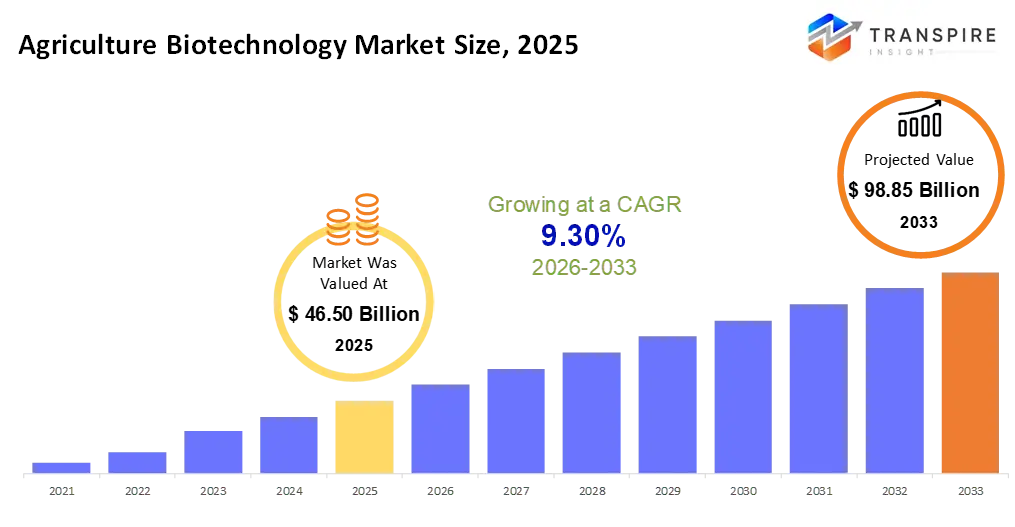
The global Agriculture Biotechnology market size was valued at USD 46.50 billion in 2025 and is projected to reach USD 98.85 billion by 2033, growing at a CAGR of 9.30% from 2026 to 2033. Fueled by hunger for more food worldwide, farms now lean on smarter seeds that survive tougher conditions. New tools like gene tweaks and cell cloning help plants yield better harvests even when the weather turns harsh. Instead of old methods, many growers choose natural-based treatments to protect soil health. Awareness spreads slowly, yet steadily, about greener ways to work the land, pushing labs and fields closer together.
Market Size & Forecast
- 2025 Market Size: USD 46.50 Billion
- 2033 Projected Market Size: USD 98.85 Billion
- CAGR (2026-2033): 9.30%
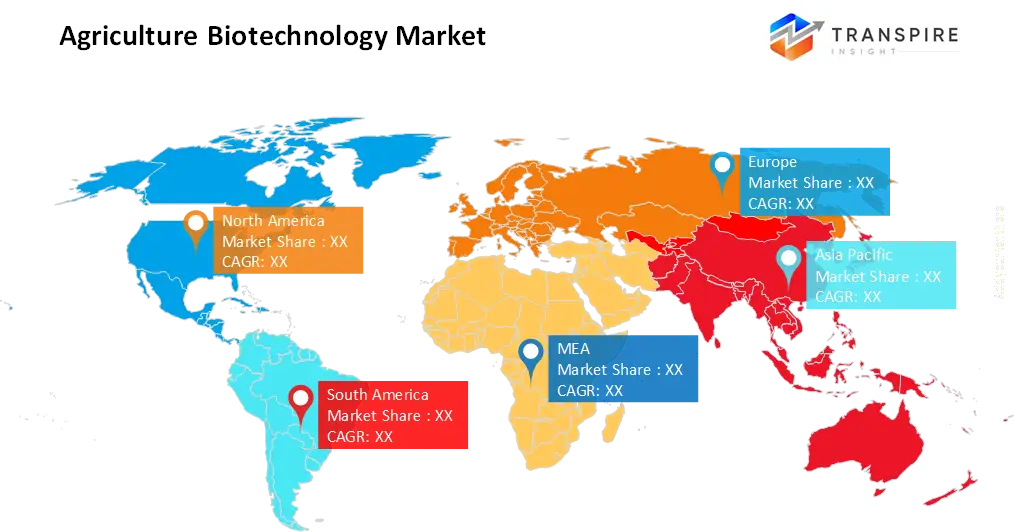
- North America: Largest Market in 2026
- Asia Pacific: Fastest Growing Market
To learn more about this report,  Download Free Sample Report
Key Market Trends Analysis
- North America market share estimated to be approximately 44% in 2026. Farming tech spreads widely across continents, yet North America stands out. Its labs and fields carry more weight than others do. This region holds the biggest piece of the ag-biotech world. Others follow, but none match its reach. Size matters here; space, funding, and research all add up. Not every place moves at this pace. Progress hums louder in these northern zones
- Out front in farm tech, the United States stays ahead because farmers widely grow genetically modified crops. Money pours into research year after year. Rules in place make it fast to bring new bio-based tools to market. That pace gives the country a lasting edge.
- Fueled by growing hunger for food, vast farming sectors pull ahead here. Government pushes for greener practices spark wider use of biological fertilizers, pest controls, alongside engineered plants. This part of the world moves quickest, lifted by such shifts. Momentum builds where fields meet policy.
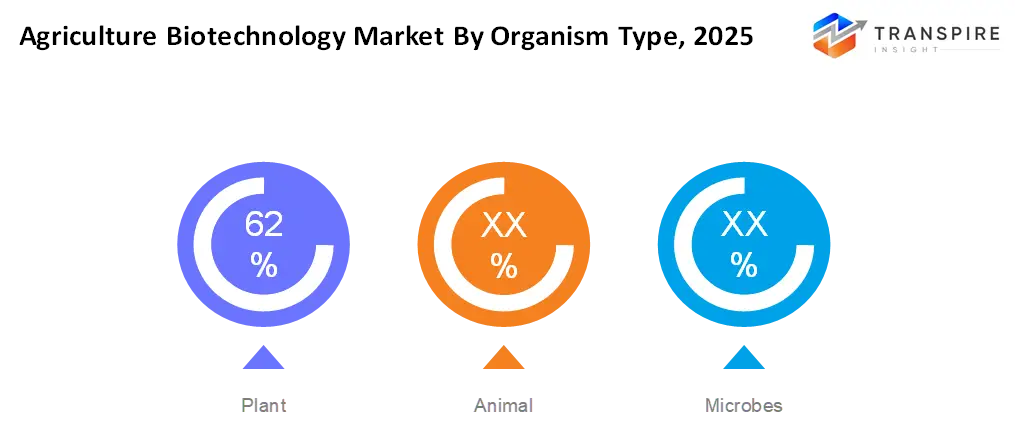
- Plants share approximately 64% in 2026. Plants dominate because farmers widely grow engineered crops for food and animal diets. Despite new tech, most gains still come from modified green life forms used in agriculture. Their reach stretches across fields where feeding people and livestock matters most.
- Transgenic crops dominate; farmers keep choosing them because harvests grow bigger. Their reach spreads far, built on years of market presence. Success shows up in field after field, season after season. Not every crop type climbs this high. These stay ahead simply by delivering results people can measure.
- Ahead of the pack, genetic engineering holds steady. Meanwhile, changes to DNA are picking up speed like never before.
- Farmers care most about strong crops that grow well and handle stress. That’s why improving and protecting plants leads the way among uses...
Growing crops now uses science to make farms work better and last longer. One part of this change involves creating new tools through biology that boost harvests, fight off bugs, reduce sickness in plants, and add more goodness to what we eat. These methods come from discoveries in labs turned into real-world solutions. Farmers get support facing bigger hunger needs across the planet. At the same time, land stays healthier despite worn-out soil, stubborn insects, and shifting weather patterns. Progress here links lab ideas to field results without ignoring Earth’s limits.
Plants are getting a boost that happens when science steps in with tools like gene tweaks, DNA adjustments, or growing tissues in labs. Introducing stronger features into crops often comes down to handling genes so they handle droughts better or pack more nutrients. Not just seeds change, tiny helpers like good bacteria, natural fertilizers, or pest controls step in place of harsh chemicals. Healthier ground and living systems follow when these earth-friendly options take root instead.
Animals gain too, thanks to advances beyond crops. Tools shaped by science now refine how herds grow, bringing better genetics into play. Vaccines emerge from these methods, shielding creatures from disease while easing their daily strain. Farms run stronger when animals thrive alongside fields. Nutrition gets a boost through fresh bio-based options, weaving tighter links between soil, feed, and life above it. Health spreads wider when roots and ribs share the same smart upgrades.
Right now, North America leads in using farm-focused biotech thanks to deep science networks, steady corporate backing, and rules that allow progress. On the flip side, countries across Asia and the Pacific are speeding up their efforts, drawn by cleaner farming methods and new tools that help feed more people while boosting local economies. Everywhere you look, fresh ideas keep pushing which possible in crop science, slowly turning high-tech biology into the backbone of stronger, smarter food systems.
Agriculture Biotechnology Market Segmentation
By Product Type
- Transgenic Crops
Crops that carry altered genes often handle weed killers better. These plants fight off bugs due to lab-made changes. Some grow stronger when sprayed. Others survive pests without damage. Engineered seeds pass these features on.
- Hybrid Seeds
Built through careful crossbreeding, hybrid seeds handle different climates well. These varieties often grow more reliably over seasons. Region by region, they adjust without losing output strength.
- Bio-Pesticides
Friendly microbes fight crop pests instead of harsh chemicals. These natural options come from living things, working gently on insects without harming nature. Farmers choose them when safety matters most around plants and soil life.
- Bio-Fertilizers
Living microbes team up with plants to boost nutrients while building healthier soil over time.
- Plant Growth Regulator
Pulling ahead when things get tough, some substances help plants grow stronger by shifting how they operate inside. These tools tweak natural routines, making crops handle drought or cold a bit better. Not magic, just smart nudges in their biology.
- Tissue Culture Products
From labs, these plants grow clean, consistent, one piece at a time. Quality stays sharp, every round. Disease takes no hold here. Uniformity comes by design, not chance.
By Organism Type
- Plant
Dominant segment driven by biotech crops for yield improvement, stress tolerance, and pest resistance.
- Animals
Focuses on livestock genetics, vaccines, and productivity enhancement, supporting food security.
- Microbes
Includes beneficial microorganisms used in biofertilizers and biopesticides to improve soil and crop health.
To learn more about this report, Download Free Sample Report
By Technology
- Genetic Engineering
Crops and animals acquire new features through traditional genetic modifications. These changes result from methods that intentionally incorporate helpful qualities. Scientists once relied on these ways to shape how plants and creatures grow.
- Genome Editing
Now possible thanks to CRISPR, speedy, sharp, and cheaper. Tools once rare are reshaping how traits get built. Precision jumps forward without slowing down work. What took ages now fits a shorter timeline. Cost drops when methods simplify. Earlier hurdles fade with smarter tech.
- Tissue Culture
Starting with tiny pieces, plants grow in jars under sterile conditions. These methods help multiply high-quality types quickly. One way keeps rare kinds safe through lab-based growth cycles. Instead of fields, glass containers become nurseries for exact copies.
- Molecular Markers
Genes can be tracked using tools that help pick desired traits faster. These methods skip altering the DNA itself. Selection gets a boost through precise identification techniques. Tools guide breeders by highlighting specific markers tied to useful features.
- Synthetic Biology
Living things are rebuilt on purpose, aiming for higher crop results when the weather gets tough. Systems shaped by lab work help farms face harder seasons ahead.
- Fermentation
Bacteria at work are turning raw materials into natural fertilizers through a slow, controlled breakdown. These tiny organisms also generate helpful enzymes during their growth phase. Instead of chemicals, living cells create plant boosters in tanks. The process runs quietly, fueled by sugar and warmth. What emerges supports soil health without synthetic inputs.
By Application
- Crop Improvement & Protection
Farmers grow stronger plants by making crops tougher. These changes help food survive bad weather. Some varieties handle bugs better than others. Better seeds lead to bigger harvests. Healthier plants give higher-quality produce. Stress from heat or drought affects growth less now.
- Transgenic Crops & Animals
Farmed creatures and plants with borrowed genes now grow under open skies, their altered code meant to push yields higher. Though built in labs, they live in fields, part of a quiet shift where biology bends to new demands. Some see progress rooted in DNA tweaks, others question what such changes mean down the line.
- Vaccine Developments
Biotechnology-based vaccines are improving livestock health and disease prevention.
- Antibiotic & Nutritional Supplements
A boost for health in plants and animals comes from lab-made supplements. These science-based helpers improve growth while strengthening natural defenses. Instead of relying only on traditional methods, these additions bring a new angle to care routines. They arrive through advanced biology techniques focused on real results. Not just antibiotics, they include key nutrients too. From farms to fields, their role is steady and practical.
- Floriculture & Biofuels
A twist in plant science brings color to gardens while shaping cleaner fuel sources. New methods grow prettier flowers through genetic tweaks, at the same time building crops that burn better. Lab work on petals links up with research on ethanol-rich stalks. These paths cross where biology meets innovation - quietly changing how we think about blossoms and engines alike.
Regional Insights
Ahead of most others, farms across North America rely heavily on upgraded genetic crops and smart breeding methods. Because science labs work hand-in-hand with private companies here, new tools move quickly from lab to field. Supported by clear rules for testing and selling innovations, progress thrives under structured oversight. When it comes to using biology-based fertilizers or pest controls, growers in this area tend to try them first. High demand for better yields keeps this region at the forefront of farming technology worldwide.
Farm tech progress moves at a measured pace across Europe, held back in part by tight rules and wariness around gene-altered crops. Because of this, attention shifts toward methods that skip genetic transfers, marker-guided selection takes root, alongside lab-grown plant tissues, natural soil helpers, and pest controls drawn from microbes. A deep-rooted push for greener harvests, land care, and chemical-free growing styles fuels new steps in eco-smart defenses for plants and smarter seed development techniques used widely through the continent's fields.
Asia Pacific, along with Latin America and the Middle East & Africa, represents the fastest-evolving landscape for agricultural biotechnology adoption. Asia Pacific is driven by rising food demand, large agricultural economies, and increasing government support for modern farming practices, leading to growing use of biotech crops and biological inputs. Latin America benefits from large-scale commercial farming and export-oriented agriculture, while the Middle East & Africa are gradually adopting biotechnology to address challenges such as water scarcity, low soil fertility, and climate stress.
To learn more about this report, Download Free Sample Report
Recent Development News
- October 13, 2025 – Cuba network launched for agricultural biotechnology.
- September 2, 2025 – India unveils advanced biomanufacturing platform to accelerate biotech growth.
|
Report Metrics |
Details |
|
Market size value in 2025 |
USD 46.50 Billion |
|
Market size value in 2026 |
USD 52.00 Billion |
|
Revenue forecast in 2033 |
USD 98.85 Billion |
|
Growth rate |
CAGR of 9.30% from 2026 to 2033 |
|
Base year |
2025 |
|
Historical data |
2021 – 2024 |
|
Forecast period |
2026 – 2033 |
|
Report coverage |
Revenue forecast, competitive landscape, growth factors, and trends |
|
Regional scope |
North America; Europe; Asia Pacific; Latin America; Middle East & Africa |
|
Country scope |
United States; Canada; Mexico; United Kingdom; Germany; France; Italy; Spain; Denmark; Sweden; Norway; China; Japan; India; Australia; South Korea; Thailand; Brazil; Argentina; South Africa; Saudi Arabia; United Arab Emirates |
|
Key company profiled |
Bayer AG, Corteva Agriscience, Syngenta AG, BASF SE, DowDuPont, FMC Corporation, KWS SAAT SE, Limagrain Group, Monsanto Company, Evogene Ltd., Bioceres Crop Solutions Corp., Vilmorin & Cie, Sakata Seed Corporation, Rijk Zwaan, Calyxt, and Arcadia Biosciences |
|
Customization scope |
Free report customization (country, regional & segment scope). Avail customized purchase options to meet your exact research needs. |
|
Report Segmentation |
By Organism Type (Plants, Animals, Microbes), By Product Type(Transgenic Crops, Hybrid Seeds, Bio-Pesticides, Bio-Fertilizers, Plant-Growth Regulators, Tissue Culture Products), By Technology (Genetic Engineering, Genome Editing, Tissue Culture, Molecular Markers, Synthetic Biology, Fermentation), By Application (Crop Improvement & Protection, Transgenic Crops & Animals, Vaccine Developments, Antibiotic & Nutritional Supplements, Floraculture & Biofuels) |
Key Agriculture Biotechnology Company Insights
Starting big in farm tech, Bayer AG shapes how crops are grown across the world through smarter science. Instead of just selling supplies, it builds better seeds using gene-based methods that stand up to bugs and tough weather. Growing food more efficiently drives their work in pest control and plant health tools. Behind much of this progress lies deep investment in labs, data systems, and field testing networks worldwide. Moving beyond traditional limits, its innovations often redefine what's possible in modern farming practices. Few companies match its reach when blending biology with digital platforms for agriculture.
Key Agriculture Biotechnology Companies:
- Bayer AG
- Corteva Agriscience
- Syngenta AG
- BASF SE
- DowDuPont
- FMC Corporation
- KWS SAAT SE
- Limagrain Group
- Monsanto Company
- Evogene Ltd.
- Bioceres Crop Solutions Corp.
- Vilmorin & Cie
- Sakata Seed Corporation
- Rijk Zwaan
- Calyxt
- Arcadia Biosciences
Global Agriculture Biotechnology Market Report Segmentation
By Organism Type
- Plants
- Animals
- Microbes
By Product Type
- Transgenic Crops
- Autoimmune Diseases
- Bio-Pesticides
- Bio-Fertilizers
- Plant-Growth Regulators
- Tissue Culture Products
By Technology
- In-House Manufacturing
- Genetic Engineering
- Genome Editing
- Tissue Culture
- Molecular Markers
- Synthetic Biology
- Fermentation
By Application
- Crop Improvement & Protection
- Transgenic Crops & Animals
- Vaccine Developments
- Antibiotic & Nutritional Supplements
- Floraculture & Biofuels
Regional Outlook
- North America
- United States
- Canada
- Mexico
- Europe
- Germany
- United Kingdom
- France
- Spain
- Italy
- Rest of Europe
- Asia Pacific
- Japan
- China
- Australia & New Zealand
- South Korea
- India
- Rest of Asia Pacific
- South America
- Brazil
- Argentina
- Rest of South America
- Middle East & Africa
- Saudi Arabia
- United Arab Emirates
- South Africa
- Rest of the Middle East & Africa
Frequently Asked Questions
Find quick answers to common questions.
The approximate Agriculture Biotechnology Market size for the market will be USD 98.85 billion in 2033.
Key segments for the Agriculture Biotechnology Market are By Organism Type (Plants, Animals, Microbes), By Product Type(Transgenic Crops, Hybrid Seeds, Bio-Pesticides, Bio-Fertilizers, Plant-Growth Regulators, Tissue Culture Products), By Technology (Genetic Engineering, Genome Editing, Tissue Culture, Molecular Markers, Synthetic Biology, Fermentation), By Application (Crop Improvement & Protection, Transgenic Crops & Animals, Vaccine Developments, Antibiotic & Nutritional Supplements, Floraculture & Biofuels).
Major Agriculture Biotechnology Market players are FMC Corporation, Bayer AG, Corteva Agriscience, and Syngenta.
The North America region is leading the Agriculture Biotechnology Market.
The Agriculture Biotechnology Market CAGR is 9.30%.
- Bayer AG
- Corteva Agriscience
- Syngenta AG
- BASF SE
- DowDuPont
- FMC Corporation
- KWS SAAT SE
- Limagrain Group
- Monsanto Company
- Evogene Ltd.
- Bioceres Crop Solutions Corp.
- Vilmorin & Cie
- Sakata Seed Corporation
- Rijk Zwaan
- Calyxt
- Arcadia Biosciences
Recently Published Reports
-
Apr 2026
Cord Blood Banking Services Market
Cord Blood Banking Services Market Size, Share & Analysis Report By Type of Service (Collection, Processing, Storage), By Bank Type (Private Banks, Public Banks, and Hybrid Banks), By Component (Cord Blood, and Cord Tissue), By End User (Hospitals, Research Institutions, Biotechnology Companies, and Others) and Geography (North America, Europe, Asia-Pacific, Middle East and Africa, South and Central America), 2021 - 2031
-
Apr 2026
ELISA Processors Market
ELISA Processors Market Size, Share & Analysis Report By Type (Optical Filter ELISA Analyzer, and Optical Grating ELISA Analyzers), By Mode (Automated ELISA Analyzers, and Semi-Automated ELISA Analyzers), By Applications (Immunology, Vaccine development, Drug Monitoring, and Others), By End Users (Biotechnology Companies, Pharmaceutical Companies, Contract Research Organization, and Diagnostic Laboratories) and Geography (North America, Europe, Asia-Pacific, Middle East and Africa, South and Central America), 2021 - 2031
-
Apr 2026
Microscope Slide Scanner Market
Microscope Slide Scanner Market Size, Share & Analysis Report By Type (Portable Microscope Slide Scanner, and Desktop Microscope Slide Scanner), By Application (Biological Research, Medicine, Veterinary, and Other) and Geography (North America, Europe, Asia-Pacific, Middle East and Africa, South and Central America), 2021 - 2031
-
Apr 2026
Microwave Cookware Market
Microwave Cookware Market Size, Share & Analysis Report By Material Type (Plastic, Glass, Ceramic, Silicone, and Metal), By Application (Cooking, Reheating, and Defrosting), By End User (Household, Commercial (Restaurants, Hotels, and Cafes), and Food Service Industry), By Sales Channel (Online Retail, Offline Retail (Supermarkets, Hypermarkets, Specialty Stores), and Direct Sales (Company Outlets)) and Geography (North America, Europe, Asia-Pacific, Middle East and Africa, South and Central America), 2021 - 2031