

Market Summary
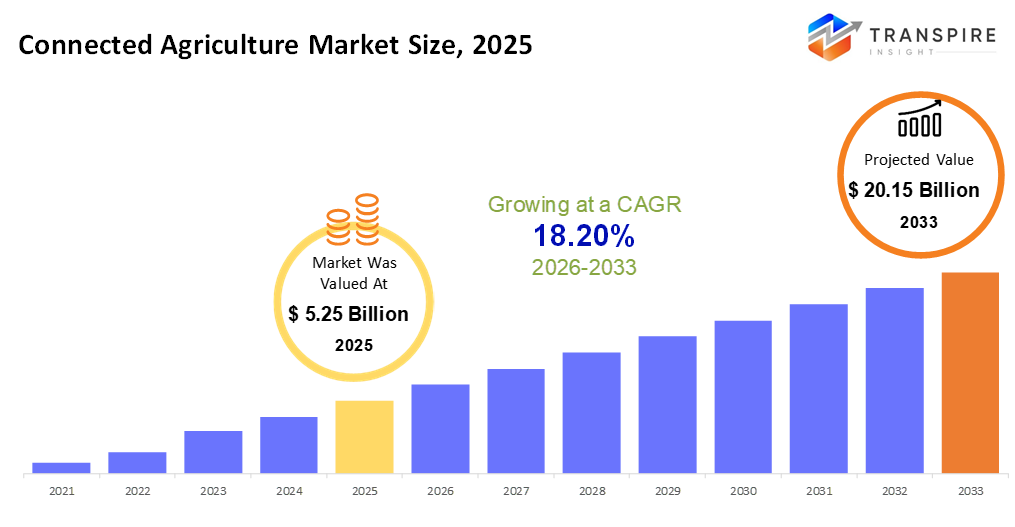
The global Connected Agriculture market size was valued at USD 5.25 billion in 2025 and is projected to reach USD 20.15 billion by 2033, growing at a CAGR of 18.20% from 2026 to 2033. Fueled by a surge in IoT tools, farms now tap into sensor networks that feed insights through data analysis, pushing gains across output and land use. With a sharper focus on exact planting methods, live tracking, and eco-smart techniques, momentum builds fast worldwide. Backed by policy moves favoring digital fields, the shift finds roots in smarter daily operations.
Market Size & Forecast
- 2025 Market Size: USD 5.25 Billion
- 2033 Projected Market Size: USD 20.15 Billion
- CAGR (2026-2033): 18.20%
- North America: Largest Market in 2026
- Asia Pacific: Fastest Growing Market
To learn more about this report,  Download Free Sample Report
Key Market Trends Analysis
- North America market share estimated to be approximately 35% in 2026. Farming here runs on smart tools, where data shapes daily choices. Out in the fields, sensors talk to machines, feeding live updates. Decisions grow sharper because numbers guide planting, watering, and harvesting. Equipment listens, learns, and adjusts without constant human input. Digital records track every change, helping refine each season’s work.
- Big farms and quick uptake of new tools make this region lead across North America. What stands out most is the common use of accurate planting methods alongside efficient water systems.
- Farms get smarter where hunger pushes change. Digital tools spread fast, especially on smaller plots. Growth surges not just from need but from new ways to grow. Connectivity rises through lean networks built for rural reach.
- Software 40% in 2026. Software leads now, fueled by more need for data tools, artificial intelligence, plus systems that run farming operations online.
- Fueled by minimal energy needs, LPWAN sees growing uptake across broad regions. Coverage stretches far while demand rises steadily.
- Farms that cover wide areas tend to have more room, more resources tucked away for new tools. Bigger pockets mean quicker moves when change knocks.
- Farming with exactness takes the lead, since it boosts output while cutting down expenses on resources.
Out in the fields, technology quietly weaves itself into daily farm work. Devices that talk to each other gather constant updates on soil, plants, animals, and machines. Information flows nonstop, feeding systems that learn patterns and spot shifts early. Instead of guessing, growers adjust water, nutrients, and timing based on what the land actually needs. Sudden changes get noticed before they spread. Decisions once made by habit now rely on fresh evidence from the ground. Farms start to respond like living networks, tuned to subtle clues. What used to be routine slowly becomes more exact, less wasteful. Over time, old habits give way to smarter rhythms shaped by live feedback.
Farms are turning to smart tools because saving resources matters more now. Right when decisions count, data from devices helps skip guesswork. Equipment that talks to software tracks how crops grow under real skies. When machines report their own status, delays shrink without extra hands on deck. Water gets used where it's needed, not wasted by habit. Out in fields, live updates replace routine checks. With fewer workers around, doing more with less is not optional. Signals from soil probes shape irrigation before plants show stress. Growing food today means watching screens as much as rows. What once took days to spot now shows up instantly.
Farmers now lean toward smart farming because it helps protect nature. When tech guides where sprays go, less spills into soil or water. This careful approach meets rules without extra effort. Watching crops closely means fewer surprises later on. Knowing each step from field to plate builds trust in what people eat.
Farmers, tech firms, agribusinesses, along with public sector bodies, form the backbone of today's networked farming world. Working together, they spark new ideas like smarter watering systems, animal health checks using sensors, better oversight of how food moves from field to table, and even forecasting when machines need fixing. With internet access growing stronger in rural zones, this web of linked farm operations stands ready to support sturdier, leaner, greener ways to grow food across the planet.
Connected Agriculture Market Segmentation
By Component
- Hardware
Farm data begins with physical tools, things like sensors or drones, maybe a GPS unit. Out in the field, gadgets gather what farmers need. Think of small devices wired into soil monitors. Sometimes flying machines pass overhead, capturing images. Equipment talks to software through invisible links. Each piece plays a role without making noise. These are not computers on desks but tough units built for dirt and weather.
- Software
Running on computers, these tools study field information. They help farmers choose what to do next. Machines talk to programs that guide planting and care.
- Services
Help includes putting systems together, studying data, keeping things running smoothly, and giving expert advice when needed.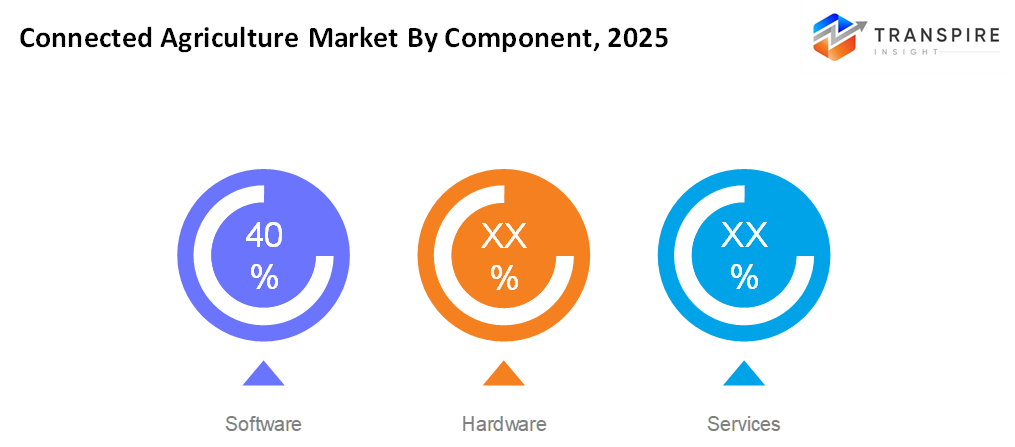
To learn more about this report, Download Free Sample Report
By Connectivity Technology
- Cellular
Farms out in the open rely on cellular signals to keep machines linked where phone networks reach.
- LPWAN
Farmland gear stays online without draining power, thanks to signals that stretch over vast distances. These networks keep devices talking even when they are miles apart.
- Satellite Communication
Out in distant countryside spots where signals rarely reach, satellite links keep farms online. Though cell towers might be missing, data still flows through space-based systems. Where wires can not go, beams from above deliver steady connections. Even when ground networks fade, these orbits hold firm. Remote plots stay tied to essential services by way of sky relays.
- Wifi, Bluetooth, Zigbee
Out in the fields, Wi-Fi links devices close by. Inside greenhouses, Bluetooth handles data exchange between tools. Zigbee operates quietly among sensors in animal buildings.
By Farm Type
- Small Farms
Farms on a modest scale tend to use simple digital tools just enough to keep an eye on things while getting slightly more done each day. One step at a time, they tap into live updates that shape how tasks unfold across fields.
Farmers on medium-sized plots begin linking tools through digital networks. These links help fine-tune seed, water, and fertilizer use. Machines share data, so tasks flow without delays.
- Medium Farms
Decisions rely more on real-time signals than guesswork. Efficiency grows when systems talk to each other. Outcomes improve even if resources stay fixed. Technology quietly reshapes daily routines out in the fields.
- Large Farms
Farms spread wide might use linked tools that work together, handling big plots with smart setups tucked into daily routines.
By Application
- Precision Farming
Farming with smart tools helps plan crops better, manage resources wisely, and cut waste. These linked systems track soil needs, adjust watering, and improve harvest results. Machines talk to each other, share data, and respond fast to changes out in the fields. Decisions rely on real-time info instead of guesswork or routines. Outcomes often include healthier plants, less chemical runoff, and tighter cost control.
- Crop Health Monitoring
Farmers see trouble in fields much faster now. Spotting sick plants happens while problems are still small. Signs of bugs or drought show up clearly on screens. This helps growers act before damage spreads too far.
- Greenhouse & Indoor Farming
A space filled with plants grows under watchful systems that adjust light, water, and air without constant human presence. Machines check conditions while crops develop in sheltered spots away from outdoor weather swings.
- Livestock Monitoring
Cows wearing tiny gadgets show where they roam, plus how they’re feeling. These tools spot changes before problems grow too big. Every movement gets recorded through smart tags attached to their ears. Watching each step helps farmers notice odd actions early. Data flows nonstop from fields straight to screens nearby.
- Smart Irrigation & Water Management
They adjust watering by reading soil signals. Moisture data guides when to start and stop; no guesswork is needed. Greener lawns without waste. Tech quietly cuts overspray, too. Efficiency shows up in lower bills.
Regional Insights
Out here, farms plug into tech that works fast because big fields need sharp tools. From tractors knowing where to go on their own to programs tracking every seed planted, machines help do more with fewer hands around. Water flows smarter now, thanks to sensors making decisions when nobody is watching. Numbers pulled from soil scans guide choices once made by guesswork or habit. Internet signals reach far across open land, letting data move without delay. Backed by rules and funds from above, new methods take root quicker than before. Companies building these tools live nearby, testing ideas just a field away. Progress grows quietly but steadily under wide skies and constant change.
Across Europe, the market for connected agriculture keeps expanding at a steady pace. Growing attention to eco-friendly farming methods plays a role here. In Western and Northern areas, farmers turn to smart tools that track crops more closely. These setups help manage water, fertilizer, and pesticides with greater care. Meeting rules about environmental impact and food tracking also pushes technology uptake. Precision techniques now shape how many fields are managed. Data-backed platforms guide daily decisions on soil health and planting schedules. Sensors placed in fields send updates without needing constant human checks. Even smaller operations find ways to include these systems step by step. Progress feels slow sometimes, yet it holds firm across different farm sizes.
Farming areas across Asia Pacific, Latin America, and parts of Africa and the Middle East are starting to use more internet-connected tools. A push comes from bigger farms, hungrier populations, plus new interest in tech-based farming methods. Though not uniform, change moves fast where governments support modern techniques, especially in Asian rural zones with dense farm communities. Out in South and Central American countries, cash crops like coffee and soy drive a shift toward networked systems on big estates. Dryer climates in desert-adjacent nations see value in smarter irrigation through linked devices. Progress varies, yet potential builds quietly beneath uneven surfaces. Over time, companies offering such tools may find their strongest footing far beyond traditional markets.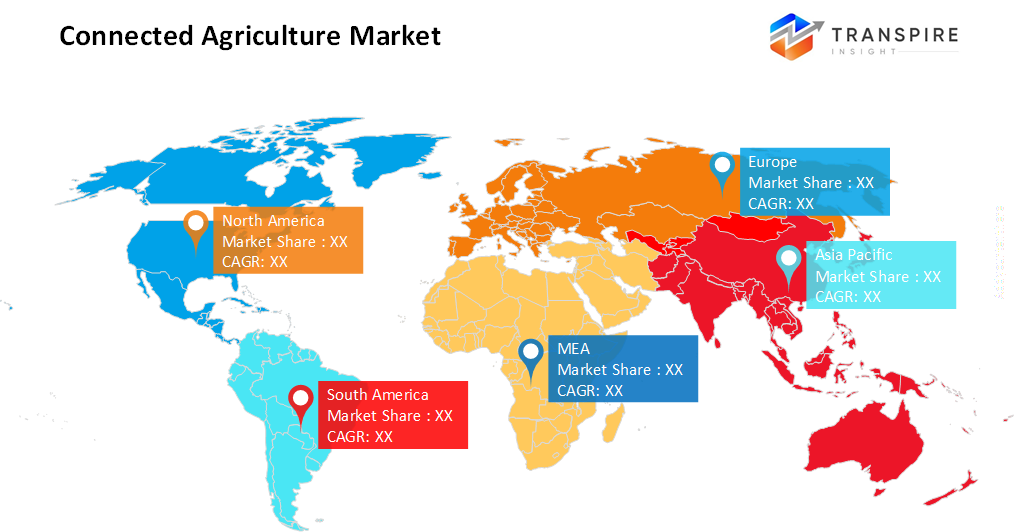
To learn more about this report, Download Free Sample Report
Recent Development News
- October 15, 2025 – India launched the global AgXelerate platform to connect agri innovators with global markets.
- March 30, 2025 – Luritz Knudsen, electrical and automation, formerly L&T Switchgear, launched a connected solution for driving automation in agriculture.
|
Report Metrics |
Details |
|
Market size value in 2025 |
USD 5.25 Billion |
|
Market size value in 2026 |
USD 6.50 Billion |
|
Revenue forecast in 2033 |
USD 20.15 Billion |
|
Growth rate |
CAGR of 18.20% from 2026 to 2033 |
|
Base year |
2025 |
|
Historical data |
2021 – 2024 |
|
Forecast period |
2026 – 2033 |
|
Report coverage |
Revenue forecast, competitive landscape, growth factors, and trends |
|
Regional scope |
North America; Europe; Asia Pacific; Latin America; Middle East & Africa |
|
Country scope |
United States; Canada; Mexico; United Kingdom; Germany; France; Italy; Spain; Denmark; Sweden; Norway; China; Japan; India; Australia; South Korea; Thailand; Brazil; Argentina; South Africa; Saudi Arabia; United Arab Emirates |
|
Key company profiled |
Trimble, John Deere, AGCO Corporation, Raven Industries, CNH Industrial, Topcon Positioning Systems, Hexagon AB, Bosch, Siemens, Deere & Company, PrecisionHawk, AgEagle Aerial Systems, IBM, SAP, Oracle, Bayer Crop Science, Syngenta, Deere & Company (Deere Digital), and Telus Agriculture |
|
Customization scope |
Free report customization (country, regional & segment scope). Avail customized purchase options to meet your exact research needs. |
|
Report Segmentation |
By Component (Hardware, Software, Services), By Connectivity Technology(Cellular, LPWAN, Satellite Communication, Wi-Fi Bluetooth, Zigbee), By Farm Type (Small Farms, Medium Farms, Large Farms), By Application (Precision Farming, Crops Health Monitoring, Greenhouse & Indoor Farming, Livestock Monitoring, Smart Irrigation & Water Management) |
Key Connected Agriculture Company Insights
Out in fields worldwide, machines bearing the green-and-yellow logo help farmers track crops with surprising detail. Starting at the soil level, sensors send updates straight to screens where patterns begin to form. Instead of guessing when to plant, growers study maps colored by the need for moisture here, less fertilizer there. Tractors steer themselves down rows, tire tracks aligned by satellites far above. Information flows between devices like threads in a weave, tightening operations bit by bit. From Brazil to Canada, local dealers step in when software stutters or hardware stalls. Each season brings new tools, quietly added, fine-tuning how land and labor connect. Trust builds slowly, not through promises but through seasons survived, yields measured, repairs handled fast. Behind every update sits years of testing under dust, rain, and heat. Fewer passes over fragile earth, fewer mistakes made in haste. A machine logs hours while decisions shift from instinct to insight. Farms grow smarter, not bigger, just more aware. That awareness spreads field by field, farmer by farmer.
Key Connected Agriculture Companies:
- Trimble
- John Deere
- AGCO Corporation
- Raven Industries
- CNH Industrial
- Topcon Positioning Systems
- Hexagon AB
- Bosch
- Siemens
- Deere & Company
- PrecisionHawk
- AgEagle Aerial Systems
- IBM
- SAP
- Oracle
- Bayer Crop Science
- Syngenta
- Deere & Company (Deere Digital)
- Telus Agriculture
Global Connected Agriculture Market Report Segmentation
By Component
- Hardware
- Software
- Services
By Connectivity Technology
- Cellular
- LPWAN
- Satellite Communication
- Wi-Fi Bluetooth
- Zigbee
By Farm Type
- Small Farms
- Medium Farms
- Large Farms
By Application
- Precision Farming
- Crops Health Monitoring
- Greenhouse & Indoor Farming
- Livestock Monitoring
- Smart Irrigation & Water Management)
Regional Outlook
- North America
- United States
- Canada
- Mexico
- Europe
- Germany
- United Kingdom
- France
- Spain
- Italy
- Rest of Europe
- Asia Pacific
- Japan
- China
- Australia & New Zealand
- South Korea
- India
- Rest of Asia Pacific
- South America
- Brazil
- Argentina
- Rest of South America
- Middle East & Africa
- Saudi Arabia
- United Arab Emirates
- South Africa
- Rest of the Middle East & Africa
Frequently Asked Questions
Find quick answers to common questions.
The approximate Connected Agriculture Market size for the market will be USD 20.15 billion in 2033.
Key segments for the Connected Agriculture Market are By Component (Hardware, Software, Services), By Connectivity Technology(Cellular, LPWAN, Satellite Communication, Wi-Fi Bluetooth, Zigbee), By Farm Type (Small Farms, Medium Farms, Large Farms), By Application (Precision Farming, Crops Health Monitoring, Greenhouse & Indoor Farming, Livestock Monitoring Smart Irrigation & Water Management).
Major Connected Agriculture Market players are Trimble, John Deere, AGCO Corporation, Raven Industries, and CNH Industrial.
The North America region is leading the Connected Agriculture Market.
The Connected Agriculture Market CAGR is 18.20%.
- Trimble
- John Deere
- AGCO Corporation
- Raven Industries
- CNH Industrial
- Topcon Positioning Systems
- Hexagon AB
- Bosch
- Siemens
- Deere & Company
- PrecisionHawk
- AgEagle Aerial Systems
- IBM
- SAP
- Oracle
- Bayer Crop Science
- Syngenta
- Deere & Company (Deere Digital)
- Telus Agriculture
Recently Published Reports
-
Dec 2024
3D Optical Profiler Market
3D Optical Profiler Market Size, Share & Analysis Report By Type (Desktop 3D Optical Profiler, and Portable 3D Optical Profiler), By Technology (Confocal Technology, and White Light Interference), By End-Use Industry (Manufacturing, Research Institutions, Automotive, Aerospace and Defense, Medical Devices, and Other), and Geography (North America, Europe, Asia-Pacific, Middle East and Africa, South and Central America), 2021 - 2031
-
Feb 2025
Depth Sensor Market
Depth Sensor Market Size, Share & Analysis Report By Type (Infrared Depth Sensors, Time-of-Flight (ToF) Sensors, Stereo Vision Sensors, Structured Light Sensors, Ultrasonic Depth Sensors), By Application (Automotive, Robotics, Gaming, Consumer Electronics, Industrial Automation, Healthcare, Security & Surveillance, Others), By End Users (Automotive Manufacturers, Consumer Electronics Companies, Healthcare Providers, Industrial Companies, Security Agencies, Gaming Companies, Robotics Companies, Others), and Geography (North America, Europe, Asia-Pacific, Middle East and Africa, South and Central America), 2021 – 2031
-
Feb 2025
Digital Manufacturing Market
Digital Manufacturing Market Size, Share & Analysis Report By Component (Hardware, Software, and Services), By Technology (Robotics, 3D Printing, Internet of Things (IoT), and Others), By Application (Automotive and Transportation, Aerospace and Defense, Consumer Electronics, Industrial Machinery, and Others), By Process Type (Computer-Based Designing, Computer-Based Simulation, Computer 3D Visualization, Analytics, and Others), and Geography (North America, Europe, Asia-Pacific, Middle East and Africa, South and Central America), 2021 – 2031
-
Feb 2025
Digital Visa Services Market
Digital Visa Services Market Size, Share & Analysis Report By Type (Individual Travelers, Group Travelers), By Application (Tourism, Business Travel, Others), and Geography (North America, Europe, Asia-Pacific, Middle East and Africa, South and Central America), 2021 – 2031