
Mar 28, 2026
Road safety and smooth traffic flow matter more than ever as cities grow and vehicle numbers increase. Authorities and planners focus on better road management systems to reduce accidents and congestion. This need continues to support the Traffic Equipment Market, which reached a value of USD 13.19 billion in 2024. The market is expected to grow to about USD 14.04 billion in 2025 and may reach nearly USD 21.82 billion by 2033, expanding at a CAGR of 6.50% during the forecast period according to Transpire Insights.
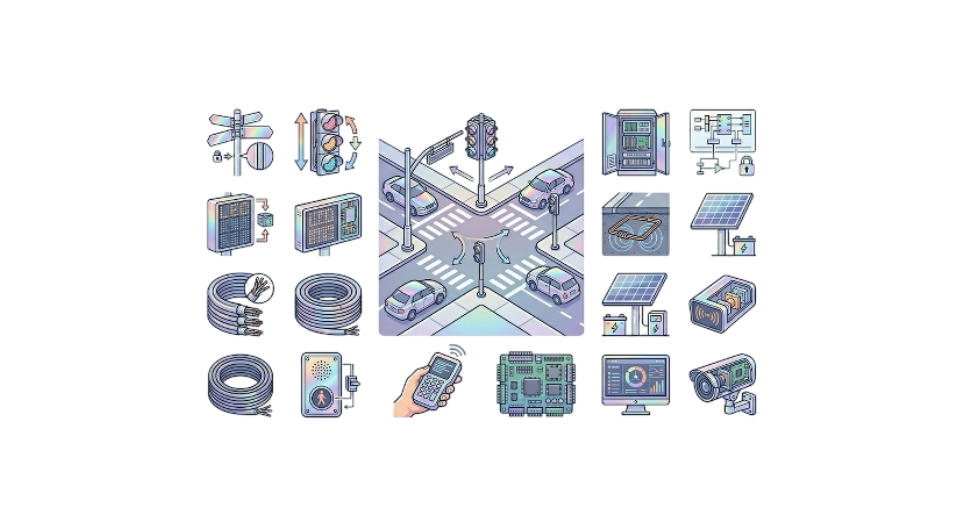
Traffic signals lead the Traffic Equipment Market and account for about 39% of total demand. The systems control vehicle movement at intersections while they maintain order on busy streets. Modern traffic signals use sensors and smart timing systems to manage traffic flow more efficiently. Cities implement advanced signal systems to decrease waiting periods and enhance road safety.
The Traffic Equipment Market experiences high demand from urban road networks. Cities face heavy traffic every day, which increases the need for proper road management tools. Drivers use traffic signal signboards and road markings to navigate roads which decreases their confusion. Authorities keep building better traffic systems because urban populations grow and vehicle movement increases.
Highways also play an important role in market growth. The need for clear guidance and safety equipment becomes vital because vehicles travel at high speeds on highways. Road barriers, signboards and markings guide drivers safely while preventing accidents. Demand for traffic equipment rises as governments allocate resources to improving highway infrastructure.
Traffic management functions as a fundamental requirement for construction zones. Temporary hazards arising from roadwork endanger both drivers and workers. The presence of traffic cones and barriers, together with warning signs, establishes vehicle movement restrictions that minimize accident occurrences in these locations. Construction companies utilize these safety tools to protect workers during road construction and repair activities.
Road barriers serve as essential safety measures which help prevent vehicle accidents. These barriers stop vehicles from entering restricted zones and driving into oncoming traffic. The system protects drivers and pedestrians by minimizing accident damage through its protective features. Traffic cones remain popular as a practical solution because they can be quickly set up and relocated. The devices direct traffic flow when temporary road modifications require either repair work or street closures.
The Traffic Equipment Market receives support from road markings, which establish various traffic routes. Drivers use clear lane markings, pedestrian crossings and directional arrows to learn road rules. The markings enhance visibility while reducing confusion during nighttime and hazardous weather conditions. Road markings require ongoing maintenance to achieve their full functional lifespan.
The Traffic Equipment Market identifies government authorities as its main customer group. Governments allocate substantial funding toward road system development, safety initiatives and traffic management solutions. They execute traffic equipment installation and maintenance activities to enhance road safety and optimize traffic operations. The need for traffic equipment maintains its constant presence because public safety remains the top priority.
The market experiences expansion because construction companies operate within the construction industry. The companies use traffic equipment for their road construction and infrastructure work. Effective traffic management systems enable worker safety and secure vehicle operations at construction zones. The construction industry requires more resources to meet the growing infrastructure demands.
Rapid urban growth together with ongoing infrastructure development, fuels strong market expansion in the Asia Pacific region of the Traffic Equipment Market. China and India allocate significant funds toward developing their road systems and smart urban initiatives. The rising number of vehicles in these nations creates an urgent need for traffic management systems. The market in this area continues to grow because of this ongoing trend.
The Traffic Equipment Market experiences changes because of technological advancements. Smart traffic systems use sensors, cameras and data analysis to manage traffic flow in real time. The systems function to decrease traffic jams while enhancing road performance. Cities are increasingly interested in solar-powered traffic signals and energy-efficient street lighting as they work toward sustainable development solutions.
The Traffic Equipment Market will continue to grow because three factors will drive its expansion. The upcoming years will see strong demand for traffic equipment because cities and governments are spending money on advanced infrastructure and intelligent traffic management systems.
Drop us an email at:
Call us on:
+91 7666513636

 inquiry@transpireinsight.com
 APAC:+91 7666513636
 Address





