
Jan 17, 2026
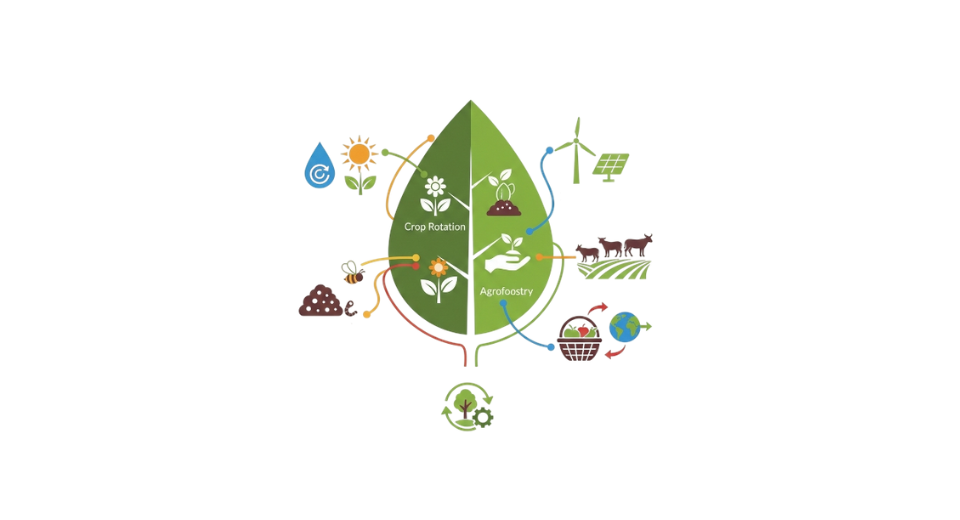
The report “Sustainable Agriculture Market By Type (Organic Fertilizers, Bio-Pesticides, Soil Conditioners, Bio-Stimulants, Compost & Mulches, Others), By Technology(Precision Farming, Vertical Farming, Hydroponics, Drones and Robotics, Data Analytics & AI Platforms), By Application (Crop Farming, Horticulture, Livestock & Poultry, Aquaculture, Forestry, Urban Agriculture), By End-Users (Farmers & Growers, Agribusiness Corporation, Government and Regulatory Agencies, Research & Educational Institutes, Agri Service Providers)” is expected to reach USD 37.20 billion by 2033, registering a CAGR of 10.90% from 2026 to 2033, according to a new report by Transpire Insight.
Farmers are slowly moving away from harsh chemicals, turning instead to methods that keep land fertile and ecosystems intact over time. One after another, they are trying things like natural fertilizers, bug controls from living sources, materials that help soil breathe, plant boosters made from nature, along with smarter tools for growing food. These approaches work not just to grow more crops, but also to save precious supplies of water, earth, variety of life included. Progress here does not shout; it grows quietly, patch by patch.
Farming's changing fast because new tools let growers track fields minute by minute. Machines that plant, feed, and watch crops now work smarter thanks to smart software behind the scenes. One field might get extra nutrients while another skips them entirely, decisions based on live readings instead of guesses. Outcomes improve when systems adjust themselves before problems grow. Some farms ditch soil altogether, stacking plants in towers where every drop counts. Desert cities or crowded suburbs often turn to these setups when farmland runs short. Water stays inside closed loops, reused until it can not be anymore. Profitability climbs not just from bigger yields but from spending less on wasted supplies.
Rules that back eco-friendly practices, plus people who care more about where their food comes from. Across the globe, officials now hand out financial help, set clearer rules, and even limit toxic farm chemicals, nudging growers toward greener ways. Shoppers, meanwhile, lean heavily toward items grown without synthetic inputs or damage to nature. This shift pulls everyone in from family-run farms to giant suppliers to adopt methods that last longer and cause less harm. Growth is not slowing down; it's spreading fast through regions like North America, Europe, and parts of Asia.
The Organic Fertilizers segment is projected to witness the highest CAGR in the Sustainable Agriculture market during the forecast period.
According to Transpire Insight, Farmers lean more into natural ways to feed soil, pushing organic fertilizers ahead in growth within sustainable farming. Because synthetic options harm the Earth's quality over time, many now choose plant-based nutrients instead. Health worries about leftover chemicals in meals fuel interest in cleaner produce. This switch supports better ground life and longer-lasting land strength. Crop fields and garden farms both see a steady rise in compost-like products. Driven by damaged soils and safer eating desires, the move feels less like a trend, more like a necessity.
On top of that, policy backing from governments helps push things forward. More land now grows crops without chemicals. Access to natural plant nutrients is getting easier. These shifts speed up demand. New ways to break down waste boost results. Fertilizers packed with essential elements work better today. They also handle larger needs. That makes them stand out. Farmers see value in long-term soil care. Growth looks likely through the coming years.
The Precision Farming segment is projected to witness the highest CAGR in the Sustainable Agriculture market during the forecast period.
Farmers are turning to smart tech more than ever, pushing precision farming ahead in sustainable agriculture growth. Tools like GPS machines, sensors, drones, and digital tracking systems help apply just enough water, fertilizer, or spray, no extra. Because of that, less gets wasted, which eases pressure on nature. This shift isn’t sudden; it follows years of testing better ways to grow food without overusing resources.
Farmers now rely more on smart tools that process information instantly, helping them act fast. Because fewer workers are available, machines step in to fill gaps. Costs drop when tasks run more smoothly with less waste. Support rolls in from big agriculture firms and public funding alike. These shifts push high-tech farming into the spotlight over the coming years.
The Crop Farming segment is projected to witness the highest CAGR in the Sustainable Agriculture market during the forecast period.
According to Transpire Insight, Crop farming likely grows fastest in sustainable ag, driven by greener inputs mixed with updated techniques that boost output plus soil quality. Moving toward natural fertilizers, pest controls from biology, and ground enhancers helps growers answer stronger cravings for planet-smart corn, wheat, apples, and tomatoes.
Farming tools that work with exactness now help grow crops using less while cutting down on surprises. Backing from officials, a clearer understanding of weather-smart methods, along with a steady appetite from factories and overseas buyers, keeps pushing better ways forward across fields ahead.
The Farmers & Growers segment is projected to witness the highest CAGR in the Sustainable Agriculture market during the forecast period.
Farmers and growers likely lead growth in sustainable agriculture, since more of them now choose eco-friendly tools and methods to boost output and keep land healthy over time. With prices up on supplies, worries growing about dirt quality, plus markets wanting better harvests, many switch to natural plant feeds, pest controls from living sources, and even tech-driven planting routines.
On top of that, more support from public funding, hands-on learning opportunities, and online guidance tools are helping both big and small farms make quicker changes. Because people now see how saving resources helps nature and saves money, those who grow food are becoming the most active users faster than any other group over the coming years.
The North America region is projected to witness the highest CAGR in the Sustainable Agriculture market during the forecast period.
Expect North America to grow fast in sustainable farming, thanks mainly to new tech taking root on many big farms. Farms there already lean heavily on organic methods, shaped by years of practice and public support. Awareness around greener choices runs deep, pushing changes that stick. Precision tools are spreading, helping farmers do more with less waste. Instead of synthetic options, natural fertilizers are gaining ground slowly but steadily. Bio-based pest controls join the shift, quietly replacing older chemical versions. Growth here ties closely to how deeply these habits have settled into daily farm life.
Policies that back new farming methods help push things forward. Financial support makes companies more willing to join in. Big farm businesses jumping in adds momentum, too. Shoppers wanting food grown without chemicals drive change across the United States and Canada. People choosing eco-friendly options shape how markets move. New tools and techniques keep evolving steadily. Progress on these fronts puts North America ahead in the coming years.
Key Players
Top companies include Bayer CropScience, Syngenta AG, BASF SE, UPL Limited, Corteva Agriscience, Nutrien Ltd., FMC Corporation, Valent BioSciences LLC, Marrone Bio Innovations, Andermatt Biocontrol AG, Isagro SpA, Valagro SpA, Koppert Biological Systems, Bioworks Inc., Tessenderlo Group, and Arysta LifeScience.
Drop us an email at:
Call us on:
+91 7666513636

 inquiry@transpireinsight.com
 APAC:+91 7666513636
 Address





