
Mar 18, 2026
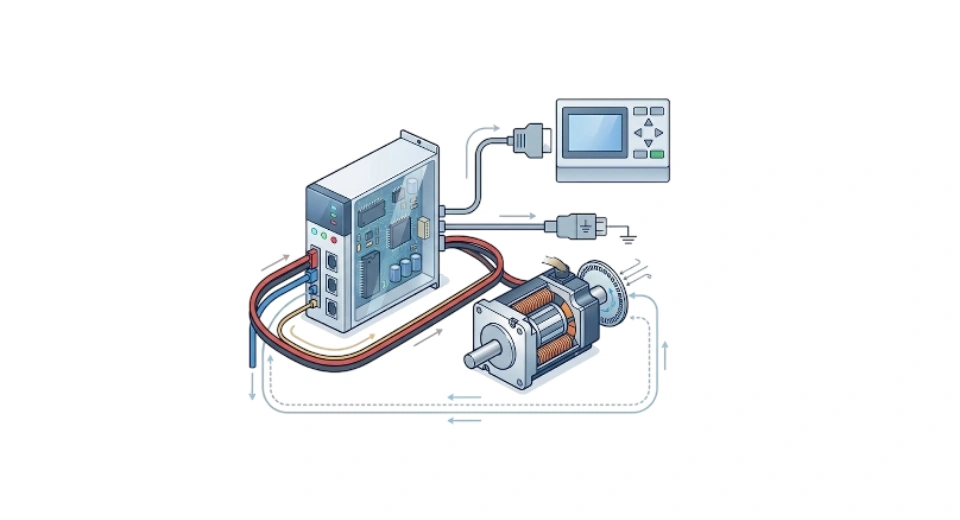
The report titled “Servo Drives Market By Drive Type (AC Servo Drives, DC Servo Drives), By Voltage Range (Low Voltage, Medium Voltage), By Application (Robotics, CNC Machinery, Packaging Equipment, Material Handling), By End-User Industry (Automotive, Electronics, Manufacturing, Aerospace)” outlines steady expansion supported by growing demand for precise motion control in automated equipment. The Servo Drives Market reached USD 2.39 billion in 2024 and is expected to grow to about USD 2.474 billion in 2025. Market projections suggest the value will reach nearly USD 3.169 billion by 2033, growing at a CAGR of 3.60% during the forecast period. The increasing use of automated machinery across production facilities continues to strengthen demand for Servo Drives, according to Transpire Insights.
Current manufacturing facilities strive to achieve better accuracy and faster production processes while maintaining operational efficiency. Servo drives provide motor control by managing both speed and torque, as well as positioning. Servo drives control motion systems, enabling machines to execute tasks with greater accuracy. The system provides precise control, leading to fewer production errors and higher product manufacturing standards. Industries continue to invest in servo drive systems due to their positive impact on current manufacturing operations.
The Servo Drives Market is experiencing its most significant expansion due to rising industrial automation. In most factories today, automated machines and robotic systems handle both simple and complex manufacturing tasks. Machines use servo drives to achieve their operational needs because the technology provides controlled motor movement for their functions. Servo-controlled systems enable production lines in the automotive and electronics industries to achieve consistent operational performance. Industrial organizations develop their automation capabilities, resulting in an increased demand for sophisticated motion control technologies.
AC servo drives are the leading segment in the Servo Drives Market, accounting for approximately 57.2% of total demand. Many industries prefer AC servo drives because they deliver efficient performance and reliable motor control. The drives control industrial machine operation by regulating motor speed and torque while using energy-efficient methods. Manufacturers adopt AC servo drives for large-scale production equipment because these drives offer high durability and compatibility with current automation technologies.
The need for accurate speed control and stable performance makes DC servo drives essential for multiple applications. Specialized machines continue to use DC servo systems because these systems deliver responsive control and straightforward integration. Industries use DC servo drives in equipment where precise positioning and consistent movement remain essential. Various industrial applications continue to use DC systems even though AC technology remains the primary choice for contemporary installations.
More than half of industrial facilities use low voltage servo drive systems because most automated machinery operates at lower voltage levels. The equipment used in robotics and packaging machines, and material handling systems depends on low voltage servo drives to achieve safe and efficient operation. The systems deliver dependable operation through their ability to operate with reduced power consumption, which provides manufacturers a chance to decrease their operational expenses.
The growth of the Servo Drives Market is strongly supported by robotics applications. Industrial robots perform tasks which include assembly, welding, inspection and material movement operations. Servo drives control robotic joints and motors, enabling robots to achieve precise movements and perform tasks consistently. The growing adoption of robotic automation by industries creates an increasing requirement for accurate motion control systems.
Servo drive systems find their primary application in CNC machinery. The precise motor positioning which CNC machines need enables them to create highly accurate material cuts and shape and process operations. Servo drives control the speed and movement of motors which machining operations require to maintain consistent product quality. Metal fabrication companies and aerospace manufacturers and automotive parts producers use CNC technology which operates with servo drives as their main production method.
Advanced servo drive systems provide performance enhancements to packaging machinery. Packaging machines must move products quickly while maintaining accurate placement, sealing, and labeling operations. The packaging equipment uses servo drives to maintain operational efficiency which allows it to function effectively during high-speed production. The packaging systems help manufacturers sustain their productivity levels while they decrease packaging process operational errors.
The automotive industry stands as one of the largest end-user sectors within the Servo Drives Market. Vehicle manufacturers use servo-controlled automation systems in assembly lines, welding robots, and component manufacturing processes. These systems improve production efficiency and help maintain consistent quality standards across large manufacturing facilities. Electronics manufacturers depend on servo drive systems because electronic devices need exact assembly methods and safe handling procedures for their fragile parts.
The Servo Drives Market maintains strong business operations within the Asia Pacific region because industrial production activities on the continent continue to grow and businesses throughout the region adopt automation technologies. The manufacturing sectors of China, Japan, South Korea, and India increasingly rely on automated equipment in their facilities. The regional demand for servo drive technology continues to grow because businesses invest in robotics systems, electronics manufacturing facilities and industrial automation technologies.
The Servo Drives Market develops through continuous technological enhancements. Manufacturers concentrate their efforts on creating small drive systems that operate with greater efficiency and enhanced digital control capabilities. Intelligent monitoring systems now exist in modern servo drives which enable operators to monitor the performance of machines, while they can also identify upcoming maintenance requirements. The new technologies enable companies to keep their production operations running smoothly while reducing periods of operational downtime.
The Servo Drives Market will experience consistent expansion over the coming years due to businesses increasing industrial automation, their need for accurate manufacturing processes, and their growing adoption of robotic technologies. Modern manufacturing systems rely on servo drive systems to enhance operational efficiency and production precision.
Drop us an email at:
Call us on:
+91 7666513636

 inquiry@transpireinsight.com
 APAC:+91 7666513636
 Address





