
Feb 12, 2026
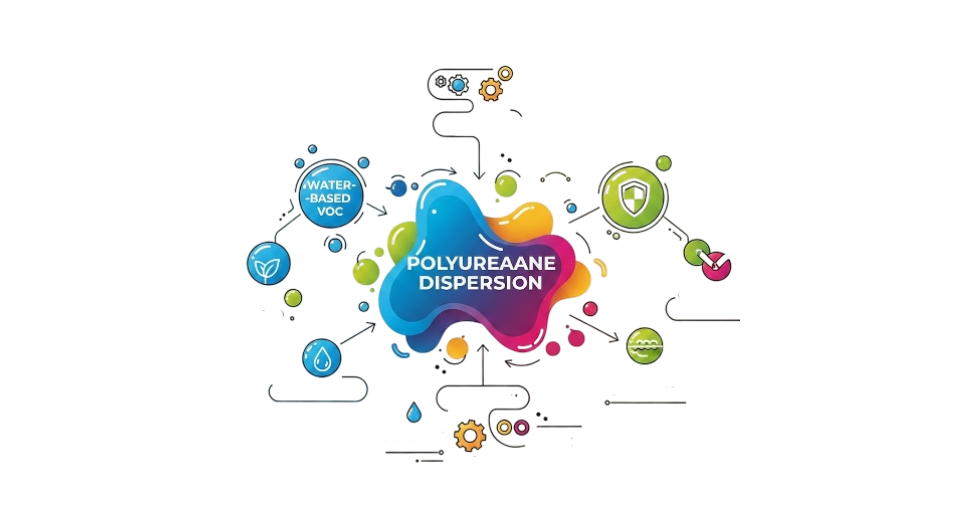
The report “Polyurethane Dispersion Market By Type (Water-Based Polyurethane Dispersion, Solvent-Based Polyurethane Dispersion, Modified Polyurethane Dispersion, Polycarbonate-Based Polyurethane Dispersion, Polyester-Based Polyurethane Dispersion), By Functionality (High-Performance Dispersion, UV-Resistant Dispersion, Chemical-Resistant Dispersion, Soft-Touch Dispersion, Abrasion-Resistant Dispersion), By Application (Coatings & Finishes, Adhesives & Sealants, Textile Finishing, Synthetic Leather Production, Printing Inks) and By End Use Industry (Automotive, Textile & Apparel, Construction, Furniture & Woodworking, Packaging)” is expected to reach USD 5.90 billion by 2033, registering a CAGR of 9.40% from 2026 to 2033, according to a new report by Transpire Insight.
The polyurethane dispersion market has been growing steadily, with an increase in the movement towards environmentally friendly material formulations in terms of coatings, adhesives, textiles, and packaging. Polyurethane dispersions, particularly water-based systems, are gaining significant importance with an increase in the use of formulations that have low volatile organic compounds, high safety, and compatibility with changing environmental regulations. Industry segments are choosing these formulations as effective environmental alternatives to existing systems while maintaining efficiency, efficacy, and compatibility in terms of sustainability. The increasing demand from automotive, construction, and textile industries will also sustain the market's growth rate. The excellent flexibility, abrasion resistance, and adhesion provided by polyurethane dispersions are beneficial for application segments like protective coatings, synthetic leather materials, as well as textile finishing. Moreover, increased focus on lightweight materials with better surface properties for automotive production is also driving this market segment across both developed and emerging nations.
Technological advancements in the field of polymer chemistry allow the manufacturer to get essentially better chemical, UV, and mechanical stability in the materials. This extends the potential for use in industrial coatings, furniture coatings, and flexible packaging. Innovation in the minds of the manufacturer results in products with multifunctional performance while sustaining all the criteria.
Additionally, the market is benefiting from increased consumer demand for eco-friendly products and regulatory initiatives promoting water-based materials use. Infrastructural development, increased synthetic materials production, as well as industrial manufacturing practices in Asia Pacific and emerging regions globally, are projected to increase demand for polyurethane dispersion solutions with time.
The Water-Based Polyurethane Dispersion segment is projected to witness the highest CAGR in the Polyurethane Dispersion during the forecast period.
According to Transpire Insight, Water-based polyurethane dispersion currently retains its position as the market leader in the type segment because of rising environmental regulations on the limits of solvent emissions in major industrial countries. It is anticipated that manufacturers are shifting their concern towards water-based polyurethane dispersions in order to comply with environmental regulations without sacrificing product properties. Polyurethane dispersions possess excellent adhesion properties along with flexibility.
Further growth in this particular segment is evident by the improving formulation technologies, which have seen a substantial enhancement in the abilities of water-based dispersions, thereby bridging the gap with solvent-based dispersions. The automotive, building, and packaging industries are also using water-based solutions, which are being employed in meeting the ever-increasing requirements in terms of environmental standards. Thus, the dominance of water-based polyurethane dispersions in the global market seems constant in terms of growth.
The High-Performance Dispersion segment is projected to witness the highest CAGR in the Polyurethane Dispersion during the forecast period.
High-performance polyurethane dispersions constitute the major share of the global market for functionality. This follows the increased focus by different industries on durability, chemical resistance, and the extended lifespan of the materials. The dispersions have major applications in the manufacturing of automotive coatings, industrial floor coverings, and protective coatings where mechanical properties and resistance to environmental effects are essential. The need to extend the lifespan of products is increasingly driving the use of the dispersions. Additionally, there is a concerted effort by manufacturers towards creating high-performance dispersions that incorporate a number of functional properties, such as abrasion resistance, flexibility, and weathering stability. This is in tandem with a heightened interest in multifunctional materials, which are capable of withstanding ever more demanding conditions of operations. Therefore, with a number of industries placing a premium on efficiency in terms of product performance, high-performance dispersions are likely to remain in high demand.
The Coatings & Finishes segment is projected to witness the highest CAGR in the Polyurethane Dispersion during the forecast period.
According to Transpire Insight, The biggest share of the applications of polyurethane dispersions is taken by coatings and finishes due to the high demand for surface protection and finishing in the automobile, construction, and furniture industries. Polyurethane dispersions provide strong film properties, flexibility, and resistance to wear as well as exposure to the environment, which makes them the best options to be used in coating applications. The shift towards water-based coatings also contributes to the increasing trend of the overall segment.
In addition, the segment would be backed by the rising trend of infrastructure development and renovation globally. There is an increased drive towards developing better dispersion technologies by manufacturers, which would help improve the gloss retainability, scratch resistance, and overall sustainable surface protection. However, during the upcoming years, as regulations become increasingly tougher, the preference towards polyurethane dispersions would continue to be high.
The Automotive segment is projected to witness the highest CAGR in the Polyurethane Dispersion during the forecast period.
The automotive industry is the leading end-use industry due to the high consumption of polyurethane dispersions for applications like coatings, interior trim, adhesive applications, and synthetic leather. As the industry is placing more emphasis on the use of lightweight materials that offer better appearance, as well as improved durability, the overall adoption of modern dispersion technology is increasing. Polyurethane dispersions help in providing better surface quality and also assist in fulfilling the environmental demands of the automotive manufacturing process.
Moreover, the increasing trend towards electrical mobility is also impacting the materials used, and coatings are being developed with more eco-friendly and high-performance materials for use in these vehicles. Water-based dispersions are becoming more popular for use in automotive coatings, both internal as well as external, due to their green credentials coupled with enhanced safety aspects. The increasing innovation rates for automotive materials and vehicle production in Asia Pacific and North America are keeping this segment growing steadily.
The North America region is projected to witness the highest CAGR in the Polyurethane Dispersion during the forecast period.
North America is a major regional market for polyurethane dispersions, responding to sustained demand from motor vehicle, construction, packaging, and industrial coating applications. The region has an advantage in established manufacturing infrastructure and strict environmental legislation that favors low-VOC and water-based dispersion technologies. The United States continues to be the largest contributor, mainly because of the high consumption of value-added coatings and adhesives; regional growth is further underpinned by the expanding industrial production and building construction taking place in Canada and Mexico.
Besides this, growing investments in sustainable materials and R&D associated with special finishes are strengthening the pace of market growth in North America. In order to keep pace with standards and regulations, manufacturers are focusing on high-performance and environmentally-friendly polyurethane dispersions to meet regulatory requirements and changing customer needs. Growth in infrastructural renovation, automotive refinishing, and industries that produce flexible packs is continuously generating stable demand; hence, the position of North America as a technologically advanced and mature market reflects steady long-term growth.
Key Players
The top 15 players in the Polyurethane Dispersion market include BASF SE, Covestro AG, The Dow Chemical Company, Huntsman Corporation, Lubrizol Corporation, LANXESS AG, Mitsui Chemicals, Inc., Wanhua Chemical Group Co., Ltd., Allnex Group, DIC Corporation, Perstorp Holding AB, Stahl Holdings B.V., Alberdingk Boley GmbH, Hauthaway Corporation, and Lamberti S.p.A.
Drop us an email at:
Call us on:
+91 7666513636

 inquiry@transpireinsight.com
 APAC:+91 7666513636
 Address





