
Apr 30, 2026
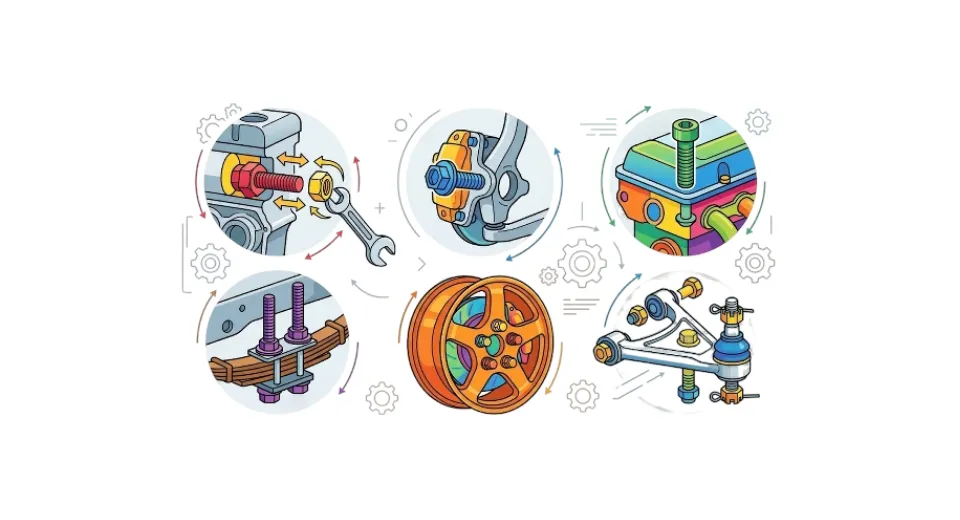
Vehicles rely on thousands of small parts to stay strong and safe, and fasteners play a key role in holding everything together. From engines to interiors, these components ensure that every section of a vehicle remains fixed and stable. This constant need supports steady growth in the Global Automotive Fastener Market. The market reached a value of USD 22.87 billion in 2024 and is expected to grow to about USD 24.2 billion in 2025. By 2033, the market will likely reach nearly USD 36.16 billion, expanding at a CAGR of 5.90% during the forecast period according to Transpire Insight.
Threaded fasteners dominate the Global Automotive Fastener Market - they make up around 64% of total demand. These fasteners consist of bolts, screws, and nuts that let you create strong and adjustable connections between parts. Manufacturers really prefer threaded fasteners since they give you a very secure fit - and you can remove or replace them whenever necessary. Their very wide use all over engines, chassis systems, and vehicle structures really keeps demand consistently quite high.
Car production continues to drive demand in the Global Automotive Fastener Market. Car manufacturers build vehicles by using many thousands of fasteners, which generates steady demand all along the production lines. As global vehicle production increases - especially in developing regions - the need for reliable fastening solutions really rises. Both passenger cars and commercial vehicles rely quite heavily on these components themselves.
Passenger cars take up a large share of the Global Automotive Fastener Market due to both their high production and sales volumes. Daily use of passenger vehicles leads to a lot of maintenance and replacement needs - which also supports aftermarket demand even more so. Commercial vehicles, including trucks and buses, also contribute quite significantly because they need very strong and very durable fasteners so that they can manage heavy loads and travel long distances all the time.
Material selection really does play a key role in fastener performance itself. Steel remains the most commonly used material because it gives you a lot of strength and really lasts long. Aluminum fasteners are gaining more and more popularity because they really help reduce vehicle weight - which then improves fuel efficiency even further. Plastic fasteners are also used in interior and lightweight applications where heavy strength isn't required. These various different materials let manufacturers meet all sorts of design and performance needs quite well indeed.
Fasteners really serve quite a few purposes within a vehicle. Engine components need very strong and heat-resistant fasteners - to handle quite high temperatures and pressures. Chassis applications count on quite durable fasteners to support the vehicle's structure and its weight. Interior applications use much lighter fasteners just for putting together dashboards, seats, and panels. Exterior applications also really rely on fasteners - to secure body parts and make sure the vehicle is safe itself.
The shift towards even more lightweight vehicles affects the Global Automotive Fastener Market rather a lot. Car manufacturers concentrate on reducing vehicle weight - so they can increase fuel efficiency and meet those tough environmental standards. This trend really does increase the use of aluminum and plastic fasteners more and more. Companies continue developing more advanced fastening solutions that give you strength while still keeping the weight down a lot.
Asia Pacific really leads the Global Automotive Fastener Market because there are lots of vehicles produced here all the time. Countries like China, India, Japan, and South Korea have some of the world's biggest automotive manufacturing plants. The growing demand for vehicles in these regions supports non-stop production, which really does increase the need for fasteners. Building up local manufacturing more and rising income levels further support market growth really well.
Technology improvements really do shape the Global Automotive Fastener Market. Companies work on creating fasteners with much better corrosion resistance, even higher strength, and improved performance even more. Advanced coating technologies help protect fasteners a lot from wear and environmental damage. Automation in manufacturing improves production efficiency and product quality quite a bit too.
Electric vehicles also really affect the market. These vehicles need entirely different fastening solutions because of the changes in design and components. Battery systems, really lightweight structures, and electronic parts create whole new needs for fasteners. As electric vehicle adoption grows, the demand for specialized fasteners actually increases quite a lot.
Some of the key companies working in the Global Automotive Fastener Market include Stanley Black & Decker Inc., Illinois Tool Works Inc., LISI Group, Bulten AB, Nifco Inc., KAMAX Holding GmbH & Co. KG, Sundram Fasteners Ltd., Bossard Group, ARaymond Network, Fontana Gruppo, PennEngineering Inc., Agrati Group, Würth Group, SFS Group AG, and Shanghai Prime Machinery Company Ltd. These companies concentrate a lot on product innovation, very strong supply chains, and advanced manufacturing techniques - so they can stay quite competitive indeed.
Growing car production demands for ultra-lightweight materials - and our ever-advancing automobile technology - will keep on supporting the global market for automotive fasteners. As our cars get more advanced and energy-efficient, fasteners are going to stay really important - for making them safer, more durable, and performing better overall.
Drop us an email at:
Call us on:
+91 7666513636

 inquiry@transpireinsight.com
 APAC:+91 7666513636
 Address





