
Mar 30, 2026
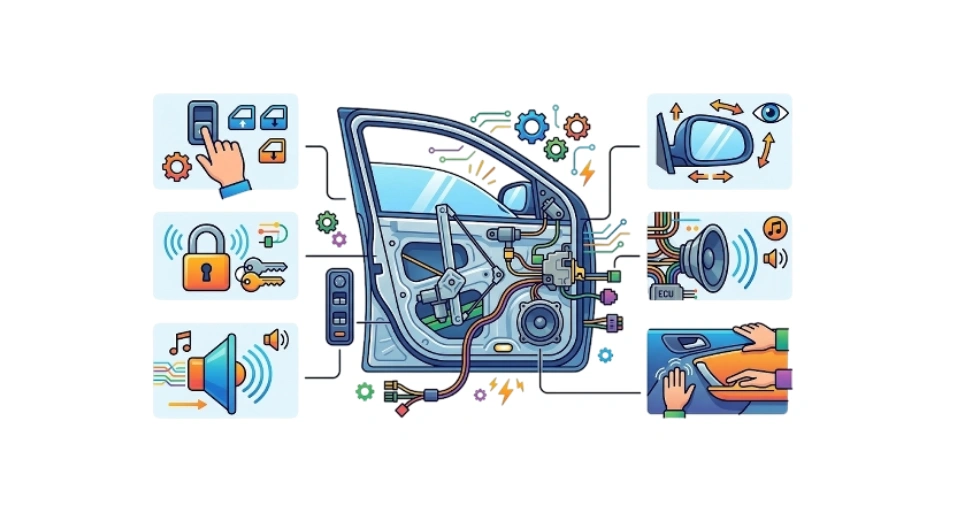
Car design today focuses not only on performance but also on comfort, safety, and convenience. Doors are no longer simple mechanical parts; they now include multiple integrated systems that improve user experience. This shift supports steady growth in the Automotive Door Module Market. The market reached a value of USD 33.9 billion in 2024 and is expected to grow to about USD 35.63 billion in 2025. By 2033, the market will likely reach nearly USD 50.82 billion, expanding at a CAGR of 5.20% during the forecast period, according to Transpire Insights.
Modern vehicles use door modules that combine several components into a single system. The modules contain window regulators, door latches, motors and switches as their components. Manufacturers today prefer integrated modules because they provide better space efficiency and operational efficiency than installing separate components. The method reduces assembly time while ensuring that production processes meet their expected quality standards.
Passenger cars continue to drive demand in the Automotive Door Module Market. Manufacturers produce a high volume of passenger vehicles every year, and each vehicle requires multiple door modules. Car buyers also expect comfort features such as power windows, central locking and smooth door operation. These expectations push manufacturers to use advanced door modules in passenger vehicles.
Commercial vehicles also contribute to market growth. Trucks, vans and buses need durable door systems which can handle their daily operational demands. The vehicles need door modules that provide durability and a long service life, as they operate in demanding environments. The rising need for commercial vehicles, which support industry growth in logistics and transportation, drives demand for automotive door module products.
The door modules depend on window regulators because these devices function as essential components. These systems control the movement of windows and allow smooth opening and closing. Modern vehicles now use power window systems as standard equipment, which creates a need for better window regulators. Door latches also play an important role by ensuring secure locking and safety for passengers.
The automation of door functions depends on motors and switches. The system uses motors to operate windows and locking systems, while users can control these features through switches. The components of the system provide users with greater convenience while driving their vehicles. The increasing complexity of modern vehicles drives the rising demand for electronic parts which manufacturers need to produce door modules.
Product performance depends on the materials which manufacturers select for their products. The automotive industry relies on plastic materials because of their lightweight properties which help reduce the total weight of vehicles. Drivers of lighter vehicles experience better fuel efficiency together with decreased emissions. Metal components remain essential because they provide safety-related parts such as latches and structural elements with the necessary strength and durability. The need for electronic components which drive modern vehicle development continues to increase. The demand for electronic parts which manufacturers need to produce door modules will keep growing.
The Automotive Door Module Market experiences its largest market share through the OEM segment. Vehicle manufacturers use door modules during their manufacturing process. OEMs create products which meet customer needs through their dedication to quality and reliability and vehicle system compatibility. The global vehicle production growth leads to increasing demand from OEMs who operate in various markets.
The aftermarket segment also plays an important role. The aftermarket maintains constant demand through the replacement process when door components become damaged or worn out. Vehicle owners replace components such as switches, motors, and latches during their vehicle ownership period. This market segment receives support from service centers and spare part suppliers who deliver matching components to their customers.
The Automotive Door Module Market experiences its highest growth in Asia Pacific because of vehicle production increases in China, India, Japan and South Korea. The market in this area is expanding due to increasing passenger car demand and rising income levels. The North American and European markets experience steady growth driven by advanced automotive technology and high vehicle ownership rates.
The Automotive Door Module Market experiences ongoing development because of technological advancements. Manufacturers develop smart door systems with features such as keyless entry, automatic locking, and anti-pinch window control. The features provide users with better safety protection and greater convenience. The system gains improved performance through its ability to work with vehicle electronic systems and sensor technology.
Market expansion receives support from electric vehicle development. The vehicles need lightweight materials, which help them achieve better operational efficiency and extended battery life. The development of advanced door modules depends on lightweight materials, which connect to this objective. The demand for contemporary door modules is increasing alongside the growing acceptance of electric vehicles.
The Automotive Door Module Market will experience growth during the next few years because of increasing vehicle production, growing demand for comfort features and ongoing technological advancements. Door modules will maintain their vital function because they enable vehicles to deliver advanced user-friendly features which enhance safety and driving comfort.
Drop us an email at:
Call us on:
+91 7666513636

 inquiry@transpireinsight.com
 APAC:+91 7666513636
 Address





