
Feb 23, 2026
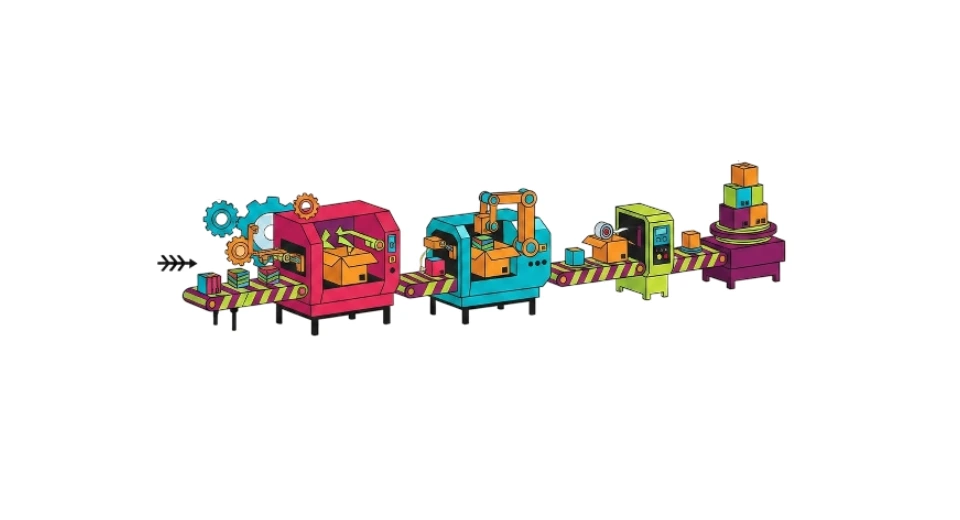
The report “Case Packing Machines Market By Type (Horizontal Case Packers, Vertical Case Packers, Robotic Case Packers, Semi-Automatic Case Packers, Automatic Case Packers), By Operation (Manual, Semi-Automatic, Fully Automatic), By Packaging Type (RSC (Regular Slotted Container), HSC (Half Slotted Container), Wrap-Around Cases, Tray & Sleeve) and By End-Use Industry (Food & Beverages, Pharmaceuticals, Cosmetics & Personal Care, Consumer Goods, Electronics, Others)” is expected to reach USD 12.30 billion by 2033, registering a CAGR of 7.50% from 2026 to 2033, according to a new report by Transpire Insight.
The Case Packing Machines market is growing steadily with the increasing demand for efficient, high-speed, and automated packaging solutions. These machines are crucial for the efficient packing of products, ensuring product safety, and improving operational efficiency. The market includes a broad range of solutions such as horizontal, vertical, robotic, semi-automatic, and fully automatic case packers, which meet the varied demands of the food & beverage, pharmaceutical, consumer goods, and electronics industries. The increasing production levels and stringent quality and safety standards are driving the demand for automated and robotic solutions. Semi-automatic solutions remain important for small- to medium-scale production, especially in emerging markets, due to cost-effectiveness and flexibility. The increasing requirement for retail-ready packaging solutions that provide brand visibility, shelf appeal, and product protection is further driving the market.
Advancements in technology, including integration with conveyors, labeling systems, and warehouse management systems, are adding to the functionality of case packing machines. The flexibility and modularity of modern case packing machines enable manufacturers to easily switch between different product lines. Automation also enables predictive maintenance, which further helps in lowering costs of operation and maximizing efficiency. The case packing machine market is driven by the increasing trend of industrialization, growth of e-commerce, and increasing consumption of packaged products across the globe. Manufacturers are investing in the development of advanced packaging solutions to stay ahead in the competition, reduce dependence on labor, and meet the requirements of regulatory standards.In terms of future expectations, merging digital grid technologies with energy storage, as well as the growing number of renewable energy targets in emerging economies will likely continue to expand the market. Case Packing Machiness are expected to be a major component of all solar power systems nationwide therefore allowing for reliable solar power on a large scale, reliably and economically.
The Horizontal Case Packers segment is projected to witness the highest CAGR in the Case Packing Machines during the forecast period.
According to Transpire Insight, Horizontal case packers are the most popular in the market because of their efficiency in handling large quantities of products. These case packers are intended for packing products that are conveyed horizontally into cases, which enables fast and accurate alignment of multiple products at the same time. Their versatility in handling a wide range of products, from rigid bottles to flexible pouches, makes them ideal for high-speed production lines, especially in the food and beverage and consumer goods industries. They help manufacturers increase production speed, ensure consistent packing, and decrease labor costs, making them more efficient.
Moreover, horizontal case packers are increasingly being combined with robotic and automated solutions for end-of-line packaging, which enables smooth integration with labeling, sealing, and palletizing processes. The ease of changeover and adaptability to different packaging styles, which is essential for companies with multiple product lines, is made possible by advanced control systems. The efficiency and versatility of horizontal case packers make them the most sought-after option in regions where high manufacturing standards and automation are prevalent, leading to a significant rise in this market globally.
The Fully Automatic segment is projected to witness the highest CAGR in the Case Packing Machines during the forecast period.
Fully automatic case packers are the most rapidly growing operation type because of their efficiency, consistency, and low labor requirements. These machines are designed for large-scale production environments in the food & beverage, pharmaceutical, and consumer products sectors. Automation enables precise product positioning, continuous case building, and accurate sealing, thereby reducing human error and increasing production rates. Organizations can look forward to improved operational efficiency, lower labor costs over time, and improved product safety, making fully automatic case packers an attractive option for high-volume production.
The integration of case packers with conveyors, robotic arms, and warehouse management systems also enhances fully automatic operations. Contemporary systems offer multi-format functionality, enabling manufacturers to easily switch between different product sizes or case formats with minimal downtime. This flexibility is essential for organizations with multiple product lines, ensuring uninterrupted production without sacrificing product quality. The operation type is increasingly influenced by technological developments, regulatory requirements, and the increasing demand for high-speed, reliable, and scalable packaging solutions worldwide.
The RSC (Regular Slotted Container) segment is projected to witness the highest CAGR in the Case Packing Machines during the forecast period.
According to Transpire Insight, RSC cases continue to be the most popular type of packaging because of their strength, versatility, and cost-effectiveness. RSC cases are ideal for general-purpose packaging in the food & beverage, consumer goods, and electronics sectors. They provide a reliable means of protecting products during transportation and storage. RSC cases also facilitate efficient stacking, handling, and distribution, making them the preferred choice for high-speed production lines.
The compatibility of RSC cases with automated and robotic packing lines is another factor that has increased their popularity. RSC cases facilitate quick changeovers, efficient product orientation, and seamless integration with sealing, labeling, and palletizing processes. This has resulted in RSC cases continuing to lead the way in packaging operations.
The Food & Beverages segment is projected to witness the highest CAGR in the Case Packing Machines during the forecast period.
The food & beverage industry is the biggest end-user of case packing machines because of the large number of packaged products, the need for hygiene, and efficient distribution. Robotic and automated packers are critical for the food & beverage industry to maintain product integrity, minimize manual labor, and facilitate high-speed processing. The need for retail-ready packaging and uniformity is also fueling the use of advanced case packing technology in the industry.
Technological innovations such as servo-driven systems and modular packers make it possible for the food & beverage industry to process different product sizes, delicate products, and multi-pack products without any interruption. Companies are also incorporating IoT-based monitoring systems for predictive maintenance to ensure uninterrupted production. The food & beverage industry’s fast growth, urbanization, and e-commerce consumption patterns make it the biggest driver of the global case packing machine market.
The North America region is projected to witness the highest CAGR in the Case Packing Machines during the forecast period.
North America is one of the most prominent markets for the use of case packing machines, thanks to the region’s highly developed manufacturing base, high degree of automation, and quality and safety requirements. The United States, Canada, and Mexico have seen widespread use of robotic and fully automatic case packers in the food and beverage, pharmaceutical, and consumer goods industries. Manufacturers in this region are working to maximize productivity, protect their products, and minimize their reliance on human labor, making North America a high-growth market for advanced packaging technology.
In addition, the region’s focus on regulatory requirements, sustainability, and energy-efficient processing has further spurred the use of advanced case packing systems. Automation helps manufacturers minimize waste, maximize accuracy, and meet regulatory requirements more efficiently. Ongoing innovation, integration with Internet of Things and predictive analytics platforms, and the presence of major market players with strong regional distribution networks solidify North America’s position as the global leader in the case packing machines market.
Key Players
The top 15 players in the Case Packing Machines market include ProMach, Inc., Schneider Packaging Equipment Company, Inc., Tetra Pak International S.A., Syntegon Technology GmbH, Douglas Machine Inc., Branco Schneider Packaging Equipment Company, Inc., Fallas Automation, Econocorp Inc., Mpac Group plc, ADCO Manufacturing, Combi Packaging Systems, LLC, JOCHAMP, Tekpak Automation, SERPA PACKAGING SOLUTIONS, and Brenton Engineering (Brenton, LLC).
Drop us an email at:
Call us on:
+91 7666513636

 inquiry@transpireinsight.com
 APAC:+91 7666513636
 Address





