
Aug 12, 2026
By Transpire Insight
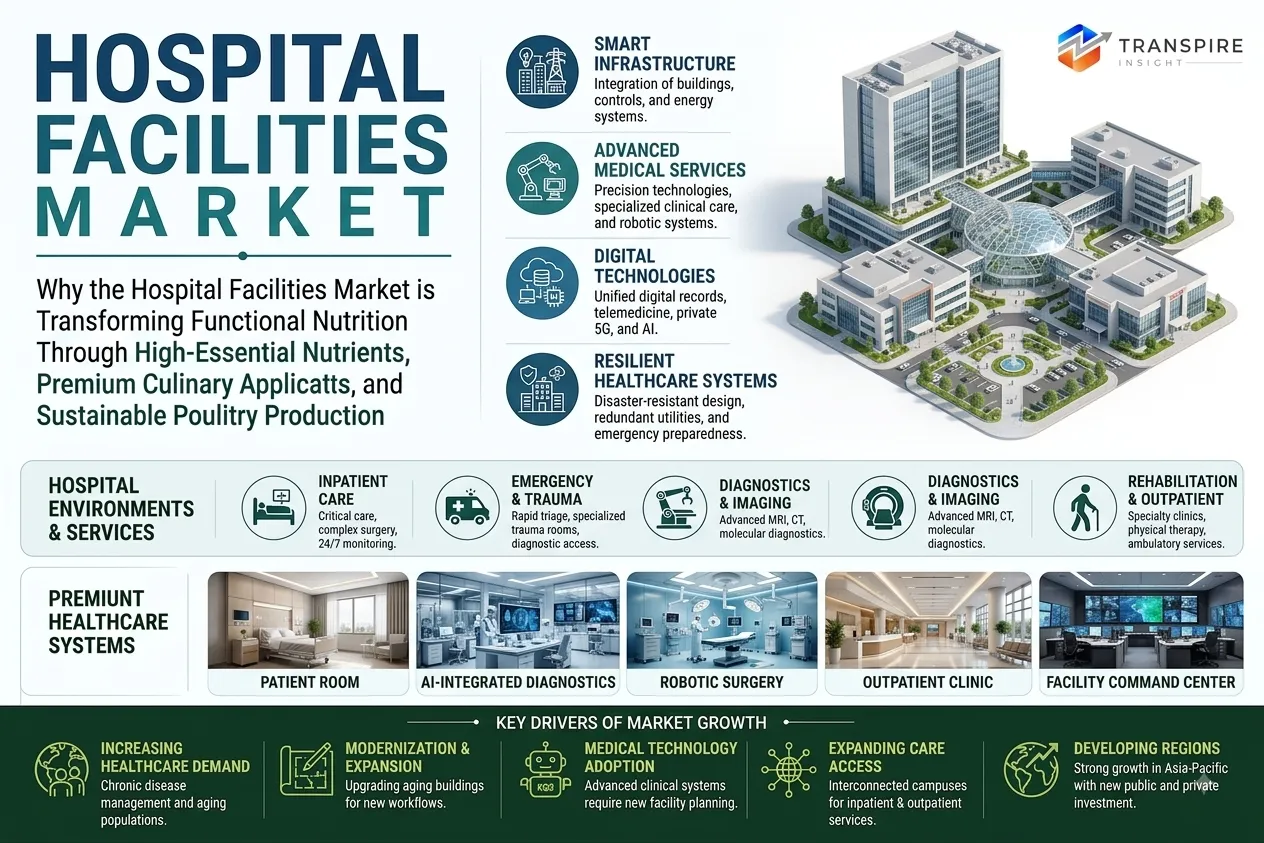
According to a research report published by Transpire Insight, the Global Hospital Facilities Market Size was valued at USD 205.18 Billion in 2025 and is projected to reach USD 345.60 Billion by 2033, expanding at a CAGR of 6.31 % during the forecast period 2026–2033.
The hospital facilities market is undergoing a major transformation as healthcare systems worldwide move beyond conventional hospital buildings toward integrated, technology-enabled, resilient, and patient-centered care environments. Hospitals are no longer being designed solely around beds, operating rooms, emergency departments, and diagnostic units. Increasingly, facility planning incorporates digital infrastructure, advanced imaging, robotic surgery, intensive-care capacity, outpatient services, rehabilitation areas, infection-control systems, energy management, and connected patient-care technologies.
The expansion of the market is closely associated with increasing healthcare utilization, aging populations, chronic disease management, medical technology adoption, expansion of healthcare infrastructure, and the growing need to improve access to specialized treatment. Hospital operators are also under pressure to improve operational efficiency while maintaining patient safety, clinical quality, regulatory compliance, and financial sustainability.
Compared with traditional healthcare infrastructure, modern hospital facilities increasingly require flexible architectural layouts, integrated information systems, intelligent building controls, advanced ventilation, reliable power systems, digital patient records, automated logistics, and specialized clinical environments. This shift is creating opportunities for hospital operators, infrastructure developers, architects, engineering companies, technology providers, equipment manufacturers, and facility-management organizations.
The hospital facilities market is also benefiting from the growing importance of outpatient and ambulatory care. In several mature healthcare systems, procedures that historically required prolonged inpatient stays are increasingly being performed through outpatient settings. This is encouraging hospital networks to develop interconnected campuses consisting of major hospitals, ambulatory centers, diagnostic facilities, rehabilitation units, specialty clinics, and digital care platforms.
Latest Market Statistics and Growth Outlook
The global hospital facilities market was valued at approximately USD 205.00 billion in 2025 and is projected to reach USD 345.60 billion by 2033, reflecting a 6.30% CAGR during 2026–2033. North America represents the leading regional market, while Asia-Pacific is positioned as the fastest-growing region as healthcare infrastructure expands and demand for advanced medical services increases.
The broader hospital infrastructure environment is also being influenced by rapid changes in healthcare delivery. Hospitals are increasingly combining inpatient treatment with outpatient services, diagnostic centers, emergency care, rehabilitation, specialty clinics, and remote-care capabilities. This creates a more integrated healthcare ecosystem in which physical facilities and digital infrastructure operate together.
The United States illustrates the scale of investment occurring in advanced hospital environments. A separate 2026 analysis estimates the U.S. hospital facilities market at USD 1.8759 trillion in 2025, with outpatient services accounting for more than half of revenue, demonstrating the growing importance of care models that extend beyond traditional inpatient facilities.
The global market is therefore not simply expanding through the construction of additional hospitals. It is also developing through modernization of existing facilities, expansion of specialty departments, renovation of aging infrastructure, development of ambulatory networks, deployment of smart-building technologies, and integration of advanced clinical systems.
Growth Drivers
One of the strongest drivers for the hospital facilities market is the increasing demand for healthcare services. Population growth, longer life expectancy, chronic disease prevalence, and increasing awareness of preventive and specialized healthcare are placing additional pressure on hospitals.
Cancer, cardiovascular diseases, diabetes, neurological conditions, orthopedic disorders, respiratory diseases, and other chronic conditions require sustained diagnostic, treatment, monitoring, and rehabilitation capacity. As patient volumes increase, hospitals need additional beds, operating rooms, imaging departments, laboratories, intensive-care units, emergency facilities, and specialized treatment areas.
Another important driver is healthcare infrastructure modernization. Many hospitals worldwide operate in buildings that were designed around older clinical models. Modernization programs are therefore focusing on improving patient flow, infection prevention, accessibility, energy performance, emergency preparedness, and digital connectivity.
The expansion of advanced medical technologies is also influencing facility requirements. Robotic surgery, high-resolution imaging, radiation therapy, minimally invasive procedures, AI-assisted diagnostics, remote monitoring, and automated laboratory systems require specialized spaces and supporting infrastructure.
The increasing adoption of outpatient treatment represents another major market opportunity. Healthcare providers are redesigning facilities around shorter stays, same-day procedures, ambulatory surgery, outpatient diagnostics, and decentralized care.
Download the exclusive Hospital Facilities Market sample report today to uncover expert insights, emerging trends, and the opportunities defining the future of the industry.
Applications Across Hospital and Healthcare Facilities
Hospital facilities serve a broad range of healthcare applications, including inpatient care, emergency treatment, outpatient consultations, surgery, intensive care, diagnostics, imaging, laboratory services, rehabilitation, maternity care, cancer treatment, cardiovascular care, and mental health services.
Inpatient facilities remain essential for patients requiring continuous monitoring, complex surgery, critical care, or prolonged treatment. Modern inpatient environments are increasingly designed around patient safety, infection control, natural lighting, accessibility, and efficient staff movement.
Emergency departments represent another critical application. Increasing patient volumes and the need for rapid response are encouraging hospitals to improve triage areas, trauma rooms, diagnostic access, observation units, and emergency operating capacity.
Diagnostic and imaging facilities are also expanding. MRI, CT, ultrasound, digital radiography, pathology, molecular diagnostics, and laboratory automation require specialized infrastructure and carefully controlled operating environments.
Rehabilitation facilities provide another area of growth as healthcare systems increasingly emphasize recovery and continuity of care. Hospitals are incorporating physical therapy, occupational therapy, neurological rehabilitation, and post-surgical recovery services into broader care networks.
Government Initiatives and Healthcare Infrastructure
Government policies are playing an increasingly important role in hospital infrastructure development. Public healthcare investment programs are supporting new hospitals, modernization of existing facilities, critical-care capacity, laboratories, emergency services, medical education infrastructure, and digital healthcare systems.
In India, the Union Budget 2026–27 placed significant emphasis on healthcare infrastructure. The Ministry of Health and Family Welfare received an allocation of ₹1,06,530.42 crores, while the Pradhan Mantri Ayushman Bharat Health Infrastructure Mission received ₹4,770 crore for FY2026–27. The government also highlighted critical-care blocks, integrated public health laboratories, district and sub-district hospitals, cancer centers, trauma and emergency services, super-specialty blocks, robotic surgery centers, and AI-enabled medical facilities.
The same budget increased funding for the Ayushman Bharat Digital Mission to ₹350 crore, supporting digital health records, interoperability, telemedicine, and integrated hospital information systems.
These initiatives demonstrate how hospital infrastructure is increasingly being viewed as a combination of physical buildings, clinical capabilities, workforce capacity, and digital systems rather than construction alone.
Technology Overview
Technology is becoming one of the defining characteristics of modern hospital facilities. Healthcare providers are adopting building-management systems, automated clinical workflows, digital patient management, connected medical devices, artificial intelligence, robotics, remote monitoring, and advanced communication networks.
Smart hospital infrastructure can integrate lighting, HVAC systems, energy management, security, access control, equipment monitoring, and environmental sensors. These systems can help facility managers identify operational problems and optimize resource utilization.
Artificial intelligence is also increasingly influencing hospital operations. AI can support diagnostic workflows, patient scheduling, resource planning, predictive maintenance, medical imaging, clinical decision support, and logistics.
Research published in 2026 has also examined AI-driven hospital logistics, finding that AI adoption can support areas such as equipment maintenance and resource allocation while emphasizing the importance of adaptive management systems.
Robotics represents another important development. Hospitals are increasingly incorporating robotic surgery systems, automated pharmacy systems, laboratory automation, robotic rehabilitation, and autonomous transportation technologies into facility planning.
Future Importance of the Hospital Facilities Market
The future of the hospital facilities market will increasingly depend on the convergence of healthcare expansion, digital transformation, advanced clinical technology, sustainability, resilience, and patient-centered design.
Hospitals will increasingly operate as connected ecosystems rather than isolated buildings. A major medical campus may incorporate inpatient towers, outpatient clinics, diagnostic centers, emergency departments, rehabilitation facilities, pharmacies, laboratories, research centers, medical education facilities, and digital health infrastructure.
Flexible infrastructure will become increasingly important because medical technologies and treatment models continue to evolve. Hospitals that can adapt room configurations, technology systems, power capacity, data networks, and clinical spaces may have greater long-term operational flexibility.
The next stage of market development is therefore likely to involve smart infrastructure, modular construction, connected medical environments, energy-efficient systems, AI-enabled operations, advanced infection-control systems, and integrated outpatient networks.
Rising Demand for Advanced Healthcare Infrastructure
The increasing complexity of healthcare delivery is creating demand for more sophisticated hospital environments. Patients increasingly expect access to specialized diagnostics, advanced surgery, emergency treatment, intensive care, and coordinated post-treatment services.
Hospitals must therefore provide infrastructure capable of supporting increasingly complex clinical workflows. This includes specialized operating rooms, high-dependency units, intensive-care facilities, imaging departments, laboratories, sterile environments, and digitally connected patient rooms.
The requirement is particularly important in regions where healthcare capacity has not kept pace with population growth. New hospitals and facility expansions can help address geographical gaps in healthcare access while reducing pressure on existing institutions.
Shift Toward Patient-Centric Hospital Design
Patient-centric design is becoming a major consideration in hospital infrastructure planning. Traditional institutional layouts are increasingly being complemented by designs that prioritize patient comfort, privacy, accessibility, navigation, and reduced environmental stress.
Modern hospitals may incorporate larger windows, improved lighting, quieter patient rooms, family areas, accessible layouts, digital wayfinding, improved waiting environments, and more efficient movement between departments.
Patient-centric design can also improve operational efficiency. When departments are logically connected and patient movement is optimized, hospitals can potentially reduce unnecessary travel and improve coordination between clinical teams.
Expansion of Outpatient and Ambulatory Facilities
The growth of outpatient healthcare is reshaping hospital infrastructure. Many procedures that once required inpatient admission can increasingly be performed through ambulatory settings because of advances in minimally invasive surgery, anesthesia, imaging, monitoring, and clinical protocols.
This is encouraging hospital networks to develop ambulatory surgery centers, outpatient diagnostic facilities, specialty clinics, infusion centers, and same-day treatment units.
The U.S. market demonstrates this transition clearly. Recent industry analysis indicates that outpatient services represented more than 53% of U.S. hospital facilities revenue in 2025, while ambulatory surgery centers have become an important component of outpatient procedure delivery.
For hospital operators, this shift creates both opportunities and challenges. Facilities must retain sufficient inpatient capacity for complex cases while developing decentralized services that improve convenience and reduce pressure on major hospital campuses.
Smart Hospitals and Digital Infrastructure
Digital infrastructure is becoming as important as physical infrastructure in modern hospitals.
Electronic medical records, connected medical devices, telemedicine platforms, digital scheduling, patient portals, AI systems, remote monitoring, and automated communication tools require reliable connectivity and secure data infrastructure.
Hospitals are therefore investing in high-capacity networks, cybersecurity systems, data centers, wireless connectivity, interoperability platforms, and integrated hospital-management systems.
The emergence of private 5G networks may further support hospital connectivity by enabling reliable wireless communication for connected medical devices, logistics systems, clinical applications, and operational technologies. Research into hospital environments has demonstrated the feasibility of private 5G deployment while examining interference and safety considerations.
Artificial Intelligence is Reshaping Hospital Operations
Artificial intelligence is moving beyond experimental applications and increasingly influencing hospital operations.
AI-enabled systems can support medical imaging, patient scheduling, clinical documentation, predictive maintenance, demand forecasting, resource allocation, inventory management, and hospital logistics.
The value of AI within hospital facilities is not limited to diagnosis. Facility operators can use predictive analytics to identify equipment-maintenance requirements, anticipate patient demand, optimize staffing patterns, and improve utilization of operating rooms and diagnostic equipment.
However, AI adoption requires reliable data, cybersecurity, interoperability, staff training, governance, and appropriate human oversight. Hospitals therefore need to design technology infrastructure around both current applications and future digital requirements.
Proceed to Checkout to purchase the exclusive Hospital Facilities Market report and gain instant access to in-depth market intelligence, strategic analysis, and future growth opportunities.
Sustainable Hospital Infrastructure Creates Opportunities
Sustainability is becoming increasingly important because hospitals are energy-intensive facilities that operate continuously.
Healthcare facilities require electricity for medical equipment, lighting, ventilation, refrigeration, sterilization, imaging, information systems, and critical-care systems. Consequently, energy-efficient building design can create opportunities to reduce operating costs while supporting environmental objectives.
Hospitals are increasingly evaluating energy-efficient HVAC systems, renewable energy, smart lighting, water-saving systems, efficient medical equipment, waste-management systems, and sustainable building materials.
Sustainability, however, cannot compromise clinical safety. Hospital environments require strict temperature, humidity, ventilation, sterilization, infection-control, and reliability standards.
The World Health Organization emphasizes that climate-resilient healthcare facilities need infrastructure capable of maintaining essential services during hazards while also addressing environmental sustainability.
Resilient Healthcare Facilities Become a Strategic Priority
Extreme weather, natural disasters, infectious disease outbreaks, power disruptions, cyber incidents, and other emergencies have highlighted the importance of resilient healthcare infrastructure.
Hospitals must remain operational during crises because healthcare demand often increases precisely when infrastructure is under pressure. This is creating demand for backup power, redundant water systems, emergency communication, secure medical-gas infrastructure, disaster-resistant construction, emergency stockpiles, and flexible treatment spaces.
WHO emphasizes that health facilities must be able to remain accessible and functional before, during, and immediately after emergencies, supported by resilient infrastructure, essential utilities, medical equipment, and trained personnel.
Future hospital design is therefore expected to incorporate resilience at the planning stage rather than treating emergency preparedness as an additional feature after construction.
E-Commerce and Digital Patient Access
Although hospital facilities are primarily physical healthcare environments, digital access is increasingly influencing how patients interact with them.
Online appointment scheduling, digital registration, teleconsultation, electronic payment, patient portals, digital prescriptions, remote monitoring, and virtual follow-up can reduce administrative pressure on hospital facilities.
Digital platforms can also improve the utilization of physical resources. Appointment optimization can help distribute patient demand across clinics and diagnostic departments, while remote consultations can reduce unnecessary visits.
The combination of digital access and physical infrastructure is therefore creating a hybrid hospital model in which patients may move between virtual and in-person care depending on clinical requirements.
Major Challenges Facing the Market
Despite its growth potential, the hospital facilities market faces substantial challenges.
One of the most important challenges is the high cost of hospital construction and modernization. Hospitals require specialized architecture, medical gases, electrical redundancy, HVAC systems, infection-control infrastructure, advanced equipment, fire safety, security, and digital networks.
Operating costs are also significant. Hospitals function continuously and require large numbers of healthcare professionals, engineers, technicians, maintenance workers, security staff, and support personnel.
Workforce shortages can limit the ability of newly constructed facilities to operate at full capacity. Infrastructure expansion therefore needs to be coordinated with medical education, nursing capacity, allied health training, and workforce planning.
Regulatory complexity represents another challenge. Hospital projects must comply with healthcare standards, building codes, fire safety requirements, environmental regulations, accessibility requirements, medical-device standards, and data-security rules.
Cybersecurity is becoming an additional concern as hospitals become increasingly connected. A cyberattack can potentially disrupt clinical systems, diagnostic services, building controls, communication networks, and patient records.
Future Opportunities for Hospital Developers and Healthcare Providers
The market offers significant opportunities for healthcare organizations and infrastructure developers.
One major opportunity lies in modernization of existing hospitals. Instead of relying solely on new construction, healthcare providers can renovate aging buildings, expand specialty departments, improve patient flow, and integrate digital systems.
Another opportunity is the development of specialty hospitals and dedicated centers for cancer care, cardiovascular treatment, orthopedics, neurology, rehabilitation, women's health, and other high-demand services
Ambulatory infrastructure also offers significant potential. Outpatient surgery centers, diagnostic hubs, specialty clinics, and integrated medical campuses can extend healthcare networks while improving access.
Smart hospital technologies represent another growth opportunity. Building automation, AI-based facility management, predictive maintenance, connected equipment, digital twins, and real-time asset tracking can create new value for hospital operators.
Competitive Landscape and Industry Development
The hospital facilities market involves a broad ecosystem rather than a single type of competitor. Participants include hospital operators, healthcare systems, infrastructure developers, construction companies, architects, engineering firms, medical equipment manufacturers, technology providers, facility-management companies, energy companies, and digital-health organizations.
Competition is increasingly based on the ability to deliver integrated healthcare environments rather than simply constructing physical buildings.
Large healthcare systems can benefit from established clinical networks, capital resources, purchasing scale, and access to specialized medical professionals. Smaller and regional providers can compete through localized care, specialized services, faster decision-making, and community relationships.
Technology providers are becoming increasingly important because hospital competitiveness increasingly depends on digital infrastructure and connected clinical systems.
The future competitive landscape will favor organizations capable of integrating architecture, clinical operations, technology, sustainability, patient experience, and long-term facility management.
Outlook
The hospital facilities market is moving from conventional infrastructure toward intelligent, flexible, digitally connected, and patient-centered healthcare environments.
Demand is being supported by increasing healthcare utilization, chronic disease prevalence, aging populations, advanced medical technologies, infrastructure modernization, outpatient care, and government healthcare investments.
The strongest opportunities are likely to emerge where hospital operators combine physical expansion with digital transformation. New facilities alone may not provide sufficient competitive advantage unless they are supported by efficient clinical workflows, advanced technology, skilled personnel, resilient utilities, and patient-focused design.
Innovation is Reshaping the Hospital Facilities Market
Innovation is changing how hospitals are designed, constructed, operated, and maintained.
Digital twins can allow facility managers and planners to create virtual representations of hospital buildings and systems. These models can support maintenance planning, space optimization, energy management, and operational simulations.
Modular construction can also shorten project timelines in selected applications. Standardized components may allow hospitals to expand specific departments more efficiently while reducing disruption to existing clinical operations.
Automation is another important development. Automated guided vehicles, robotic logistics, automated pharmacy systems, smart elevators, digital inventory systems, and robotic cleaning technologies can reduce repetitive operational workloads.
Advanced monitoring systems can also provide real-time information about equipment status, room occupancy, environmental conditions, and resource utilization.
Advanced Medical Equipment Drives Facility Modernization
The increasing sophistication of medical equipment is creating new requirements for hospital infrastructure.
Advanced MRI and CT systems require appropriate room dimensions, shielding, cooling, power supply, and structural support. Radiation therapy facilities require specialized construction and safety systems. Robotic surgery requires operating-room layouts designed around robotic equipment, surgical teams, imaging systems, and sterile workflows.
Hospitals therefore increasingly plan facilities around the technology that will operate within them rather than treating equipment installation as a final construction-stage activity.
This integrated planning approach can improve workflow efficiency and reduce the risk of infrastructure limitations restricting future clinical capabilities.
Regional Opportunities
North America remains a leading region in the hospital facilities market because of its established healthcare infrastructure, high healthcare expenditure, advanced medical technology adoption, and significant investment in hospital modernization.
The region is also experiencing a strong shift toward outpatient care and integrated hospital networks. Healthcare organizations are investing in ambulatory facilities, specialty centers, digital infrastructure, and modernization of major medical campuses.
Asia-Pacific is expected to experience the fastest growth. Population growth, urbanization, increasing healthcare expenditure, medical tourism, expanding private healthcare systems, and government infrastructure programs are creating substantial opportunities.
China, India, Japan, South Korea, Southeast Asia, and other developing healthcare markets are increasingly investing in hospitals, diagnostic infrastructure, specialty treatment centers, and digital healthcare systems.
Europe represents another important market because of its extensive public healthcare infrastructure and increasing focus on modernization, energy efficiency, aging populations, and resilient healthcare facilities.
Latin America and the Middle East and Africa are also developing opportunities as governments and private healthcare organizations expand medical infrastructure and improve access to specialized services.
India Offers Attractive Growth Potential
India represents one of the most promising growth opportunities for the hospital facilities market because of its large population, expanding healthcare demand, increasing private healthcare investment, medical tourism, urbanization, and government infrastructure programs.
The country is simultaneously addressing healthcare access, hospital capacity, digital transformation, advanced medical education, and specialized treatment availability.
The Union Budget 2026–27 specifically emphasized hospital infrastructure through PM-ABHIM, with ₹4,770 crore allocated for critical-care blocks, integrated public health laboratories, district and sub-district hospitals, and other infrastructure. It also supported the development of cancer centers, trauma and emergency services, super-specialty blocks, robotic surgery centers, and AI-enabled medical institutions.
India is also expanding digital healthcare infrastructure. The increased allocation for the Ayushman Bharat Digital Mission is intended to support digital health records, interoperability, telemedicine, and integrated hospital information systems.
The combination of public infrastructure programs and private hospital expansion could create opportunities across hospital construction, facility management, medical equipment, digital infrastructure, diagnostics, specialty care, and smart hospital technologies.
Sustainability and Responsible Hospital Development
Sustainability is expected to become a stronger consideration in hospital infrastructure planning.
Hospitals can explore energy-efficient HVAC systems, solar power, smart lighting, water recycling, efficient sterilization systems, waste segregation, medical-waste treatment, and environmentally responsible construction materials.
Energy management can become particularly valuable because hospitals operate continuously. Smart building systems can monitor energy consumption across departments and identify opportunities for efficiency without compromising clinical requirements.
Water management is also important because hospitals require substantial quantities of water for sanitation, sterilization, patient services, laboratories, kitchens, and cooling systems.
Responsible hospital development therefore requires a balance between environmental performance, patient safety, clinical reliability, and long-term operating economics.
Consumer and Patient Experience Will Be Critical
Patient expectations are changing the way hospital facilities are designed.
Patients increasingly expect faster registration, clear navigation, shorter waiting times, digital appointment systems, comfortable environments, privacy, accessible information, and seamless transitions between departments.
Hospitals can improve these experiences through digital wayfinding, mobile applications, automated registration, smart queues, real-time appointment updates, private consultation spaces, and integrated patient communication systems.
Family-centered spaces can also improve the hospital experience for patients requiring long treatment periods.
The hospital of the future will therefore be evaluated not only by clinical capabilities but also by how efficiently and comfortably patients move through the healthcare journey.
Facility Diversification Will Strengthen Market Growth
The future hospital ecosystem is unlikely to depend exclusively on large inpatient hospitals.
Potential facility categories include:
These facility types allow healthcare organizations to distribute services according to patient requirement and clinical complexity.
Large hospitals can concentrate advanced procedures and critical care, while outpatient and specialty facilities can provide more accessible services closer to residential communities.
Customize the exclusive Hospital Facilities Market report today to receive tailored insights, country-specific analysis, and business-focused market intelligence.
Competitive Strategies for Market Participants
Companies operating within the hospital facilities ecosystem can strengthen their competitive position through integrated infrastructure solutions.
Healthcare providers can focus on improving patient flow, clinical capacity, technology adoption, and facility utilization.
Infrastructure developers can differentiate through flexible construction, sustainable design, shorter project timelines, and lifecycle cost management.
Technology providers can focus on interoperability, cybersecurity, AI, predictive maintenance, and connected hospital systems.
Facility-management companies can create value through energy optimization, asset management, preventive maintenance, infection-control support, and automated monitoring.
Partnerships between healthcare organizations, technology companies, construction firms, architects, equipment manufacturers, and government agencies can accelerate the development of advanced healthcare infrastructure.
Challenges That Could Influence Future Growth
The market will continue to face several operational and financial challenges.
High capital requirements can delay hospital expansion, particularly in markets where healthcare financing remains constrained.
Shortages of physicians, nurses, technicians, biomedical engineers, and other healthcare professionals can also restrict the utilization of new facilities.
Technology integration can create interoperability challenges when hospitals operate multiple legacy systems from different vendors.
Cybersecurity risks will increase as hospitals connect more devices and infrastructure systems to digital networks.
Climate-related risks may also affect hospital operations. Flooding, heatwaves, storms, water shortages, and power disruptions can affect vulnerable facilities, particularly in regions without resilient infrastructure.
Addressing these challenges will require long-term planning, workforce development, resilient design, cybersecurity investment, and coordinated infrastructure strategies.
Future Outlook
The future of the hospital facilities market is closely connected to several major healthcare trends, including smart hospitals, outpatient care, artificial intelligence, robotics, medical tourism, chronic disease management, sustainability, digital health, and resilient infrastructure.
As healthcare delivery becomes increasingly technology-driven, hospital buildings will need to become more flexible and digitally connected.
The strongest growth opportunities are likely to emerge from integrated healthcare campuses that combine inpatient care, outpatient services, diagnostics, specialty treatment, rehabilitation, digital platforms, and advanced medical technologies.
Hospitals that successfully integrate physical infrastructure with digital capabilities will be better positioned to respond to changing patient demand and evolving treatment models.
Access detailed market segmentation, regional analysis, competitive intelligence, emerging opportunities, and forecast insights to understand the future direction of the global Hospital Facilities Market.
Schedule a meeting with our market experts to discuss the exclusive Hospital Facilities Market report and identify the best research solution for your organization.
Conclusion
The hospital facilities market is evolving through the convergence of healthcare infrastructure expansion, advanced medical technologies, digital transformation, patient-centric design, sustainability, and resilient healthcare planning.
What was traditionally viewed as hospital construction is increasingly becoming a broader infrastructure ecosystem involving buildings, medical equipment, information systems, energy management, clinical workflows, patient services, and emergency preparedness.
Future market development will depend on the ability of healthcare providers and infrastructure stakeholders to create facilities that are flexible, digitally connected, energy-efficient, clinically capable, and resilient to changing healthcare demands.
The expansion of outpatient services, specialty treatment centers, smart hospitals, AI-enabled operations, robotic surgery, advanced diagnostics, and integrated digital health platforms will create new opportunities across the hospital infrastructure value chain.


Send us a brief description of your challenge and we'll get back to you within 24 hours.

 inquiry@transpireinsight.com
 APAC:+91 7666513636
 Address


