
Sep 16, 2026
By Transpire Insight
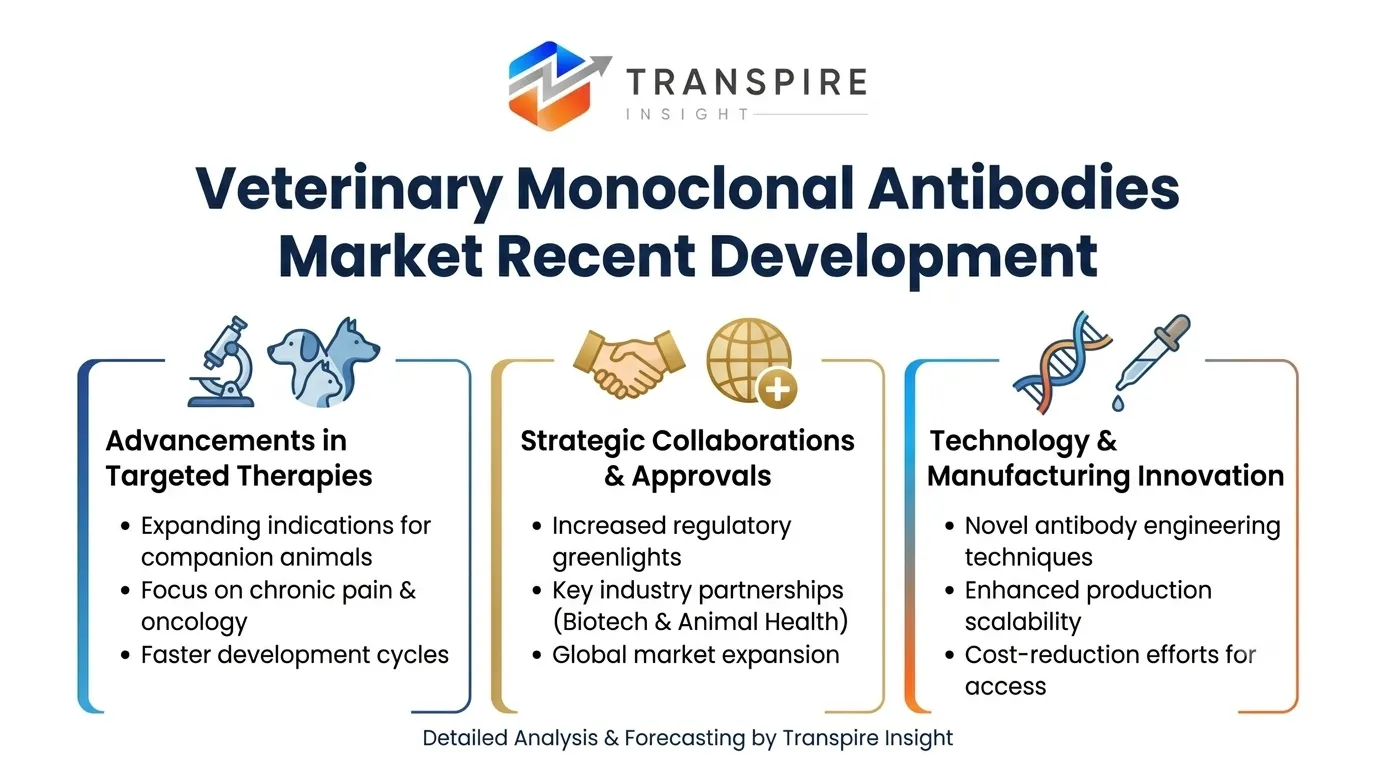
The global veterinary monoclonal antibodies market is advancing as companion-animal healthcare shifts toward targeted biological therapies, particularly for chronic pain, dermatological disorders, osteoarthritis and other conditions requiring more precise treatment approaches.
The veterinary monoclonal antibodies market is becoming an increasingly important segment of animal healthcare as veterinarians and pet owners seek therapies that can provide targeted biological intervention while reducing dependence on conventional small-molecule medicines. Monoclonal antibodies are engineered proteins designed to recognize specific biological targets, enabling them to interfere with disease pathways or inflammatory signals with a high degree of specificity.
The strongest commercial activity is currently concentrated in companion-animal medicine, particularly dogs and cats. Increasing pet ownership, greater willingness among owners to spend on advanced veterinary treatment, rising life expectancy of companion animals and growing recognition of chronic conditions are creating a favorable environment for biologic therapies. Osteoarthritis and chronic pain are particularly important areas because they require long-term disease management and represent a significant clinical burden among aging dogs and cats.
Unlike conventional pharmaceuticals that are frequently administered orally or through repeated daily dosing, certain veterinary monoclonal antibody products can be administered through periodic injections under veterinary supervision. This creates an opportunity for manufacturers to differentiate therapies through treatment convenience, targeted mechanisms and potentially improved adherence.
At the same time, the market remains relatively specialized. Veterinary biologics require substantial research and development investment, species-specific validation, regulatory approval and manufacturing capabilities. Consequently, the competitive landscape is more concentrated than that of the broader animal-health pharmaceutical industry.
Latest Global Market Developments
The global veterinary monoclonal antibodies market is estimated at approximately USD 3.10 billion in 2025 and is projected to reach nearly USD 7.90 billion by 2033, reflecting strong expansion in targeted veterinary therapeutics.
The market is expected to reach approximately USD 3.60 billion in 2026, with a forecast CAGR of around 11.80% between 2026 and 2033.
Companion animals, particularly dogs and cats, represent the principal commercial opportunity because monoclonal antibody applications are increasingly being developed around chronic pain, osteoarthritis, atopic dermatitis and other conditions affecting household pets.
North America remains a major market because of high pet healthcare expenditure, advanced veterinary infrastructure, widespread pet insurance adoption and strong acceptance of innovative animal-health therapies.
Europe continues to provide significant growth potential as pet owners increasingly seek specialized veterinary treatment and veterinary practices expand access to advanced biologic therapies.
Asia-Pacific is emerging as an important long-term growth region as companion-animal ownership expands, disposable incomes rise and veterinary healthcare infrastructure improves across countries including China, Japan, South Korea and Australia.
The growing prevalence of age-related disorders in companion animals is increasing demand for long-term management solutions, particularly therapies addressing osteoarthritis and chronic pain.
Greater investment in animal-health biotechnology and biologics manufacturing is supporting the development of next-generation veterinary antibodies and creating opportunities beyond the currently established therapeutic categories.
Why Do Veterinary Monoclonal Antibodies Matter?
Veterinary monoclonal antibodies are becoming increasingly relevant because animal healthcare is moving toward more targeted and specialized treatment strategies. Companion animals are living longer, and longer lifespans are accompanied by a greater incidence of chronic diseases such as osteoarthritis, allergic disorders and other age-associated conditions.
Traditional veterinary medicines remain essential, but they can present limitations related to repeated dosing, systemic exposure, adverse reactions and treatment adherence in certain animals. Monoclonal antibodies offer a different therapeutic approach by selectively interacting with specific molecular targets involved in disease processes.
The technology is particularly valuable in chronic conditions where repeated treatment may be required over extended periods. Veterinary-administered injectable therapies can also reduce the difficulty associated with owners administering tablets or other oral medicines to animals.
Another important factor is the changing role of pets within households. In many markets, dogs and cats are increasingly considered family members, resulting in greater willingness to pursue advanced diagnostic and therapeutic options. This humanization trend is contributing to higher veterinary expenditure and expanding the addressable market for premium animal-health products.
The market also has broader implications for veterinary biotechnology. Successful veterinary monoclonal antibodies can demonstrate the commercial potential of species-specific biologics and encourage additional research into targeted therapies for animals.
Key Factors Driving the Veterinary Monoclonal Antibodies Market
Increasing dog and cat ownership is expanding the potential patient population for advanced veterinary therapeutics. Urbanization and changing household structures have contributed to stronger demand for companion animals in many countries. As the number of pets increases, veterinary practices are encountering a larger population requiring preventive, acute and chronic healthcare.
Osteoarthritis is a major area of opportunity for veterinary monoclonal antibodies. As companion animals live longer, age-related musculoskeletal conditions become more common. Long-term pain management creates recurring treatment demand and provides a strong commercial opportunity for targeted biologic therapies.
Pet owners are increasingly willing to invest in sophisticated medical treatment for their animals. Veterinary care is moving beyond basic preventive services toward advanced diagnostics, specialty medicine and long-term disease management. This shift supports premium therapies with differentiated mechanisms of action.
Monoclonal antibodies can be designed to act against specific biological targets rather than producing broad pharmacological effects. This characteristic is increasing interest among veterinary researchers and pharmaceutical developers seeking alternatives to conventional therapeutic approaches.
Veterinary hospitals and specialty clinics are becoming more capable of providing advanced treatment. Improved diagnostic technologies, specialist veterinary training and better-equipped animal hospitals are creating an environment in which innovative biologic therapies can be adopted more readily.
Five High-Potential Markets Shaping the Global Veterinary Monoclonal Antibodies Industry
The United States represents one of the most commercially developed markets for veterinary monoclonal antibodies, supported by high companion-animal healthcare spending, sophisticated veterinary practices and strong demand for advanced therapies.
The country has a large population of dogs and cats and a mature veterinary pharmaceutical ecosystem. Veterinary hospitals, specialty practices and corporate veterinary networks provide multiple channels through which innovative therapies can reach animal owners.
Osteoarthritis, dermatological disorders and chronic pain are expected to remain important therapeutic areas. Growing pet insurance coverage and increasing willingness to spend on veterinary treatment can further support adoption.
Future opportunities in the United States are likely to center on expanding indications, improving treatment protocols, developing additional species-specific biologics and increasing access through general veterinary practices.
Germany is an important European market for advanced veterinary medicines because of its established veterinary healthcare system, substantial pet population and strong pharmaceutical and biotechnology capabilities.
The country's veterinary sector benefits from developed animal-health infrastructure and increasing attention to companion-animal welfare. Pet owners are increasingly willing to pursue specialized treatment for chronic and age-related conditions.
Germany also provides a strategic base for companies seeking access to the broader European market. Future demand for veterinary monoclonal antibodies is expected to be supported by aging companion animals, increased veterinary expenditure and wider adoption of biologic therapies.
The United Kingdom is another attractive market for veterinary monoclonal antibodies due to its large companion-animal population and well-developed network of veterinary clinics and hospitals.
The UK veterinary sector has increasingly adopted advanced diagnostic and therapeutic approaches. Owners are showing greater willingness to seek long-term management options for chronic disorders, particularly when these treatments can improve mobility and quality of life.
The market is also supported by specialist veterinary practices capable of administering injectable biological treatments and monitoring patients over extended periods.
Future growth is expected to be influenced by increasing awareness of biologic therapies, veterinary innovation and continuing demand for improved chronic-disease management.
Japan presents an important long-term opportunity because of its aging companion-animal population and high level of healthcare spending. Dogs and cats are increasingly treated as long-term household companions, creating demand for sophisticated veterinary services.
The country's aging pet population is particularly relevant to monoclonal antibody applications focused on chronic conditions. Veterinary professionals are increasingly equipped to diagnose and manage age-related diseases, creating opportunities for targeted therapies.
Japan's advanced biotechnology and pharmaceutical capabilities also create potential for domestic research, partnerships and commercialization of innovative animal-health products.
China is emerging as a high-potential veterinary pharmaceutical market as companion-animal ownership expands in urban areas and veterinary healthcare becomes increasingly sophisticated.
Large cities have experienced rapid growth in veterinary hospitals, pet clinics, diagnostic services and specialized treatment. Rising household incomes and changing attitudes toward pet healthcare are encouraging owners to spend more on medical treatment.
Although the veterinary biologics market is less mature than in North America and Western Europe, the large underlying companion-animal population creates considerable long-term potential.
Future development is expected to focus on domestic veterinary biologics manufacturing, regulatory development, veterinary education, clinical research and wider access to advanced treatments.
Competitive Landscape
The global veterinary monoclonal antibodies market includes pharmaceutical and animal-health companies involved in biologics research, veterinary therapeutics, companion-animal medicines and biotechnology.
Major companies and organizations active across the broader veterinary biologics and animal-health ecosystem include:
The competitive environment is characterized by significant barriers to entry because veterinary monoclonal antibodies require advanced biological research, species-specific clinical studies, manufacturing capabilities and regulatory expertise.
Top 5 Companies in the Veterinary Monoclonal Antibodies Market
Headquarters: Parsippany, New Jersey, USA
Zoetis is one of the world's largest animal-health companies and has established a particularly strong position in companion-animal therapeutics. Its portfolio spans pharmaceuticals, vaccines, diagnostics and other animal-health products.
The company's capabilities in veterinary biologics and companion-animal medicine provide a strong platform for the continued development of targeted therapies. Its existing veterinary distribution network also enables innovative treatments to reach a broad base of veterinary professionals.
Future opportunities for Zoetis are expected to include expanding biologic applications, developing therapies for additional chronic conditions and leveraging its diagnostic capabilities to support more personalized animal healthcare.
Headquarters: Greenfield, Indiana, USA
Elanco is a major global animal-health company with operations covering companion animals and livestock. The company has extensive experience developing pharmaceutical products for veterinary use.
Its established presence in companion-animal healthcare gives it an opportunity to participate in the growing shift toward targeted and advanced therapies. Elanco's global commercial infrastructure can also support the introduction of innovative veterinary treatments across multiple markets.
The company's future strategy is expected to emphasize differentiated medicines, chronic disease management and technologies capable of improving animal health outcomes.
Headquarters: Ingelheim am Rhein, Germany
Boehringer Ingelheim has a substantial presence in animal health and operates across both companion-animal and livestock segments. Its research capabilities and global reach provide a strong foundation for developing advanced veterinary therapeutics.
The company's animal-health activities include pharmaceuticals, vaccines and preventive healthcare products. Increasing demand for biologic solutions could create further opportunities for the company to expand its position in specialized veterinary medicine.
Investment in research and development, alongside increasing demand for sophisticated companion-animal treatment, is expected to remain important to its long-term strategy.
Headquarters: Rahway, New Jersey, USA
Merck Animal Health operates as a major participant in the global animal-health industry, serving both companion animals and livestock.
The company's broad product portfolio and research capabilities provide opportunities to participate in emerging veterinary therapeutic categories. As animal-health treatment increasingly moves toward precision approaches, biologics represent an important area for innovation.
The expansion of specialty veterinary medicine and increasing healthcare spending on companion animals can provide additional opportunities for Merck Animal Health.
Headquarters: Carros, France
Virbac is a specialized animal-health company with a broad portfolio serving companion animals and other veterinary markets. Its focus on veterinary healthcare gives it exposure to trends involving preventive medicine, diagnostics and therapeutic innovation.
The company's international presence provides opportunities to participate in the growing adoption of advanced veterinary treatments across developed and emerging markets.
As veterinary practices become increasingly specialized, companies with established veterinary expertise and dedicated animal-health research capabilities are positioned to benefit from the expansion of biologic therapies.
Opportunities for Small Investors
The veterinary monoclonal antibodies industry has significant entry barriers at the product-development level, but smaller investors can participate through adjacent segments of the animal-health ecosystem.
Potential opportunities include veterinary diagnostic services, specialized veterinary clinics, biologics distribution, cold-chain logistics, animal-health technology, laboratory services, veterinary data platforms and specialized pet-care services.
Investment opportunities can also emerge around supporting technologies. Manufacturing equipment, laboratory testing, biological research services and digital veterinary platforms can benefit from increasing adoption of advanced therapeutics without requiring investors to develop a monoclonal antibody product themselves.
Emerging markets may offer additional opportunities as veterinary infrastructure develops and companion-animal healthcare expenditure increases.
Challenges & Restraints
Despite strong growth potential, the veterinary monoclonal antibodies market faces several challenges.
The development of monoclonal antibodies requires substantial research investment, specialized manufacturing infrastructure and extensive clinical validation. Veterinary biologics must also demonstrate appropriate safety and efficacy for specific animal species, which can increase development costs and timelines.
Regulatory requirements represent another challenge. Products intended for veterinary use must satisfy country-specific requirements related to safety, quality, manufacturing and clinical performance. Regulatory differences can make international commercialization more complex.
The relatively high cost of biologic therapies can also restrict adoption, particularly in markets where pet insurance penetration and disposable income remain limited. Veterinary professionals and pet owners may compare biologic treatment costs with established generic medicines before selecting a therapy.
Cold-chain requirements and specialized handling can create additional logistical challenges. Furthermore, limited awareness of monoclonal antibody therapies among some pet owners and veterinary professionals may slow adoption in emerging markets.
Competition from conventional pharmaceuticals, alternative biologics and developing therapeutic technologies will also influence market dynamics. Manufacturers therefore need to demonstrate meaningful clinical and economic benefits to achieve sustained adoption.
Conclusion
The veterinary monoclonal antibodies market is moving toward a more targeted model of animal healthcare, supported by rising companion-animal ownership, longer pet lifespans, increasing veterinary expenditure and growing demand for specialized treatments.
The United States, Germany, the United Kingdom, Japan and China are expected to remain important markets, although their growth drivers differ according to veterinary infrastructure, pet ownership patterns, healthcare expenditure and regulatory development.
The next phase of market expansion will likely depend on broader therapeutic applications, improved access to biologic treatments, continued investment in veterinary biotechnology and the development of cost-effective manufacturing and distribution systems. Companies capable of combining biological innovation with strong veterinary commercialization networks are likely to be best positioned to capture the industry's long-term opportunities.


Send us a brief description of your challenge and we'll get back to you within 24 hours.

 inquiry@transpireinsight.com
 APAC:+91 7666513636
 Address


