
Sep 11, 2026
By Transpire Insight

Description
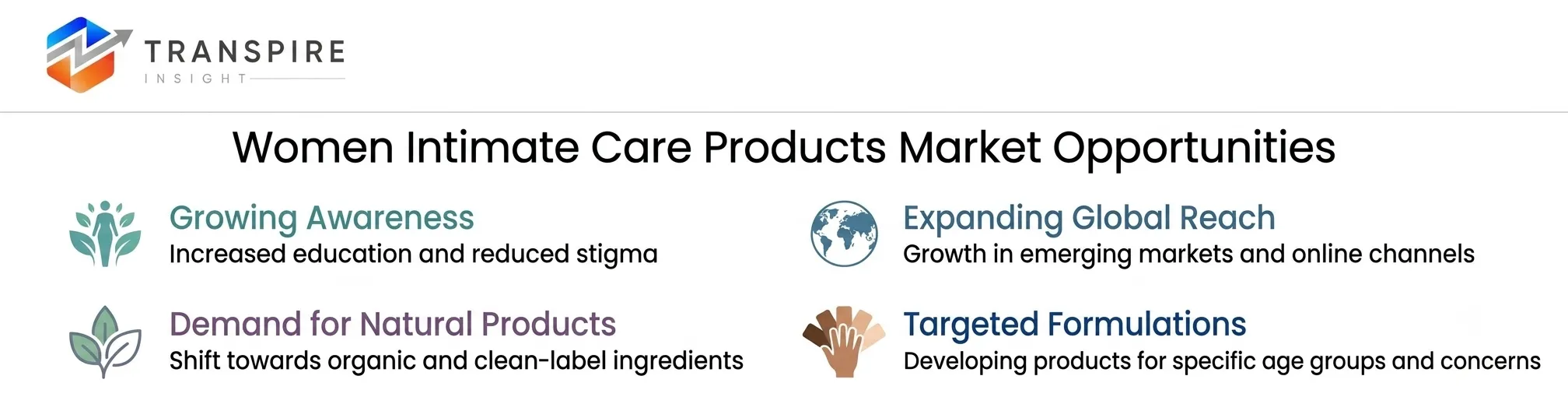
According to a research report published by Transpire Insight, the women intimate care products market size is projected to grow from USD 48.24 billion in 2026 to USD 81.12 billion by 2035, at a CAGR of 6.52% during the forecast period 2027-2035. Rising health awareness, growing prevalence of vaginal infections, expanding e-commerce accessibility, shifting consumer preferences toward pH-balanced natural formulations, and destigmatization of female wellness drive the intimate care product market.
Introduction
The women’s intimate care products market has evolved into a vital sector within personal health and cosmetics. Driven by increasing awareness around preventative hygiene, skin-friendly formulations, and specialized care across life stages (such as postpartum and menopause), demand continues to surge globally. The market features an array of established multinational personal care giants, specialized pharmaceutical firms, and disruptive digital-first wellness brands catering to evolving consumer preferences.
Recent Development News
Stay Ahead of Emerging Opportunities with Expert Market Insights by Transpire Insight
Transpire Insight provides comprehensive, data-driven market intelligence to support smarter business decisions. Our research is rooted in comprehensive analysis, authoritative predictions, and industry expertise, enabling organizations to make informed decisions in rapidly evolving markets. In-depth analysis of market segmentation, competitive positioning, regional trends, and emerging investment opportunities in high-growth areas. We blend accuracy with actionable intelligence, empowering companies to uncover new avenues for growth, bolster strategic decision-making, and stay ahead in a dynamic market.
Women Intimate Care Products Market Size & Statistics
Regional Growth and Demand Analysis by Transpire Insight
North America's leadership stems from high consumer awareness, strong healthcare infrastructure, and a mature retail and e-commerce ecosystem that supports rapid product innovation. Major players such as Procter & Gamble, Kimberly-Clark, and Johnson & Johnson continue to dominate shelf space through strong brand equity, while smaller, mission-driven challengers are reshaping the competitive landscape. The acquisition of The Honey Pot by Compass Diversified underscores how private equity is increasingly targeting niche, natural-formulation brands to accelerate scale and distribution. Meanwhile, Unilever Ventures' investment in London-based Luna Daily signals that established conglomerates are actively backing smaller, sustainability-focused intimate care startups rather than relying solely on internal R&D. Pads remain the leading product category in the region, but wipes, washes, and lubricants are gaining share as women seek broader, more holistic intimate wellness routines.
Asia-Pacific's growth is fueled by rapid urbanization, rising disposable incomes, and shifting cultural attitudes toward menstrual and intimate health, with China and India serving as the region's primary demand centers. Government-backed hygiene education campaigns and expanding e-commerce infrastructure are helping close historical awareness gaps in previously underpenetrated markets. Within the region, Taiwan has emerged as a standout growth pocket, reflecting how smaller, affluent Asia-Pacific markets are outpacing larger neighbors on a percentage basis. Companies like Unicharm are leveraging localized product formulations and distribution partnerships to capture first-time buyers, while brands adapt packaging and messaging to navigate cultural sensitivities around intimate hygiene. This combination of untapped demand and improving retail access positions Asia-Pacific as the region investors are watching most closely.
Top 15 Trends in the Women Intimate Care Products Market
Consumers increasingly prefer intimate washes made from plant-based, chemical-free ingredients, pushing brands like The Honey Pot to steadily expand organic lines and capture health-conscious buyers.
Direct-to-consumer brands are leveraging e-commerce platforms and social media marketing to reach younger women directly, bypassing traditional retail while building loyal, subscription-based customer relationships quickly.
Private equity and strategic acquirers are targeting niche intimate care brands, exemplified by Compass Diversified's acquisition of The Honey Pot, accelerating consolidation and expansion.
Reusable menstrual cups and discs are gaining traction among eco-conscious and cost-sensitive consumers, reducing waste versus disposable pads while offering longer-lasting comfort and reliable protection.
Brands are replacing plastic packaging with biodegradable, compostable, and plant-fiber materials to meet steadily rising consumer demand for sustainable intimate care and menstrual products globally.
Rapid urbanization, rising disposable incomes, and expanding e-commerce access are driving strong intimate care demand growth across China, India, and other underpenetrated emerging Asia-Pacific markets.
List of Top 25 Companies Leading Women Intimate Care Products
Commands a dominant share in feminine hygiene through legacy powerhouses.
Founded: 1837 | HQ: Cincinnati, Ohio, USA.
Why It Ranks: Holds unmatched distribution infrastructure and brand awareness across international markets.
Regional Dominance: North America, Western Europe, Latin America, Asia-Pacific, and Middle East.
Product Line: Sanitary pads, liners, intimate wipes, tampons, and specialized cleansing washes.
Pioneer in absorbent paper and personal care products across households.
Founded: 1872 | HQ: Dallas, Texas, USA.
Why It Ranks: Leverages massive retail partnerships and decades of consumer trust in hygiene.
Regional Dominance: North America, Latin America, Western Europe, Asia-Pacific, and South Africa.
Product Line: Intimate wipes, panty liners, period pads, and gentle daily cleansing products.
healthcare leader delivering clinically proven and dermatologist-tested intimate hygiene solutions.
Founded: 1886 | HQ: New Brunswick, New Jersey, USA.
Why It Ranks: Renowned for clinical credibility, extensive supply chains, and consumer brand loyalty.
Regional Dominance: North America, Europe, Asia-Pacific, Latin America, and Middle East.
Product Line: Mild intimate washes, pH-balanced cleansing liquids, and sensitive skin wipes.
Expanded intimate care footprint via strategic acquisitions of category-leading regional brands.
Founded: 1929 | HQ: London, United Kingdom.
Why It Ranks: Utilizes massive consumer market reach and strong omnichannel brand presence worldwide.
Regional Dominance: Europe, Asia-Pacific, South Asia, Latin America, and Africa.
Product Line: Intimate wash liquids, gentle hygiene wipes, and pH-balancing personal cleansers.
Pharmaceutical powerhouse backing scientifically validated intimate care brands across pharmacies.
Founded: 1973 | HQ: Paris, France.
Why It Ranks: Trusted medical heritage drives pharmacy recommendations and consumer loyalty for intimate health.
Regional Dominance: Western Europe, Eastern Europe, Latin America, and Asia-Pacific.
Product Line: Medicated washes, intimate cleansing gels, and soothing external hygiene creams.
Life science giant offering OTC and therapeutic solutions for intimate health.
Founded: 1863 | HQ: Leverkusen, Germany.
Why It Ranks: Strong medical reputation and leading antifungal and intimate comfort brand portfolios.
Regional Dominance: Europe, North America, Latin America, and Asia-Pacific.
Product Line: Soothing cleansing washes, antifungal creams, intimate moisturizers, and balance gels.
Dominates Asian markets with advanced material technology for feminine hygiene products.
Founded: 1961 | HQ: Tokyo, Japan.
Why It Ranks: Innovation in soft, breathable materials drives massive regional consumer adoption.
Regional Dominance: Japan, East Asia, Southeast Asia, India, and Oceania.
Product Line: Ultra-soft liners, intimate wet wipes, organic cotton pads, and hygiene washes.
Leading Japanese personal care firm focused on delicate skin hygiene science.
Founded: 1887 | HQ: Tokyo, Japan.
Why It Ranks: Expertise in sensitive skin formulations makes its products trusted Asian essentials.
Regional Dominance: Japan, East Asia, Southeast Asia, and select Western retail channels.
Product Line: Gentle cleansing foams, sensitive intimate washes, and breathable hygiene liners.
Specializes in consumer healthcare brands focused on targeted intimate condition management.
Founded: 1996 | HQ: Tarrytown, New York, USA.
Why It Ranks: Holds key niche brands dedicated specifically to female intimate health needs.
Regional Dominance: North America, Australia, and select European markets.
Product Line: Vaginal health washes, anti-itch creams, cleansing wipes, and odor-control sprays.
Private consumer healthcare company owning iconic female intimate wellness brand Vagisil.
Founded: 1949 | HQ: White Plains, New York, USA.
Why It Ranks: Category pioneer in anti-itch, odor control, and daily intimate washes.
Regional Dominance: North America, Western Europe, and Latin America.
Product Line: Intimate washes, anti-itch gels, daily wipes, and intimate powder solutions.
Conclusion
The women’s intimate care market reflects a fundamental transition toward holistic female health, driven by clean-label formulations and dermatologist-backed innovations. With pharmaceutical giants and direct-to-consumer disruptors expanding availability, products prioritizing pH balance, natural ingredients, and eco-friendly packaging lead industry growth. Sustained consumer education, expanding retail channels in emerging economies, and specialized life-stage solutions will continue shaping the industry landscape.


Send us a brief description of your challenge and we'll get back to you within 24 hours.

 inquiry@transpireinsight.com
 APAC:+91 7666513636
 Address


