
Sep 12, 2026
By Transpire Insight
Description
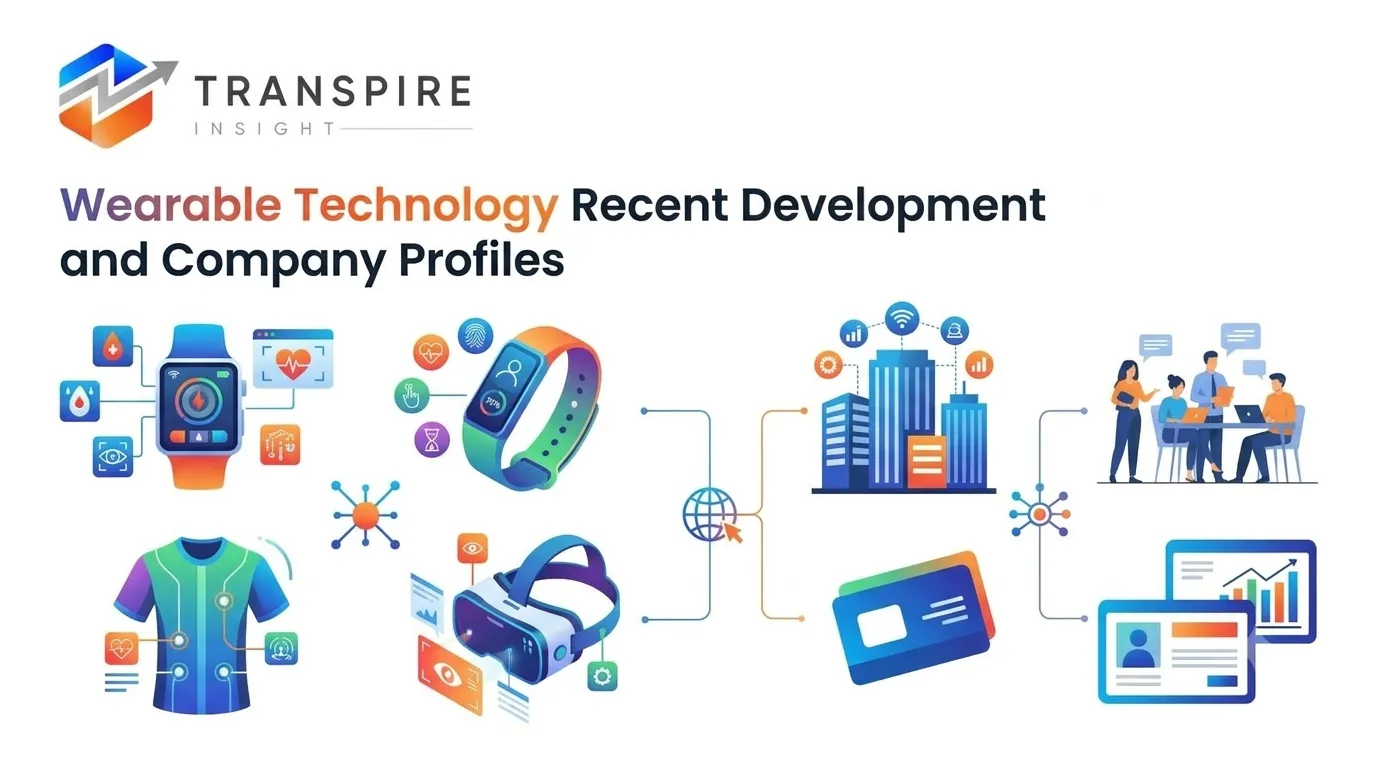
According to a research report published by Transpire Insight, the wearable technology market size is projected to grow from USD 177.82 billion in 2026 to USD 392.38 billion by 2035, at a CAGR of 17.6% during the forecast period 2027-2035. The wearable market is expanding due to rising health awareness, increasing incidence of chronic diseases, advancements in AI biometrics, growing need for constant remote patient monitoring, and the integration of smart ecosystems.
Introduction
Wearable technology is a revolution that's a fusion of personal health monitoring, digital connectivity, and immersive computing. It is a quickly evolving sector, from basic fitness tracking to clinical-level diagnostic gadgets, AI-enabled smart eyewear, and smart rings with enhanced biometric sensors. As sensor technology shrinks and edge computing becomes more prevalent, these IoT devices are still shaping the future of modern lifestyles, health care, and industrial processes across the globe.
Recent Development News
Stay Ahead of Emerging Opportunities with Expert Market Insights by Transpire Insight
Transpire Insight provides comprehensive, data-driven market intelligence to support smarter business decisions. Our research is rooted in comprehensive analysis, authoritative predictions, and industry expertise, enabling organizations to make informed decisions in rapidly evolving markets. In-depth analysis of market segmentation, competitive positioning, regional trends, and emerging investment opportunities in high-growth areas. We blend accuracy with actionable intelligence, empowering companies to uncover new avenues for growth, bolster strategic decision-making, and stay ahead in a dynamic market.
Temperature Data Logger Market Size & Statistics
Regional Growth and Demand Analysis by Transpire Insight
North America's strength lies in its strong R&D pipeline and environment that continues to support rapid device developers. We've seen FDA clearance of AI-powered medical wearables ramp up, cutting development time from prototype to shelf, and a trio of brands like Apple, Google's Fitbit arm, and Garmin are continuing to drive the premium smartwatch and fitness-tracker market with their innovations. For large manufacturers and logistics companies in the U.S., the AR headset is becoming an extension of their fitness business model, with workplace safety and remote assistance in new, emerging growth areas. Wellness programs tied to insurance coverage are also helping to drive adoption up, particularly for the continuous monitoring devices, which are integrated into larger insurance plans and digital-health platforms, not as standalone gadgets.
Asia-Pacific's playbook is different in scale, cost, and manufacturing depth. Xiaomi and Huawei have a significant percentage of the world's unit shipments, and the Chinese government's policy measures are driving self-reliance for components such as sensors and flexible displays. South Korea's development of small batteries such as early solid-state batteries is driving thinner, longer battery life throughout the region and beyond. India is a demand hotspot in Asia-Pacific, and Europe has a more consistent growth trajectory, which puts a heightened emphasis on privacy, prompting data suppliers to integrate consent and transparency into the product design, not as a compliance checkbox but as a fundamental element.
Top 15 Trends in the Wearable Technology Market
AI-powered health monitoring wearables
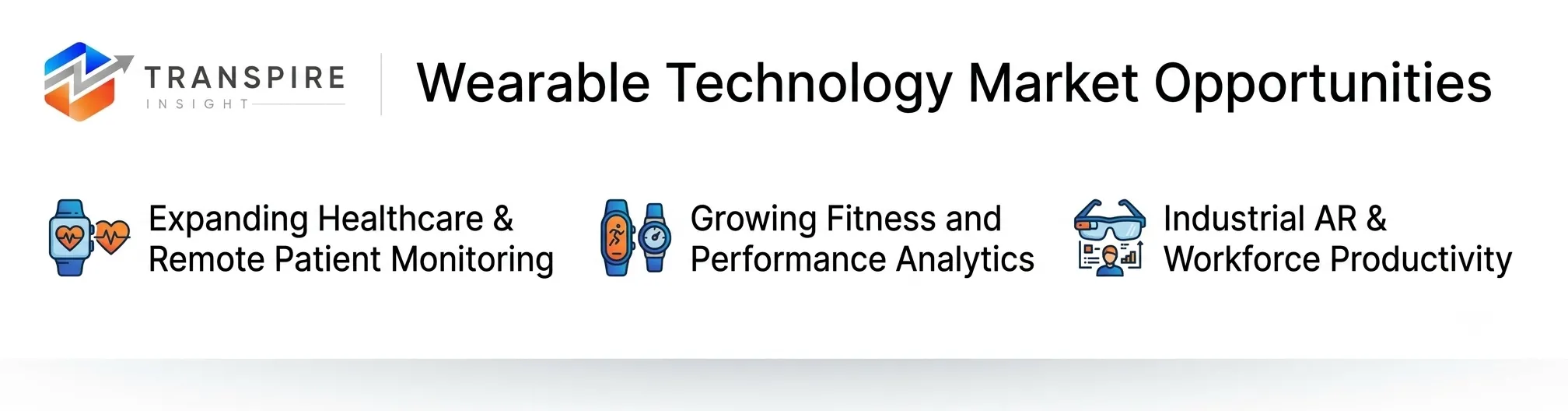
Smartwatches and fitness bands now use AI algorithms to detect irregular heart rhythms, sleep apnea, and elevated stress, enabling earlier and more personalized health interventions.
Smart rings and jewelry
Smart rings are gaining traction as compact, discreet wearables offering sleep, recovery, and activity tracking without a screen, appealing to style-conscious and privacy-focused consumers worldwide.
AR and smart glasses in enterprises
Enterprise adoption of AR and smart glasses is accelerating as companies deploy them for remote assistance, hands-free instructions, and worker safety across manufacturing and logistics.
Solid-state batteries for longer runtime
Solid-state battery breakthroughs are enabling thinner wearable designs with longer runtimes, easing a long-standing power constraint and supporting always-on health sensors without frequent recharging cycles.
Continuous glucose and biosensors
Continuous glucose monitors and advanced biosensors are expanding beyond diabetes care into mainstream fitness and metabolic wellness, reflecting rising consumer interest in preventive health management.
Edge AI for on-device processing
On-device edge AI processing is reducing wearables' reliance on cloud computing, cutting latency, improving battery efficiency, and strengthening data privacy by keeping data locally stored.
List of Top 25 Companies Leading the Wearable Technology Market
1. Apple Inc.
leader in market revenue driven by strong Watch and AirPods sales.
Founded: 1976 | HQ: Cupertino, California, USA
Why It Ranks: Unrivaled consumer ecosystem lock-in paired with cutting-edge health biometrics and design.
Regional Dominance: Dominates North American market share while maintaining massive consumer presence.
Product Line: Apple Watch Series, Apple Watch Ultra, AirPods Pro, Apple Vision Pro.
2. Samsung Electronics Co., Ltd.
Major innovator in Android-compatible smartwatches, hearables, and health-tracking smart rings.
Founded: 1969 | HQ: Suwon, South Korea
Why It Ranks: Vast distribution network paired with extensive display and sensor technology manufacturing.
Regional Dominance: Holds massive market control across South Korea, Asia-Pacific, and Europe.
Product Line: Galaxy Watch, Galaxy Ring, Galaxy Buds.
3. Xiaomi Corporation
Top-tier volume leader providing highly feature-rich wearables at aggressive price points.
Founded: 2010 | HQ: Beijing, China
Why It Ranks: Dominates high-volume value segments globally with massive unit shipment volumes.
Regional Dominance: Strong market leadership across Greater China, Asia-Pacific, and Eastern Europe.
Product Line: Xiaomi Smart Band, Redmi Watch, Xiaomi Buds, Smart Glasses.
4. Huawei Technologies Co., Ltd.
Resilient tech giant pioneering ultra-long battery life smartwatches and advanced sensors.
Founded: 1987 | HQ: Shenzhen, China
Why It Ranks: Exceptional domestic market recovery backed by heavy R&D in health metrics.
Regional Dominance: Absolute dominance in Mainland China with strong expansion in Middle East.
Product Line: HUAWEI WATCH GT, WATCH Ultimate, FreeBuds, HUAWEI TalkBand.
5. Garmin Ltd.
Premier provider of high-precision GPS navigation wearables and specialized sports smartwatches.
Founded: 1989 | HQ: Olathe, Kansas, USA
Why It Ranks: Unrivaled brand loyalty among outdoor enthusiasts, endurance athletes, and aviators.
Regional Dominance: Strong market leadership across North America, Western Europe, and Australasia.
Product Line: Fenix Series, Forerunner, Venu, Instinct, Epix.
6. Google LLC (Fitbit)
Tech powerhouse integrating deep AI capabilities with proven Fitbit health monitoring.
Founded: 1998 | HQ: Mountain View, California, USA
Why It Ranks: Powerful combination of Wear OS software platform, AI, and health tracking.
Regional Dominance: Primary market strength in North America and Western European consumer markets.
Product Line: Pixel Watch, Fitbit Charge, Fitbit Sense, Fitbit Versa.
7. Meta Platforms, Inc.
Pioneer in consumer virtual reality and AI-powered smart audio eyewear integration.
Founded: 2004 | HQ: Menlo Park, California, USA
Why It Ranks: Market-leading hardware deployment in VR headsets and AI smart glasses.
Regional Dominance: Dominates North American and European virtual reality hardware sales sectors.
Product Line: Meta Quest Series, Ray-Ban Meta Smart Glasses.
8. Oura Health Oy
Trailblazing pioneer of the sleek, health-focused smart ring hardware category.
Founded: 2013 | HQ: Oulu, Finland
Why It Ranks: Gold standard accuracy in sleep staging, readiness analytics, and temperature tracking.
Regional Dominance: Rapid growth across the European Union, Nordic countries, and North America.
Product Line: Oura Ring Horizon, Oura Ring Heritage.
9. WHOOP, Inc.
Subscription-based human performance pioneer specializing in deep strain and recovery biometrics.
Founded: 2012 | HQ: Boston, Massachusetts, USA
Why It Ranks: High adoption among elite professional sports teams and recovery-focused athletes.
Regional Dominance: Massive brand authority in the United States, expanding across Europe.
Product Line: WHOOP 4.0 Strap, Any-Wear Body Apparel.
10. Imagine Marketing Ltd. (boAt)
Rapidly growing Indian consumer electronics brand dominating regional hearables and smartwatches.
Founded: 2016 | HQ: Mumbai, India
Why It Ranks: Exceptional market penetration through affordable, stylish audio and wrist-worn wearables.
Regional Dominance: Commands huge market share leadership in India and South Asia.
Product Line: Wave Smartwatches, Airdopes Earwear, Smart Rings.
Conclusion
Wearable technology is no longer a niche luxury item but an integral part of a system for preventive healthcare, digital interaction, and enterprise efficiency. Advanced biometric sensors integrated with AI will drive the future of the industry, with form factors such as smart rings, hearables, and AR glasses being the next big thing. Seamless ecosystem connectivity will be the key driver for the ongoing expansion of this dynamic market in the coming years.


Send us a brief description of your challenge and we'll get back to you within 24 hours.

 inquiry@transpireinsight.com
 APAC:+91 7666513636
 Address


