
Sep 05, 2026
By Transpire Insight
Description
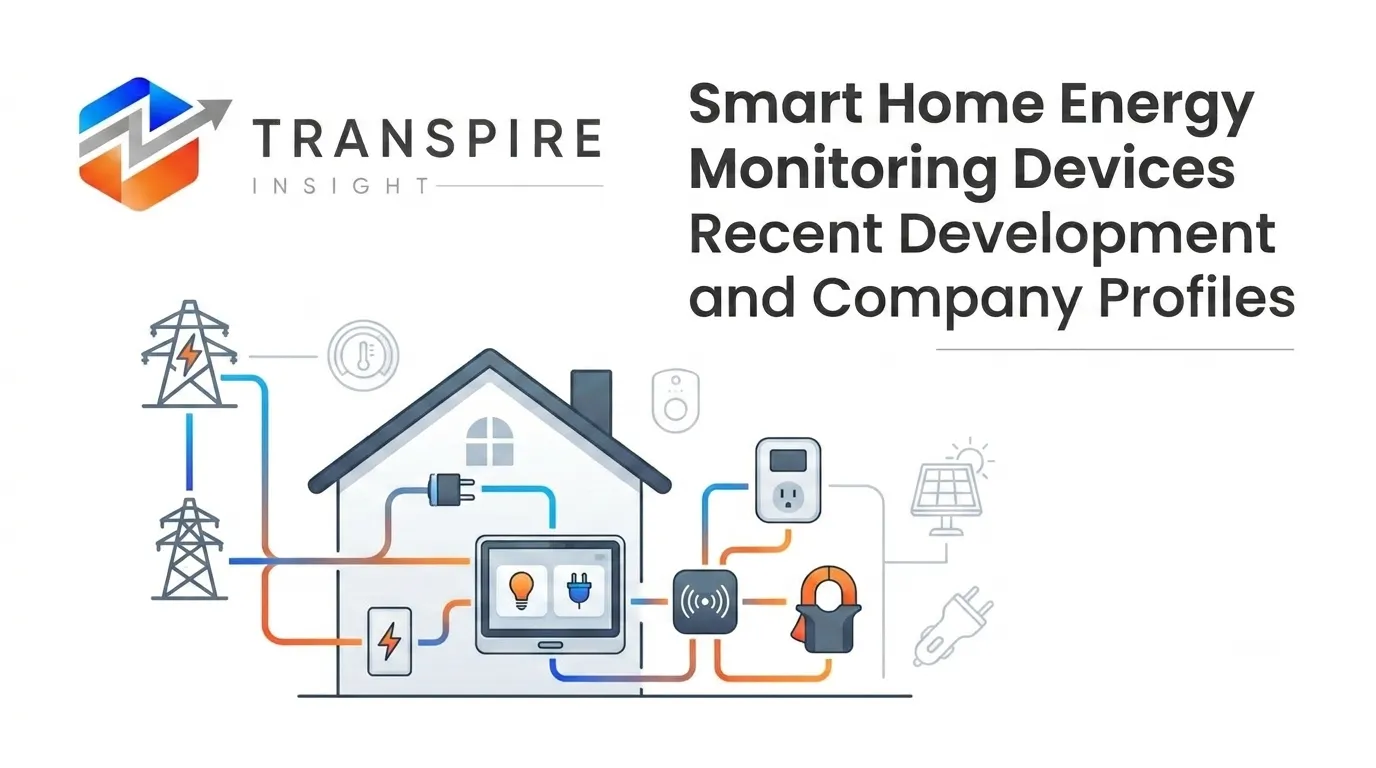
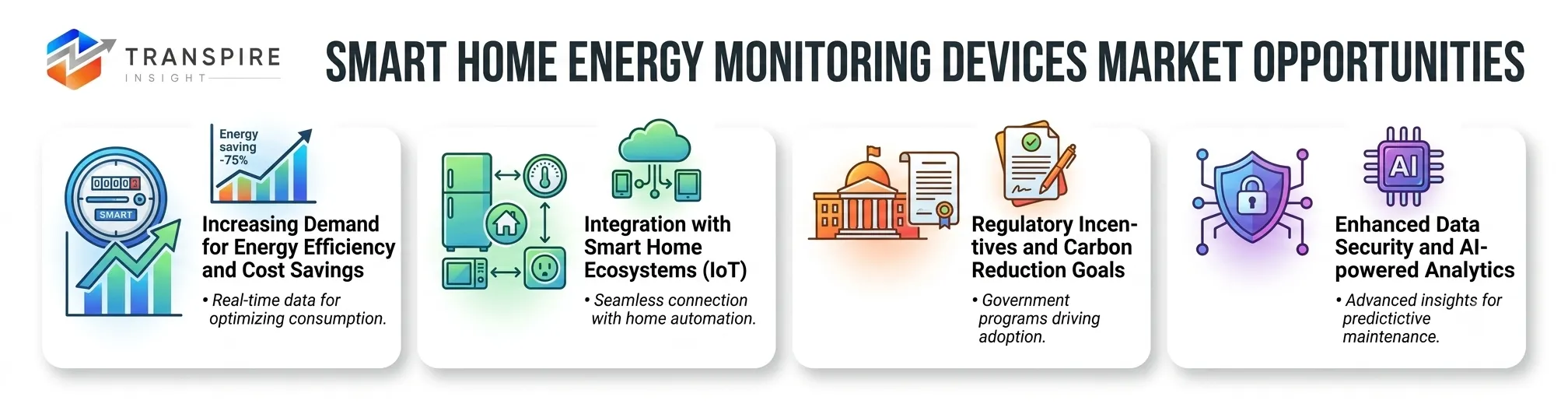
According to a research report published by Transpire Insight, the smart home energy monitoring devices market size is projected to grow from USD 4.12 billion in 2026 to USD 9.8 billion by 2035, at a CAGR of 12.30% during the forecast period 2027-2035. Market adoption is largely being propelled by rising electricity costs, increasing residential renewable energy penetrations such as PV, government energy efficiency requirements, and consumer demand for carbon footprint visibility at their fingertips.
Introduction
The Smart Home Energy Monitoring Devices Market is witnessing robust growth, as consumers are moving towards sustainable, data-driven lifestyles. These allow for a granular, real-time view of power usage so homeowners can optimise their electricity consumption, reduce their energy bills, and integrate renewable energy sources such as rooftop solar and batteries seamlessly. With the advent of smart grid systems, AI-based predictive analytics, and IoT connectivity, energy monitors have transformed from mere gadgets into critical central points in the smart, eco-friendly, and automated energy management systems across the globe.
Recent Development News
Stay Ahead of Emerging Opportunities with Expert Market Insights by Transpire Insight
Transpire Insight provides comprehensive, data-driven market intelligence to support smarter business decisions. Our research is rooted in comprehensive analysis, authoritative predictions, and industry expertise, enabling organizations to make informed decisions in rapidly evolving markets. In-depth analysis of market segmentation, competitive positioning, regional trends, and emerging investment opportunities in high-growth areas. We blend accuracy with actionable intelligence, empowering companies to uncover new avenues for growth, bolster strategic decision-making, and stay ahead in a dynamic market.
Smart Home Energy Monitoring Devices Market Size & Statistics
Regional Growth and Demand Analysis by Transpire Insight
North America is still the top regional market for smart home energy monitoring devices, owing to high penetration in smart homes, existing Internet of Things (IoT) infrastructure, and consumer awareness of the cost of energy. The U.S. is the main driver as electricity costs continue to rise, utility incentives are offered, and demand-response programs are gaining traction, households are making the step toward real-time monitoring of their energy use and automated solutions for energy management. Canada is also making a contribution in the areas of energy efficiency and the development of smart grids.
The market is anticipated to grow at a rapid pace in Asia-Pacific, which is supported by the growing urban population, surge in electricity consumption, smart city initiatives, and quick adoption of connected consumer electronics. Important markets include China and Japan, and new opportunities are being generated in India, South Korea and Australia with smart-grid modernization, renewable energy and the increasing digitalisation of residential applications. Smart energy monitoring is starting to emerge in this region as a smart home feature to become a household energy management tool thanks to the growth of the region's emerging middle-class population and the awareness of how efficiently energy can be used.
Top 15 Trends in the Smart Home Energy Monitoring Devices Market
Top 25 Companies Leading the Smart Home Energy Monitoring Devices Market
Pioneer in whole-home digital energy management and smart electrical panels.
Founded: 1836 | HQ: Rueil-Malmaison, France.
Why It Ranks: Unmatched scale and end-to-end residential energy automation infrastructure.
Regional Dominance: Europe & North America.
Product Line: Wiser Energy Monitor, Schneider Energy Monitor, Square D Edition.
Utilizes machine learning algorithms to identify unique device power signatures automatically.
Founded: 2013 | HQ: Cambridge, Massachusetts, USA.
Why It Ranks: Market leader in high-resolution, real-time disaggregation software and intelligence.
Regional Dominance: North America.
Product Line: Sense Home Energy Monitor, Sense Solar, Sense Flex.
Produces top-rated budget-friendly hardware with detailed circuit-level monitoring options.
Founded: 2018 | HQ: Littleton, Colorado, USA.
Why It Ranks: High cost-to-performance value driving massive direct-to-consumer adoption and growth.
Regional Dominance: North America.
Product Line: Emporia Vue Gen 2/3, Smart Plugs, EV Chargers.
Offers advanced sub-metering and dynamic load balancing for solar and EVs.
Founded: 2012 | HQ: Kortrijk, Belgium.
Why It Ranks: Strong technology suite tailored for eco-friendly, multi-energy household setups.
Regional Dominance: Europe.
Product Line: Smappee Infinity, Smappee Wi-Fi Connect, Smappee EV Base.
Acquired by Generac to integrate home energy monitoring with backup generators.
Founded: 2005 | HQ: Waukesha, Wisconsin, USA.
Why It Ranks: Backed by Generac’s massive residential power and microgrid distribution network.
Regional Dominance: North America.
Product Line: PWRview Home Energy Monitor, Generac PWRcell Energy System.
Delivers commercial-grade electrical metering precision scaled down for residential applications.
Founded: 1988 | HQ: Zurich, Switzerland.
Why It Ranks: leader in electrification hardware with expansive smart home distribution.
Regional Dominance: Europe & Asia-Pacific.
Product Line: ABB-free@home, M4M Network Analyzers, InSite Energy Management.
Integrates smart metering hardware directly into intelligent home distribution panelboards.
Founded: 1847 | HQ: Munich, Germany.
Why It Ranks: Deep industrial expertise powering smart grid-to-home energy transition tech.
Regional Dominance: Europe & North America.
Product Line: InHab Smart Energy Management, Sentron Power Monitoring Devices.
Transforms legacy circuit breakers into smart energy monitoring nodes via modules.
Founded: 1911 | HQ: Dublin, Ireland.
Why It Ranks: Strong standing among electrical contractors and original equipment builder networks.
Regional Dominance: North America & Europe.
Product Line: AbleEdge Smart Breakers, Energy Management Circuit Breakers (EMCB).
Offers sleek, integrated smart home infrastructure including monitored outlets and panels.
Founded: 1860 | HQ: Limoges, France.
Why It Ranks: Massive worldwide footprint in residential wiring devices and home automation.
Regional Dominance: Europe
Product Line: Netatmo Smart Energy Monitor, Eliot Connected Power Outlets.
Focuses heavily on HVAC and whole-home environmental energy tracking solutions.
Founded: 2018 | HQ: Austin, Texas, USA.
Why It Ranks: Embedded presence across millions of residential heating/cooling control installations.
Regional Dominance: North America
Product Line: Honeywell Home Smart Thermostats, Energy Dashboard Systems.
Conclusion
Smart Home Energy Monitoring Devices Market is changing quickly from an individual consumer gadget to becoming an integral part of home electrification. Modernization of energy grids and the growth of home solar are driving hardware vendors and software pioneers to collaborate and provide actionable intelligence. These devices, with their standardized connectivity and AI-powered analytics, will continue to play a key role in reducing household costs, improving grid stability, and enabling consumers to make more sustainable choices.


Send us a brief description of your challenge and we'll get back to you within 24 hours.

 inquiry@transpireinsight.com
 APAC:+91 7666513636
 Address


