
Aug 19, 2026
By Transpire Insight
Description
According to a research report published by Transpire Insight, The Plug-in Electric Vehicle Market Size is projected to Grow from USD 37.58 Billion in 2025 to USD 89.33 Billion by 2035, at a CAGR of 15.2% during the forecast period 2026-2035. The market is expanding owing to the growing inclination of consumers as well as fleet managers towards electric mobility, facilitated by increased environmental standards, government policies, enhanced battery energy density, reduced cost of batteries, faster charging systems, and charging station expansion. The development of effective cooling systems, light-weighting of cars, efficient batteries, and increased driving distance is making plug-in vehicles even more competitive.
Introduction
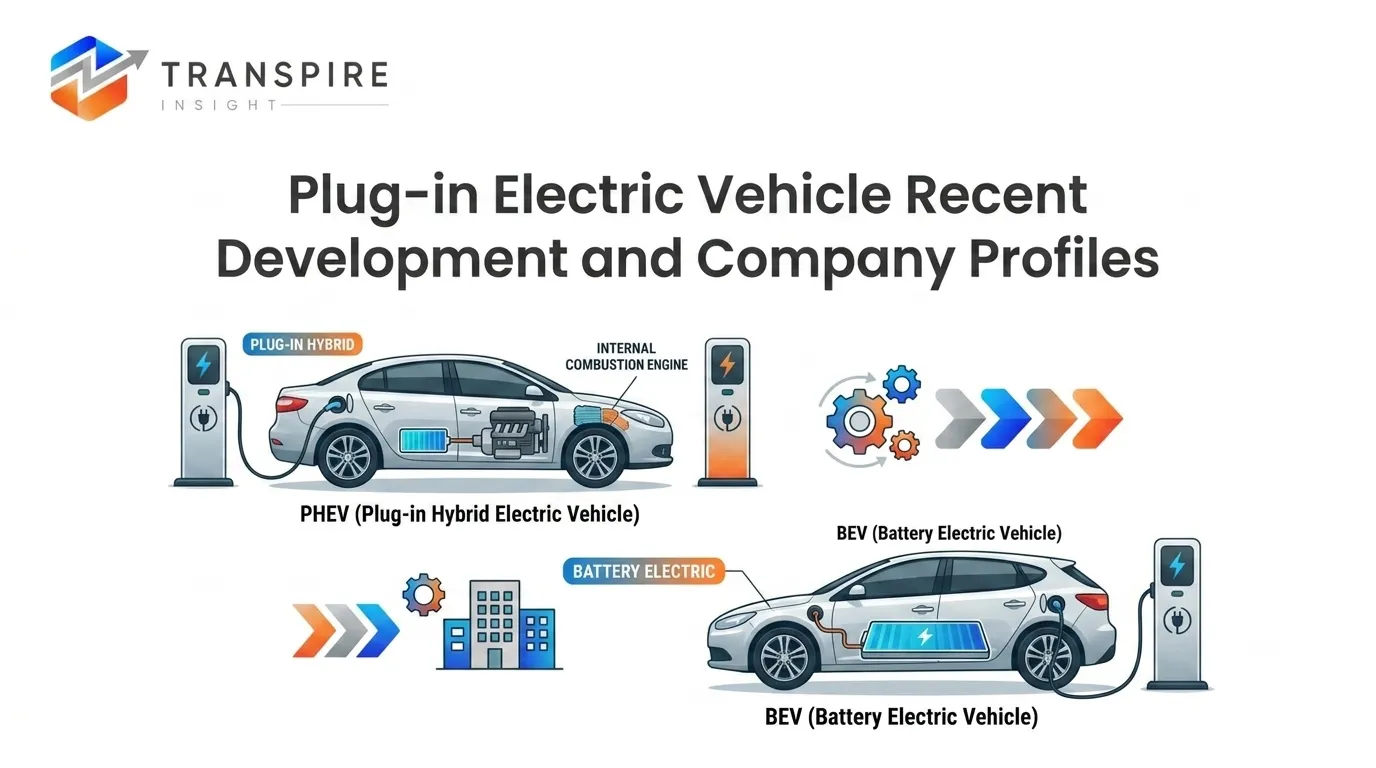
The Plug-in Electric Vehicle Market refers to the set of vehicles that have partial or full power from electricity, and which come fitted with rechargeable battery packs that can be recharged from an external electrical source, with examples being battery electric vehicles (BEVs) and plug-in hybrid electric vehicles (PHEVs). The plug-in electric vehicle market is growing, since manufacturers and users are shifting towards environmentally friendly transport modes that help to lower the dependency on traditional fuel-powered vehicles. Technological improvements such as battery efficiency, fast charging technology, electric drive trains, thermal management, connected cars, and regenerative brakes are enhancing vehicle performance and charging capabilities. At the same time, the expansion of charging infrastructures, emission standards for vehicles, government electrification initiatives, and the manufacture of electric vehicles are facilitating this shift towards plug-in transport modes.
Recent Development News
Stay Ahead of Emerging Opportunities with Expert Market Insights by Transpire Insight
The insights that have been shared through this blog are based on intensive market research carried out by Transpire Insight, an advisor that works with many organizations. Thanks to the analysis of extensive data, forecasts made by our specialists, and industry intelligence, our reports allow clients to find strategic growth opportunities in dynamically developing industries. For all those who would like to get more detailed information regarding market segmentation, competitive analysis, regional outlooks, and future investment tendencies, there is no doubt that our full report will be of great value.
Download the exclusive Plug-in Electric Vehicle Market sample report today to uncover expert insights, emerging trends, and the opportunities defining the future of the industry.
Plug-in Electric Vehicle Market Size & Statistics
Regional Growth and Demand Analysis by Transpire Insight:
The Asia-Pacific region ranks top in the Plug-in Electric Vehicle Market, mainly due to the huge number of electric vehicle uptake and production in China, the biggest electric car market globally. In 2025, electric cars comprised nearly 55% of total new car sales in China, while Chinese car companies accounted for almost 60% of all electric car sales worldwide. The region's strengths include growth of electric vehicle charging infrastructure, favorable governmental policies, presence of powerful EV manufacturers within the country, production of batteries, and rising acceptance among consumers for electric vehicles. Apart from China, India, Thailand, Vietnam, and Indonesia, some of the other fast-growing markets include India, where sales of electric cars rose by more than 75% in 2025, and in Southeast Asia, sales rose more than two-fold.
Asia-Pacific brings together high vehicle demand, high EV production ability, favorable battery supply chain, charging infrastructure development, government initiatives, and technological advancement, making it the most advanced regional market for plug-in electric vehicles. China is the major driver of this region, whereas India and Southeast Asia add significant growth prospects to the region. China is also identified as the largest country market in Asia-Pacific region, followed by India as one of the fastest growing.
Top 15 Trends in the Plug-in Electric Vehicle Market
Proceed to Checkout to purchase the exclusive Plug-in Electric Vehicle Market report and gain instant access to in-depth market intelligence, strategic analysis, and future growth opportunities.
BEVs are finding more and more acceptance because of increased model offerings by car manufacturers and growing consumer comfort with the full electric drive. Advancements in the driving range, charging capability, car design, and energy efficiency of batteries are making BEVs more appropriate for a larger number of purposes. More electric SUVs, sedans, compacts, and commercial vehicles can be observed as well.
The plug-in hybrid electric vehicles have been appealing to customers who desire an electric-powered drive train while having the internal combustion engine at the same time. The plug-in hybrid electric vehicle can run on electricity for short distances while relying on the internal combustion engine when needed. As a result, automakers have taken the advantage of the plug-in hybrid electric vehicle as a stepping stone to vehicle electrification.
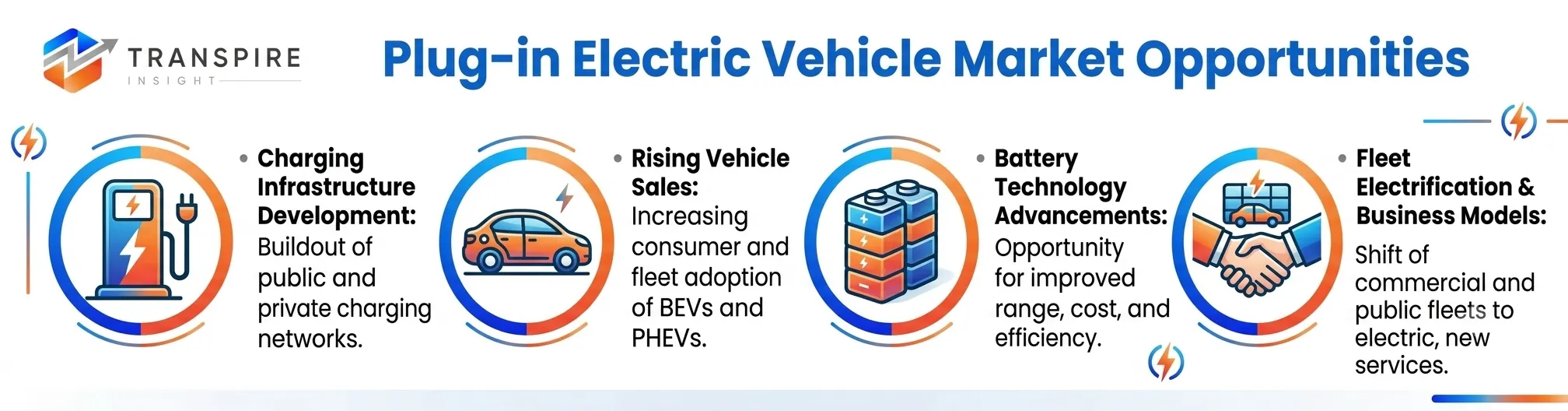
The availability of fast and superfast charging infrastructure is becoming increasingly important in making plug-in EVs more viable. Charging companies and manufacturers have invested in high-powered chargers that can significantly shorten the time required for charging compared to traditional chargers. The availability of these chargers on highways and other places will help build consumer confidence in using EVs for long trips.
Today, more and more emphasis is being placed by battery manufacturers on increasing energy density in order to increase driving distances without increasing the size and weight of batteries. Advances in battery chemistry, electrodes, design, and cooling are enabling manufacturers to increase the energy available in the batteries of their cars. This becomes especially crucial as car manufacturers try to combine increased range, increased performance, and compact vehicle designs.
Battery Management Systems have become more vital for keeping track of temperatures, voltages, states of charge, and general health of batteries. The current Battery Management System employs advanced software and hardware technology to make the process of charging and discharging optimal and to prevent overheating. With batteries getting larger and technologically advanced, intelligent battery management has become increasingly essential.
Smart charging is evolving from merely scheduled charging to more advanced techniques of controlling the charging process of electric vehicles in relation to electricity prices, grid load, renewable energy sources, and even domestic consumption. Bidirectional charging goes one step further by enabling the vehicle to return electricity to the home or any other load. As the technology and the infrastructure evolve, the above technologies can transform the EV battery into an energy resource.
Top 25 Companies Leading the Plug-in Electric Vehicle Market
Customize the exclusive Plug-in Electric Vehicle Market report today to receive tailored insights, country-specific analysis, and business-focused market intelligence.
1. BYD Company Limited
BYD Company Limited is a Chinese automotive and technology company with a strong position in electric vehicles and rechargeable battery technologies. Its portfolio spans passenger cars, commercial vehicles, batteries, and energy solutions.
Founded: 1995 | Headquarters: Shenzhen, Guangdong, China
Why It Ranks: BYD ranks among the leading plug-in EV manufacturers because of its broad BEV and PHEV portfolio, vertically integrated battery capabilities, large production scale, and strong presence across international markets.
Regional Dominance: China is its core market, while BYD has rapidly expanded across Europe, Southeast Asia, Latin America, Australia, and other international markets.
Product Line: BYD's EV portfolio includes Dolphin, Seal, Atto 3, Han, Tang, Seal U, Shark, and various plug-in hybrid models using its DM-i and DM-p technologies.
Recent Development: In July 2026, BYD introduced its Blade Battery 2.0 and FLASH Charging technology in the UK, demonstrating charging capability of up to 1,500 kW and highlighting the company's focus on dramatically reducing EV charging times.
2. Tesla, Inc.
Tesla is a major electric vehicle and clean-energy company focused on electric cars, energy storage, charging infrastructure, and related software technologies.
Founded: 2003 | Headquarters: Austin, Texas, USA
Why It Ranks: Tesla remains a leading plug-in EV company due to its established EV brand, extensive Supercharger ecosystem, software capabilities, battery technology, and large-scale electric vehicle production.
Regional Dominance: Tesla has major markets across North America, Europe, and Asia-Pacific, with China serving as an important production and sales base.
Product Line: Its vehicle portfolio includes Model 3, Model Y, Model S, Model X, and Cybertruck, alongside Supercharging, energy storage, and software services.
Recent Development: In 2026, Tesla continued expanding its focus on autonomous driving and AI-powered vehicle capabilities, while its charging network increasingly supports a broader range of EV users through the adoption of NACS charging standards.
3. Volkswagen AG
Volkswagen AG is a German automotive group with a large vehicle portfolio and a significant electrification strategy covering passenger vehicles, commercial vehicles, batteries, and software.
Founded: 1937 | Headquarters: Wolfsburg, Germany
Why It Ranks: Volkswagen ranks highly because of its extensive manufacturing footprint, strong brand portfolio, large-scale investment in EV platforms, and growing range of battery-electric vehicles.
Regional Dominance: Europe remains its strongest region, while the company also has substantial operations across China, North America, and other international markets.
Product Line: Its plug-in electric vehicle portfolio includes Volkswagen ID.3, ID.4, ID.5, ID.7, ID.Buzz, Audi Q4 e-tron, Porsche Taycan, and other group-brand EVs and PHEVs.
Recent Development: Volkswagen continued advancing its next-generation EV platform and battery strategy in 2026, with emphasis on reducing vehicle costs, expanding EV model availability, and strengthening its position in the electric mobility market.
4. SAIC Motor Corporation Limited
SAIC Motor is one of China's largest automotive groups and produces vehicles through brands including MG, IM, Roewe, and Maxus. The company has made electrification a major component of its international expansion.
Founded: 1955 | Headquarters: Shanghai, China
Why It Ranks: SAIC ranks strongly because of its high production scale, extensive Chinese market presence, broad new-energy vehicle portfolio, and international reach through the MG brand.
Regional Dominance: China remains its largest market, while Europe, Southeast Asia, Latin America, Australia, and other overseas markets are important areas of expansion.
Product Line: Its electrified portfolio includes MG4 EV, MG5 EV, MG ZS EV, IM-branded electric vehicles, Roewe EVs, and plug-in hybrid and electric commercial vehicles.
Recent Development: SAIC continued expanding its overseas EV operations in 2026, with its MG brand strengthening its electric and electrified vehicle portfolio in European and other international markets.
5. BMW AG
BMW AG is a German premium automotive manufacturer producing BMW, MINI, and Rolls-Royce vehicles, with electrification increasingly integrated across its product portfolio.
Founded: 1916 | Headquarters: Munich, Germany
Why It Ranks: BMW ranks among leading plug-in EV manufacturers because of its premium EV portfolio, advanced battery and electric-drive technologies, manufacturing capabilities, and strong investment in next-generation vehicle architectures.
Regional Dominance: BMW has strong markets across Europe, North America, and Asia-Pacific, with China representing one of its most important international markets.
Product Line: Its electrified range includes BMW i4, i5, i7, iX, iX1, iX3, MINI Cooper Electric, and various plug-in hybrid models.
Recent Development: BMW is advancing its Neue Klasse vehicle generation, with new EV technologies focused on improved range, faster charging, software integration, and manufacturing efficiency.
6. Mercedes-Benz Group AG
Mercedes-Benz Group is a German premium automotive company focused on passenger vehicles, vans, electric mobility, software, and connected vehicle technologies.
Founded: 1926 | Headquarters: Stuttgart, Germany
Why It Ranks: Mercedes-Benz ranks highly because of its premium EV portfolio, advanced electric powertrain development, strong brand, and investment in battery and software technologies.
Regional Dominance: The company has strong market positions across Europe, China, North America, and other international markets.
Product Line: Its electric portfolio includes EQS, EQE, EQA, EQB, electric G-Class, Mercedes-Benz CLA with electric technology, and plug-in hybrid models.
Recent Development: Mercedes-Benz continued expanding its next-generation EV strategy in 2026, focusing on improved electric range, faster charging, advanced software, and a broader range of electric models.
7. Hyundai Motor Company
Hyundai Motor Company is a South Korean automotive manufacturer that has developed a broad electrified vehicle portfolio covering battery-electric, hybrid, and plug-in hybrid technologies.
Founded: 1967 | Headquarters: Seoul, South Korea
Why It Ranks: Hyundai ranks strongly due to its dedicated EV platforms, competitive driving range, fast-charging capabilities, manufacturing network, and rapidly expanding electric vehicle lineup.
Regional Dominance: Hyundai has significant presence across South Korea, North America, Europe, and Asia-Pacific, with the United States becoming an increasingly important EV market.
Product Line: Its EV portfolio includes IONIQ 5, IONIQ 6, IONIQ 9, Kona Electric, and other hybrid and plug-in hybrid models.
Recent Development: In 2026, Hyundai continued expanding its EV lineup and manufacturing capacity while advancing battery, charging, software-defined vehicle, and next-generation electric mobility technologies.
8. Kia Corporation
Kia Corporation is a South Korean automotive manufacturer and a Hyundai Motor Group company that has established a growing presence in electric and electrified passenger vehicles.
Founded: 1944 | Headquarters: Seoul, South Korea
Why It Ranks: Kia ranks among major plug-in EV manufacturers because of its dedicated EV platforms, competitive vehicle designs, expanding sales network, and growing range of electric SUVs and passenger cars.
Regional Dominance: Kia has strong operations across South Korea, Europe, North America, and Asia-Pacific.
Product Line: Its electrified lineup includes EV3, EV4, EV5, EV6, EV9, Niro EV, and hybrid/plug-in hybrid vehicles.
Recent Development: Kia continued expanding its EV3, EV4, EV5, EV6, and EV9 portfolio in 2026 while increasing its focus on affordable EVs, charging performance, connected technologies, and electrification.
9. Stellantis N.V.
Stellantis is a automotive group created through the merger of Fiat Chrysler Automobiles and Groupe PSA. It manages numerous automotive brands and is investing heavily in vehicle electrification and battery technologies.
Founded: 2021 | Headquarters: Hoofddorp, Netherlands
Why It Ranks: Stellantis ranks highly because of its broad international brand portfolio, large manufacturing footprint, extensive EV investment, and ability to offer electric vehicles across passenger, SUV, commercial, and premium segments.
Regional Dominance: Stellantis has major operations across Europe and North America, with growing electrification activities in South America and other regions.
Product Line: Its electrified portfolio spans brands such as Jeep, Peugeot, Citroën, Fiat, Opel, Vauxhall, Alfa Romeo, DS Automobiles, Maserati, and Ram, including BEV and PHEV models.
Recent Development: In June 2026, Stellantis and Factorial announced the integration of Factorial's FEST solid-state battery technology into a Dodge Charger Daytona development vehicle, followed by road testing to evaluate next-generation battery performance.
10. Ford Motor Company
Ford Motor Company is a major American automaker producing passenger vehicles, trucks, commercial vehicles, and electric vehicles under the Ford brand.
Founded: 1903 | Headquarters: Dearborn, Michigan, USA
Why It Ranks: Ford ranks among major plug-in EV companies because of its strong position in North American automotive markets, established manufacturing capabilities, and electric versions of popular trucks, SUVs, and passenger vehicles.
Regional Dominance: North America is Ford's strongest region, particularly the United States, while the company also operates across Europe and other markets.
Product Line: Ford's electrified portfolio includes Mustang Mach-E, F-150 Lightning, E-Transit, Explorer EV, and plug-in hybrid and hybrid models.
Recent Development: Ford continued restructuring its EV strategy in 2026, emphasizing more affordable electric vehicles, battery-cost reductions, flexible manufacturing, and expansion of its electric commercial and truck offerings.
Schedule a meeting with our market experts to discuss the exclusive Plug-in Electric Vehicle Market report and identify the best research solution for your organization.
Conclusion
The Plug-in Electric Vehicle Market has been undergoing continuous evolution with automobile manufacturers, battery suppliers, governments, and charging facilities moving swiftly towards the shift from traditional propulsion to electrification. Major players including BYD, Tesla, Volkswagen, SAIC Motor, BMW, Mercedes-Benz, Hyundai, Kia, Stellantis, and Ford are securing themselves by enhancing their offerings of BEVs and PHEVs, using innovative batteries, fast chargers, connectivity services, and software features. Asia-Pacific has emerged as the leading regional market due to large-scale EV production in China, while Europe and North America are continuing to grow owing to policy changes, production capacity expansions, and development of charging networks. In the future, solid-state batteries, ultrafast charging, bidirectional energy storage, artificial intelligence for vehicles, recycling batteries, and affordable electric vehicles will provide additional growth avenues for the Plug-in Electric Vehicle Market.


Send us a brief description of your challenge and we'll get back to you within 24 hours.

 inquiry@transpireinsight.com
 APAC:+91 7666513636
 Address


