Top 25 Companies in Prenatal, Fetal and Neonatal Equipment Market: Company Profile by Transpire Insight
By Transpire Insight
Description
According to a research report published by Transpire Insight, the Prenatal, Fetal and Neonatal Equipment Market size is projected to grow from USD 10.22 billion in 2026 to USD 15.33 billion by 2035, at a CAGR of 7.35% during the forecast period 2027-2035. The prenatal, fetal, and neonatal equipment market can be expected to grow steadily due to rising preterm birth rates, rapid advancement in non-invasive monitoring, a growing number of NICUs around the globe, and escalating investments in maternal-infant healthcare around the globe.
Introduction
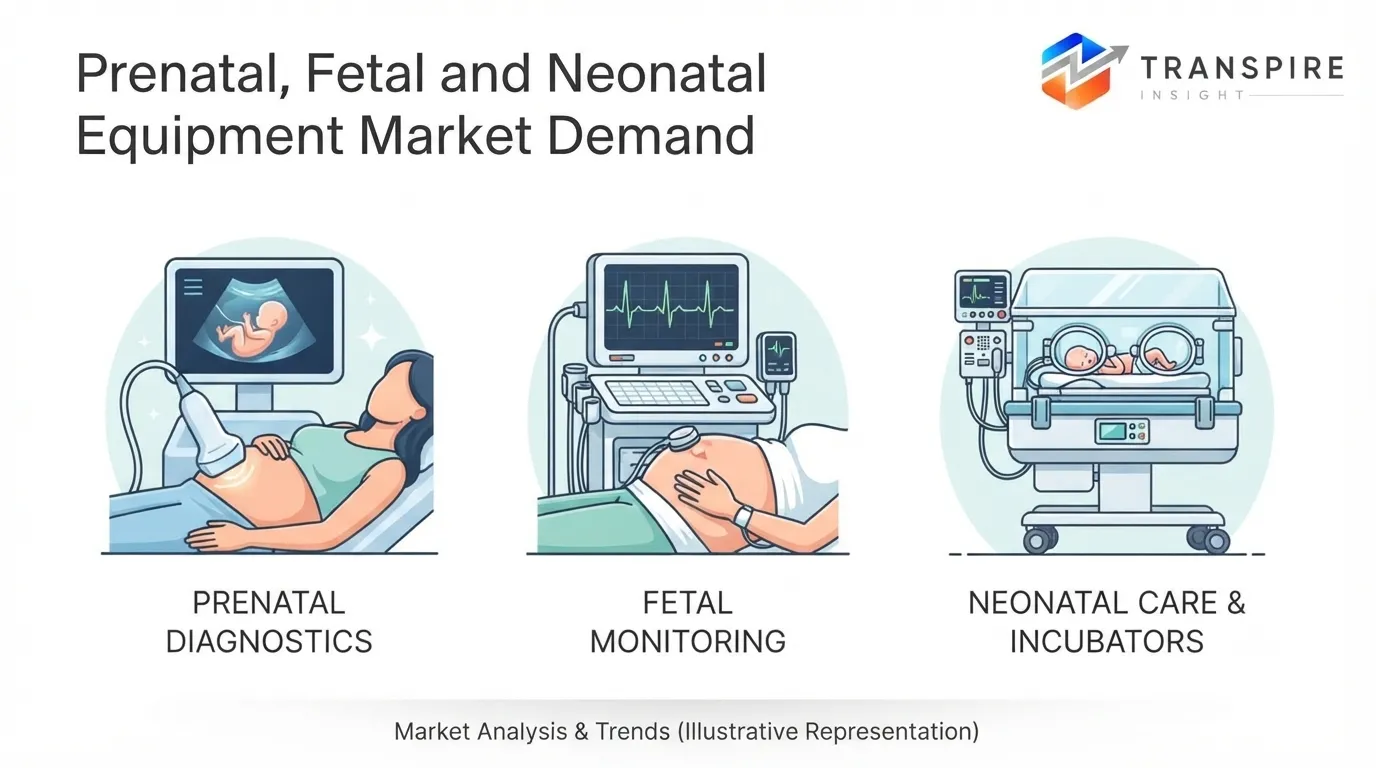
The prenatal, fetal, and neonatal equipment market holds an important position in the early diagnosis, physiological stabilization, and continued monitoring of high-risk pregnancies and premature babies. From sophisticated diagnostic ultrasound machines to advanced infant warmers, fetal monitoring monitors to non-invasive continuous respiratory devices, this vital healthcare area is dedicated to substantially decreasing neonatal mortality rates. The improved attention paid to maternal-fetal outcomes is continuing to propel rapid technological modernization in clinical environments worldwide.
Recent Development News
April 2026: Sibel Health received FDA 510(k) clearance for ANNE Maternal, the world’s first fully wireless, continuous maternal-fetal monitoring platform.
May 2026: Momcozy launched the BM08, a contact-free infant monitor leveraging millimeter-wave radar technology to track infant breathing and heart dynamics in real time.
Stay Ahead of Emerging Opportunities with Expert Market Insights by Transpire Insight
Transpire Insight provides comprehensive, data-driven market intelligence to support smarter business decisions. Our research is rooted in comprehensive analysis, authoritative predictions, and industry expertise, enabling organizations to make informed decisions in rapidly evolving markets. We provide in-depth analysis of market segmentation, competitive positioning, regional trends, and emerging investment opportunities in high-growth areas. We blend accuracy with actionable intelligence, helping companies uncover new growth avenues, strengthen strategic decision-making, and stay ahead in a dynamic market.
Download the exclusive Prenatal, Fetal and Neonatal Equipment Market sample report today to explore expert insights, key trends, and emerging opportunities shaping the future of the industry.
Prenatal, Fetal and Neonatal Equipment Market Size & Statistics
The Market Size for Prenatal, Fetal and Neonatal Equipment and PCBA Was Estimated to be Worth USD 10.22 Billion in 2026.
The Market Size is Going to Expand at a CAGR of 7.35% between 2026 and 2035.
The Prenatal, Fetal and Neonatal Equipment Market Size is anticipated to reach USD 15.33 Billion by 2035.
North America is projected to drive the highest demand during the forecast period, accounting for 48.02% of the prenatal, fetal, and neonatal equipment market.
Asia-Pacific is projected to grow the fastest during the forecast period at a CAGR of 8.84% in the prenatal, fetal, and neonatal equipment market.
Regional Growth and Demand Analysis by Transpire Insight
North America leads the market on the strength of dense NICU networks, strong private insurance coverage, and a regulatory environment that rewards continuous innovation. Even as the number of births in the United States is dropping by approximately 2% per year, the demand for incubators, ventilators, and fetal monitors has remained relatively stable at approximately 10.4% of all live births. Vendors are responding by introducing AI capabilities in their products, like GE HealthCare's Voluson Expert Series ultrasound platforms supported by the SonoLyst suite of automated measurements, and a collaboration with Raydiant Oximetry in fetal oximetry monitoring. The shift from hospital to home care is symbolized by Masimo's donation of Stork smart home baby monitoring systems to the March of Dimes, while Getinge's FDA 510(k) clearance of the Talis clinical decision-support platform illustrates the new trend of software as part of the equipment offer. Growth is tempered by closures of over 200 rural labor and delivery units and longer replacement cycles in the single-payer healthcare system in Canada. In Canada, single-payer healthcare, closures of over 200 rural labor and delivery units, and longer replacement cycles dampen growth. While greenfield capacity is not a priority in Europe, Medical Device Regulation (MDR) compliance is progressing at a more consistent rate, with harmonised rules making it easier to launch AI software across the EU.
Asia-Pacific is the growth engine, as are public health funding and rapid expansion in NICUs. The CARE-Preterm cohort now follows over 10,000 very preterm babies in 60 NICUs in China, indicating a large-scale training and technology rollout, and local manufacturers are expanding their exports to Europe and the United States. The production-linked incentive scheme for India is attracting device assembly to India and reducing landed costs, while Indonesia and Vietnam are building maternal and child hospitals with public-private partnerships that are importing mid-range incubators and monitors. Japan and South Korea are leveraging AI imaging to combat an ageing clinical workforce, and Samsung Medison's USD 93 million acquisition of Sonio represents regional aspirations in AI fetal ultrasound. While smaller, the Middle East and Africa and South America are leapfrogging to cloud-connected devices, with portable devices such as portable incubators and solar-powered monitors gaining the most traction.
Top 15 Trends in the Prenatal, Fetal and Neonatal Equipment Market
- AI-enabled ultrasound automating fetal measurements and anomaly detection.
- Shift toward non-invasive, contactless neonatal and fetal monitoring.
- Growing home-based and remote neonatal monitoring adoption.
- Portable, low-cost incubators for resource-limited and off-grid clinics.
- Wearable maternal and fetal sensors enabling continuous tracking.
- Integration of monitoring, respiratory, and thermoregulation into connected platforms.
- Predictive analytics for early sepsis and respiratory distress alerts.
- Rising NICU capacity expansion across emerging Asia-Pacific markets.
- Handheld and point-of-care ultrasound for maternity clinics.
- Tele-neonatology and cloud-based remote image review services.
- Energy-efficient LED phototherapy systems for jaundice treatment.
- Fetal MRI expanding for central nervous system anomaly detection.
- Rental, subscription, and pay-per-scan equipment business models.
- Localized manufacturing and supply chain reshoring by device makers.
- Strategic partnerships between device makers and AI software firms.
Proceed to checkout to purchase the exclusive Prenatal, Fetal and Neonatal Equipment Market report and get instant access to detailed market insights, strategic analysis, and future growth opportunities.
- AI-enabled ultrasound automating fetal measurements and anomaly detection
Manufacturers embed AI into ultrasound platforms to automate measurements, flag anomalies, and shorten scan-to-report time, helping clinicians manage rising high-risk pregnancy volumes despite workforce shortages.
- Shift toward non-invasive, contactless neonatal and fetal monitoring
Camera-based and radar sensors track pulse and respiration without skin contact, lowering infection and skin-injury risk in fragile newborns and earning clinician and payer preference.
- Growing home-based and remote neonatal monitoring adoption
Connected scales, pulse oximeters, and sleep systems let infants go home earlier, cutting NICU stays and ward costs as reimbursement for remote monitoring gradually matures.
- Portable, low-cost incubators for resource-limited and off-grid clinics
Battery-powered, compact incubators priced far below conventional units help under-resourced hospitals close equipment gaps, supporting faster adoption across rural India, sub-Saharan Africa, and Latin America.
- Wearable maternal and fetal sensors enabling continuous tracking
Wearable maternal monitors combine heart-rate, oxygen, and activity sensors, while tape-free epidermal patches stream neonatal vitals continuously, improving early risk detection and overall parental confidence.
- Integration of Monitoring, Respiratory, and Thermoregulation into Connected Platforms
Hospitals increasingly favor single connected platforms combining monitoring, respiratory support, and thermoregulation, improving NICU workflow efficiency, reducing alarm fatigue, and enabling smarter, data-driven clinical decisions.
List of Top 25 Companies Leading the Prenatal, Fetal, and Neonatal Equipment Market
- GE HealthCare
- Koninklijke Philips N.V.
- Drägerwerk AG & Co. KGaA
- Medtronic plc
- Natus Medical Incorporated
- Fisher & Paykel Healthcare Limited
- Atom Medical Corporation
- Masimo Corporation
- Becton, Dickinson and Company (BD)
- Phoenix Medical Systems (P) Ltd.
- Cardinal Health, Inc.
- Nihon Kohden Corporation
- Inspiration Healthcare Group plc
- Fanem Ltda.
- Vyaire Medical, Inc.
- Mindray Bio-Medical Electronics Co., Ltd.
- Utah Medical Products, Inc.
- Ambu A/S
- Novos Medical Systems
- TOSHIBA (Canon Medical Systems Corporation)
- Samsung Medison Co., Ltd.
- Sibel Health
- Raydiant Oximetry, Inc.
- AVI Healthcare Pvt. Ltd.
- Pluss Advanced Technologies Pvt. Ltd.
Customize the exclusive Prenatal, Fetal and Neonatal Equipment Market report to receive insights tailored to your needs, including country-specific analysis and business-focused market intelligence.
- GE HealthCare
Pioneers AI-integrated maternal-fetal ultrasound platforms and smart neonatal clinical monitoring equipment globally.Founded: 1892 | HQ: Chicago, Illinois, USA.Why It Ranks: Dominates healthcare systems with high market share and product portfolio diversity.Regional Dominance: Strong presence across North America, Europe, Asia-Pacific, and Latin American health markets.Product Line: Voluson ultrasounds, Giraffe incubators, Lullaby warmers, and Corometrics fetal monitors.
- Koninklijke Philips N.V.
Leads non-invasive patient monitoring, telemetry solutions, and advanced obstetrical clinical information systems.Founded: 1891 | HQ: Amsterdam, NetherlandsWhy It Ranks: Secures major market share through connected hospital monitoring networks and software.Regional Dominance: Holds extensive leadership across Western Europe, North America, and key Asian markets.Product Line: Avalon fetal monitors, IntelliVue monitors, transport monitors, and obstetrical telemetry systems.
- Drägerwerk AG & Co. KGaA
Specializes in high-end neonatal thermoregulation, critical care ventilation systems, and jaundice phototherapy.Founded: 1889 | HQ: Lübeck, Germany.Why It Ranks: Trusted provider of critical neonatal intensive care and ventilation technologies.Regional Dominance: Exceptional market penetration throughout Europe, the Middle East, and North America.Product Line: Isolette incubators, Babylog neonatal ventilators, Resuscitaire warmers, and BiliLux phototherapy.
- Medtronic plc
Engineers specialized pediatric respiratory equipment, infant pulse oximetry, and surgical access devices.Founded: 1949 | HQ: Dublin, Ireland.Why It Ranks: World's largest medical device firm with massive distribution and pediatric influence.Regional Dominance: reach with deep penetration across North American and European healthcare networks.Product Line: Microstream capnography, Nellcor pulse oximetry sensors, and neonatal respiratory support tools.
- Natus Medical Incorporated
Provides comprehensive newborn screening systems, neurodiagnostic tools, and specialized NICU equipment solutions.Founded: 1989 | HQ: Middleton, Wisconsin, USA.Why It Ranks: Leading specialist in newborn hearing screening, brain monitoring, and phototherapy products.Regional Dominance: Commands high adoption rates across North American and European neonatal units.Product Line: ALGO hearing screeners, NicView streaming systems, neoBLUE phototherapy, and Olympic warmers.
- Fisher & Paykel Healthcare Limited
Innovates non-invasive respiratory support devices and humidification systems designed specifically for infants.Founded: 1934 | HQ: Auckland, New Zealand.Why It Ranks: Worldwide standard of care provider for humidified neonatal continuous respiratory support.Regional Dominance: Strong clinical adoption across Asia-Pacific, North America, and European hospital networks.Product Line: FlexiTrunk CPAP systems, Optiflow Junior high-flow therapy, and respiratory humidifiers.
- Atom Medical Corporation
Manufactures high-precision infant incubators, open warmers, and specialized neonatal transport beds.Founded: 1948 | HQ: Tokyo, Japan.Why It Ranks: Renowned for precise Japanese manufacturing quality in thermoregulation and NICU equipment.Regional Dominance: Strong dominance in Japan, expanding rapidly across APAC, Europe, and America.Product Line: Dual Incu i hybrid incubators, Rabee mini incubators, and Infa Warmer systems.
- Masimo Corporation
Develops non-invasive signal extraction pulse oximetry and physiological co-oximetry sensors for neonates.Founded: 1989 | HQ: Irvine, California, USA.Why It Ranks: Industry benchmark for motion-tolerant, low-perfusion neonatal pulse oximetry and monitoring tech.Regional Dominance: Widespread implementation across North American hospitals and top international medical institutions.Product Line: SET Pulse Oximetry, Rad-97 pulse CO-oximeters, and Stork infant monitoring systems.
- Becton, Dickinson and Company (BD)
Supplies essential neonatal vascular access catheters, infusion systems, and preanalytical diagnostic products.Founded: 1897 | HQ: Franklin Lakes, New Jersey, USA.Why It Ranks: Unmatched supply chain footprint for critical vascular and infusion neonatal equipment.Regional Dominance: operational presence with immense clinical deployment across all world regions.Product Line: Neoflon cannula systems, Alaris syringe pumps, and specialized infant specimen collection.
- Phoenix Medical Systems (P) Ltd.
Engineers affordable, high-quality infant warmers, incubators, phototherapy units, and maternal monitoring systems.Founded: 1989 | HQ: Chennai, Tamil Nadu, India.Why It Ranks: Primary innovator delivering low-cost, high-performance neonatal equipment to emerging resource-constrained markets.Regional Dominance: Unrivaled market presence in India, South Asia, Africa, and Latin America.Product Line: NWS 101 radiant warmers, Ample incubators, Brilliance phototherapy, and fetal Dopplers.
Schedule a meeting with our market experts to discuss the exclusive Prenatal, Fetal and Neonatal Equipment Market report and find the right research solution for your business.
Conclusion
The market for prenatal, fetal, and neonatal equipment continues to grow rapidly, with the emergence of new technologies and advancements in the field. Innovative startups and established healthcare giants are connecting the last mile to make a huge difference in infant survival all over the world. expansion of NICU facilities enables the incorporation of advanced therapies and devices in thermoregulation, breathing, and continuous diagnostic monitoring to be more widely available to high-risk pregnancies.



 inquiry@transpireinsight.com
 APAC:+91 7666513636
 Address


