
Global Prenatal, Fetal and Neonatal Equipment Market Size & Forecast:
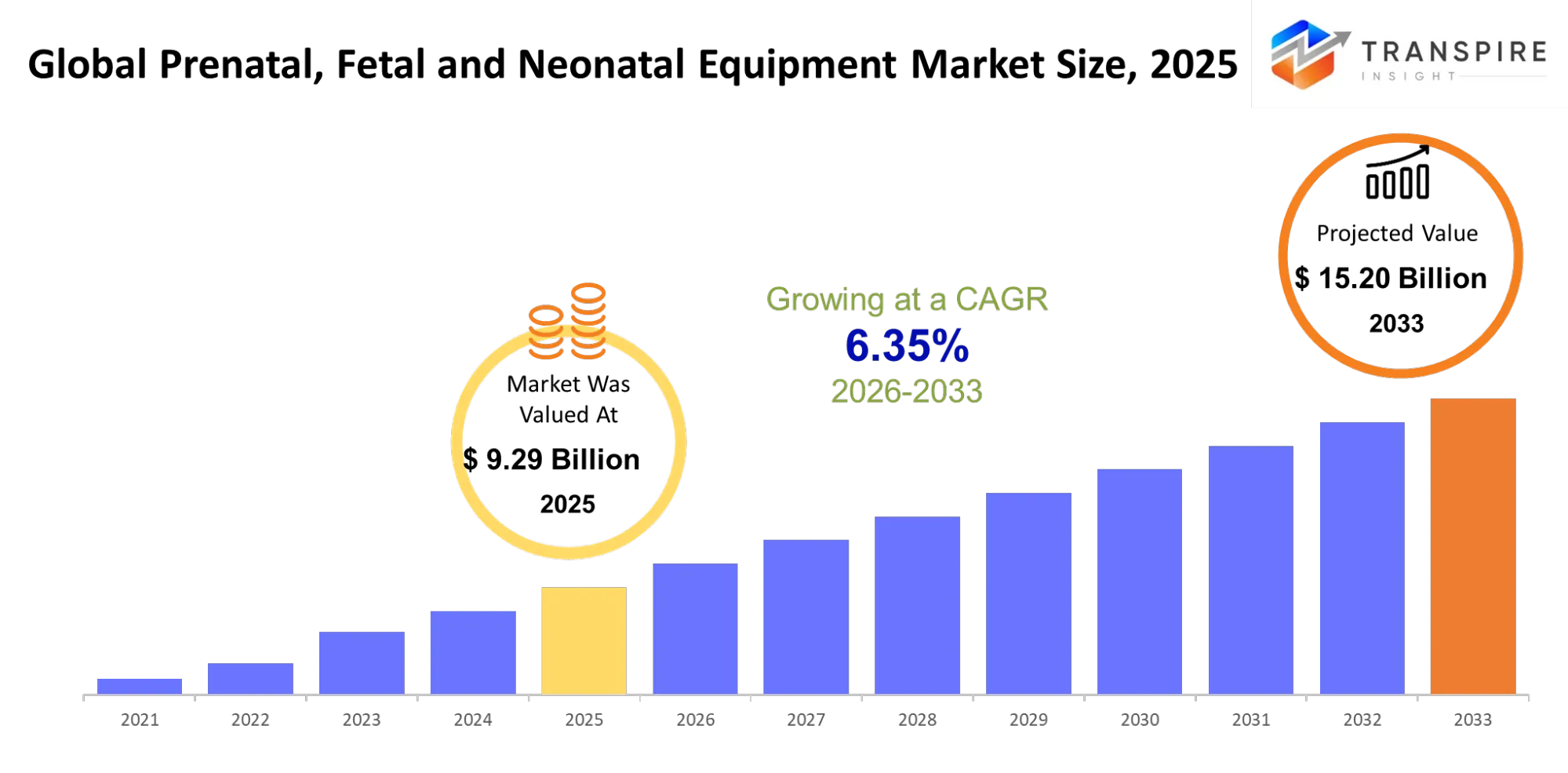
- Global Prenatal, Fetal and Neonatal Equipment Market Size 2025: USD 9.29 billion
- Global Prenatal, Fetal and Neonatal Equipment Market Size 2033: USD 15.20 billion
- Global Prenatal, Fetal and Neonatal Equipment Market CAGR: 6.35%
- Global Prenatal, Fetal and Neonatal Equipment Market Segments: By Type (Fetal Monitoring Systems, Neonatal Ventilators, Infant Warmers, Prenatal Ultrasound Systems, Neonatal Incubators, Neonatal Phototherapy Equipment, Others); By Application (Prenatal Care, Neonatal Intensive Care, Fetal Diagnostics, Premature Infant Care, Maternal Monitoring, Others); By End-User (Hospitals, Maternity Clinics, Neonatal Care Centers, Specialty Clinics, Others); By Technology (Wireless Monitoring Systems, AI-assisted Diagnostic Systems, Portable Neonatal Devices, Hybrid Monitoring Platforms, Others)
Global Prenatal, Fetal and Neonatal Equipment Market Summary:
The Global Prenatal, Fetal and Neonatal Equipment Market size is estimated at USD 9.29 billion in 2025 and is anticipated to reach USD 15.20 billion by 2033, growing at a CAGR of 6.35% from 2026 to 2033.
The prenatal, fetal, and neonatal equipment industry has witnessed many changes over the past several years as a result of the healthcare industry's growing efforts towards early detection, high-risk pregnancies, and higher neonatal survival rates. In recent years, there has been increased awareness regarding early diagnosis of pregnancy complications as well as improved care provided for newborns that require special care and treatment. This trend has resulted in widespread adoption of fetal monitoring tools, neonatal incubators, phototherapy units, and advanced ultrasound imaging devices, among others.
One of the key changes in the market is associated with the increased adoption of advanced monitoring technologies that make it possible for clinicians to monitor the condition of fetuses and newborn babies more effectively and address any health issues that can develop as soon as possible. Rising expenditures on improvements of maternal and neonatal clinics, especially following the challenges faced by healthcare facilities recently, contribute to this trend significantly.
Rising incidence of complicated pregnancies and premature births is currently considered to be a major factor responsible for the growth of the market. With an increase in demand for improved maternity and neonatal care facilities, more opportunities emerge for companies involved in equipment manufacturing.
Key Market Insights:
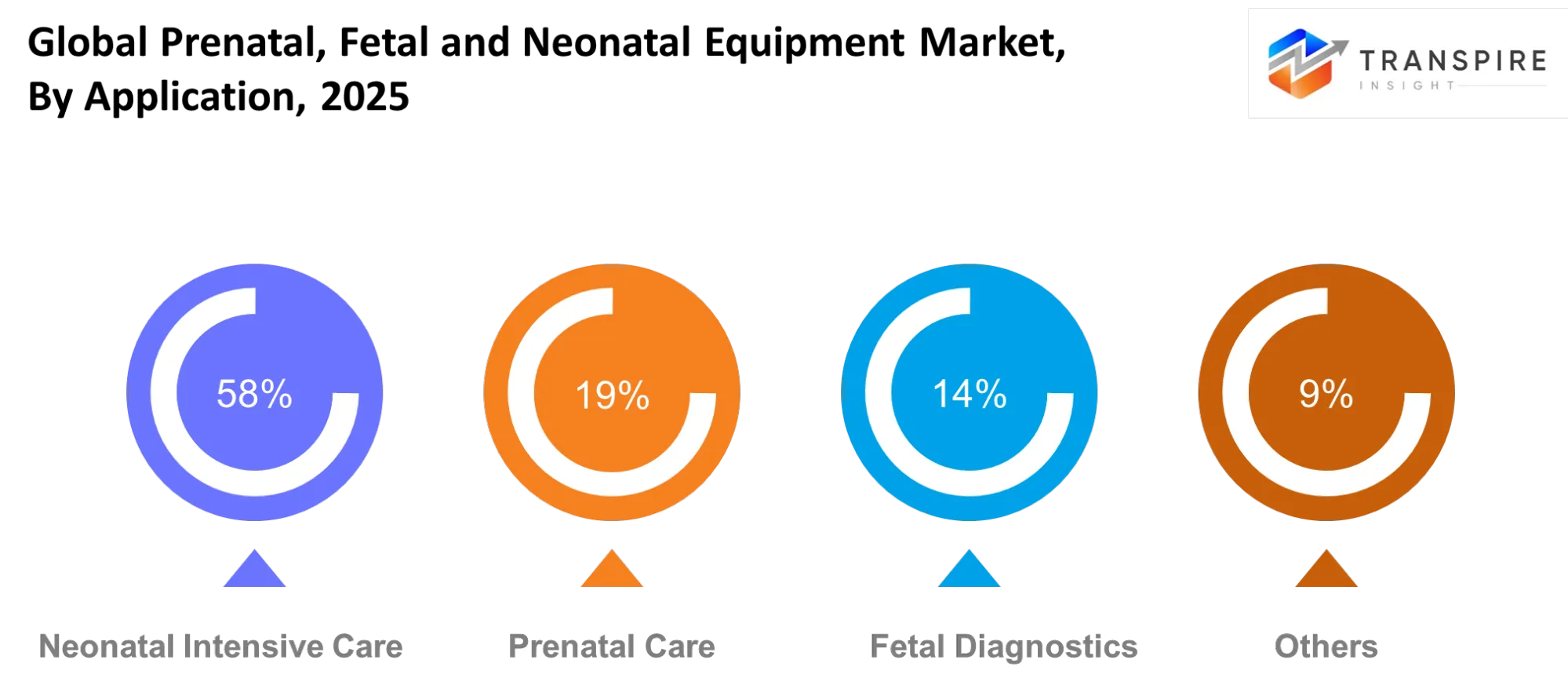
- Neonatal Intensive Care is responsible for 58% of industry demand due to higher sales of modern infant incubators and ventilators.
- Portable neonatal healthcare equipment is growing at a CAGR of 9.8%, driven by the need for mobility and wireless monitoring options.
- Prenatal Healthcare is contributing 19% towards overall demand as there is an increased number of routine tests carried out during pregnancy.
- Fetal Diagnosis constitutes 14% of industry revenue as there are better imaging techniques that enable more accurate diagnosis.
- Other healthcare applications comprise 9% as they include special monitoring solutions.
- Leading companies are implementing AI-based tools in fetal monitoring equipment to increase clinical accuracy of diagnoses.
- Wireless monitoring platforms are becoming increasingly popular because of less infrastructure required and more patient comfort.
- Healthcare facilities are looking to invest in connected newborn intensive care units to enhance workflow efficiency.
- Demand for small-sized equipment is increasing in secondary hospitals
- Cloud-based monitoring and diagnostics systems are being encouraged through digital healthcare strategies.
What are the Key Drivers, Restraints, and Opportunities in the Global Prenatal, Fetal and Neonatal Equipment Market?
Drivers
Another major growth factor is an increasing number of preterm babies and high-risk pregnancies globally. The development of equipment and facilities related to neonatal intensive care is gaining momentum in the healthcare sector due to growing efforts towards higher survival rates of babies and reducing their complications. Consequently, more devices such as incubators, ventilators, baby warmers, and advanced fetal monitoring tools are purchased.
Restraints
High costs associated with advanced monitoring technologies for newborn babies and fetuses are another major restraint on the industry's growth. In many healthcare facilities located in developing countries, budgetary issues prevent purchasing costly monitoring systems. Moreover, specialised personnel should be hired to operate such equipment and interpret its findings.
Opportunities
Innovative solutions related to the advancement of remote and portable monitoring technologies represent significant growth potential for the market of fetal and neonatal monitors. In areas where advanced healthcare facilities are lacking, telemonitoring systems would help expand special care into underrepresented territories. Investments in digital health technologies made in the regions of Asia-Pacific, Latin America, and Africa would help to achieve this goal.
What Has the Impact of Artificial Intelligence Been on the Global Prenatal, Fetal and Neonatal Equipment Market?
Artificial intelligence has revolutionised various components of care related to the prenatal period, fetal care, and the newborn baby care by improving clinical decision-making. For instance, AI-assisted monitoring systems allow assessing fetal heart rate patterns, as well as vital signs of infants and health status of mothers in real-time. The process of clinical decision-making is supported by automation of data processing, as systems are capable of analysing huge amounts of patient data and pointing out important events that demand prompt intervention. Predictive analytics is utilised when it comes to predicting the risk of premature delivery, infant breathing problems, and other critical conditions. In operational terms, artificial intelligence has facilitated efficient use of monitoring equipment, as well as other medical tools, due to automation and improved communication within clinical teams.
In other words, integration and automation enable healthcare professionals to avoid routine documentation procedures and collaborate more efficiently. Nevertheless, implementing artificial intelligence into healthcare requires considerable financial input, as well as effective system integration into existing processes. Differences in clinical databases and approaches adopted in certain regions may also pose additional challenges for effective utilisation of the technologies in question. In October 2025, GE HealthCare unveiled CareIntellect for Perinatal, which is an AI-powered cloud technology solution to integrate maternal and fetal monitoring information into one interface for timely risk identification and evidence-based decision-making in maternal-fetal medicine.
Key Market Trends:
Technological advancements are transforming neonatal and fetal care services from a reactive approach to a more proactive one. Connected technologies have gained greater preference in the industry compared to individual devices.
- The use of AI-enabled technologies has gone from the early stages of testing to full-scale implementation.
- The use of mobile neonatal equipment has gone up because of flexible care delivery models.
- Wireless monitoring systems are being adopted instead of their wired counterparts in new-generation maternity and neonatal care centres.
- Prediction tools are now commonly featured in advanced fetal monitoring devices.
- Hospitals are now more inclined to purchase comprehensive care solutions instead of individual devices.
- The use of remote monitoring technology is enhancing access to maternal and neonatal care in underprivileged areas.
- Cloud-based clinical communication systems are making care collaboration faster and easier at hospitals.
- Manufacturers are designing equipment with convenient user interfaces to minimise clinician workloads.
- Healthcare organisations require energy-efficient and compact equipment in growing numbers.
- Big data and analytics are shaping neonatal care strategies at healthcare networks.
Global Prenatal, Fetal and Neonatal Equipment Market Segmentation
By Type
Fetal Monitoring Systems, Fetal Ultrasound Systems, Neonatal Ventilators, Infant Warmers, Neonatal Incubators, Neonatal Phototherapy Equipment, and many others belong to the market studied. The equipment used in Neonatal Intensive Care dominates the market due to its dominance in the segment at 58%. The prenatal care sector has 19% share, while the fetal diagnostics category has 14% share in the market, and others account for 9%.Factors driving market growth include the rise in the number of births of premature babies, increasing awareness about prenatal health issues, and increased demand for neonatal equipment.
The market will witness high adoption of intelligent, portable, and connected equipment, allowing healthcare providers to achieve accurate and fast diagnoses and better monitoring services.
By Application
Neonatal Intensive Care is the leader on the neonatal devices market with its 58% market share because of high equipment requirements in cases of premature babies and critically ill infants. Prenatal Care takes second place with 19% share driven by increased funding for maternal healthcare screenings. The segment of Fetal Diagnostics has gained a 14% share owing to increased interest in innovative devices for advanced fetal diagnostics. Other applications hold 9% of the total market volume.
By End Users
hospitals continue to be the largest purchasers since they provide a wide range of maternity care units. The maternal care units are investing in technological equipment to increase their capacity for prenatal diagnostics, whereas neonatal care units are looking to invest in technology solutions to enable a special environment for providing specialised care services. Speciality care clinics are implementing specific diagnosis technology tools to facilitate high-risk pregnancies. Future growth will likely be led by health practitioners seeking efficient integration and management of patients.
By Technology
The demand for wireless monitoring solutions is on the rise due to their versatility and convenience. AI-powered diagnostic tools are helping increase accuracy levels and enabling predictive models for health solutions. The fastest-growing technology type segment is portable neonatal devices, growing at a CAGR of 9.8%. Hybrid monitoring platforms are expected to become more prevalent as hospitals strive for connected health solutions.
What are the Key Use Cases Driving the Global Prenatal, Fetal and Neonatal Equipment Market?
The key use case involves intensive care for neonates, in which incubators, ventilators, monitors, and warming devices facilitate treatment for sick and premature babies. This application is reflective of the market. Further applications involve prenatal evaluations and screening programs as well as fetal testing services. It is becoming more common to utilise ultrasound technology to detect potential problems in early stages of pregnancy.
Potential future applications would include remote monitoring for neonates, the use of artificial intelligence in predicting risk factors, and portable neonatal assistance systems. This innovation will allow healthcare institutions to provide specialised care outside hospital confines.
|
Report Metrics |
Details |
|
Market size value in 2025 |
USD 9.29 Billion |
|
Market size value in 2026 |
USD 9.88 Billion |
|
Revenue forecast in 2033 |
USD 15.20 Billion |
|
Growth rate |
CAGR of 6.35% from 2026 to 2033 |
|
Base year |
2025 |
|
Historical data |
2021 - 2024 |
|
Forecast period |
2026 - 2033 |
|
Report coverage |
Revenue forecast, competitive landscape, growth factors, and trends |
|
Regional scope |
United States; Canada; Mexico; United Kingdom; Germany; France; Italy; Spain; Denmark; Sweden; Norway; China; Japan; India; Australia; South Korea; Thailand; Brazil; Argentina; South Africa; Saudi Arabia; United Arab Emirates |
|
Key company profiled |
GE Healthcare, Philips Healthcare, Dräger, Medtronic, Natus Medical, Siemens Healthineers, Fisher & Paykel Healthcare, Atom Medical, Masimo, Nihon Kohden, BD, Baxter International, Vyaire Medical, Fanem, Inspiration Healthcare |
|
Customization scope |
Free report customization (country, regional & segment scope). Avail customized purchase options to meet your exact research needs. |
|
Report Segmentation |
By Type (Fetal Monitoring Systems, Neonatal Ventilators, Infant Warmers, Prenatal Ultrasound Systems, Neonatal Incubators, Neonatal Phototherapy Equipment, Others); By Application (Prenatal Care, Neonatal Intensive Care, Fetal Diagnostics, Premature Infant Care, Maternal Monitoring, Others); By End-User (Hospitals, Maternity Clinics, Neonatal Care Centers, Specialty Clinics, Others); By Technology (Wireless Monitoring Systems, AI-assisted Diagnostic Systems, Portable Neonatal Devices, Hybrid Monitoring Platforms, Others) |
Which Regions are Driving the Global Prenatal, Fetal and Neonatal Equipment Market Growth?
North America
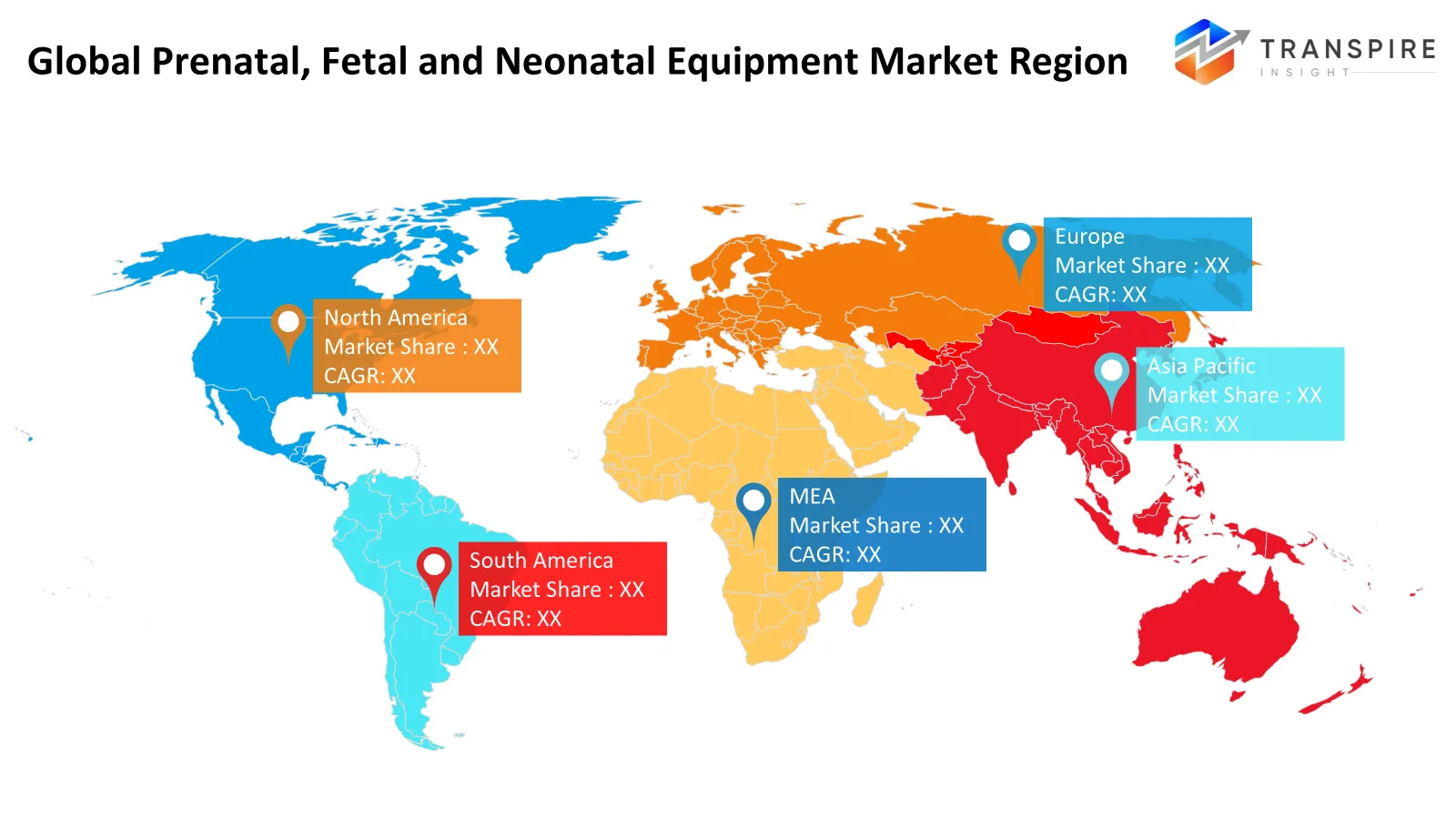
North America has a share of about 39% in the market, and its dominance is achieved owing to a robust healthcare infrastructure, significant expenditures on neonatal services, and fast adaptation to technologies. The reimbursement system provides favourable conditions for purchasing advanced equipment. Healthcare institutions are implementing new solutions related to diagnostics with artificial intelligence intensively. Constant innovations are a major competitive advantage of the market player. In October 2025, GE Healthcare introduced CareIntellect for Perinatal, a cloudplatform that gathers data on both the mother and fetus to deliver actionable insights. This announcement is part of the growing trend of using digital perinatal monitoring solutions among U.S. health facilities.
Europe
Europe accounts for about 28% of market activity and features well-developed public healthcare systems and maternal healthcare programs. It is characterised by relatively slow but steady growth in comparison with North America. A good regulatory environment promotes quality upgrades and safety measures related to medical equipment. Modernisation of neonatal care facilities is also contributing to market development.Raydiant Oximetry began commercialising its technology in September 2025, helping accelerate the development of next-generation fetal monitoring technologies suitable for implementation within European maternity hospitals.
Asia-Pacific
Asia-Pacific has a share of about 25% in the market and demonstrates a very strong growth trend, featuring a CAGR of 10.7%. Increased expenses on healthcare, better infrastructure at hospitals, and enhanced awareness regarding maternal and neonatal health issues are fueling demand. Authorities are working on enhancing access to special healthcare facilities. This provides numerous opportunities for equipment manufacturers.In February 2024, GE HealthCare secured broader FDA approval of its Novii+ Wireless Patch Solution, a beltless maternal-fetal monitoring device. The new product will be launched internationally, including in the Asia Pacific region, where hospital systems are seeking to improve their maternal monitoring equipment.
Who are the Key Players in the Global Prenatal, Fetal and Neonatal Equipment Market and how do they Compete?
The competition is based on innovation, clinical effectiveness improvement, and the strategy for market development within new healthcare sectors. The firms fight each other via diagnostics efficiency improvement, patient monitoring advancement, and overall integration of care procedures.
Firms like GE Healthcare, Philips, Dräger, Medtronic, and Natus Medical concentrate their activities primarily on technological differences. Their strategy is mainly oriented toward innovative imaging technologies, intelligent monitoring systems, and a neonatal ecosystem-based approach. The investments in R&D help the firm have high-quality product portfolios and premium positions on the market.
The other companies use expansion strategies via alliances, geographic distribution networks, and the provision of unique devices adjusted to specific needs of the local healthcare environment. Innovations in portable medical devices, AI incorporation, and digital healthcare connection are among the most relevant competitive advantages nowadays. As healthcare facilities demand not just devices but entire ecosystems of software and hardware, manufacturers move toward such a strategy.
Global Prenatal, Fetal and Neonatal Equipment Market Companies:
- Philips Healthcare
- Dräger
- Medtronic
- Natus Medical
- Siemens Healthineers
- Fisher & Paykel Healthcare
- Atom Medical
- Masimo
- Nihon Kohden
- BD
- Baxter International
- Vyaire Medical
- Fanem
- Inspiration Healthcare
Recent Development News
In October 2025, the release of new Voluson Signature 20 and 18 ultrasound machines. The new machines incorporate state-of-the-art AI features that help make automatic fetal heart and brain measurements to greatly minimise the time needed in scanning.
In January 2026, Philips partnered with Masimo to incorporate the advanced neonatal pulse oximetry feature from Masimo in Philips’ patient monitor to improve oxygen saturation monitoring in the NICU to better prevent retinopathy of prematurity.
What Strategic Insights Define the Future of the Global Prenatal, Fetal and Neonatal Equipment Market?
The future of this marketplace sees the development of care systems that utilise predictions, connectedness, and mobility in order to enable continuous monitoring through data analytics in clinical decision-making processes. One of the hidden threats to the market is related to the increase in complexity in terms of requirements for data management and integration. The use of the technology might not be adopted by the providers if its implementation becomes too costly or disruptive for their workflow.
A promising trend concerns the introduction of artificial intelligence-based portable monitoring systems aimed at the provision of specialised services to underprivileged and remote regions in healthcare. The most relevant strategy for organisations would consist of investment in the development of such technologies as connected and predictive platforms, along with scalable monitoring tools.
Global Prenatal, Fetal and Neonatal Equipment Market Segmentation:
By Type
- Fetal Monitoring Systems
- Neonatal Ventilators
- Infant Warmers
- Prenatal Ultrasound Systems
- Neonatal Incubators
- Neonatal Phototherapy Equipment
By Application
- Prenatal Care
- Neonatal Intensive Care
- Fetal Diagnostics
- Premature Infant Care
- Maternal Monitoring
By End-User
- Hospitals
- Maternity Clinics
- Neonatal Care Centers
- Specialty Clinics
By Technology
- Wireless Monitoring Systems
- AI-assisted Diagnostic Systems
- Portable Neonatal Devices
- Hybrid Monitoring Platforms
Regional Outlook
North America
- United States
- Canada
- Mexico
Europe
- Germany
- United Kingdom
- France
- Spain
- Italy
- Rest of Europe
Asia Pacific
- Japan
- China
- Australia & New Zealand
- South Korea
- India
- Rest of Asia Pacific
South America
- Brazil
- Argentina
- Rest of South America
Middle East & Africa
- Saudi Arabia
- United Arab Emirates
- South Africa
- Rest of the Middle East & Africa
Frequently Asked Questions
Find quick answers to common questions.
The Global Prenatal, Fetal and Neonatal Equipment Market size was valued at USD 9.29 Billion in 2025 and is poised to reach USD 15.20 Billion by 2033, expanding at a 6.35% CAGR.
Key segments for the Global Prenatal, Fetal and Neonatal Equipment Market are By Type (Fetal Monitoring Systems, Neonatal Ventilators, Infant Warmers, Prenatal Ultrasound Systems, Neonatal Incubators, Neonatal Phototherapy Equipment, Others); By Application (Prenatal Care, Neonatal Intensive Care, Fetal Diagnostics, Premature Infant Care, Maternal Monitoring, Others); By End-User (Hospitals, Maternity Clinics, Neonatal Care Centers, Specialty Clinics, Others); By Technology (Wireless Monitoring Systems, AI-assisted Diagnostic Systems, Portable Neonatal Devices, Hybrid Monitoring Platforms, Others).
Growth is primarily driven by the worldwide market for equipment used in prenatal, fetal, and neonatal care is mainly fueled by an increase in premature births, enhanced health awareness among pregnant women and newborns, high demand for diagnostic tools and monitoring devices, improved health care facilities, and increased spending on NICUs.
The global market is led by major manufacturers including GE Healthcare, Philips Healthcare, Dräger, Medtronic, Natus Medical, Siemens Healthineers, Fisher & Paykel Healthcare, Atom Medical, Masimo, Nihon Kohden, BD, Baxter International, Vyaire Medical, Fanem, and Inspiration Healthcare.
The Asia Pacific Region leads the worldwide Prenatal, Fetal, and Neonatal Equipment Market, and is expected to expand at a CAGR of 10.7%. The leading position held by the Asia Pacific Region is attributed to factors such as its large birth population, high rate of premature births, well-developed health care infrastructure, high healthcare spending, and the government’s emphasis on maternal and neonatal health care services.
The Global Prenatal, Fetal and Neonatal Equipment Market can expect substantial growth prospects owing to the increasing cases of premature birth, growing need for fetal and neonatal monitoring devices, and expansion of healthcare facilities, especially in developing countries. Furthermore, developments like artificial intelligence-based diagnostics and increased investments in maternal and infant health care will add impetus to the market growth.
- Philips Healthcare
- Dräger
- Medtronic
- Natus Medical
- Siemens Healthineers
- Fisher & Paykel Healthcare
- Atom Medical
- Masimo
- Nihon Kohden
- BD
- Baxter International
- Vyaire Medical
- Fanem
- Inspiration Healthcare
About the Authors

Pankaj Ghogare Patil
I am Pankaj Ghogare Patil, a Senior Research Analyst at Transpire Insight, specializing in the Pharmaceutical, Chemicals & Materials, Healthcare IT, and Biotechnology industry. My expertise lies in conducting comprehensive market research, analyzing industry trends, evaluating competitive landscapes, and translating complex data into actionable insights. At Transpire Insight, I closely follow emerging technologies, regulatory developments, and market innovations to create accurate, well-researched, and informative content that helps businesses and professionals make informed decisions. I am committed to producing credible, evidence-based articles that reflect industry best practices while making technical topics accessible and valuable for a broad audience.

Chakradhar Khansole
Chakradhar serves as the Research Director at Transpire Insight, bringing over 8 years of experience in technology, innovation, and strategic market intelligence. He specializes in transforming complex market data into actionable business insights that enable organizations to make informed, growth-oriented decisions. Recognized for his strategic vision and analytical expertise, Chakradhar leads high-impact research initiatives, delivering comprehensive market assessments, competitive intelligence, and forward-looking industry analysis.
Recently Published Reports
-
Apr 2026
AI in Diabetic Retinopathy Market
AI in Diabetic Retinopathy Market Size, Share & Analysis Report By Type (Screening AI Systems, Diagnostic AI Systems, and Predictive AI Models), By Application Segment (Hospitals, Ophthalmology Clinics, Diagnostic Centers, and Research and Development), and Geography (North America, Europe, Asia-Pacific, Middle East and Africa, South and Central America), 2021 - 2031
-
Apr 2026
Psychometric Tests Market
Psychometric Tests Market Size, Share & Analysis Report By Type (Personality Tests, Ability/Aptitude Tests, Skill/Knowledge Tests, and Others), By Application (Talent Acquisition and Talent Management), and Geography (North America, Europe, Asia-Pacific, Middle East and Africa, South and Central America), 2021 – 2031
-
Apr 2026
Rare Biological Sample Collection Market
Rare Biological Sample Collection Market Size, Share & Analysis Report By Type (Isolation Kits & Reagent, Blood Collection Tubes, and Others), By Application (Oncology, Transcriptomics, Pharmacogenomics, and Others), and Geography (North America, Europe, Asia-Pacific, Middle East and Africa, South and Central America), 2021 – 2031
-
Jul 2026
Diabetic Retinopathy Market
Diabetic Retinopathy Market Size, Share & Analysis Report By Type (Proliferative Diabetic Retinopathy, and Diabetic Macular Edema (DME)), By Treatment Type (Anti VEGF Drug, Steroid Implants, Laser Surgeries, and Vitrectomy), and Geography (North America, Europe, Asia-Pacific, Middle East and Africa, South and Central America), 2021 – 2031
Our Clients







