
Oct 29, 2026
By Transpire Insight
Description
According to a research report published by Transpire Insight, the patient-controlled analgesia pumps market size is projected to grow from USD 518.67 billion in 2026 to USD 799.12 billion by 2035, at a 4.15% CAGR during the 2027-2035 forecast period. Rising post-operative procedure volumes, growing chronic pain and oncology cases, integration of smart EHR-connected dose-error reduction systems, and an increasing shift toward home infusion therapy drive the market growth.
Introduction
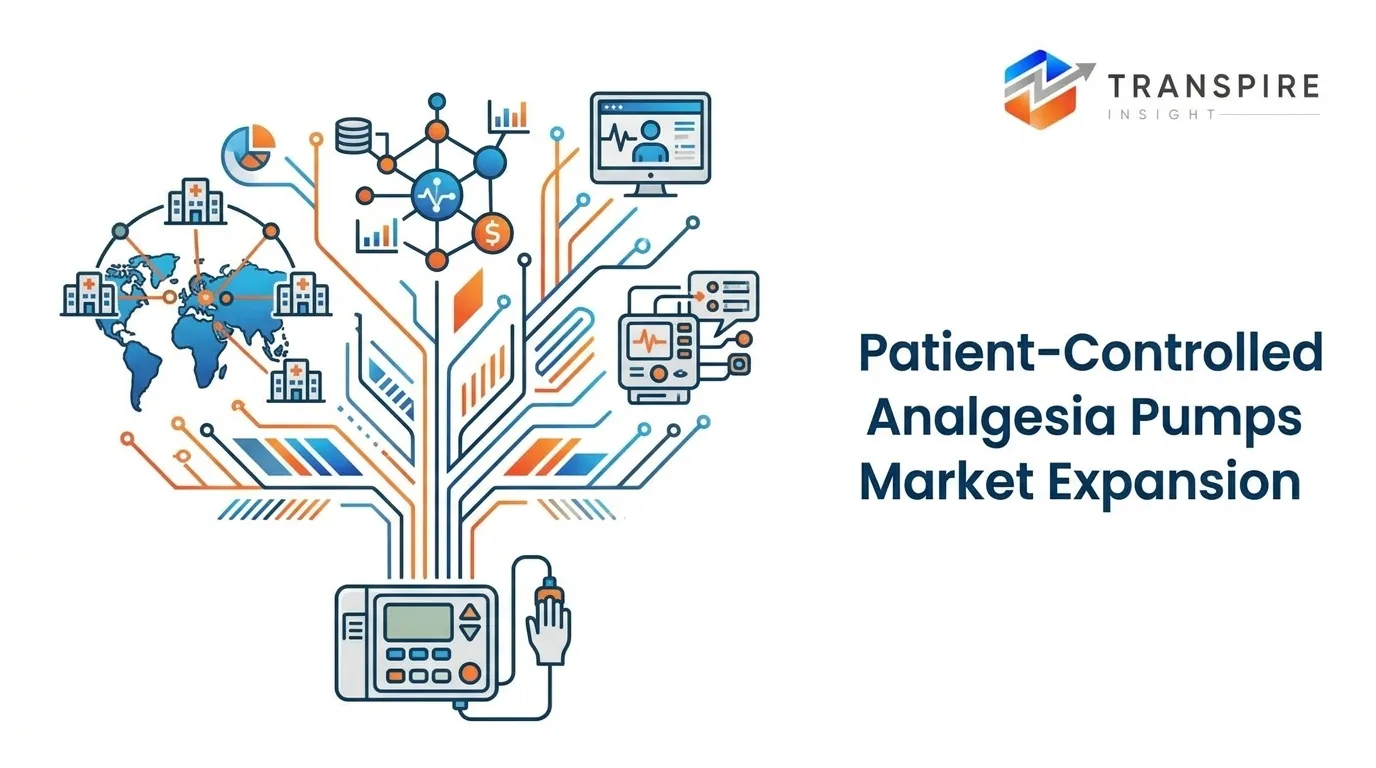
The Patient-Controlled Analgesia (PCA) Pumps market plays a critical role in modern pain management, enabling self-administration of intravenous, epidural, or subcutaneous analgesics within pre-programmed safety boundaries. Fueled by rising surgical throughput, expanding oncological care, and technological leaps in smart ambulatory systems, the market is undergoing rapid evolution. Healthcare systems increasingly adopt advanced PCA platforms featuring EHR integration to enhance post-operative comfort, mitigate medication errors, and optimize clinical workflows.
Recent Development News
February 2026: Leading medical technology providers finalized next-generation EHR bi-directional integration software protocols for PCA pumps, reducing manual programming errors and enabling automated remote monitoring in home-care settings.
July 2026: health regulatory authorities issued updated human factors engineering guidelines for smart ambulatory infusion devices, prompting top manufacturers to release upgraded touch-screen interfaces and real-time dose-tracking firmware.
Stay Ahead of Emerging Opportunities with Expert Market Insights by Transpire Insight
Transpire Insight provides comprehensive, data-driven market intelligence to support smarter business decisions. Our research is rooted in comprehensive analysis, authoritative predictions, and industry expertise, enabling organizations to make informed decisions in rapidly evolving markets. We provide in-depth analysis of market segmentation, competitive positioning, regional trends, and emerging investment opportunities in high-growth areas. We blend accuracy with actionable intelligence, helping companies uncover new growth avenues, strengthen strategic decision-making, and stay ahead in a dynamic market.
Patient-Controlled Analgesia Pumps Market Size & Statistics
The Market Size for Patient-Controlled Analgesia Pumps Was Estimated to be Worth USD 518.67 Billion in 2026.
The Market Size is Going to Expand at a CAGR of 4.15% between 2026 and 2035.
The Patient-Controlled Analgesia Pumps Market Size is anticipated to reach USD 799.12 Billion by 2035.
North America is projected to drive the highest demand during the forecast period, accounting for 42.08% of the patient-controlled analgesia pumps market.
Asia-Pacific is projected to grow the fastest during the forecast period at a CAGR of 8.29% in the patient-controlled analgesia pumps market.
Regional Growth and Demand Analysis by Transpire Insight
North America leads because of clear reimbursement, early smart-pump adoption, and a large base of surgical and oncology patients who need sustained pain control. US hospitals are linking PCA pumps with electronic health records and barcode medication verification, while vendors such as Baxter, Medtronic, and Smiths Medical, with its CADD-Solis system, compete on dose-error reduction. The opioid crisis has pushed buyers toward pumps with strict dose limits and lockout controls. Demand also gains from the shift to ambulatory surgery centers and home-based cancer pain care, where portable electronic pumps are replacing manual injections.
Asia-Pacific is growing fastest as hospital infrastructure, surgical volumes, and cancer incidence rise across China, India, and Japan. Local manufacturers such as Mindray are winning price-sensitive hospitals with cost-effective electronic pumps, while Terumo remains a key supplier in Japan, where an aging population is lifting demand for advanced pain management. Growing awareness of post-operative pain protocols and the gradual spread of homecare devices in developing countries are widening the user base. Mechanical pumps still appeal in resource-limited settings, but hospitals are steadily upgrading to programmable electronic systems.
Top 15 Trends in the Patient-Controlled Analgesia Pumps Market
Electronic PCA pumps are replacing mechanical models because hospitals want programmable accuracy, adjustable bolus settings, and built-in safety alerts that reduce dosing errors and complications.
Linking PCA pumps with electronic health records automates dose documentation, reduces manual charting, and gives clinicians real-time visibility into patient analgesic use and compliance.
Barcode medication verification checks the drug, concentration, and patient before infusion starts, helping hospitals prevent wrong-drug and wrong-dose events involving high-risk opioid analgesics across wards.
Portable, battery-powered PCA pumps let cancer and chronic pain patients receive controlled analgesia at home, reducing hospital stays and supporting the wider shift toward homecare.
Smart PCA pumps enforce programmed dose limits and lockout intervals, which protect patients from overdose and address hospital concerns about opioid misuse and medication errors.
Clinicians increasingly combine PCA with nerve blocks and non-opioid drugs, lowering opioid consumption while keeping patient-controlled dosing central to post-surgical recovery and enhanced recovery programs.
List of Top 25 Companies Leading the Patient-Controlled Analgesia Pumps Market
1. B. Braun SE
pioneer delivering high-precision infusion pumps and safety-engineered pain management solutions.
Founded: 1839 | HQ: Melsungen, Germany.
Why It Ranks: High market share driven by robust safety features and broad portfolio.
Regional Dominance: Strong market leadership across Europe, North America, and growing Asia-Pacific presence.
Product Line: Space Infusion System, SpacePCA, Perfusor, and Introcan intravascular devices.
2. BD (Becton, Dickinson and Company)
Industry giant providing automated infusion systems, smart medication delivery, and workflow software.
Founded: 1897 | HQ: Franklin Lakes, New Jersey, USA.
Why It Ranks: Leading market presence with extensive hospital network and smart infusion platforms.
Regional Dominance: Dominant share in North America with extensive distribution networks worldwide.
Product Line: Alaris System, BD BodyGuard, Alaris PCA Module, and infusion sets.
3. Baxter International Inc.
Renowned leader in essential healthcare products, advanced infusion technologies, and clinical platforms.
Founded: 1931 | HQ: Deerfield, Illinois, USA.
Why It Ranks: Strong competitive positioning with innovative interoperability platforms for clinical safety.
Regional Dominance: Massive market reach across North America, Latin America, and Western Europe.
Product Line: Novum IQ Infusion Platform, Spectrum IQ, and Elastomeric PCA Infusion Systems.
4. ICU Medical, Inc. (including Smiths Medical)
Specialized infusion therapy titan following the strategic acquisition of Smiths Medical assets.
Founded: 1984 | HQ: San Clemente, California, USA.
Why It Ranks: Market leader in targeted pain management and ambulatory infusion technology.
Regional Dominance: Widespread footprint across North America, Europe, and Asia-Pacific healthcare systems.
Product Line: CADD-Solis, CADD-Solis VIP, Plum 360, and Medfusion Syringe Pumps.
5. Fresenius Kabi (Fresenius SE & Co. KGaA)
Worldwide healthcare provider specialising in infusion therapy, clinical nutrition, and oncology care.
Founded: 1912 | HQ: Bad Homburg, Germany.
Why It Ranks: Premier provider of comprehensive intravenous drug delivery and dedicated infusion devices.
Regional Dominance: Unmatched dominance across European markets with expanding footprint in Asia.
Product Line: Agilia Infusion System, Injectomat Agilia, Volumat Agilia, and PCA modules.
6. Avanos Medical, Inc.
Medical technology provider focusing on non-opioid pain management and recovery solutions.
Founded: 2014 | HQ: Alpharetta, Georgia, USA.
Why It Ranks: Category leader in non-opioid patient-controlled surgical and acute post-operative analgesia.
Regional Dominance: Dominant in North American outpatient and surgical ambulatory centers.
Product Line: ON-Q Pain Relief System, ambIT Continuous Infusion Pump, and accessories.
7. MicroPort Scientific Corporation
innovator developing advanced medical technology across cardiovascular, orthopedic, and infusion sectors.
Founded: 1998 | HQ: Shanghai, China.
Why It Ranks: High growth trajectory driven by expanding pain management adoption in Asia.
Regional Dominance: Strongly dominant in China and expanding rapidly across Asia-Pacific markets.
Product Line: AutoMed Electronic PCA Pump, MicroPort Infusion Systems, and disposable accessories.
8. Medtronic plc
healthcare technology leader developing targeted drug delivery systems for chronic pain management.
Founded: 1949 | HQ: Dublin, Ireland.
Why It Ranks: World leader in intrathecal drug delivery and targeted chronic pain therapies.
Regional Dominance: Established market powerhouse across North America, Western Europe, and Japan.
Product Line: SynchroMed II Programmable Infusion System and targeted intrathecal pain pumps.
9. Terumo Corporation
Major Japanese medical device manufacturer renowned for high-quality infusion and transfusion systems.
Founded: 1921 | HQ: Tokyo, Japan.
Why It Ranks: Preferred provider of precise syringe infusion pumps across Asian healthcare sectors.
Regional Dominance: Strong regional hold in Japan, East Asia, and growing European presence.
Product Line: Terufusion Smart Infusion System, Terufusion Syringe Pump, and PCA sets.
10. Moog Inc.
Designer of precision motion controls and medical ambulatory infusion systems for hospitals.
Founded: 1951 | HQ: Elma, New York, USA.
Why It Ranks: Key innovator in portable electronic infusion devices designed for continuous analgesia.
Regional Dominance: Solid market penetration across North American home infusion and clinical markets.
Product Line: Curlin Medical Ambulatory Infusion System, Curlin 6000 CMS, and administration sets.
Conclusion
The Patient-Controlled Analgesia (PCA) Pumps market is poised for sustained growth, driven by technological breakthroughs, rising surgical interventions, and an imperative for patient-centered care. Integrating bi-directional EHR connectivity, smart safeguards, and non-opioid delivery options addresses historical safety challenges while streamlining clinical workflows. As market leaders expand their ecosystems globally, connected PCA technologies will play an essential role in defining modern post-operative and chronic pain management standard protocols.


Send us a brief description of your challenge and we'll get back to you within 24 hours.

 inquiry@transpireinsight.com
 APAC:+91 7666513636
 Address


