
Oct 22, 2026
By Transpire Insight
Description
According to a research report published by Transpire Insight, the fiber-based bottle packaging market size is projected to grow from USD 5.15 billion in 2026 to USD 8.19 billion by 2035, at a 7.65% CAGR during the 2027-2035 forecast period. Strict environmental regulations banning single-use plastics, rising consumer eco-consciousness, corporate net-zero carbon goals, and technological breakthroughs in bio-based moisture barriers actively drive adoption of fiber-based bottle packaging.
Introduction
The fiber-based bottle packaging market represents a transformative leap toward sustainable, circular packaging solutions. By utilizing molded wood pulp and natural fibers, these bottles offer a renewable, lightweight alternative to traditional glass and plastic containers. Driven by brand sustainability commitments and stringent waste-reduction mandates, the industry is moving from niche pilot programs to commercial-scale manufacturing across beverage, personal care, and household sectors worldwide.
Recent Development News
January 2026: Absolut Vodka expanded its rollout of paper-based bottle packaging across more than 50 international markets, establishing fiber formats as a viable high-volume replacement for traditional glass spirits bottles.
September 2026: Kelpi and Bower launched the world's first bio-based paper sachet and liquid container format featuring a plant-derived barrier coating, enabling complete paper-stream recyclability without synthetic plastic linings.
Stay Ahead of Emerging Opportunities with Expert Market Insights by Transpire Insight
Transpire Insight provides comprehensive, data-driven market intelligence to support smarter business decisions. Our research is rooted in comprehensive analysis, authoritative predictions, and industry expertise, enabling organizations to make informed decisions in rapidly evolving markets. We provide in-depth analysis of market segmentation, competitive positioning, regional trends, and emerging investment opportunities in high-growth areas. We blend accuracy with actionable intelligence, helping companies uncover new growth avenues, strengthen strategic decision-making, and stay ahead in a dynamic market.
Fiber-based Bottle Packaging Market Size & Statistics
The Market Size for Fiber-based Bottle Packaging Was Estimated to be Worth USD 5.15 Billion in 2026.
The Market Size is Going to Expand at a CAGR of 7.65% between 2026 and 2035.
The Fiber-based Bottle Packaging Market Size is anticipated to reach USD 8.19 Billion by 2035.
Europe is projected to drive the highest demand during the forecast period, accounting for 38.2% of the fiber-based bottle packaging market.
Asia-Pacific is projected to grow the fastest during the forecast period at a CAGR of 26.1% in the fiber-based bottle packaging market.
Regional Growth and Demand Analysis by Transpire Insight
Europe leads demand because its regulations push brand owners away from plastic. The EU Single-Use Plastics Directive and the Packaging and Packaging Waste Regulation add compliance pressure and cost to plastic bottles. Carlsberg has developed its Green Fibre Bottle with Danish developer Paboco, whose partner network includes Coca-Cola and L’Oréal. Diageo-backed Pulpex has worked on a paper-based spirits bottle for Johnnie Walker. In the UK, Frugalpac has promoted its paper bottle with a recycled food-grade liner for wine and spirits. Premium alcohol, personal care and household brands in the region are moving from pilot runs to commercial-scale trials.
North America is the second-largest market, led by the United States. Brand owners there are chasing plastic-reduction targets, and Ecologic Brands has supplied paper-based bottles to household care names such as Seventh Generation. Asia-Pacific is the fastest-growing region as plastic restrictions tighten in Japan, South Korea, China and India, and as packaged beverage and e-commerce volumes expand. Premium consumers in Japan and South Korea respond well to tactile, design-led packaging. Latin America is growing from a smaller base, led by Brazil’s sustainability initiatives and its premium spirits exporters, while the Middle East and Africa are still at an early adoption stage.
Top 15 Trends in the Fiber-based Bottle Packaging Market
Bans, levies, and extended producer responsibility rules are making plastic costlier, pushing brand owners to adopt fiber bottles to stay compliant and meet sustainability targets.
Spirits and wine producers are testing paper bottles to signal premium, eco-conscious positioning, using tactile finishes and distinctive shapes to stand out against traditional glass.
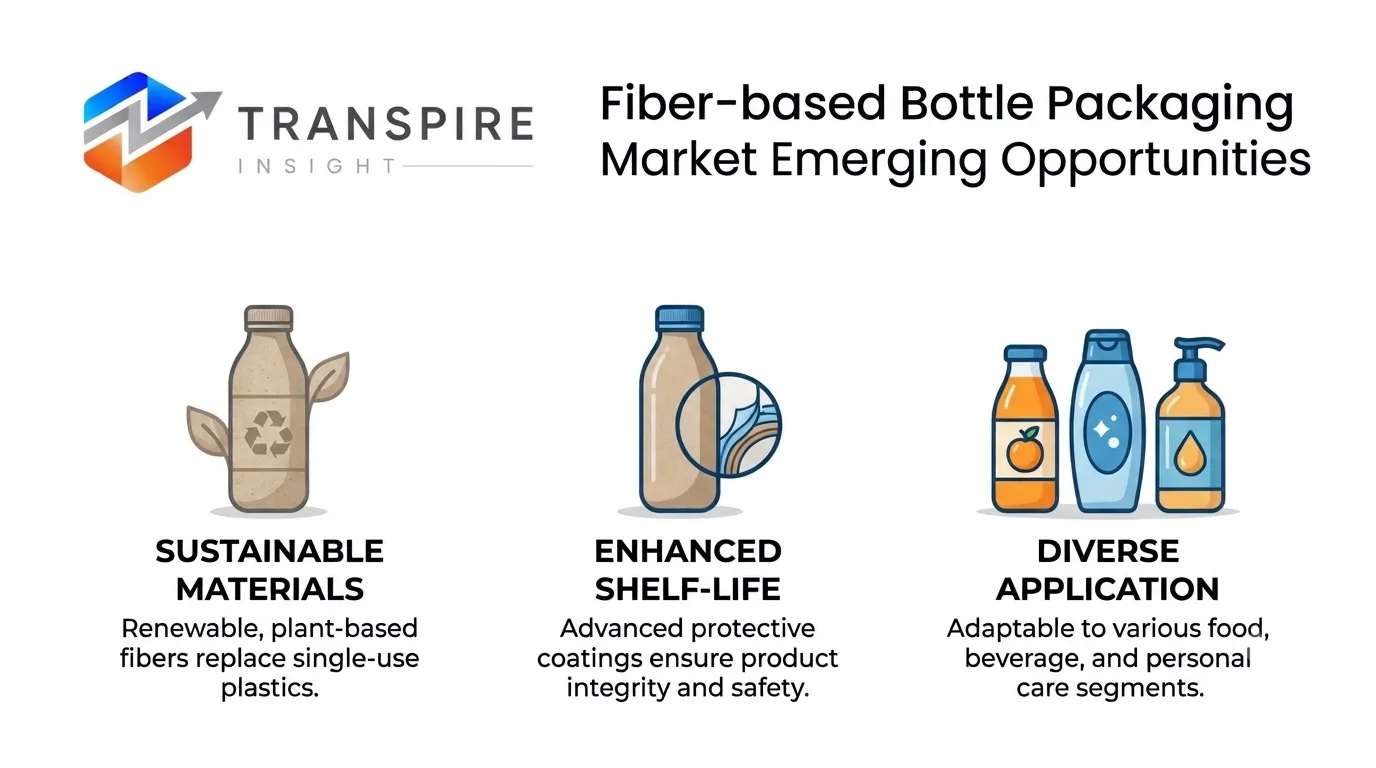
Improved thin-film and recyclable liners protect liquids from leakage, oxygen, and flavor loss, enabling fiber bottles to hold carbonated drinks, juices, and spirits more reliably.
Beverage, cosmetics, and household brands are partnering with technology developers to co-develop fiber bottles, sharing research costs and accelerating the move toward full commercial scale.
Shampoo, lotion, and household cleaner brands are adopting fiber bottles to cut plastic use, responding to shoppers who increasingly favor sustainable packaging in everyday purchases.
Manufacturers are investing in dedicated molded fiber bottle lines, lowering per-unit costs and moving fiber bottles steadily closer to price parity with glass and plastic.
List of Top 25 Companies Leading the Market
1. Paboco (Paper Bottle Company)
Paboco develops fully recyclable, bio-based paper bottles for liquid consumer brands.
Founded: 2019 | HQ: Slangerup, Denmark.
Why It Ranks: Pioneer in commercial-scale molded fiber bottles with bio-based barrier integration.
Regional Dominance: Europe.
Product Line: Next-generation paper bottles and fiber closures for beverages and personal care.
2. Frugalpac
Frugalpac manufactures the Frugal Bottle, a paper bottle designed for wine and spirits.
Founded: 2011 | HQ: Ipswich, United Kingdom.
Why It Ranks: Market leader in commercial paper bottles for the wine industry.
Regional Dominance: Europe.
Product Line: Frugal Bottle and specialized paper bottle assembly machinery.
3. Pulpex
Pulpex produces scalable, 100% PET-free paper bottles made from sustainably sourced wood pulp.
Founded: 2020 | HQ: London, United Kingdom.
Why It Ranks: Backed by major consumer consortiums for high-volume liquid packaging scalability.
Regional Dominance: Europe and North America.
Product Line: Molded pulp bottles for fast-moving consumer goods and spirits.
4. EcoLogic Brands (Jabil)
EcoLogic Brands designs sustainable paper-based bottles using outer eco-shells paired with minimalist liners.
Founded: 2008 | HQ: St. Petersburg, Florida, USA.
Why It Ranks: Pioneer in commercialized eco-shell paper bottles for household and liquid detergent products.
Regional Dominance: North America.
Product Line: EcoLogic molded fiber bottles and recyclable liquid-pouch hybrid containers.
5. Stora Enso
Stora Enso provides renewable materials and biomaterials, including fiber-based packaging solutions globally.
Founded: 1998 | HQ: Helsinki, Finland.
Why It Ranks: leader in sustainable forestry-based materials powering paper bottle innovations.
Regional Dominance: Europe.
Product Line: Formed fiber substrates, eco-barrier materials, and specialized packaging boards.
6. Billerud
Billerud delivers high-performance paper and packaging materials crafted from virgin wood fibers.
Founded: 2001 | HQ: Solna, Sweden.
Why It Ranks: Founding partner in fiber bottle development and high-strength barrier paper tech.
Regional Dominance: Europe.
Product Line: Specialty kraft paper, barrier-coated papers, and molded pulp substrates.
7. Smurfit Westrock
Smurfit Westrock supplies corrugated packaging and sustainable paper-based containers across worldwide markets.
Founded: 2024 (via merger) | HQ: Dublin, Ireland / Atlanta, Georgia, USA.
Why It Ranks: Unmatched manufacturing scale driving paper-based alternative packaging distribution worldwide.
Regional Dominance: (North America & Europe).
Product Line: Molded fiber solutions, corrugated paper containers, and sustainable liquid packaging.
8. Graphic Packaging International
Graphic Packaging International develops consumer paper packaging solutions for food and beverage brands.
Founded: 1923 | HQ: Atlanta, Georgia, USA
Why It Ranks: Leading provider of folding cartons and sustainable fiber container alternatives globally.
Regional Dominance: North America
Product Line: Paperboard containers, liquid cartons, and custom molded-fiber packaging systems.
9. Sonoco Products Company
Sonoco designs diversified consumer packaging, industrial products, and sustainable fiber containers.
Founded: 1899 | HQ: Hartsville, South Carolina, USA.
Why It Ranks: Extensive expertise in rigid paper containers and recycled fiber package engineering.
Regional Dominance: North America.
Product Line: Rigid paper cans, fiber bottles, and eco-friendly protective packaging.
10. Molded Fiber Products (MFP)
MFP manufactures custom molded pulp packaging solutions engineered for protective industrial applications.
Founded: 1992 | HQ: Lincolnshire, United Kingdom.
Why It Ranks: Specialists in precision-molded pulp structural shells and eco-friendly bottle protection.
Regional Dominance: Europe.
Product Line: Molded pulp bottle trays, outer shells, and bespoke fiber packaging.
Conclusion
The fiber-based bottle packaging market is rapidly evolving from experimental trials to widespread commercial deployment. Breakthroughs in bio-based barrier coatings and fiber closure systems continue to resolve historic moisture-resistance challenges. As regulatory pressure intensifies against single-use plastics, leading consumer goods brands are embracing paper bottles. Ongoing investments in automated manufacturing and material science will solidify fiber bottles as a core standard for sustainable packaging.


Send us a brief description of your challenge and we'll get back to you within 24 hours.

 inquiry@transpireinsight.com
 APAC:+91 7666513636
 Address


