
Global Fiber-based Bottle Packaging Market Summery:
According to Transpire Insights, a detailed research report on the market reflects that the beverage packaging application segment dominates the Global Fiber-based Bottle Packaging Market, accounting for approximately 72% of the total share worldwide. Huhtamaki Oyj leads the market with approximately (around USD 4.6 billion) in annual revenue and an estimated 18-22% global market share, making it the leading contributor to global market development, innovation, advanced fiber-based bottle packaging production, expanding manufacturing capabilities, and growth dynamics.
Market Snapshot
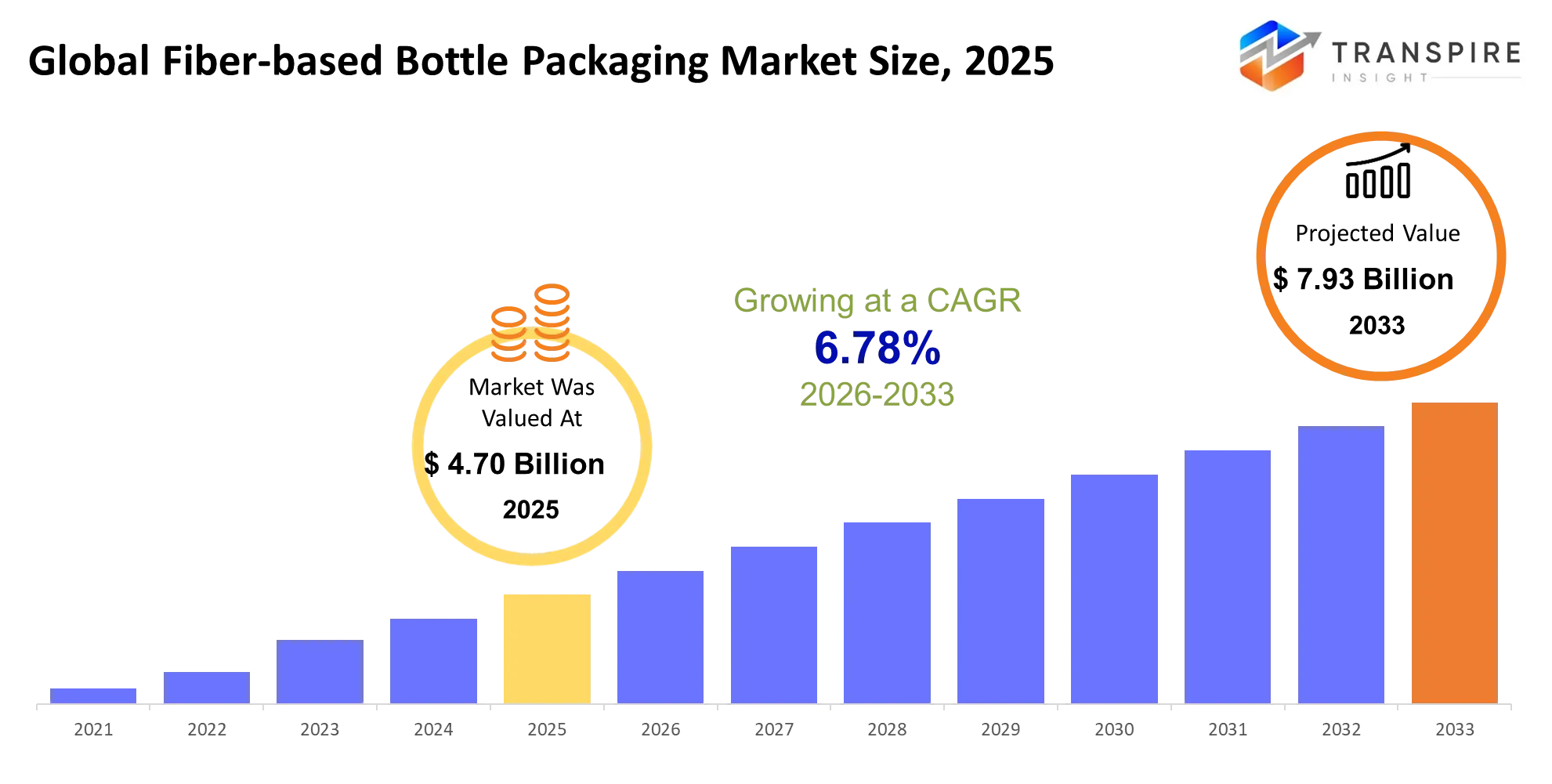
- Market Value (2025): USD 4.70 Billion.
- Expected Market Value (2026): USD 5.01 Billion.
- Estimated Market Value (2033): USD 7.93 Billion.
- Forecast CAGR (2026–2033): 6.78%.
- Leading Region in 2025: North America.
- Second-largest Region: Europe.
- Fastest Growing Region: Asia-Pacific.
Introduction
The global fiber-based bottle packaging market is growing because many companies are choosing fiber-based bottles for their packaging. Fiber-based packaging is made from various natural Plant-based raw materials. These include Reused paper materials such as Old newspapers, Waste newspapers, Paperboard, Used cardboard, plant fiber and other natural materials. As people want packaging that's better for the environment more companies will probably start using Fiber-based bottle packaging in the future. The Global Fiber-based Bottle Packaging Market will keep growing because people, like the idea of using Fiber-based bottle packaging of plastic bottles. Fiber-based bottle packaging offers several advantages, including biodegradability, recyclability, reduced plastic waste, and the use of renewable resources. It also helps companies achieve their sustainability goals while meeting consumer demand for environmentally friendly packaging.
For Instance: -Asia-Pacific,Primary investments are being put into developing advanced, internal bio-coatings to improve the shelf life of high-acid and carbonated beverages, as well as perfecting complex bottle geometries.
North America,Technology Focus: Plastic-Free Innovation: In order to address the rising demand for FMCG and beverages, companies such as Germany's Papacks are actively pursuing the US market with its 100% cellulose-based Fiber-Bottle.
Market Highlights: -
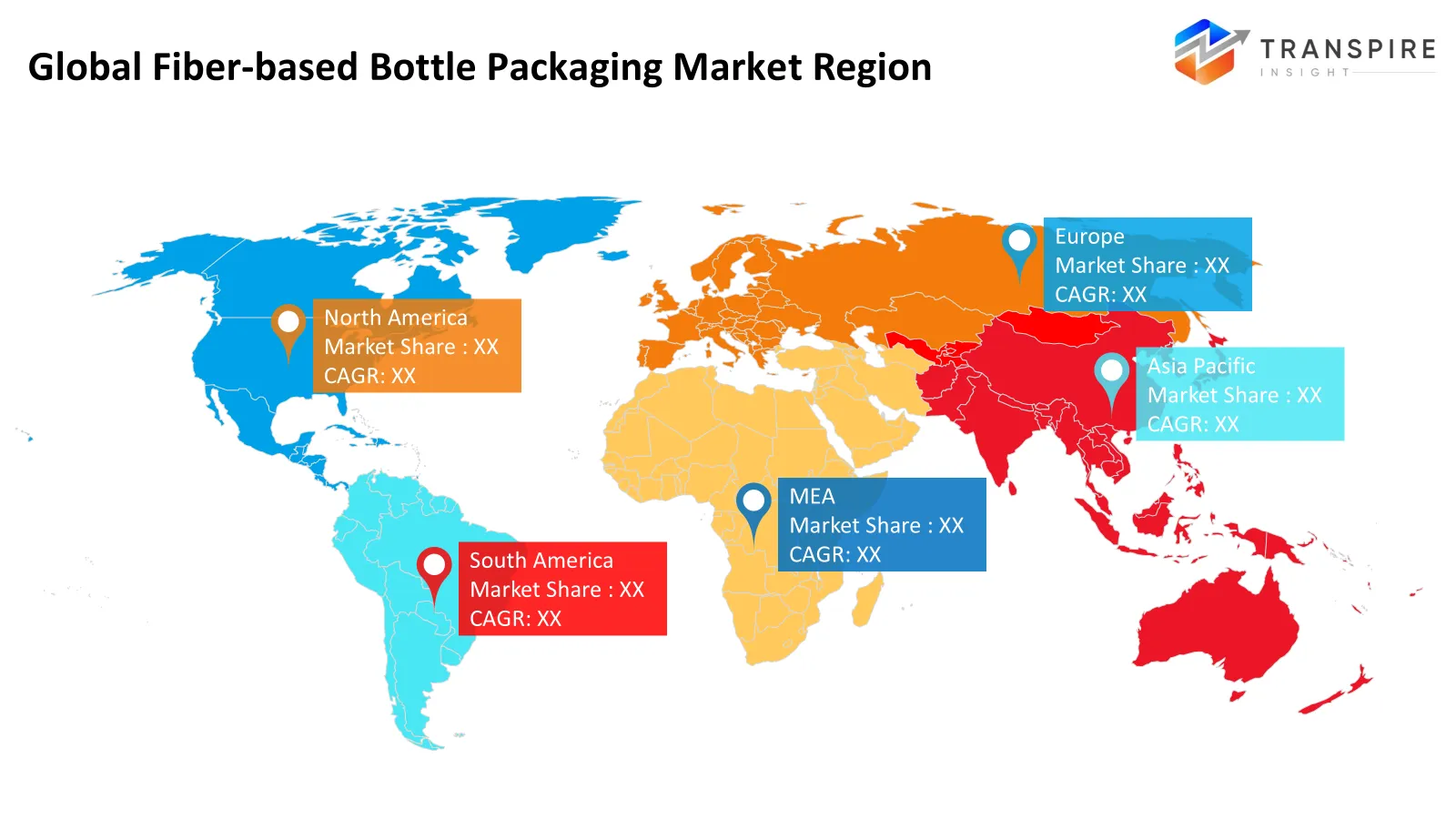
- North America is expected to grow at a rapid CAGR in the Global Fiber-based Bottle Packaging Market by holding approximately 37% of the share during the forecast period.
- Europe is the fastest-growing region in the Global Fiber-based Bottle Packaging Market during the period, holding approximately 30% share.
- Asia Pacific is anticipated to hold approximately 38% share of the Global Fiber-based Bottle Packaging Market over the predicted timeframe.
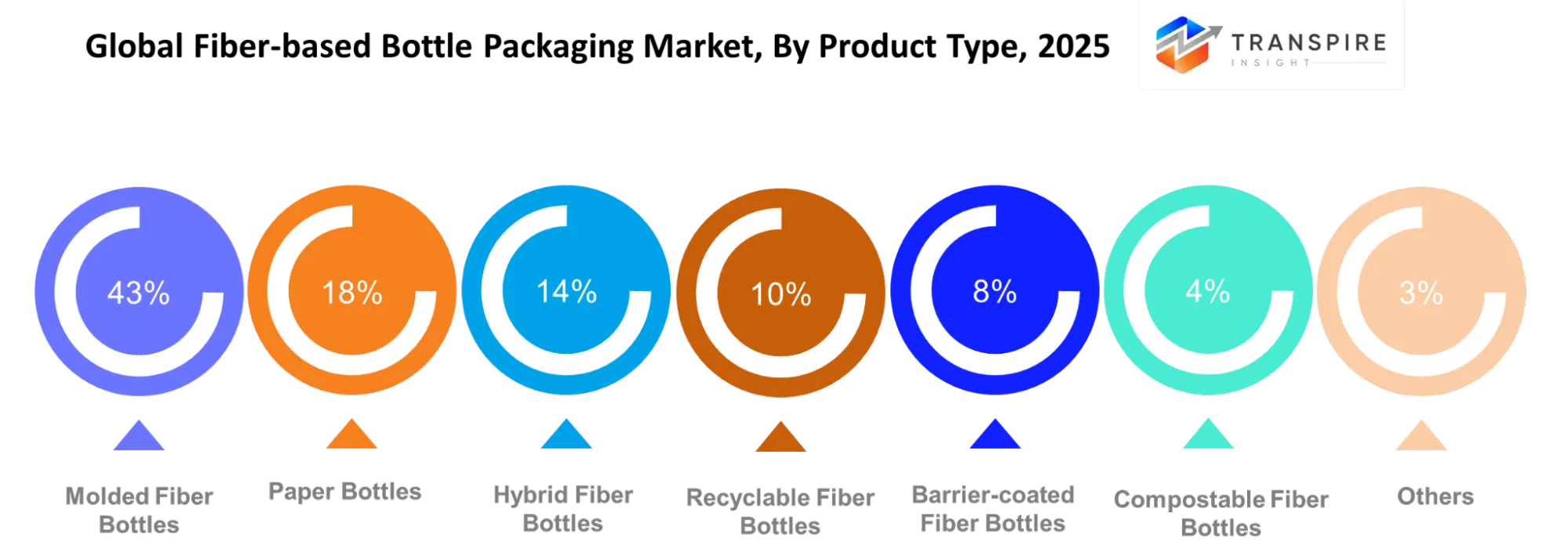
- By product type, the molded fiber segment dominated the market and holds approximately 38% share in 2025 and is projected to grow at a substantial CAGR during the forecast period.
- By material, the recycled fiber segment dominated the market and holds approximately 58% share in 2025 and is projected to grow at a substantial CAGR during the forecast period.
- By end user, the food and beverage segment dominated the market and holds approximately 60% share in 2025 and is projected to grow at a substantial CAGR during the forecast period.
- Swachh Bharat Mission (Urban 2.0) focuses on "Waste to Wealth" and promotes source segregation, decrease of single-use plastics, and the use of easily recyclable or compostable materials.
Market Drivers
Organizations like the UNEP are leading a system-wide change toward a circular plastics economy. They increase demand for environmentally friendly, fiber-based bottles by discouraging single-use plastics. Concurrently, firms are being compelled to embrace sustainable alternatives by stringent government requirements, such as the EU's PPWR and India's Plastic Waste Management policies. Legal compliance and environmental activism work together to spur innovation in molded fiber and hasten the shift to environmentally friendly packaging. The fiber-based bottle packaging market is anticipated to grow steadily across a number of end-use industries as global commitments to sustainability continue to grow. Continued investments in cutting-edge materials and environmentally friendly production techniques will improve market growth and long-term uptake.
For Instance: - Global rules (particularly India's gradual restrictions on single-use plastics and trash export bans) guarantee long-term, structural demand from the food, beverage, and pharmaceutical industries.
Restrain
Fiber-based bottle packaging offers a sustainable alternative to plastic but faces significant commercial hurdles, including high production costs, poor moisture resistance, and lower structural durability. These inherent material flaws, like leakage susceptibility, necessitate sophisticated bio-coatings and engineering advancements that now restrict broad market implementation. Continuous research and technical improvements are projected to overcome these obstacles, offering new growth potential for the Fiber-based Bottle Packaging Market.
Analysis of Prices and Consumer Behaviour
The revenue generated from all types of fibre-based bottle packaging is nearly of 62% of the market. The main factors affecting the high market share is that the beverage, personal care, and household product manufacturers are moving to fibre-based (sustainable) packaging options. Fibres-based bottles produced with advanced barrier coatings and moisture-resistant technologies are priced (on average) about 25% more than conventional fibre-based packaging (i.e. for consumers this is an increased price based on superior durability/protects the products better). Molded fibre-based bottles generated 41% of the unit sales of all fibre-based bottles in 2021 due to an increase in commercialization and brand acceptance. The beverage and food packaging industries constitute approximately 66% of total usage for fibre-based bottles. Regulations that support users of environmentally sustainable materials (and provide incentives) have encouraged the manufacturers to produce more of these types of products. Results of a consumer study demonstrate that approximately 59% of consumers expect products they purchase to be environmentally friendly, recyclable, and perform well. Additionally, 31% of consumers prefer long-term supply contracts and strategically sourced procurement contracts to increase their costs savings through global procurement (through improved supply chain flexibility).
Top Companies in the Global Fiber-based Bottle Packaging Market
Global Fiber-based Bottle Packaging Market Segmentation
The global fiber-based bottle packaging market share is divided into five categories: product type, material, end user, application, and distribution channel.
Themolded fiberdominated the market, accounting for nearly 38% in 2025, and is expected to rise at a significant CAGR during the forecast period.
The global fiber-based bottle packaging marketis segmented by product type into molded fiber bottles, paper bottles, hybrid fiber bottles, barrier-coated fiber bottles, recyclable fiber bottles, compostable fiber bottles, multi-layer fiber bottles, others. Among these, the molded fiber segment dominated the market, accounting for nearly 38% in 2025 and expected to increase at a significant CAGR during the forecast period. Due to severe single-use plastic bags, rising consumer demand for eco-friendly biodegradability, and the thriving e-commerce and food delivery industries demanding sustainable, cost-effective protective packaging.
The recycled fiber segmentheld the greatest share of approximately 58% in 2025 and is expected to increase at a substantial CAGR over the forecast period.
The global fiber-based bottle packaging marketis segmented by material type into virgin fiber, recycled fiber, kraft fiber, bamboo fiber, sugarcane bagasse fiber, wood pulp fiber, and mixed natural fibers, others. Among these, the recycled fiber segment held the greatest share of approximately 58% in 2025 and is expected to increase at a substantial CAGR over the forecast period. Recycled fiber prevails due to rising environmental expectations, stringent government laws on plastic waste, and cost-effectiveness. Furthermore, large consumer businesses are actively moving toward environmentally friendly packaging materials.
The beverage industry segmentheld the greatest share of over 60% in 2025 and is expected to increase at a high CAGR over the forecast period.
The global fiber-based bottle packaging marketis segmented by end user type into beverage industry, personal care, household products, pharmaceuticals, food industry, industrial chemicals, retail brands, others. Among these, the food and beverage segment held the greatest share of over 60% in 2025 and is expected to increase at a considerable CAGR over the projected period. The food and beverage industry is dominant due to rising worldwide population demand, increased consumption of processed goods, and expanding e-commerce distribution networks, which ensure consistent market expansion.
Regional Segment Analysis of the Global Fiber-based Bottle Packaging Market
- Europe (Germany, France, U.K., Italy, Spain, Rest of Europe)
- North America (U.S., Canada, Mexico)
- Asia-Pacific (China, Japan, India, Rest of APAC)
- South America (Brazil and the Rest of South America)
- The Middle East and Africa (UAE, South Africa, Rest of MEA)
North America is expected to grow at a rapid CAGR in the global fiber-based bottle packaging market by holding approximately 37% of the share during the forecast period.
North America dominates the fiber-based bottle packaging market due to plastic use limitations. Many North American retailers are committed to sustainability. North Americans are also more conscious of difficulties. There are manufacturing and recycling facilities in the region. More internet purchasing means more packaging. They are helping to expand the North American market. New concepts for moisture-resistant coatings are also helpful. Many food, beverage, and personal care industries are looking for eco-friendly bottles. It also keeps North America in front. All of these factors contribute to the growth of North America's Fiber-based Bottle Packaging Market over the predicted period. These elements contribute to the North American market's continued strength. North America continues to dominate the fiber-based bottle packaging market.
Europe is the fastest-growing region in the global fiber-based bottle packaging market during the period, holding approximately 30% share.
Legislation and shifting customer preferences are propelling Europe into the forefront of fiber-based bottle packaging. Regulations in the EU include the Packaging and Packaging Waste Regulation and the Single-Use Plastics Directive. According to the rules, corporations will pay a premium for fuel-based plastics. That is why major beverage and cosmetic manufacturers are turning to eco-friendly alternatives. People in Europe are increasingly interested in zero-waste products, thus the market is expanding. These laws, combined with popular demand, place Europe in the forefront of fiber bottle packaging.
Asia Pacific is anticipated to hold approximately 38% share of the global fiber-based bottle packaging market over the predicted timeframe.
The global market for fiber-based bottle packaging is dominated by the Asia Pacific region. This is due to the stringent regulations imposed by the local governments. For instance, single-use plastics are no longer permitted in nations like China and India. Large corporations are forced to use alternatives as a result. There are numerous rapidly expanding food and beverage, pharmaceutical, and cosmetic enterprises in the Asia Pacific area. Many of these businesses' items are sold online. They are taking this action to demonstrate to their clientele that they are environmentally conscious. As a result, the global market for fiber-based bottle packaging is rapidly expanding.
Strategies for Market Growth in Non-Leading Regions:
By increasing regional manufacturing capacity, broadening recycling facilities and purchasing improved technology to produce fiber-based products through advanced methods, we can accelerate the growth of our market. Strategic partnerships with other manufacturers creating items such as food, drink, cosmetics, and household items will help establish mutual compliance with changing regulations on sustainability. Further supporting increased consumer awareness, as well as low-cost options for creating fiber-based bottles, will help foster more activity through government initiatives for the promotion of a circular economy, leading to improved adoption rates and more market penetration of non-leading regions.
Future Market Trends for the Global Fiber-based Bottle Packaging Market: -
- Advanced Barrier Technologies: Fiber-based bottles may now securely store liquids and oils without sacrificing their structural integrity thanks to developments in recyclable and biodegradable barrier coatings.
- Regulatory Shifts and Extended Producer Responsibility (EPR): Due to cheaper charge schedules, paper-based alternatives are becoming increasingly popular over plastics as a result of stricter environmental regulations and EPR laws.
- Cost Competitiveness: Production prices are falling as pilot projects develop into scalable mass production, making fiber bottles more affordable than conventional plastic and metal.
Recent Development
- June 2026 – Hébert Group and ANDRITZ Scale Dry Molded Fiber Production: Hébert Group partnered with ANDRITZ to expand industrial-scale Dry Molded Fiber manufacturing, strengthening production capabilities for next-generation fiber-based packaging solutions.
- March 2026 – PulPac Introduces Next-Generation Fiber-Based Bottle Caps: PulPac unveiled a new generation of plastic-like fiber bottle caps designed to deliver high-performance sealing, thread engagement, and consumer usability.
- January 2025: PAPACKS introduced a fully plastic-free cellulose fiber bottle, reducing CO₂ emissions by up to 90% while remaining recyclable through existing paper recycling systems, advancing sustainable bottle packaging innovation.
Market Segment
This study forecasts revenue at global, regional, and country levels from 2020 to 2033. Transpire Insights has segmented the global fiber-based bottle packaging market based on the below-mentioned segments:
Global Fiber-based Bottle Packaging Market, By Product
- Molded Fiber Bottles
- Paper Bottles
- Hybrid Fiber Bottles
- Barrier-coated Fiber Bottles
- Recyclable Fiber Bottles
- Compostable Fiber Bottles
- Multi-layer Fiber Bottles
- Others
Global Fiber-based Bottle Packaging Market, By Material
- Virgin Fiber
- Recycled Fiber
- Kraft Fiber
- Bamboo Fiber
- Sugarcane Bagasse Fiber
- Wood Pulp Fiber
- Mixed Natural Fibers
- Others
Global Fiber-based Bottle Packaging Market, By End User
- Beverage Industry
- Personal Care
- Household Products
- Pharmaceuticals
- Food Industry
- Industrial Chemicals
- Retail Brands
- Others
Global Fiber-based Bottle Packaging Market, By Application
- Alcoholic Beverages
- Soft Drinks
- Dairy Products
- Personal Care Products
- Cleaning Products
- Edible Oils
- Nutraceutical Packaging
- Others
Global Fiber-based Bottle Packaging Market, By Distribution Channel
- Direct Sales
- Packaging Distributors
- Brand Owners
- Online B2B Platforms
- OEM Packaging Suppliers
- Exporters
- Wholesalers
- Others
Global Fiber-based Bottle Packaging Market, By Regional Analysis
North America
- United States
- Canada
- Mexico
Europe
- Germany
- United Kingdom
- France
- Italy
- Spain
- Russia
- Rest of Europe
Asia Pacific
- China
- Japan
- India
- South Korea
- Australia
- Rest of Asia Pacific
South America
- Brazil
- Argentina
- Rest of South America
Middle East & Africa
- Saudi Arabia
- United Arab Emirates
- Qatar
- South Africa
- Rest of the Middle East & Africa
Frequently Asked Questions
Find quick answers to common questions.
Rising sustainability demand, plastic regulations, consumer preference for eco-friendly packaging, and innovations in barrier coatings are driving market growth.
Molded fiber bottles dominate with approximately 38% market share due to biodegradability, affordability, and increasing food and beverage applications.
North America leads through strict environmental regulations, while Asia-Pacific records the fastest growth due to expanding manufacturing and sustainability initiatives.
High production costs, moisture resistance limitations, and lower durability than plastic remain key challenges despite ongoing technological advancements.
- Pulpex
- Paboco
- Frugalpac
- Choose Packaging
- Notpla
- Tetra Pak
- Amcor
- Mondi
- Stora Enso
- Smurfit Westrock
About the Authors

Kartik bhong
I am Kartik Bhong, a Senior Research Analyst at Transpire Insight, specializing in the Packaging, Manufacturing, and Construction industry. My work focuses on analyzing market trends, emerging technologies, industry regulations, and competitive landscapes to deliver accurate, data-driven insights. I am passionate about transforming complex industry information into clear, practical content that helps businesses, professionals, and decision-makers stay informed and make confident strategic decisions. Through continuous research and a strong commitment to accuracy, I strive to create reliable, well-researched content that reflects the latest developments across these dynamic industries and supports the vision of Transpire Insight in delivering valuable market intelligence.

Chakradhar Khansole
Chakradhar serves as the Research Director at Transpire Insight, bringing over 8 years of experience in technology, innovation, and strategic market intelligence. He specializes in transforming complex market data into actionable business insights that enable organizations to make informed, growth-oriented decisions. Recognized for his strategic vision and analytical expertise, Chakradhar leads high-impact research initiatives, delivering comprehensive market assessments, competitive intelligence, and forward-looking industry analysis.
Recently Published Reports
-
Apr 2026
Pharmaceutical Cold Chain Packaging Market
Pharmaceutical Cold Chain Packaging Market By Material (Plastic,(Polyethylene (PE), Polypropylene (PP), Polyethylene Terephthalate (PET), Expanded Polystyrene (EPS), Polyurethane (PU),Others), Paper, Metal, Others), By Product (Small Boxes, Pallets, Large Sized Pallet Containers, Others), By End Use (Biopharmaceutical Companies, Clinical Research Organizations, Hospitals, Research Institutes, Logistics and Distribution Companies, Others)”, By Industry Analysis, Size, Share, Growth, Trends, and Forecasts 2026-2033
-
Apr 2026
Active & Intelligent Packaging Market
Active & Intelligent Packaging Market By Type (Active Packaging, Smart Packaging), By Material (Polymer-Based, Paper & Board-Based, Metal-Based, Glass-Based), By Technology (Time-Temperature Indicators, Freshness Indicators, RFID, Antimicrobial Packaging, Modified Atmosphere Packaging), By Application (Food & Beverages, Pharmaceutical, Cosmetics & Personal Care, Electronics & Consumer Goods, Others), By Industry Analysis, Size, Share, Growth, Trends, and Forecasts 2026-2033
-
Apr 2026
Biodegradable Cut Flower Packaging Market
Biodegradable Cut Flower Packaging Market By Material Type (Paper & Paperboard, Biodegradable Plastics, Natural Fibers, Molded Pulp, Others), By Product Type (Sleeves, Wraps, Boxes & Cartons, Bags & Pouches, Inserts & Holders), By Application (Roses, Carnations, Tulips, Chrysanthemums, Mixed Flowers, Others) and By Distribution Channel (Direct Sales, Distributors & Wholesalers, Online Channels), By Industry Analysis, Size, Share, Growth, Trends, and Forecasts 2026-2033
-
May 2026
Pharmaceutical Packaging Market
Pharmaceutical Packaging Market By Material Type (Plastic, Glass, Metal, Paper & Paperboard, Others), By Packaging Type (Bottles, Blister Packs, Vials, Ampoules, Pouches & Sachets, Others) and By End User (Hospitals & Clinics, Retail Pharmacies, Online Pharmacies, Pharmaceutical Manufacturers), By Industry Analysis, Size, Share, Growth, Trends, and Forecasts 2026-2033