
Sep 12, 2026
By Transpire Insight
Description
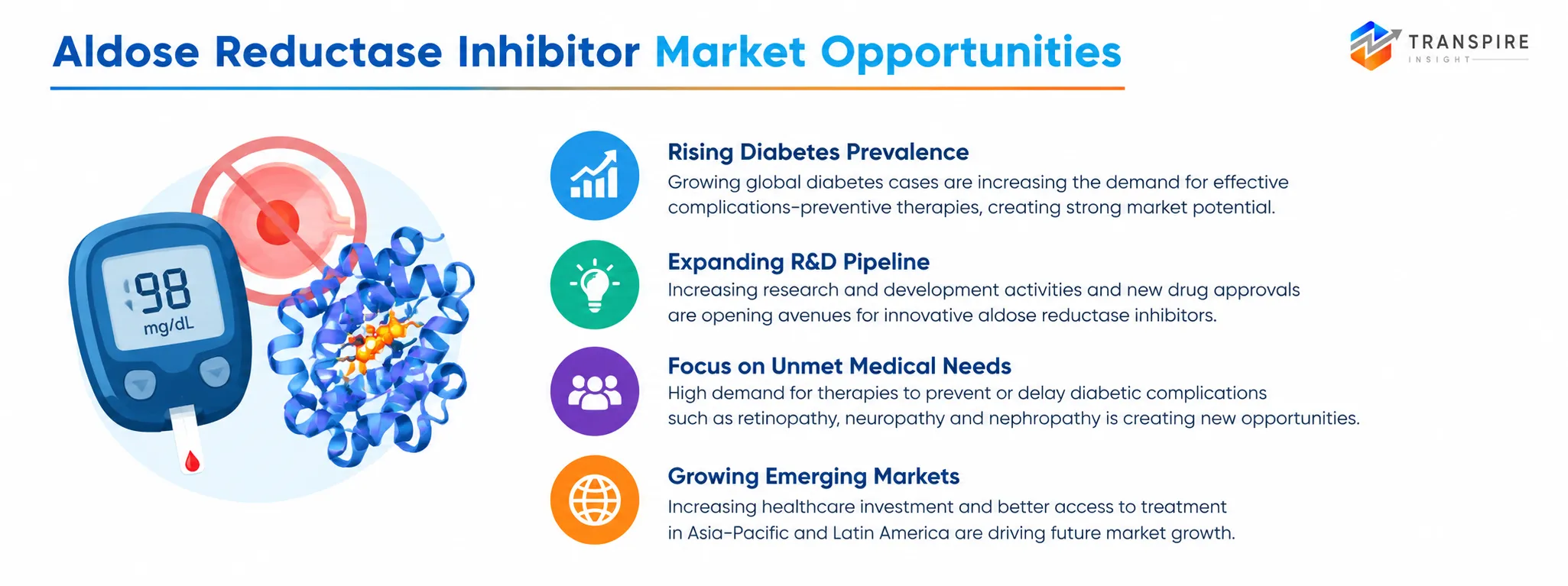
According to a research report published by Transpire Insight, the aldose reductase inhibitor market size is projected to grow from USD 7.5 billion in 2026 to USD 11.19 billion by 2035, at a CAGR of 6.89% during the forecast period 2027-2035. The increasing diabetes prevalence, high prevalence of diabetic neuropathy, escalating demand for rare metabolic disease drugs, and advancements in the clinical field of targeted polyol pathway inhibition foster the growth of the market.
Introduction
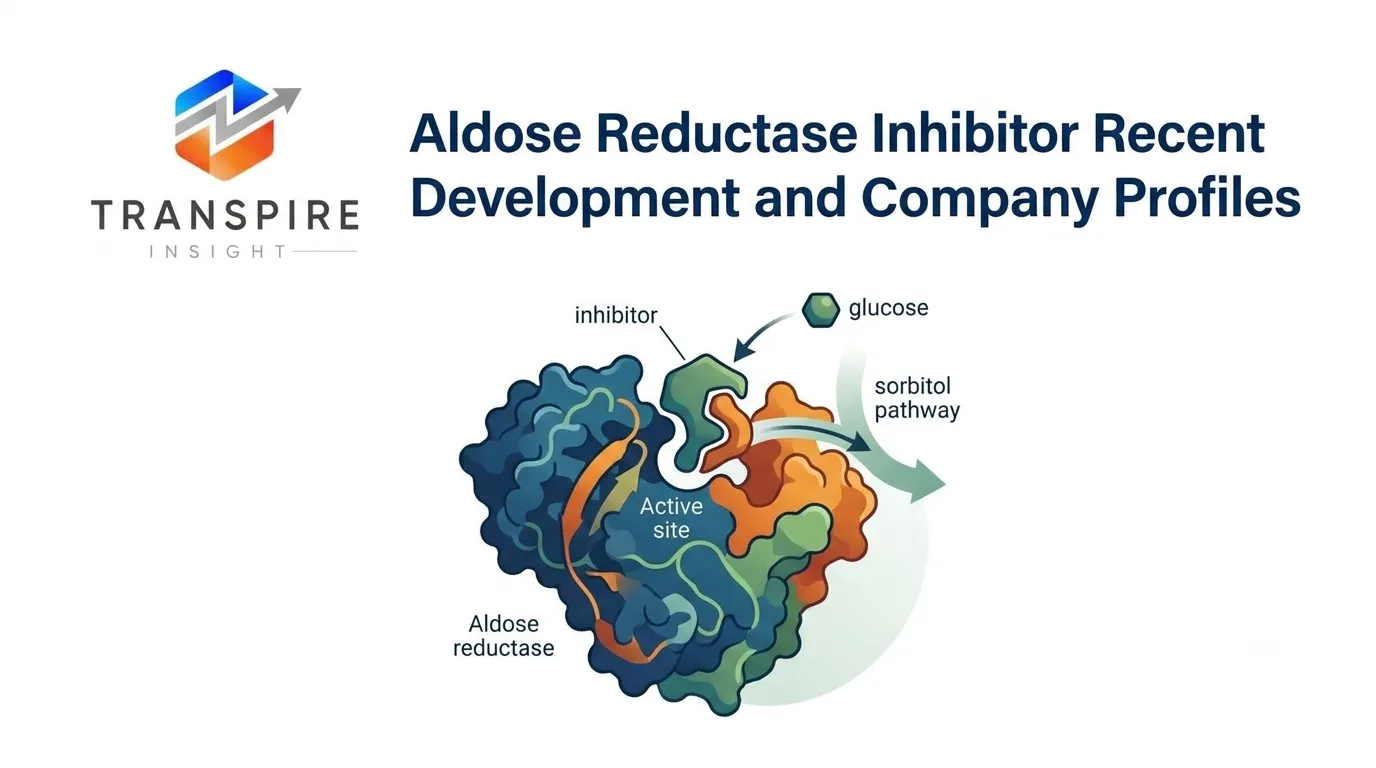
Diabetic complications such as neuropathy, retinopathy, and nephropathy are a key reason why the Aldose Reductase Inhibitor (ARI) market is important. ARIs inhibit the accumulation of polyols in the intracellular space, thus reducing tissue damage. The market is expected to expand due to the increasing prevalence of diabetes and increasing applications in rare metabolic disorders. Continuous clinical evolution and strategic progress of major pharmaceutical companies further reinforce the role of ARIs as valuable medications for chronic metabolic management. Clinical progress and strategic advances of the major pharmaceutical companies further cement the position of ARIs as valuable medicines for chronic metabolic management.
Recent Development News
Stay Ahead of Emerging Opportunities with Expert Market Insights by Transpire Insight
Transpire Insight provides comprehensive, data-driven market intelligence to support smarter business decisions. Our research is rooted in comprehensive analysis, authoritative predictions, and industry expertise, enabling organizations to make informed decisions in rapidly evolving markets. In-depth analysis of market segmentation, competitive positioning, regional trends, and emerging investment opportunities in high-growth areas. We blend accuracy with actionable intelligence, empowering companies to uncover new avenues for growth, bolster strategic decision-making, and stay ahead in a dynamic market.
Aldose Reductase Inhibitor Market Size & Statistics
Regional Growth and Demand Analysis by Transpire Insight
The Aldose Reductase Inhibitor Market in North America is projected to be the largest due to its well-established diabetic care infrastructure in the U.S., Canada, and Mexico, where the prevalence of diabetic neuropathy is high and is expected to support the market. Domestic manufacturers like Pfizer, Merck & Co., and Dr. Reddy's Laboratories have a strong presence in the region, and FDA programs that promote domestic production and generic drug review are further boosted. Distribution here is dominated by hospitals leading the way, driven by the region's dependence on specialist diabetes control practice, and an increase in prescription volume is being underpinned by private insurance coverage and clinical evidence. Overall, the growth rate of next-generation ARIs for preventive diabetic care is picking up pace in the region despite the slower growth in emerging markets.
Asia-Pacific is the fastest-growing market, owing to the large number of diabetics that are present in the region, specifically in Japan, India, and China. It has been years since Japan has been using Epalrestat to treat diabetic neuropathy, and its health ministry has sponsored a decade-long initiative to speed up drug discovery. The market is favored by India's cheap, generic drug production, and China's significant diabetes prevalence allows for a high drug consumption volume. The rapid growth of the region's demand is being driven by a combination of increased investment in healthcare facilities, increasing diabetes screening programmes, and access to new treatments; generics play a key role in increasing the accessibility to treatment across the region's major markets.
Top 15 Trends in the Aldose Reductase Inhibitor Market
Rising Diabetes Prevalence Driving Diabetic Neuropathy Therapy Demand
Growing diabetes cases are increasing diabetic neuropathy incidence, pushing healthcare providers toward aldose reductase inhibitors as a preferred therapy for managing chronic nerve-related complications.
AI-Assisted Drug Discovery Accelerating ARI Candidate Optimization
Pharmaceutical companies are increasingly using AI platforms to identify promising aldose reductase inhibitor drug candidates faster, cutting development timelines and significantly reducing overall discovery costs.
Expanding Generic Manufacturing Reduces Overall Treatment Costs
Expansion of generic aldose reductase inhibitor manufacturing, especially across India and China, is steadily lowering treatment costs and improving affordable access to diabetic complication therapies.
Government-Backed Diabetes Screening Programs Boosting Early Diagnosis
Government-funded diabetes screening initiatives across Asia-Pacific and North America are enabling earlier diagnosis, which supports timely aldose reductase inhibitor prescribing before clinical complications progress further.
Expansion of Hospital and Retail Pharmacy Distribution Channels
Distribution networks for aldose reductase inhibitors are widening across hospital, retail, and online pharmacy channels, improving patient access, expanding regional coverage, and driving revenue growth.
Shift Toward Preventive Diabetic Care Over Late-Stage Treatment
Healthcare systems are shifting toward preventive diabetic care, prescribing aldose reductase inhibitors earlier to delay complications rather than waiting for advanced, late-stage clinical disease progression.
Top 25 Companies Leading the Aldose Reductase Inhibitor Market
1. Ono Pharmaceutical Co., Ltd.
Commercialized Epalrestat, a leading commercial aldose reductase inhibitor for diabetic neuropathy.
Founded: 1717 | HQ: Osaka, Japan.
Why It Ranks: Pioneer in commercializing aldose reductase inhibitors across Asian markets.
Regional Dominance: Strongest commercial footprint and distribution dominance across the Asia-Pacific region.
Product Line: Kinedak (Epalrestat), specialized cardiovascular and metabolic disorder therapeutics portfolio.
2. Applied Therapeutics Inc.
Developing novel ARIs like Govorestat for rare pediatric metabolic conditions.
Founded: 2016 | HQ: New York, USA.
Why It Ranks: Leading innovation in next-generation central nervous system-penetrating aldose reductase inhibitors.
Regional Dominance: Major research, clinical trial footprint, and market presence across North America.
Product Line: Govorestat (AT-007), AT-001 (Ponalrestat derivation), targeted metabolic therapy candidates.
3. Pfizer Inc.
Early pioneer in aldose reductase research with legacy compounds like Zopolrestat.
Founded: 1849 | HQ: New York, USA.
Why It Ranks: Vast pharmaceutical infrastructure and historical foundational research in polyol pathways.
Regional Dominance: commercial distribution network covering North America, Europe, and Asia-Pacific regions.
Product Line: Diverse metabolic health drugs, historical ARI trial assets, cardiometabolic pipeline therapeutics.
4. Sumitomo Pharma Co., Ltd.
Active contributor to metabolic disorder treatments and polyol pathway target research.
Founded: 1905 | HQ: Osaka, Japan.
Why It Ranks: Extensive Asian distribution network and deep metabolic disease research program capabilities.
Regional Dominance: Established commercial presence and manufacturing dominance across East Asia and Japan.
Product Line: Cardiovascular drugs, metabolic disease treatments, neurological and psychiatric therapeutic lines.
5. Sanofi S.A.
leader in diabetes care with substantial research assets in microvascular complications.
Founded: 1973 | HQ: Paris, France.
Why It Ranks: World-class diabetes franchise infrastructure driving long-term metabolic enzyme target innovations.
Regional Dominance: Expansive footprint across Europe, Latin America, North America, and Middle East regions.
Product Line: Insulin analogs, oral antidiabetic agents, cardiovascular metabolic therapeutic products portfolio.
6. Merck & Co., Inc.
Historical contributor to polyol pathway inhibition research for diabetic microvascular complications.
Founded: 1891 | HQ: Rahway, New Jersey, USA.
Why It Ranks: Unmatched pharmaceutical R&D capabilities and massive diabetes therapy market presence.
Regional Dominance: Strong commercial and clinical development dominance across North America and Europe.
Product Line: Januvia franchise, cardiometabolic therapeutics, specialized small-molecule metabolic discovery assets.
7. AstraZeneca plc
Investigates metabolic disease pathways to prevent long-term diabetic organ and vascular damage.
Founded: 1999 | HQ: Cambridge, United Kingdom.
Why It Ranks: powerhouse in cardiovascular, renal, and metabolic disease drug development programs.
Regional Dominance: Extensive multinational reach across Europe, North America, and emerging international markets.
Product Line: Farxiga, cardiometabolic drug pipeline, advanced targeted microvascular pathology research programs.
8. Novartis AG
Conducted pioneering clinical research on early-generation aldose reductase inhibitor molecules globally.
Founded: 1996 | HQ: Basel, Switzerland.
Why It Ranks: Leading developer of innovative medicines targeting chronic disease microvascular pathologies.
Regional Dominance: Dominant clinical, manufacturing, and commercial presence across European and North American markets.
Product Line: Galvus, comprehensive cardiovascular and metabolic health management drug assets.
9. Takeda Pharmaceutical Co. Ltd.
Extensive expertise in metabolic disease biology and Asian diabetes care therapeutic markets.
Founded: 1781 | HQ: Tokyo, Japan.
Why It Ranks: Premier Asian pharmaceutical entity driving research in chronic diabetes tissue complications.
Regional Dominance: Leading market footprint across Japan, Asia-Pacific, and expanding Western market presence.
Product Line: Nesina, Actos, targeted metabolic disorder therapeutics, specialized enzyme pathway research assets.
10. Daiichi Sankyo Company, Limited
Deep expertise in vascular biology and metabolic complication drug target development programs.
Founded: 2005 | HQ: Tokyo, Japan.
Why It Ranks: Strong legacy of innovative cardiovascular and metabolic medicine development in Asia.
Regional Dominance: Major commercial presence across Japan, wider Asia-Pacific, and North American territories.
Product Line: Olmesartan franchise, vascular protective drugs, metabolic disease therapeutic development assets.
Conclusion
The Aldose Reductase Inhibitor market is significant in reducing serious microvascular complications of diabetes, including neuropathy and retinopathy. In the face of the growing diabetes burden, the industry is on the move to improve access to generic drugs and to invest in new ARI pipelines for rare metabolic disorders. With further clinical advancements and regional growth, ARIs will continue to play a vital part in the changing heart health dynamic.


Send us a brief description of your challenge and we'll get back to you within 24 hours.

 inquiry@transpireinsight.com
 APAC:+91 7666513636
 Address


