
Nov 17, 2026
By Transpire Insight
Description
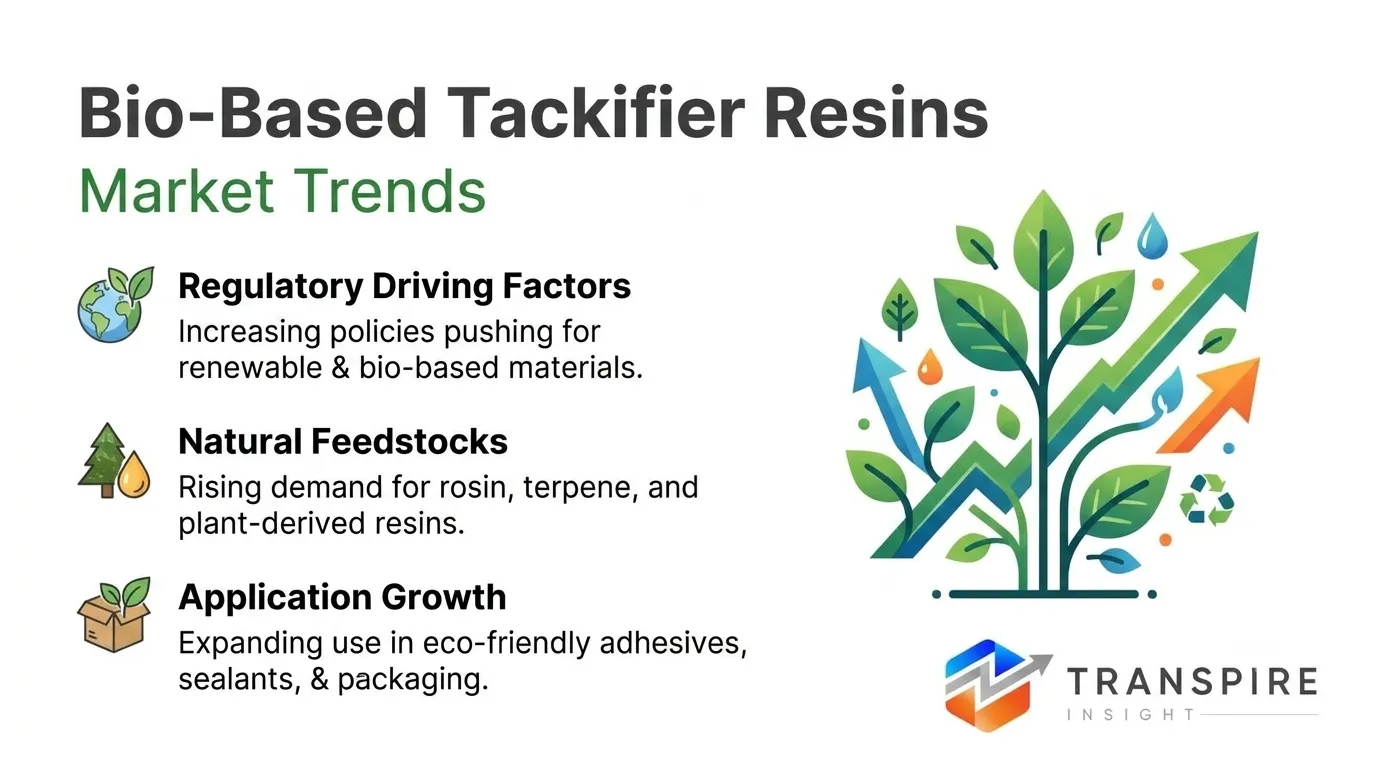
According to a research report published by Transpire Insight, the global Bio-Based Tackifier Resins Market size was valued at USD 1.89 billion in 2026 and is projected to grow at a CAGR of 5.83% during the 2027–2035 forecast period. Based on this growth rate, the market is expected to reach approximately USD 2.00 billion in 2027 and USD 3.15 billion by 2035. Increasing demand for sustainable adhesive materials, growing adoption of renewable raw materials, stricter environmental requirements, and rising consumption of pressure-sensitive and hot-melt adhesives are supporting industry expansion. Manufacturers are investing in advanced rosin esters, terpene-based resins, tall oil derivatives, and renewable resin technologies to reduce dependence on petroleum-derived materials while maintaining adhesion strength, thermal stability, and product performance.
Introduction
Adhesive manufacturers are under pressure to reconsider the raw materials used in their formulations. Petroleum-derived tackifiers have established performance characteristics, but renewable alternatives are gaining attention as packaging, automotive, construction, and consumer goods companies work toward lower-carbon material sourcing.
Bio-based tackifier resins are adhesive-enhancing materials manufactured from renewable biological feedstocks. These include pine-derived chemicals, gum rosin, tall oil, terpene compounds, vegetable oils, and other biomass resources. They improve initial tack, adhesion, bonding strength, flexibility, and compatibility with different adhesive polymers.
Their importance extends across several industrial applications. Packaging manufacturers use tackifiers in hot-melt adhesives for carton sealing, labeling, and flexible packaging. Hygiene product manufacturers require consistent adhesion in tapes, diapers, and nonwoven materials. Automotive companies use specialized adhesive formulations for interior components, insulation, and assembly applications.
Product development is moving beyond simply replacing petroleum-based ingredients. Resin manufacturers are working on lighter-color rosin esters, improved oxidation resistance, higher renewable content, and better compatibility with synthetic and natural polymers.
Competition includes established pine chemical specialists such as Kraton, DRT, Ingevity, Arakawa Chemical, and Harima Chemicals, alongside broader specialty chemical producers and regional resin manufacturers.
Recent Development News
January 2026: Kraton Corporation achieved ISCC PLUS certification for its manufacturing facility in Panama City, Florida. The certification supports traceability and sustainability claims for eligible renewable-content materials, strengthening the company's position in renewable specialty chemicals and bio-based resin supply chains.
April 2026: Research published in Progress in Organic Coatings presented a bio-based acrylate oligomeric tackifier developed for high-performance optically clear adhesive films. The research demonstrated improvements in optical clarity and adhesive performance, highlighting opportunities for bio-based tackifier chemistries beyond conventional rosin ester formulations.
October 2026: Kraton presented its REvolution™ rosin ester technology as a bio-based alternative to conventional hydrocarbon tackifiers. The technology focuses on improving initial resin color and oxidative stability while retaining adhesion performance. Its applications include packaging adhesives and thermoplastic road-marking formulations.
November 2026: dsm-firmenich announced the production ramp-up of a new hydrogenated bio-based resin manufacturing unit at its Vielle-Saint-Girons facility in France. Commissioned during the first half of 2026, the facility manufactures DRT Industry Ingredients resins and derivatives for adhesives, coatings, and other industrial applications. The investment strengthens the availability of advanced pine-derived resin materials.
Stay Ahead of Emerging Opportunities with Expert Market Insights by Transpire Insight
Transpire Insight provides comprehensive, data-driven market intelligence to support informed business decisions. Our research combines market sizing, competitive benchmarking, regional analysis, industry trends, and growth forecasting to help businesses understand changing market conditions.
We provide detailed assessments of market segmentation, leading manufacturers, product innovation, renewable feedstock developments, and emerging investment opportunities. Our research helps manufacturers, investors, raw material suppliers, adhesive formulators, and industry professionals evaluate market developments and identify opportunities for business expansion.
Download the exclusive Bio-Based Tackifier Resins Market sample report today to explore market estimates, competitive developments, emerging technologies, and future industry opportunities.
Bio-Based Tackifier Resins Market Size & Statistics
Regional Growth and Demand Analysis by Transpire Insight
Asia-Pacific
Asia Pacific held the leading regional position in the Bio-Based Tackifier Resins Market in 2025. The region benefits from established chemical manufacturing industries, access to renewable feedstocks, and substantial adhesive consumption across packaging, automotive, footwear, construction, and consumer goods applications.
China, Japan, India, and South Korea are important markets for resin manufacturing and downstream adhesive production. Companies such as Arakawa Chemical, Harima Chemicals, Yasuhara Chemical, and Foreverest Resources contribute to the regional resin supply base.
China has an established rosin-processing industry, supported by domestic availability of gum rosin and other natural resin materials. Japanese manufacturers concentrate on specialized rosin esters and terpene-based formulations for applications requiring controlled adhesion, color, and thermal characteristics.
India offers opportunities through its growing packaging, footwear, construction, and industrial adhesive sectors. The availability of pine-derived and other renewable chemical feedstocks also supports the development of regional supply chains.
North America
North America is projected to be the fastest-growing regional market. Increasing interest in renewable industrial chemicals, sustainable packaging, and lower-carbon adhesive formulations is supporting demand for bio-based tackifier resins.
The United States has an established pine chemicals industry. Kraton and Ingevity are important participants in renewable resin chemistry, supplying materials used in packaging, labels, tapes, hygiene products, and industrial adhesives.
Manufacturers are paying greater attention to renewable-content verification, product traceability, and life-cycle environmental assessments. These requirements are influencing raw material selection among adhesive formulators.
The region also benefits from established adhesive manufacturing capabilities and demand from packaging, automotive, construction, and consumer product manufacturers.
Europe
Europe represents an important market for renewable resin technologies. Environmental requirements, sustainable packaging initiatives, and demand for bio-based industrial chemicals are supporting the adoption of renewable tackifiers.
France, Germany, Italy, and Finland contribute to the regional supply chain through specialty chemical manufacturing, pine chemical processing, and adhesive production.
DRT, part of dsm-firmenich, has an established position in pine-derived resin chemistry. Its investment in hydrogenated bio-based resin production in France demonstrates the continued development of specialized renewable resin manufacturing.
Harima Chemicals, Synthomer, and other international suppliers also serve adhesive applications requiring modified rosin esters and specialty tackifier formulations.
Top 15 Trends in the Bio-Based Tackifier Resins Market
Proceed to explore the exclusive Bio-Based Tackifier Resins Market report to access detailed market insights, competitive analysis, strategic assessments, and future growth opportunities.
Growing Adoption of Renewable Rosin Ester Tackifiers
Rosin ester resins are among the established renewable tackifier chemistries used in adhesive formulations. They are manufactured through the modification of natural rosin and offer different softening points, compatibility characteristics, and adhesion properties.
Kraton, Arakawa Chemical, Ingevity, and Harima Chemicals are recognized participants in this product category. Product development focuses on improving color stability, oxidation resistance, and compatibility with different adhesive polymers.
Increasing Demand for Sustainable Packaging Adhesives
Packaging applications represent an important consumption area for tackifier resins. Carton sealing, pressure-sensitive labels, packaging tapes, and flexible packaging require adhesives that deliver reliable initial tack and bonding strength.
Manufacturers are evaluating renewable tackifiers to reduce fossil-based raw material consumption. The challenge is to maintain adhesive performance during transportation, storage, and packaging operations.
Development of Advanced Hydrogenated Bio-Based Resins
Hydrogenation improves the stability and color characteristics of selected rosin-derived resins. These properties are important for applications where discoloration, oxidation, and long-term product consistency affect the finished adhesive.
Recent manufacturing investments in hydrogenated bio-based resins demonstrate the industry's interest in higher-performance renewable materials.
Growing Use of Terpene-Based Tackifier Resins
Terpene resins are manufactured using renewable terpene feedstocks, including materials derived from pine and citrus sources. They are used in different adhesive formulations to improve tack, compatibility, and bonding characteristics.
Specialty resin producers are developing modified terpene and terpene-phenolic products for applications that require specific thermal and adhesion properties.
Rising Demand for Bio-Based Hygiene Adhesives
Hygiene products such as disposable diapers, sanitary products, and medical-related adhesive materials require consistent bonding performance. Adhesive formulations must maintain suitable adhesion while meeting requirements for flexibility, processing, and product quality.
Rosin ester tackifiers offer a renewable material option for selected hygiene adhesive formulations. Their compatibility with different polymer systems makes them relevant to manufacturers developing sustainable product portfolios.
Increasing Investment in Renewable Feedstock Supply Chains
Access to consistent raw materials is a major consideration for bio-based resin manufacturers. Pine chemicals, gum rosin, tall oil, and terpene feedstocks are important sources for renewable resin production.
Companies are strengthening their sourcing arrangements and manufacturing capabilities to improve raw material availability and product consistency. Feedstock traceability is also becoming a purchasing consideration for customers seeking documented renewable content.
List of Top 20 Companies Leading the Bio-Based Tackifier Resins Market
The following companies represent established manufacturers, specialty resin producers, and relevant suppliers participating in the global bio-based tackifier and related tackifying resin industry as of 2026. The selection considers product portfolios, renewable resin capabilities, adhesive applications, manufacturing presence, and industry participation.
The list is an editorial competitive shortlist, not an audited ranking by market share. Some companies specialize in renewable rosin and terpene chemistry, while others participate in the broader tackifier resin industry.
Customize the exclusive Bio-Based Tackifier Resins Market report to receive insights tailored to your business requirements, including country-specific market analysis, competitor benchmarking, product segmentation, and business-focused market intelligence.
Kraton is a major specialty chemicals manufacturer with established pine chemicals and adhesive resin operations. Its portfolio includes renewable rosin ester and other tackifying materials used in industrial adhesive formulations.
The company's REvolution™ technology focuses on improving color and oxidative stability in rosin ester products, providing formulators with alternatives to conventional petroleum-derived tackifiers.
Headquarters: Houston, Texas, USA.
Why It Ranks: Established pine chemical operations, renewable resin technologies, and international adhesive industry participation.
Product Line: SYLVALITE™, SYLVATAC™, SYLVAROS™, AQUATAC™, and other pine-based adhesive resin products.
Eastman is an established specialty materials and chemical manufacturer with a broad tackifier resin portfolio. Its adhesive resin products serve pressure-sensitive adhesives, hot-melt formulations, packaging, and industrial applications.
The company is relevant to the competitive environment through its experience in resin modification, specialty polymers, and adhesive formulation materials. Its broader tackifier portfolio should be distinguished from products specifically certified as bio-based.
Headquarters: Kingsport, Tennessee, USA.
Why It Ranks: International chemical manufacturing capabilities, established resin technologies, and a broad adhesive materials portfolio.
Product Line: Piccotac™, Regalite™, Eastotac™, and other specialty resin products.
DRT is a specialist in pine-derived chemicals and renewable resin products. Its materials are used in adhesives, coatings, inks, and other industrial applications.
The company develops rosin-based and terpene-based materials, including hydrogenated resin derivatives. Its production investment in France during 2026 strengthens its position in specialty bio-based resin manufacturing.
Headquarters: Dax, France.
Why It Ranks: Strong specialization in renewable pine chemicals, rosin derivatives, and terpene-based resin technologies.
Product Line: Dertophene™, Dercolyte™, Foral™, Staybelite™, and other resin derivatives.
Ingevity is a major supplier of pine chemicals and bio-based tackifying resins. Its modified rosin resin portfolio serves packaging, hygiene, construction adhesives, tapes, and labels.
The company focuses on providing specialty resin materials with compatibility across different adhesive polymer systems. Its manufacturing and technical support capabilities serve customers across industrial markets.
Headquarters: North Charleston, South Carolina, USA.
Why It Ranks: Established bio-based tackifier manufacturing and specialization in renewable pine-derived chemicals.
Product Line: WestRez® modified rosin resins and other adhesive tackifier products.
Arakawa Chemical is a Japanese specialty chemical manufacturer with established operations in rosin-based resin technologies. Its products are used in adhesives, coatings, printing inks, and other industrial applications.
The company develops modified rosin esters and specialty resin formulations for customers requiring controlled adhesion, compatibility, and product stability.
Headquarters: Osaka, Japan.
Why It Ranks: Long-standing experience in rosin chemistry and specialty adhesive resin manufacturing.
Product Line: Pentalyn™, Super Ester™, and other rosin-derived resin products.
Harima Chemicals specializes in pine-derived chemicals and rosin-based materials. Its resin technologies serve adhesive tapes, packaging labels, and other industrial applications.
The company has also developed tackifier formulations designed to improve heat resistance. Its product development reflects growing demand for renewable materials with specific technical performance characteristics.
Headquarters: Osaka, Japan.
Why It Ranks: Established pine chemical expertise and development of specialty rosin-based tackifiers.
Product Line: Rosin ester resins, modified rosin tackifiers, and other pine-derived chemical materials.
Lawter is a specialty chemical supplier associated with Harima Chemicals Group. It provides resin and chemical products for printing inks, coatings, and adhesive applications.
Its tackifier and rosin-based product offerings support adhesive formulators seeking different compatibility, dispersion, and bonding characteristics.
Headquarters: Northbrook, Illinois, USA.
Why It Ranks: Established specialty resin distribution and technical experience in rosin-based adhesive materials.
Product Line: Rosin resins, resin dispersions, Snowtack™ products, and specialty adhesive materials.
Foreverest Resources is a Chinese supplier specializing in natural resin derivatives, pine chemicals, and terpene-based materials.
Its product portfolio serves manufacturers involved in adhesives, coatings, fragrances, and other chemical applications. Renewable resin materials are an important part of its business activities.
Headquarters: Xiamen, China.
Why It Ranks: Focus on natural resin feedstocks and participation in the international rosin and terpene supply chain.
Product Line: Gum rosin derivatives, terpene resins, rosin esters, and specialty pine chemical products.
Pine Chemical Group participates in the supply of pine-derived raw materials and chemical derivatives used in industrial applications.
Its relevance to the bio-based tackifier industry comes from the importance of tall oil and other pine chemical feedstocks in renewable resin manufacturing.
Headquarters: Finland.
Why It Ranks: Participation in the European pine chemical supply chain and renewable feedstock industry.
Product Line: Pine chemical derivatives, tall oil-related materials, and specialty renewable chemical feedstocks.
SI Group is a global performance additives and specialty chemical manufacturer serving adhesives, rubber, plastics, and industrial markets.
Its resin and additive technologies contribute to the broader tackifier and adhesive materials industry. The company's competitive relevance includes specialty resin development and chemical formulation capabilities.
Headquarters: Schenectady, New York, USA.
Why It Ranks: Established specialty chemical operations and participation in adhesive and performance resin applications.
Product Line: Specialty resins, performance additives, and adhesive-related chemical materials.
Schedule a meeting with our market experts to discuss the exclusive Bio-Based Tackifier Resins Market report and identify the right research solution for your business.
Conclusion
The global Bio-Based Tackifier Resins Market is moving toward wider use of renewable raw materials in industrial adhesive formulations. Rosin esters, terpene resins, and tall oil derivatives remain important product categories, while improvements in hydrogenation, resin modification, and bio-hybrid chemistry are expanding the range of available materials.
Kraton, DRT, Ingevity, Arakawa Chemical, and Harima Chemicals have established capabilities in renewable resin chemistry. Other specialty chemical manufacturers contribute through broader tackifier portfolios, adhesive technologies, and raw material supply chains.
For manufacturers and investors, the next step should be to examine resin chemistry and end-use application separately. Comparing renewable content, feedstock availability, adhesive compatibility, thermal stability, and production costs across rosin ester and terpene resin categories will provide a clearer basis for selecting suppliers and evaluating investment opportunities.


Send us a brief description of your challenge and we'll get back to you within 24 hours.

 [email protected]
 APAC:+91 7666513636
 Address


