
Sep 18, 2026
By Transpire Insight
Industrial steam systems are under increasing pressure to become more energy efficient. As manufacturers focus on reducing steam losses and improving maintenance, steam traps are evolving from basic condensate-removal devices into increasingly monitored and optimized components of industrial energy systems.
The growing adoption of automation, predictive maintenance and energy-efficiency programs is creating a new opportunity for advanced steam-trap technologies.
September 2026: Steam remains essential across power generation, food processing, chemicals, pharmaceuticals, oil and gas and other process industries. However, inefficient steam systems can result in energy losses, equipment problems and higher operating costs.
Steam traps play a critical role by removing condensate and non-condensable gases while preventing the unnecessary escape of live steam.
As energy costs and efficiency requirements increase, companies are paying greater attention to steam-system performance.
Market Size
The global steam trap market was valued at approximately USD 4.2 billion in 2025 and is projected to reach USD 6.3 billion by 2035, expanding at a CAGR of 4.3% during 2026–2035. Asia Pacific represents the largest market, while Europe is projected to record the fastest regional growth.
Energy Efficiency Is Becoming the Main Market Driver
Steam generation can represent a major component of industrial energy consumption. A malfunctioning or incorrectly selected steam trap can allow steam to escape or prevent condensate from being removed effectively.
For industrial operators, improving trap performance can therefore support energy savings and process reliability.
This is particularly important as manufacturers seek practical ways to reduce operating costs without replacing entire steam networks.
The result is growing interest in steam-trap inspection, monitoring and replacement programs.
Industrial Applications Dominate Demand
Industrial applications represented approximately 78.6% of the market in 2025, reflecting the importance of steam systems across process industries.
Oil and gas facilities, chemical plants, food-processing factories, pharmaceutical facilities and power plants all depend on reliable steam infrastructure.
Different industrial processes require different pressure levels, materials and trap configurations. This creates demand for mechanical, thermostatic and thermodynamic technologies.
The selection of an appropriate trap is increasingly being linked to total system efficiency rather than initial equipment price alone.
Mechanical Traps Remain Important
Mechanical steam traps generated approximately USD 1.9 billion in 2025 and are expected to reach around USD 3 billion by 2035, supported by reliability and cost-effectiveness.
Mechanical designs remain popular because they are proven across many industrial applications.
However, digital monitoring is creating an additional layer of value. Sensors and connected systems can help maintenance teams identify trap failures without relying exclusively on manual inspection.
This could gradually shift the industry from reactive replacement toward predictive maintenance.
Smart Monitoring Could Change the Maintenance Model
Traditional steam-trap maintenance often depends on scheduled inspections. Smart monitoring technologies can provide more continuous information about trap performance.
Connected sensors can potentially identify abnormal operating conditions and allow maintenance teams to prioritize equipment requiring attention.
This is particularly valuable in large industrial facilities where hundreds or thousands of traps may be installed.
The integration of wireless communication and analytics could therefore become an important future differentiator.
Asia Pacific Maintains Its Manufacturing Advantage
Asia Pacific is the largest steam trap market and is expected to grow at approximately 4.5% through 2035. Rapid industrialization, energy-cost pressures and increasing automation support demand across the region.
China and India remain important markets because of their large industrial bases.
At the same time, Europe is projected to be the fastest-growing regional market as industrial operators place greater emphasis on energy conservation and modernization.
Competitive Landscape Is Relatively Established
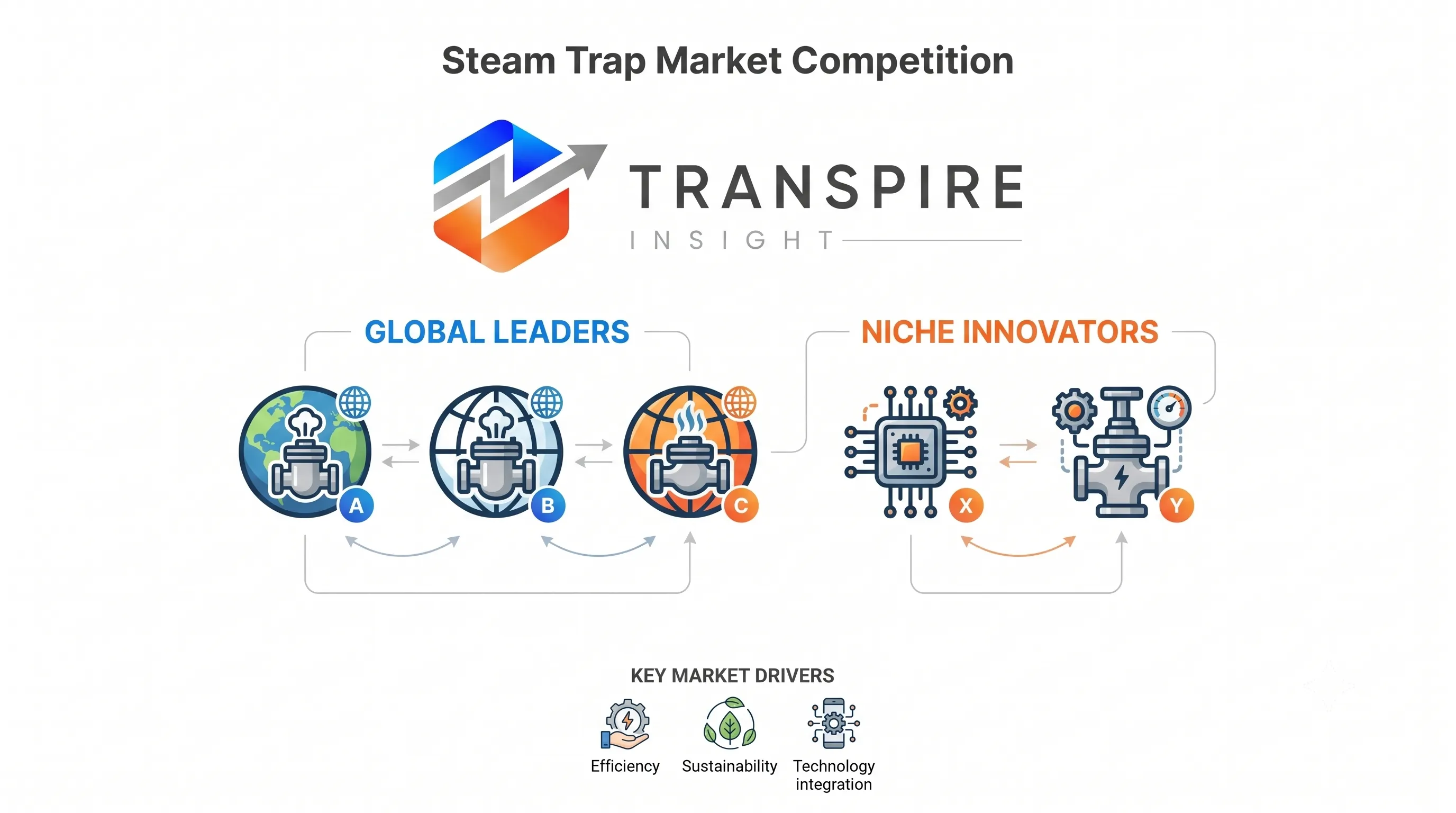
Spirax-Sarco Engineering led the market with more than 10.2% share in 2025. The top five companies—Spirax-Sarco Engineering, Armstrong International, TLV International, Emerson Electric and Watts Water Technologies—collectively accounted for approximately 25.7% of the market.
Competition is based on product reliability, energy-efficiency performance, technical support and the ability to provide complete steam-system solutions.
Top 10 Companies in Steam Trap Market
Headquarters: Cheltenham, United Kingdom
Spirax-Sarco is a leading steam-system specialist with a broad portfolio of steam traps and condensate-management solutions. Its global presence supports industrial customers seeking energy-efficiency improvements.
Headquarters: Three Rivers, Michigan, USA
Armstrong provides steam and condensate-management technologies for industrial customers. Its solutions focus on improving steam efficiency, reliability and energy performance.
Headquarters: Kakogawa, Japan
TLV specializes in steam engineering and provides mechanical, thermostatic and thermodynamic steam traps. Its products are used across industrial steam systems globally.
Headquarters: St. Louis, Missouri, USA
Emerson provides steam-control technologies through its broader automation and fluid-control portfolio. Its position benefits from its expertise in industrial automation and process optimization.
Headquarters: North Andover, Massachusetts, USA
Watts provides flow-control and water-management technologies and participates in steam and condensate applications through its industrial product portfolio.
Outlook: Could Smart Steam Traps Become the Next Industrial Efficiency Tool?
Steam traps are increasingly being viewed as part of the broader industrial energy-efficiency strategy rather than isolated valves.
The next stage of market development is likely to involve greater use of connected monitoring, predictive maintenance and data-driven steam-system optimization.
As industries face pressure to reduce energy waste while maintaining production reliability, advanced steam-trap technologies could become increasingly important across manufacturing, power, chemicals, food processing and other energy-intensive sectors.


Send us a brief description of your challenge and we'll get back to you within 24 hours.

 inquiry@transpireinsight.com
 APAC:+91 7666513636
 Address


