
Sep 15, 2026
By Transpire Insight
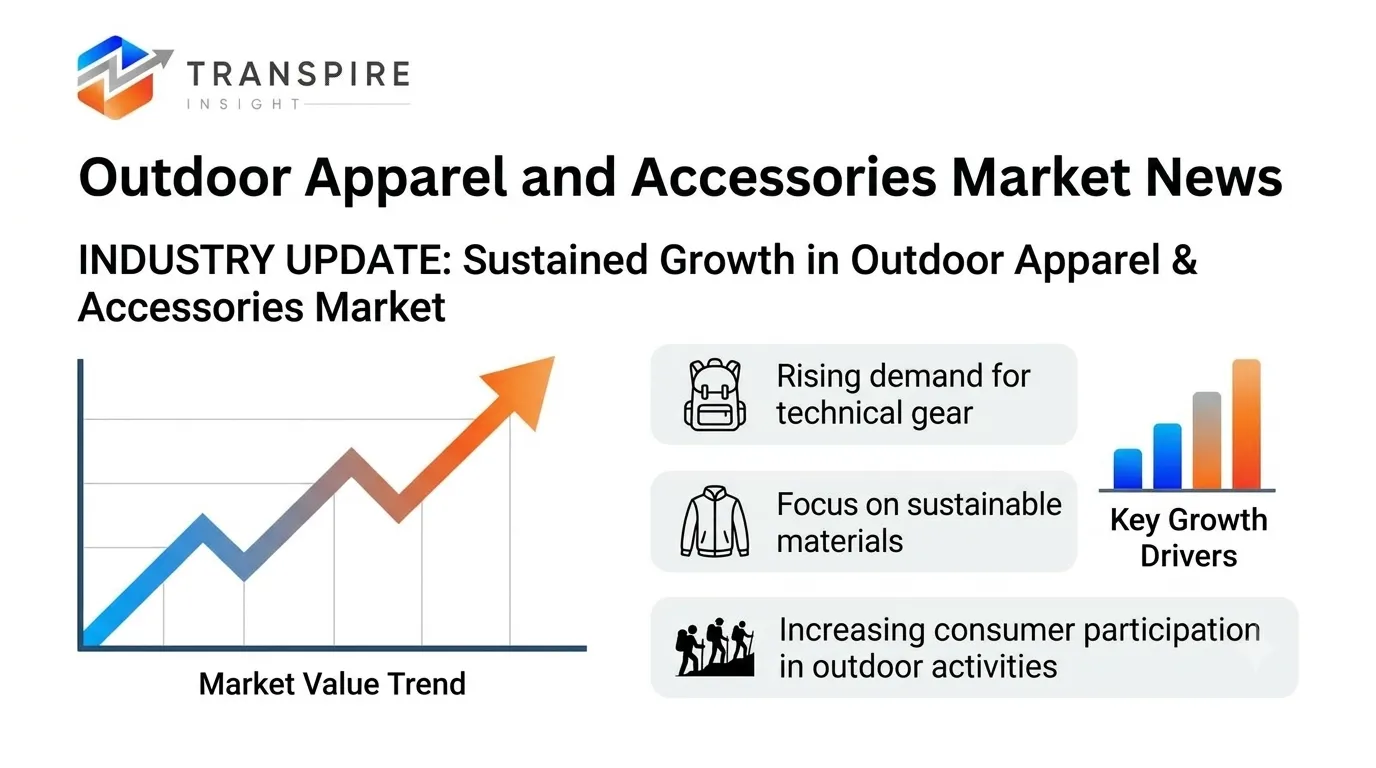
The global outdoor apparel and accessories market is evolving as consumers increasingly combine outdoor recreation, everyday mobility, technical performance, sustainability and lifestyle fashion, creating new opportunities for apparel brands, material innovators and specialty retailers.
Outdoor Apparel Is Moving from Adventure Gear to Everyday Lifestyle Wear
Outdoor apparel and accessories are increasingly becoming part of everyday wardrobes rather than remaining limited to hiking, camping, skiing and other specialist activities. Technical jackets, fleece layers, hiking trousers, utility bags, performance shirts, hats and weather-resistant accessories are increasingly being selected for commuting, travel, urban recreation and casual use.
The change is being supported by the growing participation in outdoor activities and by the convergence of technical functionality with contemporary fashion. The Outdoor Industry Association reported that U.S. outdoor retail sales reached approximately $28 billion in 2024, with footwear and accessories recording the strongest gains while apparel remained broadly flat. The organization also highlighted that casual consumers are becoming an increasingly important source of outdoor-industry spending.
At the same time, outdoor participation continues to broaden. The 2025 Outdoor Participation Trends Report identified growth in gateway activities such as hiking, camping and fishing, while also reporting increased participation among younger and older consumers.
This shift is changing how companies design products. Instead of developing apparel exclusively for extreme environments, brands are increasingly creating versatile products that can move between trails, airports, city streets and recreational spaces. The continuing influence of gorpcore and technical-fashion styling is reinforcing this transition, positioning performance outerwear and utility accessories as lifestyle products as well as outdoor equipment.
Why Are Outdoor Apparel and Accessories Important for Modern Consumers?
Outdoor clothing is increasingly viewed as a combination of protection, comfort and personal style. Consumers want products that can perform under changing weather conditions without requiring a completely different wardrobe for everyday activities.
Technical fabrics provide benefits such as moisture management, wind resistance, thermal insulation, water protection, breathability and durability. These characteristics are particularly valuable as consumers participate in activities across multiple environments and seasons.
The category is also benefiting from the expansion of casual outdoor participation. The Outdoor Industry Association's 2025 consumer research indicates that casual and active lifestyle participants now account for more than 90% of outdoor market spending, demonstrating why brands are increasingly designing products for consumers who may participate in outdoor activities while also using the same products in everyday life.
For brands, this creates a larger addressable consumer base. A waterproof shell can serve a mountain hiker, a traveler and a city commuter, while a technical fleece can function as a mid-layer during trekking or as casual streetwear.
Outdoor Apparel and Accessories Are Expanding Consumer Applications
Hiking and Trekking: Lightweight shells, trekking trousers, moisture-wicking base layers and supportive accessories are helping consumers manage long-distance outdoor activities across changing terrain and weather.
Camping and Outdoor Recreation: Insulated jackets, utility bags, weather-resistant clothing, hats and multi-purpose accessories are increasingly being designed for recreational camping and weekend travel.
Travel and Commuting: Consumers are increasingly choosing lightweight, packable and weather-resistant clothing that can be used across airports, urban environments and outdoor destinations.
Winter Sports: Skiing, snowboarding and cold-weather activities continue to support demand for insulated outerwear, technical base layers, gloves and protective accessories.
Trail Running and Adventure Sports: Breathable fabrics, lightweight construction, stretch materials and compact accessories are becoming important for consumers participating in higher-intensity outdoor activities.
Urban Lifestyle: Technical jackets, fleece garments, cargo trousers, trail-inspired footwear and utility bags are increasingly being integrated into everyday fashion as the outdoor aesthetic continues to influence mainstream clothing.
Latest Developments in Outdoor Apparel and Accessories Market
Sustainability Initiatives Supporting the Outdoor Apparel Ecosystem
Sustainability has become one of the defining strategic themes across outdoor apparel and accessories. Outdoor consumers frequently associate product longevity with environmental responsibility, creating pressure on manufacturers to reduce material waste, improve durability and provide repair or resale options.
Brands are increasingly experimenting with recycled polyester, recycled nylon, bio-based materials and alternative fibers. The objective is to reduce dependence on virgin fossil-based inputs while retaining the performance characteristics required for technical clothing.
Waterproof and water-repellent outdoor products have historically depended on highly functional chemical treatments. Increasing regulatory scrutiny of PFAS is accelerating research into alternative durable water-repellent technologies and membrane systems.
Long product lifecycles are becoming a competitive differentiator. Repair services, trade-in programs and resale platforms allow brands to maintain relationships with consumers after the original purchase while extending the useful life of apparel and accessories.
Companies are increasingly considering recyclability, material separation and durability at the design stage. This approach can reduce waste while creating opportunities for brands to recover materials from products at the end of their useful lives.
Technology Overview – The Outdoor Apparel Advantage
The outdoor apparel and accessories industry is increasingly using advanced materials and construction technologies to improve performance without making products unnecessarily heavy or complicated.
Investment Opportunities in Outdoor Apparel and Accessories
The outdoor apparel and accessories industry is creating investment opportunities across technical textiles, sustainable materials, direct-to-consumer retail, outdoor lifestyle fashion and circular business models.
One of the strongest opportunities is in high-performance sustainable fabrics, particularly materials that can deliver waterproofing, breathability and durability without relying on environmentally problematic chemistries. Brands that can combine lower-impact materials with reliable technical performance may gain an advantage as consumers become more attentive to product sustainability.
Another opportunity is emerging around multi-functional apparel. Consumers increasingly prefer garments that can be worn during outdoor activities and everyday urban use, increasing the potential sales value of versatile jackets, trousers, fleece, bags and accessories.
The repair and resale economy is also becoming strategically important. Outdoor products are generally designed for durability, making them suitable for secondary markets. Companies that develop repair networks, trade-in systems and authenticated resale channels can create additional revenue streams while reinforcing customer loyalty.
Opportunities are also developing in women's outdoor apparel, adaptive outdoor products, extended sizing, youth-oriented products and climate-specific clothing, as participation becomes more diverse. Recent industry developments indicate that brands are increasingly addressing underserved consumer groups rather than relying exclusively on traditional outdoor enthusiasts.
Top 10 Companies in the Outdoor Apparel and Accessories Market
1) The North Face
It has established a strong position across technical outerwear, fleece, insulated clothing, footwear and outdoor accessories. The brand operates across both specialist outdoor and lifestyle segments, allowing it to benefit from the continuing convergence between technical performance and everyday fashion. Its 2026 partnership with U.S. Ski & Snowboard further reinforces its position in high-performance winter apparel and athlete-led product development.
2) Patagonia
It is strongly associated with durable outdoor apparel, environmental responsibility, repair and circularity. Its product portfolio covers technical shells, insulation, fleece, climbing apparel, trail clothing and outdoor accessories. The company's emphasis on product longevity has also helped make sustainability a central part of the outdoor apparel consumer conversation.
3) Columbia Sportswear Company
Operates across outdoor apparel, footwear, accessories and equipment, with a broad consumer reach spanning technical outdoor activities and everyday recreation. Its portfolio enables the company to participate in multiple outdoor categories while responding to demand for versatile, weather-resistant and accessible products.
4) Arc'teryx
Developed a strong reputation around premium technical apparel, particularly high-performance shells, insulation, climbing products and mountain equipment. The brand has also benefited from the increasing crossover between technical outdoor clothing and fashion, helping technical outerwear reach consumers beyond traditional alpine activities.
5) Salomon
combines outdoor apparel, trail-running products, footwear and accessories. Its presence across hiking, trail running and mountain sports allows the company to participate in several of the fastest-changing outdoor lifestyle categories. The continued popularity of trail-inspired products in urban environments has also increased the visibility of performance-oriented outdoor brands.
Market Expert View
The outdoor apparel and accessories market is undergoing a structural transition from a specialist equipment category toward a broader lifestyle ecosystem. The most important change is not simply an increase in the number of consumers participating in outdoor activities; it is the changing definition of what an outdoor consumer looks like.
Today's consumer may hike on weekends, commute in technical outerwear during the week and select the same fleece, shell or utility bag for travel. This creates a market in which performance, comfort, design, sustainability and versatility increasingly need to coexist within a single product.
The strongest long-term opportunities are likely to emerge for companies that can combine technical credibility with everyday usability. Sustainability will remain important, but environmental claims alone will not be sufficient. Consumers will increasingly expect durable products, credible material information, repairability and measurable performance.
The market is therefore moving toward a more integrated model in which apparel brands compete not only through seasonal collections but also through materials, product durability, digital retail, community building, resale, repair and inclusive design.
Conclusion
The Outdoor Apparel and Accessories Market is entering a broader phase of development as outdoor recreation, technical innovation and everyday fashion increasingly overlap. Rising participation in hiking, camping, trail activities and other recreational pursuits is expanding the consumer base, while the growing adoption of technical clothing in urban environments is creating additional demand.
Sustainability is simultaneously changing product development, with recycled materials, alternative fibers, PFAS-free treatments, repair programs and circular business models gaining strategic importance. Recent product launches and partnerships demonstrate that leading brands are also expanding into new seasons, new consumer groups and new applications.
In the long term, companies that successfully combine technical performance, durability, sustainable materials, inclusive design and lifestyle appeal are likely to be best positioned to capture the next stage of growth in the global outdoor apparel and accessories industry.


Send us a brief description of your challenge and we'll get back to you within 24 hours.

 inquiry@transpireinsight.com
 APAC:+91 7666513636
 Address


