
Sep 23, 2026
By Transpire Insight
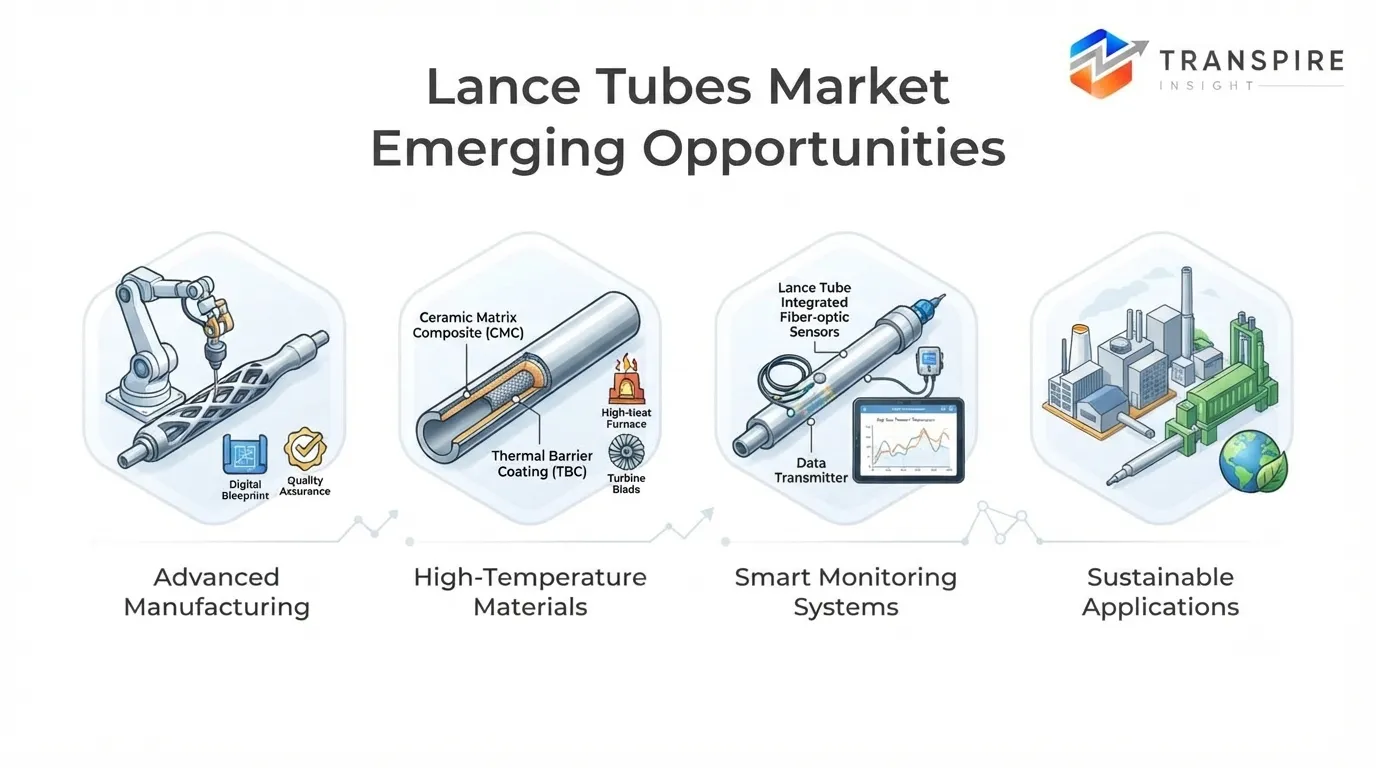
Lance tubes are essential consumable and process components in demanding industrial environments where gases, powders or other materials must be introduced into high-temperature processes.
The modernization of steel plants, expansion of electric arc furnace capacity and increasing emphasis on efficient metal processing are creating opportunities for higher-performance lance tubes with improved thermal resistance and operating life.
September 2026: Lance tubes are used across steelmaking, foundries, metal processing and other high-temperature industrial applications.
These specialized tubes must withstand extreme thermal conditions while maintaining reliable delivery of oxygen, gases, powders or other process materials.
In steelmaking, lance tubes can support oxygen injection, decarburization and other refining operations. Their performance can influence process efficiency, productivity and consumable costs.
As steel producers focus on improving furnace productivity and reducing operating costs, the demand for durable and reliable lance tubes is increasing.
Market Size
The global lance tubes market was estimated at approximately USD 122 million in 2025 and is projected to reach around USD 191 million by 2033, expanding at a CAGR of approximately 5.8% during 2026–2033.
Current market research estimates the market at approximately USD 116 million in 2025 and forecasts around USD 185 million by 2033. Other market definitions report significantly larger values because they include broader industrial tube categories.
Steel Production Remains the Main Demand Driver
Steel manufacturing represents one of the most important applications for lance tubes.
Steelmakers use oxygen and other process gases to control chemical reactions, improve melting efficiency and refine molten metal.
The increasing focus on process optimization means that consumables such as lance tubes are being evaluated not only on purchase price but also on operating life and process reliability.
A tube that remains operational for longer can reduce replacement frequency and minimize interruptions.
Electric Arc Furnaces Create New Opportunities
The transition toward electric arc furnace steelmaking is creating additional opportunities.
EAF facilities rely heavily on scrap steel and can require oxygen injection and other auxiliary processes to improve melting performance.
As global steel producers invest in lower-carbon production methods, the importance of EAF-based steelmaking is expected to increase.
This does not eliminate the requirement for lance technologies. Instead, it can create demand for lance tubes designed specifically for the thermal and operational conditions of modern furnaces.
Thermal Resistance Is Becoming Critical
Lance tubes operate under extremely severe conditions.
Exposure to intense heat can cause deformation, oxidation and material degradation.
Manufacturers are therefore focusing on tube materials, protective coatings and structural designs that can improve service life.
The ability to withstand temperatures above 1,000°C is particularly important in several applications.
Improved thermal resistance can reduce consumable replacement and help operators maintain consistent production.
Oxygen Lance Tubes Represent an Important Segment
Oxygen lance tubes are widely used in steelmaking and other metal-processing operations.
They allow controlled oxygen delivery into furnaces or molten-metal environments.
The design of the tube depends on the operating temperature, pressure, diameter and application.
Large steel plants can require significant quantities of lance tubes because the components are exposed to severe operating conditions.
Disposable Lance Tubes Support Recurring Demand
Disposable lance tubes create a recurring replacement market.
Unlike permanent equipment, consumable tubes must be replaced after their service life is reached.
This provides manufacturers with recurring demand from steel plants and foundries.
Operators increasingly look for a balance between tube cost and operating life.
A low-cost tube may not necessarily provide the best economics if it requires frequent replacement.
Foundries Provide Additional Applications
Foundries use lance tubes for a range of metal-processing activities.
These applications include oxygen injection, temperature control, cleaning and treatment of molten metal.
The expansion of metal casting for automotive, industrial machinery and infrastructure applications can therefore support demand.
Specialized tube designs can also be used for non-ferrous metal processing.
Asia Pacific Leads Industrial Demand
Asia Pacific represents the most important region for lance-tube demand because of its large steelmaking and metal-processing industries.
China, India, Japan and South Korea are major industrial markets.
India is becoming increasingly important as steel production capacity expands and infrastructure investment continues.
China remains the largest steel-producing country and therefore represents a major addressable market for steelmaking consumables.
Europe and North America also remain important because of their established steel and foundry industries and ongoing modernization programs.
Competitive Landscape
The lance tubes market includes specialized manufacturers as well as major industrial tube and metallurgy companies.
Competition is based on heat resistance, durability, dimensional consistency, delivery reliability and customization.
Companies identified across current industry reports include Sandvik, Oxylance, Suttner, Burkle, Bruker, Giant, Kraenzle, Tubecon, Kinnari Steel and Anssen Metallurgy. Broader industrial tube suppliers such as Nippon Steel, ArcelorMittal, Tenaris and Vallourec also participate in related applications.
Top 10 Companies in Lance Tubes Market
1. Sandvik
Headquarters: Stockholm, Sweden
Sandvik provides advanced engineering and materials technologies, including specialized tube solutions through its Kanthal operations. Its expertise in high-temperature materials supports demanding industrial applications.
2. Oxylance
Headquarters: USA
Oxylance specializes in oxygen and thermal cutting technologies and supplies products used in high-temperature metal-processing applications.
3. Suttner
Headquarters: Germany
Suttner develops industrial equipment and components used in demanding processing environments. Its product capabilities support specialized industrial applications.
4. Burkle
Headquarters: Germany
Burkle participates in industrial equipment and high-temperature processing applications, providing specialized solutions for industrial customers.
5. Bruker
Headquarters: Massachusetts, USA
Bruker is primarily recognized for analytical and scientific technologies, with its broader industrial expertise supporting applications involving advanced materials and process analysis.
Outlook: Could Longer-Life Lance Tubes Improve Steelmaking Efficiency?
The lance tubes market is closely connected to the future of steel production.
As producers modernize furnaces and invest in higher-efficiency processes, consumables that can operate reliably under extreme conditions will become increasingly important.
The transition toward EAF steelmaking, growth in emerging steel markets and demand for improved process economics should provide long-term opportunities.
Future product development is likely to focus on longer service life, improved thermal protection, optimized geometries and application-specific designs.
Lance tubes may remain relatively small components within large industrial systems, but their role in maintaining furnace productivity makes them an important part of the modern metal-processing ecosystem.


Send us a brief description of your challenge and we'll get back to you within 24 hours.

 inquiry@transpireinsight.com
 APAC:+91 7666513636
 Address


