
Oct 10, 2026
By Transpire Insight
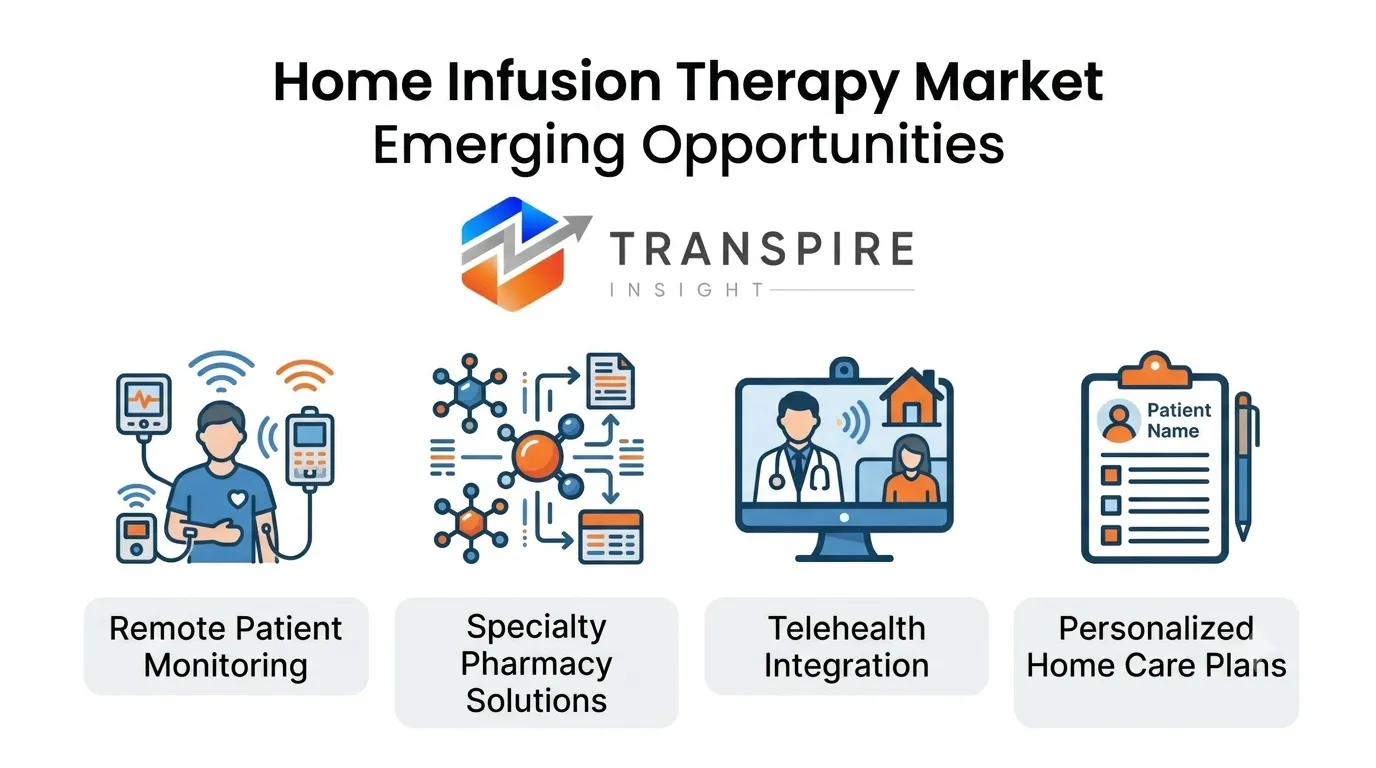
The Home Infusion Therapy Market is expanding as healthcare systems shift appropriate treatments from hospitals toward home and alternate-care environments. Aging populations, chronic diseases, specialty medicines, advances in infusion devices, and pressure to improve healthcare efficiency are supporting the transition.
Home Infusion Therapy Market Overview
The Home Infusion Therapy Market includes products and services used to administer medications, nutrients, fluids, and other therapies outside traditional inpatient settings.
Applications include:
Transpire Insights estimates the global Home Infusion Therapy Market at approximately USD 40.95 billion in 2025, increasing to around USD 44.25 billion in 2026 and reaching approximately USD 76.85 billion by 2033, representing an estimated CAGR of 8.21%.
Latest Global Market Developments
The National Home Infusion Association's March 2026 industry report identified continued resilience and a growing pipeline of complex infused therapies across home and alternate sites.
Current industry estimates indicate that services represented approximately 72.4% of global revenue in 2025, reflecting the clinical and operational complexity involved in home infusion.
Anti-infective applications represented the largest application category in one current 2026 market assessment.
The pipeline of complex infused medicines creates opportunities for home-care providers capable of managing more sophisticated treatment protocols.
Ambulatory pumps, elastomeric devices, electronic infusion pumps, and compact systems can support greater mobility.
Moving appropriate patients away from inpatient settings can potentially reduce hospital resource requirements while improving patient convenience.
Older patients frequently require long-term treatment and may benefit from care delivered closer to home.
Payment policy, especially in the U.S., influences which therapies can economically transition from hospital to home.
Why Home Infusion Therapy Matters?
Home infusion can provide a bridge between intensive medical treatment and conventional outpatient care.
Its potential benefits include:
However, home infusion requires appropriate patient selection, clinical oversight, trained professionals, reliable equipment, and adequate reimbursement.
Key Factors Driving the Market
1. Aging Population
Growing numbers of older adults are increasing demand for long-term healthcare services.
2. Chronic Disease
Chronic conditions frequently require extended treatment rather than short inpatient episodes.
3. Specialty Drugs
Increasing availability of biologics and specialty therapies is expanding the potential treatment base.
4. Portable Devices
Smaller and more sophisticated infusion systems make home-based treatment more practical.
5. Healthcare Cost Management
Providers and payers increasingly examine alternate-care models that can reduce unnecessary hospital utilization.
Five High-Potential Markets
1. United States
The U.S. is the largest regional market, accounting for approximately 56.3% of global home infusion revenue in 2025 according to one current estimate.
2. Germany
Germany has strong healthcare infrastructure and a mature homecare ecosystem.
3. United Kingdom
The U.K. offers opportunities through community-based healthcare and efforts to reduce hospital dependency.
4. Japan
Japan's aging population creates significant long-term demand for home-based medical care.
5. India
India represents a developing opportunity as private healthcare providers and home-healthcare companies expand beyond traditional hospital settings.
Competitive Landscape
Top 5 Companies
Additional participants include BD, Terumo, CVS Health, Optum, Soleo Health, Moog, and JMS.
Opportunities for Small Investors
Challenges & Restraints
Patient safety, reimbursement, clinical staffing, drug storage, infection control, emergency response, equipment maintenance, and geographic coverage can constrain market expansion.
Complex therapies also require highly trained personnel and reliable coordination between physicians, pharmacies, nurses, patients, and caregivers.
Conclusion
The Home Infusion Therapy Market is becoming an increasingly important component of alternate-site healthcare delivery.
The 2026 NHIA industry assessment highlights the growing role of home and alternate-site infusion, particularly as the pipeline of complex infused therapies expands.
For healthcare providers, pharmaceutical companies, medical-device manufacturers, and investors, opportunities are increasingly concentrated around specialty therapies, portable infusion systems, home nursing, pharmacy services, digital monitoring, and integrated care coordination.


Send us a brief description of your challenge and we'll get back to you within 24 hours.

 inquiry@transpireinsight.com
 APAC:+91 7666513636
 Address


