
Jul 10, 2026
By Transpire Insight

Description
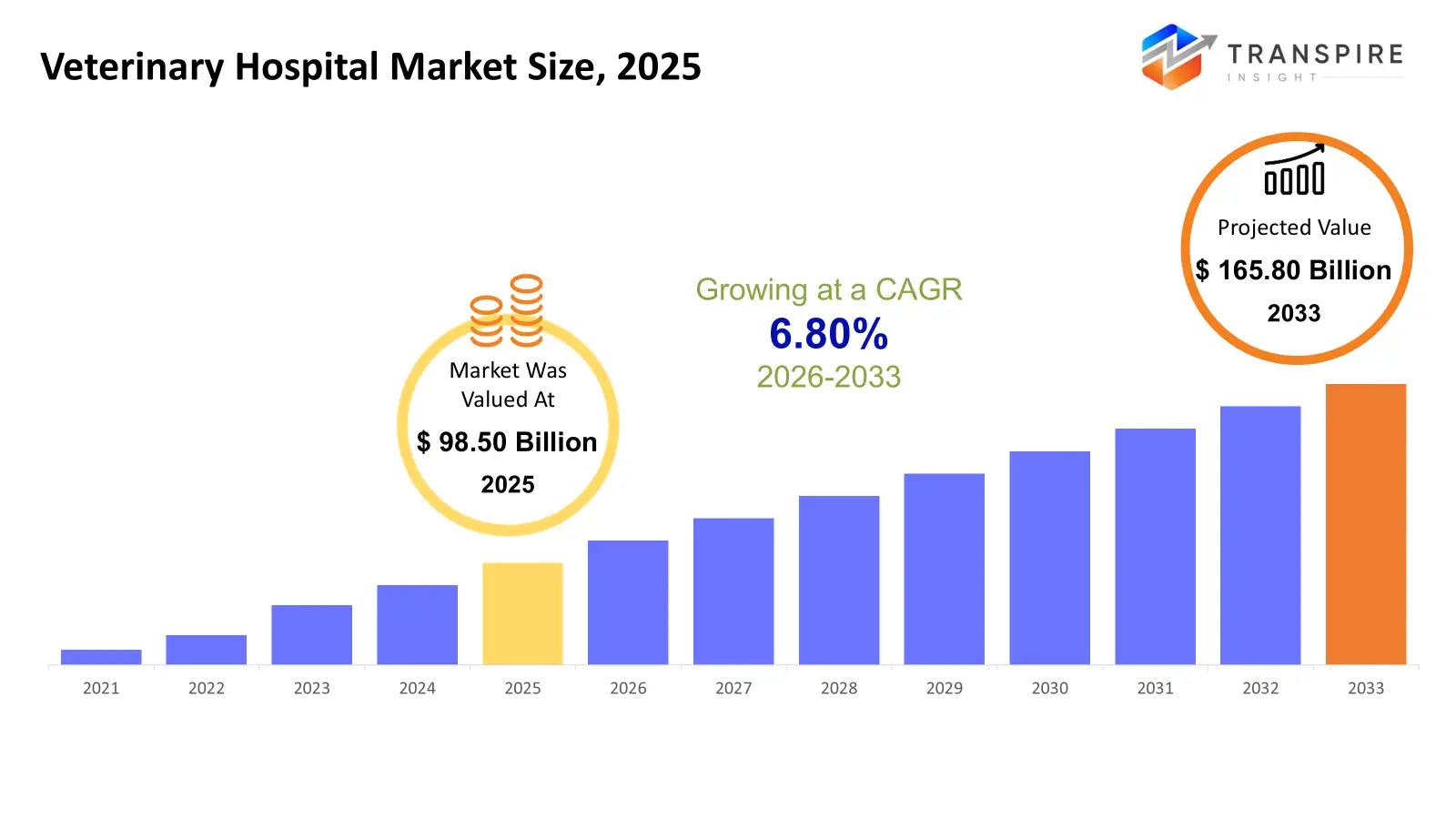
According to a research report published by Transpire Insight, the global veterinary hospital market size is projected to grow from USD 110 billion in 2026 to USD 170.80 billion by 2035, at a CAGR of 7.80% during the forecast period 2026-2035. The market demand is heavily driven by the trend of pet humanization and the growing number of pets in the world. Moreover, strong revenue growth is fueled by escalating consumer interest in paying for advanced diagnostics and specialized companion animal treatments.
Introduction
The global veterinary hospital market is witnessing a strong growth trajectory, with a huge demographic change and increased disposable income across the globe. The expectations of companion animal owners as family members have likewise grown to a whole new level, with increased demand for high-quality, high-tech medical care services from basic check-ups to advanced surgery. This continuous progression into higher specialty care drives veterinary facilities to keep upgrading their facilities, investing heavily in world-class equipment, and strongly embracing digital technology to gain a bigger share of the international animal care market and open up very profitable options in both public and private animal care.
Recent Development News
Download the exclusive Veterinary Hospital Market sample report today to uncover expert insights, emerging trends, and the opportunities defining the future of the industry.
Veterinary Hospital Market Size & Statistics
Regional Growth and Demand Analysis by Transpire Insight :
North America is expected to grow the fastest during the forecast period in the Veterinary Hospital market. The dominant player in the Veterinary Hospital Market is North America, owing to the availability of leading players in terms of established hospital networks, advanced animal healthcare infrastructure, and high rates of pet insurance adoption. The United States is currently the biggest producer in the Veterinary Hospital Market, considering factors such as the presence of extensive commercial veterinary clinic networks, efforts toward modernizing diagnostic testing, and continued advancement in specialized animal surgeries. As of 2026, some of the corporate veterinary entities in the United States have undertaken expansion activities aimed at building superior, high-acuity specialty hospitals that would enhance next-generation companion and production animal medical care.
Asia Pacific is anticipated to generate the highest demand during the forecast period in the Veterinary Hospital market. It is expected that the Asia-Pacific region will witness the highest growth rate during the forecast period due to increasing demand for veterinary services, growing populations of pets, increased pet health awareness, and significant investment in clinical infrastructure. China, India, Japan, and South Korea are some of the rapidly growing nations regarding commercial veterinary activities that drive the demand for advanced animal health technologies. In 2026, there will be an increase in clinical modernization programs by many hospital networks in China and India. This was done with the aim of ensuring highly efficient medical diagnostics and specialized surgical treatment systems.
Top 15 Trends in the Veterinary Hospital Market
Proceed to Checkout to purchase the exclusive Veterinary Hospital Market report and gain instant access to in-depth market intelligence, strategic analysis, and future growth opportunities.
The global surge in pet adoption, particularly following the pandemic, is steadily increasing the need for routine checkups, vaccinations, and emergency care. This growing pet population is directly driving higher patient volumes across veterinary hospitals worldwide.
Increasing penetration of pet insurance is reducing the financial burden on pet owners, encouraging more frequent veterinary visits and acceptance of advanced treatments. This shift is significantly boosting overall revenue generation for veterinary hospitals globally.
The rising incidence of chronic and complex animal diseases is fueling demand for specialized services such as oncology, cardiology, and neurology. Consequently, veterinary hospitals are expanding their round-the-clock emergency care capabilities to meet this need.
Private equity firms and large corporations are actively acquiring independent veterinary practices, leading to consolidation of the fragmented market. This trend is standardizing hospital operations and enabling the expansion of multi-location veterinary networks.
The growing adoption of telemedicine platforms is enabling pet owners to access remote consultations, follow-ups, and preliminary diagnoses conveniently. This trend is easing in-clinic congestion while improving accessibility to veterinary expertise for pet owners.
Veterinary hospitals are increasingly investing in advanced imaging technologies such as MRI, CT scans, and ultrasound systems. These tools are enhancing diagnostic accuracy, enabling early disease detection, and supporting more effective treatment planning for animals.
Top 25 Companies Leading the Veterinary Hospital Market
Customize the exclusive Veterinary Hospital Market report today to receive tailored insights, country-specific analysis, and business-focused market intelligence.
Top 25 Companies Leading the Veterinary Hospital Market
1. Mars Inc
Mars is a massive private global conglomerate dominating animal health networks.
Founded: 1911 | HQ: McLean, Virginia, United States.
Why It Ranks: It operates roughly 3,000 veterinary hospitals across several major brands.
Regional Dominance: Strong market leadership across North America and key Western European nations.
Product Line: General practice, emergency care, specialized diagnostics, and commercial pet nutrition.
2. National Veterinary Associates Inc (NVA)
NVA represents a massive premier global network of specialized veterinary hospitals.
Founded: 1996 | HQ: Westlake Village, California, United States.
Why It Ranks: It manages over 1,400 general practice and emergency veterinary locations.
Regional Dominance: Holds highly significant clinic density across North America, Europe, and Australasia.
Product Line: Primary animal medical care, specialty referral services, and pet boarding.
3. CVS Group Plc
CVS Group is a major consolidated veterinary services provider in Europe.
Founded: 1999 | HQ: Diss, Norfolk, United Kingdom.
Why It Ranks: It owns hundreds of multi-disciplinary surgeries, referral centers, and laboratories.
Regional Dominance: Commands an exceptionally dominant market position throughout the United Kingdom.
Product Line: Clinical veterinary treatments, diagnostic laboratory testing, and online pharmacy services.
4. Apiam Animal Health Limited
Apiam provides comprehensive regional and rural veterinary services across Australia.
Founded: 1998 | HQ: Bendigo, Victoria, Australia.
Why It Ranks: It serves as a leading corporate operator focusing on production animals.
Regional Dominance: Exerts extensive regional dominance throughout rural and regional Australian territories.
Product Line: Companion pet clinical care, livestock production medicine, and genetic services.
5. Medivet Group Limited
Medivet operates a highly collaborative hub-and-spoke veterinary clinic model across Europe.
Founded: 1987 | HQ: Watford, Hertfordshire, United Kingdom.
Why It Ranks: Its integrated clinic model delivers reliable 24-hour continuous emergency medical care.
Regional Dominance: Expanding rapidly across the United Kingdom, Germany, France, and Spain.
Product Line: General pet health check-ups, advanced surgical operations, and emergency triage.
6. Pets at Home Group Plc
Pets at Home blends retail pet commerce with corporate veterinary care.
Founded: 1991 | HQ: Handforth, Cheshire, United Kingdom.
Why It Ranks: Its extensive Vets4Pets brand places hospitals directly within large retail stores.
Regional Dominance: Exceptionally strong operational and brand presence across the United Kingdom market.
Product Line: Preventive veterinary care, routine dental cleanings, microchipping, and surgical treatments.
7. MSPCA-Angell
MSPCA-Angell is a prestigious, historic non-profit animal hospital and welfare organization.
Founded: 1915 | HQ: Boston, Massachusetts, United States.
Why It Ranks: It serves as a premier, world-renowned veterinary teaching and referral institution.
Regional Dominance: Highly influential referral authority throughout the New England region, United States.
Product Line: 24/7 emergency medicine, animal behavior counseling, and complex veterinary surgery.
8. Greencross Vets Limited
Greencross functions as Australia’s largest integrated consumer pet care company.
Founded: 2014 | HQ: Brisbane, Queensland, Australia.
Why It Ranks: It leverages massive scale by co-locating specialty clinics with retail hubs.
Regional Dominance: Maintains the leading position in veterinary services across the Australian market.
Product Line: Specialty veterinary medicine, general check-ups, vaccinations, and pet preventative wellness.
9. Zabeel Veterinary Hospital
Zabeel stands as a state-of-the-art facility offering advanced specialty veterinary care.
Founded: 2015 | HQ: Dubai, United Arab Emirates.
Why It Ranks: It features unmatched diagnostic technology tailored for premium and exotic animals.
Regional Dominance: Exercises profound luxury medical dominance within the Middle East region.
Product Line: Advanced diagnostic imaging, companion pet therapy, and avian medical care.
10. International Center for Veterinary Services (ICVS)
ICVS is a prominent, fully international, high-standard veterinary hospital in China.
Founded: 2006 | HQ: Beijing, China.
Why It Ranks: It pioneered premium, bilingual veterinary care meeting strict international healthcare guidelines.
Regional Dominance: Highly influential provider serving expatriate and local communities in mainland China.
Product Line: Pet wellness examinations, dental surgeries, laboratory diagnostics, and international pet export.
Schedule a meeting with our market experts to discuss the exclusive Veterinary Hospital Market report and identify the best research solution for your organization.
Conclusion
As corporate consolidation, private equity investments, and other factors shape the future of global practice ownership, the veterinary hospital market is well positioned for long-term, steady revenue growth. The Asia Pacific is modernizing clinical infrastructure to meet the growing demands of an urban middle class, while mature markets such as North America are looking to high pet insurance adoption as a way to increase access to high-acuity specialty services. Structural veterinarian shortages and new pricing regulations will continue to play a significant role in ensuring these top companies continue to operate at an exemplary level.


Send us a brief description of your challenge and we'll get back to you within 24 hours.

 inquiry@transpireinsight.com
 APAC:+91 7666513636
 Address


