
Jul 15, 2026
By Transpire Insight
Description
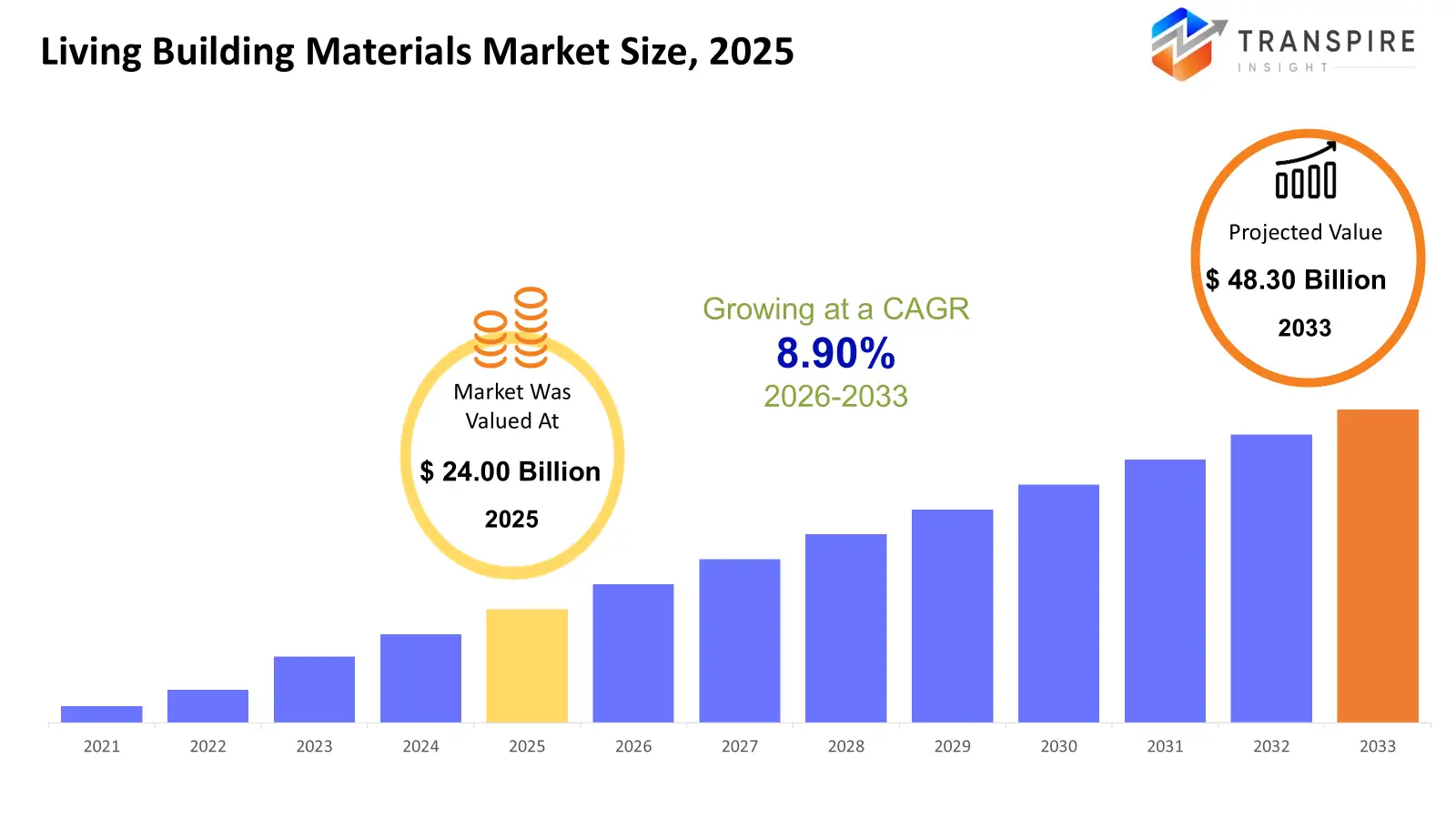
According to a research report published by Transpire Insight, The Global Living Building Materials Market Size is projected to Grow from USD 24.00 Billion in 2026 to USD 54.01 Billion by 2035, at a CAGR of 11.14% during the forecast period 2026-2035. The market growth is due to the increased demand for low-carbon building materials, investments in biologically based building technologies, strict environmental policies, and growing trends of sustainable constructions globally. Innovation in fields like synthetic biology, biomaterials engineering, microbial manufacture, and self-healing concrete technologies is enhancing the economic viability of living building materials. Moreover, rising government focus on net-zero infrastructure, research partnerships in academic and industrial organizations, and investments in green buildings will bring numerous opportunities for market growth during the forecast period.
Introduction
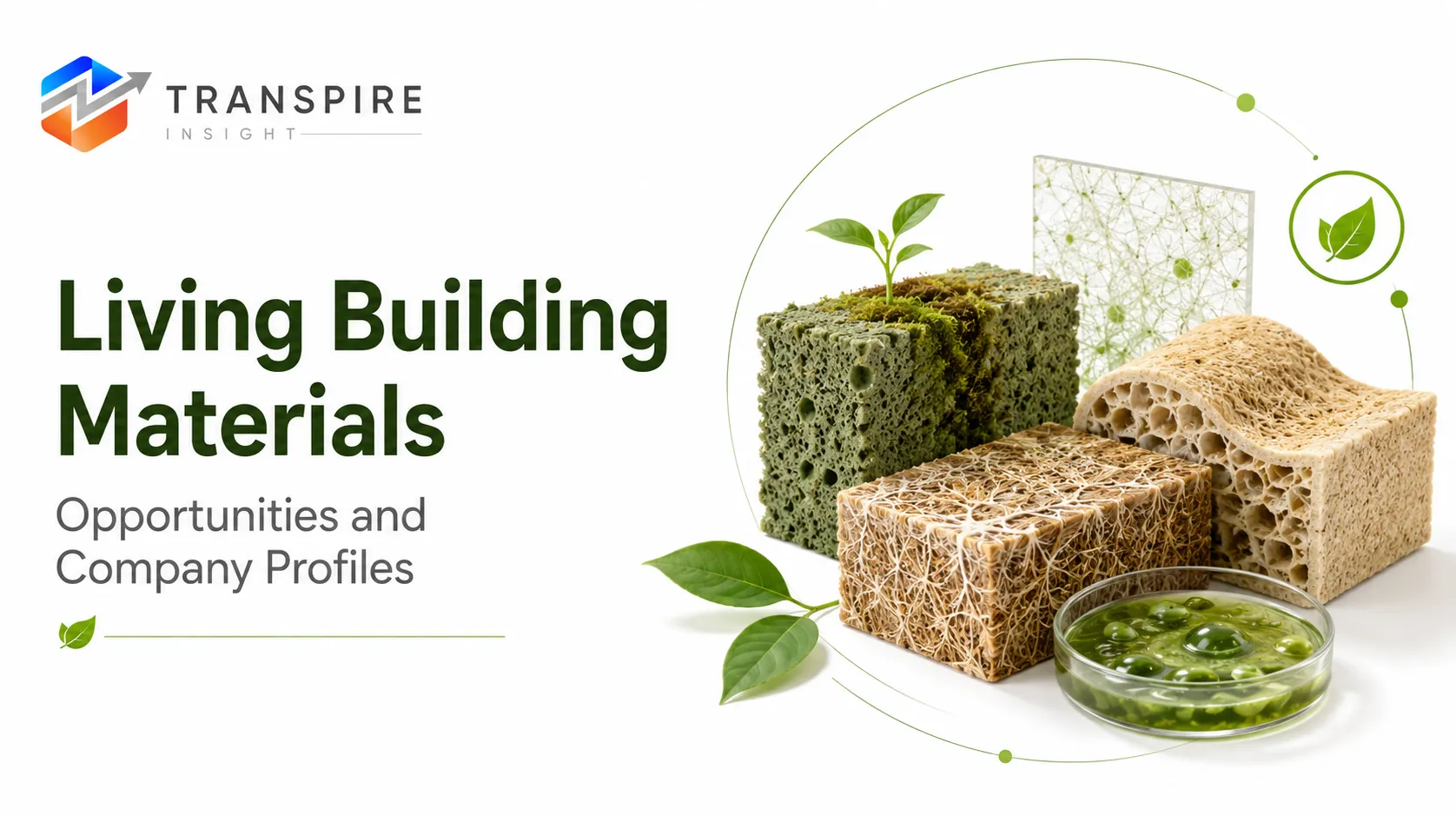
The Living Building Material Market includes the range of construction materials that use living things like bacteria, fungi, algae, yeast, or plants in their biological system to develop living, healing, carbon capturing, and eco-friendly building products. Such new age materials are being used for the manufacture of various building materials like bricks, concrete, insulation, facade, and structural components. Increasing importance for zero-carbon constructions and eco-friendly infrastructure development is driving the market for living building materials.
Recent Development News
Stay Ahead of Emerging Opportunities with Expert Market Insights by Transpire Insight
The insights that have been shared through this blog are based on intensive market research carried out by Transpire Insight, an advisor that works with many global organizations. Thanks to the analysis of extensive data, forecasts made by our specialists, and industry intelligence, our reports allow clients to find strategic growth opportunities in dynamically developing industries. For all those who would like to get more detailed information regarding market segmentation, competitive analysis, regional outlooks, and future investment tendencies, there is no doubt that our full report will be of great value.
Download the exclusive Living Building Materials Market sample report today to uncover expert insights, emerging trends, and the opportunities defining the future of the industry.
Living Building Materials Market Size & Statistics
Regional Growth and Demand Analysis by Transpire Insight:
The North America region is the most dominant in the Living Building Materials Market, contributing around 41% of the total market share. Dominance in the market can be attributed to heavy investments in sustainable building construction technology, substantial government support for the development of green buildings, and presence of prominent biotechnology firms, institutes, and universities focused on researching bio-based building materials. The United States and Canada lead in innovations in self-healing concrete, mycelium building materials, bio-cements, and carbon-sequestering buildings. Apart from that, environmental regulations and implementation of LEED certification programs in the North American region further boost its market position.
It is anticipated that Asia-Pacific will emerge as the fastest-growing region owing to factors like the rapid pace of urbanization, significant infrastructure construction, and an increased focus on sustainable building practices by governments. Nations like China, Japan, South Korea, India, and Singapore are making massive investments in the technologies and materials for creating carbon-efficient buildings and environmentally friendly construction materials. Growing knowledge about the importance of carbon reduction, advancements in biomaterials, and investments in green infrastructure are projected to drive the growth of living building materials in the region.
Top 15 Trends in the Living Building Materials Market
Proceed to Checkout to purchase the exclusive Living Building Materials Market report and gain instant access to in-depth market intelligence, strategic analysis, and future growth opportunities.
1. Growing Adoption of Self-Healing Bio-Concrete Technologies
One of the most exciting new developments in sustainable building materials is the development of self-healing bio-concrete, which uses bacteria that are able to produce limestone to seal cracks. The use of this technology increases the longevity of structures, lowers maintenance costs, increases structural durability, and reduces the frequency of repair work.
2. Expansion of Mycelium-Based Construction Materials
Mycelium-made materials, which are made from roots of fungi, have been becoming increasingly popular as an eco-friendly alternative to the existing materials used in construction due to their renewability and biodegradability. The materials, being lightweight, have good insulating properties and can be fire-resistant while emitting low levels of carbon into the atmosphere. Sustainable architecture is driving investments in such materials.
3. Increasing Use of Bio-Cement for Low-Carbon Construction
Bio-cement technology uses microorganisms to bond aggregates rather than using Portland cement, thus cutting down carbon dioxide emissions that result from construction. With more governments and construction companies seeking to meet zero carbon goals, bio-cement is proving to be a promising solution to the challenges of building sustainably.
4. Rising Integration of Carbon-Sequestering Building Materials
There is increasing recognition of living building materials that can absorb and retain carbon dioxide from the atmosphere. The use of bio-materials that incorporate algae, bacteria, or genetically modified organisms allows for the continuous absorption of carbon, assisting in the reduction of greenhouse gas emissions.
5. Growing Demand for Bio-Based Insulation Solutions
Insulation materials from organic materials such as mycelium, hemp, flax, cellulose, and other natural sources have been gaining popularity due to their high efficiency as insulators, biodegradability, and negligible ecological footprint. This type of insulation not only helps save energy but also serves as a replacement for petrochemicals.
6. Expansion of Living Facades and Bio-Reactive Building Systems
The trend towards living façades and bio-reactive building systems which involve incorporation of living algae, mosses and other such organisms within building exteriors is being witnessed within architectural practice and construction industry today. Such developments serve many benefits including air purification, temperature regulation, renewable biomass production, energy conservation, among others. Thus, they represent a key trend in sustainable building design.
Top 25 Companies Leading the Living Building Materials Market
Customize the exclusive Living Building Materials Market report today to receive tailored insights, country-specific analysis, and business-focused market intelligence.
1. Biomason, Inc.
The Bio-mason, Inc. company is engaged in the creation of bio-cement technology using micro-organisms to produce low carbon emission construction materials.
Founded: 2012 | Headquarters: Research Triangle Park, North Carolina, USA
Why It Ranks: The leader in developing bio-cement and live-building material technology.
Regional Dominance: Well-known in North America, growing commercial activities in Europe and the Asia Pacific regions.
Product Line: Bio-cement, bio-cement tiles, masonry products, construction materials, and low carbon emission buildings.
Recent Development: Expanding production capacity of its bio-cement products in 2025 for commercial green construction projects.
2. Prometheus Materials, Inc.
Prometheus Materials manufactures carbon-neutral construction materials through microalgae-based bio-cement technology.
Founded: 2021 | Headquarters: Boulder, Colorado, USA
Why It Ranks: Industry leader in algae-based carbon-neutral construction materials.
Regional Dominance: Majorly operates in the North American region but growing internationally.
Product Line: Bio-cement blocks, sustainable masonry products, carbon-neutral concrete substitutes, and bio-based building materials.
Recent Development: Increased commercialization of bio-cement masonry products for sustainable infrastructure in 2025.
3. ECOVATIVE Design LLC
ECOVATIVE Design designs mycelium based biomaterials for construction, insulation, packaging and sustainable manufacturing.
Founded: 2007 | Headquarters: Green Island, New York, USA
Why It Ranks: Leading company for commercial mycelium based biomaterial technology.
Regional Dominance: Dominant position in North America with increasing popularity in Europe.
Product Line: Mycelium insulation, biocomposites, construction materials, packaging materials and sustainable biomaterials.
Recent Development: Increased production of mycelium based insulation products for green buildings in 2025.
4. MycoWorks, Inc.
The company MycoWorks produces next-generation mycelium-derived biomaterials used in eco-friendly construction and architecture.
Founded: 2013 | Headquarters: Emeryville, California, USA
Why It Ranks: Known pioneer of luxury mycelium-derived sustainable materials.
Regional Dominance: Leading in the North American biomaterials industry but growing in Europe as well.
Product Line: Mycelium biomaterials, construction panels, architectural materials, interior products, and sustainable composites.
Recent Development: Expansion in sustainable bio-based construction material production in 2025.
5. Biohm Ltd.
Biohm Ltd. manufactures circular building materials based on mycelium and bio-based materials sourced from waste.
Founded: 2016 | Headquarters: London, United Kingdom
Why It Ranks: Market leader in circular economy building materials.
Regional Dominance: Firmly embedded within Europe and expanding its reach worldwide.
Product Line: Mycelium insulation, biocomposites, sustainable building panels, circular building materials, and bio-based materials made from waste.
Recent Development: Expanded the production of mycelium insulation products for sustainable buildings in 2025.
6. Green Basilisk B.V.
Bacterial Self-healing Concrete Technologies of Green Basilisk B.V. are used to make the concrete structures stronger and increase their lifespans.
Founded: 2015 | Headquarters: Delft, Netherlands
Why It Ranks: Innovation in self-healing living concrete technologies.
Regional Dominance: Regionally dominant in Europe, especially in the infrastructure industry.
Product Line: Bacterial self-healing concrete additives, repair solutions, technologies for repair of concrete, and bio-construction solutions.
Recent Development: Deploying self-healing concrete technologies in European infrastructure projects in 2025.
7. Solidia Technologies, Inc.
Solidia Technologies specializes in cutting-edge low-carbon cements and concretes that help mitigate greenhouse gas emissions.
Founded: 2008 | Headquarters: Piscataway, New Jersey, USA
Why It Ranks: Prominent contributor to the field of sustainable cement production.
Regional Dominance: Significant footprint in North America via alliances with international cement producers.
Product Line: Low-carbon cement, sustainable concrete solutions, carbon curing systems, and green construction materials.
Recent Development: Successfully adopted its low-carbon cement solutions commercially via strategic partnerships in 2025.
8. CarbiCrete Inc.
CarbiCrete is an innovator in cement-free concrete solutions that provide long-term storage of captured CO2, offering sustainable concrete products.
Founded: 2016 | Headquarters: Montreal, Quebec, Canada
Why It Ranks: A pioneer in carbon-negative concrete technology.
Regional Dominance: Primarily dominates North America but is also making waves in Europe.
Product Line: Cement-free concrete, carbon-negative concrete blocks, precast concrete products, and carbon utilization solutions.
Recent Development: Commercial expansion of carbon-negative concrete products through manufacturing agreements in 2025.
9. Made of Air GmbH
Made of Air GmbH produces carbon-negative building materials through the use of biochar and recycled polymers.
Founded: 2016 | Headquarters: Berlin, Germany
Why It Ranks: Pioneer in carbon-capturing building materials.
Regional Dominance: Strong presence throughout Europe.
Product Line: Biochar-based products, façade panels, building materials, carbon-negative building materials, and sustainable construction solutions.
Recent Development: Deployed carbon-negative façade systems on commercial buildings in 2025.
10. Mogu S.r.l.
Interior construction products using mycelium have been manufactured by Mogu S.r.l. for sustainable architecture and interior design purposes.
Founded: 2015 | Headquarters: Inarzo, Italy
Why It Ranks: Largest manufacturer of mycelium-based architectural products in Europe.
Regional Dominance: Prominent in Europe in the field of sustainable architecture and interior construction.
Product Line: Includes mycelium acoustic panels, flooring solutions, mycelium wall panels, interior architectural products, and bio-construction materials.
Recent Development: Introduced new range of mycelium-based acoustic and interior construction products in 2025.
Schedule a meeting with our market experts to discuss the exclusive Living Building Materials Market report and identify the best research solution for your organization.
Conclusion
The Living Building Materials Market is slated for significant growth due to the increasing use of sustainable, carbon-negative, and bio-based materials by the construction industry in its efforts to reduce its impact on the environment and construct buildings that will be net zero. Recent developments in synthetic biology, microbial engineering, self-healing concrete, mycelium composites, and bio-cement will be at the heart of how construction materials are produced in the coming years. The increase in green infrastructure initiatives on the part of governments, growing investments in climate-resilient construction, and increasing demand for circular economy solutions are some of the other factors helping fuel the growth of the market. Some of the leading players include Biomason, Inc., Prometheus Materials, Inc., ECOVATIVE Design LLC, MycoWorks, Inc., Biohm Ltd., Green Basilisk B.V., Solidia Technologies, Inc., CarbiCrete Inc., Made of Air GmbH, and Mogu S.r.l. The growing environmental regulations and emphasis on low carbon solutions in the global construction sector are expected to help boost the potential of the Living Building Materials Market significantly in the coming years.


Send us a brief description of your challenge and we'll get back to you within 24 hours.

 inquiry@transpireinsight.com
 APAC:+91 7666513636
 Address


