
Jul 10, 2026
By Transpire Insight
Description
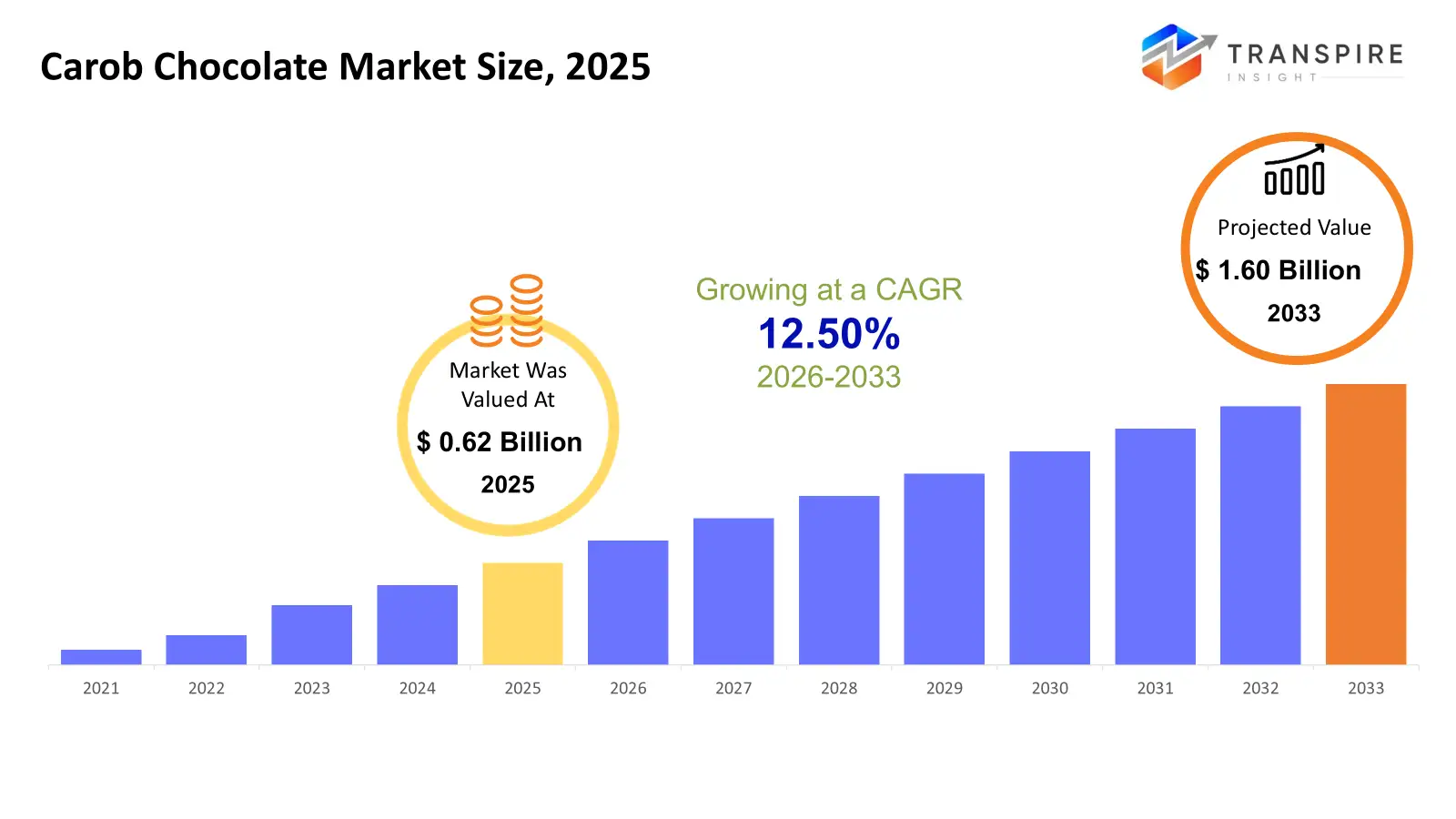
According to a research report published by Transpire Insight, the global carob chocolate market size is projected to grow from USD 0.80 billion in 2026 to USD 2.60 billion by 2035, at a CAGR of 13.55 % during the forecast period 2026-2035. Rising global prevalence of caffeine sensitivities, severe cocoa allergies, and gastroesophageal reflux disease (GERD) actively propels the demand for stimulant-free, low-fat, naturally sweet carob confectionery.
Introduction
The global carob chocolate market is experiencing dynamic expansion, driven by a profound transformation in consumer health awareness and global supply chain re-engineering. Carob chocolate, formulated from roasted carob pods, is an increasingly sought-after alternative to conventional cocoa products. Organically rich in essential nutrients, fiber, and natural sugars, it caters directly to modern wellness paradigms. As dietary preferences progressively realign toward nutrient-dense, allergen-free solutions, carob has firmly stepped out of its historic niche to establish a highly competitive, mainstream global presence.
Recent Development News
May 2026: Market reports verified that global cocoa price volatility and structural shortages forced mainstream confectioners to dramatically ramp up investment in alternative carob chocolate formulations.
June 2026: Food-tech innovator Foreverland secured substantial expansion funding and achieved global IFS quality certification at its automated Italian facility to mass-produce advanced carob-based, cocoa-free industrial chocolates.
Stay Ahead of Emerging Opportunities with Expert Market Insights by Transpire Insight
Transpire Insight provides comprehensive, data-driven market intelligence to support smarter business decisions. Our research is rooted in comprehensive analysis, authoritative predictions, and industry expertise, enabling organizations to make informed decisions in rapidly evolving markets. In-depth analysis of market segmentation, competitive positioning, regional trends, and emerging investment opportunities in high-growth areas. We blend accuracy with actionable intelligence, empowering companies to uncover new avenues for growth, bolster strategic decision-making, and stay ahead in a dynamic global market.
Download the exclusive Carob Chocolate Market sample report today to uncover expert insights, emerging trends, and the opportunities defining the future of the industry.
Carob Chocolate Market Size & Statistics
Regional Growth and Demand Analysis by Transpire Insight:
North America is expected to hold the largest value share during the forecast period in the carob chocolate market. The dominant player in the Carob Chocolate Market is North America, owing to the rapid consumer adoption of plant-based nutrition, strong clean-label wellness culture, and robust retail distribution channels. The United States is currently the biggest producer and consumer in the North American carob chocolate market, considering factors such as the presence of extensive allergen-free food manufacturing operations, massive retail shifts toward sugar-reduction preferences, and continued advancement in natural ingredient formulations. As of 2026, some of the functional food brands in the United States have undertaken extensive product diversification activities aimed at manufacturing superior carob bars and chips that would enhance next-generation vegan confectionery portfolios.
Asia Pacific is anticipated to witness the highest growth rate during the forecast period in the carob chocolate market. It is expected that the Asia-Pacific region will witness the fastest expansion due to increasing demand for convenient functional snacks, rising disposable incomes, expanding urban populations across metropolitan hubs, and significant investment in clean-label infrastructure. China and India are some of the rapidly growing nations regarding plant-based food market activities that drive the global demand for advanced caffeine-free and low-allergen treats. In 2026, there will be an increase in healthy snacking adoption and product modernization programs by local confectionery brands in China and India. This was done with the aim of ensuring nutrient-dense, permissible indulgence options for a growing diabetic and health-conscious consumer demographic.
Top 15 Trends in the Carob Chocolate Market
Proceed to Checkout to purchase the exclusive Carob Chocolate Market report and gain instant access to in-depth market intelligence, strategic analysis, and future growth opportunities.
As consumers increasingly seek stimulant-free indulgence options, carob chocolate has gained traction among parents, pregnant individuals, and people managing caffeine sensitivity or sleep-related dietary concerns.
Carob's naturally dairy-free, allergen-friendly composition aligns closely with plant-based diet trends, positioning it as a preferred cocoa substitute across vegan chocolate bars, spreads, and confectionery formulations.
Since carob naturally avoids theobromine and caffeine found in cocoa, it is increasingly positioned as a safer ingredient choice for children's snacks and sensitive-consumer product lines.
Brands are emphasizing carob's minimal processing and inherent sweetness to strengthen clean-label claims, appealing to consumers seeking to avoid artificial additives, refined sugars, and processed cocoa derivatives.
Premium brands are highlighting Mediterranean-grown organic carob pods, emphasizing traceability and sustainable farming practices to justify higher price points within the specialty confectionery segment.
Since carob trees require minimal water and thrive in arid climates, brands are increasingly marketing their environmental resilience and lower agricultural footprint compared to traditional cocoa farming.
Top 25 Companies Leading the Carob Chocolate Market
Customize the exclusive Carob Chocolate Market report today to receive tailored insights, country-specific analysis, and business-focused market intelligence.
Top 25 Companies Leading the Carob Chocolate Market
1. CarobCo
Handcrafts artisanal premium bars utilizing unroasted carob pods for unique flavor.
Founded: 2015 | HQ: Sydney, Australia.
Why It Ranks: Pioneers' raw processing techniques that maximize natural polyphenol and antioxidant levels.
Regional Dominance: Dominates the premium organic retail channels across the Australian domestic market.
Product Line: Features raw carob bars, vegan baking chips, and organic spreads.
2. The Carob Kitchen
Utilizes sweet, home-grown carob varieties from their own sustainable orchard.
Founded: 2010 | HQ: Port Elliot, Australia.
Why It Ranks: Establishes farm-to-bar traceability, ensuring premium quality and taste consistency globally.
Regional Dominance: Holds leading shelf space across major supermarkets throughout Oceania and Europe.
Product Line: Offers bean-to-bar carob blocks, kibble nipples, and kid-friendly snacks.
3. Missy J’s
Formulates 100% vegan treats completely free from caffeine, cane sugar, or dairy.
Founded: 2012 | HQ: Boulder, Colorado, USA.
Why It Ranks: Leads the allergen-free market by replacing traditional sugars with organic coconut sugar.
Regional Dominance: Commands strong market penetration across major natural grocery chains in North America.
Product Line: Retail carob candy bars, peanut butter cups, and unsweetened powder.
4. Mount Carob
Sources high-quality, wild-harvested carob pods from pristine, certified Mediterranean forests.
Founded: 2018 | HQ: Limassol, Cyprus.
Why It Ranks: Maximizes purity by employing chemical-free, low-temperature milling processes for a smooth texture.
Regional Dominance: Holds highly profitable market distribution agreements across Southern and Eastern Europe.
Product Line: Manufactures premium baking bars, organic syrups, and raw carob powder.
5. Carob World
Position carob as a luxury gourmet indulgence rather than just a substitute.
Founded: 2015 | HQ: Faro, Portugal.
Why It Ranks: Collaborates with European culinary chefs to create highly sophisticated flavor profiles.
Regional Dominance: Controls the high-end boutique and duty-free confectionery sectors across Western Europe.
Product Line: Sells premium carob bars, gourmet spreads, and artisanal confectionery gifts.
6. D&D Chocolates
Operates a dedicated facility completely free from dairy, gluten, and nuts.
Founded: 1986 | HQ: London, United Kingdom.
Why It Ranks: Provides long-standing, trusted dairy-free alternatives for consumers managing severe food allergies.
Regional Dominance: Commands exceptional consumer brand loyalty across specialty health stores in the UK.
Product Line: Produces dairy-free carob bars, Easter eggs, and decorative drop chips.
7. Australian Carob Co.
Operates the largest highly advanced, single-estate organic carob orchard globally.
Founded: 2000 | HQ: Booborowie, Australia.
Why It Ranks: Processes non-bitter, sweet carob varieties specifically bred for confectionery manufacturing.
Regional Dominance: Remains the primary global supplier of bulk carob ingredients to worldwide markets.
Product Line: Supplies bulk roasted carob powder, raw powder, and sweet syrups.
8. Caroboo
Packages all products in certified plastic-free, home-compostable paper packaging wraps.
Founded: 2018 | HQ: Devon, United Kingdom.
Why It Ranks: Blends carob with creamier coconut compounds to achieve real milk-chocolate mouthfeel.
Regional Dominance: Drives highly successful sales volume through eco-conscious retail outlets in Europe.
Product Line: Retail melty carob bars, coconut-blend bites, and low-sugar treats.
9. PANOS Brands
Manages a diverse portfolio of natural food brands, including Chatfield's premium carob.
Founded: 2006 | HQ: Rochelle Park, New Jersey, USA.
Why It Ranks: Leverages massive corporate distribution networks to place clean-label carob in conventional retail.
Regional Dominance: Secures widespread, everyday retail product availability across United States supermarket chains.
Product Line: Distributes organic carob baking chips, pure powder, and vegan formulations.
10. Supertreats UK
Targets the children's healthy snacking sector with wholesome, caffeine-free alternatives.
Founded: 2016 | HQ: London, United Kingdom.
Why It Ranks: It creates nutrient-dense bars enriched with superfoods to appeal to health-conscious parents.
Regional Dominance: Experiences fast-paced, highly profitable growth within online marketplaces and British schools.
Product Line: Offers carob-based "Merryology" bars, snack bites, and educational health packs.
Schedule a meeting with our market experts to discuss the exclusive Carob Chocolate Market report and identify the best research solution for your organization.
Conclusion
The carob chocolate market has proven its structural resilience, solidifying its trajectory beyond a simple alternative toward a standalone powerhouse category. Escalating global demand highlights a distinct consumer evolution focused on proactive health, allergen management, and ethical food sourcing. Driven by technological innovations and aggressive expansion by prominent global brands, carob chocolate effectively bridges the gap between indulgent confectionery and clinical nutrition. Moving forward, the market is highly positioned to capture substantial global value, fundamentally reshaping the global sustainable confectionery landscape.


Send us a brief description of your challenge and we'll get back to you within 24 hours.

 inquiry@transpireinsight.com
 APAC:+91 7666513636
 Address


