
Sep 16, 2026
By Transpire Insight
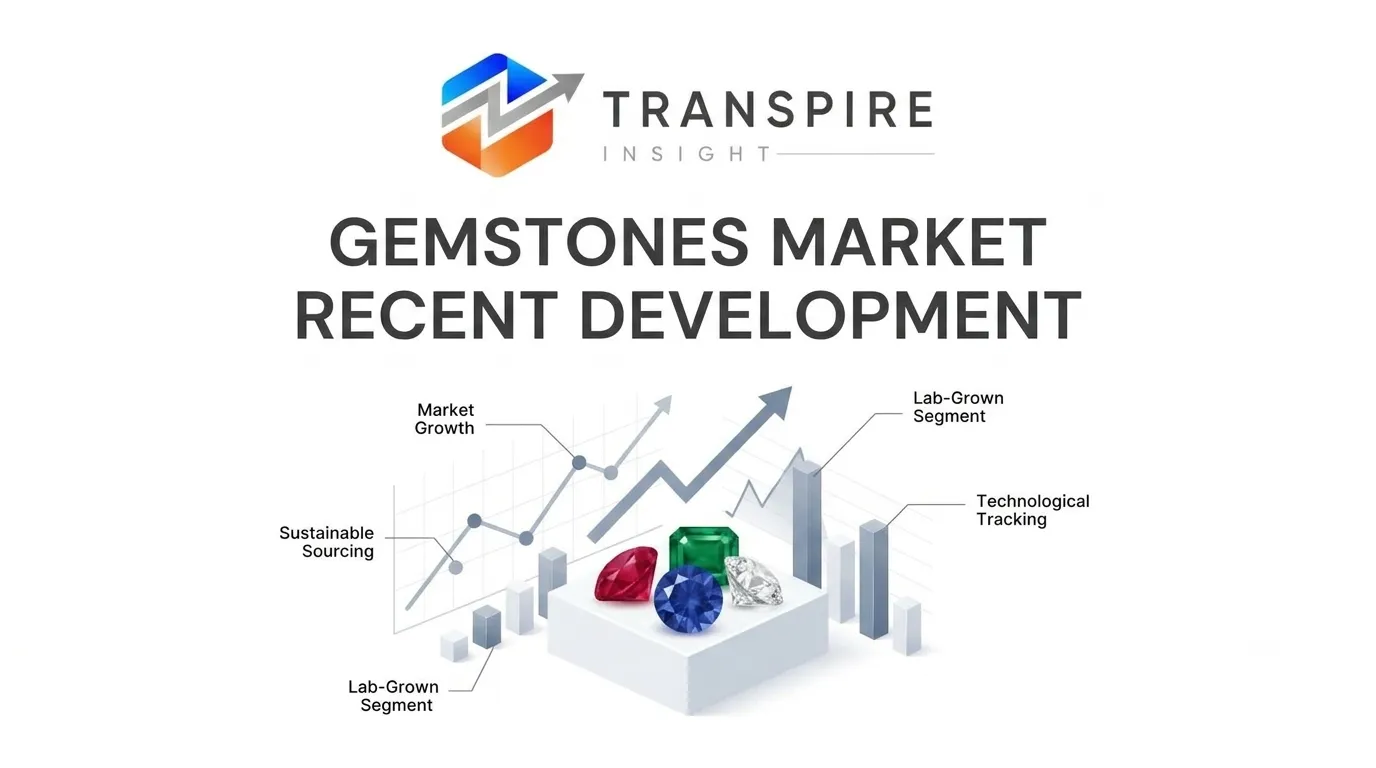
The global gemstones industry is moving beyond traditional luxury jewelry as rising disposable incomes, colored-stone preferences, ethical sourcing, online retail, laboratory-grown alternatives, and digital certification create new opportunities across mining, processing, trading, and consumer markets.
The Changing Landscape of the Gemstones Industry
Gemstones have remained closely connected with luxury, cultural traditions, personal adornment, investment, and craftsmanship for centuries. However, the modern gemstones industry is undergoing a significant transformation as consumer expectations increasingly extend beyond beauty and rarity toward provenance, sustainability, authenticity, and purchasing transparency.
The market encompasses a broad range of precious and semi-precious stones, including emeralds, rubies, sapphires, opals, spinels, and other colored gemstones. Demand is generated across jewelry and ornaments, luxury products, collectibles, decorative applications, astrology, and selected industrial uses.
Asia-Pacific continues to represent a major center of gemstone consumption and trade, supported by cultural traditions, jewelry manufacturing, weddings, and expanding consumer spending. At the same time, North America and Europe remain important premium markets, while online retail and digital certification are changing how consumers discover and purchase gemstones.
According to Transpire Insight, the global Gemstones Market was valued at approximately USD 34.00 billion in 2025 and is projected to reach USD 58.00 billion by 2033, expanding at a 7.00% CAGR from 2026 to 2033. The 2026 market is estimated at approximately USD 36.38 billion, based on the reported forecast trajectory.
Global Gemstones Market Statistics
Global Gemstones Market Size: approximately USD 34.00 billion in 2025, projected to reach USD 58.00 billion by 2033, representing a 7.00% CAGR from 2026–2033.
Estimated 2026 Market Value: approximately USD 36.38 billion, based on the stated 2026–2033 growth trajectory.
Jewelry remains the principal application area because gemstones continue to play a central role in bridal jewelry, luxury accessories, fashion collections, and personal adornment.
Asia-Pacific is one of the leading regional markets, supported by gemstone consumption, jewelry manufacturing, cultural traditions, and established trading networks.
Natural and laboratory-grown gemstones are increasingly developing as parallel product categories, with synthetic alternatives attracting consumers seeking affordability, traceability, and ethical sourcing.
Online retail and digital certification are becoming increasingly important for improving consumer access and confidence in gemstone purchases.
Rising disposable incomes in emerging economies, particularly across Asia, are supporting demand for premium jewelry and colored gemstones.
Major Causes of Gemstones Market Growth
The expansion of the global gemstones industry is being supported by a combination of luxury consumption, cultural demand, technology, changing consumer preferences, and retail transformation.
Rising Demand for Luxury and Premium Jewelry
Gemstones remain fundamental to the global luxury jewelry industry. Consumers purchase gemstone jewelry for weddings, anniversaries, celebrations, personal expression, and wealth-related purposes.
Growing disposable incomes in developing economies are expanding the consumer base for premium jewelry. India, China, and Southeast Asian economies are particularly important because jewelry has strong cultural significance in addition to its luxury appeal.
The increasing interest in unique designs is also supporting demand for colored stones. Consumers who want distinctive jewelry pieces are increasingly considering emeralds, sapphires, rubies, tourmalines, and other colored gemstones as alternatives to conventional diamond-centered designs.
Growing Popularity of Colored Gemstones
Colored gemstones are gaining visibility within luxury and contemporary jewelry. Emeralds, sapphires, rubies, spinels, and other stones can provide consumers with distinctive colors and individual character.
This trend is particularly relevant among younger consumers who increasingly view jewelry as an expression of identity rather than simply a traditional symbol of status.
The 2026 colored-gemstone landscape is being influenced by scarcity, provenance, design preferences, auction performance, and growing interest in stones with distinctive visual characteristics.
Expansion of Laboratory-Grown Gemstones
Laboratory-grown gemstones are creating another dimension of competition within the industry. Advances in production technology allow manufacturers to produce stones with controlled characteristics and consistent quality.
For consumers, laboratory-grown options can provide lower-cost alternatives while addressing concerns surrounding mining impacts, sourcing, and supply-chain transparency.
The emergence of laboratory-grown colored gemstones is extending this trend beyond diamonds, with lab-created sapphires, emeralds, alexandrite, and other stones gaining attention among value-conscious consumers.
Increasing Importance of Ethical and Traceable Sourcing
Consumers are becoming increasingly interested in where gemstones originate and how they move through the supply chain.
Mining practices, labor conditions, environmental impact, conflict-related concerns, and authenticity can influence purchasing decisions. As a result, gemstone companies are increasingly focusing on responsible sourcing, origin documentation, certification, and supply-chain transparency.
Digital technologies are strengthening this transition by making it possible to associate individual stones with digital records containing information about origin, certification, processing, and ownership.
Growth of Online Jewelry Retail
E-commerce is changing the traditional gemstone purchasing process. Consumers can now compare designs, gemstone characteristics, certifications, prices, and brands without visiting physical stores.
Online platforms also allow smaller jewelry businesses to reach international customers without maintaining extensive physical retail networks.
As trust-building technologies improve, online gemstone retail is expected to become increasingly important, particularly for younger digitally oriented consumers.
Recent Industry Developments
Growing Focus on Digital Gemstone Traceability
Digital certification and provenance technologies are becoming increasingly important as gemstone buyers seek greater confidence regarding authenticity and origin.
Blockchain-enabled systems and digital certificates can create records that follow a gemstone through different stages of the supply chain. Such technologies can help retailers communicate provenance information and improve transparency for consumers.
The broader gemstone market is increasingly identifying digital certification and traceability as strategic tools for improving trust and supporting ethical sourcing.
Colored Gemstones Gain Strategic Importance in 2026
The colored gemstone segment is experiencing renewed attention in 2026 as luxury consumers increasingly seek distinctive stones rather than standardized designs.
Sapphires, emeralds, and rubies continue to attract premium demand, while less traditional colored stones are being incorporated into contemporary collections. Industry analysis suggests that auction performance, provenance, scarcity, and color are becoming increasingly important elements of gemstone value.
Laboratory-Grown Technology Expands Beyond Diamonds
Laboratory-grown gemstone production is becoming more diversified. Advances that initially transformed the synthetic-diamond segment are increasingly being applied to colored gemstones.
The development of lab-grown sapphires, emeralds, alexandrite, and other stones provides jewelry companies with additional options for serving customers who prioritize price accessibility, consistent quality, and alternative sourcing models.
Jewelry Companies Strengthen Omnichannel Retail
Gemstone retailers and jewelry brands are increasingly combining physical stores with digital platforms. Consumers may discover products through social media, research gemstones online, compare prices digitally, and ultimately purchase through either an online or physical channel.
This omnichannel approach allows gemstone companies to combine the trust and experience of physical jewelry stores with the convenience and reach of e-commerce.
Areas of Opportunity
The future opportunity for the gemstones industry extends beyond conventional mining and jewelry sales.
Premium colored gemstones represent an important opportunity as consumers seek individuality and distinctive designs.
Laboratory-grown gemstones can expand the addressable customer base by offering lower-cost and potentially more traceable alternatives.
Digital certification provides opportunities to improve consumer trust while helping retailers communicate authenticity and provenance.
Online gemstone retail can connect producers, jewelry designers, and consumers across international markets without requiring extensive physical distribution networks.
Astrology and cultural applications remain particularly important in South Asian markets, where gemstones can have traditional and symbolic significance.
Decorative products and collectibles provide additional opportunities for rare and visually distinctive stones, especially among high-net-worth consumers and collectors.
Emerging Strategies to Strengthen the Gemstones Market
Digital Provenance and Blockchain Certification
One of the most important long-term developments is the digitalization of gemstone provenance.
Digital records can connect a gemstone's physical identity with information regarding origin, certification, treatment, ownership, and movement through the supply chain. Blockchain-based systems can further support immutable records.
For premium gemstones, transparent provenance can become a differentiating factor that supports consumer confidence and potentially strengthens resale value.
AI-Assisted Gemstone Grading
Artificial intelligence and computer vision are creating opportunities for automated gemstone analysis.
Machine-learning systems can potentially assist in evaluating color, clarity, cut characteristics, inclusions, and other visual attributes. Such systems could improve consistency and reduce the time required for selected grading and sorting processes.
The technology is particularly relevant to high-volume gemstone processing, where automated image analysis can support human experts rather than completely replace laboratory assessment.
Sustainable Mining and Responsible Sourcing
Mining companies are under increasing pressure to improve environmental performance and demonstrate responsible operating practices.
Water management, land restoration, energy efficiency, worker safety, local-community development, and transparent supply chains are becoming increasingly important considerations.
Companies that can combine gemstone quality with credible sustainability practices may gain stronger relationships with luxury brands and environmentally conscious consumers.
Omnichannel and Direct-to-Consumer Models
Gemstone businesses are increasingly combining wholesalers, physical retailers, marketplaces, websites, and social-commerce channels.
Direct-to-consumer models can provide greater control over brand positioning and customer relationships, while digital platforms allow companies to communicate gemstone characteristics, certification, provenance, and craftsmanship more effectively.
Regional Development
The global gemstones market is developing differently across regions because consumer preferences, cultural traditions, mining resources, jewelry manufacturing, luxury spending, and retail structures vary considerably.
Asia-Pacific
Asia-Pacific is one of the most important regions in the global gemstones industry and is expected to remain a leading market.
India is particularly significant because of its strong jewelry culture, extensive gemstone cutting and polishing ecosystem, large wedding market, and growing middle- and upper-income consumer base.
China also represents a major consumer market, supported by luxury spending and jewelry demand. Thailand and other Southeast Asian countries contribute through gemstone processing, trading, tourism-related jewelry sales, and manufacturing.
The region's combination of cultural demand, manufacturing capabilities, and expanding consumer spending provides a strong foundation for continued market development.
North America
North America represents a major premium gemstone and jewelry market, with demand supported by high consumer spending, luxury brands, online jewelry platforms, and growing interest in ethical sourcing.
The United States is particularly important for premium jewelry, colored gemstones, collectibles, and laboratory-grown alternatives.
Consumers are increasingly exposed to gemstone education through digital platforms, social media, online retailers, and luxury jewelry websites. This is helping expand awareness of colored stones beyond traditional jewelry categories.
Europe
Europe remains an important center of luxury jewelry, high-end fashion, gemstone design, and craftsmanship.
Countries such as Switzerland, France, Italy, Germany, and the United Kingdom have strong luxury ecosystems and established jewelry brands.
European consumers are increasingly attentive to sustainability, responsible sourcing, provenance, and product authenticity. These factors are encouraging jewelry companies to strengthen supply-chain transparency and certification practices.
Latin America
Latin America offers opportunities on both the supply and consumption sides of the gemstone industry.
Brazil is particularly notable for its rich variety of colored gemstones and its established position in gemstone production and jewelry. The region also provides opportunities for domestic jewelry consumption and international exports.
Greater investment in responsible mining, processing infrastructure, certification, and value-added jewelry manufacturing could increase the region's contribution to the global market.
Middle East & Africa
The Middle East and Africa represent an important combination of gemstone resources, luxury consumption, and emerging retail opportunities.
African countries contribute significantly to the global supply of several colored gemstones, including emeralds and rubies. The region's mining industry is increasingly focused on responsible sourcing and value creation.
Meanwhile, Gulf markets such as the UAE are becoming important luxury retail and trading hubs, connecting gemstone suppliers with high-income consumers and international jewelry brands.
Challenges & Restraints
Despite favorable growth prospects, the gemstones market faces several structural challenges.
One of the most important is supply volatility. Natural gemstone availability depends on geological resources, mining conditions, regulations, weather, infrastructure, and geopolitical factors. These variables can create significant fluctuations in supply and pricing.
Price transparency is another challenge because gemstone valuation can depend on numerous characteristics, including color, clarity, cut, origin, treatment, rarity, certification, and market reputation.
The industry also faces ethical and environmental concerns associated with mining. Consumers and luxury brands increasingly expect greater transparency regarding labor practices, environmental management, and supply-chain integrity.
Laboratory-grown alternatives present both an opportunity and a competitive challenge. Their affordability can expand the consumer base, but increased availability may also place pressure on the perceived scarcity and pricing of certain natural stones.
Counterfeiting, undisclosed treatments, inaccurate origin claims, and inconsistent certification can further reduce consumer confidence.
Finally, gemstone companies must balance traditional craftsmanship and heritage with rapidly changing digital retail expectations.
Top 10 Companies Working in the Gemstones Market
These companies represent important participants across gemstone mining, processing, jewelry manufacturing, luxury retail, and digital distribution. Industry sources identify Gemfields, Gem Diamonds, Kiran Gems, ALROSA, Anglo American, Rio Tinto, Chow Tai Fook, Tiffany & Co., and Blue Nile among leading companies in the broader gemstones market.
1) Gemfields Group Limited
Gemfields is a major colored-gemstone mining company with a strong focus on emeralds and rubies. Its position illustrates the growing commercial importance of colored gemstones within the luxury market.
The company's vertically connected approach across mining, marketing, and gemstone auctions provides a model for increasing transparency and value creation within the colored-stone supply chain.
2) Gem Diamonds Limited
Gem Diamonds is a specialist diamond mining company operating high-value assets. Its participation in the gemstone ecosystem demonstrates the importance of high-quality natural stones within the premium luxury market.
The company focuses on recovering high-value diamonds and maintaining responsible mining practices across its operations.
3) Kiran Gems Private Limited
Kiran Gems is an important participant in the gemstone and diamond processing ecosystem. Its large-scale cutting and polishing capabilities connect raw gemstone supply with international jewelry manufacturers and retailers.
The company's position highlights the importance of processing efficiency, quality control, and global distribution within the gemstone value chain.
4) PJSC ALROSA
ALROSA is one of the world's major diamond mining companies and remains an important participant in the global gemstone supply chain.
Its large-scale mining operations demonstrate the continued importance of natural gemstone resources despite the growing presence of laboratory-created alternatives.
5) Anglo American plc
Anglo American participates in the diamond industry through its ownership interest in De Beers. Its position connects large-scale mining, diamond production, marketing, and global luxury supply chains.
The company's presence demonstrates how resource companies remain strategically important to the upstream gemstone ecosystem.
Market Expert View
The gemstones industry is entering a more transparent and diversified phase. Natural gemstones continue to benefit from scarcity, heritage, cultural significance, craftsmanship, and perceived long-term value, while laboratory-grown alternatives are opening the category to consumers seeking affordability and alternative sourcing models.
The most important competitive shift is therefore not simply between one gemstone and another. It is increasingly between different value propositions natural rarity, ethical sourcing, provenance, affordability, design individuality, certification, and digital accessibility.
Asia-Pacific is expected to remain central to global gemstone consumption and trade, while North America and Europe will continue to influence premium jewelry, luxury design, ethical sourcing, and laboratory-grown adoption.
Companies that invest in traceability, responsible sourcing, advanced processing, digital retail, and strong consumer education are likely to be better positioned as gemstone purchasing becomes increasingly information-driven.
Conclusion
The global gemstones market is evolving from a traditional luxury-oriented industry into a more diversified and technology-enabled ecosystem. Demand for jewelry and premium products remains the foundation of the market, but new forces including colored gemstone popularity, laboratory-grown alternatives, ethical sourcing, digital certification, e-commerce, and changing consumer preferences are reshaping the competitive landscape.
With the market valued at approximately USD 34.00 billion in 2025 and projected to reach USD 58.00 billion by 2033, the industry is positioned to expand at a reported 7.00% CAGR from 2026–2033.
The next stage of growth will depend on how effectively companies combine natural gemstone heritage with modern transparency, responsible sourcing, digital technology, and omnichannel retail. As consumers increasingly seek both emotional value and verifiable authenticity, gemstones are likely to remain an important component of global luxury, fashion, culture, and personal expression.


Send us a brief description of your challenge and we'll get back to you within 24 hours.

 inquiry@transpireinsight.com
 APAC:+91 7666513636
 Address


