
Aug 07, 2026
By Transpire Insight
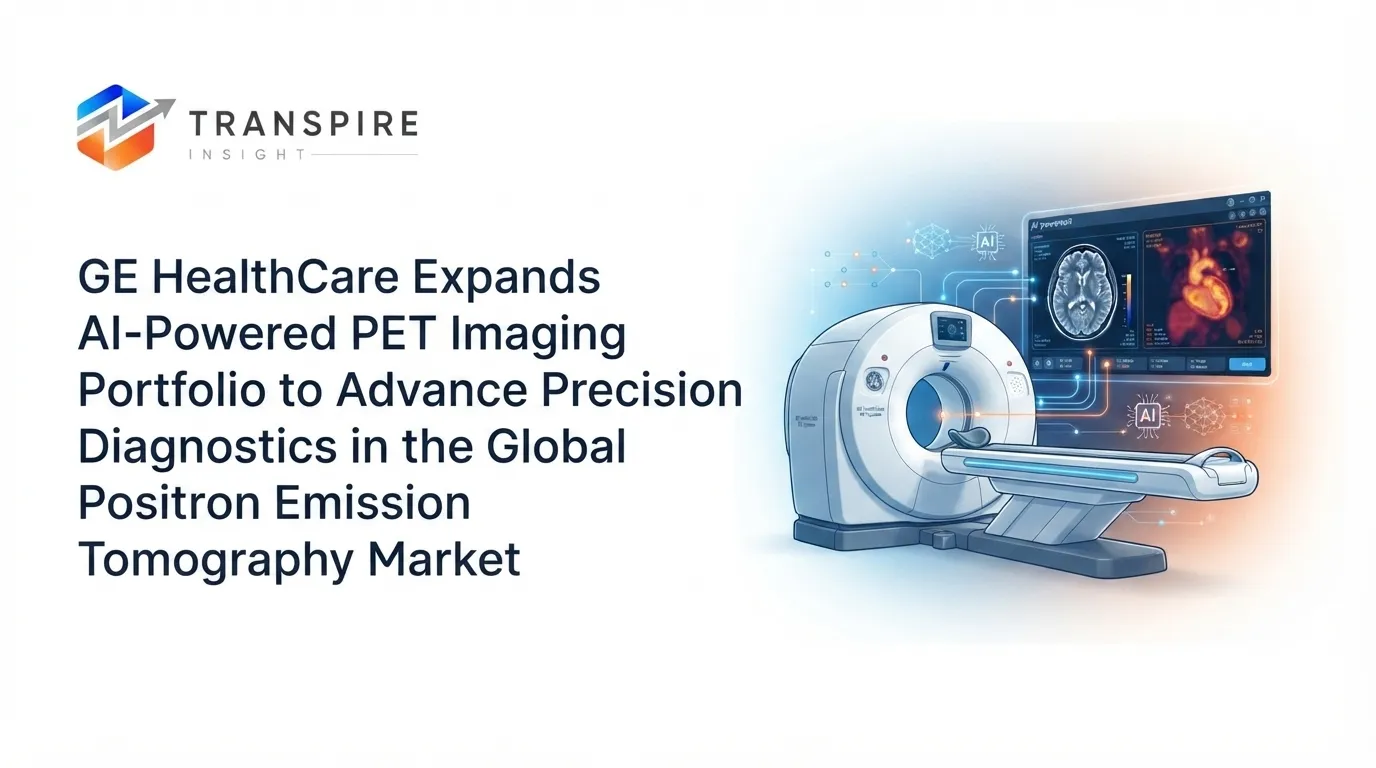
According to Transpire Insights, the global Positron Emission Tomography (PET) Market is entering a transformative phase as healthcare providers increasingly adopt artificial intelligence, digital imaging technologies, and advanced radiopharmaceuticals to improve the early detection and management of cancer, neurological disorders, and cardiovascular diseases. The Global Positron Emission Tomography Market was valued at approximately USD 2.93 billion in 2025 and is projected to grow to nearly USD 5.85 billion by 2034, registering a compound annual growth rate (CAGR) of around 7.16% during the forecast period. The market continues to benefit from rising investments in precision medicine, expanding molecular imaging applications, increasing cancer prevalence, and continuous technological innovation in hybrid imaging systems.
One of the most significant developments influencing the industry occurred in 2026, when GE HealthCare continued expanding its AI-enabled PET/CT imaging ecosystem, integrating advanced image reconstruction algorithms, workflow automation, and digital imaging capabilities to improve diagnostic accuracy while reducing scan times and radiation exposure. The company's continued investment reflects a broader industry movement toward intelligent molecular imaging platforms capable of supporting precision oncology, neurology, and cardiology. As healthcare providers face growing patient volumes and increasing demand for early disease detection, AI-assisted PET imaging is becoming an essential component of next-generation diagnostic infrastructure.
The importance of this transformation is underscored by the growing global burden of chronic diseases. According to the World Health Organization (WHO), cancer remains one of the leading causes of mortality worldwide, accounting for nearly 10.04 million deaths annually, while cardiovascular diseases are responsible for approximately 17.9 million deaths each year. Neurological disorders, including Alzheimer's disease and Parkinson's disease, are also increasing rapidly due to aging populations. Because PET imaging enables clinicians to visualize metabolic and molecular activity before structural abnormalities become apparent, it has become one of the most valuable diagnostic tools for early disease detection, treatment planning, and therapy monitoring.
According to international healthcare estimates, more than 20.7 million new cancer cases are diagnosed worldwide every year, and this number is expected to continue rising as populations age and life expectancy increases. Oncology currently accounts for the largest proportion of PET imaging procedures globally because molecular imaging enables clinicians to detect malignancies at earlier stages, evaluate metastatic spread with greater accuracy, and monitor treatment response throughout chemotherapy, immunotherapy, and targeted therapy. As personalized medicine becomes increasingly integrated into clinical practice, PET imaging is expected to play an even greater role in guiding individualized treatment decisions.
Download the exclusive Positron Emission Tomography Market sample report today to uncover expert insights, emerging trends, and the opportunities defining the future of the industry.
Why GE HealthCare's AI Expansion Matters
GE HealthCare's continued investment in artificial intelligence for Positron Emission Tomography represents far more than an incremental product enhancement it reflects the broader transformation taking place across diagnostic imaging worldwide. Healthcare systems are increasingly moving beyond conventional image acquisition toward intelligent imaging ecosystems capable of improving diagnostic confidence, accelerating clinical workflows, and supporting precision medicine. As hospitals face growing patient volumes, workforce shortages, and increasing demand for complex diagnostic procedures, AI has emerged as a strategic solution for improving operational efficiency without compromising clinical quality.
One of the most significant challenges confronting diagnostic imaging providers today is the rapidly increasing incidence of chronic diseases. According to the World Health Organization (WHO), non-communicable diseases account for approximately 75% of all global deaths, while cancer alone is responsible for nearly 10 million deaths every year. Simultaneously, cardiovascular diseases continue to cause around 17.9 million deaths annually, and neurological disorders such as Alzheimer's disease are becoming increasingly prevalent as populations age. These trends are substantially increasing demand for molecular imaging technologies capable of detecting disease at its earliest stages, often before anatomical abnormalities become visible through conventional imaging modalities.
Artificial intelligence is becoming central to addressing these clinical demands. Modern AI-powered PET systems can automatically optimize image reconstruction, reduce image noise, improve lesion detectability, accelerate workflow automation, and assist physicians in interpreting complex imaging datasets. These technological improvements enable clinicians to obtain higher-quality diagnostic images while potentially reducing scan duration and radiation exposure, thereby improving both patient safety and operational efficiency. As healthcare providers increasingly prioritize value-based care, investments in AI-assisted molecular imaging are expected to deliver measurable improvements in diagnostic accuracy, treatment planning, and long-term healthcare outcomes.
Market Analysis
According to Transpire Insights, the global Positron Emission Tomography market continues to demonstrate stable long-term expansion as healthcare providers increase investments in advanced imaging technologies, molecular diagnostics, and precision medicine. Although growth remains steady rather than explosive, the market's strategic importance continues increasing because PET imaging has become indispensable for modern oncology, neurology, cardiology, and pharmaceutical research.
North America continues to maintain its leadership position within the global PET market due to its advanced healthcare infrastructure, strong reimbursement environment, and widespread adoption of molecular imaging technologies. The region accounted for approximately 43% of global market revenue in 2025, supported by high healthcare expenditure, continuous investment in imaging infrastructure, and early adoption of artificial intelligence within radiology departments. The United States alone performs millions of advanced diagnostic imaging procedures annually, while leading academic medical centers continue expanding PET applications across oncology, neurology, cardiology, and clinical research. The availability of sophisticated cyclotron facilities and well-established radiopharmaceutical manufacturing networks further strengthens North America's competitive position.
Europe remains the second-largest regional market, benefiting from strong government healthcare systems, increasing investment in cancer diagnostics, and growing adoption of hybrid imaging technologies. Countries including Germany, France, Italy, the United Kingdom, and Spain continue modernizing diagnostic infrastructure through investments in digital healthcare, artificial intelligence, and molecular imaging research. The region is also witnessing increasing collaboration between academic institutions, pharmaceutical companies, and healthcare providers to develop innovative radiotracers capable of improving disease-specific imaging. As personalized medicine continues gaining momentum throughout Europe, PET imaging is expected to become increasingly integrated into routine clinical decision-making.
Asia-Pacific is projected to register the fastest expansion throughout the forecast period, supported by rapid healthcare modernization, expanding hospital infrastructure, rising healthcare expenditure, and increasing prevalence of chronic diseases. Countries such as China, Japan, South Korea, and India are investing heavily in advanced diagnostic imaging equipment to improve early disease detection while reducing the long-term economic burden associated with cancer and cardiovascular diseases. China, in particular, continues expanding domestic production of PET scanners and radiopharmaceuticals while increasing investments in artificial intelligence and precision healthcare technologies. These developments are expected to significantly strengthen regional demand over the coming decade.
From a technology perspective, PET/CT systems continue to dominate the global market, accounting for an estimated more than 81% of installed clinical PET systems because they provide simultaneous functional and anatomical imaging within a single examination. Their ability to accurately localize lesions, improve disease staging, and guide treatment planning has established PET/CT as the clinical standard across most oncology applications. Meanwhile, PET/MRI systems, although representing a smaller portion of the market, are gaining attention in neurological research, pediatric imaging, and specialized oncology applications due to their superior soft-tissue contrast and reduced radiation exposure.
Another important factor shaping market expansion is the rapid development of novel radiopharmaceuticals. While F-fluorodeoxyglucose (FDG) continues to represent the most widely utilized PET tracer globally, increasing regulatory approvals for prostate-specific membrane antigen (PSMA), amyloid, tau, and neuroendocrine tumor imaging agents are significantly expanding the clinical utility of PET imaging. These specialized radiotracers are enabling more accurate disease characterization while supporting personalized treatment strategies across multiple therapeutic areas.
Competitive Landscape
The competitive environment within the global Positron Emission Tomography market is becoming increasingly technology-driven as manufacturers compete through innovation rather than conventional hardware improvements alone. Artificial intelligence, digital detector technologies, advanced image reconstruction software, cloud-based imaging platforms, and integrated molecular imaging ecosystems have become primary areas of competitive differentiation. Manufacturers are increasingly positioning themselves as providers of comprehensive diagnostic solutions that combine imaging equipment, software, radiopharmaceutical support, and digital healthcare services into unified clinical platforms.
Companies such as GE HealthCare, Siemens Healthineers, Philips Healthcare, Canon Medical Systems, United Imaging Healthcare, Positron Corporation, and Mediso Medical Imaging Systems continue investing heavily in research and development to strengthen their competitive positions. Beyond hardware innovation, these companies are expanding strategic collaborations with pharmaceutical manufacturers, artificial intelligence developers, academic medical centers, and radiopharmaceutical producers to accelerate technological advancement while broadening clinical applications.
The market is also witnessing increasing competition from emerging companies specializing in digital PET detector technologies, AI-powered image analysis, and next-generation radiopharmaceutical development. These specialized innovators are contributing to a more dynamic competitive landscape where software capabilities, imaging intelligence, workflow optimization, and precision diagnostics are becoming just as important as scanner performance itself.
Proceed to Checkout to purchase the exclusive Positron Emission Tomography Market report and gain instant access to in-depth market intelligence, strategic analysis, and future growth opportunities.
Financial Impact
The continued expansion of the Positron Emission Tomography market carries significant economic implications for the broader healthcare industry. Rising investments in precision medicine, oncology infrastructure, artificial intelligence, and molecular imaging are creating substantial commercial opportunities for equipment manufacturers, radiopharmaceutical companies, hospital networks, and diagnostic service providers.
Healthcare systems worldwide continue allocating larger portions of their capital budgets toward advanced imaging technologies capable of improving clinical outcomes while reducing long-term treatment costs through earlier diagnosis. At the same time, pharmaceutical companies are increasing their reliance on PET imaging during clinical trials to evaluate drug efficacy, monitor biological responses, and accelerate the development of targeted therapies. This expanding role in pharmaceutical research further strengthens the commercial importance of PET imaging beyond routine clinical practice.
A Direct Challenge to Conventional Diagnostic Imaging
The evolution of Positron Emission Tomography (PET) technology is fundamentally reshaping the global diagnostic imaging landscape. For many years, conventional imaging modalities such as Computed Tomography (CT), Magnetic Resonance Imaging (MRI), Ultrasound, and X-ray have served as the primary tools for disease diagnosis because of their ability to visualize anatomical structures with remarkable precision. However, modern healthcare increasingly demands diagnostic technologies capable of identifying disease before structural abnormalities become clinically apparent. This shift has positioned PET imaging at the forefront of precision diagnostics by enabling physicians to observe metabolic, biochemical, and molecular changes that often precede visible anatomical damage.
Unlike traditional imaging techniques that primarily reveal the physical appearance of tissues and organs, PET imaging provides real-time insights into cellular activity, glucose metabolism, receptor expression, and physiological function. This capability allows clinicians to detect malignant tumors, neurological disorders, and cardiovascular diseases at much earlier stages, often improving treatment planning and patient outcomes. As precision medicine becomes more deeply integrated into healthcare systems worldwide, diagnostic imaging is gradually transitioning from anatomical visualization toward functional and molecular assessment, with PET playing an increasingly central role in this transformation.
The convergence of molecular imaging, artificial intelligence, hybrid imaging systems, and advanced radiopharmaceuticals is therefore redefining the future of diagnostic medicine. Rather than functioning as standalone imaging equipment, PET systems are becoming integrated clinical decision-support platforms capable of supporting personalized diagnosis, treatment planning, therapy monitoring, and long-term disease management across multiple medical specialties.
Why Competitors Should Pay Attention
The competitive landscape within the Positron Emission Tomography market is evolving more rapidly than at any point in the industry's history. Competition is no longer centered solely on scanner performance or image resolution. Instead, manufacturers are competing through artificial intelligence capabilities, digital imaging ecosystems, radiopharmaceutical innovation, workflow automation, cybersecurity, cloud connectivity, and precision medicine integration. Companies capable of combining these technologies into comprehensive diagnostic platforms are expected to define the next generation of molecular imaging.
Leading manufacturers such as GE HealthCare, Siemens Healthineers, Philips Healthcare, Canon Medical Systems, United Imaging Healthcare, Positron Corporation, and Mediso Medical Imaging Systems continue investing aggressively in research and development to strengthen their technological leadership. Collectively, these organizations invest billions of dollars annually in product development, digital healthcare solutions, software engineering, and advanced imaging technologies. Their objective is no longer limited to manufacturing imaging hardware but extends toward creating intelligent healthcare ecosystems that integrate diagnostic imaging, clinical analytics, artificial intelligence, and hospital information systems into a seamless clinical workflow.
The market is simultaneously witnessing increasing competition from specialized software developers and artificial intelligence companies. Rather than manufacturing imaging equipment, these organizations focus on AI-powered lesion detection, image reconstruction, quantitative imaging analysis, automated reporting, and predictive clinical decision support. Their technologies are increasingly being incorporated into commercial PET systems through strategic collaborations with established medical imaging manufacturers. This convergence between traditional medical device companies and digital health innovators is significantly accelerating technological advancement throughout the industry.
Strategic Partnerships Accelerate Innovation Across Molecular Imaging
Collaboration has become one of the defining characteristics of the modern Positron Emission Tomography industry. Increasing technological complexity, expanding regulatory requirements, and rising demand for precision medicine have encouraged healthcare companies to establish strategic partnerships that accelerate innovation while improving commercialization opportunities.
Medical imaging manufacturers are increasingly collaborating with pharmaceutical companies to support the development of targeted therapies and companion diagnostics. PET imaging now plays an essential role in modern drug development by enabling researchers to visualize biological responses during clinical trials, evaluate therapeutic effectiveness, and optimize patient selection for personalized treatment strategies. Consequently, molecular imaging has become an increasingly valuable component of pharmaceutical research and development programs.
Artificial intelligence companies have also become important strategic partners. Imaging manufacturers continue integrating machine learning algorithms capable of enhancing image reconstruction, reducing scanning time, improving lesion detection, and supporting automated quantitative analysis. These collaborations enable hospitals to improve workflow efficiency while delivering greater diagnostic consistency across increasingly complex imaging examinations.
Healthcare providers are likewise strengthening collaborations with cloud computing companies and digital health organizations to develop integrated imaging ecosystems that support remote diagnostics, secure data sharing, multidisciplinary clinical collaboration, and longitudinal patient monitoring. These digital capabilities are expected to become increasingly important as healthcare systems continue transitioning toward connected and data-driven clinical environments.
Major Healthcare Companies Continue Expanding Their Molecular Imaging Portfolios
Growing global demand for precision diagnostics has encouraged leading medical technology companies to significantly expand their molecular imaging businesses. Manufacturers are investing not only in next-generation PET scanners but also in artificial intelligence software, digital detector technologies, workflow automation platforms, cloud-based imaging infrastructure, and advanced radiopharmaceutical research.
GE HealthCare continues strengthening its PET portfolio through AI-enabled image reconstruction technologies, intelligent workflow solutions, and integrated molecular imaging platforms designed to improve diagnostic confidence while increasing departmental productivity. Siemens Healthineers remains focused on digital PET technology, high-sensitivity detector systems, and precision oncology solutions that support increasingly personalized cancer care. Philips Healthcare continues emphasizing connected diagnostic ecosystems by integrating advanced imaging technologies with enterprise informatics and clinical decision-support platforms.
Meanwhile, United Imaging Healthcare has emerged as one of the fastest-growing innovators within the global imaging industry through significant investments in digital PET/CT systems, artificial intelligence, and high-performance detector technologies. The company has expanded its international presence while strengthening research collaborations designed to improve imaging performance and workflow efficiency. At the same time, companies specializing in radiopharmaceutical production are increasing manufacturing capacity to address rising global demand for PET tracers as molecular imaging procedures continue expanding across oncology, neurology, cardiology, and pharmaceutical research.
Market Impact: Precision Medicine Becomes the New Standard
The continued evolution of Positron Emission Tomography is reshaping the future of diagnostic medicine far beyond the imaging department. Hospitals are increasingly recognizing molecular imaging as a strategic investment capable of supporting oncology programs, neurological care, cardiovascular medicine, pharmaceutical research, and precision healthcare initiatives. As diagnostic technologies become increasingly integrated with artificial intelligence and personalized medicine, PET imaging is evolving into a foundational component of modern healthcare infrastructure rather than a specialized diagnostic modality reserved for complex cases.
This transformation creates significant opportunities across the broader healthcare value chain. Equipment manufacturers, radiopharmaceutical companies, cyclotron operators, software developers, artificial intelligence providers, contract research organizations, pharmaceutical manufacturers, and hospital networks all stand to benefit from expanding utilization of molecular imaging. Continued investment in imaging infrastructure, radiotracer development, digital healthcare platforms, and clinical research is expected to stimulate innovation while strengthening the commercial outlook for the global PET market.
Customize the exclusive Positron Emission Tomography Market report today to receive tailored insights, country-specific analysis, and business-focused market intelligence.
The Key Players Shaping the Global Positron Emission Tomography Market
GE HealthCare remains one of the world's largest medical technology companies and continues to play a pivotal role in advancing molecular imaging through continuous investments in artificial intelligence, digital imaging platforms, and precision diagnostics. The company's PET portfolio includes advanced PET/CT systems equipped with AI-powered image reconstruction technologies, intelligent workflow automation, and integrated software solutions designed to improve diagnostic confidence while enhancing operational efficiency. The company generated approximately USD 19.9 billion in revenue during 2025, with imaging representing one of its largest business segments. GE HealthCare continues investing heavily in next-generation detector technologies, cloud-based imaging platforms, and radiopharmaceutical collaborations to strengthen its leadership position in molecular imaging. The company's global presence across more than 160 countries enables it to maintain strong relationships with hospitals, research institutions, and cancer centers worldwide.
Siemens Healthineers has established itself as one of the global leaders in molecular imaging by pioneering digital PET technology and high-performance hybrid imaging systems. Its Biograph product family has become widely recognized for delivering exceptional image quality, improved sensitivity, and advanced quantitative imaging capabilities that support precision oncology, neurology, and cardiology. The company reported annual revenue exceeding €22.7 billion, supported by a diversified portfolio spanning diagnostic imaging, laboratory diagnostics, cancer therapy, and digital healthcare. Continuous investment in AI-enabled image reconstruction, photon-counting technologies, and enterprise imaging solutions has positioned Siemens Healthineers at the forefront of diagnostic innovation. The company also collaborates extensively with pharmaceutical firms and academic medical centers to accelerate the development of next-generation molecular imaging applications.
Philips Healthcare continues strengthening its molecular imaging business by integrating advanced PET technologies with digital health ecosystems and enterprise informatics solutions. Rather than focusing solely on scanner performance, the company emphasizes connected healthcare environments that improve diagnostic workflows, facilitate multidisciplinary collaboration, and enhance patient management throughout the care continuum. Philips generated approximately €18.4 billion in annual revenue while maintaining operations in more than 100 countries. The company continues expanding artificial intelligence capabilities across its imaging portfolio through automated workflow solutions, advanced visualization software, and cloud-enabled clinical decision support. These initiatives are expected to further strengthen Philips' competitive position as healthcare providers increasingly prioritize digital transformation.
Canon Medical Systems has steadily expanded its presence within advanced diagnostic imaging by combining high-performance hardware with intelligent software designed to improve image quality, reduce radiation exposure, and streamline clinical workflows. The company's PET/CT technologies are widely utilized across oncology, neurology, and cardiovascular imaging applications, particularly throughout Asia-Pacific and selected international markets. Canon continues investing in detector innovation, digital healthcare infrastructure, and AI-assisted imaging while strengthening partnerships with hospitals and research organizations. Its long-term strategy focuses on delivering integrated imaging solutions capable of supporting precision medicine while improving diagnostic efficiency across increasingly complex healthcare environments.
United Imaging Healthcare has rapidly emerged as one of the fastest-growing competitors within the global molecular imaging industry. The company has gained international recognition through significant investments in digital PET/CT technology, ultra-high-resolution detector systems, artificial intelligence, and integrated healthcare solutions. China's expanding healthcare infrastructure and increasing investment in precision medicine have provided United Imaging with substantial opportunities for domestic growth while supporting international expansion across Europe, the Middle East, Latin America, and North America. The company continues strengthening research collaborations with leading hospitals and universities to accelerate innovation while improving the accessibility of advanced molecular imaging technologies worldwide.
Transpire Insights Expert View
According to Transpire Insights, the global Positron Emission Tomography (PET) market is undergoing one of the most significant technological transformations since the commercialization of hybrid imaging systems. What was once regarded as a specialized diagnostic modality primarily reserved for oncology is rapidly evolving into a comprehensive molecular imaging platform supporting precision medicine, personalized therapeutics, pharmaceutical research, and data-driven clinical decision-making. The convergence of artificial intelligence, digital imaging, advanced radiopharmaceuticals, and hybrid imaging technologies is fundamentally redefining how diseases are detected, characterized, and monitored throughout the patient care continuum.
One of the strongest long-term drivers of market expansion remains the increasing global burden of chronic diseases. According to international health estimates, more than 20 million new cancer cases are diagnosed worldwide each year, while cancer-related mortality approaches 10 million deaths annually. Cardiovascular diseases continue to account for approximately 17.9 million deaths every year, and neurological disorders such as Alzheimer's disease are expected to increase substantially as populations continue aging. These epidemiological trends are significantly increasing demand for molecular imaging technologies capable of detecting disease at the cellular level before irreversible structural damage occurs. PET imaging is uniquely positioned to address this challenge because it provides clinicians with functional and metabolic information that cannot be obtained through conventional anatomical imaging alone.
Artificial intelligence is expected to further accelerate this transformation. AI-enabled PET systems are already demonstrating measurable improvements in image reconstruction, lesion detection, quantitative analysis, workflow automation, and diagnostic consistency. These technologies enable healthcare providers to produce higher-quality images using lower radiation doses while reducing examination times and improving patient throughput. As imaging departments worldwide continue facing workforce shortages and increasing diagnostic workloads, intelligent automation is expected to become a standard feature rather than a competitive advantage. Industry analysts anticipate that AI will increasingly support predictive analytics, automated disease classification, and real-time clinical decision support, further enhancing the value of molecular imaging within modern healthcare systems.
Schedule a meeting with our market experts to discuss the exclusive Positron Emission Tomography Market report and identify the best research solution for your organization.
Conclusion
The global Positron Emission Tomography market is transitioning from a highly specialized diagnostic segment into one of the most strategically important pillars of precision healthcare. Continuous advances in artificial intelligence, hybrid imaging technologies, digital diagnostics, and targeted radiopharmaceuticals are enabling clinicians to diagnose disease earlier, personalize treatment strategies, and improve patient outcomes across oncology, neurology, cardiology, and pharmaceutical research.


Send us a brief description of your challenge and we'll get back to you within 24 hours.

 inquiry@transpireinsight.com
 APAC:+91 7666513636
 Address


