

United States Topical Keratolytics Market Size & Forecast:
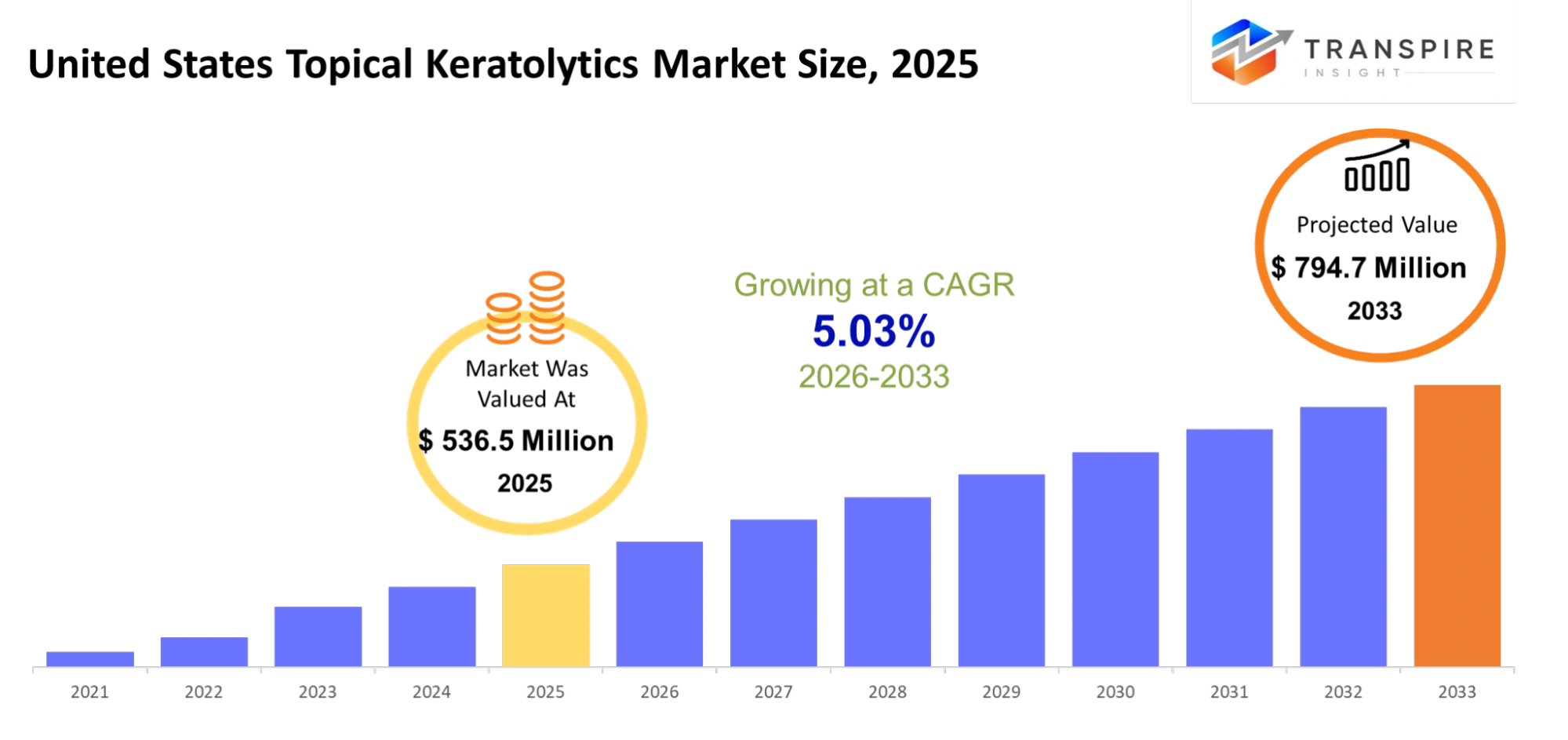
- United States Topical Keratolytics Market Size 2025: USD 536.5 Million
- United States Topical Keratolytics Market Size 2033: USD 794.7 Million
- United States Topical Keratolytics Market CAGR: 5.03%
- United States Topical Keratolytics Market Segments:By Type (Salicylic Acid, Urea, Lactic Acid, Benzoyl, Sulfur, Glycolic, Combo), By Application (Acne, Psoriasis, Warts, Calluses, Keratosis, Skin Disorders, Dermatology), By Form (Cream, Gel, Lotion, Ointment, Solution, Foam, Spray), By Distribution (Pharmacy, Hospital, Online, Clinic, Retail, OTC, Dermatology), By End-User (Patients, Dermatologists, Hospitals, Clinics, Consumers, Pharmacies, Cosmetic).
To learn more about this report,  Download Free Sample Report
United States Topical Keratolytics Market Summary:
The United States topical keratolytics market size is estimated at USD 536.5 million in 2025 and is anticipated to reach USD 794.7 million by 2033, growing at a CAGR of 5.03% from 2026 to 2033. The United States topical keratolytics market is experiencing continuous growth because people increasingly understand skin health while more people develop acne and psoriasis and wart conditions. Consumers prefer to buy over-the-counter treatments which deliver fast results and cause few adverse effects. The user experience has improved because new product formulas use gentler components and exact product delivery systems. The market experiences continuous growth because dermatologists endorse products and e-commerce platforms have expanded their product distribution to various consumer markets.
Key Market Trends & Insights:
- The rising incidence of acne and psoriasis together with corns and warts creates a greater need for topical keratolytics. The treatment allows customers to use it at home, which leads to higher product acceptance.
- The majority of consumers choose to use OTC keratolytic products because these products provide them with both convenience and cost savings. The current trend decreases prescription treatment usage while it makes skincare products available to more people.
- Brands create their products by developing formulas that are gentle to skin and achieve better results. The development of faster and safer results comes from optimizing salicylic acid, urea and lactic acid as active ingredients.
- People who experience chronic skin problems use professional guidance to determine which products to buy. Products that receive dermatologist endorsement achieve greater customer trust, which results in better market performance.
- Keratin products become accessible through online platforms which enable customers to discover and buy these products. The combination of product details and customer reviews with delivery service to houses creates a more secure buying experience.
- The increasing understanding about personal appearance together with hygiene practices leads people to establish daily skincare habits. The cultural change leads to higher demand for keratolytic treatments.
- People now prefer to purchase products that have been labelled as safe, non-irritating and free from dangerous substances. The current trend shows that customers prefer brands which disclose product information and provide skin-friendly alternatives.
United States Topical Keratolytics Market Segmentation
By Type
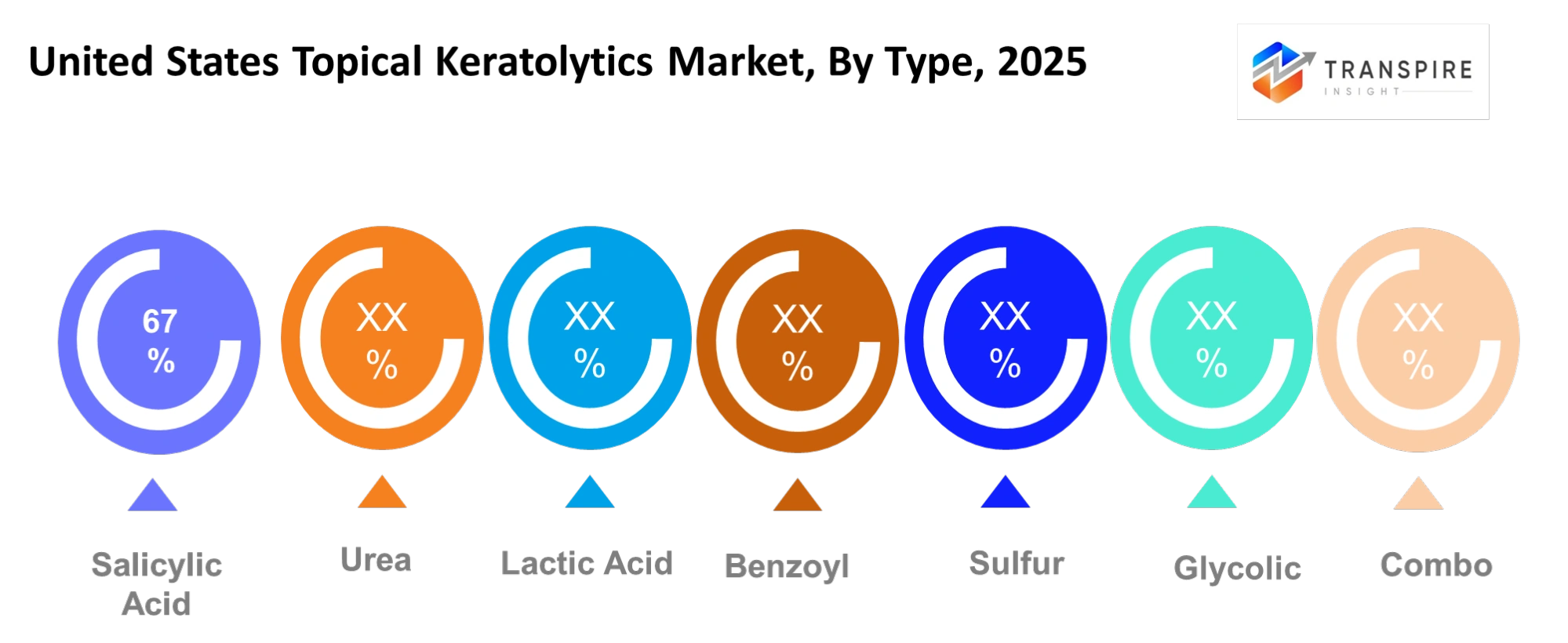
- Salicylic Acid: Salicylic acid functions as a powerful exfoliant which effectively removes dead skin cells while unclogging pores. The ingredient serves as a primary component in over-the-counter keratolytic products which treat acne and wart conditions because users achieve visible improvements through its consistent use.
- Urea: The keratolytic properties of urea-based treatments provide two benefits because they offer skin hydration and skin exfoliation. The products work effectively for treating calluses and psoriasis because they transform thick skin into softer skin which retains more moisture. Their gentle nature makes them suitable for long-term use across sensitive skin types.
- Lactic Acid: Lactic acid delivers mild skin exfoliation while boosting skin moisture levels. The treatment delivers results for people suffering from rough and dry skin conditions. The product enables users to achieve smoother skin results without experiencing major skin irritation which makes it suitable for daily skincare use.
- Benzoyl: Benzoyl peroxide and other benzoyl products serve as effective acne treatments. The products help decrease skin bacteria levels while they eliminate surplus facial oils. The moderate to severe acne treatments deliver effective results when patients follow the recommended usage instructions.
- Sulfur: Sulfur reduces extra facial oil while it softly peels away surface skin. The product serves as an effective solution for treating acne and seborrheic dermatological conditions. The product attracts consumers who want traditional skincare solutions which use natural ingredients to deliver effective results with reduced chemical exposure.
- Glycolic: Glycolic acid functions as an alpha hydroxy acid which enables deep skin exfoliation and skin regeneration. The treatment improves skin appearance by enhancing both skin color and skin surface quality. The treatment works effectively against keratosis and other difficult skin problems because of its capability to reach deep skin layers.
- Combo: Combination products use multiple active ingredients to treat different skin conditions at the same time. The products provide two benefits because they deliver superior results while allowing consumers to use all their skincare needs through one product.
To learn more about this report, Download Free Sample Report
By Application
- Acne: The first application of keratolytic products continues to treat acne. The treatments provide three benefits that include pore unclogging and inflammation reduction and skin clarity improvement, which makes them popular with both teenagers and adults.
- Psoriasis: Keratolytics serve as an essential treatment for psoriasis because they help dissolve and eliminate thick scales. They increase the success rate of other therapies while providing relief from the condition's dry and uncomfortable symptoms.
- Warts: Keratolytics enable wart removal by dissolving hardened skin patches through their gradual skin layer breakdown process. People prefer this non-invasive method because it allows them to use their home treatments successfully while seeing effective results.
- Calluses: People commonly use keratolytic products to treat calluses because they help to soften and reduce calluses which develop through friction. The product provides smoother skin restoration through its regular application which prevents additional skin thickening on both feet and hands.
- Keratosis: Keratolytics provide treatment for keratosis pilaris because they help to create smooth skin by eliminating rough bumps. The products develop skin texture improvements through time which make them suitable for daily treatment.
- Skin Disorders: Keratolytics serve as a treatment option for skin disorders because they help control excessive skin buildup. These products support normal skin shedding while they help the skin to regenerate in a healthy manner.
- Dermatology: Keratolytics function as common dermatological treatments which doctors prescribe to support patient care. The products improve other treatments and become essential components of many professional skin care programmes.
By Form
- Cream: Cream-based keratolytics have a balanced texture that enables users to apply and absorb the product easily. The product works for dry and sensitive skin because it provides comfortable dual benefits of exfoliation and hydration.
- Gel: Gels function as lightweight materials which absorb quickly to suit users who have oily skin or acne-prone skin. The product delivers active ingredients to users but does not create any greasy residue, which enhances user comfort.
- Lotion: Lotions provide a lighter consistency which makes them suitable for larger body areas because they require less product than creams. The product enables users to achieve skin health maintenance through daily applications which result in smooth skin.
- Ointment: Ointments provide users with two benefits because they create a thicker barrier which protects their skin while offering deep moisture and keratolytic treatment. The treatment works best for users who experience extreme skin dryness and have developed thickened skin conditions.
- Solution: Solutions function as liquid products which enable exact application to specific body parts such as warts. The product features simple application methods which allow rapid absorption into the user skin.
- Foam: Foam-based products create a lightweight application process which makes users feel like they apply an airy product. The product spreads easily, and users often choose it for applications on their scalp or large body areas, which makes their experience more convenient.
- Spray: Sprays provide users with a quick application method which maintains hygienic standards. The product helps users reach difficult-to-access body parts while it delivers an even product distribution through automatic spraying, which prevents physical contact.
By Distribution
- Pharmacy: The complete pharmacy system distributes both over-the-counter products and prescription keratolytic medications to customers. The public relies on pharmacists who provide trustworthy advice through this distribution method, which sees high customer adoption.
- Hospital: Keratolytic products are distributed by hospitals to treat patients who suffer from severe skin disorders. Medical facilities provide controlled environments which ensure that patients use medications according to professional guidance.
- Online: The e-commerce industry experiences rapid expansion because it enables customers to access various products with maximum convenience. Customers can easily now assess products through product comparisons and customer reviews while they receive their purchases at home.
- Clinic: Clinics distribute keratolytics as part of dermatological treatments. The personalised recommendations that patients receive from staff enhance both product efficacy and customer confidence.
- Retail: Retail stores make these products easily accessible to everyday consumers. Customers tend to select products based on appealing packaging and promotional materials that stores offer during their shopping experience.
- OTC: People can buy keratolytics as over-the-counter products because they do not require a prescription for purchase. The availability of products without prescriptions enables more people to use skincare products on a regular basis.
- Dermatology: Specialised dermatology channels focus on clinically tested and professional-grade products. These products serve as the primary option for people who require specific skin therapy treatments.
By End-User
- Patients: The first sentence states that patients with particular skin diseases use keratolytics to achieve treatment and relief. The products create daily skincare routines for users, which helps them achieve better comfort and healthier skin results.
- Dermatologists: The dermatology field uses keratolytics as a treatment method which dermatologists endorse through their physician recommendations. The dermatology professionals use their medical knowledge to teach patients the correct way to apply treatments, which results in successful skin problem solutions.
- Hospitals: Keratolytics are used by hospitals to treat patients with severe medical conditions or chronic diseases. Medical professionals use these products to deliver safe and effective treatment methods to their patients.
- Clinics: The main function of clinics involves providing patients with access to specific skincare treatment options. Clinics provide patients with keratolytics which they can combine with other treatments for better treatment effects.
- Consumers: People use keratolytics to treat their daily skincare needs and to manage their small skin problems. People use these products more often now because they understand better how to achieve smooth skin and maintain healthy skin.
- Pharmacies: Pharmacies operate as product distributors while they function as retail outlets which lead customers to their appropriate products. The stores use their position to determine what customers will choose to buy.
- Cosmetic: The cosmetic industry uses keratolytics to improve skin appearance and texture through its makeup products. These beauty products become part of daily beauty practices which create a more glowing and smoother skin appearance.
Country Insights
The United States topical keratolytics market shows a developed market which keeps changing because customers know about products and can access advanced skincare solutions. The country benefits from a well-established healthcare system and widespread availability of both prescription and over-the-counter products. The increasing prevalence of acne and psoriasis and other skin conditions generates demand for treatment solutions which different age groups require.
The U.S. market shows strong consumer preference for products which dermatologists recommend and which undergo clinical testing because these two factors create product trust and increase customer loyalty. The rising power of online platforms and digital marketplaces has simplified the process for people to discover and buy specific treatment solutions. Innovation drives the market because companies develop new products which provide safe and effective skin solutions for various skin types. The market shows high product availability, which enables multiple popular brands to offer consumers skincare products that meet their individual needs.
Recent Development News
In April 2026, dermatologists highlight the best keratosis pilaris treatments using keratolytics: rising consumer demand for effective keratolytic ingredients like salicylic and lactic acid is shaping skincare trends in the U.S. Dermatologists are emphasising exfoliation-based treatments for smoother skin.
In April 2026, Experts Recommend Combined Exfoliation and Hydration for Skin Conditions: Dermatologists in the U.S. are increasingly recommending combination skincare routines that include keratolytics for better management of chronic skin conditions.
|
Report Metrics |
Details |
|
Market size value in 2025 |
USD 536.5 Million |
|
Market size value in 2026 |
USD 1439.5 Million |
|
Revenue forecast in 2033 |
USD 794.7 Million |
|
Growth rate |
CAGR of 5.03% from 2026 to 2033 |
|
Base year |
2025 |
|
Historical data |
2021 – 2024 |
|
Forecast period |
2026 – 2033 |
|
Report coverage |
Revenue forecast, competitive landscape, growth factors, and trends |
|
Country scope |
United States |
|
Key company profiled |
J&J, Galderma, Bayer, Pfizer, GSK, Sanofi, Teva, AbbVie, Roche, LEO Pharma, Perrigo, Almirall, Sun Pharma, Cipla, Dr Reddy |
|
Customization scope |
Free report customization (country, regional & segment scope). Avail customized purchase options to meet your exact research needs. |
|
Report Segmentation |
By Type (Salicylic Acid, Urea, Lactic Acid, Benzoyl, Sulfur, Glycolic, Combo), By Application (Acne, Psoriasis, Warts, Calluses, Keratosis, Skin Disorders, Dermatology), By Form (Cream, Gel, Lotion, Ointment, Solution, Foam, Spray), By Distribution (Pharmacy, Hospital, Online, Clinic, Retail, OTC, Dermatology), By End-User (Patients, Dermatologists, Hospitals, Clinics, Consumers, Pharmacies, Cosmetic). |
Key United States Industrial Coating Company Insights
Established pharmaceutical companies together with new skincare brands create competition in the United States topical keratolytics market through their product innovations and their product quality. The leading players develop their products to deliver effective results through gentle formulations which meet various skin requirements. Companies use dermatologist-approved solutions to establish consumer trust which leads to customer loyalty. The smaller companies succeed through their clean-label products and specialized offerings which enable them to attract consumers. Companies use strategic partnerships together with digital marketing and online presence development to increase their market reach while they sustain their industry competitiveness in response to market changes.
Company List
- J&J
- Galderma
- Bayer
- Pfizer
- GSK
- Sanofi
- Teva
- AbbVie
- Roche
- LEO Pharma
- Perrigo
- Almirall
- Sun Pharma
- Cipla
- Dr Reddy
United States Topical Keratolytics Market Report Segmentation
By Type
- Salicylic Acid
- Urea
- Lactic Acid
- Benzoyl
- Sulfur
- Glycolic
- Combo
By Application
- Acne
- Psoriasis
- Warts
- Calluses
- Keratosis
- Skin Disorders
- Dermatology
By Form
- Cream
- Gel
- Lotion
- Ointment
- Solution
- Foam
- Spray
By Distribution
- Pharmacy
- Hospital
- Online
- Clinic
- Retail
- OTC
- Dermatology
By End-User
- Patients
- Dermatologists
- Hospitals
- Clinics
- Consumers
- Pharmacies
- Cosmetic
Frequently Asked Questions
Find quick answers to common questions.
The approximate United States Topical Keratolytics Market size for the market will be USD 794.7 Million in 2033.
The key segments of the United States Topical Keratolytics Market are By Type (Salicylic Acid, Urea, Lactic Acid, Benzoyl, Sulfur, Glycolic, Combo), By Application (Acne, Psoriasis, Warts, Calluses, Keratosis, Skin Disorders, Dermatology), By Form (Cream, Gel, Lotion, Ointment, Solution, Foam, Spray), By Distribution (Pharmacy, Hospital, Online, Clinic, Retail, OTC, Dermatology), By End-User (Patients, Dermatologists, Hospitals, Clinics, Consumers, Pharmacies, Cosmetic).
Major players in the United States Topical Keratolytics Market are J&J, Galderma, Bayer, Pfizer, GSK, Sanofi, Teva, AbbVie, Roche, LEO Pharma, Perrigo, Almirall, Sun Pharma, Cipla, Dr Reddy.
The current market size of the United States Topical Keratolytics Market is USD 536.5 Million in 2025.
The United States Topical Keratolytics Market CAGR is 5.03%.
- J&J
- Galderma
- Bayer
- Pfizer
- GSK
- Sanofi
- Teva
- AbbVie
- Roche
- LEO Pharma
- Perrigo
- Almirall
- Sun Pharma
- Cipla
- Dr Reddy
Recently Published Reports
-
May 2026
Biosimilars Market
Biosimilars Market By Product Type (Monoclonal Antibodies, Recombinant Hormones, Erythropoietin, G-CSF, Others), By Indication (Oncology, Autoimmune Diseases, Blood Disorders, Diabetes, Others), By Manufacturing Type (In-House Manufacturing, Contract Manufacturing), By Distribution Channel (Hospital Pharmacies, Retail Pharmacies, Online Pharmacies), By Industry Analysis, Size, Share, Growth, Trends, and Forecasts 2021-2033
-
Apr 2026
Gastrointestinal Endoscopy Market
Gastrointestinal Endoscopy Market By Type (Rigid Gastrointestinal Endoscope, Flexible Gastrointestinal Endoscopes, Disposable Gastrointestinal Endoscope), By Procedure Type (Colonoscopy, Gastroscopy, Duodenoscopy, Enteroscopy, Flexible Sigmoidoscopy, Others), By Application (Diagnosis, Treatment), By End-Users (Hospitals, Ambulatory Surgical Centers, Specialty Clinics, Laboratories, Others), By Industry Analysis, Size, Share, Growth, Trends, and Forecasts 2021-2033
-
Apr 2026
Rare Inherited Metabolic Disorder Drug Market
Rare Inherited Metabolic Disorder Drug Market By Drug Class (Enzyme Replacement Drugs, Gene Therapy Drugs, Substrate Reduction Drugs, Small Module Drugs, Protein Drugs), By Route of Administration(Parenteral, Oral, Intrathecal), By Clinical Development (Marketed Drugs, Late Stage Clinical Phase III, Early Stage Clinical Phase I-II, Preclinical Candidates), By Indication (Lysosomal Storage Disorders, Urea Cycle Disorders, Amino Acid Metabolic Disorders, organic Acidemias, Peroximal Disorders), By Industry Analysis, Size, Share, Growth, Trends, and Forecasts 2021-2033
-
Jan 2026
Pharmaceutical Cleanroom Technology Market
Pharmaceutical Cleanroom Technology Market By Product (Equipment, Consumables, Services); By Cleanroom Type (Standard Cleanrooms, Modular Cleanrooms); By End Use (Pharmaceutical Companies, Biotechnology Companies), By Industry Analysis, Size, Share, Growth, Trends, and Forecasts 2021-2033