

United States Slim Cigarette Market Size & Forecast:
- United States Slim Cigarette Market Size 2025: USD 9.24 Billion
- United States Slim Cigarette Market Size 2033: USD 24.92 Billion
- United States Slim Cigarette Market CAGR: 13.20%
- United States Slim Cigarette Market Segments: By Type (Menthol, Non-menthol, Flavored, Premium, Low-tar, Others); By Application (Regular Smoking, Occasional, Social, Premium Segment, Export, Others); By End-User (Men, Women, Young Adults, Premium Users, Others); By Distribution (Retail Stores, Online, Duty-free, Convenience Stores, Others)

To learn more about this report,  Download Free Sample Report
United States Slim Cigarette Market Summary
The United States Slim Cigarette Market was valued at USD 9.24 Billion in 2025. It is forecast to reach USD 24.92 Billion by 2033. That is a CAGR of 13.20% over the period.
In practice, the United States slim cigarette market serves adult smokers who are looking for a tighter format tobacco product linked with a smoother draw, better portion discipline, and a premium lifestyle story inside cigarettes. It works less like a brand-new nicotine gateway and more like a swap decision among established smokers, who are trying to feel less intensity and clearer brand separation, especially when they shop at retail. Over the last five years, the market has moved in a structural way as regulatory pressure from the U.S. Food and Drug Administration, plus constraints on flavored cigarettes, has pushed company portfolios toward more distinct slim versions.
COVID-19 related supply chain hiccups also sped up distribution reshuffling, which strengthened convenience store dominance and made manufacturers streamline their SKUs , a bit too eagerly sometimes. Taken together, these dynamics have helped keep revenue steady, by nudging trading-up from regular formats and keeping price segmentation as the main lever, not pure volume growth. Manufacturers, in turn, can gain from higher average selling prices as consumers cluster into fewer , higher-margin SKUs across retail channels.
Key Market Insights
- The Southern U.S, kind of dominates the United States Slim Cigarette Market. It has almost 34% share in 2025 because of higher retail tobacco penetration and all that. Western U.S. also seems like the fastest moving region through 2030, mainly pushed by premium product take up and shifting, more urban smoking patterns that are changing over time.
- The Northeast is still pretty steady. The demand holds on, thanks to higher-income demographics and strong convenience-store distribution networks, not just one thing.
- Slim cigarette variants are leading the United States Slim Cigarette Market with around 46% share in 2025, mostly because of premium positioning.
- Super-slim cigarettes take the second-largest slice. That’s supported by pretty specific city consumer tastes, plus brand differentiation strategies.
- Ultra-slim formats meanwhile are the fastest-growing segment through 2030. This reflects that people are buying into a “lighter” smoking experience, at least as it’s perceived.
- In 2025 convenience store channels are pretty much dominating, with about 52% share, kind of mirroring impulse based tobacco buying habits.
- Meanwhile online tobacco adjacent retail still looks like the fastest growing application channel , helped along by digital age verification systems, which people use more often nowadays.
- When it comes to end users, adult established smokers keep taking the lead, they hold over 70% share in the United States Slim Cigarette Market.
- And for the quicker expanding group, younger legal-age consumers are trending upward the most, mainly due to trial and experimentation with those premium slim cigarette variants.
What are the Key Drivers, Restraints, and Opportunities in the United States Slim Cigarette Market?
The main push is product premiumization, sort of triggered by long-running regulatory focus from the U.S. Food and Drug Administration on cigarette marketing and the limitations around flavors. As makers start losing flexibility in how they can differentiate through flavor-led approaches, they tend to pivot toward format oriented innovation, especially slim and super-slim variants. That shift supports higher average selling prices, and also encourages smokers to trade across options inside the same category instead of leaving the market altogether. So it ends up directly stabilizing brand revenue, mainly for players operating in the United States Slim Cigarette Market.
The big brake is tougher tobacco control measures, plus excise taxes climbing at both the federal and state scale. In practice these changes structurally dampen volume growth, because end-user pricing stays higher, and affordability sensitivity gets squeezed over time. This doesn’t really act like a short-term cycle, it keeps compressing consumption levels and makes it harder for new users to enter. Therefore long-term expansion gets capped, even if brands intensify their repositioning efforts.
The strongest opening sits in retail digitization, and in a data guided approach to inventory optimization across convenience store networks. Retailers like 7-Eleven, along with various regional tobacco shops, are increasingly using predictive stocking systems that basically sort and prioritize high margin SKUs, including slim formats. The result is a more efficient shelf allocation setup, which helps manufacturers in the United States Slim Cigarette Market gain better visibility and improve sell-through rates, especially in dense urban areas like California , and New York.
What Has the Impact of Artificial Intelligence Been on the United States Slim Cigarette Market?
Artificial intelligence and advanced digital technologies are kind of reshaping day to day operational efficiency across the United States Slim Cigarette Market, by tightening control over manufacturing , distribution, and even retail execution, not that it’s super simple. In production environments AI-driven automation is more and more common on high-speed cigarette manufacturing lines for monitoring equipment calibration, cutting downtime, and keeping product specifications stable especially for slim-format variants. Computer vision setups also help with real-time quality checks, which in turn reduces material wastage, and makes output consistency feel more reliable.
On the commercial side, machine learning models are widely used for demand forecasting and inventory optimization across convenience store networks. These systems look at point-of-sale data, regional consumption rhythms , and how promotions actually seem to change buyer behavior, so stock allocation for slim cigarette SKUs improves. The result is less risk of overstock, and less chance of stockouts too. AI-enabled logistics platforms handle distribution route optimization as well, improving fuel efficiency and lowering last-mile delivery costs while also supporting tighter regulatory traceability requirements like FDA compliance reporting, and age-verification enforcement.
Operationally, manufacturers are seeing directional improvements such as reduced machine downtime, better forecast accuracy, and more efficient SKU-level pricing tactics that help protect margin control in premium slim categories. Still, adoption is constrained by fragmented retail data ecosystems, and by high integration costs across independent distributors, which is a bit of a mess. Limited interoperability between retailer systems also keeps real-time data sharing weaker, so the full potential of predictive analytics in the United States Slim Cigarette Market doesn’t really get unlocked.
Key Market Trends
- Since around 2020, FDA flavor restrictions sort of pushed a more slim format type of innovation, and in turn that sped up how companies repositioned their products all over the United States slim cigarette market.
- The premiumization move actually lifted average selling prices by roughly 8–12% between 2021 and 2025, even while the volume growth stayed kinda flat, so revenue still got a boost.
- Also, convenience stores went on to dominate, reaching more than 50% share, because retail consolidation made slim cigarette sales cluster into high-frequency urban buy points, where people tend to grab stuff fast.
- After 2022, the Western United States showed up as the fastest-growing region, and that was tied to urban migration, plus stronger uptake of premium tobacco formats there.
- During the COVID era, supply chain disruptions forced SKU rationalization in 2021–2023, which trimmed portfolio complexity and, in a quiet way, improved manufacturing efficiency for the big brands.
- Altria Group, and British American Tobacco too, expanded data driven retail partnerships—so they could tune shelf placement and promotional targeting more precisely.
- At the same time, state excise taxes kept rising since 2022, lowering affordability and kinda suppressing entry-level consumption, so shoppers shifted up into premium slim variants faster than before.
- Finally, adoption of AI enabled point of sale analytics increased after 2023, which improved forecast accuracy and also reduced stockouts across high demand urban retail clusters.
United States Slim Cigarette Market Segmentation
By Type :
The United States slim cigarette market by type shows varied demand movements, kind of depending on taste and how the product is positioned. Menthol and non-menthol variants stay widely chosen, not just because of flavor preferences, but also because people tend to stick with what feels familiar. Meanwhile flavored and premium slim categories pull in smaller groups, more like niche users, who want a different kind of sensorial profile. Even the low-tar options keep getting more notice too, especially from health-conscious consumers who look for a lighter alternative, with a reduced intensity narrative.
Menthol items keep a fairly steady preference in cities, helped by solid brand visibility and long-standing consumption routines. Non-menthol variants hold onto a stable share, mostly due to broad availability and traditional use patterns, where usage doesn’t really change much over time. Flavored and premium slim cigarettes tend to appeal to users chasing variety, and yes, a higher product positioning, while low-tar options rise slowly among reduced-risk preference groups, who prefer the “gentler” lineup.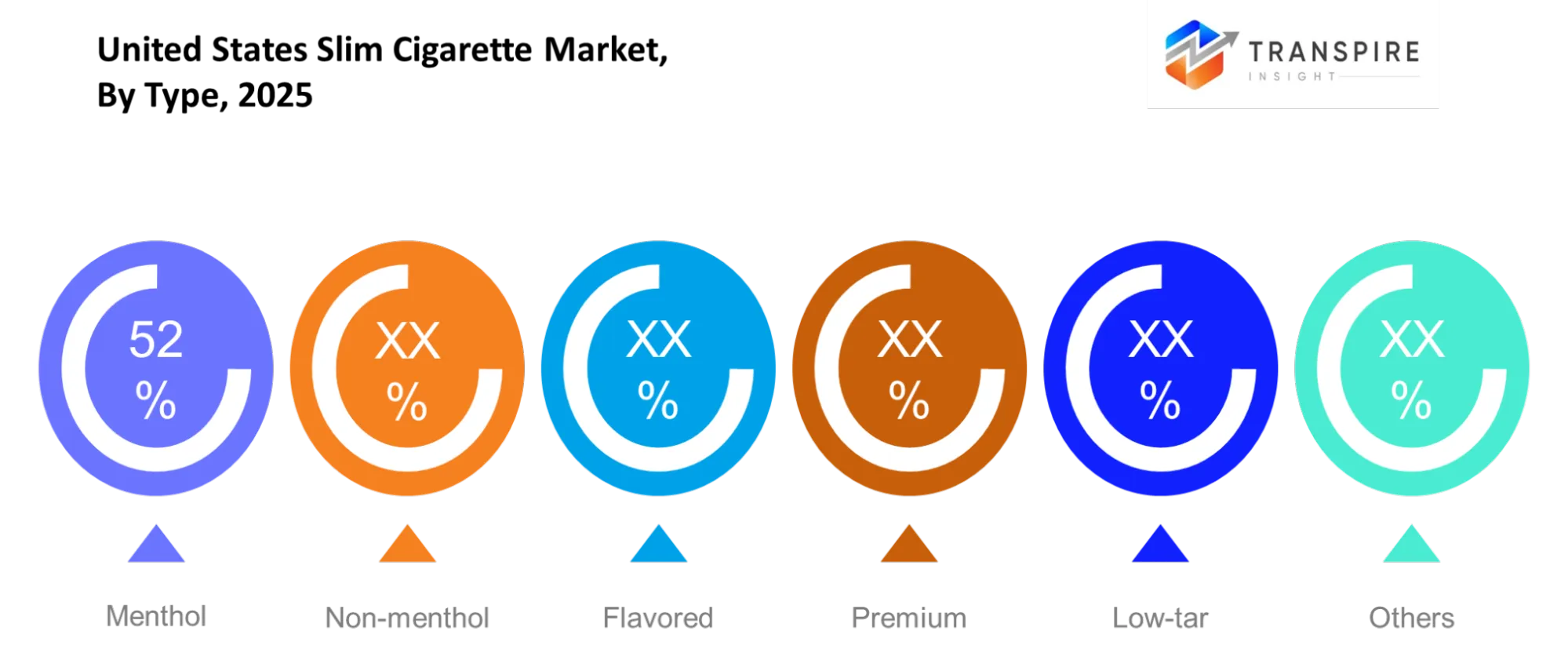
To learn more about this report, Download Free Sample Report
By Application :
For application-based segmentation, the slim cigarette demand gets shaped by different usage situations. Regular smoking still sits at the top for overall consumption, while occasional use and social smoking create a secondary layer of demand. The premium segment is tied to lifestyle-based selection, and export activity supports international trade flows, like a separate route of demand. Other applications cover limited and situational consumption patterns, where people buy and use in a more sporadic manner.
Regular smoking remains the main engine for market volume, supported by habitual users. Occasional and social smoking segments feed the market on flexible occasions, often connected with gatherings, or with reduced-frequency habits. Premium segment usage is influenced by brand positioning and lifestyle appeal, which is pretty consistent for that group. Export-oriented demand also boosts market reach beyond domestic boundaries, and it can move with overseas demand swings.
By End-User :
End-user segmentation points to demographic differences, kind of steering which product people pick. Like, male consumers make up a big portion, mostly because of long standing usage habits, you know the traditional kind of pattern. Meanwhile female consumers show more involvement in slim cigarette preference, and it keeps climbing. Young adults add an experimentation driven demand, since they tend to try new options. Premium users, on the other hand, go toward higher quality offerings and more reliable brand cues. There are also other groups like mixed and irregular users, who don’t really follow one neat routine.
Male users keep leading consumption figures, with that steady support coming from well-established usage behavior. Female participation goes up specifically for slim formats, largely due to a perceived lighter profile, and that’s a common perception people lean on. Young adults express interest that is shaped by lifestyle influence plus exposure to product variety. Premium users remain quality focused, including packaging, brand value, and overall credibility, which helps fuel higher margin product demand inside the market structure.
By Distribution :
Distribution channels really do matter for availability and how easily consumers can access products. Retail stores and convenience stores handle most sales since they’re easy to reach and straightforward to use. Online channels broaden access especially for younger consumers, who tend to shop in a more flexible way. Duty-free outlets also help, mainly when international travelers are involved, while the remaining channels provide limited but fairly stable distribution support.
Retail stores stay the most dominant channel, largely because they’re everywhere and they enable direct consumer interaction. Convenience stores support impulse buying, and that frequent purchase rhythm matters. Online distribution grows bit by bit as shopping preferences shift, plus discreet purchasing patterns become more common. Duty-free channels support cross-border demand, especially around travel hubs, while other channels keep a smaller role with more niche supply routes.
What are the Key Use Cases Driving the United States Slim Cigarette Market?
The core use case driving the United States Slim Cigarette Market is basically daily consumption by established adult smokers who buy slim-format products from convenience stores and gas stations, like pretty much all the time. That channel takes the lead because it supports fast, habitual purchases. There is also strong brand loyalty at the counter or point of sale, especially in urban and suburban retail zones.
Beyond that, you can see expanding applications in premium lifestyle spending in on-trade locations and hospitality-adjacent spaces, where slim cigarettes are framed as a more differentiated option among higher-income adult users. In urban convenience retail the uptake can be notably stronger with price-insulated shoppers who switch within premium tobacco assortments rather than fully abandoning the category.
Some of the more emerging use cases show up in digitally enabled retail execution, where AI-based age verification and sharper promotions help with both regulatory compliance and conversion efficiency across licensed retail environments. Travel retail, plus controlled duty-free channels, are also getting more attention, as manufacturers trial regionally segmented premium lines under tighter regulatory oversight.
|
Report Metrics |
Details |
|
Market size value in 2025 |
USD 9.24 Billion |
|
Market size value in 2026 |
USD 10.46 Billion |
|
Revenue forecast in 2033 |
USD 24.92 Billion |
|
Growth rate |
CAGR of 13.20% from 2026 to 2033 |
|
Base year |
2025 |
|
Historical data |
2021 - 2024 |
|
Forecast period |
2026 - 2033 |
|
Report coverage |
Revenue forecast, competitive landscape, growth factors, and trends |
|
Geographic scope |
United States of America |
|
Key company profiled |
Philip Morris, British American Tobacco, Japan Tobacco, Imperial Brands, Reynolds American, Altria, ITC, KT&G, China Tobacco, Gudang Garam, Djarum, PT Bentoel, Scandinavian Tobacco, Karelia Tobacco, Vector Group |
|
Customization scope |
Free report customization (country, regional & segment scope). Avail customized purchase options to meet your exact research needs. |
|
Report Segmentation |
By Type (Menthol, Non-menthol, Flavored, Premium, Low-tar, Others); By Application (Regular Smoking, Occasional, Social, Premium Segment, Export, Others); By End-User (Men, Women, Young Adults, Premium Users, Others); By Distribution (Retail Stores, Online, Duty-free, Convenience Stores, Others) |
Which Regions are Driving the United States Slim Cigarette Market Growth?
The Southern United States still feels like the main region in the United States Slim Cigarette Market, mostly because there’s a dense chain of convenience stores ,and in the past people tended to smoke more. On top of that, state-level tax quirks and sometimes moderate enforcement in a few places help keep the repeat purchase rhythm steady among adult smokers. Rural , plus semi-urban groups also lean on brick-and-mortar retail when buying tobacco products, so the volume kind of stays smooth. Then there’s the long-running wholesale ,and gas station distribution web that keeps products easy to find, which also supports that “buy again” behavior.
The Northeastern United States is stable too, but it’s a bit different in structure, largely tied to higher income demographics and fairly strict consumption rules. Public health measures are tougher, so the overall number of smokers is smaller, yet it can push premiumization, like people who still smoke often gravitate toward slim cigarette variants. Even so, demand stays steady, because buying habits cluster around organized retail outlets with more predictable taxation setups. So the revenue picture becomes less shaky, but also more sensitive to price changes than in some other areas.
The Western part of the United States is moving fast, tied to urban migration and that, a higher concentration of adult smokers in those major coastal metro areas. Since 2022, little lifestyle changes have nudged people toward more premium and slimmer cigarette kinds, not only for new buyers but also for the folks who already smoke. Regulations have gotten stricter overall, which has pushed smoking rates down, but it also looks like they are making the internal pivot happen sooner, toward higher-priced options, even while staying in the same general product categories. In other words, this looks like stronger longer-term potential for targeted premium positioning , and for sharpening retail execution tactics through 2033.
Who are the Key Players in the United States Slim Cigarette Market and How Do They Compete?
The United States slim cigarette market is pretty consolidated, you know, competition is basically run by a small group of multinational tobacco manufacturers who hold most of the premium and mainstream retail distribution. Most of the incumbents really just defend share with brand distinction , pricing ladders, and shelf presence, not so much with aggressive volume growth. The main battleground has moved toward product premiumization and retail execution strength where winning convenience store partnerships and optimizing the SKU mix kind of matters more than plain new market entry. Also, regulatory limits make disruptive entry harder, so established players stay in charge.
Philip Morris International is mostly in this premium product innovation and portfolio re-positioning mode, and it leans on these reduced-risk narratives, plus slim-format options to push further into city pockets, kinda urban corners. The advantage it really has is the really solid worldwide brand image, and also the consistent investment into next-generation product design, which keeps it in higher margin spaces.Expansion for them often means strategic distributor partnerships, to lock in premium shelf space in busy retail hotspots .
Altria Group leans hard on its domestic distribution footprint and long-term retailer agreements, which gives it heavy control over U.S. convenience store channels. British American Tobacco competes by spreading risk across a wider portfolio and doing aggressive brand repositioning across slim and super-slim variants, backed by marketing that’s targeted at urban regions . Japan Tobacco International leans into niche segmentation, and it uses flavor differentiation to keep itself relevant within premium tobacco clusters. Imperial Brands tends to go for selective growth, focusing on high-margin slim cigarette niches rather than trying to fight everyone in broad-volume competition.
Company List
- Philip Morris
- British American Tobacco
- Japan Tobacco
- Imperial Brands
- Reynolds American
- Altria
- ITC
- KT&G
- China Tobacco
- Gudang Garam
- Djarum
- PT Bentoel
- Scandinavian Tobacco
- Karelia Tobacco
- Vector Group
Recent Development News
In April 2026, Altria Group raised cigarette prices for the second time within the year across its U.S. portfolio, including Marlboro, as part of its pricing strategy to offset volume declines and sustain revenue in the premium tobacco segment.Source https://www.cspdailynews.com/
In 2025, Philip Morris International and Japan Tobacco International advanced their collaboration plans for next-generation reduced-risk tobacco products, including heated tobacco systems under the Ploom platform, with preparations for expanded U.S. commercialization through joint venture structures. Source https://en.wikipedia.org/
What Strategic Insights Define the Future of the United States Slim Cigarette Market?
The United States Slim Cigarette Market is, kind of, moving structurally toward a more concentrated, premium-led ecosystem where value creation depends more on retail control and format based differentiation rather than on just expanding volumes. This shift is fueled by continued regulatory tightening and taxation pressure , so overall consumption gets squeezed while trade keeps routing itself through premium cigarette formats like slim variants. So, revenue stability ends up relying less on user growth, and more on pricing power plus distribution efficiency, which is more or less where the real leverage sits.
A less obvious risk is that there could be over-reliance on a shrinking but highly concentrated smoker base, and then any extra policy tightening or even litigation pressure might speed up a sudden demand contraction across those premium sub-segments. This results in exposure to abrupt volume swings, and that volatility often isn’t fully reflected in near term pricing strength.
Meanwhile, there’s an emerging opportunity in AI enabled retail intelligence systems that tune SKU placement and do localized demand forecasting across fractured convenience store networks. This matters a lot in high density states like California and Florida. Firms that connect real time retail analytics with distributor ecosystems can gain disproportionate shelf influence. Strategically, market participants should probably prioritize data driven retail partnerships and SKU rationalization frameworks, not only to protect margins but also to adjust as overall smoking prevalence keeps declining in a structural, slow kind of way.
United States Slim Cigarette Market Report Segmentation
By Type
- Menthol
- Non-menthol
- Flavored
- Premium
- Low-tar
By Application
- Regular Smoking
- Occasional
- Social
- Premium Segment
- Export
By End-User
- Men
- Women
- Young Adults
- Premium Users
By Distribution
- Retail Stores
- Online
- Duty-free
- Convenience Stores
Frequently Asked Questions
Find quick answers to common questions.
The United States Slim Cigarette Market size is USD 24.92 Billion in 2033.
Key Segments for the United States Slim Cigarette Market are By Type (Menthol, Non-menthol, Flavored, Premium, Low-tar, Others); By Application (Regular Smoking, Occasional, Social, Premium Segment, Export, Others); By End-User (Men, Women, Young Adults, Premium Users, Others); By Distribution (Retail Stores, Online, Duty-free, Convenience Stores, Others).
Major United States Slim Cigarette Market Players are Philip Morris, British American Tobacco, Japan Tobacco, Imperial Brands, Reynolds American, Altria, ITC, KT&G, China Tobacco, Gudang Garam, Djarum, PT Bentoel, Scandinavian Tobacco, Karelia Tobacco, Vector Group.
The Current United States Slim Cigarette Market size is USD 9.24 Billion in 2025.
The United States Slim Cigarette Market CAGR is 13.20% from 2026 to 2033.
- Philip Morris
- British American Tobacco
- Japan Tobacco
- Imperial Brands
- Reynolds American
- Altria
- ITC
- KT&G
- China Tobacco
- Gudang Garam
- Djarum
- PT Bentoel
- Scandinavian Tobacco
- Karelia Tobacco
- Vector Group
Recently Published Reports
-
Apr 2026
Bottled Water Market
Bottled Water Market Size, Share & Analysis Report By Product Type (Still Bottled Water, Carbonated Bottled Water, Functional Bottled Water, and Others), By Packaging (PET, Cans, and Others), By Sales Channel (Supermarkets/Hypermarkets, Convenience Stores/Drug Stores, Grocery Stores/Club Stores, Foodservice, and Others) and Geography (North America, Europe, Asia-Pacific, Middle East and Africa, South and Central America), 2021 - 2032
-
Apr 2026
Color Cosmetic Packaging Market
Color Cosmetic Packaging Market Size, Share & Analysis Report By Application (Mascara Packaging, Liquid Packaging, and Liquid Face), By Type (Tubes & Bottles, Pens & Markers, Compacts & Containers, and Droppers & Pumps), and Geography (North America, Europe, Asia-Pacific, Middle East and Africa, South and Central America), 2021 - 2031
-
Apr 2026
External Microphone For Camera Market
External Microphone For Camera Market Size, Share & Analysis Report By Type (Shotgun Microphone, Lavalier Microphone, and Others), By Application (Digital Camera, Professional Video Camera, and Others), and Geography (North America, Europe, Asia-Pacific, Middle East and Africa, South and Central America), 2021 - 2031
-
Apr 2026
Foot Orthotic Insoles Market
Foot Orthotic Insoles Market Size, Share & Analysis Report By Type (Pre-fabricated, and Custom-made), By Material (Thermoplastic, Composite Carbon Fiber, and Others), By Distribution Channel (Drug Stores, Hospitals & Clinics, and Others), and Geography (North America, Europe, Asia-Pacific, Middle East and Africa, South and Central America), 2021 - 2031