

United States Silane Market Size & Forecast:
- United States Silane Market Size 2025: USD 237.8 Million
- United States Silane Market Size 2033: USD 372.5 Million
- United States Silane Market CAGR: 5.83%
- United States Silane Market Segments:By Type (Alkyl Silanes, Amino Silanes, Vinyl Silanes, Epoxy Silanes, Methacrylate, Sulfur Silanes, Others), By Application (Adhesives, Coatings, Sealants, Rubber, Plastics, Electronics, Construction), By End-User (Automotive, Construction, Electronics, Chemical, Industrial, Energy, Packaging), By Form (Liquid, Powder, Emulsion, Gel, Concentrate, Blend, Additive), By Distribution (Direct, Distributors, OEM, Export, Retail, Online, Bulk).

To learn more about this report,  Download Free Sample Report
United States Silane Market Summary:
The United States silane market shows continuous expansion because the construction and automotive and electronics industries create increasing demand for silanes. Silanes function as essential coupling agents which improve coating and sealant and composite materials through enhanced adhesion and durability. The market shows growth because rising infrastructure and renewable energy project investments drive expansion. The market experiences innovation because material science advancements and sustainable solutions receive increasing attention. The market will continue to grow throughout the upcoming years because industrial support exists for its development.
Key Market Trends & Insights:
- Your text demonstrates high complexity because it contains many difficult words which need to be changed into simpler terms. The construction industry maintains its status as the main force driving silane usage through its applications in sealants and adhesives and coatings. The need for weather-resistant durable materials increases because of expanding infrastructure projects and renovation activities.
- The automotive industry uses silanes for two main purposes which include improving bonding capabilities and preventing corrosion damage. The automotive industry uses silanes to improve the performance and lifespan of vehicle components through their use in lightweight materials.
- The electronic and semiconductor industries use silanes for their essential function in surface treatment and insulation processes. The role of these products in boosting product reliability has grown more essential.
- Manufacturers are focusing on developing low-VOC and environmentally friendly silane products. The environmentally friendly product development represents a response to stricter regulations which consumers now expect because of environmental issues.
- The development of advanced silane formulations continues through ongoing research and development activities. The product improvements which result from these advancements enable companies to create new business opportunities in different industrial sectors.
- Silanes are being used increasingly in solar panels and wind energy components. The renewable energy projects in the United States will benefit from their capacity to enhance both durability and performance.
- The market receives advantages from established companies which spend money on research and development activities together with product development efforts. The companies are developing their operations through partnerships which create new competitive challenges in their respective markets.
United States Silane Market Segmentation
By Type
- Alkyl Silanes: Alkyl silanes serve two main purposes in industrial applications for water-repellent treatments and surface treatment work. The construction materials gain enhanced durability because the materials block moisture from entering their structure. The increasing demand for these materials in infrastructure projects and protective coatings creates continuous demand which exists throughout the United States.
- Amino Silanes: Amino silanes provide strong adhesion capabilities for their use in coatings and adhesives because they serve as fundamental materials in this industry. The combination of organic and inorganic materials requires their use in automotive and industrial applications because these materials need to achieve both performance and durability standards.
- Vinyl Silanes: Vinyl silanes serve essential functions in the plastics and rubber industries because they enhance mechanical properties and chemical protection. Their function in polymer crosslinking establishes them as essential materials for wire insulation production and advanced material development.
- Epoxy Silanes: Epoxy silanes create powerful bonding connections which also protect against corrosion. The products find extensive application in coatings and adhesives and electronics because they enhance product durability and performance during extreme environmental testing.
- Methacrylate Silanes: Methacrylate silanes improve composite material compatibility through their application. The automotive and construction industries benefit from their advantages because they enhance material strength and flexibility while providing protection against environmental forces.
- Sulfur Silanes: Rubber manufacturers primarily use sulfur silanes for rubber processing work especially in the production of tires. The materials provide improved elasticity and durability which meets the increasing demand for high-performance automotive parts.
- Others: The other silane types include special compounds that exist for specific industry functions. The solutions provide dedicated industrial solutions which enhance performance for multiple business sectors.
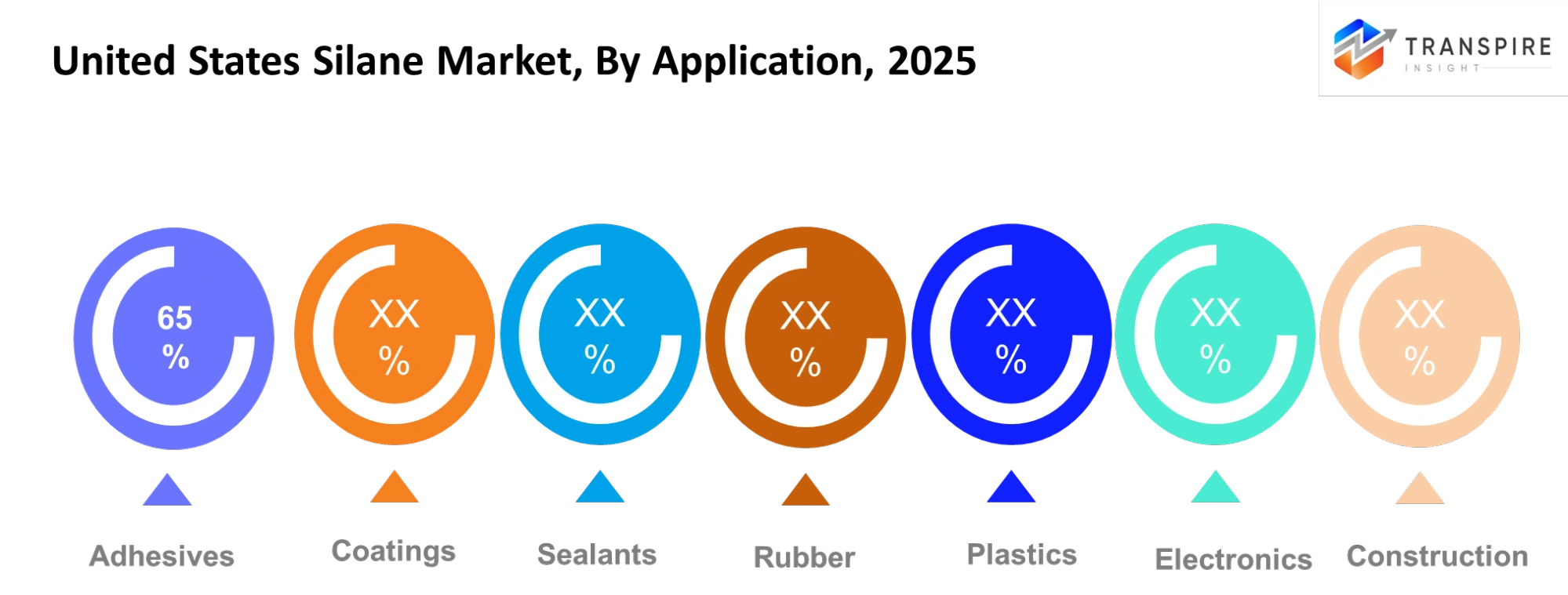
By Application
- Adhesives: Silanes improve adhesive bonding strength and durability through their performance in industrial environments which demand high-performance solutions. Their ability to create strong chemical links enables products to perform better in construction and automotive and electronics sectors.
- Coatings: Silanes improve coating systems through their ability to protect surfaces from corrosion while providing to surface protection. The coating system has achieved widespread adoption because it delivers durable results which withstand environmental damage.
- Sealants: Silanes function as essential components for sealants because they enhance both flexibility and adhesion properties. The products create weather-resistant seals which construction and infrastructure projects require to function effectively.
- Rubber: Silanes improve rubber products by increasing their strength and elasticity and their ability to resist wear. The tyre industry depends on these materials because they enhance both tire performance and product lifespan.
- Plastics: Silanes function as plastic additives which improve material compatibility and mechanical strength. The substances enable the production of industrial and automotive materials which exhibit superior strength and durability.
- Electronics: Silanes serve two functions in electronics through their use in surface treatment processes and insulation development. The materials boost product reliability primarily in semiconductor devices and advanced electronic components.
- Construction: Silanes function as construction material additives which enhance both water resistance and material durability. The materials enable infrastructure systems to last longer while decreasing their required maintenance expenses.
To learn more about this report, Download Free Sample Report
By End-User
- Automotive: The automotive sector depends on silanes because they create coatings and adhesives and rubber components. They assist in making vehicles more durable while decreasing weight and boosting vehicle performance.
- Construction: Silanes find extensive use in construction because infrastructure development requirements drive their demand. Silanes enhance material performance and environmental sustainability through their ability to extend longevity and material strength.
- Electronics: Silanes function as crucial materials which enable the production of dependable and superior electronic components. Their role continues to expand because of technological progress and miniaturization.
- Chemical: Silanes function as intermediates and additives for chemical processes in the chemical industry. They serve to better product quality while making possible new product development through their use.
- Industrial: Silanes provide industrial applications through their use in coatings and sealants and composite materials. Their versatility supports a wide range of manufacturing processes.
- Energy: Silanes find application in the energy sector through their use in renewable technologies, which include solar panels. They enhance efficiency and durability, which helps advance clean energy development.
- Packaging: Silanes boost packaging material performance through their ability to strengthen materials and protect against damage. Their use helps extend product shelf life and maintain quality.
By Form
- Liquid: The most widely used silane form consists of liquid silanes because they can be applied with minimal effort. The materials find extensive application in different industrial sectors through their use in coatings and adhesives and surface treatments.
- Powder: The application of powder silanes occurs in specific fields which need both regulated emission and product durability. The products find wider industrial use because they establish dependable performance standards.
- Emulsion: Emulsion-based silanes offer better distribution properties while making their application process simpler. The materials find common application in construction projects and coating materials because they enhance surface area distribution.
- Gel: Gel silanes enable controlled material distribution which results in improved surface attachment to particular surfaces. The products find use in specialised fields which demand exact operational performance.
- Concentrate: The concentrated silanes enable users to create their own silane solutions according to their project needs. The industrial materials need to be mixed with water because they require industrial operators to manage their production process.
- Blend: Blended silanes combine multiple properties to meet diverse application needs. The material solutions are gaining popularity because they serve as high-performance materials for advanced applications.
- Additive: The performance of silanes improves existing materials when used as additives. The products achieve better strength and adhesion and durability through their use.
By Distribution
- Direct: Direct distribution enables manufacturers to send silanes to end-users without any intermediaries. The system provides manufacturers with superior ability to manage their production costs and product quality.
- Distributors: Distributors play a key role in reaching a broader customer base. Distributors provide logistical support to their customers while sustaining product availability throughout different locations.
- OEM: Original Equipment Manufacturers use silanes directly in their production processes. This method delivers steady material supplies to support major production operations.
- Export: U.S. manufacturers use export channels to sell their products in international markets. This not only creates new market possibilities but also enables businesses to grow their international presence.
- Retail: Retailing provides smaller companies and individual customers with access to silane products. Retailing enables customers to purchase silane products in small quantities.
- Online: Consumers increasingly prefer online platforms to buy silanes. Online platforms provide users with easy access to products and transparent information about their purchasing choices.
- Bulk: Bulk distribution serves the needs of major industrial customers who require continuous supply. The method delivers cost savings while creating uninterrupted material flow to meet ongoing production requirements.
Country Insights
The United States silane market demonstrates strong industrial capabilities which rely on its advanced manufacturing system and ongoing research progress. The country operates established sectors that include construction and automotive and electronics which create continuous market requirements for silane products. The market expansion develops through increasing infrastructure development together with renovation work which creates demand for protective coatings and sealants.
The United States experiences increasing adoption of sustainable materials which leads manufacturers to create environmentally friendly silane products. The market landscape develops through technological progress and research and development funding and dedicated investment in research activities. The market maintains competitiveness through top chemical companies which assess product quality and performance. The United States functions as a primary force in global silane markets because of its high market demand and ongoing research developments and changing industrial requirements.
Recent Development News
In February 2026, growth in U.S. Semiconductor Industry Drives Silane Usage: With semiconductor manufacturing expanding, silane demand is rising for wafer fabrication and surface treatments. This is reinforcing the chemical’s importance in advanced electronics.
In January 2026, U.S. Construction Boom Boosts Silane Demand: Rising infrastructure investments across highways and smart cities are increasing the use of silane-based coatings and sealants. This trend is strengthening demand for high-performance materials in the U.S. market.
|
Report Metrics |
Details |
|
Market size value in 2025 |
USD 237.8 Million |
|
Market size value in 2026 |
USD 250.6 Million |
|
Revenue forecast in 2033 |
USD 372.5 Million |
|
Growth rate |
CAGR of 5.83% from 2026 to 2033 |
|
Base year |
2025 |
|
Historical data |
2021 – 2024 |
|
Forecast period |
2026 – 2033 |
|
Report coverage |
Revenue forecast, competitive landscape, growth factors, and trends |
|
Country scope |
United States |
|
Key company profiled |
Evonik, Dow, Shin-Etsu, Momentive, Wacker Chemie, Gelest, Arkema, BASF, KCC Corporation, LG Chem, Nanjing Shuguang, Jiangxi Chenguang, Power Chemical, WD Silicone, Siltech |
|
Customization scope |
Free report customization (country, regional & segment scope). Avail customized purchase options to meet your exact research needs. |
|
Report Segmentation |
By Type (Alkyl Silanes, Amino Silanes, Vinyl Silanes, Epoxy Silanes, Methacrylate, Sulfur Silanes, Others), By Application (Adhesives, Coatings, Sealants, Rubber, Plastics, Electronics, Construction), By End-User (Automotive, Construction, Electronics, Chemical, Industrial, Energy, Packaging), By Form (Liquid, Powder, Emulsion, Gel, Concentrate, Blend, Additive), By Distribution (Direct, Distributors, OEM, Export, Retail, Online, Bulk). |
Key United States Industrial Coating Company Insights
The United States silane market exists because established chemical companies operate in the market with their focus on creating new products which meet high standards of quality and performance. The companies dedicate resources to research and development projects which aim to create new silane products for use in construction automotive and electronics industries. Companies strengthen their market position through three main strategies which include establishing strategic partnerships and developing new products and increasing their operational capabilities. The business environment becomes competitive when companies develop sustainable products which meet both regulatory requirements and changing customer needs.
Company List
- Evonik
- Dow
- Shin-Etsu
- Momentive
- Wacker Chemie
- Gelest
- Arkema
- BASF
- KCC Corporation
- LG Chem
- Nanjing Shuguang
- Jiangxi Chenguang
- Power Chemical
- WD Silicone
- Siltech
United States Silane Market Report Segmentation
By Type
- Alkyl Silanes
- Amino Silanes
- Vinyl Silanes
- Epoxy Silanes
- Methacrylate
- Sulfur Silanes
- Others
By Application
- Adhesives
- Coatings
- Sealants
- Rubber
- Plastics
- Electronics
- Construction
By End-User
- Automotive
- Construction
- Electronics
- Chemical
- Industrial
- Energy
- Packaging
By Form
- Liquid
- Powder
- Emulsion
- Gel
- Concentrate
- Blend
- Additive
By Distribution
- Direct
- Distributors
- OEM
- Export
- Retail
- Online
- Bulk
Frequently Asked Questions
Find quick answers to common questions.
The approximate United States Silane Market size for the market will be USD 372.5 Million in 2033.
The key segments of the United States Silane Market are By Type (Alkyl Silanes, Amino Silanes, Vinyl Silanes, Epoxy Silanes, Methacrylate, Sulfur Silanes, Others), By Application (Adhesives, Coatings, Sealants, Rubber, Plastics, Electronics, Construction), By End-User (Automotive, Construction, Electronics, Chemical, Industrial, Energy, Packaging), By Form (Liquid, Powder, Emulsion, Gel, Concentrate, Blend, Additive), By Distribution (Direct, Distributors, OEM, Export, Retail, Online, Bulk).
Major players in the United States Silane Market are Evonik, Dow, Shin-Etsu, Momentive, Wacker Chemie, Gelest, Arkema, BASF, KCC Corporation, LG Chem, Nanjing Shuguang, Jiangxi Chenguang, Power Chemical, WD Silicone, Siltech.
The current market size of the United States Silane Market is USD 237.8 Million in 2025.
The United States Silane Market CAGR is 5.83%.
- Evonik
- Dow
- Shin-Etsu
- Momentive
- Wacker Chemie
- Gelest
- Arkema
- BASF
- KCC Corporation
- LG Chem
- Nanjing Shuguang
- Jiangxi Chenguang
- Power Chemical
- WD Silicone
- Siltech
Recently Published Reports
-
May 2026
Healthcare Polymer Packaging Market
Healthcare Polymer Packaging Market Size, Share & Analysis Report By Packaging Type (Syringes, IV Bottles and Pouches, Clamshells, Blisters, Bottles & Jars, Containers, Tubes, IV Parental Packaging, Others), By Type (Regulated, Non-regulated), By Polymer Type (LDPE (Low-Density Polyethylene), HDPE (High-Density Polyethylene), Homo-polymer (Homo), Random Copolymer (Random), Block Copolymer (Block), PET, Polystyrene, Polyvinyl Chloride, Polyamide/EVOH, Others), and Geography (North America, Europe, Asia-Pacific, Middle East and Africa, South and Central America), 2021 - 2031
-
Apr 2026
Hydrophilic Tape (Waterstop) Market
Hydrophilic Tape (Waterstop) Market Size, Share & Analysis Report By Type (Bentonite-Based Hydrophilic Tape, Rubber-Based Hydrophilic Tape), By Application (Residential Buildings, Commercial Buildings, Infrastructure Projects), and Geography (North America, Europe, Asia-Pacific, Middle East and Africa, South and Central America), 2021 - 2031
-
Apr 2026
Metalens Market
Metalens Market Size, Share & Analysis Report By Type (Visible Light Metalens, and Infrared Metalens), By Application (Consumer Electronics, Automotive Electronics, Industrial, Medical, and Others), and Geography (North America, Europe, Asia-Pacific, Middle East and Africa, South and Central America), 2021 - 2031
-
Apr 2026
PBT Resin Market
PBT Resin Market Size, Share & Analysis Report By Type (Reinforced PBT Resin, Unreinforced PBT Resin), By Processing Method (Injection Molding, Extrusion, Blow Molding, Others), By End-User (Automotive, Electrical & Electronics, Consumer Appliances, Industrial Machinery, Medical Devices, Packaging, Others), and Geography (North America, Europe, Asia-Pacific, Middle East and Africa, South and Central America), 2021 - 2031