United States Prothrombin Complex Concentrate (PCC) Market Size & Forecast:
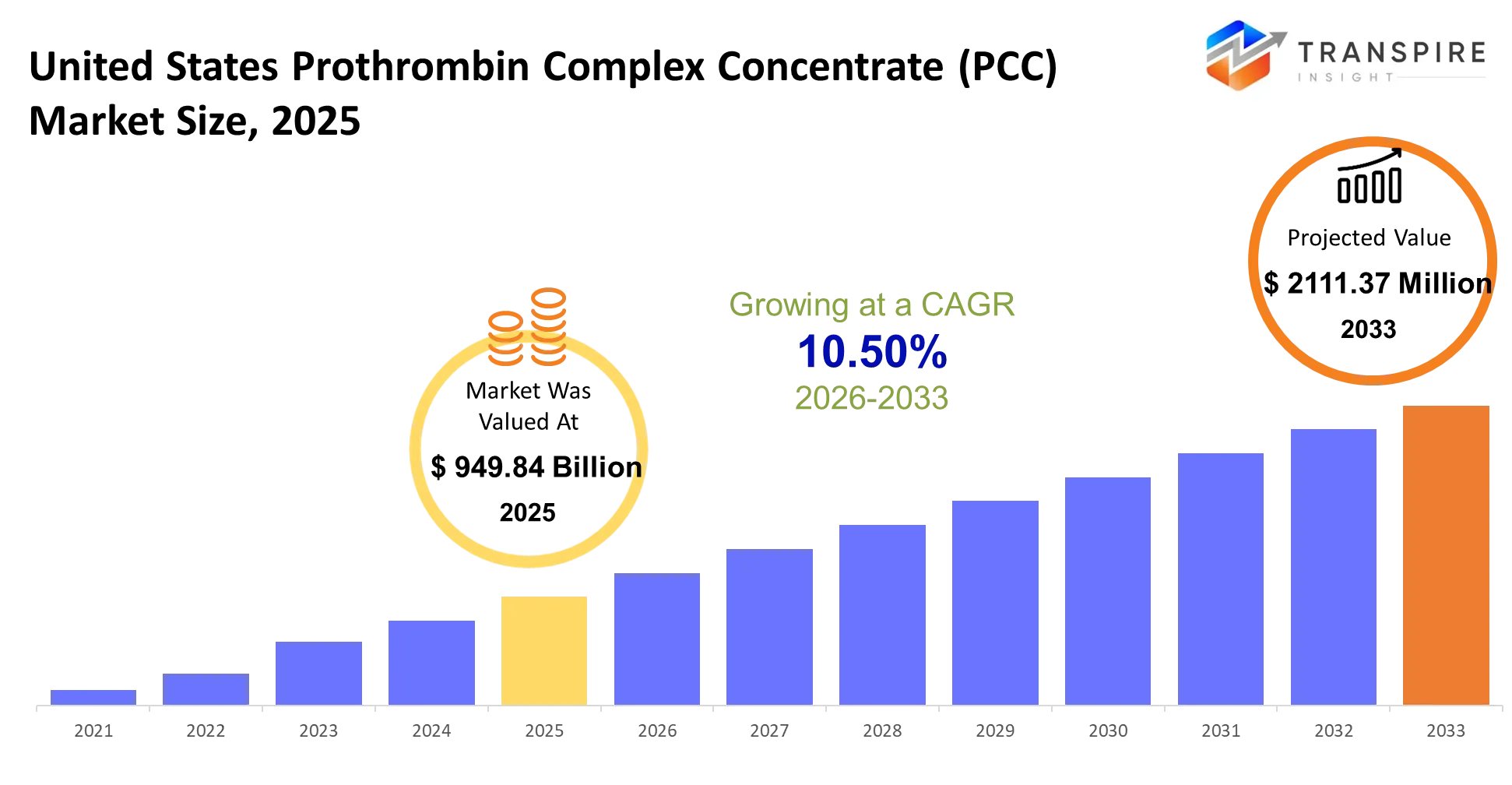
- United States Prothrombin Complex Concentrate (PCC) Market Size 2025: USD 949.84 Billion
- United States Prothrombin Complex Concentrate (PCC) Market Size 2033: USD 2111.37 Billion
- United States Prothrombin Complex Concentrate (PCC) Market CAGR: 10.50%
- United States Prothrombin Complex Concentrate (PCC) Market Segments: By Product Type (4-factor PCC, 3-factor PCC, Activated PCC, Others); By Application (Hemophilia Treatment, Anticoagulant Reversal, Bleeding Disorders, Surgical Bleeding Management, Others); By End User (Hospitals, Specialty Clinics, Blood Banks, Others); By Distribution Channel (Hospital Pharmacies, Retail Pharmacies, Online Pharmacies, Others)
To learn more about this report,  Download Free Sample Report
United States Prothrombin Complex Concentrate (PCC) Market Summary
The United States Prothrombin Complex Concentrate (PCC) Market was valued at USD 949.84 Billion in 2025. It is forecast to reach USD 2111.37 Billion by 2033. That is a CAGR of 10.50% over the period.
Prothrombin complex concentrates have become this sort of critical tool within U.S. hospital emergency care, because they let physicians rapidly reverse life-threatening bleeding. Mostly, this matters for patients on anticoagulants, or those needing urgent surgery right away. In real practice, these products reduce the time it takes to step in at trauma centers, cardiac units, and operating rooms, where every minute of uncontrolled bleeding nudges up both clinical risk and treatment costs and well you feel it pretty fast. Over the last five years, the market seems to have moved away from only selective use in specialized tertiary centers. Instead it’s leaning toward broader protocol driven adoption across community hospitals, and that trend is helped by updated anticoagulation reversal guidelines plus more solid clinical evidence implying quicker correction is better than the older plasma based methods.
One big trigger was the noticeable uptick in direct oral anticoagulant use after expanded cardiovascular disease management protocols, especially in the post pandemic period , and that also increased how often anticoagulant-related bleeding shows up in acute care settings.So, the demand for faster, more dependable reversal agents has grown very directly. And since hospitals are prioritizing treatment efficiency, shorter ICU stays, and better emergency outcomes, PCC utilization is shifting from emergency backup stock to more standard formulary inclusion. For suppliers, that shift gives stronger revenue visibility too, even when budgets feel tight, day to day.
Key Market Insights
- The Northeast is basically taking over the United States Prothrombin Complex Concentrate (PCC) Market, with something like nearly 34% share in 2025, helped by the heavy concentration of tertiary care hospitals , not just general facilities.
- The West actually looks like the fastest mover , and it is expected to grow a lot through 2032 , mainly because of more trauma center investments and a push toward higher level emergency readiness.
- Meanwhile the Southern states show fresh demand, driven by the gradual rollout of emergency medicine infrastructure and the steady rise in cardiovascular intervention rates , so it is not sudden but it is clearly building up.
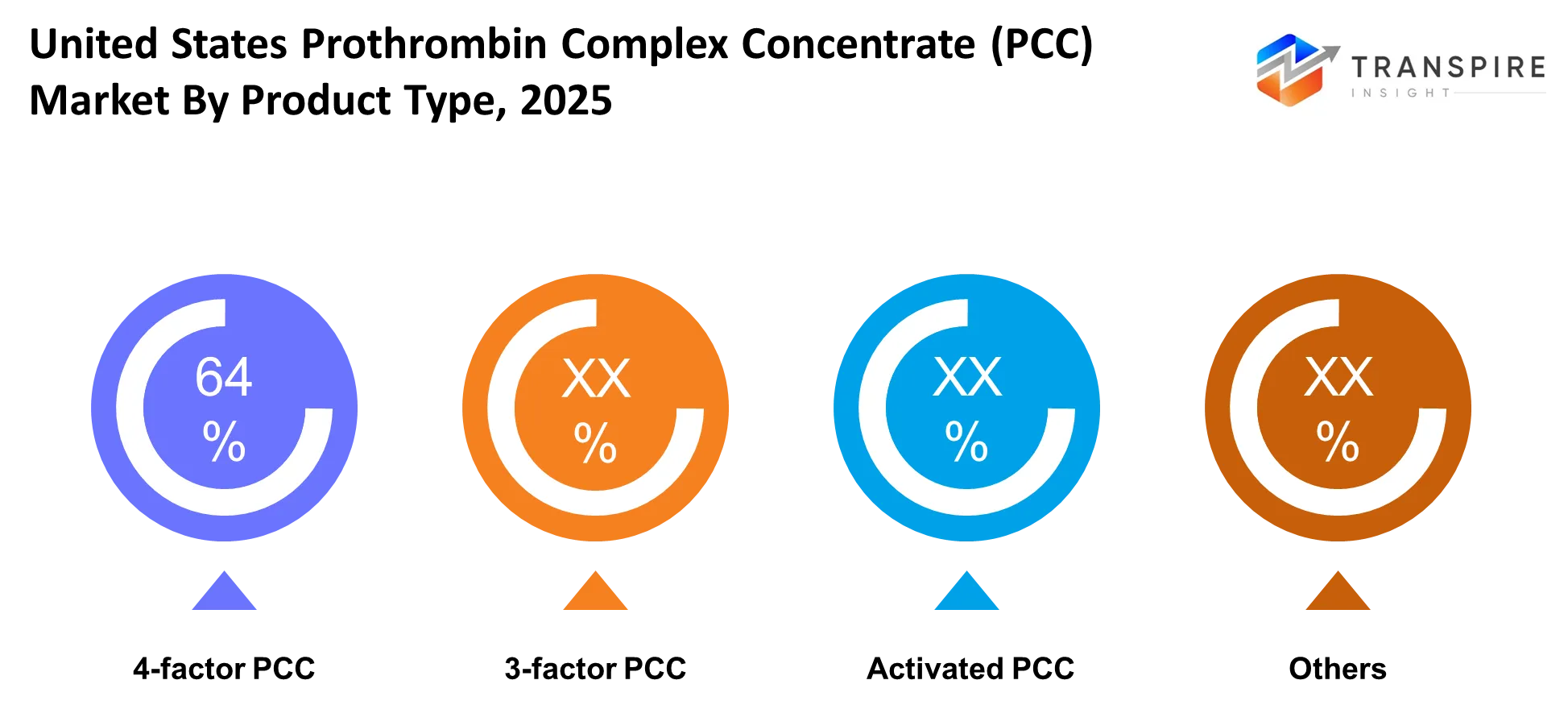
- In terms of product types , the 4-factor PCC segment leads, holding around 68% of the industry in 2025 , mainly because it tends to deliver stronger results for urgent anticoagulant reversal.
- The 3-factor PCC remains the second-largest slice, and it is mostly used across certain coagulation deficiency management protocols, where clinicians are selecting more specific approaches.
- As for the segments by formulation, Activated PCC is the speediest growth area, and it should keep accelerating through 2032 due to expanded hematology applications, plus broader adoption in clinical workflows.
- Urgent warfarin reversal takes the biggest slice, at almost 46% , and ends up being the top revenue driver.
- Hospitals are leading the United States Prothrombin Complex Concentrate (PCC) Market, holding more than 71% share by 2025, and really sit in the dominant position.
- Academic medical centers still buy in large volumes, mostly because they handle more critical care patients, with steadier throughput.
- Ambulatory surgical centers show the quickest expansion as an end user type across the forecast window.
What are the Key Drivers, Restraints, and Opportunities in the United States Prothrombin Complex Concentrate (PCC) Market?
Honestly, the most powerful driver pushing the United States Prothrombin Complex Concentrate (PCC) Market forward is this institutional tilt toward rapid anticoagulant reversal protocols, in acute care settings it kinda makes sense. The whole thing really took off when updated clinical guidelines—coming from major hematology and cardiovascular groups—started to back PCC more consistently than fresh frozen plasma, especially for urgent warfarin reversal. Hospitals moved because PCC tends to provide faster correction, requires smaller infusion volumes, and usually shortens the treatment window, like days not weeks. And then, there’s the commercial ripple effect. With formulary placement broadening, procurement contracts become more frequent, repeated and yes, more predictable. Plus, heavier use in emergency departments and trauma centers boosts revenue per hospital account, which is why decision makers pay attention.
On the other side, the biggest structural hurdle is still the narrow, and frankly costly, plasma-derived manufacturing platform. PCC relies on elaborate plasma fractionation facilities, long regulatory check-ins, and donor plasma collection networks that are extremely controlled. These limitations can’t be fixed overnight. Building compliant fractionation capacity takes serious capital and multi-year approvals, and that part drags. So you end up with ongoing pricing pressure and periodic supply tightness, which ends up slowing adoption among mid-sized hospitals, those hospitals that often live under tighter pharmacy budgets. In practice this holds back market penetration, and it also leaves a chunk of unrealized revenue sitting in secondary care networks, kind of waiting there.
A major growth opportunity kind of exists in pushing PCC use further, especially for direct oral anticoagulant associated bleeding handling. As U.S. anticoagulant prescriptions keep drifting toward newer oral options , hospitals are putting money into wider reversal readiness, sort of pre planning. Clinical studies that look at PCC as a useful substitute when dedicated reversal agents are too expensive could open up sizable new use cases, in particular across nearby trauma networks and community hospital clusters.
What Has the Impact of Artificial Intelligence Been on the United States Prothrombin Complex Concentrate (PCC) Market?
Artificial intelligence along with advanced digital technologies are sorta reshaping the U.S. PCC landscape, by lifting plasma fractionation efficiency, boosting inventory precision and kind of refining the treatment response workflows in a more fluid way. Manufacturers are more and more deploying AI-enabled process automation across plasma collection and purification lines, to track protein yield consistency and to automate deviation detection plus fine tune batch release timelines. In practice this cuts down on production interruptions and pushes throughput higher, which is critical in a market that is really constrained by limited plasma-derived supply.
Meanwhile machine learning models are giving even stronger predictive abilities across hospital and supplier networks, sort of like they “see” ahead a bit. Health systems then lean on forecasting algorithms to anticipate emergency reversal demand for anticoagulant prescription patterns, alongside seasonal trauma volumes, and the timing of procedure schedules. As a result, pharmacies can tune inventory levels more precisely , so there is less wastage yet product availability is better when acute bleeding events happen, even if it feels sudden.Some integrated care networks report directional declines in stockout incidents and quicker emergency dispensing times after moving to predictive inventory platforms.
On the clinical side, decision-support tools tucked into electronic health records help flag eligible reversal candidates faster, so treatment timing gets better and critical care efficiency improves.
A big limitation is still fragmented data infrastructure. A lot of mid-sized hospitals run with disconnected pharmacy, laboratory, and clinical systems, so algorithm accuracy takes a hit and integration costs go up too. Until interoperability improves, AI adoption across the broader coagulation therapy ecosystem will probably stay uneven.
Key Market Trends
- Since 2021, something like over 60% of the major U.S. trauma centers have revised anticoagulant reversal protocols, kinda shifting from plasma-based correction toward these faster PCC-first treatment pathways, and it keeps showing up across the network.
- Between 2022 and 2025, hospital pharmacy committees increasingly moved PCC from restricted access status to standard formulary inclusion, which basically made procurement contracts repeatable faster and more consistent.
- CSL Behring and Octapharma expanded their plasma collection investments after 2023 , as they responded to tighter fractionation capacity and also elevated hospital purchasing commitments that were harder to predict.
- Direct oral anticoagulant prescribing climbed by nearly 18% since 2020, and that pushed hospitals to expand reversal preparedness, plus they started evaluating broader off-label PCC deployment more seriously.
- After updated hematology guidance emerged in 2022, emergency physicians shortened the reversal decision timelines , so treatment initiation in acute bleeding cases became quicker, or at least faster than before.
- Mid-sized community hospitals changed procurement behavior after 2024 group purchasing renegotiations, adopting centralized PCC sourcing to reduce unit acquisition costs by an estimated 8–12% , which sounded modest but adds up.
- Digital inventory forecasting platforms gained traction after 2023, and they helped health systems reduce stockout events , while improving emergency product availability across distributed care sites.
- Manufacturers started prioritizing manufacturing resilience more often after pandemic-era plasma disruptions exposed supply fragility, so the domestic plasma collection network expansion got stronger.
- Competitive behavior shifted noticeably after 2024, with suppliers leaning into clinician education partnerships and protocol integration support , rather than competing only on product pricing.
United States Prothrombin Complex Concentrate (PCC) Market Segmentation
By Product Type :
That 4-factor PCC segment, kind of holds a major share in the United States Prothrombin Complex Concentrate (PCC) Market, mostly because it sees wide clinical use for urgent coagulation correction. There is a strong preference, within hospital emergency care settings , which kind of keeps demand steady especially where rapid reversal of anticoagulation is needed for immediate patient stabilization and continuing treatment without too much delay.
Meanwhile the 3-factor PCC segment keeps serving selected treatment needs, while activated PCC stays relevant in more specialized coagulation therapies. Other product variants also cover particular clinical requirements where more tailored formulations are needed. Overall growth across product categories seems linked to higher emphasis on advanced blood management solutions, along with improved treatment outcomes across both acute and chronic care environments.
To learn more about this report, Download Free Sample Report
By Application :
Hemophilia treatment still counts as an important application area, supported by the need for effective clotting factor replacement, during emergency episodes. Ongoing advancements in therapeutic approaches help expand this segment, and healthcare facilities increasingly lean toward concentrated products that reduce treatment delays and improve clinical response during critical interventions.
Anticoagulant reversal is a rapidly growing application too, mainly due to rising anticoagulant use among aging patient populations. Bleeding disorder management, and surgical bleeding control, also drive consistent demand as hospitals look for faster hemostatic solutions during complex procedures. Other applications keep showing up, as clinical understanding of coagulation support broadens across different treatment environments.
By End User :
Hospitals take the largest end user share, mostly because the patient inflow is high , they have advanced emergency response infrastructure, and because access to critical care treatment pathways is immediate. Even with that , demand stays strong, since hospital systems are prioritizing useful coagulation correction products to help with trauma handling, surgery preparation and, of course , urgent anticoagulation reversal needs.
Specialty clinics also contribute, though in a more narrow way, via hematology focus and ongoing treatment monitoring, especially for patients who need continuous coagulation management. Blood banks are useful as well, supporting supply continuity and storage capabilities, kind of keeping the whole thing steady behind the scenes. Other healthcare facilities are still expanding their participation, as wider access to advanced coagulation therapies grows across regional care networks and referral pathways.
By Distribution Channel :
Hospital pharmacies dominate distribution because product administration often happens in controlled medical environments, where immediate access matters a lot. Plus, strong inventory management systems across hospital networks help guarantee fast availability during emergencies. So this channel ends up being central to efficient treatment delivery across acute and surgical care applications.
Retail pharmacies tend to show up in a smaller but pretty steady way, kind of like they help with follow up treatment coordination and specialized prescription access, not always front and center. Online pharmacies are also getting more attention lately , mainly because pharmaceutical logistics are improving and digital healthcare adoption is moving faster. If the regulated distribution frameworks keep developing, they should open the door to wider accessibility, while still holding on to strict product handling, safety standards, and the required compliance, in place.
What are the Key Use Cases Driving the United States Prothrombin Complex Concentrate (PCC) Market?
The main use case that is really pushing PCC adoption across the United States is the urgent flip of warfarin associated bleeding, mostly in hospital emergency departments and Level I trauma centers. This particular application drives the highest demand, because clinicians need fast coagulation correction before surgery or while dealing with life threatening hemorrhagic moments, and if the response is delayed it can push ICU time up, and in turn raise overall treatment costs.
After the emergency reversal piece, use is also creeping into perioperative bleeding management and into more intricate cardiovascular procedures at big academic medical centers. Cardiac surgery teams are leaning more and more on PCC to handle coagulopathy during these high risk interventions, while transplant units and neurosurgical teams are folding it into protocol based bleeding control pathways, not just doing it ad hoc.
You can also see emerging applications that go beyond warfarin, including more frequent use for direct oral anticoagulant related bleeding, where dedicated reversal agents stay expensive, or sometimes simply not on hand. Another area that is starting to take shape is prehospital trauma stabilization, especially inside advanced regional care networks, where tighter field to hospital coordination for treatment might let PCC fit into next generation emergency hemorrhage response strategies across the forecast period.
|
Report Metrics |
Details |
|
Market size value in 2025 |
USD 949.84 Billion |
|
Market size value in 2026 |
USD 1049.62 Billion |
|
Revenue forecast in 2033 |
USD 2111.37 Billion |
|
Growth rate |
CAGR of 10.50% from 2026 to 2033 |
|
Base year |
2025 |
|
Historical data |
2021 - 2024 |
|
Forecast period |
2026 - 2033 |
|
Report coverage |
Revenue forecast, competitive landscape, growth factors, and trends |
|
Geographic scope |
United States of America |
|
Key company profiled |
CSL Behring, Takeda Pharmaceutical, Octapharma, Grifols, Pfizer, Bayer, Kedrion Biopharma, Novo Nordisk, Bio Products Laboratory, Sanquin, LFB Group, Roche, Biotest AG, Emergent BioSolutions, ADMA Biologics |
|
Customization scope |
Free report customization (country, regional & segment scope). Avail customized purchase options to meet your exact research needs. |
|
Report Segmentation |
By Product Type (4-factor PCC, 3-factor PCC, Activated PCC, Others); By Application (Hemophilia Treatment, Anticoagulant Reversal, Bleeding Disorders, Surgical Bleeding Management, Others); By End User (Hospitals, Specialty Clinics, Blood Banks, Others); By Distribution Channel (Hospital Pharmacies, Retail Pharmacies, Online Pharmacies, Others) |
Which Regions are Driving the United States Prothrombin Complex Concentrate (PCC) Market Growth?
The Northeastern United States still feels like the dominant regional market for prothrombin complex concentrate, because it sorta blends thick clusters of tertiary care hospitals with some of the country’s most advanced trauma and cardiovascular care networks. States like New York, Massachusetts,and Pennsylvania get a real advantage from highly standardized anticoagulation reversal protocols, largely influenced by big academic health systems and strong payer reimbursement structures. On top of that this area tends to show higher procedural volumes in complicated cardiac surgery, and in emergency intervention too, so product use stays steady. There’s also this mature ecosystem of specialized blood management programs, clinical research institutions, and centralized hospital purchasing processes that keeps reinforcing that leadership.
Then the Midwest comes in as the second-largest regional contributor, but its main strength is more about operational consistency rather than extreme clinical density. Big integrated hospital systems across Illinois, Ohio, and Minnesota have rolled out disciplined formulary planning that helps maintain stable procurement habits for PCC products. Compared with the Northeast, the Midwest leans a bit more on cost efficiency, with purchasing choices being shaped by budgeting discipline and long-term supplier agreements. That dynamic basically gives manufacturers a steadier revenue runway, since utilization growth follows broader hospital system expansion, not just occasional spikes from emergency demand.
The Western United States is coming into view as the fastest-growing region, mostly because there is rapid investment in trauma facilities and digital critical care modernization, kind of like they are moving two steps at once. California, Arizona, and Colorado have expanded high-acuity treatment capacity since 2023, and health systems have also sped up adoption of predictive inventory management for emergency therapeutics. More direct oral anticoagulants are being used across these states so now there is even more pressure to build rapid reversal preparedness, not just slower fallback options. So for market entrants and investors, this region looks like a strong opening through 2026–2033 as acute care networks keep folding in advanced bleeding management protocols.
Who are the Key Players in the United States Prothrombin Complex Concentrate (PCC) Market and How Do They Compete?
The competitive landscape of the United States Prothrombin Complex Concentrate market is kinda consolidated, mostly because the regulatory barriers are high, plasma sourcing is constrained , and the fractionation steps are complex too. So a meaningful new entry gets capped. In general, competition is not so much about price shocks, it’s more about day to day manufacturing dependability, clinical substantiation, and supply continuity. Current players tend to defend their share by pushing expanded plasma collection capacity, using tighter hospital contracting frameworks, and offering protocol integration help for acute care providers. The ones that end up getting real traction are usually those who can ensure dependable product availability while staying aligned with the changing anticoagulation reversal guidance.
CSL Behring leans on its scale plus clinical integration. Its edge comes from an extensive plasma collection setup, and also from how familiar physicians already are with its coagulation line, which makes hospital procurement feel more stable. It keeps on investing in the U.S. plasma network to improve domestic supply resilience. Octapharma, on the other hand, differentiates through a more vertically integrated plasma processing approach, and it also makes focused investments into manufacturing flexibility so it can respond faster when emergency care demand shifts.
Takeda Pharmaceutical Company is really all about specialized hematology know-how, and it leans hard into deep relationships with large academic medical centers. There's an intention there to make formulary positioning stronger, like, more firmly in place. The approach they take also puts weight on evidence based clinical education, which is supposed to help physicians feel more sure when they’re dealing with the complicated bleeding management protocols.On the other side, Grifols gains an edge via aggressive plasma center expansion, plus operational efficiency initiatives—so basically they try to reduce production bottlenecks, and keep things moving smoother. Then there’s Pfizer, which benefits from broad access to hospital systems, and it uses its long standing distribution reach to push further into community healthcare networks. In those places, procurement scale often ends up shaping purchasing decisions, even when the clinical factors are still important.
Company List
- CSL Behring
- Takeda Pharmaceutical
- Octapharma
- Grifols
- Pfizer
- Bayer
- Kedrion Biopharma
- Novo Nordisk
- Bio Products Laboratory
- Sanquin
- LFB Group
- Roche
- Biotest AG
- Emergent BioSolutions
- ADMA Biologics
Recent Development News
In August 2025, Octapharma published pivotal Phase III clinical data for Balfaxar through a peer-reviewed clinical validation initiative. The publication of efficacy and safety findings from the LEX-209 trial strengthened physician confidence and accelerated institutional evaluation of Balfaxar as a key alternative to incumbent PCC therapies in the United States.
Source https://www.octapharma.com/
In February 2026, CSL Limited reported strategic cost-optimization and commercial expansion initiatives. These efforts are expected to reinforce its leadership in PCC products such as Kcentra, supporting sustained market penetration in the United States despite short-term financial pressure. Sourcehttps://in.investing.com/
What Strategic Insights Define the Future of the United States Prothrombin Complex Concentrate (PCC) Market?
Over the next five to seven years, the United States Prothrombin Complex Concentrate market is kinda moving—structurally—toward protocol-embedded, first-line integration across acute care pathways, instead of the usual episodic emergency use. The main driver is that reversal expectations for anticoagulants are getting faster, and hospitals are under more pressure to cut critical care costs, while clinicians keep leaning into broader clinical standardization for rapid hemostatic intervention. In practice, this shift will probably turn PCC from a narrow specialty therapeutic reserve into a more deliberately managed core hospital formulary product.
There’s also a less obvious risk that people don’t always talk about, which comes from how concentrated the plasma-derived manufacturing is. Because there are only a few suppliers with enough fractionation capacity, any disruption in donor plasma availability, regulatory inspection delays, or manufacturing quality events could quickly tighten supply and then create pricing volatility. So even if the clinical outcomes look favorable, this concentration risk may still slow adoption in budget-sensitive regional health systems.
Meanwhile, a real and growing opportunity is the expansion of PCC use for direct oral anticoagulant-related bleeding, especially since hospitals are trying to find practical alternatives to higher-cost dedicated reversal agents. In the Western U.S. integrated care systems, folks are already building the infrastructure for this transition. For market participants, the clearest strategic move is to invest now in domestic plasma collection expansion, and also in real-world clinical evidence generation, because that can strengthen supply resilience and help accelerate broader protocol adoption before competitive pressure starts to really intensify.
United States Prothrombin Complex Concentrate (PCC) Market Report Segmentation
By Product Type
- 4-factor PCC
- 3-factor PCC
- Activated PCC
By Application
- Hemophilia Treatment
- Anticoagulant Reversal
- Bleeding Disorders
- Surgical Bleeding Management
By End User
- Hospitals
- Specialty Clinics
- Blood Banks
By Distribution Channel
- Hospital Pharmacies
- Retail Pharmacies
- Online Pharmacies
Frequently Asked Questions
Find quick answers to common questions.
The United States Prothrombin Complex Concentrate (PCC) Market size is USD 2111.37 Billion in 2033.
Key segments for the United States Prothrombin Complex Concentrate (PCC) Market are By Product Type (4-factor PCC, 3-factor PCC, Activated PCC, Others); By Application (Hemophilia Treatment, Anticoagulant Reversal, Bleeding Disorders, Surgical Bleeding Management, Others); By End User (Hospitals, Specialty Clinics, Blood Banks, Others); By Distribution Channel (Hospital Pharmacies, Retail Pharmacies, Online Pharmacies, Others).
Major United States Prothrombin Complex Concentrate (PCC) Market players are CSL Behring, Takeda Pharmaceutical, Octapharma, Grifols, Pfizer, Bayer, Kedrion Biopharma, Novo Nordisk, Bio Products Laboratory, Sanquin, LFB Group, Roche, Biotest AG, Emergent BioSolutions, ADMA Biologics.
The United States Prothrombin Complex Concentrate (PCC) Market size is USD 949.84 Billion in 2025.
The United States Prothrombin Complex Concentrate (PCC) Market CAGR is 10.50% from 2026 to 2033.
- CSL Behring
- Takeda Pharmaceutical
- Octapharma
- Grifols
- Pfizer
- Bayer
- Kedrion Biopharma
- Novo Nordisk
- Bio Products Laboratory
- Sanquin
- LFB Group
- Roche
- Biotest AG
- Emergent BioSolutions
- ADMA Biologics
Recently Published Reports
-
Apr 2026
AI in Diabetic Retinopathy Market
AI in Diabetic Retinopathy Market Size, Share & Analysis Report By Type (Screening AI Systems, Diagnostic AI Systems, and Predictive AI Models), By Application Segment (Hospitals, Ophthalmology Clinics, Diagnostic Centers, and Research and Development), and Geography (North America, Europe, Asia-Pacific, Middle East and Africa, South and Central America), 2021 - 2031
-
Apr 2026
Psychometric Tests Market
Psychometric Tests Market Size, Share & Analysis Report By Type (Personality Tests, Ability/Aptitude Tests, Skill/Knowledge Tests, and Others), By Application (Talent Acquisition and Talent Management), and Geography (North America, Europe, Asia-Pacific, Middle East and Africa, South and Central America), 2021 – 2031
-
Apr 2026
Rare Biological Sample Collection Market
Rare Biological Sample Collection Market Size, Share & Analysis Report By Type (Isolation Kits & Reagent, Blood Collection Tubes, and Others), By Application (Oncology, Transcriptomics, Pharmacogenomics, and Others), and Geography (North America, Europe, Asia-Pacific, Middle East and Africa, South and Central America), 2021 – 2031
-
Apr 2026
Patient Lift Pendant Market
Patient Lift Pendant Market By Product Type (Wired Pendants, Wireless, Programmable), By Operation Type(Manual, Electric), By End-Users (Healthcare Professionals, Patients), By Application (Hospitals, Homecare, Rehabilitation Centers, Others), By Industry Analysis, Size, Share, Growth, Trends, and Forecasts 2021-2033
Our Clients
.jpg)