

United States Plant-Based Collagen Supplement Market Summary
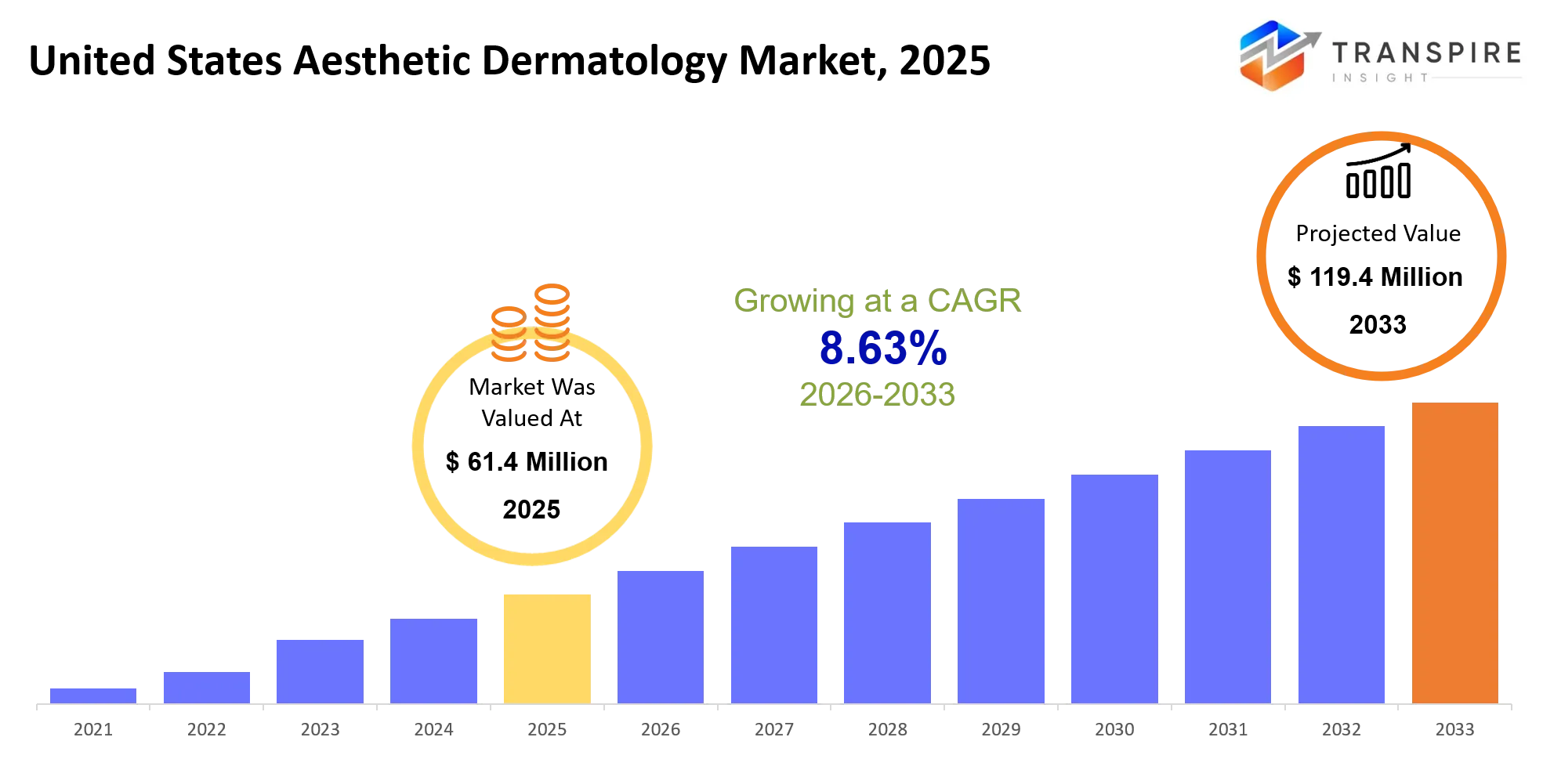
As per Transpire Insight Analysis the United States Plant-Based Collagen Supplement Market size is estimated at USD 61.4 Million in 2025 and is anticipated to reach USD 119.4 Million by 2033, growing at a CAGR of 8.63% from 2026 to 2033.
The U.S. plant based collagen supplement market kind of backs beauty nutrition and wellness things by offering plant derived nutrients like amino acids, vitamin C, biotin, silica, and botanical extracts, which are meant to help the body’s natural collagen production. In the last 3–5 years, this whole category seems to have moved away from only plain vegan beauty supplements, and instead toward more multifunctional blends, where collagen support nutrients are paired with wider effects for skin hair nails, and general wellness. Take Garden of Life as one example, they promote a plant collagen builder that includes biotin, silica and also more than 30 organic plant foods. Then during 2020 to 2022, the supply chain got disrupted a bit, so companies leaned harder on diversifying ingredient sourcing, and they also worked on beefing up domestic distribution. The market is reported at USD 61.4 million in 2025, and it’s projected to jump to USD 119.4 million by 2033. How fast revenue grows will likely hinge on convenient formats, cleaner formulations, better ingredient transparency, plus more reach through online platforms and specialty retail.
United States Plant-Based Collagen Supplement Market Size & Forecast:
- United States Plant-Based Collagen Supplement Market Size 2025: USD 61.4 Million
- Expected Market Value 2033: USD 119.4 Million
- Forecast CAGR: 8.63%
- Key Profile: Garden of Life, Vital Proteins, NeoCell, Sunwarrior, Ancient Nutrition, HUM Nutrition, Future Kind, MaryRuth Organics, Ora Organic, Moon Juice, Your Super, Vega, Amazing Grass, Nature's Bounty, GNC Holdings
Key Market Insights
- Market value is expected to nearly double , from USD 61.4 million in 2025 to around USD 119.4 million by 2033 , while overall investment keeps getting stronger in differentiated plant-based formulations.
- West Coast markets still dominate specialty wellness adoption, though Southern states are showing momentum too, mainly as fitness, beauty, and natural-product retail networks keep expanding, in a kind of slow and steady way.
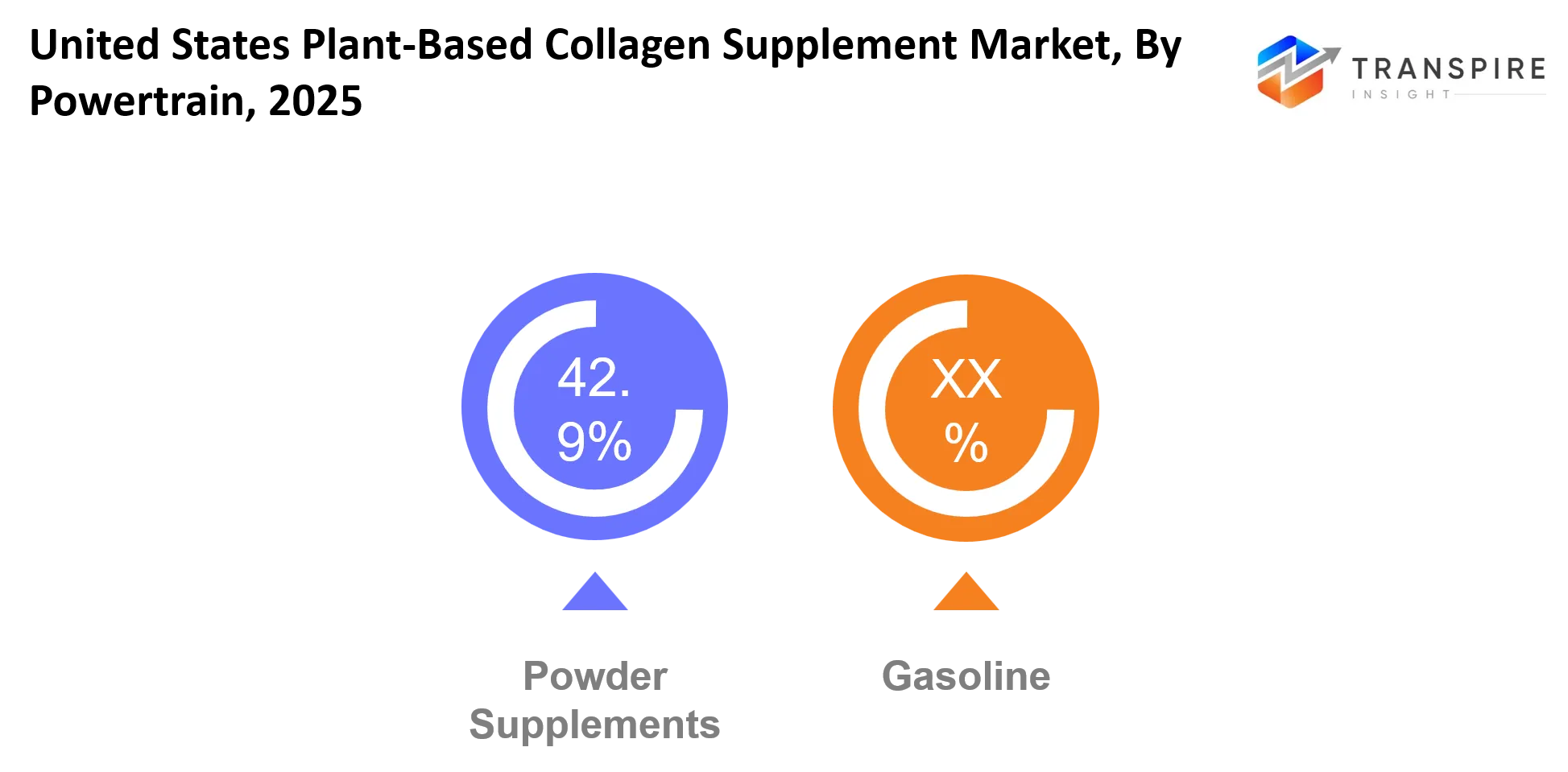
- Powder supplements are holding onto a notable share, helped by flexible dosing, compatibility with beverages, and the fact that people like having customizable daily nutrition routines , more than rigid schedules .
- For applications , skin health remains out front. At the same time , joint and bone support are expanding , along with sports nutrition and general wellness use cases, which keeps widening product positioning and shelf appeal.
- In formulations , Vitamin C, amino acids, biotin , and silica have become more important, and they’re also pushing things away from a single-ingredient story toward broader collagen-support nutrient combinations.
- Online retail really accelerated after 2020, so smaller brands can reach consumers more easily, and there’s less dependence on traditional specialty-store distribution.
- Plant-based collagen builders are also increasingly framing themselves around organic and non-GMO credentials, and Garden of Life is a good example, since it combines biotin, silica, botanicals, and certified organic ingredients into one package.
- Gummy formats and functional beverage formats are getting more attention lately too, because many consumers want alternatives to conventional tablets and daily powder routines, without feeling like they’re giving up convenience.
- Beauty shoppers and women are major purchasing groups, yet athletes and fitness enthusiasts are building additional demand, creating openings for protein-rich multifunctional formulations that do more than one job.
- Meanwhile, competitive strategies are shifting toward clean labels, third-party certifications, ingredient transparency, and multifunctional claims, which makes differentiation requirements tougher across the established brands.
What are the Key Drivers, Restraints, and Opportunities in the United States Plant-Based Collagen Supplement Market?
Driver: The strongest growth pull is shifting from animal-derived collagen toward plant-based collagen-support blends that bundle several functional nutrients, and it kind of keeps expanding from there. Manufacturers may aim at vegan consumers without leaning on bovine , porcine, or marine collagen inputs. And product innovation has also wandered past one-only beauty positioning , into formulas that try to cover skin , hair, nail, antioxidants, and general wellness, all at once. Garden of Life , for example, uses biotin, silica, antioxidants, and a mix of organic plant foods inside a collagen-builder formulation. This wider value narrative lets them justify premium pricing and it tends to make repeat buying more likely too.
Restraint: The main structural snag is the scientific plus shopper confusion around the phrase “vegan collagen”. Plants do not really produce collagen on their own, so a lot of products that are marketed as plant-based collagen are actually giving you nutrients meant to support your own, endogenous collagen. That difference can raise skepticism, muddy product claims, and basically push brands to spend more on education, testing, and clearer labeling , so customers can understand what they are buying.
Opportunity: Precision fermentation and biotechnology create a longer-range opening for truly animal-free collagen type ingredients. If commercial development of engineered collagen keeps moving forward, it could eventually shrink the functional distance between collagen builders and direct collagen supplementation. Then you’d have room for premium ingestible products, plus clinically backed formulations, with a more solid evidence trail.
What Has the Impact of Artificial Intelligence Been on the United States Plant-Based Collagen Supplement Market?
Artificial intelligence is starting to affect the supplement space mostly via product development, demand forecasting, digital merchandising, and formulation analysis , not so much through physical manufacturing automation. Machine-learning systems can go through consumer reviews, browsing habits, purchase records, and also product performance, then sort out what sort of ingredient pairings make sense like vitamin C, biotin, silica, amino acids, and botanical extracts, somehow. Manufacturers can take those insights to figure out which new formulations to push, adjust product sizes, anticipate inventory needs, and trim extra stock across online plus specialty retail. With AI-backed demand forecasting, brands can also move faster when seasonal beauty buying patterns shift or when promotions ramp up, a bit.
More advanced analytics can also make quality-control workflows smoother by flagging odd ingredient specifications, strange batch-level data, or supplier inconsistencies for extra checking. AI can further help with more personalized product recommendations , basically matching consumer preferences to formats such as powders capsules gummies and functional beverages. The upside shows up as faster product decisions, improved inventory allocation , and tighter digital marketing , rather than direct production automation. Still, one big snag stays in place: there’s a shortage of high-quality clinical and consumer outcome data that is specific to plant-based collagen-support formulations. Until stronger standardized datasets exist, AI-driven formulation ideas or efficacy predictions can end up relying on incomplete evidence.
Key Market Trends
- Since 2020, online purchasing has sort of become more important as supplement brands expand direct-to-consumer sales, and they also run more digital subscription programs, little by little.
- Formulators now more often combine vitamin C, biotin, silica, amino acids and botanicals, instead of leaning on single-purpose collagen-support ingredients which is kind of limiting.
- Garden of Life uses over 30 organic plant foods, and it kind of shows the shift toward whole-food, multifunctional collagen-builder formulations, more than the old “just add collagen” idea.
- Powder formats still help people customize their routine, however gummies and functional beverages are increasingly aimed at consumers who want an easier daily supplement, without the hassle.
- Vegan and non-GMO certifications are now stronger competitive signals as brands go after clean-label shoppers, and also those who feel strongly plant-focused.
- Beauty messaging has expanded way past skin, it now includes hair, nails, joint support, sports nutrition, and even more general wellness use-cases.
- Ingredient transparency has gained real weight, because consumers are learning the difference between actual collagen, and nutrients that are meant to support natural collagen synthesis.
- Specialty nutrition retailers keep adding credibility for premium products, while marketplaces are improving access for smaller supplement brands, which can matter a lot for growth.
- Biotechnology is starting to look like a longer-term competitive factor, with engineered collagen potentially opening up new animal-free product categories.
- Overall, product differentiation is leaning more on formulation quality convenience certification, evidence, and digital engagement, not just vegan positioning on its own, anymore.
United States Plant-Based Collagen Supplement Market Segmentation
By Product Type
Collagen Builders have a fairly strong stance, since collagen support products can merge vitamin C, biotin, silica, amino acids, and botanical ingredients , without animal derived collagen . Vegan collagen peptides and plant protein blends end up backing people who want plant based protein and beauty nutrition at the same time , in one formulation. Powder supplements stay important though, because powder formats blend easily with smoothies, water, coffee and other drinks, while Capsules are there for more convenient daily dosing. Gummies keep picking up attention, mostly because they are easier to eat and the flavor profiles feel consumer friendly .
Liquid supplements and functional beverages also push collagen-support nutrition into ready to consume formats, which opens up more convenience led product development. Sachets are handy for portability and controlled serving sizes , especially for travel, work, and fitness routines. Other formats include specialized blends, chewables, and mix and match wellness products. Going forward, product innovation will likely lean harder on taste, solubility, ingredient compatibility, packing convenience, and those multifunctional benefits across beauty and wellness categories .
By Ingredient
Vitamin C-based formulations are kinda important, because vitamin C helps normal collagen formation and it fits pretty naturally with beauty driven supplement positioning. Bamboo Extract together with Silica kinda support formulations aimed at skin, hair, and nail nourishment, while Biotin is still broadly used across beauty oriented products. Garden of Life is a practical example, with a formula that includes 10 mg silica from organic bamboo and 2,500 mcg whole food biotin . Amino Acid blends add building parts that relate to protein synthesis and they help with a more comprehensive nutritional story.
Seaweed Extract, plus botanical extracts, bring extra chances for differentiated plant based formulations, especially when you’re talking premium wellness positioning. Soy protein and Pea protein also help protein focused products, and they tend to appeal to fitness consumers, in a straightforward way. Other ingredients may include antioxidant compounds , minerals, plant enzymes, and specialty extracts. Ingredient innovation is likely to shift toward complementary combinations instead of isolated nutrients, so brands can hit several wellness goals in one single product .
By Application
Skin Health is probably the strongest application, because collagen-support products have long been tied to elasticity, how someone looks, hydration, and those age related cosmetic worries. Hair Health and Nail Health also sit pretty close together as applications, so brands can frame products around a few visible beauty wins , in one go. Then Joint Health plus Bone Health give a more expanded nutrition pathway, especially for mature adults, who are often looking for plant based wellness type solutions.
Anti-Aging still feels tightly linked with beauty supplementation, and it helps brands sell premium products, in a very direct way. Sports Nutrition and General Wellness kind of push the audience wider, beyond the usual beauty only buyers. Athletes and Fitness Enthusiasts can fold protein rich plant formulations into a wider nutrition routine, while at the same time Beauty Supplements stay relevant for people who care mostly about appearance.
Other applications can include recovery, nutritional support, and sort of lifestyle driven supplementation. In the future, product development will more and more connect beauty benefits with broader nutritional functions, so multifunctional products become more common, and they pull in a wider set of consumers as well.
By Distribution Channel
Online retail and e commerce platforms have become key routes for plant based supplement sales because digital channels let brands put up detailed ingredient notes, certification proofs, customer feedback, how to use guidance, and even subscription style options. Direct sales also help with customer retention using brand owned websites and recurring buying programs, which is kind of the same idea over time but just smoother. Meanwhile specialty nutrition stores and health & wellness stores give better product discovery to consumers who already want natural vegan fitness, or more premium nutrition type items. Supermarkets and hypermarkets broaden mainstream access, and they often make impulse purchasing feel easier thanks to their well known retail presence.
Pharmacies bring extra trust for people looking for structured wellness products, while others include clinics, independent retailers, beauty shops, and practitioner led channels. So the distribution strategy increasingly turns into a balancing act, mixing digital reach with physical product discovery. Online channels help smaller brands because the geographic barriers are lower, while physical retailers help already known products show up in the real world for consumers who prefer in person purchasing.
By End User
Adults are kind of a broad consumer base , while Women and Beauty Consumers still matter a lot because skin , hair, nail, and anti-aging uses strongly shape the buying decision. Vegans are also a clear target group, since plant based formulations dodge animal-derived collagen components. Then you have Athletes and Fitness Enthusiasts that open more doors for products which combine collagen supporting nutrients together with plant proteins and some wider nutritional upsides.
\Men, meanwhile, are becoming an increasingly important group, as beauty , joint, fitness, and general wellness positioning becomes less locked in by gender. Elderly consumers also bring opportunities for joint, bone, and general wellness products especially when the formulations focus on easy dosing and multiple nutritional benefits at the same time.
Other users include people on flexitarian diets, plus individuals who want alternatives to animal-derived supplements. In the end, segmentation is going to blend more and more across lifestyle categories , because consumers will pick products based on the formulation, the application , dietary preference, convenience, and perceived value rather than on one single demographic feature.
What are the Key Use Cases Driving the United States Plant-Based Collagen Supplement Market?
Skin health stays the biggest use case, because collagen-support formulations kind of connect right away with beauty routines that care about skin looks, elasticity, and those age-related changes. Beauty consumers, and women in general, are key buying segments, and multifunctional products are moving more and more toward combining skin with hair and nail positioning. Product types like capsules, powders, and gummies also make it easier for people to stick to regular daily use, without thinking too much about it.
Hair and nail health still matter a lot as adjacent applications, especially for consumers who want one beauty supplement covering several visible outcomes. General wellness and sports nutrition also keep helping adoption, particularly among fitness enthusiasts and athletes, when the formulas include amino acids, vitamin C, biotin, silica, and plant proteins. With that kind of setup brands can really go past a strict beauty-only story, and lean into something broader, and yes, more agreeable.
New use cases are starting to appear too, like joint and bone wellness, where mature adults, and elderly consumers, open space for more comprehensive nutritional products. Functional beverages and portable sachets can push usage into the workplace, travel, and fitness routines, which is pretty practical. Even biotechnology-based animal-free collagen could eventually bring in new angles, if scalable ingestible formats end up with stronger clinical validation, and can be produced at the right cost.
|
Report Metrics |
Details |
|
Market size value in 2025 |
USD 61.4 Million |
|
Market size value in 2026 |
USD 66.8 Million |
|
Revenue forecast in 2033 |
USD 119.4 Million |
|
Growth rate |
CAGR of 8.63% from 2026 to 2033 |
|
Base year |
2025 |
|
Historical data |
2021 - 2024 |
|
Forecast period |
2026 - 2033 |
|
Report coverage |
Revenue forecast, competitive landscape, growth factors, and trends |
|
Regional scope |
United States; Canada; Mexico; United Kingdom; Germany; France; Italy; Spain; Denmark; Sweden; Norway; China; Japan; India; Australia; South Korea; Thailand; Brazil; Argentina; South Africa; Saudi Arabia; United Arab Emirates |
|
Key company profiled |
Garden of Life, Vital Proteins, NeoCell, Sunwarrior, Ancient Nutrition, HUM Nutrition, Future Kind, MaryRuth Organics, Ora Organic, Moon Juice, Your Super, Vega, Amazing Grass, Nature's Bounty, GNC Holdings |
|
Customization scope |
Free report customization (country, regional & segment scope). Avail customized purchase options to meet your exact research needs. |
|
Report Segmentation |
By Product Type (Collagen Builders, Vegan Collagen Peptides, Plant Protein Blends, Powder Supplements, Capsules, Gummies, Liquid Supplements, Functional Beverages, Sachets, Others); By Ingredient (Vitamin C-Based, Bamboo Extract, Amino Acid Blends, Biotin, Silica, Seaweed Extract, Soy Protein, Pea Protein, Botanical Extracts, Others); By Application (Skin Health, Hair Health, Nail Health, Joint Health, Bone Health, Anti-Aging, Sports Nutrition, General Wellness, Beauty Supplements, Others); By Distribution Channel (Online Retail, Supermarkets & Hypermarkets, Pharmacies, Specialty Nutrition Stores, Health & Wellness Stores, Direct Sales, E-commerce Platforms, Others); By End User (Adults, Women, Men, Elderly, Athletes, Beauty Consumers, Vegans, Fitness Enthusiasts, Others) |
Which Regions are Driving the United States Plant-Based Collagen Supplement Market Growth?
The Western United States is arguably the leading regional market, backed by solid natural-product retail, well known wellness brands, and a high concentration of health-minded consumers that just seem to buy faster. California especially has this mature sort of ecosystem, connecting specialty nutrition stores, direct-to-consumer brands, fitness businesses and beauty retailers all together, not really in separate lanes. The region also rides on product innovation momentum, where brands like Sunwarrior highlight organic plant proteins, bamboo-derived silica, biotin, vitamin C, and botanical ingredients, all folded into collagen-support formulations.
The Northeastern United States then acts as the fairly steady second market, with growth pulled along by dense urban populations, premium retail networks, and meaningful spending on beauty plus wellbeing. This region is a bit different from the West, because it leans more on concentrated metropolitan purchasing and the existing pharmacy, specialty retail, and e-commerce infrastructure. New York also works as a major stage for brand visibility, as seen when Vital Proteins used New York Fashion Week in 2026 to link collagen products with beauty, food, and lifestyle audiences, more or less at once.
Meanwhile the Southern United States is positioned as the fastest-growing regional market, mainly due to population expansion, higher fitness participation, and broader availability of wellness retail that creates extra buying occasions. Lower operating costs and expanding distribution networks further help, making Southern states seem attractive for warehouse expansion and regional e-commerce fulfillment. For 2026–2033, market entrants who pair low-cost store formats with strong digital distribution can use Southern expansion to reach consumers beyond the more established coastal wellness markets.
Who are the Key Players in the United States Plant-Based Collagen Supplement Market and How Do They Compete?
Competition is still kind of fragmented, you know, with long standing supplement brands going head to head with specialist vegan nutrition companies and also those digitally native entrants. Sure, price does matter, but it’s not the main thing anymore. It’s more like formulation credibility, vegan certification, ingredient transparency, format convenience, and this whole “beauty” positioning vibe that’s slowly becoming the real differentiator. On top of that the category is getting nudged by biotech companies developing animal-free collagen, which could sooner or later put pressure on the usual collagen-builder formulations.
Garden of Life sort of differentiates by leaning hard into organic and whole-food messaging, using more than 30 certified organic plant foods along with biotin and bamboo derived silica in its Organic Plant Collagen Builder. Sunwarrior is more protein-led, blending organic pea protein and brown rice peptides, then adding greens, sea buckthorn, tremella, hyaluronic acid, silica, and vitamin C. Vital Proteins is taking collagen into adjacent wellness moments, and they’re rolling out Advanced Collagen Peptides + Creatine in April 2026, positioned around exercise performance, recovery, and that kind of everyday endurance support.
Ora Organic competes through plant based, third-party tested, and organic where possible positioning, and they’ve got a partner network behind them which expands customer reach beyond the typical retail route. Ancient Nutrition can play with broader functional nutrition framing, while HUM Nutrition keeps pushing the beauty oriented supplementation angle. Overall, the competitive edge seems to be shifting toward designing genuinely distinct formulas, and then scaling them across online, specialty, fitness, and beauty channels, rather than just trading on price alone.
Company List
- Garden of Life
- Vital Proteins
- NeoCell
- Sunwarrior
- Ancient Nutrition
- HUM Nutrition
- Future Kind
- MaryRuth Organics
- Ora Organic
- Moon Juice
- Your Super
- Vega
- Amazing Grass
- Nature's Bounty
- GNC Holdings
Recent Development News
"In April 2026, TOSLA launched its vegan Signaling Collagen Shot in partnership with Geltor. The ready-to-drink supplement uses Geltor’s PrimaColl Type 21 signaling collagen and combines biotechnology with a convenient liquid format, creating a new model for animal-free ingestible beauty products.https://www.prnewswire.com/news-releases/tosla-and-geltor-launch-the-first-vegan-signaling-collagen-liquid-supplement-powered-by-primacoll-a-type-21-signaling-collagen-302749005.html (PR Newswire)."
"In March 2026, Provenance Bio entered a partnership with Artes Biotechnology to scale production of its Col-01 hydroxylated collagen peptide. The collaboration targets higher-purity animal-free collagen production and could improve commercial availability of biotechnology-derived collagen ingredients for future supplement applications.https://www.nutraingredients.com/Article/2026/03/12/protein-startup-partners-global-tech-specialist-to-scale-superior-animal-free-collagen/ (NutraIngredients)."
"In April 2026, Vital Proteins launched Advanced Collagen Peptides + Creatine. The new powder combines collagen peptides with creatine and targets exercise performance, recovery, hair, skin, nail, and joint support, expanding collagen supplementation into multifunctional sports nutrition.https://www.vitalproteins.com/blogs/stay-vital/introducing-vital-proteins-advanced-collagen-peptides-creatine (Vital Proteins)."
What Strategic Insights Define the Future of the United States Plant-Based Collagen Supplement Market?
The market is kinda structurally moving away from basic collagen-support blends and more toward science backed , multifunctional, and eventually biotechnology derived formulations. The driving undercurrent is that people want to close the efficacy gap between conventional animal collagen and plant based alternatives, but at the same time keep that vegan positioning intact. There is also a sneaky risk that doesn’t look obvious at first: terminology and evidence quality. Consumers may start to differentiate between products that help collagen synthesis and those that actually contain collagen, so any claims that are only lightly supported could end up under sharper scrutiny.
The key opportunity that is emerging right now is precision fermented or recombinant collagen, which could make real animal free collagen products instead of depending only on precursor nutrients. Recent progress , including work associated with Geltor, Provenance Bio, and various biotech collaborators, suggests the commercial setup for animal free collagen is getting more mature. So market players should be looking to invest in clinically supported formulations, keep the ingredient communication transparent, and build partnerships with biotechnology suppliers sooner rather than later, while still offering affordable collagen builder products for the near term mass market.
United States Plant-Based Collagen Supplement Market Report Segmentation
By Product Type
• Collagen Builders
• Vegan Collagen Peptides
• Plant Protein Blends
• Powder Supplements
• Capsules
• Gummies
• Liquid Supplements
• Functional Beverages
• Sachets
• Others
By Ingredient
• Vitamin C-Based
• Bamboo Extract
• Amino Acid Blends
• Biotin
• Silica
• Seaweed Extract
• Soy Protein
• Pea Protein
• Botanical Extracts
• Others
By Application
• Skin Health
• Hair Health
• Nail Health
• Joint Health
• Bone Health
• Anti-Aging
• Sports Nutrition
• General Wellness
• Beauty Supplements
• Others
By Distribution Channel
• Online Retail
• Supermarkets & Hypermarkets
• Pharmacies
• Specialty Nutrition Stores
• Health & Wellness Stores
• Direct Sales
• E-commerce Platforms
• Others
By End User
• Adults
• Women
• Men
• Elderly
• Athletes
• Beauty Consumers
• Vegans
• Fitness Enthusiasts
• Others
Frequently Asked Questions
Find quick answers to common questions.
The expected United States Plant-Based Collagen Supplement Market size for the market will be USD 119.4 Million in 2033
Key segments for the United States Plant-Based Collagen Supplement Market are By Product Type (Collagen Builders, Vegan Collagen Peptides, Plant Protein Blends, Powder Supplements, Capsules, Gummies, Liquid Supplements, Functional Beverages, Sachets, Others); By Ingredient (Vitamin C-Based, Bamboo Extract, Amino Acid Blends, Biotin, Silica, Seaweed Extract, Soy Protein, Pea Protein, Botanical Extracts, Others); By Application (Skin Health, Hair Health, Nail Health, Joint Health, Bone Health, Anti-Aging, Sports Nutrition, General Wellness, Beauty Supplements, Others); By Distribution Channel (Online Retail, Supermarkets & Hypermarkets, Pharmacies, Specialty Nutrition Stores, Health & Wellness Stores, Direct Sales, E-commerce Platforms, Others); By End User (Adults, Women, Men, Elderly, Athletes, Beauty Consumers, Vegans, Fitness Enthusiasts, Others)
Major United States Plant-Based Collagen Supplement Market players are Garden of Life, Vital Proteins, NeoCell, Sunwarrior, Ancient Nutrition, HUM Nutrition, Future Kind, MaryRuth Organics, Ora Organic, Moon Juice, Your Super, Vega, Amazing Grass, Nature's Bounty, GNC Holdings
The United States Plant-Based Collagen Supplement Market size is USD 61.4 Million in 2025.
The United States Plant-Based Collagen Supplement Market CAGR is 8.63%from 2026 to 2033.
- Garden of Life
- Vital Proteins
- NeoCell
- Sunwarrior
- Ancient Nutrition
- HUM Nutrition
- Future Kind
- MaryRuth Organics
- Ora Organic
- Moon Juice
- Your Super
- Vega
- Amazing Grass
- Nature's Bounty
- GNC Holdings
About the Authors

Pankaj Ghogare Patil
I am Pankaj Ghogare Patil, a Senior Research Analyst at Transpire Insight, specializing in the Pharmaceutical, Chemicals & Materials, Healthcare IT, and Biotechnology industry. My expertise lies in conducting comprehensive market research, analyzing industry trends, evaluating competitive landscapes, and translating complex data into actionable insights. At Transpire Insight, I closely follow emerging technologies, regulatory developments, and market innovations to create accurate, well-researched, and informative content that helps businesses and professionals make informed decisions. I am committed to producing credible, evidence-based articles that reflect industry best practices while making technical topics accessible and valuable for a broad audience.

Chakradhar Khansole
Chakradhar serves as the Research Director at Transpire Insight, bringing over 8 years of experience in technology, innovation, and strategic market intelligence. He specializes in transforming complex market data into actionable business insights that enable organizations to make informed, growth-oriented decisions. Recognized for his strategic vision and analytical expertise, Chakradhar leads high-impact research initiatives, delivering comprehensive market assessments, competitive intelligence, and forward-looking industry analysis.
Recently Published Reports
-
Jul 2026
Alopecia Treatment Market
Alopecia Treatment Market Size, Share & Analysis Report By Disease Type (Alopecia Areata, Cicatricial Alopecia, Traction Alopecia, Alopecia Totalis, Androgenetic Alopecia, Alopecia Universalis, and Other Disease Types), By Treatment Type (Topical Treatments, Oral Medications, Injectable Therapies, and Hair Transplantation), By Gender (Male, and Female), By Distribution Channel (Hospitals and Clinics, Retail Pharmacies, and Online Retailers), and Geography (North America, Europe, Asia-Pacific, Middle East and Africa, South and Central America), 2021 - 2031
-
Jul 2026
Medical Ultrasound Probe Market
Medical Ultrasound Probe Market Size, Share & Analysis Report By Type (Linear Type, Convex Type, Endocavitary Probe, Phased Array/Cardiac Probe, Transesophageal (TEE) Probe, and Others), By Application (Ophthalmology, Cardiology, Musculoskeletal, Oncology, Obstetrics & Gynecology, General Imaging, and Others), By End User (Hospitals & Clinics, Diagnostic Centers, Ambulatory Surgical Centers, and Others), and Geography (North America, Europe, Asia-Pacific, Middle East and Africa, South and Central America), 2021 – 2031
-
May 2026
Biosimilars Market
Biosimilars Market By Product Type (Monoclonal Antibodies, Recombinant Hormones, Erythropoietin, G-CSF, Others), By Indication (Oncology, Autoimmune Diseases, Blood Disorders, Diabetes, Others), By Manufacturing Type (In-House Manufacturing, Contract Manufacturing), By Distribution Channel (Hospital Pharmacies, Retail Pharmacies, Online Pharmacies), By Industry Analysis, Size, Share, Growth, Trends, and Forecasts 2021-2033
-
Apr 2026
Gastrointestinal Endoscopy Market
Gastrointestinal Endoscopy Market By Type (Rigid Gastrointestinal Endoscope, Flexible Gastrointestinal Endoscopes, Disposable Gastrointestinal Endoscope), By Procedure Type (Colonoscopy, Gastroscopy, Duodenoscopy, Enteroscopy, Flexible Sigmoidoscopy, Others), By Application (Diagnosis, Treatment), By End-Users (Hospitals, Ambulatory Surgical Centers, Specialty Clinics, Laboratories, Others), By Industry Analysis, Size, Share, Growth, Trends, and Forecasts 2021-2033