
United States Obsessive-Compulsive Disorder (OCD) Drugs Market Size & Forecast:
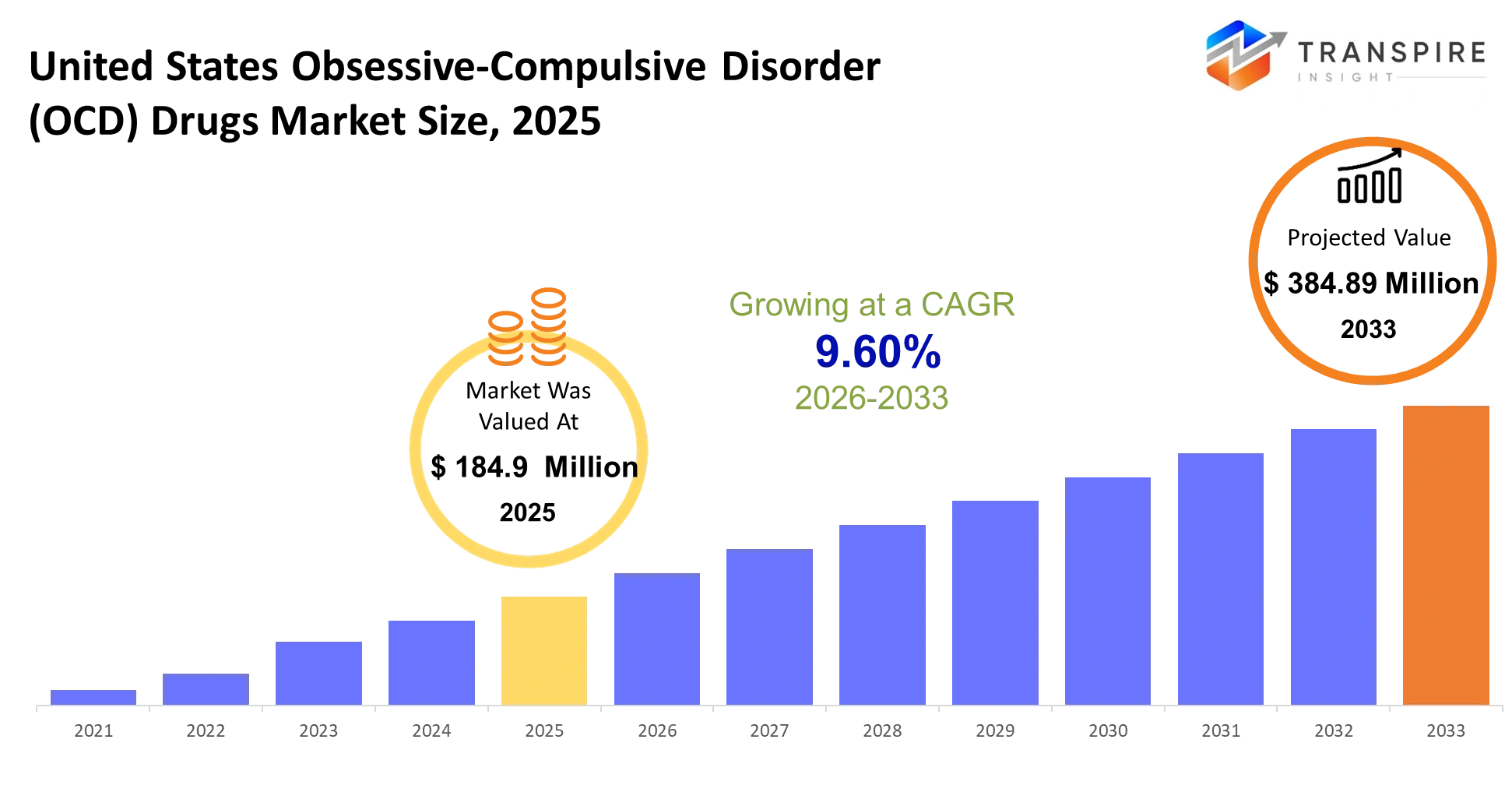
- United States Obsessive-Compulsive Disorder (OCD) Drugs Market Size 2025: USD 184.9 Million
- United States Obsessive-Compulsive Disorder (OCD) Drugs Market Size 2033: USD 384.89 Million
- United States Obsessive-Compulsive Disorder (OCD) Drugs Market CAGR: 9.60%
- United States Obsessive-Compulsive Disorder (OCD) Drugs Market Segments:By Drug Type (SSRIs, TCAs, Antipsychotics, Others), By Application (Adults, Pediatrics, Severe, Mild), By Distribution Channel (Hospitals, Pharmacies, Online, Clinics), By End-User (Patients, Hospitals, Clinics, Providers), By Therapy (Medication, CBT, Combination, Others).
To learn more about this report,  Download Free Sample Report
United States Obsessive-Compulsive Disorder (OCD) Drugs Market Summary:
The United States Obsessive Compulsive Disorder (OCD) Drugs Market size is estimated at USD 184.9 Million in 2025 and is anticipated to reach USD 384.89 Million by 2033, growing at a CAGR of 9.60% from 2026 to 2033. The United States Obsessive-Compulsive Disorder (OCD) drugs market shows constant growth because people have a better understanding of the disorder, doctors attain higher diagnosis rates and society accepts mental health treatment. Pharmaceutical companies are developing advanced treatment options which include selective serotonin reuptake inhibitors (SSRIs) and their upcoming medications to improve patient outcomes. The market experiences expansion because healthcare expenditures increase and programmes that support healthcare development function. Research efforts and personalised medicine approaches create pathways to develop better treatment methods which improve patient care despite the obstacles presented by side effects and treatment resistance.
Key Market Trends & Insights:
- The expanding mental health discussions across the United States help more individuals to access treatment services. The rising demand for effective drug treatments and enduring treatment solutions stems from enhanced early diagnosis of OCD.
- Pharmaceutical companies are investigating new types of medications through combination treatment research. The use of antipsychotics together with SSRIs has become a preferred treatment for OCD patients who do not respond to standard therapies.
- The medical field is starting to develop personalised treatment methods that depend on specific patient needs. Clinicians achieve better therapy results by using genetic research together with data on how patients respond to treatment.
- OCD research receives financial support from both government funding sources and private research institutions. The current process accelerates drug research and development while it moves new treatment methods closer to actual clinical application.
- The majority of patients experience side effects together with slow treatment progress, which creates obstacles to their treatment compliance. The current situation demonstrates the urgent requirement for medications which provide safer effects and quicker results while causing fewer adverse effects.
- The medical field is now using digital applications together with traditional medical treatments and psychological therapies. The combination of these two methods helps patients become more involved in their treatment while it boosts their overall health results.
United States Obsessive-Compulsive Disorder (OCD) Drugs Market Segmentation
By Drug Type
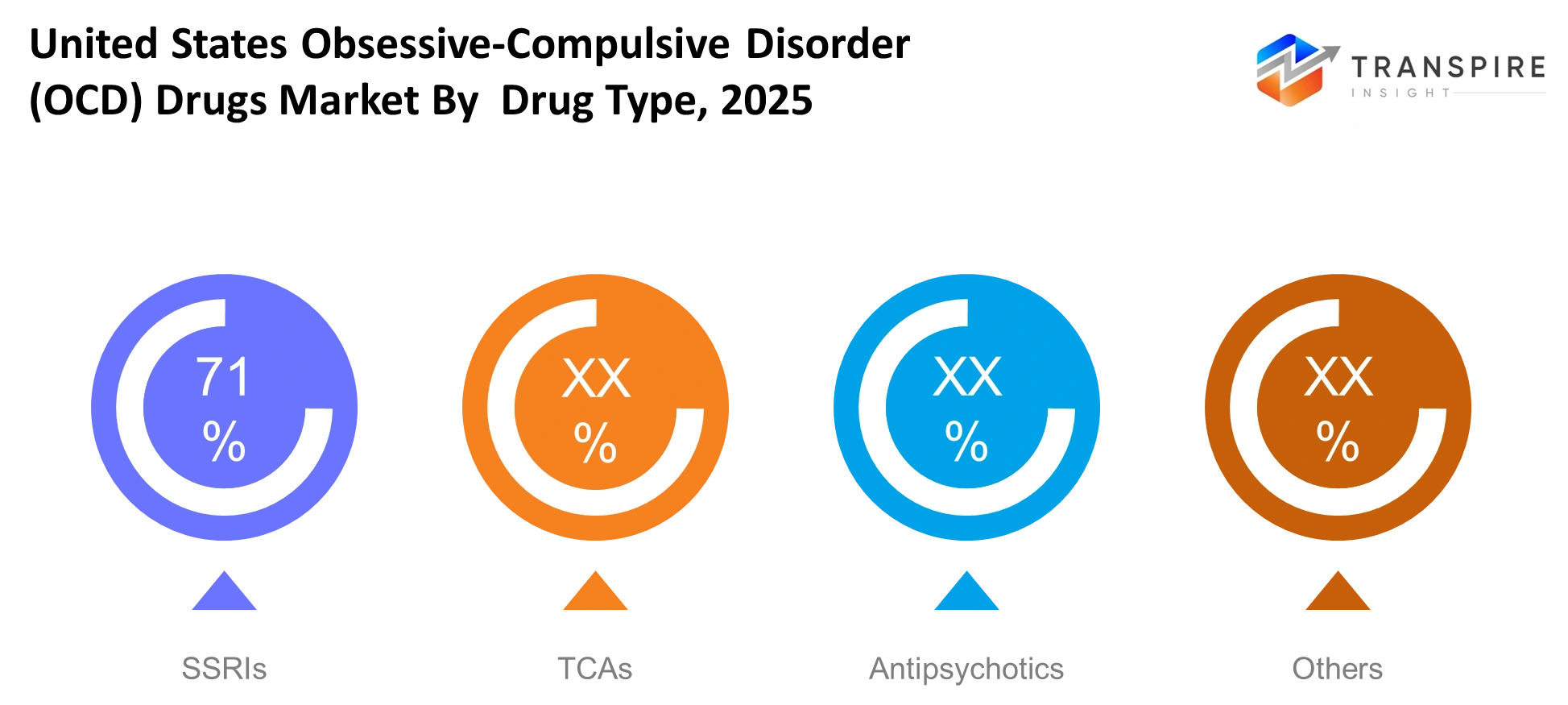
- SSRIs (Selective Serotonin Reuptake Inhibitors): SSRIs function as the main treatment option for OCD because they have shown both safety and effectiveness throughout their use in the United States. The medication enables users to control their serotonin levels which leads to reduced obsessive thoughts and compulsive behavior. The medication needs patients to consume more of it while they must endure extended periods before seeing any effects yet doctors recommend it as the first treatment choice for patients with ongoing medical issues.
- TCAs (Tricyclic Antidepressants): Clomipramine functions as an effective treatment when SSRIs fail to deliver satisfactory results for patients. The drugs demonstrate strong effectiveness yet their application remains limited because they cause more hazardous adverse effects. Physicians track the condition of TCA patients, which establishes this treatment as a secondary yet vital method for handling OCD cases that do not respond to conventional therapies.
- Antipsychotics: Antipsychotics serve as common additional treatments for patients who achieve partial improvements with SSRIs. The medication works to improve treatment results by activating different brain systems. Doctors need to control their drug doses for patients with complex OCD because of the risk that side effects might happen.
- Others: The category includes newly developed drug classes and unapproved medications which help in treating OCD. The creation of new neuropsychiatric drugs provides alternative treatment methods for patients who do not respond to conventional therapies. Scientists continue to discover innovative approaches which produce safer targeted treatment solutions.
To learn more about this report, Download Free Sample Report
By Application
- Adults: The adult population constitutes the largest segment of patients in the market for OCD medications. People start receiving therapy when they know more about mental health issues and they can access mental health treatment facilities. The market for drugs develops because many adults want permanent treatment solutions which they use with their therapy sessions.
- Pediatrics: The field of pediatric OCD treatment is receiving more attention because doctors can now diagnose patients at an earlier age. Doctors prefer cautious prescribing due to sensitivity in younger patients. Parents and schools now show more awareness, which creates higher demand for secure and efficient medications that doctors can prescribe to children and teenagers.
- Severe: Patients with severe OCD need intensive treatment which uses either high-dose medications or combination-therapy methods. Patients with this condition drive up healthcare costs because they require both basic medical care and specialised treatments. The market demands effective treatments which lead to new drug developments that focus on this specific patient group.
- Mild: The treatment of mild OCD cases requires either lower medication doses or therapy-based treatment methods. The patients in this group need immediate treatment because it helps them avoid long-term medication requirements. The category creates a consistent need for treatment methods that adapt to different patients and provide them with safe medical care.
By Distribution Channel
- Hospitals: Hospitals function as essential institutions which diagnose patients with OCD while they initiate treatment for patients who have severe cases of the disorder. They ensure that patients can obtain both specialised medical treatment and required medications. Their presence becomes essential when patients need continuous supervision or when they need treatment in psychiatric facilities.
- Pharmacies: Retail pharmacies operate as the main distribution method which delivers OCD medications to customers. Patients choose this method because they can easily access it while receiving instructions from pharmacists about their ongoing medication requirements. The organisation secures continuous drug availability, which allows patients to follow their extended treatment schedule.
- Online: Online pharmacies attract customers because they offer both convenient shopping experiences and private buying options. Patients prefer receiving their mental health medications through home delivery services. The distribution channel for this market is growing at a fast pace because of digital healthcare advances and better regulatory systems.
- Clinics: Clinics function as essential locations which provide diagnostic services while offering follow-up appointments and prescription medication refills. The facility delivers individualised treatment which enables patients to spend more time with their doctors. Patients depend on clinics to handle their routine health assessments, which causes clinics to become reliable sources for distribution of medications.
By End-User
- Patients: The OCD drugs market depends on patient demand, which needs to be diagnosed first before patients can start their treatment. The need for medical treatment has grown because more patients now seek assistance. Drug development and healthcare services development follow patient-centred methods.
- Hospitals: Hospitals serve as primary end-user facilities since they provide treatment for complicated OCD disorders. Hospitals need to have constant access to medications required for both their inpatient and outpatient treatment programmes. Their purchasing power enables them to acquire medications in bulk while they establish treatment standards through their treatment guidelines.
- Clinics: Clinics function as essential end-user organisations which deliver continuous patient support together with medication treatments. The clinics provide treatment to multiple OCD patients through their scheduled appointments. The organisation plays an important role in sustaining treatment procedures while checking how patients are doing.
- Providers: Healthcare providers, which include psychiatrists and therapists, have a strong impact on the medications that doctors prescribe to patients. Their professional intelligence determines the selection of medical therapies and their accompanying treatment plans. The organisation plays an important role in determining patient results while creating demand for particular medical treatments.
By Therapy
- Medication: OCD treatment relies on medication as its primary treatment method for patients who experience moderate to severe symptoms. The drugs enable patients to achieve better daily functioning through their ability to decrease symptoms. Researchers work on developing new methods which will decrease treatment side effects while increasing treatment success rates for patients who require extended therapy.
- CBT (Cognitive Behavioral Therapy): Cognitive behavioural therapy serves as an established treatment method which does not require medication. The system offers patients a method to handle their obsessive thoughts through its organised framework. Patients undergoing medication management gain more from their treatment when they combine CBT therapy with it.
- Combination: Healthcare providers now choose combination therapy, which combines medication with CBT, because it produces superior treatment results. The treatment method combines two essential components, which include both the biological and psychological aspects of OCD. The method establishes operational improvements for managing symptoms, which results in a reduced likelihood of patients experiencing relapse.
- Others: The field includes new treatment methods which involve digital therapeutics and neuromodulation techniques as potential therapeutic options. The therapeutic options are increasingly recognised as effective additional treatment options. The ongoing progress within this field creates new treatment possibilities for patients who require different kinds of medical support or treatment.
Country Insights
The United States Obsessive-Compulsive Disorder (OCD) drugs market demonstrates its established status as a complete market which continues to grow because people now understand treatment options better and can access those options. The recognition that OCD represents a serious mental health condition has increased the number of people who seek medical treatment, which has created a greater need for effective medication solutions. The country possesses advanced healthcare systems which provide access to mental health experts who work together with researchers to develop new solutions.
The government has established programmes which improve insurance coverage to make treatment more accessible, but some patients still face challenges with treatment costs. The presence of top pharmaceutical companies in the market creates opportunities for research development which aim to create safer medications with improved precision. The rising trend of combining medication treatment with behavioural therapy programmes leads to better results for patients. The U.S. market develops through a patient-centred model which delivers clinical results while enhancing patient life quality.
Recent Development News
In March 2026, FDA Clears New TMS System for OCD Treatment Expansion: A major step in non-drug OCD treatment came as a new brain stimulation system gained U.S. clearance, reflecting growing innovation beyond traditional medications. This signals expanding therapeutic options alongside drug therapies.
In March 2026, Debate Grows Over Antidepressant Safety Warnings in the U.S.: U.S. regulators are reviewing potential warnings on SSRIs, highlighting safety concerns and ongoing scrutiny of widely used OCD medications in clinical practice.
|
Report Metrics |
Details |
|
Market size value in 2025 |
USD 184.9 Million |
|
Market size value in 2026 |
USD 202.65 Million |
|
Revenue forecast in 2033 |
USD 384.89 Million |
|
Growth rate |
CAGR of 9.60% from 2026 to 2033 |
|
Base year |
2025 |
|
Historical data |
2021 – 2024 |
|
Forecast period |
2026 – 2033 |
|
Report coverage |
Revenue forecast, competitive landscape, growth factors, and trends |
|
Country scope |
United States |
|
Key company profiled |
Pfizer, Eli Lilly, GSK, Roche, Novartis, AbbVie, AstraZeneca, Merck, Sanofi, Teva, BMS, Lundbeck, Otsuka, J&J, Takeda |
|
Customization scope |
Free report customization (country, regional & segment scope). Avail customized purchase options to meet your exact research needs. |
|
Report Segmentation |
By Drug Type (SSRIs, TCAs, Antipsychotics, Others), By Application (Adults, Pediatrics, Severe, Mild), By Distribution Channel (Hospitals, Pharmacies, Online, Clinics), By End-User (Patients, Hospitals, Clinics, Providers), By Therapy (Medication, CBT, Combination, Others). |
Key United States Obsessive-Compulsive Disorder (OCD) Drugs Company Insights
The United States Obsessive-Compulsive Disorder (OCD) drugs market operates through the combined power of existing pharmaceutical companies and new biotech startups. The companies focus on creating successful treatments which include SSRIs and additional treatment methods while they conduct research to develop solutions for unmet needs that include treatment resistance. Companies use strategic partnerships and clinical research studies and product development to enhance their business operations. The market competition currently relies on increasing patient-centred solutions which include safer and more tolerable medication options.
Company List
- Pfizer
- Eli Lilly
- GSK
- Roche
- Novartis
- AbbVie
- AstraZeneca
- Merck
- Sanofi
- Teva
- BMS
- Lundbeck
- Otsuka
- J&J
- Takeda
United States Obsessive-Compulsive Disorder (OCD) Drugs Market Report Segmentation
By Drug Type
- SSRIs
- TCAs
- Antipsychotics
- Others
By Application
- Adults
- Pediatrics
- Severe
- Mild
By Distribution Channel
- Hospitals
- Pharmacies
- Online
- Clinics
By End-User
- Patients
- Hospitals
- Clinics
- Providers
By Therapy
- Medication
- CBT
- Combination
- Others
Frequently Asked Questions
Find quick answers to common questions.
The approximate United States Obsessive Compulsive Disorder (OCD) Drugs market size for the market will be USD 384.89 million in 2033.
The key segments of the United States Obsessive Compulsive Disorder (OCD) Drugs Market are By Drug Type (SSRIs, TCAs, Antipsychotics, Others), By Application (Adults, Pediatrics, Severe, Mild), By Distribution Channel (Hospitals, Pharmacies, Online, Clinics), By End-User (Patients, Hospitals, Clinics, Providers), By Therapy (Medication, CBT, Combination, Others).
Major players in the United States Obsessive Compulsive Disorder (OCD) Drugs Market are Pfizer, Eli Lilly, GSK, Roche, Novartis, AbbVie, AstraZeneca, Merck, Sanofi, Teva, BMS, Lundbeck, Otsuka, J&J, Takeda.
The current market size of the United States Obsessive Compulsive Disorder (OCD) Drugs Market is USD 184.9 Million in 2025.
The United States Obsessive Compulsive Disorder (OCD) Drugs Market CAGR is 9.60%.
- Pfizer
- Eli Lilly
- GSK
- Roche
- Novartis
- AbbVie
- AstraZeneca
- Merck
- Sanofi
- Teva
- BMS
- Lundbeck
- Otsuka
- J&J
- Takeda
Recently Published Reports
-
May 2026
Biosimilars Market
Biosimilars Market By Product Type (Monoclonal Antibodies, Recombinant Hormones, Erythropoietin, G-CSF, Others), By Indication (Oncology, Autoimmune Diseases, Blood Disorders, Diabetes, Others), By Manufacturing Type (In-House Manufacturing, Contract Manufacturing), By Distribution Channel (Hospital Pharmacies, Retail Pharmacies, Online Pharmacies), By Industry Analysis, Size, Share, Growth, Trends, and Forecasts 2021-2033
-
Apr 2026
Gastrointestinal Endoscopy Market
Gastrointestinal Endoscopy Market By Type (Rigid Gastrointestinal Endoscope, Flexible Gastrointestinal Endoscopes, Disposable Gastrointestinal Endoscope), By Procedure Type (Colonoscopy, Gastroscopy, Duodenoscopy, Enteroscopy, Flexible Sigmoidoscopy, Others), By Application (Diagnosis, Treatment), By End-Users (Hospitals, Ambulatory Surgical Centers, Specialty Clinics, Laboratories, Others), By Industry Analysis, Size, Share, Growth, Trends, and Forecasts 2021-2033
-
Apr 2026
Rare Inherited Metabolic Disorder Drug Market
Rare Inherited Metabolic Disorder Drug Market By Drug Class (Enzyme Replacement Drugs, Gene Therapy Drugs, Substrate Reduction Drugs, Small Module Drugs, Protein Drugs), By Route of Administration(Parenteral, Oral, Intrathecal), By Clinical Development (Marketed Drugs, Late Stage Clinical Phase III, Early Stage Clinical Phase I-II, Preclinical Candidates), By Indication (Lysosomal Storage Disorders, Urea Cycle Disorders, Amino Acid Metabolic Disorders, organic Acidemias, Peroximal Disorders), By Industry Analysis, Size, Share, Growth, Trends, and Forecasts 2021-2033
-
Jan 2026
Pharmaceutical Cleanroom Technology Market
Pharmaceutical Cleanroom Technology Market By Product (Equipment, Consumables, Services); By Cleanroom Type (Standard Cleanrooms, Modular Cleanrooms); By End Use (Pharmaceutical Companies, Biotechnology Companies), By Industry Analysis, Size, Share, Growth, Trends, and Forecasts 2021-2033