

United States Consumer Chemical Packaging Market Size & Forecast:
- United States Consumer Chemical Packaging Market Size 2025: USD 10.01 Billion
- United States Consumer Chemical Packaging Market Size 2033: USD 15.24 Billion
- United States Consumer Chemical Packaging Market CAGR: 5.39%
- United States Consumer Chemical Packaging Market Segments:By Material (Plastic, Glass, Metal, Paperboard, Biodegradable, Flexible, Composite), By Packaging (Bottles, Containers, Sachets, Drums, Tubes, Pouches, Aerosols), By Application (Cleaning, Personal Care, Agrochemicals, Household, Industrial, Automotive, Specialty), By End-User (FMCG, Chemical Firms, Retailers, Consumers, Industrial, Distributors, E-commerce), By Closure (Caps, Pumps, Sprayers, Flip-top, Child-lock, Dispensing, Screw).
United States Consumer Chemical Packaging Market Summary:
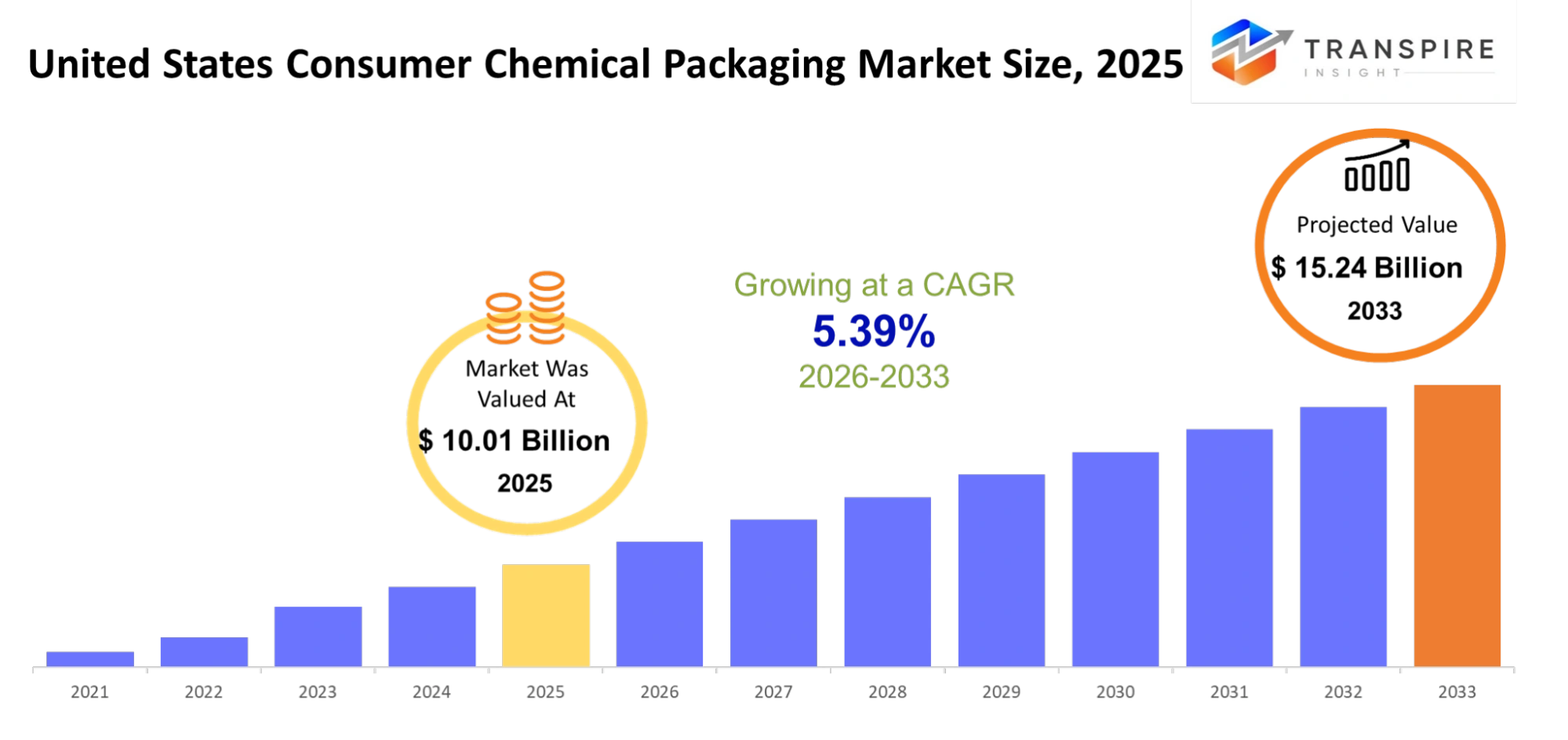
The United States Consumer Chemical Packaging Market size is estimated at USD 10.01 billion in 2025 and is anticipated to reach USD 15.24 billion by 2033, growing at a CAGR of 5.39% from 2026 to 2033. The United States consumer chemical packaging market is experiencing fast development because consumers demand safe packaging solutions which have sustainable design and simple usability. The increasing consumer understanding of environmental effects leads brands to choose recyclable materials and eco-friendly products. The combination of regulatory standards and packaging durability requirements and safety standards needs manufacturers to develop better packaging solutions. The adoption of smart labelling technologies and user-friendly dispensing systems demonstrates how consumer chemical products are moving towards sustainable and functional design.
Key Market Trends & Insights:
- The shift towards environmentally friendly packaging solutions has become a major trend among consumers which forces brands to implement packaging solutions that include recyclable and biodegradable and reusable materials. Companies are also decreasing their plastic consumption while they test paper-based solutions and compostable materials.
- The public currently shows increased interest in products which include spray bottles and easy-pour containers and resealable packaging designs. The product features enable users to handle items more easily while they deliver benefits to customers throughout their entire usage of the product.
- Packaging design needs to follow strict requirements established by safety regulations and labeling regulations. The manufacturers develop child-resistant packaging systems together with systems that display safety information in order to achieve certification requirements.
- The increase in online shopping has created a demand for packaging solutions that must withstand stronger impacts and provide protection against leaks. The packaging design process requires brands to create systems which will safeguard their products throughout shipment while preserving their market presence.
- Brands use QR codes and smart labels to improve product information delivery and product traceability capabilities. This system enables brands to establish direct contact with their customer base.
- Product packaging has evolved into an essential branding instrument because packaging elements such as distinct shapes and colors and special designs create product differentiation. Companies create attractive packaging designs which help their products become more visible to customers when they browse in physical stores and online retail websites.
United States Consumer Chemical Packaging Market Segmentation
By Material
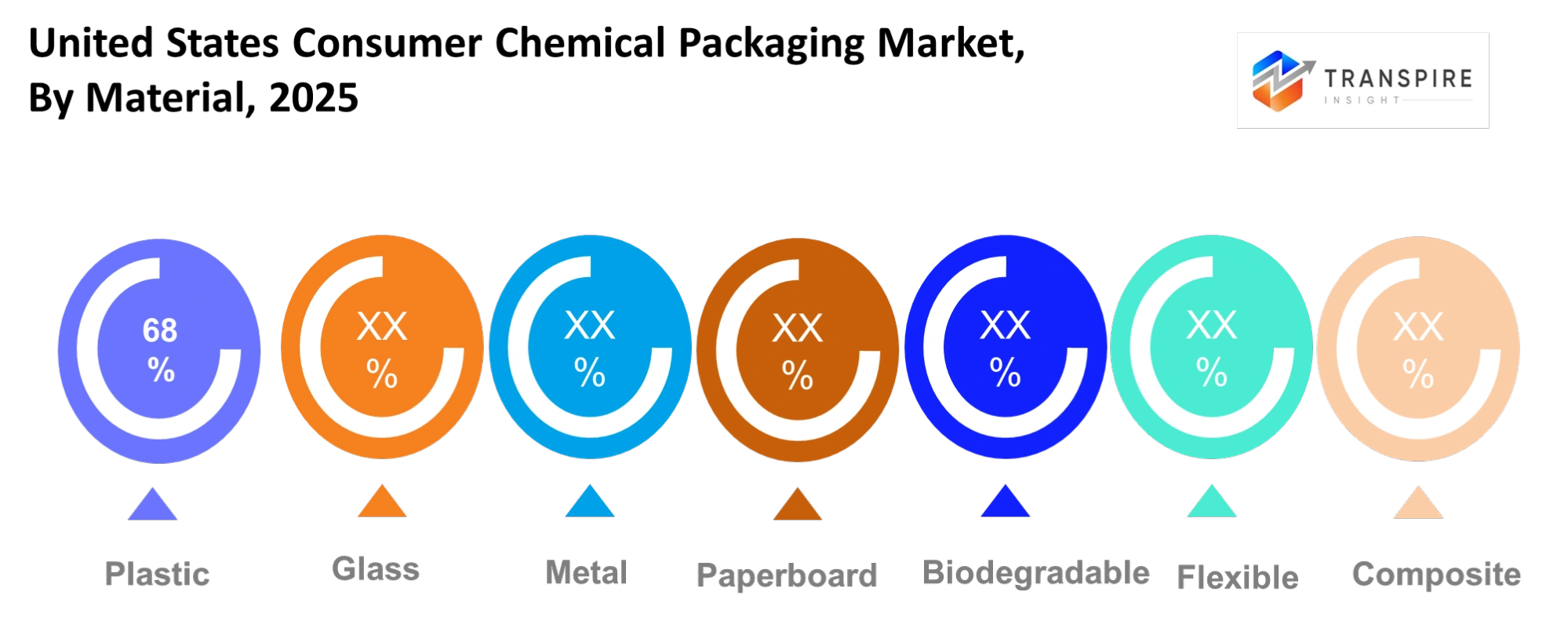
- Plastic: Plastic maintains its position as the most commonly preferred material because it delivers both flexible properties and durable characteristics at an affordable price. The material's properties allow designers to create numerous product shapes, which makes it suitable for manufacturing chemical products that target mass-market consumers. To achieve sustainable development goals, researchers are developing new packaging methods that use recyclable materials while decreasing their plastic waste.
- Glass: Glass packaging provides a premium appearance with its ability to resist chemical substances. The material functions effectively in applications that demand both high purity levels and stable operational characteristics. The material attracts environmentally aware brands and customers because of its ability to be recycled despite its heavy weight and delicate nature.
- Metal: Metal packaging provides strong protective capabilities which safeguard pressurised chemical products and sensitive chemical products. The material serves as a main component in aerosol production because it guarantees product endurance and extended storage capacity. The material provides sustainable development advantages through its recyclable properties, but its production expenses exceed those of other available options.
- Paperboard: Paperboard has emerged as an environmentally friendly option for businesses that require sustainable secondary packaging solutions. The material functions as a lightweight packaging solution which can be recycled and used for packaging outer boxes and cartons. To achieve environmental sustainability, brands now use this material which protects their products while showing them to customers.
- Biodegradable: The development of biodegradable materials functions as a reaction to increasing environmental protection requirements. The materials decompose through natural processes, which leads to decreased landfill volume. The materials demonstrate developing performance and cost capabilities which have attracted brand interest that seeks environmentally friendly packaging options.
- Flexible: The lightweight design and compact storage features of flexible packaging, which includes films and wraps, have contributed to its increasing acceptance. The system decreases both transportation expenses and material consumption. The system offers flexible solutions that meet the needs of multiple consumer chemical product markets.
- Composite: Composite material definition Composite materials create stronger products which also provide better barrier protection and extended product life through their combination of different materials. The materials find application in situations where single-material packaging solutions prove inadequate. The process of recycling these materials succeeds, but problems arise because the components include multiple different materials.
By Packaging
- Bottles: Bottles serve as the primary packaging choice for liquid consumer chemicals because they offer simple and practical methods to handle those products. The bottles provide multiple closure systems together with different ways to dispense their contents. The bottles serve as essential products which cleaning and personal care and household items require due to their ability to adapt to different cleaning needs.
- Containers: Containers function as excellent storage solutions which store both liquid and semi-solid chemical substances. The containers have been built to withstand heavy use while offering secure movement of materials especially when dealing with bulk items. The reusable design of these items provides industrial and commercial spaces with extra advantages.
- Sachets: Sachets serve as economical single-use packing solutions which businesses need especially for their small product shipments. The products are commonly used for both trial packs and travel-size packaging. Their low cost and easy-to-carry design make them attractive to customers yet environmental problems about waste disposal still exist.
- Drums: Drums serve as the main container used in industrial settings to store and move chemicals between different locations. The containers provide long-lasting strength together with complete protection against any leaks or products which might cause contamination. The items are used in industrial settings which require bulk operations because they are essential to the supply chain process.
- Tubes: Tubes function as the perfect container solution which enables users to dispense viscous and semi-solid materials in a controlled manner. The products find extensive application in both personal care items and special chemical solutions. The compact product design enables consumers to use the item without difficulty.
- Pouches: Pouches have obtained increasing acceptance because they offer users a combination of lightweight and flexible design advantages. The design decreases material requirements while creating storage areas which result in financial savings for users. The product packaging allows customers to open and close it which helps maintain product quality while making the product easier to use.
- Aerosols: Aerosol packaging serves as the delivery system for spray products which need exact measurement and controlled application. The system provides both uniform chemical distribution and user-friendly operation. The scientific community works to create environmentally friendly propellants together with sustainable materials despite the current environmental challenges.
By Application
- Cleaning: The packaging for cleaning products needs to protect cleaning products from chemical hazards. The union of spray nozzles with secure closures creates superior control solutions for users. The need for environmentally friendly packaging solutions is increasing because consumers now show greater environmental awareness.
- Personal Care : The personal care industry uses packaging that combines visual appeal with practical function and protection measures. Consumers choose products based on appealing designs that provide simple dispensing methods. The need for sustainable packaging solutions now drives packaging design development for this market segment.
- Agrochemicals: The packaging used for agrochemical products must show excellent defence against both chemical threats and environmental dangers. The packaging system needs to protect both products and personnel by preventing leaks. The packaging system ensures safe product delivery and correct agricultural application throughout its entire lifecycle.
- Household: The packaging for household cleaning products needs to provide users with simple access and storage solutions. The products offer daily user convenience through their ergonomic design and resealable features. All safety protocols must be followed according to safety regulations which protect kids from home dangers.
- Industrial: The industrial sector requires packaging solutions that can withstand extreme conditions while delivering high strength performance for bulk material handling. The packaging solutions main objective centers on creating safe operational systems which achieve efficient results while meeting all regulatory requirements. The two main factors that drive packaging development process are packaging reuse possibilities and its economic advantages.
- Automotive: Automotive chemical packaging serves as the protective container for automotive chemicals which include lubricants and cleaning products. The system needs to provide both high durability and accurate product serving capabilities. The packaging needs to remain intact when exposed to temperature changes while storing products and using them.
- Specialty: Specialty chemicals require packaging solutions which designers create to meet specific product requirements. The package offers improved security features which include customized appearance elements and specific product delivery systems. The development of innovative solutions enables businesses to serve customer needs across multiple specialized market segments.
By End-User
- FMCG: FMCG companies depend on their appealing yet practical packaging solutions to boost their sales performance. Packaging requires companies to find the right balance between their expenses and their branding needs and their packaging needs. Brands now focus on sustainability because their customers demand sustainable production methods.
- ChemicalFirms: Chemical firms need to develop packaging solutions which fulfill security needs and legal requirements and product protection needs. They concentrate their efforts on two goals which include protecting product integrity and ensuring safe handling. The packaging solutions which companies create must comply with all applicable industry standards.
- Retailers: Retailers seek packaging solutions which make their products more attractive to customers who shop at their stores. The ability to store products easily and display them effectively constitutes another essential requirement. Packaging functions as the primary factor that determines which products customers will buy at retail stores.
- Consumers: Customers require packaging solutions which provide them with convenient and safe and eco-friendly options. Customers consider it very important to have products which they can reseal and carry with them. The rising environmental awareness among people is making them choose eco-friendly packaging materials.
- Industrial: Industrial end-users need packaging solutions which enable them to efficiently store their products while handling bulk quantities. Protection of products through packaging design must meet essential requirements. The packaging solutions which companies create must enable customers to use their products multiple times while reducing their expenses.
- Distributors: Distributors need packaging solutions which protect products during transit and decrease product damage. The use of lightweight yet strong packaging materials enables companies to decrease their transportation expenses. Packaging solutions which operate efficiently help organisations achieve their supply chain functions.
- E-commerce: E-commerce needs packaging solutions which protect products during transportation while maintaining their original product state. The use of leak-proof packaging and protective systems proves necessary. Packaging materials enhance the packaging experience which customers receive during their product unboxing process.
By Closure
- Caps: The most frequent type of closure used in products needs only basic operations because it delivers dependable performance. The system provides complete protection between its two components through its operational functions. The research field currently works to develop better solutions that increase both recycling capabilities and customer usability.
- Pump: The design of pump closures enables controlled product distribution which makes them suitable for liquid applications. The system creates improved user experience while it decreases the amount of product which customers throw away. The product serves as a standard component in personal care products and cleaning supplies.
- Sprayers: Sprayers enable users to distribute liquids through a process that guarantees both uniformity and targeted distribution. The product finds extensive application as a component of both cleaning solutions and automotive products. The design of the product improves user comfort while increasing operational effectiveness.
- Flip-top: The design of flip-top closures provides customers with fast access to products. The product design allows users to open and close their devices which makes it suitable for personal care product packaging. The product design enables users to open and close the device multiple times while maintaining its airtight sealing ability.
- Child-lock: Child-lock closures protect products from unauthorized access by young children. The product serves as a mandatory requirement for all products containing dangerous chemicals. The safety locks create a secure environment yet they remain accessible for adult users to operate.
- Dispensing: The system uses dispensing closures to give users exact control over how products will flow out of the package. The system works best with products which customers need to consume in specific amounts. The system functions to enhance user satisfaction while it minimises product waste.
- Screw: Screw closures create a complete system. The system protects from all forms of leakage which might lead to product contamination. The product became popular because it combines simple design elements with effective performance.
Country Insights
The United States consumer chemical packaging market operates as a developed market which experiences continuous progress because of new market developments and changing consumer needs. The packaging market in the United States maintains constant demand because of the country's manufacturing capabilities and its sophisticated retail systems which require dependable packaging solutions. The rising environmental consciousness among consumers leads businesses to adopt sustainable materials while decreasing their reliance on plastic products. The implementation of strict regulatory frameworks establishes centres which maintain high standards for safety requirements and labelling procedures and chemical material handling protocols. Packaging solutions in the United States have evolved because of e-commerce growth, which requires packaging materials to protect products during transit through their development into leak-proof and durable designs. The market has seen increasing interest in new systems which include smart labelling features and better dispensing technologies. The market exists between three essential elements which companies need to balance because they must fulfil regulatory obligations and meet changing customer demands while competing with other businesses.
Recent Development News
In April 2026, Rising Plastic Costs Impact Packaging Industry: U.S. chemical and packaging companies are experiencing price shifts due to global supply disruptions. This is directly influencing packaging material costs and availability.
In April 2026, the EPA plans to regulate microplastics in drinking water: Growing environmental concerns are pushing regulators to examine microplastics originating from packaging materials, impacting future packaging standards.
|
Report Metrics |
Details |
|
Market size value in 2025 |
USD 10.01 Billion |
|
Market size value in 2026 |
USD 10.55 Billion |
|
Revenue forecast in 2033 |
USD 15.24 Billion |
|
Growth rate |
CAGR of 5.39% from 2026 to 2033 |
|
Base year |
2025 |
|
Historical data |
2021 – 2024 |
|
Forecast period |
2026 – 2033 |
|
Report coverage |
Revenue forecast, competitive landscape, growth factors, and trends |
|
Country scope |
United States |
|
Key company profiled |
Amcor, Berry Global, Sealed Air, Sonoco, Huhtamaki, Mondi, DS Smith, WestRock, Aptar, Silgan, Crown, Ball, ALPLA, Greif, RPC |
|
Customization scope |
Free report customization (country, regional & segment scope). Avail customized purchase options to meet your exact research needs. |
|
Report Segmentation |
By Material (Plastic, Glass, Metal, Paperboard, Biodegradable, Flexible, Composite), By Packaging (Bottles, Containers, Sachets, Drums, Tubes, Pouches, Aerosols), By Application (Cleaning, Personal Care, Agrochemicals, Household, Industrial, Automotive, Specialty), By End-User (FMCG, Chemical Firms, Retailers, Consumers, Industrial, Distributors, E-commerce), By Closure (Caps, Pumps, Sprayers, Flip-top, Child-lock, Dispensing, Screw). |
Key United States Industrial Coating Company Insights
The United States consumer chemical packaging market operates as an extremely competitive market because companies use innovative solutions and sustainable practices and customer-focused designs to gain competitive advantages. The leading manufacturers now focus their investments on developing biodegradable materials and creating lightweight package designs and building sophisticated dispensing systems to satisfy changing market demands. Companies use three main strategies, which include forming partnerships and developing new products and using advanced technologies to expand their market reach. The companies now work to develop products which comply with government regulations while they improve product safety and customer safety. The active market environment creates a need for companies to enhance their operations, which enables them to create packaging solutions that meet consumer needs while remaining environmentally friendly.
Company List
- Amcor
- Berry Global
- Sealed Air
- Sonoco
- Huhtamaki
- Mondi
- DS Smith
- WestRock
- Aptar
- Silgan
- Crown
- Ball
- ALPLA
- Greif
- RPC
United States Consumer Chemical Packaging Market Report Segmentation
By Material
- Plastic
- Glass
- Metal
- Paperboard
- Biodegradable
- Flexible
- Composite
By Packaging
- Bottles
- Containers
- Sachets
- Drums
- Tubes
- Pouches
- Aerosols
By Application
- Cleaning
- Personal Care
- Agrochemicals
- Household
- Industrial
- Automotive
- Specialty
By End-User
- FMCG
- Chemical Firms
- Retailers
- Consumers
- Industrial
- Distributors
- E-commerce
By Closure
- Caps
- Pumps
- Sprayers
- Flip-top
- Child-lock
- Dispensing
- Screw
Frequently Asked Questions
Find quick answers to common questions.
The approximate United States Consumer Chemical Packaging Market size for the market will be USD 15.24 Billion in 2033.
The key segments of the United States Consumer Chemical Packaging Market are By Material (Plastic, Glass, Metal, Paperboard, Biodegradable, Flexible, Composite), By Packaging (Bottles, Containers, Sachets, Drums, Tubes, Pouches, Aerosols), By Application (Cleaning, Personal Care, Agrochemicals, Household, Industrial, Automotive, Specialty), By End-User (FMCG, Chemical Firms, Retailers, Consumers, Industrial, Distributors, E-commerce), By Closure (Caps, Pumps, Sprayers, Flip-top, Child-lock, Dispensing, Screw).
Major players in the United States Consumer Chemical Packaging Market are Amcor, Berry Global, Sealed Air, Sonoco, Huhtamaki, Mondi, DS Smith, WestRock, Aptar, Silgan, Crown, Ball, ALPLA, Greif, RPC.
The current market size of the United States Consumer Chemical Packaging Market is USD 10.01 Billion in 2025.
The United States Consumer Chemical Packaging Market CAGR is 5.39%.
- Amcor
- Berry Global
- Sealed Air
- Sonoco
- Huhtamaki
- Mondi
- DS Smith
- WestRock
- Aptar
- Silgan
- Crown
- Ball
- ALPLA
- Greif
- RPC
Recently Published Reports
-
May 2026
Healthcare Polymer Packaging Market
Healthcare Polymer Packaging Market Size, Share & Analysis Report By Packaging Type (Syringes, IV Bottles and Pouches, Clamshells, Blisters, Bottles & Jars, Containers, Tubes, IV Parental Packaging, Others), By Type (Regulated, Non-regulated), By Polymer Type (LDPE (Low-Density Polyethylene), HDPE (High-Density Polyethylene), Homo-polymer (Homo), Random Copolymer (Random), Block Copolymer (Block), PET, Polystyrene, Polyvinyl Chloride, Polyamide/EVOH, Others), and Geography (North America, Europe, Asia-Pacific, Middle East and Africa, South and Central America), 2021 - 2031
-
Apr 2026
Hydrophilic Tape (Waterstop) Market
Hydrophilic Tape (Waterstop) Market Size, Share & Analysis Report By Type (Bentonite-Based Hydrophilic Tape, Rubber-Based Hydrophilic Tape), By Application (Residential Buildings, Commercial Buildings, Infrastructure Projects), and Geography (North America, Europe, Asia-Pacific, Middle East and Africa, South and Central America), 2021 - 2031
-
Apr 2026
Metalens Market
Metalens Market Size, Share & Analysis Report By Type (Visible Light Metalens, and Infrared Metalens), By Application (Consumer Electronics, Automotive Electronics, Industrial, Medical, and Others), and Geography (North America, Europe, Asia-Pacific, Middle East and Africa, South and Central America), 2021 - 2031
-
Apr 2026
PBT Resin Market
PBT Resin Market Size, Share & Analysis Report By Type (Reinforced PBT Resin, Unreinforced PBT Resin), By Processing Method (Injection Molding, Extrusion, Blow Molding, Others), By End-User (Automotive, Electrical & Electronics, Consumer Appliances, Industrial Machinery, Medical Devices, Packaging, Others), and Geography (North America, Europe, Asia-Pacific, Middle East and Africa, South and Central America), 2021 - 2031