
United States Clinical Trial Consumables Market Summary
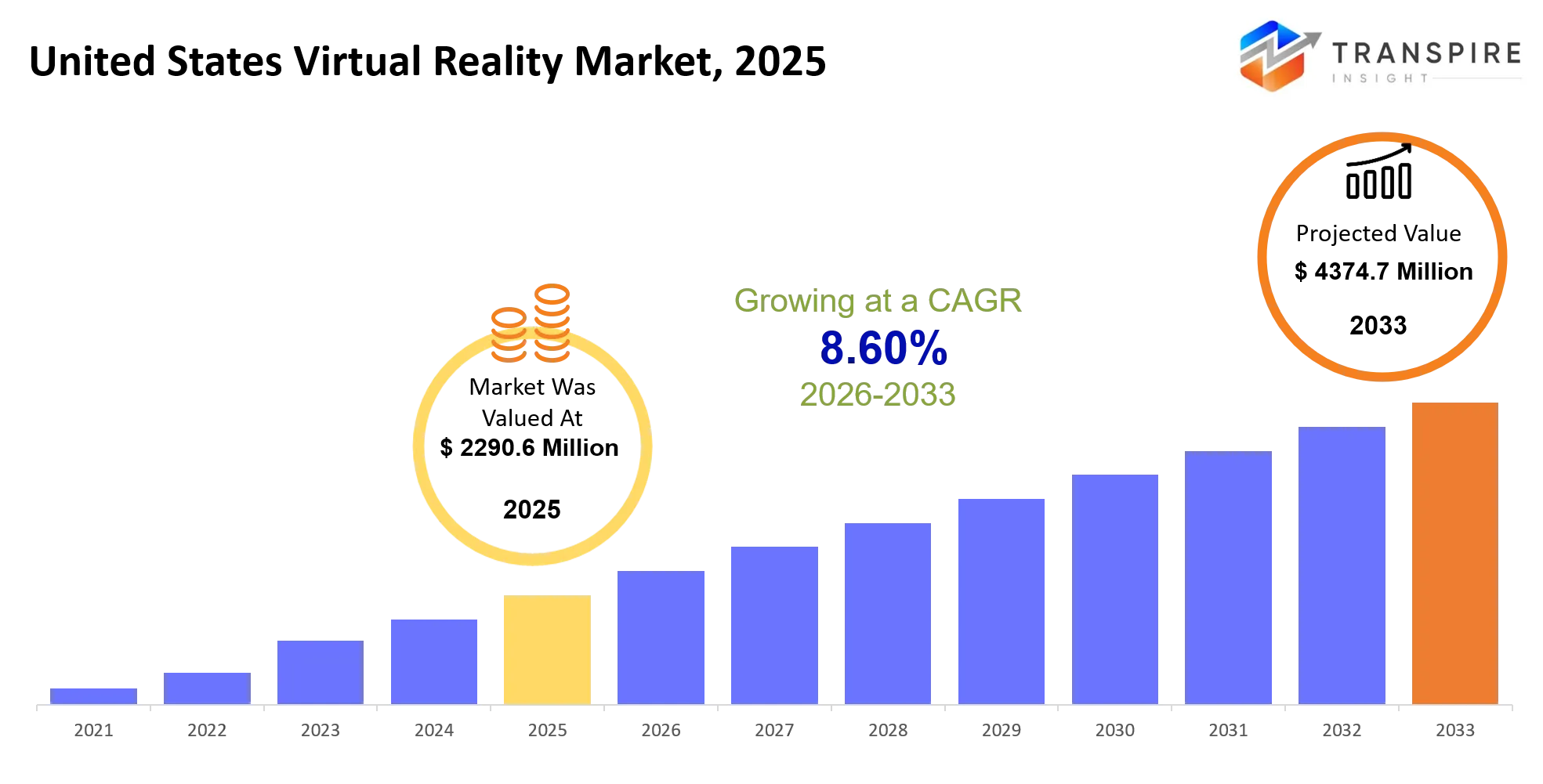
As per Transpire Insight Analysis the United States Clinical Trial Consumables Market size is estimated at USD 2290.6 Million in 2025 and is anticipated to reach USD 4374.7 Million by 2033, growing at a CAGR of 8.60% from 2026 to 2033.
Clinical trial consumables sort of support the daily collection stuff, handling, identification, storage , transport and protection of biological samples and investigational materials across research sites. Things like Kits, tubes, vials, labels, packaging, temperature-monitoring devices, PPE, and related supplies kind of help keep sample integrity and protocol compliance intact from patient collection through laboratory analysis , even when the workflow is pretty distributed.
In the past 3–5 years, clinical research has been moving more toward decentralized and hybrid trial models, not just one traditional pathway. The FDA issued final guidance on decentralized clinical trials in September 2024, backing remote visits, local healthcare facilities, home based activities, and direct investigational product distribution. COVID-19 disruptions sped this up quite a bit, because they showed weaknesses in site dependent supply chains, and they also made it clear that distributed clinical supply logistics matter more than before. The United States now represents 28% of registered ClinicalTrials.gov studies, with 167,622 U.S.-only studies recorded as of July 2026. As trials get more intricate, sample-volume needs go up, decentralized collection gets more common, and temperature + traceability controls get tighter, consumable requirements are expanding too, which in turn helps drive higher supplier revenue.
United States Clinical Trial Consumables Market Size & Forecast:
- United States Clinical Trial Consumables Market Size 2025: USD 2290.6 Million
- Expected Market Value 2033: USD 4374.7 Million
- Forecast CAGR:8.60%
- Leading region in 2025:Northeast
- Fastest Growing region:West
- Key Profile: Thermo Fisher Scientific, Avantor Inc., Fisher Clinical Services, Marken, Almac Group, Catalent Inc., Parexel International, IQVIA Holdings, Charles River Laboratories, Labcorp Drug Development, WuXi AppTec, PCI Pharma Services, Sharp Services, UDG Healthcare, Berkshire Sterile Manufacturing
Key Market Insights
- Market value is projected to creep up from USD 2,290.6 million in 2025 to USD 4,374.7 million by 2033, and that basically signals sustained clinical research momentum, ongoing.
- The Northeast seems to lead regional activity , with a dense pharmaceutical and biotechnology presence , plus academic medical centers , and clinical research infrastructure that just keeps feeding the pipeline.
- The West is showing up as the fastest-growing area, driven by biotechnology investment, tech-centric trials, and a wider rollout of decentralized research networks.
- Kits show a leading product category position, mostly because standardized collection formats make it easier to carry out protocols, handle specimens, and keep site-level inventory managed more cleanly.
- Sample collection tubes and vials still hold notable shares , since oncology immunology, and biologic studies often need repeated specimen collection, over time.
- Oncology stays a heavyweight therapeutic application too, backed by large drug-development pipelines, plus regular biomarker-driven sampling requirements that dont really slow down.
- Pharmaceutical companies remain the biggest end-user group, but biotechnology firms and CROs keep expanding procurement via outsourced development programs, more and more.
- Decentralized trials got stronger regulatory backing after the FDA final guidance in September 2024, which in turn increased expectations for home-use supplies, shipping materials, and monitoring devices, across sites.
- ClinicalTrials.gov logged 42,966 newly posted studies during 2025 , showing the ongoing scale of clinical research activity that supports consumable purchasing.
- AI-enabled inventory forecasting, digital tracking, and temperature-monitoring technologies are moving procurement away from reactive re-upping, toward a more data-driven clinical supply management model.
What are the Key Drivers, Restraints, and Opportunities in the United States Clinical Trial Consumables Market?
Driver: Clinical trial decentralization is kinda a big growth engine, because the research activity is, increasingly, stretching past the usual trial sites. FDA wrapped up decentralized clinical trial guidance in September 2024, and it covers remote activities, local healthcare facilities, home visits, digital health technologies, investigational-product distribution, plus packaging and shipping too. These decentralized setups end up needing extra collection kits, tubes labels, packaging, temperature-monitoring devices, and also home-use supplies. That ends up driving repeatable consumable purchases across participants who are spread out in different places. On top of that, more trial complexity tends to make consumption happen more often, especially for laboratory sampling and specimen preservation.
Restraint: Strict quality requirements, and the whole supply-chain qualification process, still act like a solid structural blockage. Clinical consumables have to use validated materials, keep documented traceability, meet the right storage conditions, and maintain consistent manufacturing quality. Qualification rules can drag out supplier onboarding, and they can also discourage quick substitution during shortages. At the same time specialized packaging, and temperature controlled logistics, raise procurement expenses. Smaller suppliers may also carry bigger compliance burdens, so price competition gets weaker, and market entry can slow down.
Opportunity: AI-supported clinical supply forecasting looks like a credible expansion chance. With automated demand planning you can merge enrollment projections, protocol timing, site inventories, shipment records, and historical consumption, which can reduce both stockouts and excess inventory. NIH research already shows that AI can be practically applied for clinical-trial matching via TrialGPT, and that suggests a broader momentum toward AI-supported research operations.
What Has the Impact of Artificial Intelligence Been on the United States Clinical Trial Consumables Market?
Artificial intelligence is reshaping clinical supply operations in a kind of roundabout way, it helps with demand forecasting, inventory allocation, shipment planning, and also that protocol-level consumable handling part. Machine-learning models can look at enrollment rates, visit schedules, past consumption, study amendments, and even site-level stock data to estimate what will be needed for collection tubes, kits, vials, labels, PPE, plus packaging supplies. Automated systems then may flag odd consumption patterns, foresee upcoming shortages, and help rank replenishment actions across multiple geographically spread research sites. In practice these abilities cut down the amount of manual inventory checks, and they nudge teams toward steadier supply availability during multi-site studies, even when things get messy.
AI can also support temperature-sensitive logistics by blending sensor readings with shipment records and local environmental conditions. Predictive analytics are useful because they can spot likely temperature excursions before a shipment hits some critical limit so logistics teams can step in sooner and reduce sample or product loss. Digital systems further tighten compliance tracking by keeping electronic records for lot identifiers, expiration dates, shipment progress, and site-level inventory movement. NIH has shown AI-assisted clinical-trial matching via TrialGPT, and that basically signals wider adoption of AI across research routines. Still, a big constraint remains the cost to integrate tools, plus the fragmented nature of data , because suppliers, CROs, labs, hospitals, and sponsors frequently run separate systems with inconsistent data formats.
Key Market Trends
Since 2020, decentralized trial models have sort of broadened past emergency use, which in turn ramps up the needs for home collection kits, direct shipping, and remote sample handling.
FDA finalized decentralized trial guidance in 2024, and it really tightens operational frameworks for local laboratories , home visits , digital tools, as well as packaging, and shipping.
ClinicalTrials.gov logged 43,671 new studies in 2024 and then 42,966 in 2025, so the overall volume procurement stays high across clinical research networks.
Pharmaceutical buyers are leaning more toward integrated suppliers that can bundle consumables, packaging, logistics, temperature monitoring, and clinical supply services , all in one.
On the CRO side, procurement has been shifting toward standardized, protocol specific kits because sponsors outsource more clinical operations and they want consistent site execution.
Biotechnology firms are also taking on smaller, tailored consumable batches, which mirrors more protocol specialization across biologic programs and precision medicine studies.
Digital inventory platforms are gradually replacing spreadsheet led stock control too , and they support automated replenishment based on enrollment , visit timetables, and usage patterns.
Temperature monitoring uptake has strengthened as decentralized shipments tend to create longer and more unpredictable transport routes for biological samples.
Sustainability considerations are starting to weigh in more on packaging choices, pushing lower material designs, but still without cutting into specimen protection and regulatory expectations.
AI supported forecasting is moving clinical supply planning toward predictive replenishment, meaning less reliance on manual inventory checks and those fixed ordering routines.
United States Clinical Trial Consumables Market Segmentation
By Product Type
Kits still remain a big procurement category because standardized kits, sort of simplifies specimen collection, and also helps make protocol consistency more stable across several clinical sites. These preconfigured kits may have tubes, labels, collection accessories, instructions, and protective materials, for those defined study steps. Pharmaceutical companies together with CROs tend to favor a standardized format for multi site trials because the same contents, really cut down on the prep work at each site and reduce ordering complexity. Also, oncology and biologic research add even more demand for specialized kits, since repeated lab collections back up biomarker analysis and safety assessments.
All of these support specimen collection, identification, preservation, transport, and even site safety. Sample tubes and vials need proper material compatibility and the right storage conditions, while labels provide traceability across laboratory workflows, more or less. Packaging materials and temperature monitoring devices become extra relevant in decentralized trials, because home collections and distributed shipping add extra handling.
By Phase
Phase I and • Phase II studies need flexible consumable volumes, mainly because the early development programs often work with smaller participant groups and they also make lots of protocol tweaks, and it happens more often than later. These early stage trials also pull in demand for specialized kits, collection tubes, vials, labels, and safety materials. • Phase III ends up with big procurement volumes, because larger participant populations and multi-site execution raise the collection pace and make shipment requirements climb. • Phase IV keeps the needs going via post marketing investigations and longer term safety studies.
Bioequivalence Studies • Investigator-Initiated Trials • Adaptive Trials • Decentralized Trials • Others add extra procurement patterns depending on the specific study build. Adaptive trials can need flexible inventory planning since those protocol changes might shift collection schedules. Decentralized trials, on the other hand, typically call for home use materials, shipping packaging that travels with the participant, coordination with local laboratory teams, and careful temperature monitoring. FDA guidance backs decentralized components that involve local healthcare providers, local clinical laboratories, home visits, and direct distribution.
By Therapeutic Area
Oncology counts as a major use case , because cancer trials often mean repeated blood drawing, biomarker analysis, tissue management, and routine lab testing. Precision oncology further ramps up needs for specimen identification , specialized collection materials, plus temperature maintained shipping. • Cardiovascular Diseases and • Infectious Diseases add a lot of pull, via lab monitoring, safety evaluations, and repeated patient sampling. Clinical research work across big pharma pipelines keeps supporting the buying pattern across already established therapeutic tracks.
Others , all add extra demand too, mostly tied to specialized study protocols and ongoing patient observation. Studies in rare diseases can , in practice, gain from decentralized approaches because people who are geographically spread may have real trouble getting to classic research centers. FDA also points to decentralized models as useful for widening access among groups dealing with rare diseases or mobility limitations.
By End User
Pharmaceutical Companies are a major procurement group in a way, since big drug development portfolios need recurring supplies across a few clinical phases and therapeutic programs. With standardized consumables, study work stays consistent over broad site networks, at least for the operational flow.Biotechnology Companies, in contrast, tend to drive requests for specialized items tied to biologics, precision medicine, cell-based research, and even smaller protocol populations, more or less.CROs still show substantial purchasing activity too, because when clinical operations are outsourced you usually end up with centralized supply planning, plus site-level distribution that has to be handled cleanly.
Others also play their part, through investigator-led research, hospital trials, laboratory testing, and public-sector programs. Academic medical centers hold an important stance in complex clinical studies because research infrastructure helps with patient enrollment, specimen gathering , lab assessment, and ongoing investigator duties. FDA guidance further helps with bringing randomized trials into routine clinical care, mostly through already established healthcare institutions.
By Distribution Channel
Direct Sales is still kinda important for pharmaceutical firms, biotechnology companies, and big CROs , where they usually need negotiated agreements , tailored specifications, repeat volumes, and hands-on technical help. Also direct procurement can make supply tracking a lot clearer for larger studies , and it helps with custom kit packing or labeling needs.
Clinical Supply Vendors meanwhile bring broader coordination , spanning sourcing, packaging, storage and distribution tasks. Contract Packaging Organizations become more relevant when sponsors decide to outsource kit assembly, labels, and the study specific packaging parts, not just one piece but the whole setup. Online Procurement also plays a role , as do Specialty Distributors and Hospital Procurement, plus Wholesalers and other intermediaries, who generally serve smaller research organizations, hospitals, labs, and institutions that want flexible purchasing quantities. Online procurement helps people order quicker for standard lab items, and specialty distributors offer access to regulated or more technically specific products. With decentralized clinical trials, there are added expectations for distributed fulfillment because the work can happen not only at sites, but also at participant homes , local healthcare facilities, and even local laboratories.
What are the Key Use Cases Driving the United States Clinical Trial Consumables Market?
Pharmaceutical and biotechnology clinical trials kinda represent the main use case , with oncology and other high-volume therapeutic programs creating big needs for collection kits, tubes, vials, labels, blood collection devices, and lab packaging. You also see repeated patient visits , plus protocol driven specimen collection , so you get these recurring consumable purchases across Phase II and Phase III programs. Then the bigger multi-site studies push procurement volumes even more, mostly because the supply requirements stay standardized.
CRO managed trials and hospital based research are getting more traction too. In those setups CROs coordinate supplies across multiple sponsors and research sites, while hospitals and academic medical centers still need standardized materials for investigator initiated and institution led studies. On top of that, decentralized trials tend to boost demand for home collection kits, direct-to-patient packaging, temperature tracking, and local laboratory supplies. The FDA guidance specifically backs local healthcare facilities, local labs, home visits, and direct distribution of the investigational product.
There are also emerging use cases like remote biomarker collection, digitally monitored sample shipments, and AI assisted inventory planning. Rare disease research looks especially promising, since decentralized models can lower geographic obstacles for participants and for research teams. The FDA guidance notes that decentralized approaches are helpful for rare diseases and for groups with mobility limitations.
|
Report Metrics |
Details |
|
Market size value in 2025 |
USD 2290.6 Million |
|
Market size value in 2026 |
USD 2450.4 Million |
|
Revenue forecast in 2033 |
USD 4374.7 Million |
|
Growth rate |
CAGR of 8.60% from 2026 to 2033 |
|
Base year |
2025 |
|
Historical data |
2021 - 2024 |
|
Forecast period |
2026 - 2033 |
|
Report coverage |
Revenue forecast, competitive landscape, growth factors, and trends |
|
Regional scope |
United States; Canada; Mexico; United Kingdom; Germany; France; Italy; Spain; Denmark; Sweden; Norway; China; Japan; India; Australia; South Korea; Thailand; Brazil; Argentina; South Africa; Saudi Arabia; United Arab Emirates |
|
Key company profiled |
Thermo Fisher Scientific, Avantor Inc., Fisher Clinical Services, Marken, Almac Group, Catalent Inc., Parexel International, IQVIA Holdings, Charles River Laboratories, Labcorp Drug Development, WuXi AppTec, PCI Pharma Services, Sharp Services, UDG Healthcare, Berkshire Sterile Manufacturing |
|
Customization scope |
Free report customization (country, regional & segment scope). Avail customized purchase options to meet your exact research needs. |
|
Report Segmentation |
By Product Type (Kits, Sample Collection Tubes, Syringes, Vials, Labels, Blood Collection Devices, Packaging Materials, Temperature Monitoring Devices, PPE, Others); By Phase (Phase I, Phase II, Phase III, Phase IV, Bioequivalence Studies, Investigator-Initiated Trials, Adaptive Trials, Decentralized Trials, Others); By Therapeutic Area (Oncology, Cardiovascular Diseases, Infectious Diseases, Neurology, Immunology, Endocrinology, Rare Diseases, Respiratory Diseases, Gastroenterology, Others); By End User (Pharmaceutical Companies, Biotechnology Companies, CROs, Research Institutes, Hospitals, Academic Medical Centers, Diagnostic Laboratories, Government Organizations, Others); By Distribution Channel (Direct Sales, Clinical Supply Vendors, Contract Packaging Organizations, Online Procurement, Specialty Distributors, Hospital Procurement, Wholesalers, Others) |
Which Regions are Driving the United States Clinical Trial Consumables Market Growth?
The Northeast is still kind of the dominant U.S. region because Boston New York, New Jersey and Pennsylvania basically bring together dense pharmaceutical AND biotechnology clusters with big academic medical centers plus research hospitals. When you line up all the sponsors, CROs laboratories, and clinical research sites in one place you get shorter procurement cycles and that tends to keep recurring buys going for collection kits, vials tubes, labels, and specialized packaging. It also helps a lot that the area has solid access to specialized scientific talent and a well-established clinical research setup. In practice this concentration lets suppliers support multiple trial programs using a relatively compact commercial and research network, which is sort of what you want.
The South shows up as a distinct contributor too , backed by a broad healthcare base, plus expanding research infrastructure and strong CRO activity around North Carolina and other established life-science nodes. Research Triangle Park for instance has built this dense little ecosystem of pharmaceutical companies contract research organizations, and academic institutions, leading to steadier demand across clinical development activities. The region also tends to have lower operating costs than the big Northeast biotechnology hubs so companies are more willing to expand laboratories and clinical operations. Overall this mix makes the South a dependable source of consumables revenue, not just a smaller side extension of the Northeast flow.
The West is positioned as the fastest-growing region, with California giving a strong foundation for biotechnology, cell and gene therapy, advanced therapeutics, and specialized clinical manufacturing.
Who are the Key Players in the United States Clinical Trial Consumables Market and How Do They Compete?
Competition feels moderately consolidated at the integrated-service level, though a lot of specialist suppliers still fight it out across single consumable categories, kind of fragmented. The main edge seems to come from braiding together laboratory products with clinical supply management, plus packaging, logistics, data systems, and regulatory know how, instead of only wrestling over unit price. With this approach, bigger providers can land multi year contracts and handle complicated trials that need customized kits, temperature managed distribution, and full traceability. And when trials keep shifting toward decentralized setups and biologic formats, suppliers that can choreograph several clinical supply functions at once, tend to benefit more.
Thermo Fisher Scientific is pressing its technology position via acquisitions and digital integration, including its $8.875 billion acquisition of Clario, wrapped up in March 2026, which brought clinical-trial endpoint data capabilities into its laboratory and biopharma services mix. It also finalized its roughly $4.0 billion acquisition of Solventum's Purification & Filtration business in September 2025, extending filtration technologies that are used across bioprocessing workflows. PCI Pharma Services, meanwhile, is leaning into a more narrow direction centered on sterile fill-finish, advanced drug delivery, and clinical supply. Its 2025 Ajinomoto Althea acquisition, for instance, added big scale San Diego resources for prefilled syringes and cartridges.
Catalent tends to stand out through integrated development, manufacturing, packaging, and clinical logistics. That includes a September 2025 collaboration with Science 37 aimed at direct-to-patient clinical trial medication delivery, so things move in a more streamlined, patient-facing way.
Company List
- Thermo Fisher Scientific
- Avantor Inc.
- Fisher Clinical Services
- Marken
- Almac Group
- Catalent Inc.
- Parexel International
- IQVIA Holdings
- Charles River Laboratories
- Labcorp Drug Development
- WuXi AppTec
- PCI Pharma Services
- Sharp Services
- UDG Healthcare
- Berkshire Sterile Manufacturing
Recent Development News
"In January 2026, Thermo Fisher Scientific announced a strategic collaboration with NVIDIA leveraging AI to advance scientific instrumentation and laboratory performance. The collaboration combines NVIDIA's AI platform with Thermo Fisher's laboratory technologies to increase automation, accuracy, and workflow speed, strengthening digital capabilities across research operations.
"In February 2026, Catalent and S.Biomedics announced a strategic partnership to develop and manufacture TED-A9, an allogeneic stem-cell-derived therapy for Parkinson's disease. The agreement expands Catalent's role in advanced cell-therapy development and manufacturing while supporting clinical-stage supply requirements for regenerative medicine programs.
"In April 2026, PCI Pharma Services announced more than $1 billion in investments across its U.S. and European operations to expand sterile fill-finish and drug-device combination capabilities. The U.S. expansion adds high-speed isolator filling lines for prefilled syringes, cartridges, and vials, strengthening domestic clinical supply and advanced drug-delivery capacity.
What Strategic Insights Define the Future of the United States Clinical Trial Consumables Market?
Over the next 5–7 years, the market is probably going to slide away from the usual, site based consumable buying and move toward integrated, digitally managed clinical supply systems. The real push is trial decentralization, plus increasingly tangled biologic, cell therapy, and precision medicine protocols , that end up needing customized collection materials, very specific packaging, temperature monitoring, and honestly tighter inventory control than before. There’s also a kind of quiet risk that not everyone sees quickly supplier concentration , since acquisitions and bundled integrated service contracts can shrink the number of qualified providers, and that could make sponsors more exposed if something goes sideways at a critical manufacturing site.
At the same time, there’s an opportunity, kind of new-ish AI enabled predictive clinical supply planning, especially tools that link enrollment forecasts with site inventories, protocol amendments, shipment timetables , and even the temperature monitoring records. So suppliers should put money into interoperable digital platforms along with the physical consumables, rather than only trying to win on product pricing. If they also build regional fulfillment capability and validate backup suppliers, it should both protect margins and make operations more resilient for decentralized, and advanced therapy trials.
United States Clinical Trial Consumables Market Report Segmentation
By Product Type
• Kits
• Sample Collection Tubes
• Syringes
• Vials
• Labels
• Blood Collection Devices
• Packaging Materials
• Temperature Monitoring Devices
• PPE
• Others
By Phase
• Phase I
• Phase II
• Phase III
• Phase IV
• Bioequivalence Studies
• Investigator-Initiated Trials
• Adaptive Trials
• Decentralized Trials
• Others
By Therapeutic Area
• Oncology
• Cardiovascular Diseases
• Infectious Diseases
• Neurology
• Immunology
• Endocrinology
• Rare Diseases
• Respiratory Diseases
• Gastroenterology
• Others
By End User
• Pharmaceutical Companies
• Biotechnology Companies
• CROs
• Research Institutes
• Hospitals
• Academic Medical Centers
• Diagnostic Laboratories
• Government Organizations
• Others
By Distribution Channel
• Direct Sales
• Clinical Supply Vendors
• Contract Packaging Organizations
• Online Procurement
• Specialty Distributors
• Hospital Procurement
• Wholesalers
• Others
Frequently Asked Questions
Find quick answers to common questions.
The expected United States Clinical Trial Consumables Market size for the market will be USD 4374.7 Million in 2033.
Key segments for the United States Clinical Trial Consumables Market are By Product Type (Kits, Sample Collection Tubes, Syringes, Vials, Labels, Blood Collection Devices, Packaging Materials, Temperature Monitoring Devices, PPE, Others); By Phase (Phase I, Phase II, Phase III, Phase IV, Bioequivalence Studies, Investigator-Initiated Trials, Adaptive Trials, Decentralized Trials, Others); By Therapeutic Area (Oncology, Cardiovascular Diseases, Infectious Diseases, Neurology, Immunology, Endocrinology, Rare Diseases, Respiratory Diseases, Gastroenterology, Others); By End User (Pharmaceutical Companies, Biotechnology Companies, CROs, Research Institutes, Hospitals, Academic Medical Centers, Diagnostic Laboratories, Government Organizations, Others); By Distribution Channel (Direct Sales, Clinical Supply Vendors, Contract Packaging Organizations, Online Procurement, Specialty Distributors, Hospital Procurement, Wholesalers, Others)
Major United States Clinical Trial Consumables Market players are Thermo Fisher Scientific, Avantor Inc., Fisher Clinical Services, Marken, Almac Group, Catalent Inc., Parexel International, IQVIA Holdings, Charles River Laboratories, Labcorp Drug Development, WuXi AppTec, PCI Pharma Services, Sharp Services, UDG Healthcare, Berkshire Sterile Manufacturing
The United States Clinical Trial Consumables Market size is USD 2290.6 Million in 2025.
The United States Clinical Trial Consumables Market CAGR is 8.60%from 2026 to 2033.
- Thermo Fisher Scientific
- Avantor Inc.
- Fisher Clinical Services
- Marken
- Almac Group
- Catalent Inc.
- Parexel International
- IQVIA Holdings
- Charles River Laboratories
- Labcorp Drug Development
- WuXi AppTec
- PCI Pharma Services
- Sharp Services
- UDG Healthcare
- Berkshire Sterile Manufacturing
About the Authors

Pankaj Ghogare Patil
I am Pankaj Ghogare Patil, a Senior Research Analyst at Transpire Insight, specializing in the Pharmaceutical, Chemicals & Materials, Healthcare IT, and Biotechnology industry. My expertise lies in conducting comprehensive market research, analyzing industry trends, evaluating competitive landscapes, and translating complex data into actionable insights. At Transpire Insight, I closely follow emerging technologies, regulatory developments, and market innovations to create accurate, well-researched, and informative content that helps businesses and professionals make informed decisions. I am committed to producing credible, evidence-based articles that reflect industry best practices while making technical topics accessible and valuable for a broad audience.

Chakradhar Khansole
Chakradhar serves as the Research Director at Transpire Insight, bringing over 8 years of experience in technology, innovation, and strategic market intelligence. He specializes in transforming complex market data into actionable business insights that enable organizations to make informed, growth-oriented decisions. Recognized for his strategic vision and analytical expertise, Chakradhar leads high-impact research initiatives, delivering comprehensive market assessments, competitive intelligence, and forward-looking industry analysis.
Recently Published Reports
-
Apr 2026
AI in Diabetic Retinopathy Market
AI in Diabetic Retinopathy Market Size, Share & Analysis Report By Type (Screening AI Systems, Diagnostic AI Systems, and Predictive AI Models), By Application Segment (Hospitals, Ophthalmology Clinics, Diagnostic Centers, and Research and Development), and Geography (North America, Europe, Asia-Pacific, Middle East and Africa, South and Central America), 2021 - 2031
-
Apr 2026
Psychometric Tests Market
Psychometric Tests Market Size, Share & Analysis Report By Type (Personality Tests, Ability/Aptitude Tests, Skill/Knowledge Tests, and Others), By Application (Talent Acquisition and Talent Management), and Geography (North America, Europe, Asia-Pacific, Middle East and Africa, South and Central America), 2021 – 2031
-
Apr 2026
Rare Biological Sample Collection Market
Rare Biological Sample Collection Market Size, Share & Analysis Report By Type (Isolation Kits & Reagent, Blood Collection Tubes, and Others), By Application (Oncology, Transcriptomics, Pharmacogenomics, and Others), and Geography (North America, Europe, Asia-Pacific, Middle East and Africa, South and Central America), 2021 – 2031
-
Jul 2026
Diabetic Retinopathy Market
Diabetic Retinopathy Market Size, Share & Analysis Report By Type (Proliferative Diabetic Retinopathy, and Diabetic Macular Edema (DME)), By Treatment Type (Anti VEGF Drug, Steroid Implants, Laser Surgeries, and Vitrectomy), and Geography (North America, Europe, Asia-Pacific, Middle East and Africa, South and Central America), 2021 – 2031
Our Clients







