
Stem Cell Market Summary:
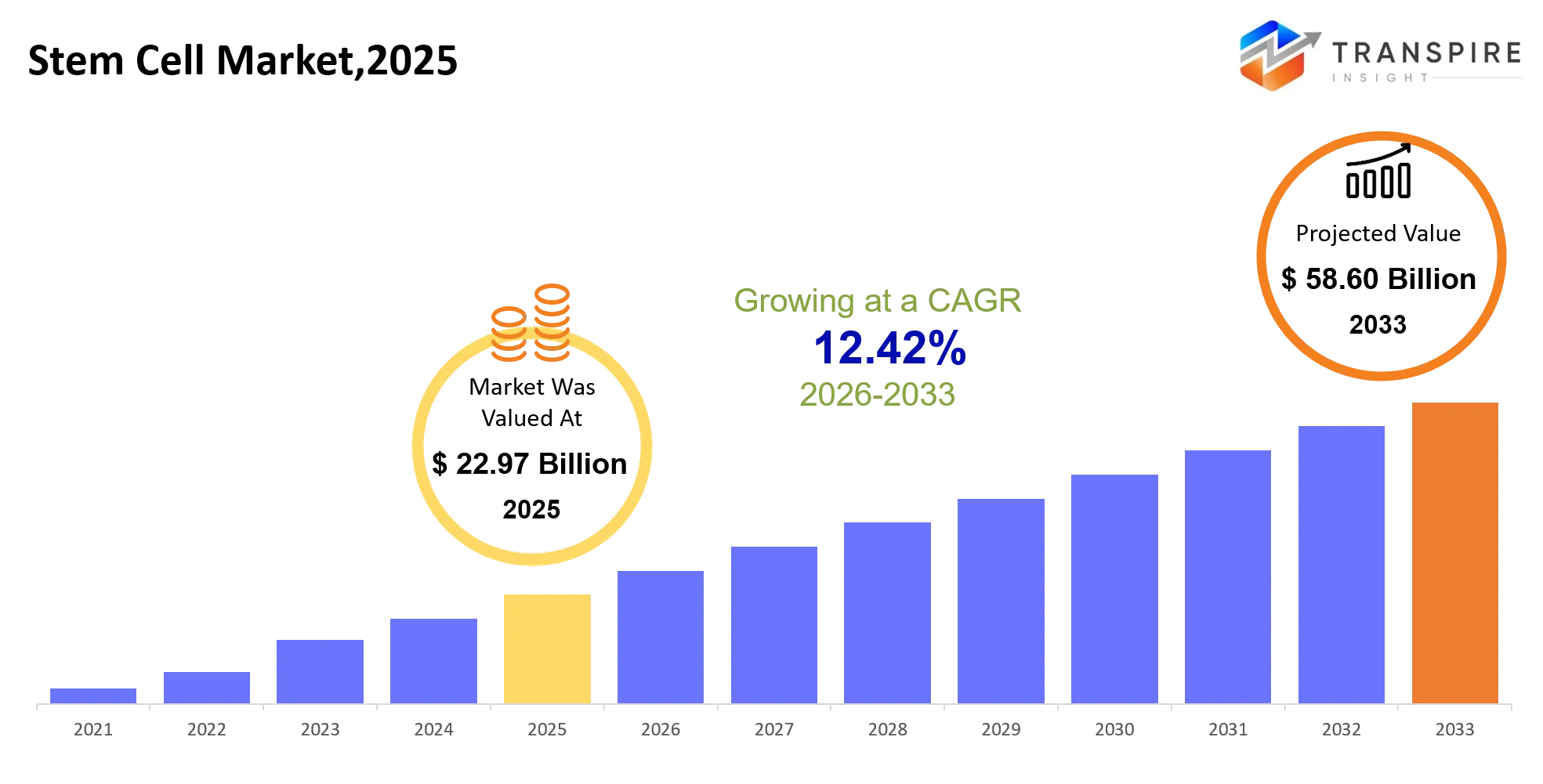
As per the Transpire insight Analysis, The Stem Cell Market size is estimated at USD 22.97 billion in 2025 and is anticipated to reach USD 58.60 billion by 2033, growing at a CAGR of 12.42% from 2026 to 2033.
The market for stem cell therapies is shifting from research to clinically controlled, ready-to-commercialise manufactured therapies, as cell replacement, tissue repair and disease modelling begin to approach the routine development workflow. The key change in the last three to five years has been the bringing of iPSC therapies into an industrialised paradigm, with better control of cell identity, potency, traceability, and long-term safety. The paradigm is shifting away from customised patient-specific protocols to allogeneic (sourced) and banked cell therapies, which will be scalable starting products. An important driver has been the increasing clinical trial evidence supporting the approach with more mature iPSC therapies; in 2026, a follow-up to a Keio University spinal cord injury study showed there were no tumors or serious adverse events from the therapy over four years. Clarification of the regulatory pathway has also supported development planning.
Stem Cell Market Size & Forecast:
- Market Size 2025: USD 22.97 Billion
- Expected Market Value (2033): USD 58.60 Billion
- Forecast CAGR (2026–2033): 12.42%
- Leading Region in 2025: North America
- Fastest Growing Region: Asia-Pacific
- Key Company Profiles: Thermo Fisher Scientific, STEMCELL Technologies, Merck KGaA, Bio-Techne, Lonza, Takara Bio, Becton Dickinson, Danaher, Miltenyi Biotec, Fujifilm Cellular Dynamics, Osiris Therapeutics, Mesoblast, Lineage Cell Therapeutics, Athersys, Cynata Therapeutics.
Key Stem Cell Market Insights:
As the market moves away from research-based cell supply, it is evolving into regulated, scalable platforms featuring an automated workflow, clinical-grade inputs, and traceable manufacturing. Reproducibility, approval readiness, and access to specialised production infrastructure are important factors in gaining competitive advantage, which is increasingly dependent on them.
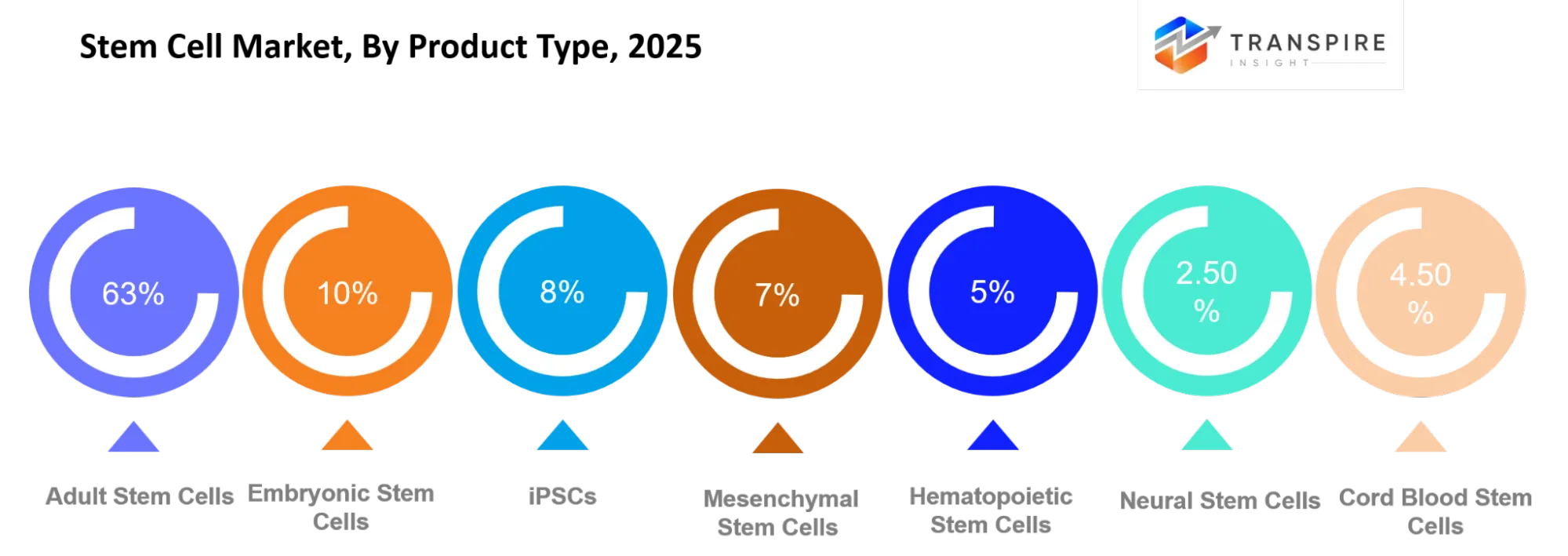
- The adult stem cells contain 63.00%, and Thermo Fisher adds to its biologics capabilities and automated workflows to enhance standardised cell processing.
- Embryonic stem cells make up 10.00% of Merck KGaA's, and the company differentiates by providing high purity research reagents for controlled pluripotent-cell studies.
- As pharma transitions to human-relevant screening models, iPSCs make up 8.00% of the market.
- Mesenchymal stem cells account for 7.00% and Mesoblast is not a research supply company; it's a clinically targeted, allogeneic cell-therapy developer.
- Hospital and laboratory demand for validated tools for the isolation, expansion, and storage of hematopoietic stem cells benefits Hematopoietic stem cells with 5.00%.
- Neural stem cells are 2.50% of the total and Lineage Cell Therapeutics is working on specialized cell-replacement programs for neurological and ophthalmic indications.
- Cord-blood stem cells make up 2.00%; cell banks are modernising cryostorage, identity tracking and release testing as transplant networks become global.
- The remaining cells make up 2.50%, while Takara Bio and Bio-Techne are involved in niche research via engineered vectors, assay kits and molecular analytics.
- iPSCs exhibit a CAGR of 15.8%, which increases investments in automated differentiation and AI-driven morphology monitoring.
What are the Key Drivers, Restraints, and Opportunities in the Stem Cell Market?
Driver:
Growth is being driven by the transition of stem cells from experimental research inputs into defined therapeutic starting materials. A key trigger has been the accumulation of clinical evidence for iPSC-derived and adult-cell therapies, encouraging developers to invest in standardised cell banks, potency assays and GMP production. This raises adoption because pharmaceutical and biotechnology companies can build more repeatable development programs instead of relying entirely on small, bespoke cell preparations. It improves utilisation of manufacturing capacity. Regulatory modernisation is another driver: FDA issued final cellular and gene therapy FAQs in August 2026 covering manufacturing, clinical and regulatory questions, helping developers identify regulatory requirements earlier.
Restraint:
Manufacturing consistency remains the central brake. Stem cells are biologically variable, highly sensitive to donor material, culture conditions, and handling, while scale-up must preserve identity, potency, sterility, and viability. These requirements keep cleanroom infrastructure, skilled labour, batch-release testing, and long-term regulatory validation expensive. The persistence of unapproved regenerative-medicine clinics also damages confidence and prompts tighter oversight, lengthening legitimate developers’ evidence and compliance burden.
Opportunity:
The largest opportunity lies in industrialized, automation-enabled iPSC manufacturing and quality control. Matched research-use and GMP iPSC lines, closed processing, and AI-assisted quality monitoring can shorten the transition from discovery to clinical supply while improving batch consistency. Asia-Pacific offers additional expansion potential as cell-therapy regulations, clinical-trial networks, and manufacturing capabilities mature. Regional investment in GMP facilities, cell banks, and automated platforms could create specialized research and production hubs, supporting broader commercialization of iPSC-based therapies.
What Has the Impact of Artificial Intelligence Been on the Stem Cell Market?
AI-Driven Cell Culture and Maintenance Stem-cell production and discovery are shifting from manual visual inspection to an automated, data-driven process. AI and computer vision techniques assess cell morphology on microscopy images to avoid labour-intensive staining steps by detecting aberrant colonies, estimating cell states, and tracking differentiation in the lab. This will lead to more consistent iPSC culture, where even small errors can greatly affect downstream assay results or therapeutic efficacy.
In drug discovery, AI connects iPSC disease models to image, genomic, and compound data. AI can find disease-specific phenotypes, identify most-likely responders, prioritise lead candidates, and enable virtual screening for compounds before expensive wet-bench experiments. It allows pharma companies to use patient-derived cells as a building block for more disease-relevant models for neurological, heart, and rare genetic disorders. On the manufacturing side, AI supports predictive maintenance, anomaly detection, scheduling, and digitization of batch records for cell-processing workflows. Barriers include the need for large, well-annotated standardized data sets that can be difficult when protocols are inconsistent and donor-to-donor variation exists, and digital infrastructure with validated software, cybersecurity controls and regulatory-compliant data governance.
In August 2026, Molecular Devices highlighted new data demonstrating how its machine learning-driven CellXpress.ai Automated Cell Culture System completely automates the image-guided, criteria-based feeding, passaging, and monitoring of stem cells.
https://www.news-medical.net/CellXpressaic2ae-Automated-Cell-Culture-System
Key Stem Cell Market Trends:
It is not just that the discovery of new stem cells is important, but the ability to produce them in a standardised, scalable platform that is becoming more significant than a single laboratory workflow at scale. Clinical data, automation and regulatory measures are increasingly driving the selection of cell platforms to move forward to commercialisation.
- In recent years, the iPSC programs have progressed from proof-of-concept to clinical translation, with investment in GMP-ready starting materials.
- Manufacturing of cells is shifting from manual to closed and automated processes that minimise operator variability and exposure to contamination.
- Research-use and GMP cell lines are becoming matched, with a speeded-up transition from discovery experiments to clinical manufacturing.
- Long-term safety follow-up is becoming more important in clinical programs, as they seek to monitor for long-term effects following cell administration.
- The subjective visual release is being replaced by image analysis and molecular assays, making potency testing more quantitative.
- Allogeneic platforms are attracting strategic interest as developers look to repeatable cell supply, instead of manufacturing every dose from an individual patient.
- The use of stem-cell-derived disease models is expanding drug-discovery workflows, enabling compound screening to be done at an earlier stage against human-relevant cellular phenotypes.
- Regulatory activities are increasingly detailed regarding manufacturing changes, comparability and post-approval monitoring, which are increasingly leading to earlier planning for quality by design and process control.
Stem Cell Market Segmentation
Cell Type:
Adult Stem Cells dominate the marketshare at 63.00%. Clinical, transplantation, and harvesting workflows have been well established for hematology, orthopedics, and regenerative industries. Human Embryonic Stem Cells make up 10.00% of the market. Induced Pluripotent Stem Cells (iPSCs) are forecasted to accelerate development as differentiation platforms become standardized and are also forecasted to have a 15.8% CAGR as applicable in clinical and research settings. Mesenchymal Stem Cells account for 7.00% of research into immunomodulation and tissue repair. Hematopoietic Stem Cells account for 5.00% for the clinical pathways. Neural Stem Cells account for 2.50%, Cord Blood Stem Cells 2.00% and Others 2.50%. Stem Cells will be increasingly defined by specialized neurological and regenerative programs in the future.
Application:
Regenerative Medicine remains the central use case as developers advance stem-cell therapies for tissue replacement, wound repair, and functional recovery. Oncology continues to utilize stem-cell platforms in transplantation, treatment development, and disease modelling, supported by established clinical workflows. Orthopedics is expanding through cartilage and bone repair programs, while Cardiovascular applications focus on tissue recovery. Neurology, Diabetes, and Ophthalmology are developing through increasingly specialized differentiation methods, enabling researchers to produce disease-relevant cells and evaluate targeted therapies with greater biological precision.
Therapy:
Cell Replacement and Tissue Regeneration remain core pathways because they directly target damaged or dysfunctional tissues. Immunotherapy is expanding the therapeutic role of stem-cell platforms by supporting immune-cell development and engineered treatment strategies. Gene-Modified Cell Therapy adds further differentiation through gene editing and controlled cellular engineering, enabling developers to address specific disease mechanisms. Organ Repair represents a longer-term opportunity, while Disease Modelling and Drug Discovery are strengthening non-treatment applications by providing human-relevant cellular systems for compound screening, toxicity assessment, and therapeutic development.
Source:
Bone Marrow remains an important foundation because established collection, transplantation, and processing infrastructure supports consistent clinical use. Cord Blood provides an alternative source with established banking networks, while Adipose Tissue offers accessible material for regenerative research. Peripheral Blood supports hematopoietic and immune-cell applications, whereas Placental Tissue is attracting interest because of its accessibility and cellular diversity. Dental Pulp provides a specialized source for regenerative research, and continued improvements in isolation, characterization, and cryopreservation are helping developers evaluate different sources according to scalability, quality, and therapeutic suitability.
End User:
Hospitals remain central to clinical translation because they provide treatment infrastructure, specialist expertise, and patient access. Pharmaceutical Companies are expanding stem-cell applications through drug discovery, disease modelling and therapeutic development, while Biotechnology Companies focus on specialized cell platforms and clinical programs. Research Institutes and Academic Institutions continue generating foundational discoveries and differentiation methods. Cell Banks support standardized storage and distribution of biological materials, while Specialty Clinics provide focused delivery environments for selected regenerative procedures, creating a broader ecosystem connecting research, manufacturing and clinical application.
What are the Key Use Cases Driving the Stem Cell Market?
The core use case is regenerative medicine, anchored by the 63.00% adult stem-cell share. Established hematopoietic transplantation provides a clinical base, while cell replacement and tissue regeneration expand applications into bone, cartilage, blood and other damaged tissues. Standardized cell banks and GMP processing are increasingly important for reproducible quality.
Expanding applications include oncology, orthopaedics, cardiovascular disease, neurology, diabetes and ophthalmology. Stem-cell-derived disease models enable pharmaceutical companies to test therapies using human cellular phenotypes, while iPSC platforms support differentiated cells for modelling and screening.
Emerging uses combine stem cells with gene editing, engineered tissues, organ repair and personalized disease models. Integrated platforms linking sourcing, automated manufacturing, quality testing and clinical delivery can reuse validated processes across multiple indications, improving scalability and development efficiency.
|
Report Metrics |
Details |
|
Market size value in 2025 |
USD 22 Billion |
|
Market size value in 2026 |
USD 25.82 Billion |
|
Revenue forecast in 2033 |
USD 58.60 Billion |
|
Growth rate |
CAGR of 12.42% from 2026 to 2033 |
|
Base year |
2025 |
|
Historical data |
2021 - 2024 |
|
Forecast period |
2026 - 2033 |
|
Report coverage |
Revenue forecast, competitive landscape, growth factors, and trends |
|
Regional scope |
United States; Canada; Mexico; United Kingdom; Germany; France; Italy; Spain; Denmark; Sweden; Norway; China; Japan; India; Australia; South Korea; Thailand; Brazil; Argentina; South Africa; Saudi Arabia; United Arab Emirates |
|
Key companies profiled |
Thermo Fisher Scientific, STEMCELL Technologies, Merck KGaA, Bio-Techne, Lonza, Takara Bio, Becton Dickinson, Danaher, Miltenyi Biotec, Fujifilm Cellular Dynamics, Osiris Therapeutics, Mesoblast, Lineage Cell Therapeutics, Athersys, Cynata Therapeutics |
|
Customization scope |
Free report customisation (country, regional & segment scope). Available customised purchase options to meet your exact research needs. |
|
Report Segmentation |
Cell Type (Adult Stem Cells, Human Embryonic Stem Cells, Induced Pluripotent Stem Cells, Mesenchymal Stem Cells, Hematopoietic Stem Cells, Neural Stem Cells, Cord Blood Stem Cells, Others); Application (Regenerative Medicine, Oncology, Orthopedics, Cardiovascular, Neurology, Diabetes, Ophthalmology, Others); Therapy (Cell Replacement, Tissue Regeneration, Immunotherapy, Gene-Modified Cell Therapy, Organ Repair, Disease Modeling, Drug Discovery, Others); Source (Bone Marrow, Cord Blood, Adipose Tissue, Peripheral Blood, Embryonic Tissue, Placental Tissue, Dental Pulp, Others); End User (Hospitals, Research Institutes, Pharmaceutical Companies, Biotechnology Companies, Cell Banks, Academic Institutions, Specialty Clinics, Others). |
Which Regions are Driving the Stem Cell Market Growth?
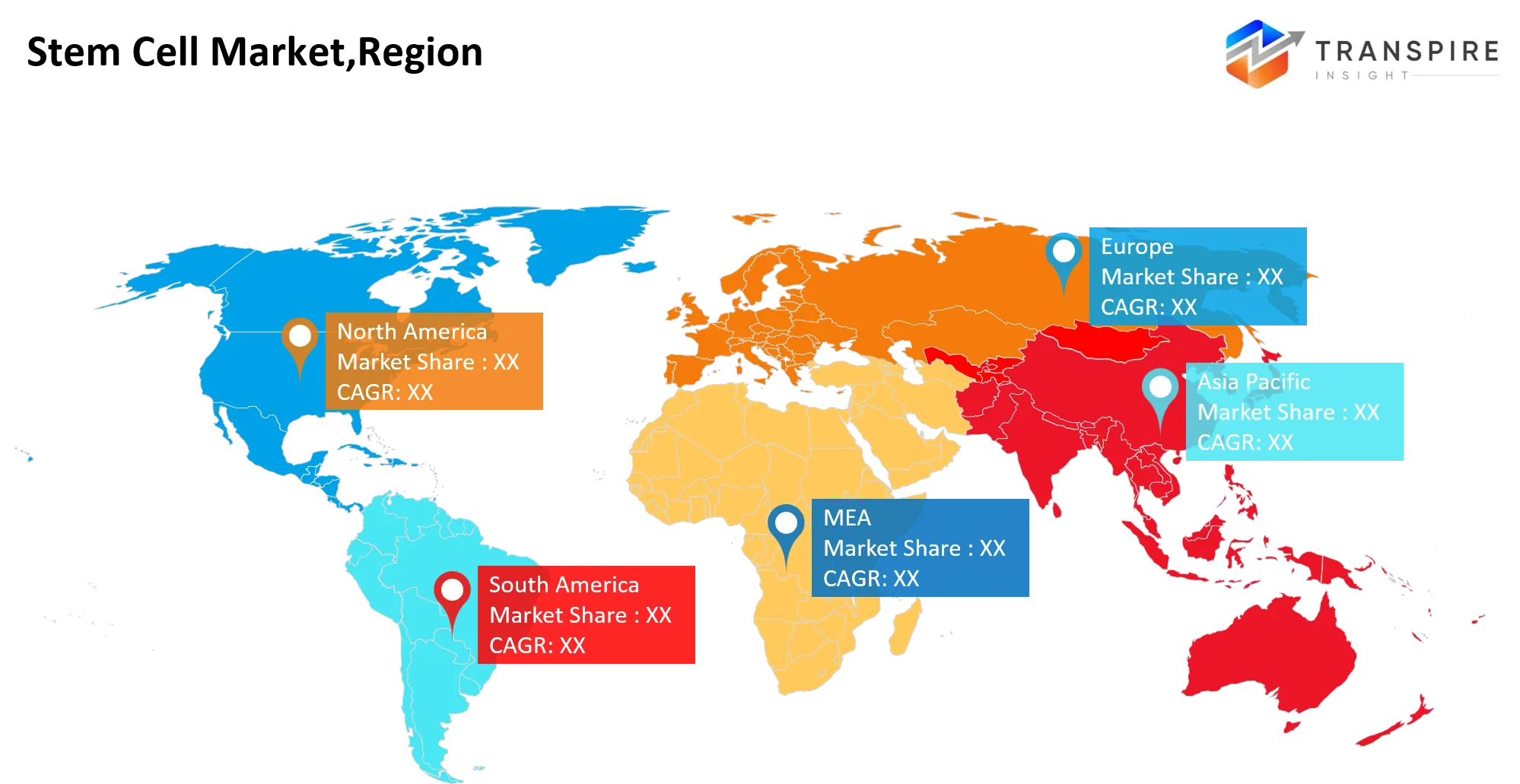
North America is a dominant market with 43.89% market share. This is owing to the concentrated biotech clusters, advanced transplant infrastructure, and significant venture and pharmaceutical investment. RMAT (Regenerative Medicine Advanced Therapy), Fast Track, and Orphan Drug designations have helped facilitate regulatory pathways in the U.S. of America for clinicians to work more closely with developers of therapies for serious conditions. Canada has invested CAD 22.5 million to expand manufacturing capacity for the STEMCELL Technologies facility in BC. These factors contribute to commercial leadership in the market as clinical-trial activity remains high along with demand for oncology, rare-disease, and regenerative applications.
In June 2026, SOLA Biosciences Japan GK was awarded a grant of approximately 6 billion yen over five years by the Japan Agency for Medical Research and Development (AMED) under the Strengthening Program for Pharmaceutical Startup Ecosystem.
Europe represents 27.00% of the market, covering an all-inclusive and transparent academic research base combined with direct regulation of Advanced Therapy Medicinal Products through the European Medicines Agency. EU Growth depends on cross-border clinical networks, partnerships under Horizon Europe, co-investment between public and private funding, and evidence requirements from health systems. While enabling scientific consensus and multi-country clinical trial recruitment, reimbursement discussions might slow down commercial adoption. It remains stable thanks to ageing university hospitals, regulated cell banks, and a growing number of officially approved advanced therapies.
In February 2026, the European Commission launched a major dedicated funding call under the Horizon Europe framework, titled "HORIZON-HLTH-2026-01-TOOL-07," to establish a coordinated European network of Centres of Excellence (CoEs) for Advanced Therapy Medicinal Products (ATMPs).
https://hadea.ec.europa.eu/news/2026-horizon-europe-health-calls-proposals-2026-02-12_en
Asia-Pacific is growing the fastest at a CAGR of 16.08%, and markets there are supported by policy reforms to shorten the development-to-market time. Japan's weak conditional approvals, China's accelerated review programs, and South Korea's revised conditional approval regulations strengthen incentives for domestic manufacturing and clinical translation, with Japan also boosting its edge through generous public backing of trials and manufacturing. China's research funding and insurance inclusion programs broaden the future market. There is a window of opportunity to build up regional-grade GMP capacity before price constriction and heterogeneous national policies block cross-border scaling.
In August 2026, WuXi XDC achieved the GMP release of its new BCM3 production line and DP4 facility in Singapore. This operational milestone expands regional-grade, automated biomanufacturing capabilities for complex advanced therapeutics within the Asia-Pacific region, countering fragmented cross-border logistics and solidifying local supply chains.
https://www.packaginginsights.com/news/syntegon-wuxi-xdc-singapore-gmp-site.html
Who are the Key Players in the Stem Cell Market, and how do they compete?
Competitive focus for the entire stem-cell industry is shifting from individual product categories to management of the stem-cell workflow as a whole. Thermo Fisher Scientific, Merck KGaA, Bio-Techne, and Becton Dickinson compete in the broad strokes, with comprehensive research, analytical, and cell-processing portfolios. Lonza, Danaher, and Miltenyi Biotec emphasize manufacturing, automation, and workflow integration.
Takara Bio emphasises molecular and cell-engineering technologies. STEMCELL Technologies emphasizes specialized research products and the provision of standard cell materials. Fujifilm Cellular Dynamics emphasizes manufacturing of iPSCs and CDMO services. Fujifilm leverages characterized cell lines and its large, scalable facilities to support its research and therapy partners. Mesoblast and Lineage Cell Therapeutics target differentiation, rather than a broad laboratory supply; in other words, specific therapies and clinical applications. Osiris Therapeutics, Athersys, and Cynata Therapeutics are examples of platform-focused and clinical-stage regenerative-medicine strategies. Platform focus and clinical development separate many different types of regenerative-medicine companies. Broad industry trends are towards GMP infrastructure, partnerships, cell banking, and automation, while the cost of competitiveness is increasingly defined by repeatability and reduction of manufacturing complexity.
Key Players are:
- Thermo Fisher Scientific
- STEMCELL Technologies
- Merck KgaA
- Bio-Techne
- Lonza
- Takara Bio
- Becton Dickinson
- Danaher
- Miltenyi Biotec
- Fujifilm Cellular Dynamics
- Osiris Therapeutics
- Mesoblast
- Lineage Cell Therapeutics
- Athersys
- Cynata Therapeutics
Recent Development News
In August 2026, the Stem Cell Network launched its new national regenerative medicine research funding competition. This initiative deploys strategic multi-million dollar capital tranches to accelerate early-career research programs, drive proof-of-principle data generation, and transition high-viability stem cell therapies from academic discovery into formal clinical pipelines.
In April 2026, Cartherics Pty Ltd expanded its commercial license and manufacturing agreement with Catalent, Inc. This partnership grants Cartherics access to Catalent's cGMP-compliant induced pluripotent stem cell (iPSC) lines, significantly accelerating the late-stage clinical scale-up and commercial manufacturing pipeline for its lead CAR-NK cell therapy candidates targeting cancer and endometriosis.
https://www.catalent.com/news/cartherics-and-catalent-expand-commercial-license-agreement
In July 2026, STEMCELL Technologies partnered with CCRM to expand access to matched GMP and research-use-only iPSC lines for cell therapy development. The collaboration provides developers with characterized iPSC starting materials across research and clinical development, supporting a more consistent transition from laboratory research toward therapeutic applications.
What Strategic Insights Define the Future of the Stem Cell Market?
The market is moving towards closed, automated, allogeneic manufacturing with AI-driven quality monitoring and induced pluripotent stem cell (iPSC)-derived disease models. An unrecognised danger is that clinical breakthroughs may outpace the comparability of manufacturing: a process change that allows more scalable manufacturing could alter cell identity, potency or safety, leading to expensive bridging studies and regulatory delays. The emerging opportunity is to build a pan-region iPSC master-cell bank with integrated standards for differentiation and digital batch-release, which could provide repeatable starting material for drug discovery, disease modelling and eventually off-the-shelf treatments. Companies should focus on platform economics rather than product economics by investing early in closed processing, validated analytics, chain of identity and regulator-friendly data packages, and in forming partnerships with hospitals and payers before pivotal trials, because long-term durable patient outcomes and the viability of delivery models, rather than scientific achievement alone, will matter for regulatory acceptance.
Key Segmentations are:
Cell Type
- Adult Stem Cells
- Human Embryonic Stem Cells
- Induced Pluripotent Stem Cells
- Mesenchymal Stem Cells
- Hematopoietic Stem Cells
- Neural Stem Cells
- Cord Blood Stem Cells
- Others
Application
- Regenerative Medicine
- Oncology
- Orthopaedics
- Cardiovascular
- Neurology
- Diabetes
- Ophthalmology
- Others
Therapy
- Cell Replacement
- Tissue Regeneration
- Immunotherapy
- Gene-Modified Cell Therapy
- Organ Repair
- Disease Modelling
- Drug Discovery
- Others
Source
- Bone Marrow
- Cord Blood
- Adipose Tissue
- Peripheral Blood
- Embryonic Tissue
- Placental Tissue
- Dental Pulp
- Others
End User
- Hospitals
- Research Institutes
- Pharmaceutical Companies
- Biotechnology Companies
- Cell Banks
- Academic Institutions
- Speciality Clinics
- Others
Frequently Asked Questions
Find quick answers to common questions.
The stem cell market size was valued at USD xx 22.97 billion in 2025 and is poised to reach USD 58.60 billion by 2033, expanding at a 12.42% CAGR.
Key segments for the stem cell market are Cell Type (Adult Stem Cells, Human Embryonic Stem Cells, Induced Pluripotent Stem Cells, Mesenchymal Stem Cells, Hematopoietic Stem Cells, Neural Stem Cells, Cord Blood Stem Cells, Others); Application (Regenerative Medicine, Oncology, Orthopedics, Cardiovascular, Neurology, Diabetes, Ophthalmology, Others); Therapy (Cell Replacement, Tissue Regeneration, Immunotherapy, Gene-Modified Cell Therapy, Organ Repair, Disease Modeling, Drug Discovery, Others); Source (Bone Marrow, Cord Blood, Adipose Tissue, Peripheral Blood, Embryonic Tissue, Placental Tissue, Dental Pulp, Others); End User (Hospitals, Research Institutes, Pharmaceutical Companies, Biotechnology Companies, Cell Banks, Academic Institutions, Specialty Clinics, Others)
Growth is primarily driven by advances in iPSC technology, regenerative medicine, GMP manufacturing, stem-cell-derived disease modelling, automation, and expanding clinical research
The stem cell market is led by major manufacturers, including Thermo Fisher Scientific, STEMCELL Technologies, Merck KGaA, Bio-Techne, Lonza, Takara Bio, Becton Dickinson, Danaher, Miltenyi Biotec, Fujifilm Cellular Dynamics, Osiris Therapeutics, Mesoblast, Lineage Cell Therapeutics, Athersys, and Cynata Therapeutics.
North America holds 43.89% of the stem cell market, supported by advanced clinical infrastructure, biotechnology investment, research institutions, GMP facilities, and a strong pharmaceutical ecosystem.
Commercial opportunities include automated iPSC manufacturing, matched GMP cell lines, AI-assisted quality control, cell banking, gene-edited therapies, and expanding Asia-Pacific manufacturing hubs.
- Thermo Fisher Scientific
- STEMCELL Technologies
- Merck KgaA
- Bio-Techne
- Lonza
- Takara Bio
- Becton Dickinson
- Danaher
- Miltenyi Biotec
- Fujifilm Cellular Dynamics
- Osiris Therapeutics
- Mesoblast
- Lineage Cell Therapeutics
- Athersys
- Cynata Therapeutics
About the Authors

Pankaj Ghogare Patil
I am Pankaj Ghogare Patil, a Senior Research Analyst at Transpire Insight, specializing in the Pharmaceutical, Chemicals & Materials, Healthcare IT, and Biotechnology industry. My expertise lies in conducting comprehensive market research, analyzing industry trends, evaluating competitive landscapes, and translating complex data into actionable insights. At Transpire Insight, I closely follow emerging technologies, regulatory developments, and market innovations to create accurate, well-researched, and informative content that helps businesses and professionals make informed decisions. I am committed to producing credible, evidence-based articles that reflect industry best practices while making technical topics accessible and valuable for a broad audience.

Chakradhar Khansole
Chakradhar serves as the Research Director at Transpire Insight, bringing over 8 years of experience in technology, innovation, and strategic market intelligence. He specializes in transforming complex market data into actionable business insights that enable organizations to make informed, growth-oriented decisions. Recognized for his strategic vision and analytical expertise, Chakradhar leads high-impact research initiatives, delivering comprehensive market assessments, competitive intelligence, and forward-looking industry analysis.
Recently Published Reports
-
Apr 2026
Cord Blood Banking Services Market
Cord Blood Banking Services Market Size, Share & Analysis Report By Type of Service (Collection, Processing, Storage), By Bank Type (Private Banks, Public Banks, and Hybrid Banks), By Component (Cord Blood, and Cord Tissue), By End User (Hospitals, Research Institutions, Biotechnology Companies, and Others) and Geography (North America, Europe, Asia-Pacific, Middle East and Africa, South and Central America), 2021 - 2031
-
Apr 2026
ELISA Processors Market
ELISA Processors Market Size, Share & Analysis Report By Type (Optical Filter ELISA Analyzer, and Optical Grating ELISA Analyzers), By Mode (Automated ELISA Analyzers, and Semi-Automated ELISA Analyzers), By Applications (Immunology, Vaccine development, Drug Monitoring, and Others), By End Users (Biotechnology Companies, Pharmaceutical Companies, Contract Research Organization, and Diagnostic Laboratories) and Geography (North America, Europe, Asia-Pacific, Middle East and Africa, South and Central America), 2021 - 2031
-
May 2026
Microscope Slide Scanner Market
Microscope Slide Scanner Market Size, Share & Analysis Report By Type (Portable Microscope Slide Scanner, and Desktop Microscope Slide Scanner), By Application (Biological Research, Medicine, Veterinary, and Other) and Geography (North America, Europe, Asia-Pacific, Middle East and Africa, South and Central America), 2021 - 2031
-
Apr 2026
Microwave Cookware Market
Microwave Cookware Market Size, Share & Analysis Report By Material Type (Plastic, Glass, Ceramic, Silicone, and Metal), By Application (Cooking, Reheating, and Defrosting), By End User (Household, Commercial (Restaurants, Hotels, and Cafes), and Food Service Industry), By Sales Channel (Online Retail, Offline Retail (Supermarkets, Hypermarkets, Specialty Stores), and Direct Sales (Company Outlets)) and Geography (North America, Europe, Asia-Pacific, Middle East and Africa, South and Central America), 2021 - 2031