South Korea Incretin-based Drugs Market Summary:
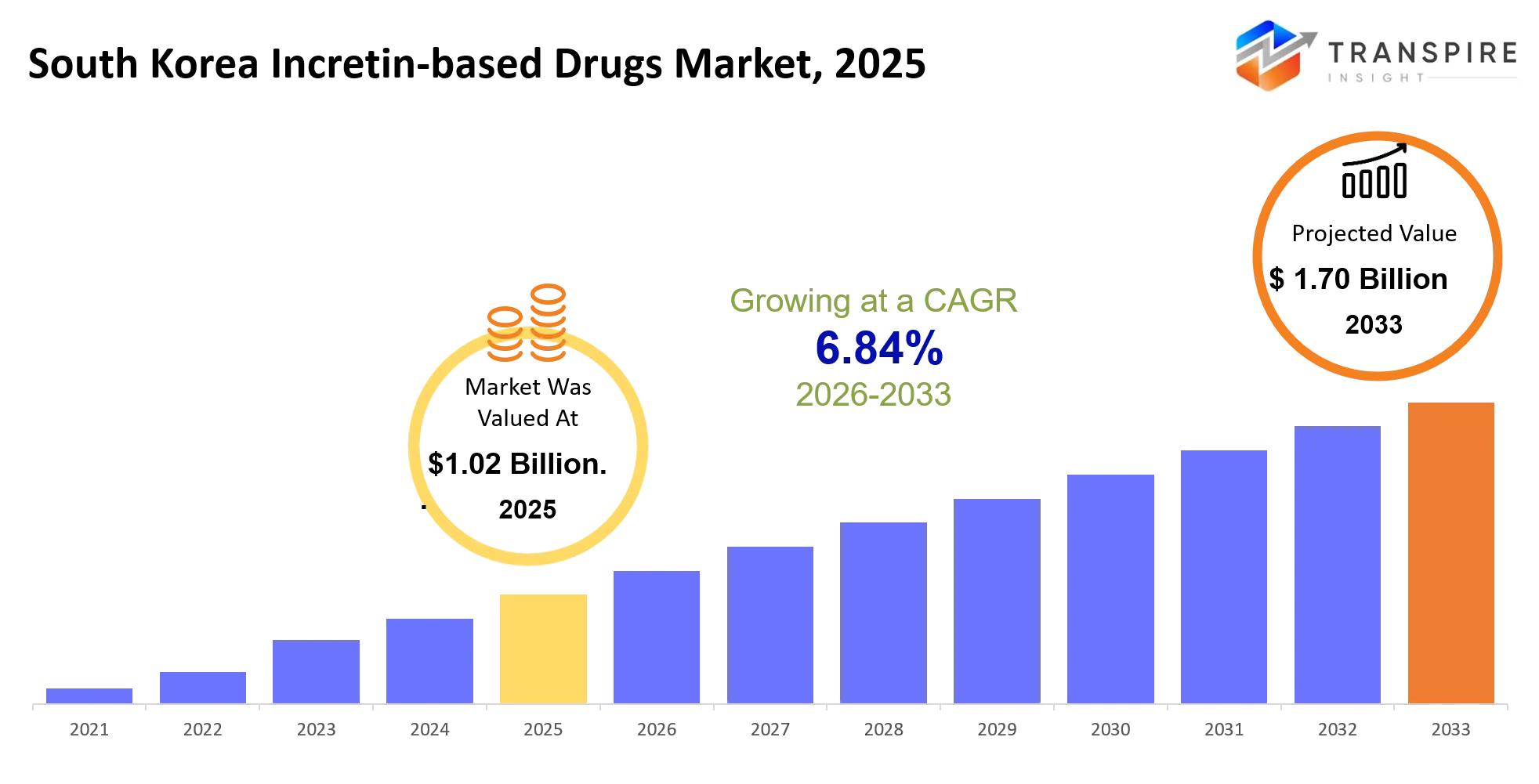
According to Transpire Insights, a detailed research report on the South Korea Incretin-based Drugs Market reflects that the semaglutide segment dominates the market, accounting for approximately 80.5% of the total market share in 2025. Novo Nordisk A/S leads the market with approximately DKK 152.2 billion in global GLP-1-based type 2 diabetes product revenue and an estimated 45.8% global value market share, making it the leading contributor to market development, innovation, advanced incretin-based drug production, expanding manufacturing capabilities, and growth dynamics. The South Korea GLP-1 receptor agonist market was valued at approximately USD 526.6 million in 2025, projected to reach USD 655.4 million in 2026 and USD 1,608.4 million by 2033, registering a CAGR of approximately 13.7% during 2026–2033.
Market Snapshot
- Market Value (2025): USD 1.02 Billion.
- Expected Market Value (2026): USD 1.07 Billion.
- Estimated Market Value (2033): USD 1.70 Billion.
- Forecast CAGR (2026–2033): 6.84%.
Introduction
South Korea Incretin-based Drugs Market features prescription medications formulated for enhancing glucose control and managing body weight through stimulation of the natural incretin pathway such as GLP-1 and GIP. The market includes GLP-1 receptor agonists, DPP-4 inhibitors, and emerging dual-incretin medications that have been employed for diabetes and obesity treatment. Growing need for efficient metabolic therapies, rising prevalence of obesity and Type 2 diabetes, and increasing utilization of advanced incretin-based drugs are fueling market growth. The existence of an advanced healthcare system, robust pharmaceutical innovation environment, and rising spending on the research of domestic metabolic drugs in South Korea is adding to the market dynamics. Innovations related to long-acting drugs, oral incretin medications, peptide innovations, and drug delivery systems are paving the way for novel therapeutic options. Thus, pharmaceutical companies are increasingly concentrating on efficacy, convenience, safety, and distinctive metabolic benefits within South Korea Incretin-based Drugs Market.
Key Market Highlights: -
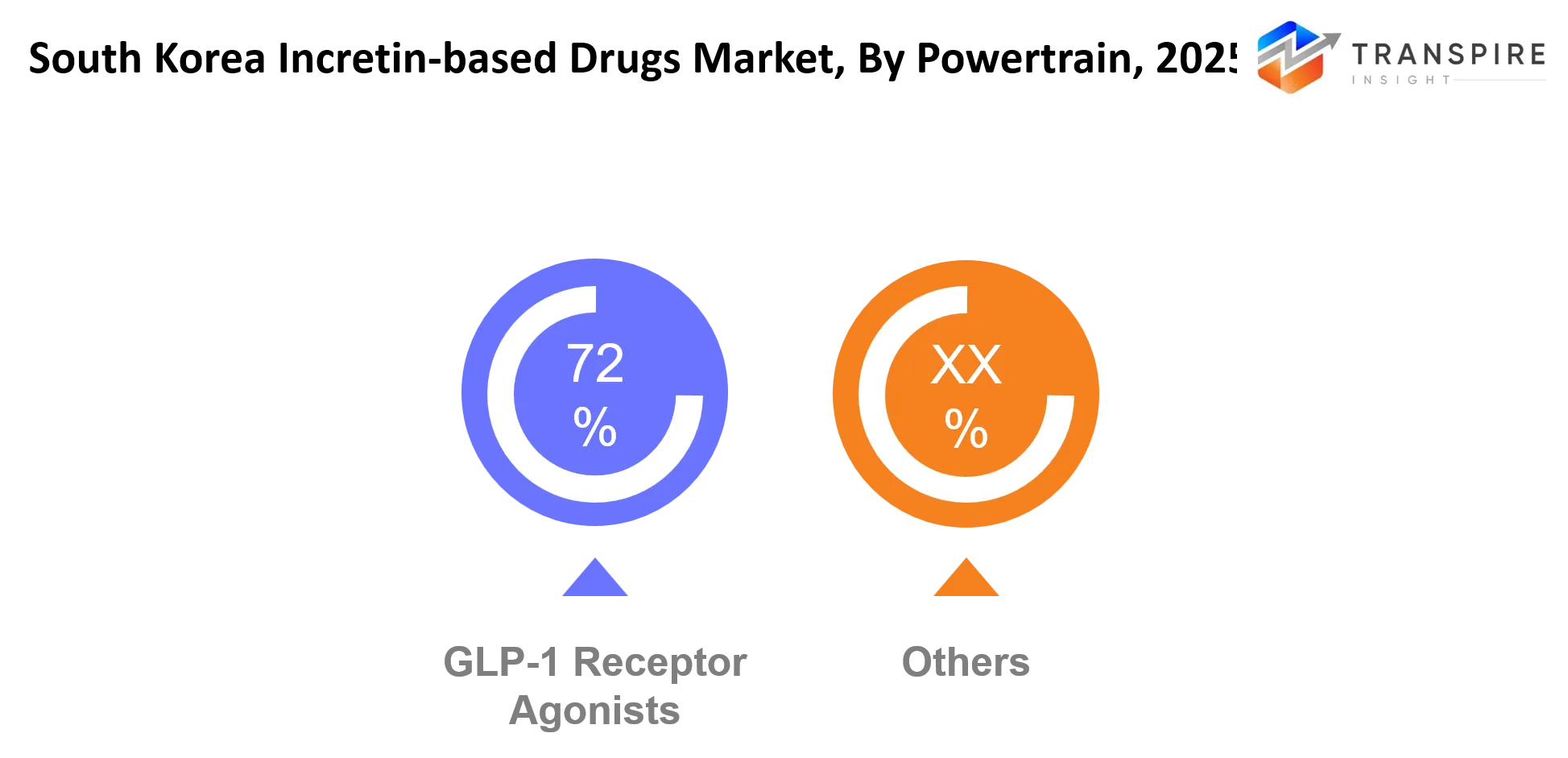
- By Drug Class, the GLP-1 Receptor Agonists dominated the market and holds approximately 62 % share in 2025 and is projected to grow at a substantial CAGR during the forecast period.
- By Indication, the Type 2 Diabetes dominated the market and holds approximately 45 % share in 2025 and is projected to grow at a substantial CAGR during the forecast period.
- By Route, the Injectable Manufacturers segment dominated the market and holds approximately 92 % share in 2025 and is projected to grow at a substantial CAGR during the forecast period.
- Changes in the reimbursement landscape, increased regulation on GLP-1 prescriptions, patient out-of-pocket payment for obesity treatments, and increased scrutiny will transform the incretin market environment.
How is Technology Driving Growth in the South Korea Incretin-based Drugs Market?
The use of technology is helping the expansion of the market due to peptide manufacturing, injectable drug delivery mechanisms, AI, automation, and data-driven pharmaceutical innovation. Predictive analytics and AI make drug discovery and screening processes faster for metabolic diseases, and advanced delivery mechanisms enhance convenience and efficacy of drug administration. Platforms for precision medicine and real-world data help in developing patient-specific drugs and clinical decision making. Automation and process control technologies help in increasing production efficiency and improving quality and scalability for incretin therapies.
Market Drivers
Increasing Prevalence of Obesity and Diabetes: The increased prevalence of type 2 diabetes, obesity, and overweight is boosting the demand for efficacious drugs to manage glucose levels and obesity. Increasing Use of GLP-1 and Dual-Incretin Agonists: Excellent clinical results obtained from the use of semaglutide and tirzepatide are promoting their usage. Research and Development Efforts by Local Companies: Research and development efforts for developing new incretins and multi-agonists are on the rise within South Korean pharmaceutical and biotech firms. Advanced Formulations: Advanced oral formulations, long-acting forms, and advanced injection-based incretins are providing patients with more options.
Restrain
Higher out-of-pocket expenses associated with incretin therapy drugs, such as semaglutide and tirzepatide, can hinder the ability of patients to afford such drugs and remain on them in the long run. The limited coverage by insurance for obesity-related indications, prescription restrictions, and patient criteria prevent wider adoption of such drugs beyond diabetes treatment. All these factors may prevent further growth in the South Korea Incretin-based Drugs Market.
|
Driver |
Relative Impact on Growth (%) |
Geographic Relevance |
Impact Timeline |
Demand Strength |
Growth Mechanism |
Key Beneficiaries |
Major Constraint |
|
Driver 1: Rising prevalence of obesity and type 2 diabetes |
28% |
South Korea; Seoul, Gyeonggi, Busan |
Short-term |
High |
Expanding metabolic disease increases incretin therapy demand. |
Drug manufacturers, hospitals, endocrinologists, patients |
High treatment costs limit broader patient access. |
|
Driver 2: Increasing adoption of GLP-1 and dual incretin therapies |
24% |
Nationwide; major urban healthcare centers |
Short-term |
High |
Superior glycemic and weight-management outcomes accelerate therapy adoption. |
Novo Nordisk, Eli Lilly, hospitals, specialty clinics |
Gastrointestinal adverse effects can reduce treatment persistence. |
|
Driver 3: Expansion of next-generation incretin drug pipelines |
20% |
South Korea; domestic pharmaceutical R&D hubs |
Medium-term |
High |
Oral, dual, and multi-agonist pipelines expand treatment options. |
Biopharma companies, R&D organizations, technology providers |
Clinical failures and regulatory uncertainty increase development risks. |
|
Driver 4: Growing obesity-treatment demand and clinical awareness |
16% |
Seoul metropolitan area; nationwide |
Short-term |
High |
Greater obesity awareness increases physician prescriptions and patient consultations. |
Obesity clinics, pharmaceutical companies, healthcare providers |
Prescription controls restrict inappropriate or non-medical use. |
|
Driver 5: Domestic pharmaceutical investment and technology localization |
12% |
South Korea; Seoul, Daejeon, Osong |
Long-term |
Medium |
Local R&D and manufacturing strengthen incretin supply capabilities. |
Korean pharma, CDMOs, biotech firms, technology vendors |
Complex biologic manufacturing requires substantial investment. |
Analysis of Prices and Consumer Behaviour
The South Korean Incretin-based Drugs Market has been characterized by high demand for GLP-1 receptor agonists (62% of total market share – mainly because of the demands of the diabetes, obesity and metabolic diseases treatment segments). The price of the innovative incretin drugs with high-efficiency of action mechanism of GLP-1 and dual-incretin will be higher by 35% compared to traditional drugs because of the development and application of advanced peptide engineering and clinically proved drug delivery mechanisms. About 45% of total demand for incretin drugs in South Korea relates to the treatment of Type 2 diabetes. The demand is influenced by the growing prevalence of diabetes, obesity and metabolic diseases and effectiveness of incretin-based therapy. Type 2 diabetes and obesity treatment segments account for about 70% of the demand for these therapies. The purchasing preferences of the end consumers have revealed that 55% pay the most attention to efficacy, safety, tolerance and convenience of treatment. Another 33% of doctors and patients opt for long-term medication programs or structured prescription systems as they are keen on minimizing the cost of treatment and guaranteeing the availability of incretin-based medications in South Korea.
|
Company |
Est. Revenue Share Range |
Key Offerings |
Strategic Positioning |
Geographic Strength |
Technology Focus |
|
Novo Nordisk A/S |
55–65% |
Wegovy, Ozempic, Rybelsus, semaglutide |
Market leadership through broad semaglutide portfolio |
Asia Pacific, Europe, North America |
Semaglutide, oral GLP-1, long-acting peptides |
|
Eli Lilly and Company |
30–40% |
Mounjaro, Zepbound, tirzepatide |
Innovation-led differentiation through dual incretin therapy |
North America, Europe, Asia Pacific |
GIP/GLP-1 dual agonism, next-generation incretins |
|
Hanmi Pharmaceutical |
0–2% |
Efpeglenatide, HM15275, H.O.P. pipeline |
Domestic innovation with differentiated metabolic therapies |
South Korea, North America, Asia |
Long-acting GLP-1, GLP-1/GIP/GCG agonism |
|
JW Pharmaceutical |
0–1% |
Bofanglutide, long-acting GLP-1 candidates |
Convenience-focused dosing interval differentiation |
South Korea, China, Asia |
Biweekly GLP-1 delivery, long-acting formulations |
|
Yuhan Corporation |
0–1% |
YH-GLP-1RA, monthly semaglutide, YH25724 |
Convenience-driven oral and long-acting development |
South Korea, Asia, global partnerships |
Oral GLP-1, monthly delivery, protein engineering |
|
Daewoong Pharmaceutical |
0–1% |
Long-acting GLP-1 obesity candidate |
Delivery innovation targeting reduced injection frequency |
South Korea, Asia |
Microneedle delivery, sustained-release GLP-1 |
|
Dong-A ST / MetaVia |
0–1% |
DA-1726, vanoglipel |
Multi-mechanism metabolic disease differentiation |
South Korea, North America |
GLP-1/glucagon dual agonism, metabolic therapeutics |
|
D&D Pharmatech |
0–1% |
MET-002o, MET-224o, MET-875o, DD01 |
Oral and long-acting GLP-1 platform specialization |
South Korea, North America |
ORALINK, long-acting peptides, multi-agonists |
|
Ildong Pharmaceutical |
0–1% |
ID110521156, oral GLP-1 candidate |
Oral small-molecule incretin development |
South Korea, Asia |
Small-molecule GLP-1 receptor agonism |
|
Chong Kun Dang Pharmaceutical |
0–1% |
CKD-514, oral GLP-1 candidate |
Oral administration and domestic pipeline expansion |
South Korea, Asia |
Oral GLP-1, small-molecule drug development |
Who are the Key Players in the South Korea Incretin-based Drugs Market and how do they compete?
Competitiveness in the international market for South Korea Incretin-based Drugs Market involves firms engaged in innovations in the field of pharmaceuticals, solutions for metabolic diseases and creation of distribution channels internationally. Competing not only on the basis of prices but also through use of incretin therapies, innovative drug formulations, innovative delivery systems and integration into digital healthcare platforms, such a way of competing will result in constant product innovation and will help companies reach better treatment results, patient convenience, efficiency and accessibility in healthcare.
Incretin-based drugs development including advanced GLP-1 receptor agonists, dual incretin therapies, oral formulations and innovative metabolic therapies makes Novo Nordisk more competitive in the market. High-performance incretin-based therapies for diabetes treatment, obesity therapy and weight management and other metabolic disorders make Eli Lilly differentiated from its competitors. Creation of position in the field of GLP-1 therapies, long-acting peptides technologies, metabolic drug development and innovative incretin-based therapies gives Hanmi Pharmaceutical competitive advantage.
Top Companies in the South Korea Incretin-based Drugs Market
- Novo Nordisk
- Eli Lilly
- AstraZeneca
- Boehringer Ingelheim
- Merck
- Sanofi
- Amgen
- Pfizer
- Roche
- Hanmi Pharmaceutical
- Daewoong Pharmaceutical
- Dong-A ST
- Chong Kun Dang
- LG Chem
- Yuhan Corporation
South Korea Incretin-based Drugs Market Segmentation
The South Korea Incretin-based Drugs Market share is divided into five categories: By Drug Class, By Indication, By Route, By Distribution, By Patient.
The GLP-1 Receptor Agonists dominated the market, accounting for nearly 62% in 2025 and is expected to rise at a significant CAGR during the forecast period.
The South Korea Incretin-based Drugs Market is segmented by drug class into glp-1 receptor agonists, gip receptor agonists, dual glp-1/gip agonists, glp-1/gip/glucagon agonists, dpp-4 inhibitors, oral incretin drugs, combination therapies. Among these, the GLP-1 Receptor Agonists segment dominated the market, accounting for nearly 62% in 2025 and expected to increase at a significant CAGR during the forecast period. The GLP-1 receptor agonists are widely adopted due to excellent glycaemic control, significant weight loss potential, cardio-metabolic effects, and increasing demand for obesity treatment.
The Type 2 Diabetes dominated the market, accounting for nearly 45% in 2025, and is expected to rise at a significant CAGR during the forecast period.
The South Korea Incretin-based Drugs Market is segmented by indication into type 2 diabetes, obesity, cardiovascular disease, chronic kidney disease, metabolic syndrome, non-alcoholic fatty liver disease, prediabetes. Among these, the Type 2 Diabetes dominated the market, accounting for nearly 45% in 2025 and expected to increase at a significant CAGR during the forecast period. Increasing prevalence of type 2 diabetes, rising diagnosis rates, better treatment results, and adoption of new incretin-based treatments are propelling the segment growth.
The Injectable dominated the market, accounting for nearly 92% in 2025 and is expected to rise at a significant CAGR during the forecast period.
The South Korea Incretin-based Drugs Market is segmentedby route into oral, subcutaneous, injectable, once-daily, once-weekly, extended-release, immediate-release. Among these, the Injectable dominated the market, accounting for nearly 92% in 2025 and expected to increase at a significant CAGR during the forecast period. The injectable incretin therapies are highly efficacious, fast acting, adopted by clinicians, and dosing is straightforward, providing high demand potential in diabetes and obesity treatment.
Future Market Trends for the South Korea Incretin-based Drugs Market: -
Adoption of Semaglutide and Tirzepatide: South Korea is witnessing increasing adoption of semaglutide and tirzepatide owing to glycemic efficacy, weight loss, and other metabolic benefits.
Next-Generation Local Incretin Development: South Korean pharma firms are developing next-generation incretin therapeutics including long-acting GLP-1, dual- and triple agonists that aim at better efficacy and easier administration.
Next-Generation Incretin Therapies: Korean drug firms are also showing growing interest in developing novel incretin-based drugs using advanced delivery systems such as microspheres and peptides.
Recent Development
Wegovy (Semaglutide) – Novo Nordisk: Commercialization process began in October 2024, accelerating the use of obesity treatment and promoting semaglutide as one of the leading incretin therapies.
Mounjaro (Tirzepatide) – Eli Lilly: The commercial launch process was initiated in August 2025, followed by the high dose of 15 mg Mounjaro launch in June 2026, speeding up the adoption of tirzepatide in advanced cases.
EPPE / Efpeglenatide – Hanmi Pharmaceutical: Commercial launch preparations began in 2026, with the target commercial launch date being set for October 2026 in South Korea, presenting the domestic GLP-1 obesity therapy.
Wegovy Pill & Foundayo (Orforglipron): Regulatory submissions for South Korea began in September 2026, with the commercial launch targets being set for second half of 2027.
Market Segmentation
This study forecasts revenue at Japan, regional and country levels from 2020 to 2033. Transpire Insights has segmented the South Korea Incretin-based Drugs Market based on the below-mentioned segments:
South Korea Incretin-based Drugs Market, By Drug Class
- GLP-1 Receptor Agonists
- GIP Receptor Agonists
- Dual GLP-1/GIP Agonists
- GLP-1/GIP/Glucagon Agonists
- DPP-4 Inhibitors
- Oral Incretin Drugs
- Combination Therapies
South Korea Incretin-based Drugs Market, By Indication
- Type 2 Diabetes
- Obesity
- Cardiovascular Disease
- Chronic Kidney Disease
- Metabolic Syndrome
- Non-Alcoholic Fatty Liver Disease
- Prediabetes
South Korea Incretin-based Drugs Market, By Route
- Oral
- Subcutaneous
- Injectable
- Once-Daily
- Once-Weekly
- Extended-Release
- Immediate-Release
South Korea Incretin-based Drugs Market, By Distribution
- Hospital Pharmacies
- Retail Pharmacies
- Specialty Pharmacies
- Online Pharmacies
- Clinics
- Direct Sales
- Other Channels
South Korea Incretin-based Drugs Market, By Patient
- Adults
- Elderly
- Obese Patients
- Diabetic Patients
- Cardiovascular Patients
- Renal Patients
- High-Risk Patients
Frequently Asked Questions
Find quick answers to common questions.
Rising diabetes and obesity prevalence, increasing GLP-1 adoption, advanced formulations, domestic R&D, and expanding metabolic treatment demand are accelerating market growth.
GLP-1 receptor agonists dominate due to strong glycemic control, significant weight-loss benefits, cardiometabolic advantages, and increasing obesity-treatment adoption across South Korea.
Type 2 diabetes represents the leading indication, supported by increasing disease prevalence, diagnosis, treatment demand, and adoption of advanced incretin therapies.
Domestic companies are developing long-acting GLP-1 therapies, oral formulations, dual agonists, and advanced delivery technologies to strengthen local treatment innovation.
High treatment costs, limited obesity reimbursement, prescription restrictions, supply pressures, and regulatory controls can constrain broader patient access and market penetration.
- Novo Nordisk
- Eli Lilly
- AstraZeneca
- Boehringer Ingelheim
- Merck
- Sanofi
- Amgen
- Pfizer
- Roche
- Hanmi Pharmaceutical
- Daewoong Pharmaceutical
- Dong-A ST
- Chong Kun Dang
- LG Chem
- Yuhan Corporation
About the Authors

Pankaj Ghogare Patil
I am Pankaj Ghogare Patil, a Senior Research Analyst at Transpire Insight, specializing in the Pharmaceutical, Chemicals & Materials, Healthcare IT, and Biotechnology industry. My expertise lies in conducting comprehensive market research, analyzing industry trends, evaluating competitive landscapes, and translating complex data into actionable insights. At Transpire Insight, I closely follow emerging technologies, regulatory developments, and market innovations to create accurate, well-researched, and informative content that helps businesses and professionals make informed decisions. I am committed to producing credible, evidence-based articles that reflect industry best practices while making technical topics accessible and valuable for a broad audience.

Chakradhar Khansole
Chakradhar serves as the Research Director at Transpire Insight, bringing over 8 years of experience in technology, innovation, and strategic market intelligence. He specializes in transforming complex market data into actionable business insights that enable organizations to make informed, growth-oriented decisions. Recognized for his strategic vision and analytical expertise, Chakradhar leads high-impact research initiatives, delivering comprehensive market assessments, competitive intelligence, and forward-looking industry analysis.
Recently Published Reports
-
Apr 2026
AI in Diabetic Retinopathy Market
AI in Diabetic Retinopathy Market Size, Share & Analysis Report By Type (Screening AI Systems, Diagnostic AI Systems, and Predictive AI Models), By Application Segment (Hospitals, Ophthalmology Clinics, Diagnostic Centers, and Research and Development), and Geography (North America, Europe, Asia-Pacific, Middle East and Africa, South and Central America), 2021 - 2031
-
Apr 2026
Psychometric Tests Market
Psychometric Tests Market Size, Share & Analysis Report By Type (Personality Tests, Ability/Aptitude Tests, Skill/Knowledge Tests, and Others), By Application (Talent Acquisition and Talent Management), and Geography (North America, Europe, Asia-Pacific, Middle East and Africa, South and Central America), 2021 – 2031
-
Apr 2026
Rare Biological Sample Collection Market
Rare Biological Sample Collection Market Size, Share & Analysis Report By Type (Isolation Kits & Reagent, Blood Collection Tubes, and Others), By Application (Oncology, Transcriptomics, Pharmacogenomics, and Others), and Geography (North America, Europe, Asia-Pacific, Middle East and Africa, South and Central America), 2021 – 2031
-
Jul 2026
Diabetic Retinopathy Market
Diabetic Retinopathy Market Size, Share & Analysis Report By Type (Proliferative Diabetic Retinopathy, and Diabetic Macular Edema (DME)), By Treatment Type (Anti VEGF Drug, Steroid Implants, Laser Surgeries, and Vitrectomy), and Geography (North America, Europe, Asia-Pacific, Middle East and Africa, South and Central America), 2021 – 2031
Our Clients