
South Korea Healthy Beverages Market Size & Forecast:
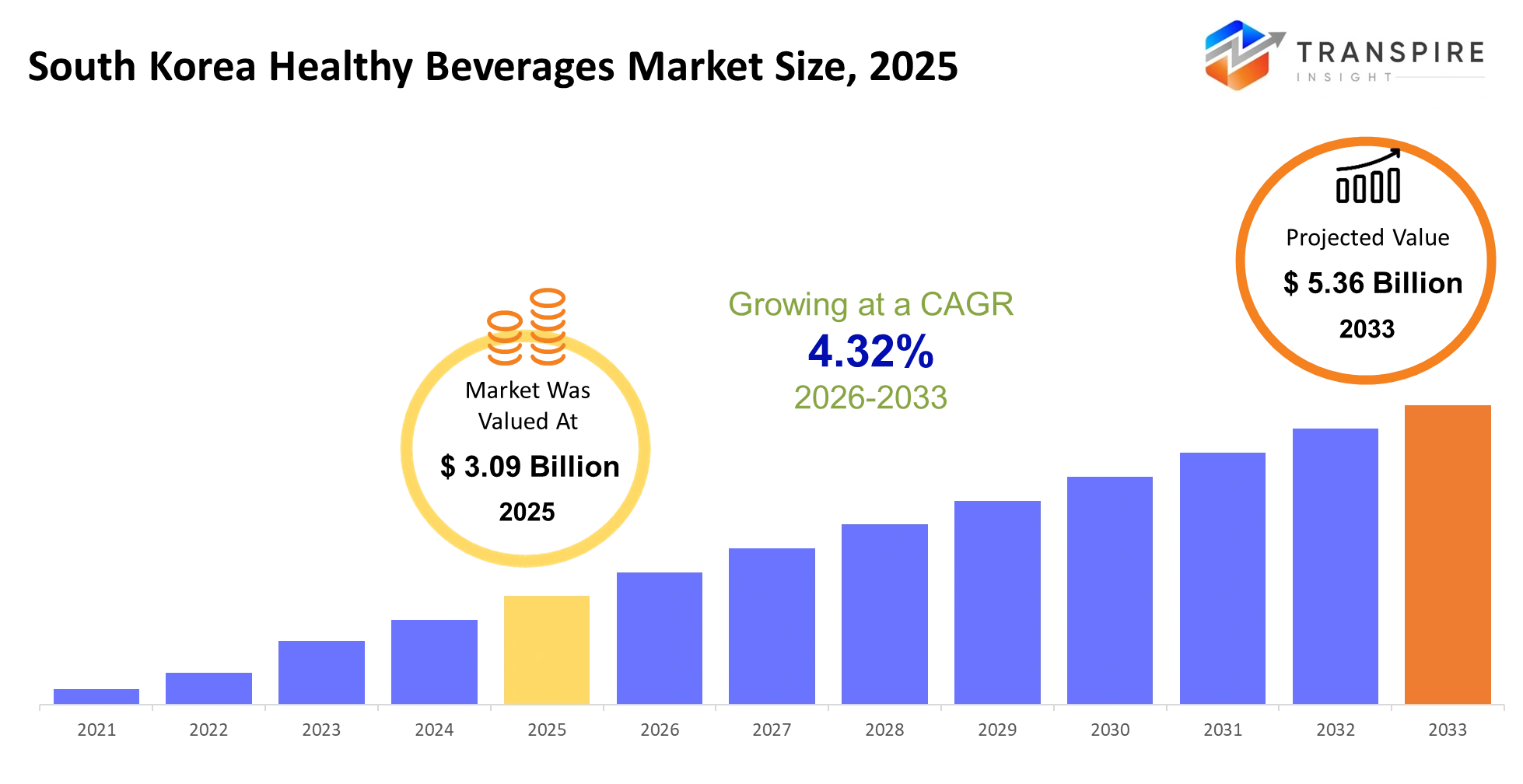
- South Korea Healthy Beverages Market Size 2025: USD 3.09 Billion
- South Korea Healthy Beverages Market Size 2033: USD 5.36 Billion
- South Korea Healthy Beverages Market CAGR: 4.32%
- South Korea Healthy Beverages Market Segments: By Product Type (Functional Drinks, Plant-based Beverages, Low-sugar Drinks, Energy Drinks, Probiotic Beverages, Others); By Distribution Channel (Supermarkets, Convenience Stores, Online Retail, Specialty Stores, Others); By Application (Hydration, Energy Boosting, Digestive Health, Immunity Support, Weight Management, Others); By Packaging Type (PET Bottles, Cans, Glass Bottles, Cartons, Others); By End User (Adults, Fitness Enthusiasts, Children, Elderly Consumers, Others).
To learn more about this report,  Download Free Sample Report
South Korea Healthy Beverages Market Summary
The South Korea Healthy Beverages Market was valued at USD 3.09 Billion in 2025. It is forecast to reach USD 5.36 Billion by 2033. That is a CAGR of 4.32% over the period.
South Korea’s healthy beverage industry works like a kind of practical outgrowth of the country’s preventive wellness mindset and also that convenience driven food ecosystem. You can see it in products like low-sugar drinks, probiotic beverages , plant-based nutrition drinks and even fortified functional teas. These options help people juggle things such as energy steadiness, digestion support, hydration, and metabolic well-being while they’re moving through fast paced city days. Because of that, beverage makers are no longer only treating these items as “special moments” or occasional lifestyle buys, instead they’re being framed as everyday wellness fixes.
In the past 3–5 years the market has also shifted in a more structural way, kind of, like it stopped following the older routine of vitamin-fortified drinks. Instead it now goes toward cleaner label choices, lower-calorie formulas, and frankly a more personalized nutrition drink approach. A big push happened after the pandemic period, when many consumers rechecked their dietary routines and the retail presence somehow grew quicker. Health focused product visibility got amplified through e-commerce along with convenience stores , and that made a difference. So the buying pattern moved from random impulse consumption to a routine functional intake. Beverage companies answered fast too, they stepped up sugar reduction plans and pushed probiotic innovation, and they added protein enriched formulations. So now revenue growth more and more comes from premium functional categories. Those categories typically have better repeat purchase frequency and a more durable brand loyalty compared with conventional soft drinks, even when people feel picky about price.
Key Market Insights
- South Korea Healthy Beverages Market seems to be moving toward those functional, low-sugar kinds of drinks, and this clean-label vibe too, as wellness oriented retail channels keep spreading across the country in a sort of steady way.
- By 2033 the market is projected to go beyond USD 5.36 billion, and that’s being pushed mainly by premium beverage innovations plus how more people are trying personalized nutrition habits.
- In 2025, the Seoul metropolitan region led, taking nearly 46% of the market share, mostly because premium retail presence is strong there, along with heavier functional beverage consumption.
- Meanwhile Busan and Incheon look like they’re growing the quickest through 2033, helped by convenience retail networks expanding and also because younger shoppers are becoming more noticeable.
- Functional beverages made up about 38% share in 2025, and this happened with steady interest in probiotic, collagen, and immunity centered formulations.
- Plant-based beverages landed as the second largest segment. After 2023, lactose free nutrition and vegan dietary preferences started to feel more mainstream, so adoption grew, kind of naturally.
- Low-sugar energy drinks are the fastest growing category too, showing how consumers are drifting away from older style carbonated beverages and toward fitness focused hydration items instead.
- Daily wellness and digestive health applications captured close to 34% share in 2025, supported by ongoing probiotic beverage consumption across urban households.
- And millennials plus working professionals together represented roughly 41% of all consumers in 2025, so they basically became the leading end-user group for premium healthy beverages, even if the numbers still keep evolving.
What are the Key Drivers, Restraints, and Opportunities in the South Korea Healthy Beverages Market?
The main thing driving the South Korea healthy beverages industry is kind of that fast movement toward preventive nutrition and low-sugar eating habits. On top of that, government backed nutritional labeling rules, plus the general public attention around obesity, metabolic well being, pushed brands to reformulate across their whole beverage lines. So beverage manufacturers started bringing out reduced-sugar probiotic drinks, collagen infused waters, and those plant protein beverages, mostly to catch the higher-margin wellness buyers. It really showed up in higher premium sales, and even more shelf space in supermarkets, pharmacies, and convenience store chains.
Still, there’s a big drag, and it’s mostly the high production cost linked to functional ingredients and these clean label formulation standards. Things like probiotics, plant proteins, natural sweeteners, and special vitamins add extra strain, not just in sourcing but also in cold chain logistics, and in keeping product stability, properly. This isn’t the kind of thing that flips quickly, because the structural issue is the domestic ingredient reliance, plus the formulation complexity itself, so it can’t be simplified overnight without risking product quality. Because of that smaller players often get stuck with limited scalability, while price sensitive consumers keep buying the cheaper, more familiar traditional beverages.
Meanwhile, a noticeable opportunity is opening up around personalized nutrition drinks, backed by AI based consumer health insights and digital retail systems. In South Korea, the mobile commerce infrastructure is already really advanced, so beverage companies can launch targeted wellness products tied to fitness tracking, age specific nutrition needs, and subscription style dietary plans. Functional protein beverages and microbiome focused drinks aimed at older customers could become the next step in premium market growth, roughly between 2026 and 2033.
What Has the Impact of Artificial Intelligence Been on the South Korea Healthy Beverages Market?
Artificial intelligence is kind of reshaping the beverage manufacturing scene, especially product formulation and retail optimization across South Korea’s so called healthy drinks industry . Beverage makers are now more and more relying on AI based analytics to keep an eye on production consistency, do automatic quality inspection, and also fine tune ingredient blending during high volume manufacturing. These smart manufacturing setups tend to cut down formulation waste, and they also raise batch level accuracy for probiotic and plant based beverages, since those kinds of products need pretty controlled processing conditions .
On another note, machine learning is improving how demand gets forecasted, and how inventory is managed. Retailers and beverage firms dig into how people buy stuff, how seasonal habits shift, and even what shows up in health focused search activity , to see where demand might move next. That includes low sugar drinks, protein beverages, and immunity leaning products. With AI supported prediction tools, they can reduce the risk of stock shortages and make supply chain operations run smoother, across convenience stores as well as e-commerce distribution networks.
There are also operational upgrades that show up as quicker product development cycles, less inventory loss, and more precise regional placement decisions. Some manufacturers even use AI assisted flavor analysis, to trial consumer preference combinations before the product ever goes commercial, which lowers the chance of failed introductions . Still, the high implementation cost is not trivial, and the access to big nutritional consumer datasets is limited, which is a big barrier. This hits mid-sized beverage producers the hardest, mainly because their digital infrastructure investment capacity is comparatively smaller.
Key Market Trends
- South Korea Healthy Beverages Market is moving, kind of toward premium functional nutrition, backed by low-sugar reformulations and also digital retail expansion.
- It's not just the same old stuff, beverage manufacturers are now putting more emphasis on clean label ingredients, customized nutrition, and probiotic innovation so they can lock in better long term market credibility.
- Functional probiotic drinks basically managed to raise shelf penetration by almost 28% from 2022 to 2025 across both convenience stores and supermarkets, which is noticeable.
- After 2023, new plant based beverage launches picked up speed, especially once younger consumers started leaning into lactose free and vegan nutrition options.
- Low sugar beverage reformulations also grew a lot once stricter nutritional labeling and calorie disclosure rules were introduced after 2022, and everyone had to adjust.
- Protein enriched drinks have been getting real traction with fitness oriented consumers, mainly through urban convenience retail networks.
- Meanwhile, online beverage subscription sales jumped by more than 30% between 2023 and 2025, mainly via mobile commerce platforms.
- Companies like Lotte Chilsung and Maeil Dairies also widened their collagen and gut health drink portfolios after the post pandemic wellness shift, people were drinking differently.
- There’s more AI in the process too, because AI assisted flavor development, cut down product testing cycles, and helped teams aim products more precisely at regional demand in premium beverage categories.
- Convenience stores, for their part, have been replacing a lot of older carbonated drink shelf space with functional hydration drinks and immunity focused beverages.
- And as the population ages, demand keeps pushing toward digestive wellbeing and bone support drinks, often with calcium, probiotics, and vitamin enriched formulas.
- Domestic brands then doubled down on collaborations with fitness centers and wellness platforms, to build recurring healthy beverage consumption habits that actually stick.
South Korea Healthy Beverages Market Segmentation
By Product Type
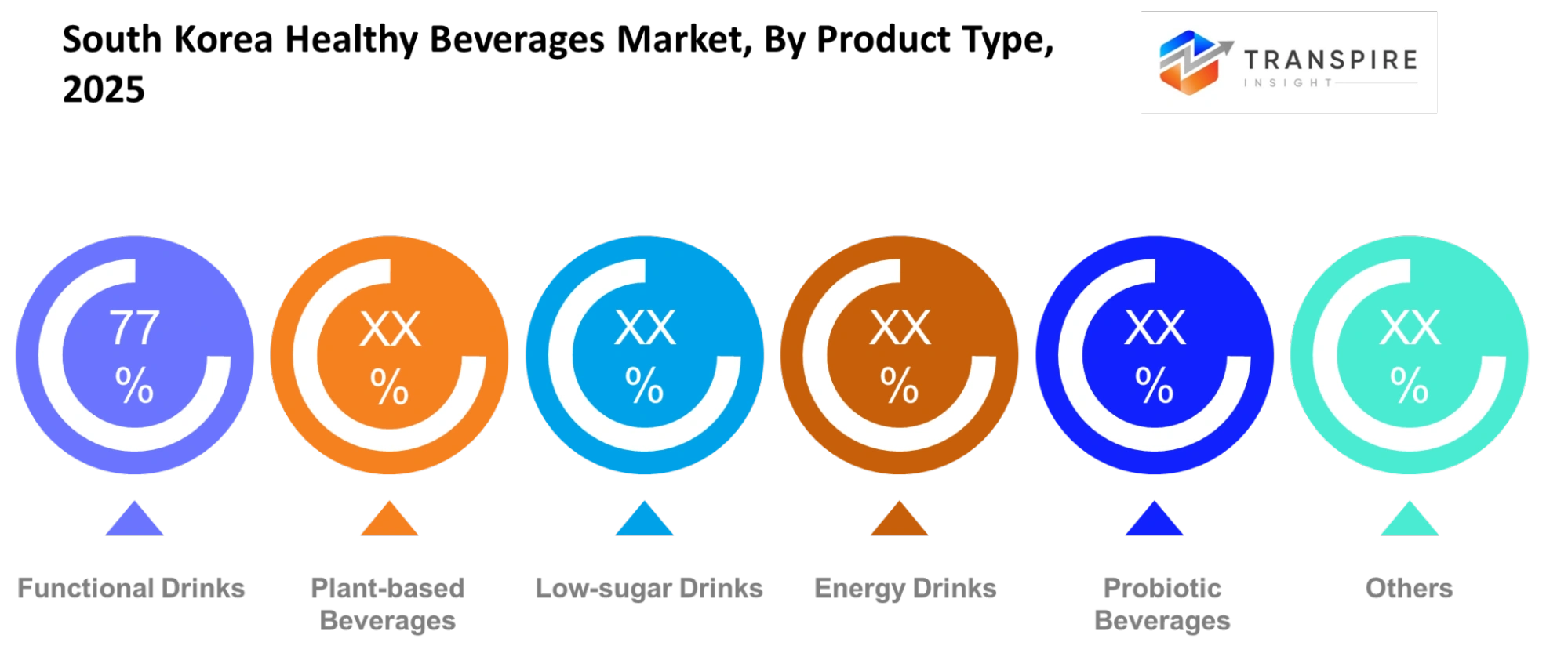
Functional Drinks are basically in the lead,mostly because people really want beverages tied to immunity support, hydration, and some kind of nutritional supplementation. The adoption feels high in busy urban lifestyles where these ready to consume wellness drinks simply match day to day routines and snack thinking. Probiotic Beverages sit in second place too, because digestive health products tend to create solid repeat purchases among adults, and also aging consumers. After that, Plant-based Beverages, Low-sugar Drinks, Energy Drinks, and a few Others keep pushing forward, mainly through sharper wellness framing and more premium product innovation, yeah.
Functional Drinks will keep expanding as beverage firms roll out collagen vitamin, and protein enriched formulations aimed at preventive nutrition trends. Plant-based beverages are getting more traction too, not only for lactose intolerance management,but also because more consumers are ok with vegan dietary alternatives. Low-sugar Drinks look like the quickest mover,as stricter nutritional labeling rules are nudging buying choices across convenience retail channels. During the forecast period, product development is likely to lean into personalized wellness beverages, with cleaner ingredients, more specific functionality, and AI supported nutrition positioning that feels kind of targeted.
To learn more about this report, Download Free Sample Report
By Distribution Channel
Convenience Stores keep the leading edge because South Korea still has one of the world’s most developed convenience retail networks, plus shoppers make high-frequency beverage buys. You get strong product visibility and longer operating hours, together with quick launch cycles, so beverage sales keep moving upward in those dense , urban areas. Supermarkets sit in second place, mostly because they manage to give more shelf space for family oriented and even premium wellness beverage buys. Online retail, Specialty stores, and others are still climbing in importance as digital grocery keeps expanding, and brands are pushing a more focused wellness product positioning, pretty hard.
Convenience stores are also widening their reach, since beverage brands are leaning on impulse friendly packaging, plus localized rollouts for those new item drops. Supermarkets are still key for multi-pack purchases and for sending premium functional drinks into the home, rather than single quick grabs. Online Retail is growing the fastest, driven by mobile commerce adoption and subscription based beverage habits among younger consumers. During the forecast period, distribution tactics will more and more blend digital marketplaces, data led inventory planning, and direct-to-consumer wellness campaigns models, kinda like a connected system.
By Application
Hydration is taking the lead, sort of, because consumers increasingly switch out classic carbonated drinks for low calorie, vitamin enhanced options for day to day use. The push is especially strong around functional waters, electrolyte drinks, and low sugar teas, all framed as a routine wellness nudge. Digestive Health comes in second, mainly because probiotic beverage adoption is high and people have been knowing these gut care products for a long time. Energy Boosting, Immunity Support, Weight Management, and the other smaller segments keep moving ahead via lifestyle centered new product ideas,even if the messaging varies.
Hydration is still growing as beverage makers work on functional formulas that blend well being perks with easy everyday drinking. Digestive Health stays fairly steady, helped by solid loyalty to fermented and probiotic beverage types across different age groups. Weight Management and Immunity Support are the quickest risers, since shoppers more often want drinks tied to calorie guidance and general prevention style health upkeep. Looking ahead, application demand will start leaning more toward multifunctional beverages, meaning products that merge hydration with protein support and metabolic health benefits, in one package.
By Packaging Type
PET Bottles are still in the lead, mostly because the packaging is lightweight, easy to carry, and produced in a cost efficient way which helps with high volume beverage distribution through convenience stores and supermarkets . There’s also strong uptake because PET works well with functional drinks, flavored waters, and ready to drink wellness beverages. Cans come in second, largely from their rising use in low sugar energy drinks and those premium sparkling health drinks aimed at younger shoppers. Glass Bottles, Cartons, and Others keep getting used for more niche premium offerings plus sustainability minded product lines.
PET Bottles keep pushing forward thanks to efficient cold chain logistics and the fact that many consumers like resealable packaging formats . Meanwhile, cans are getting more noticeable as beverage brands steer energy and protein drinks toward quick portable, city style consumption . Cartons meanwhile, seem to be the fastest growing part of the market, because sustainability worries, plus the shift toward plant based beverage options, encourage paper like packaging innovation. Across the forecast window, packaging development will lean harder into recyclable materials, lighter weight formats, and production systems that stay environmentally compliant.
By End User
Adults seem to keep the dominant position, mostly because working professionals and middle-income households together show the highest frequency of healthy beverage intake. Their strong purchasing behavior is basically pushed by the desire for hydration support, better digestive wellness items, and low-sugar alternatives that get baked into everyday routines, even when people don’t think about it. Fitness Enthusiasts come in second, since more consumers are leaning toward protein beverages, electrolyte drinks, and performance-minded energy products. Meanwhile Children, Elderly Consumers and Others keep adding value too, through age-specific nutritional beverage demand, which still matters in a pretty steady way.
Looking ahead, Adults are likely to keep expanding their beverage consumption as preventive nutrition becomes more woven into urban lifestyle habits. Fitness Enthusiasts are also driving noticeable growth, especially for protein-enriched and functional recovery beverages that tie into gym memberships and active living themes. For Elderly Consumers, the growth pace is the quickest, because there’s more attention on bone health, digestion support, and low-sugar nutritional supplementation. Over the forecast period end-user demand should start leaning more toward age-targeted formulations, supported by personalized wellness approaches and digital health ecosystems.
What are the Key Use Cases Driving the South Korea Healthy Beverages Market?
Daily digestive health and hydration still look like the big everyday reasons people choose healthy beverages, even if the pattern is a bit messy at times. Probiotic drinks, low-sugar teas, and vitamin-enriched waters keep pulling strong repeat purchases, because consumers are, increasingly, folding these options into routine wellness management and even meal replacement habits in a kind of automatic way.
Sports nutrition plus functional energy support are also getting more attention, mainly among younger urban consumers, and the fitness-focused crowd that kinda lives in convenience retail. Protein beverages and electrolyte-enhanced drinks are picking up momentum through gym partnerships, grab-and-go stores, and online subscription platforms aimed at active lifestyles, not just casual shoppers.
On the newer side, you start seeing personalized nutrition beverages that tie back to microbiome health and age-specific support. Beverage manufacturers are working on collagen-infused drinks, cognitive wellness formulations, and AI-guided nutrition beverages for aging populations and digital health ecosystems, and all of this can open long-term premium product opportunities, all the way through 2033.
|
Report Metrics |
Details |
|
Market size value in 2025 |
USD 3.09 Billion |
|
Market size value in 2026 |
USD 3.31 Billion |
|
Revenue forecast in 2033 |
USD 5.36 Billion |
|
Growth rate |
CAGR of 4.32% from 2026 to 2033 |
|
Base year |
2025 |
|
Historical data |
2021 - 2024 |
|
Forecast period |
2026 - 2033 |
|
Report coverage |
Revenue forecast, competitive landscape, growth factors, and trends |
|
Regional scope |
South Korea |
|
Key company profiled |
Coca-Cola Korea, Lotte Chilsung Beverage, PepsiCo, Nestlé, Danone, Binggrae, Maeil Dairies, Namyang Dairy Products, Unilever, Yakult, KeVita, Monster Beverage, Red Bull, Nongshim, Oatly. |
|
Customization scope |
Free report customization (country, regional & segment scope). Avail customized purchase options to meet your exact research needs. |
|
Report Segmentation |
By Product Type (Functional Drinks, Plant-based Beverages, Low-sugar Drinks, Energy Drinks, Probiotic Beverages, Others); By Distribution Channel (Supermarkets, Convenience Stores, Online Retail, Specialty Stores, Others); By Application (Hydration, Energy Boosting, Digestive Health, Immunity Support, Weight Management, Others); By Packaging Type (PET Bottles, Cans, Glass Bottles, Cartons, Others); By End User (Adults, Fitness Enthusiasts, Children, Elderly Consumers, Others). |
Which Regions are Driving the South Korea Healthy Beverages Market Growth?
The Seoul metropolitan region still seems to be in front, leading the South Korea healthy beverages industry because it has this dense, premium retail ecosystem kind of thing, plus higher disposable income and a fast move toward functional wellness products. Big convenience store chains, digital grocery platforms and department store networks let beverage manufacturers roll out premium probiotic, low-sugar, and plant based drinks at scale, without too much friction. There are also lots of corporate offices around, and younger working professionals buy again and again, especially for functional hydration and energy beverages. On top of that, the region has strong logistics infrastructure and people tend to react quickly to wellness marketing campaigns, so the dominant position keeps getting reinforced.
Gyeonggi Province feels like the second largest regional contributor, mostly because manufacturing stays stable and suburban consumption stays large. In a way, it grows differently than Seoul, since Gyeonggi’s momentum comes less from premium experimentation, and more from steady household purchasing of affordable health oriented drinks. Big beverage production facilities and efficient cold chain distribution help keep products available across supermarkets and convenience retailers. With middle-income spending that’s pretty stable, plus growing family focused nutrition demand, the area turns into a dependable source for long term industry revenue.
Busan and Incheon, meanwhile, are the fastest growing regional markets, largely due to retail modernization moving quickly and health focused consumption rising among younger urban consumers. More recently, the expansion of convenience retail networks and online grocery delivery services has made it easier to find premium healthy beverage brands even beyond the Seoul metropolitan core.
Who are the Key Players in the South Korea Healthy Beverages Market and How Do They Compete?
Competition in the South Korea healthy beverages industry is still moderately consolidated, like a few big players, but also a mix of domestic makers going head to head with global nutrition and energy drink brands. At this point, the main fight is not really about pricing anymore—well it is a bit, but the center has moved toward formulation quality, clean label vibes, and functional ingredient differentiation, you know sort of healthier signals. Big established beverage companies keep defending shelf space by doing faster product diversification, while newer wellness brands quietly aim at narrower categories, like plant-based nutrition and microbiome health, rather than trying to be everywhere.
Lotte Chilsung Beverage usually competes using localized product development along with heavy convenience store distribution, which helps them roll out low-sugar and functional beverage variants quickly. Maeil Dairies leans on probiotic know-how, lactose-free formulations, and protein-led wellness drinks, targeting digestive health shoppers and active nutrition consumers. Coca-Cola Korea, meanwhile, tries to stay relevant by reformulating older favorites, cutting sugar, and pushing functional hydration positioning, especially to appeal to younger consumers who want something more than “just a drink”.
Oatly expands by leaning into premium plant-based beverage positioning, plus partnerships with cafés and specialty retail channels, aimed at lactose-intolerant and vegan consumers. Monster Beverage and Red Bull, on the other hand, push performance-focused energy drink portfolios that fit fitness culture and those gaming-linked consumption patterns. More and more companies are also investing in online grocery partnerships, AI-driven consumer analytics, and functional ingredient innovation, basically to build long-term competitive edge, even if it takes time.
Company List
- Coca-Cola Korea
- Lotte Chilsung Beverage
- PepsiCo
- Nestlé
- Danone
- Binggrae
- Maeil Dairies
- Namyang Dairy Products
- Unilever
- Yakult
- KeVita
- Monster Beverage
- Red Bull
- Nongshim
- Oatly
Recent Development News
In May 2026, Maeil Dairies launched “Maeil Soymilk 99.9 Seoritae.” The sugar-free soy milk expansion strengthened the company’s clean-label and low-sugar beverage portfolio targeting health-focused consumers in South Korea.
Source: https://en.sedaily.com
In April 2026, Maeil Dairies launched three new “Maeil Bio Greek Yogurt Drink” products. The high-protein and lactose-free drinkable yogurt lineup expanded functional probiotic beverage accessibility through portable wellness-focused packaging.
Source: https://www.hankyung.com
In February 2026, Tetra Pak entered a partnership with Maeil Dairies to deploy paper-based barrier carton technology in South Korea. The collaboration introduced high-speed aluminum-free beverage packaging, supporting sustainability-focused innovation across plant-based beverage production.
Source: https://www.foodinfotech.com
What Strategic Insights Define the Future of the South Korea Healthy Beverages Market?
The South Korea healthy beverages industry is kind of moving, structurally, toward personalized functional nutrition powered by digital retail ecosystems , preventive healthcare behaviors, and clean-label product reshaping. In the next 5–7 years, growth is likely to come more often from premium probiotic, plant-based, and protein-enhanced drinks that get framed as daily wellness management tools, not just old school refreshment stuff. AI aided nutrition targeting plus microbiome centered beverage development is probably going to be a big differentiator across the premium product landscape.
There is a sneaky risk too, and it’s more about raw material dependency tied to imported plant proteins, specialty probiotics, and natural sweeteners. If supply gets messed up, or commodity costs wobble hard, margins can get squeezed, and mid-sized manufacturers may see premium expansion slow down.
At the same time there’s a real opportunity showing up: age specific functional beverages designed for South Korea’s rapidly aging population , especially items connected to digestive comfort, bone reinforcement, and metabolic wellness. Beverage companies should focus on data driven personalization and also tighten collaborations with digital health platforms, so they can keep consumers longer and push recurring revenue growth.
South Korea Healthy Beverages Market Report Segmentation
By Product Type
- Functional Drinks
- Plant-based Beverages
- Low-sugar Drinks
- Energy Drinks
- Probiotic Beverages
- Others
By Distribution Channel
- Supermarkets
- Convenience Stores
- Online Retail
- Specialty Stores
- Others
By Application
- Hydration
- Energy Boosting
- Digestive Health
- Immunity Support
- Weight Management
- Others
By Packaging Type
- PET Bottles
- Cans
- Glass Bottles
- Cartons
- Others
By End User
- Adults
- Fitness Enthusiasts
- Children
- Elderly Consumers
- Others
Frequently Asked Questions
Find quick answers to common questions.
The expected South Korea Healthy Beverages Market size for the market will be USD 5.36 Billion in 2033.
Key segments for the South Korea Healthy Beverages Market are By Product Type (Functional Drinks, Plant-based Beverages, Low-sugar Drinks, Energy Drinks, Probiotic Beverages, Others); By Distribution Channel (Supermarkets, Convenience Stores, Online Retail, Specialty Stores, Others); By Application (Hydration, Energy Boosting, Digestive Health, Immunity Support, Weight Management, Others); By Packaging Type (PET Bottles, Cans, Glass Bottles, Cartons, Others); By End User (Adults, Fitness Enthusiasts, Children, Elderly Consumers, Others).
Major South Korea Healthy Beverages Market players are Coca-Cola Korea, Lotte Chilsung Beverage, PepsiCo, Nestlé, Danone, Binggrae, Maeil Dairies, Namyang Dairy Products, Unilever, Yakult, KeVita, Monster Beverage, Red Bull, Nongshim, Oatly.
The South Korea Healthy Beverages Market size is USD 3.09 Billion in 2025.
The South Korea Healthy Beverages Market CAGR is 4.32% from 2026 to 2033.
- Coca-Cola Korea
- Lotte Chilsung Beverage
- PepsiCo
- Nestlé
- Danone
- Binggrae
- Maeil Dairies
- Namyang Dairy Products
- Unilever
- Yakult
- KeVita
- Monster Beverage
- Red Bull
- Nongshim
- Oatly
Recently Published Reports
-
Apr 2026
Baby Infant Formula Market
Baby Infant Formula Market Size, Share & Analysis Report By ype (Infant Milk, Follow On Milk, Specialty Baby Milk, Growing-Up Milk), By Ingredient (Carbohydrate, Fat, Protein, Minerals, Vitamins, and Others), By Product Form (Powder, Liquid, and Ready-to-feed), By Distribution Channels (Supermarket/Hypermarket, Specialty Store, Pharmacies, Online Retail, and Others), and Geography (North America, Europe, Asia-Pacific, Middle East and Africa, South and Central America), 2021 - 2031
-
Apr 2026
Edible Insects for Animal Feed Market
Edible Insects for Animal Feed Market Size, Share & Analysis Report By Type (Insect Powder, Insect Meal, Insect Bar, Insect Paste, Insect Oil, and Others), By Insect Type (Beetles, Cricket, Caterpillar, Hymenoptera, Orthoptera, Tree Bugs, and Others), By Application (Livestock, Pet Food, and Aquaculture), By Livestock Type (Poultry, Swine, and Others), and Geography (North America, Europe, Asia-Pacific, Middle East and Africa, South and Central America), 2021 - 2031
-
Apr 2026
Food Industry Disinfection and Bacterial Control Market
Food Industry Disinfection and Bacterial Control Market Size, Share & Analysis Report By Type (Chemical Disinfectants, Physical Disinfectants, and Biocides and Antimicrobials), By Application (Food Processing Equipment Surface Disinfection, Food Preparation Areas Surface Disinfection, Storage Areas Surface Disinfection, Anti-microbial Coatings Food Preservation, and Preservative Solutions Food Preservation), By End User (Meat and Poultry Processing, Dairy Processing, Seafood Processing, Bakery and Confectionery, Restaurants and Commercial Kitchens, and Food Service Providers), By Sales Channel (Online, Offline), and Geography (North America, Europe, Asia-Pacific, Middle East and Africa, South and Central America), 2021 - 2031
-
May 2026
Freeze Dried Food Market
Freeze Dried Food Market Size, Share & Analysis Report By Product Type (Fruits, Vegetables, Freeze-Dried Dairy Products, Freeze-Dried Meat and Seafood, Freeze-Dried Pet Food, and Prepared Meal), By Nature (Organic, and Conventional), By Form (Powdered, Granules, and Diced), By End Use (Breakfast Cereals, Dairy Products, Bakery & Confectionery, Nutritional Bars & Supplements, Powdered Beverages, Snacks, and Retail (Household)), and Geography (North America, Europe, Asia-Pacific, Middle East and Africa, South and Central America), 2021 - 2031